
Review · LISBON CITY TOURS
Tour TukTuk 3 hours Lisbon Free Pick-up
Lisbon in three quick tuk-tuk loops. I love how the ride shortcuts the worst hill fatigue with private tuk-tuk transport, and how the stops are picked for big viewpoint payoffs over Lisbon’s tiles and rooftops. One possible drawback: monument entrances are not included for several of the stops, so if you want to go inside, plan on extra tickets.
This tour is also a smart way to get oriented fast. You’ll have an English-speaking guide, a mobile ticket, and a schedule that strings together older Lisbon neighborhoods, river views, and a few iconic churches and viewpoints without turning the whole day into a walking test.
Key things to know before you ride
- Private group, private pacing: it’s only your group, and the route is designed for a smooth 3-hour circuit.
- Viewpoints dominate the good stuff: several stops are free and focused on where you want to look.
- English-speaking guide support: guides mentioned by name include Rodrigo, Miguel, Fernanda, Thiago, and Alexandra.
- Entrance fees can add up: cathedrals, the National Pantheon, and some church/tile-focused spots are not included.
- Rules keep it comfortable: no smoking or alcohol on board, and large suitcases are not allowed.
Why a tuk-tuk, private 3 hours, works in Lisbon
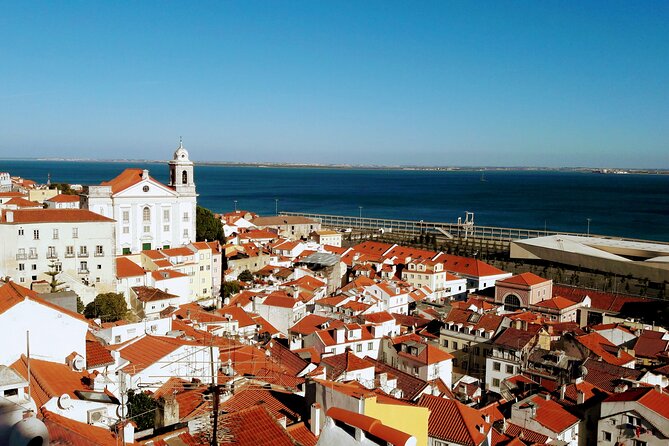
Lisbon is gorgeous, and it’s also a workout. That’s why this format makes sense. Instead of trying to conquer steep streets on foot, you’re in a tuk-tuk for most of the transfer time, which lets you spend your energy on the places you actually want to see up close.
The price, $48.12 per person, feels most fair when you’re using it for what it does best: quick orientation plus viewpoint access. For a first visit, that can be more valuable than paying for long entry tickets at just one or two sights. You get a guided pass through major zones like Graça, Alfama, and the downtown core around Praça do Comércio.
A second practical plus is that this is a private tour. That usually means less waiting around and fewer interruptions. It also helps if you want to pause for photos at viewpoints, or if you prefer a slower pace on the climbs and stops where you choose to linger.
One more small but real consideration: this is not a stroller-friendly tour in the sense that children under 7 are not allowed, and large suitcases are not permitted. If you’re traveling light and your group is within the age guidelines, it’s a very convenient way to see a lot without exhausting your legs.
More Lisbon tours and experiences for the shortlist


Start and finish where you want to be: Rua do Comércio
The tour starts at Rua do Comércio in central Lisbon (Rua do Comércio, 1100 Lisboa, Portugal). It also ends back at the meeting point. That round-trip convenience matters in a city where getting from one hill to another can swallow time.
Because the meeting point is central, you can also plan your pre and post time around it. Think of this as the first half of your Lisbon day, then you can either continue on foot from the center or line up dinner and an easy walk to nearby nightlife zones.
It’s also listed as near public transportation. So if your day is already a patchwork of bus, tram, and walking, you won’t feel stuck on the outskirts. For a 3-hour experience, that flexibility helps a lot.
Lisbon Cathedral, then Portas do Sol: start with old Lisbon and a river view
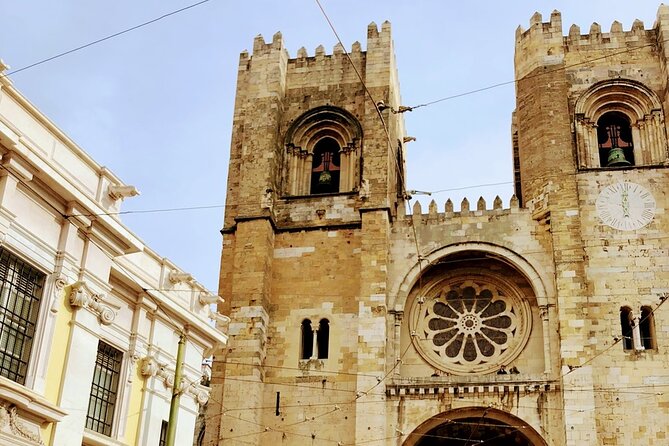
The first main stop is Lisbon Cathedral. The building began in 1147, after the capture of Lisbon, and it’s considered the oldest church in the current capital. This gives you a strong historical anchor right away. If you’re the type who likes to understand what you’re looking at, starting here is a good move because it sets the timeline for everything else.
This stop is 15 minutes, and the admission ticket is not included. That means you’re most likely making a decision on the spot: quick exterior time only, or buying an entry ticket if you want to go inside.
Next comes Miradouro das Portas do Sol. This viewpoint is tied to the old Moorish fence of Lisbon, and it also connects to earthquake history from 1755. Even if you just treat it as a quick photo stop, the payoff is the classic Tagus River view energy.
It’s only 10 minutes, and admission is free. That mix, short time plus easy access, is exactly how a tuk-tuk tour should feel. You get the look, you take the photos, and you move on before the light changes.
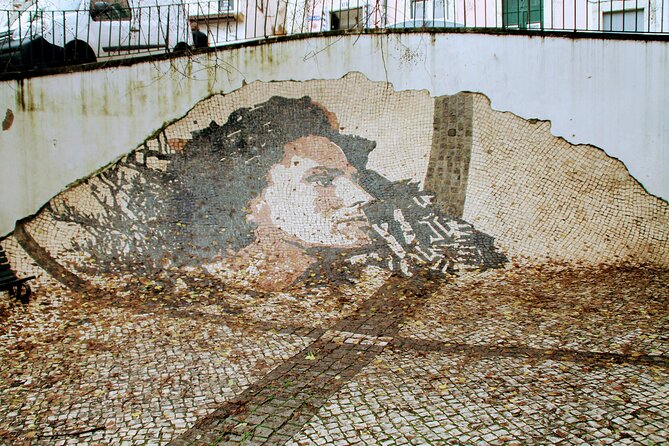
There’s also a short stop that includes a face of Amália Rodrigues in Portuguese pavement, created by the urban artist Vhils. That detail is worth paying attention to, because it’s one of those street-level art moments that feels very Lisbon rather than museum-Lisbon.
Graça and Senhora do Monte viewpoints: tiles, convent context, and a legendary chair
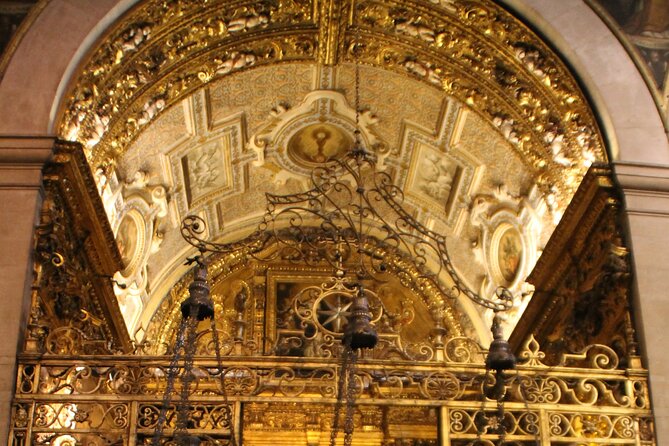
Miradouro da Graça (Sophia de Mello Breyner Andresen) is another viewpoint stop, 15 minutes, and admission is not included. It’s near the Convent of Grace, where you can see beautiful tile panels. Even if you don’t enter anywhere, this is a great “look, then learn” kind of stop because the area is tied to old orders and local siege history.
This spot also connects to the 1147 era, because the old place known as Almofala is mentioned as where Afonso Henriques camped with his troops during the siege of Lisbon. That kind of connection helps you understand why Lisbon’s viewpoints and landmarks keep repeating the same names.
Then you move to Miradouro da Senhora do Monte, 15 minutes and admission is free. This is one of those “how is Lisbon so steep” viewpoints, with views to the south, west, and north. The description includes Palha Sea, Saint George Castle, part of the downtown area, and the Tagus River estuary. That’s a lot of geography in one glance.
Next to the viewpoint is the small ancient Hermitage of Our Lady of Mount, founded in 1147 and consecrated to Saint Gens. There’s also a famous legend tied to a stone chair associated with uncomplicated births, and it mentions D. Maria Ana from Austria (wife of D. João V) sitting there when pregnant with the heir to the throne.
That legend is exactly why a viewpoint stop can feel more than just scenic. Even a quick visit to the hermitage area gives you a human story layered on top of the views.
For me, the best value here is that you’re not stuck just staring at the city. The stops are framed with context. You get the wide view, then you get a reason to care about what you’re seeing.
St. Vincent de Fora and the National Pantheon: who you meet, not just what you see
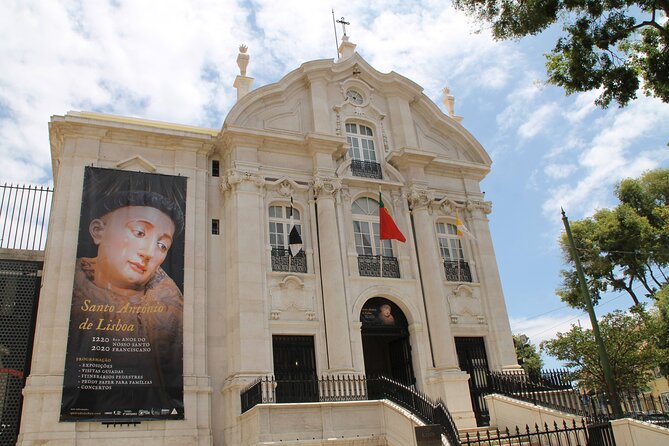
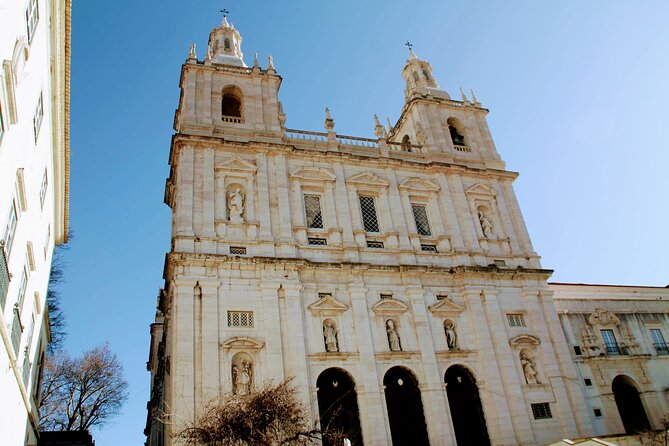
Church of St. Vincent de Fora is next, with about 10 minutes. You’ll visit from outside. The description notes construction began in 1582 where Afonso Henriques had previously ordered an earlier temple. Architecturally, it’s a mix, with traces of Portuguese Mannerism along with Gothic and Baroque elements.
It also houses the Pantheon of the Dukes of Bragança, and several Portuguese kings from the Bragança dynasty are buried there. Even without entering, the exterior stop can be meaningful because this is one of those places where Lisbon signals its importance as a national capital.
Then comes Panteão Nacional in the Church of Santa Engrácia. The stop is 30 minutes, and admission is not included. This is the longer window of the tour after Praça do Comércio, and it fits because this building has a huge “how long did this take” story. Construction began in 1682 and work ended in 1966, and there are several stories associated with the church.
The graves you can see are named in the tour details: Amália, the fado diva; and Eusébio, the football player. If you care about Portuguese culture beyond monuments, this is a high-value stop because music and sports are both part of the national identity here.
One thing to consider: since entrances are not included, you’ll want to decide in advance whether you’re buying tickets on the spot. If you’re on a tight budget, you can treat it as a guided overview exterior and keep your ticket spending limited. If you want the full experience, you’ll probably be glad you pay for entry at least once during the loop.




Alfama on the route: hot-water origins, Chafariz de Dentro, and Saramago’s house
Alfama is a quick, 10-minute introduction to Lisbon’s oldest neighborhood. The name is traced to Arabic al-hamma, meaning fountain or hot water baths, because Alfama was described as a thermal area. The tour data even gives a temperature range for the waters flowing from springs, from a minimum of 20ºC to a maximum of 34ºC.
This is a nice stop because it frames Alfama beyond the clichés. It explains why the area has that older, lived-in feeling, not just why it’s scenic.
Next is Chafariz de Dentro, free, with about 5 minutes. This fountain has layers. The oldest record is from 1285 as the Fountain of Horses. In 1373, the Castilians took bronze heads as a reminder of the sack of Lisbon. Later, it became known as Inside Fountain because it was on the interior side of the Fernandina fence.
One of the most striking details in the description is how the fountain regulated who could draw water and how many spouts existed. It mentions nine waterspouts at one point, each exclusive for different social groups, and it even lists separate channels for groups like slaves and others. Whether you read every detail or just soak it in, it gives you a real sense of how a city can be organized through something as ordinary as a fountain.
After that, there’s a stop connected with the House of Nozzles, also called the House of Brás de Albuquerque. This includes the Museum of writer José Saramago on the second floor. On the first floor, the tour details mention Roman-era salt tanks, a medieval tower, and Mudejar pavement. The building dates to 1523, built at the request of D. Brás de Albuquerque, and the facade is covered in diamond-shaped stone, called beaks, with Italian Renaissance influence.
Admission is not specified for this particular stop, so treat it as a short look unless you’ve confirmed ticket info with the guide or during booking.
If you like Lisbon for its small details, this cluster is a good reason to choose a guided ride. On your own, you might see the buildings but miss how much the city code is written in everyday objects like fountains and facades.
From Igreja da Conceição Velha to Praça do Comércio: Lisbon’s earthquake scars and grand entrances

Igreja de Nossa Senhora da Conceição Velha is next, free, with about 5 minutes. The church is described as combining architectural styles, largely because of reconstruction after the 1755 earthquake. It also mentions the earlier church on the site, Igreja de Nossa Senhora da Misericórdia, described as the second largest Manueline temple in Lisbon after the Jerónimos Monastery in Belém.
The interior is described as Pombaline with only one nave, and the main altar ties to the chapel of the Blessed Sacrament of the old church of mercy.
Then you get to Praça do Comércio, free, with about 15 minutes. This is one of those Lisbon places that feels instantly important even when you don’t know every fact. The description calls it the former site of the kings’ palace for about two centuries, and says it’s one of the largest squares in Europe.
It also points out the famous Martinho da Arcada café, described as the oldest in Lisbon and noted as a favorite of Fernando Pessoa. On the north side of the square you’ll find the Triumphal Arch from Rua Augusta.
There’s also a story tied to the marble steps of Cais das Colunas, where heads of state and other notable figures, including Isabel II of England and Gungunhana (last emperor of Gaza in the territory that is now Mozambique), were mentioned.
This stop is where the tour naturally shifts from tight historic alleys and fountains into the wide-open sense of Lisbon facing the river.
From there, the tour area includes Cais do Sodré, Pink Street, and Chiado. Those segments are described as lively, nightlife and gastronomy zones (Cais do Sodré), a street with late-night energy (Pink Street), and a more intellectual, bohemian neighborhood known for writers and artists (Chiado).
If your group likes to end a tour with energy rather than quiet, this is a good place to do it. If you prefer calm, you can simply use these as orientation points and move on quickly.
São Roque, São Pedro de Alcântara, and Carmo: Jesuit survival and ruins you can read
Church of São Roque (Igreja de São Roque) is next, free, with about 15 minutes. It’s described as built at the end of the 16th century, belonging to the Society of Jesus, and as its first church in Portugal. It survived the 1755 earthquake unscathed, which is a big deal in Lisbon.
The description also mentions a cemetery for plague victims in the area known as Compassion, outside the walls and sparsely populated. Later, a hermitage built in 1506 became a pilgrimage and worship spot, and the Brotherhood of Saint Roque was created.
Architecturally, there are several chapels, mostly Baroque from the early 17th century. The standout here, according to the details given, is the Chapel of Saint John the Baptist, described as an Italian art masterpiece unique in the world.
Then the tour heads to Miradouro São Pedro de Alcântara, free, about 10 minutes. This is another “point the camera and breathe” viewpoint, with views over the east of Lisbon and part of downtown.
There’s also a stop tied to the Convent of Saint Peter from Alcântara, founded in 1670. A detail worth noting is the funerary chapel of Cardinal D. Veríssimo de Lencastre, which remained untouched after the earthquake. Again, you’re not only seeing buildings, you’re seeing which pieces survived.
After that, you’ll pass through Bairro Alto, described as an old neighborhood with narrow cobbled streets and centuries-old houses. It’s also described as Lisbon’s best-known nightlife area since the 1980s, with countless bars, restaurants, and fado clubs.
The final ruin-focused stop is the Carmo Convent. The tour data notes it was founded in 1389 and was one of the buildings not surviving the 1755 earthquake, with some walls left as-is instead of being rebuilt. You also get the Pombalino do Carmo Fountain in front of the museum, which replaced an existing fountain at the same location in 1786.
This ending makes sense. It wraps up Lisbon’s story from power and religious influence, to earthquake survival, to nightlife streets, to leftover stone you can still interpret.
What to plan for: tickets, time at each stop, and comfort
Because entrances are not included for multiple monuments, I recommend deciding your style before you ride. If you love stepping into churches and pantheons, budget for at least a couple entrance fees along the way, especially for Lisbon Cathedral and the National Pantheon, which both have admission not included.
If you prefer staying outdoors, you can still get a lot. Several viewpoint stops and street-level areas are listed as admission free, including Portas do Sol, Senhora do Monte, Alfama, Chafariz de Dentro, and parts of the downtown square areas.
Timing is also short in a tuk-tuk loop like this. Many stops are around 5 to 15 minutes. That means you’ll want to bring a short priority list. Pick what matters most, then let the guide handle the rest.
Finally, keep your comfort in mind. The tour is designed to reduce hill walking, but you may still step out briefly at viewpoints. Dress for sun and wind, and bring your camera strap so you’re not fiddling with gear at every stop.
Should you book this TukTuk tour?
Yes, if you want a fast, guided Lisbon circuit that hits major neighborhoods and viewpoints without demanding a whole day of steep walking. I’d also book it if you care about context, because guides named in the praise include Rodrigo, Miguel, Fernanda, Thiago, and Alexandra, and the descriptions emphasize clear, engaging explanations.
Book it especially if you like practical flexibility. The details also include examples of the team working with you when bad weather hit and adjusting the schedule after you rescheduled, so you’re not stuck in a total washout.
Hold off or go in with open eyes if you dislike paying extra for entrances. Since ticketed entries are not included for key sites like the cathedral and the National Pantheon, your final cost can rise if you choose to go inside several places. Also, if you travel with a large suitcase or you have children under 7, this tour won’t work.
FAQ
How long is the Lisbon TukTuk tour?
The tour duration is about 3 hours.
What is the price per person?
The price is $48.12 per person.
Is pickup included, and where does the tour start?
It includes free pick-up, and the meeting point is Rua do Comércio, 1100 Lisboa, Portugal. The tour ends back at the meeting point.
Is the tour offered in English?
Yes, it is offered in English.
Are entrances to monuments included?
No. Entrances to monuments are not included. The tour also notes meals and drinks are not included.
Which stops have free admission?
Several stops are listed as free, including Miradouro das Portas do Sol, Miradouro da Senhora do Monte, Alfama, Chafariz de Dentro, Igreja de Nossa Senhora da Conceicao Velha, Praça do Comércio, Igreja de Sao Roque, and Miradouro Sao Pedro de Alcantara.
Is this a private tour?
Yes. It is a private tour/activity, and only your group participates.
Are there any restrictions on who can join?
Children under 7 are not allowed. Large suitcases are not allowed, and smoking or alcohol is not allowed on board.
FAQ
What happens if the weather is bad?
The experience requires good weather. If it’s canceled due to poor weather, you’ll be offered a different date or a full refund.
More 3-Hour Experiences in Lisbon



More Tours in Lisbon





More Tour Reviews in Lisbon
Not for you? Here's more nearby things to do in Lisbon we have reviewed










Lisbon City Tours, side by side.
 ★ 5.0Lisbon City Center Tour – The Unmissable LisbonTickets from $322,234 traveller reviews
 ★ 4.7Sintra, Pena, Regaleira, Cabo da Roca & CascaisTickets from $2319,656 traveller reviews
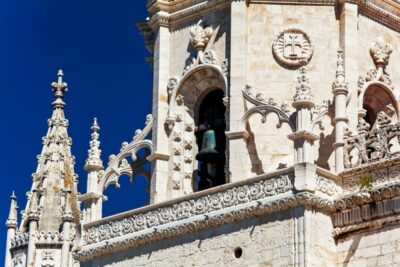 ★ 4.1Jerónimos Monastery Entrance TicketTickets from $2114,164 traveller reviews
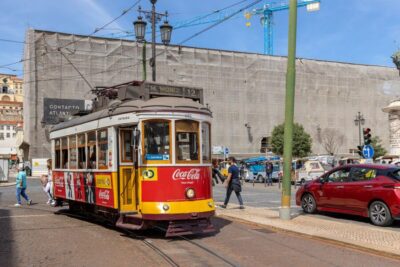 ★ 4.8History, Stories and Lifestyle Walking TourTickets from $2910,902 traveller reviews
 ★ 4.5Sunset Boat Party Cruise with DJ and Open BarTickets from $2710,378 traveller reviews
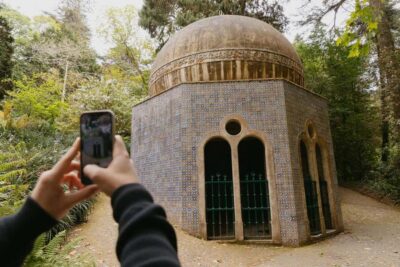 ★ 4.7Pena Palace, Sintra, Cabo da Roca, & Cascais DaytripTickets from $919,981 traveller reviews
 ★ 4.6Oceanário de Lisboa Entrance TicketTickets from $299,943 traveller reviews
 ★ 5.0True 4Hour Private Tuk Tuk Tour: Discover Lisbon with a Local!Tickets from $1088,008 traveller reviews
More useful lists for this tour