
Review · LISBON CITY TOURS
3-Hour Guided Street Art Walking Tour of Lisbon
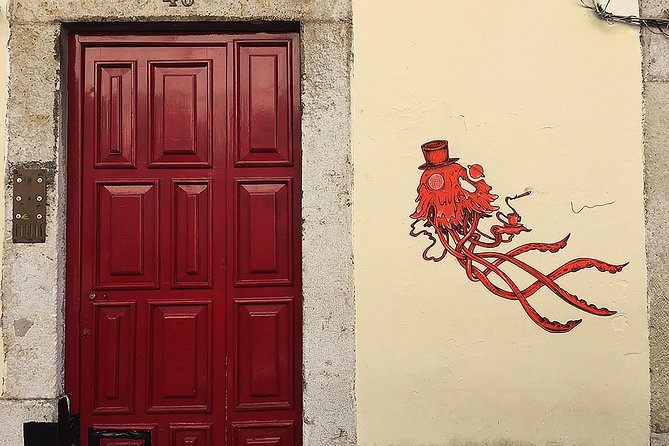
Street art in Lisbon is not random paint. It is a city conversation, and this 3-hour guided walk helps you read it fast. I love the small-group pace, and I love that your guide adds social and historical context instead of just pointing at walls. The only real catch is simple: it is a hilly, uneven walking tour, so comfortable shoes and steady feet matter.
You will hit classic art neighborhoods and also places most first-timers walk past. Stops include Bairro Alto nightlife walls, the Calçada da Gloria urban art stretch near the Elevador, and Lisbon’s tile-and-stone streets in Baixa. And yes, the guides can be a big part of why this works so well. People mention guides like Erica, Maria, and Laith for clear English, strong city storytelling, and an easygoing style that keeps the group together.
One more thing to know up front: this is a real walking tour, not a bus loop. You will cover a lot of ground in about three hours, and you end at Miradouro da Graça, so plan for an extra hop back to your hotel afterward.
Key things to notice before you go
- Small-group format (max 12) means more attention, more questions, and better photo chances at tight spots.
- Guides connect art to Lisbon life including politics, workers rights, and neighborhood character.
- Your route is designed for visuals from viewpoints to tile streets and multi-floor art walls.
- Free access at each stop keeps the value focused on the guide and your time.
- A mid-tour rest break helps you keep your energy for the second half.
- It is hilly and uneven so bring grippy shoes and expect to climb.
What this Lisbon street art tour does better than a typical walk
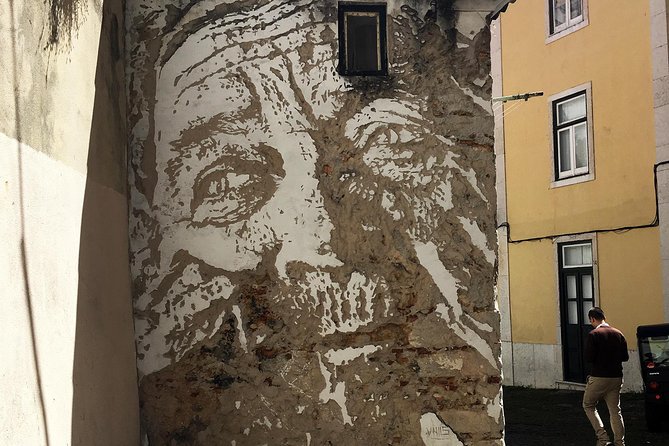
Lisbon has murals, graffiti, and tiled details everywhere, but the city is also good at hiding the why behind the art. This tour is built for people who want more than a photo. You walk from neighborhood to neighborhood with a local guide who explains symbols, materials, and the social logic of why certain messages appear on certain walls.
The value here is not the ticket price alone. It is what you get for it: a local guide, a rest break halfway through, and a small group. At $42.27 per person, you are paying for time, context, and access to the spots your phone map might not connect into a story.
And the reviews are consistent on one big point: the guide is the difference-maker. Names that pop up again and again include Erica, Maria, and Laith, with comments about strong English, patient explanations, and a pace that still leaves room for questions. I like that the tour does not treat street art like a playground or a scavenger hunt. It treats it like a cultural language.
You can also read our reviews of more walking tours in Lisbon



Price, time, and the practical reality of walking Lisbon
This is a 3-hour guided street art walking tour. You start at R. Luz Soriano 67, 1200-246 Lisboa and you end at Miradouro da Graça, Calçada da Graça, 1100-265 Lisboa. There is no hotel pickup or drop-off, so you will want to get yourself to the start point using public transportation or a short taxi or ride-share hop.
Most people book it in advance (it is booked about 26 days ahead on average). That tells me two things: it is popular, and the small-group size is part of the appeal.
Comfort matters. You will be walking on uneven terrain and possibly on unfaved sections. Lisbon hills are the theme song here. The tour also is not recommended for travelers with mobility issues, and it is generally best for anyone who can handle cobblestones and inclines without turning it into a mission.
The best part: a guide who puts street art in context
If you only care about street art as decoration, you can still enjoy this. But the tour is especially good if you want to understand the messages and the craft behind them.
Here is what I think makes the guide-led approach worthwhile:
- You learn how street art in Lisbon relates to neighborhood life, not just pop culture trends.
- You start noticing patterns in what artists use: location choice, scale, and symbolism.
- You get a framework for talking about graffiti and murals without sounding like you are guessing.
In the reviews, multiple guides get praised for explaining street art as part of social and political stories. One guide is even described as a street artist who brought a spray can so participants could try it. That is not something you should expect every day, but it shows the spirit of the experience: hands-on curiosity paired with local storytelling.
Stop 1: Bairro Alto and nightlife walls that feel local
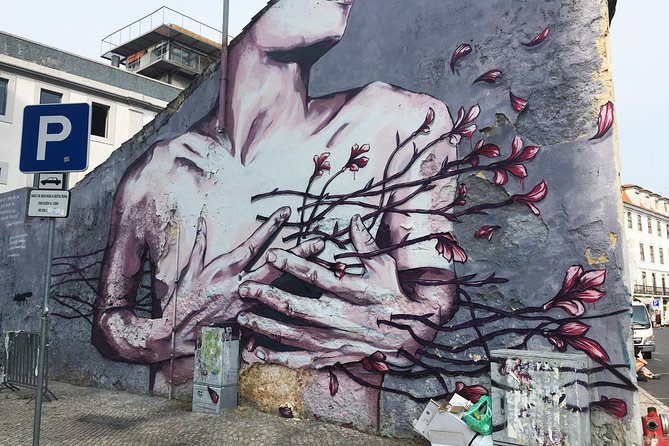
Your first stop is Bairro Alto, with about 30 minutes there and free admission. Bairro Alto is known for nightlife traditions, and that comes through in the art. Think of the walls here as part poster, part mood board, and part neighborhood memory.
Why this stop works early: it gives you a baseline. You see how street art can reflect a district’s rhythm. You will likely notice how artists speak to the street, not to an empty gallery.
Practical tip: Bairro Alto can be busy depending on the time of day. The guided structure keeps you from drifting and helps you find the corners where the art actually connects to the story.
What to watch for: look at how the art sits in the street space. Does it face foot traffic? Does it feel like it is talking to people passing by at night? Those are the kinds of details a good guide points out.
Stop 2: Elevador da Gloria and the urban art gallery feeling
Next you go to Elevador da Gloria, specifically the area around Calçada da Gloria. This is also about 30 minutes and free. The tour frames this stretch as one of Lisbon’s urban art gallery zones, where street artists from all over create major projects.
This stop is where you start appreciating how Lisbon blends street-level art with the city’s built surfaces. The slope and the stair-and-slope feel can make murals look different from different angles. It is also a natural photo zone because you get sightlines you would not plan yourself.
A small heads-up: if you love crisp, straight-on photos, you may need to adjust your stance or position a few times. The guide helps you not only find the best angles, but also understand what you are seeing.
You can also read our reviews of more guided tours in Lisbon





Stop 3: Baixa de Lisboa, azulejos, and the design language of tiles

Then it is Baixa de Lisboa, again around 30 minutes and free admission at the stop. This part shifts from large street art to the symbolic world of azulejos (Lisbon’s famous tiles) and the cobblestone streets underfoot.
This stop matters because it widens your definition of street art. In Lisbon, tilework can be a form of public storytelling. Symbols on buildings can act like messages, and streets can become part of the visual narrative.
What you get out of this: you stop thinking of street art as only graffiti and murals. You start noticing the city’s older public art language, the kind that predates modern spray paint but still serves the same purpose, communicating identity in public.
Practical tip: keep your camera ready but also slow down. The best tile details are often at eye level when you stop and look, not when you power-walk for the next corner.
Stop 4: Miradouro da Graça and workers-rights street art memory
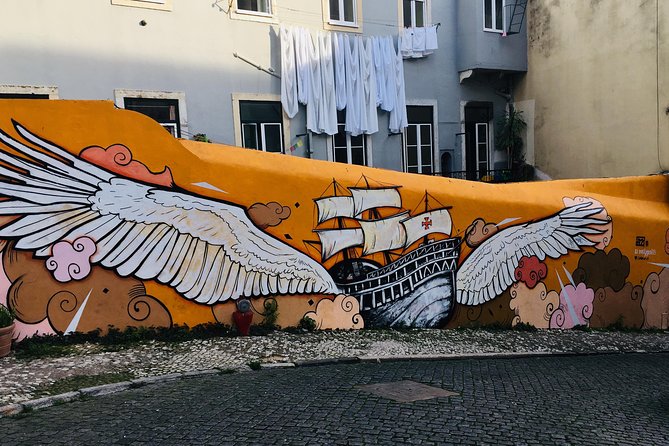
Your fourth stop is Miradouro da Graça (Sophia de Mello Breyner Andresen), with about 30 minutes. This is in the Bairro da Graça area, described as a residential district with a history linked to Portugal’s workers unions and workers rights. The street art here reflects that legacy.
This is one of the more meaningful stops on the route because it explains why some street art feels serious. It also shows you that Lisbon’s street art scene is not only about aesthetics. It can be about solidarity, protest, and collective memory.
Photo-wise, a miradouro stop gives you breathing room. Viewpoints are a natural reset button, and this tour includes a rest break halfway through, so you should feel ready for the final neighborhood after this segment.
One practical consideration: viewpoints mean stairs, and Miradouros tend to be near uneven paving. Take your time. You do not want to rush this part, because the story tends to be the point.
Stop 5: Alfama and Chão do Loureiro, a car-park turned gallery
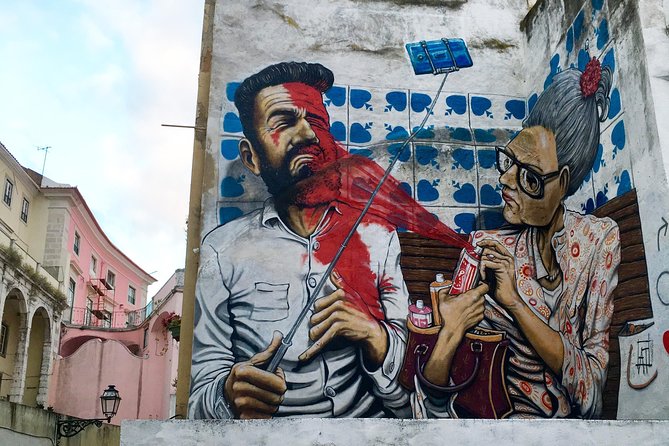
Final stop is Alfama, specifically Chão do Loureiro, about 30 minutes. The tour describes it as a car-park transformed into a street-art gallery, and it is a five-floor building showcasing prominent artists from Lisbon’s south margin.
This is the kind of place where you can actually go vertical with your photos. Multi-floor art gives you layered compositions. It also makes it easier to see technique differences across pieces.
Why I like ending here: it feels like a payoff. After learning how street art connects to neighborhoods and history, you land in a dense, concentrated gallery-like space where you can compare styles quickly.
What to watch for: do not just scan. Take 20 to 30 seconds per level. You will usually start noticing repeat themes and how artists respond to the building itself.
What included in the ticket actually means for your day
The tour includes:
- A local guide
- A rest break halfway
- A small group tour
- Mobile ticket
- English language offering
It does not include:
- Hotel pickup or drop-off
- Food and drinks
So I treat this like a well-guided walk that saves you from two problems: getting lost and missing context. The rest break matters because Lisbon walking can get harder than you expect, even when the distance does not look huge on a map. Food and drinks are on you, so bring water or plan to buy it during breaks.
This is also one of those tours where a camera is not optional. Street art changes by angle, by light, and by how close you stand. You will see a lot of pieces, from small tags to larger murals, and you will get better photos if you slow down when the guide asks you to look closely.
Who this tour is best for (and who should skip it)
This is a great fit for:
- Art fans and photographers who want more than quick snapshots
- People who like history, politics, and social context behind what they see
- Visitors who want a structured route across hills without constant navigation headaches
- Anyone who enjoys hearing how street art works across cultures
It is less ideal if:
- You have mobility limitations or you struggle on uneven terrain
- You want minimal walking
- You need a tour that includes food, because the ticket does not cover it
If you are traveling solo, this style can also feel reassuring. Several reviews mention guides helping people feel confident moving through the city and staying connected to the group.
Timing and booking tips that make the day smoother
Since the tour is popular and averages a booking window of around 26 days, I suggest booking early. You want a spot while there are enough groups running.
Also, check the weather. This experience requires good weather. If it is canceled due to poor weather, you should be offered a different date or a full refund.
Finally, wear practical clothes. You are walking on hills and uneven ground. Comfortable shoes are not a suggestion here. They are the difference between enjoying the route and thinking about your feet the whole time.
Should you book this Lisbon 3-hour street art walk?
Yes, if you want your Lisbon experience to feel lived-in and readable. This tour earns its money through guide-led context, a small group pace, and stops that span the city from Bairro Alto nightlife energy to Alfama’s vertical, gallery-like street art at Chão do Loureiro.
Book it especially if you like street art as a form of communication. The best versions of this tour seem to treat graffiti, murals, and even tiled symbolism as part of a larger cultural story. If that interests you, you will get far more out of the walk than by wandering alone with a map.
Skip it if hills and cobblestones will frustrate you, or if you need a less physical activity. This is a walking tour built for people who can handle uneven pavement and who do not mind climbing a bit for the payoff.
FAQ
How long is the Lisbon street art walking tour?
The tour lasts about 3 hours.
What is the price per person?
The price is $42.27 per person.
Is the tour offered in English?
Yes, the tour is offered in English.
What is the group size limit?
The maximum group size is 12 people, and the tour can have up to 15 travelers.
Where does the tour start and end?
It starts at R. Luz Soriano 67, 1200-246 Lisboa, Portugal, and ends at Miradouro da Graça, Calçada da Graça, 1100-265 Lisboa, Portugal.
What is included in the ticket price?
The ticket includes a local guide, a rest break halfway through, and a small group tour, plus a mobile ticket.
Are food and drinks included?
No. Food and drinks are not included.
Is there admission charged at the stops?
The stops listed are free to access, with each stop showing free admission.
What should I wear or bring for the tour?
Wear comfortable clothes and shoes. You must be able to walk on unpaved or uneven terrain.
What is the cancellation and weather policy?
You can cancel for a full refund if you cancel at least 24 hours before the experience starts. The tour requires good weather, and if it is canceled due to poor weather you will be offered a different date or a full refund.
More Walking Tours in Lisbon



More Tours in Lisbon





More Tour Reviews in Lisbon



Not for you? Here's more nearby things to do in Lisbon we have reviewed











Lisbon City Tours, side by side.
 ★ 5.0Lisbon City Center Tour – The Unmissable LisbonTickets from $322,234 traveller reviews
 ★ 4.7Sintra, Pena, Regaleira, Cabo da Roca & CascaisTickets from $2319,656 traveller reviews
 ★ 4.1Jerónimos Monastery Entrance TicketTickets from $2114,164 traveller reviews
 ★ 4.8History, Stories and Lifestyle Walking TourTickets from $2910,902 traveller reviews
 ★ 4.5Sunset Boat Party Cruise with DJ and Open BarTickets from $2710,378 traveller reviews
 ★ 4.7Pena Palace, Sintra, Cabo da Roca, & Cascais DaytripTickets from $919,981 traveller reviews
 ★ 4.6Oceanário de Lisboa Entrance TicketTickets from $299,943 traveller reviews
 ★ 5.0True 4Hour Private Tuk Tuk Tour: Discover Lisbon with a Local!Tickets from $1088,008 traveller reviews
More useful lists for this tour