
Review · LISBON CITY TOURS
2-hour city tour of Lisbon’s highlights
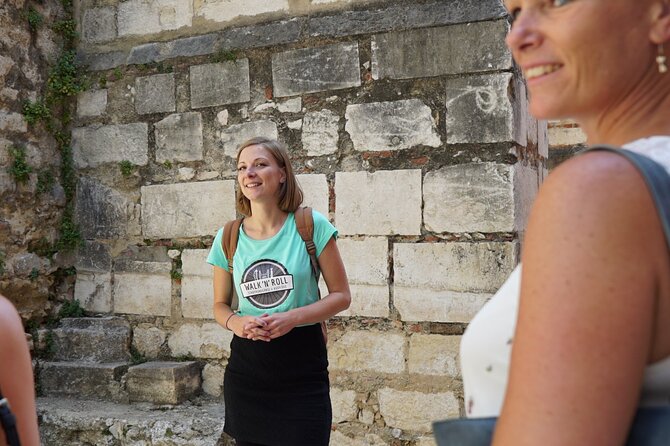
Lisbon rewards shortcuts, and this tour is one of them. You hit Baixa, Chiado, and Bica in just two hours, with a German-speaking guide who keeps the pace friendly and the stories clear.
I like two things the most: first, the tour is packed with high-value stops that actually help you understand where things are, from Elevador de Santa Justa to the viewpoint at Miradouro de Santa Catarina. Second, you end with restaurant-style recommendations in writing, so you can plan the rest of your days without guessing. One consideration: it is mostly on foot and includes hills and viewpoints, so you will want moderate fitness and good walking shoes.
Key things to notice before you book
Small group size (max 12), so questions and small detours for photos feel easier
Rossio to Santa Justa, with a classic Lisbon elevator stop plus the best city-over-Castle view
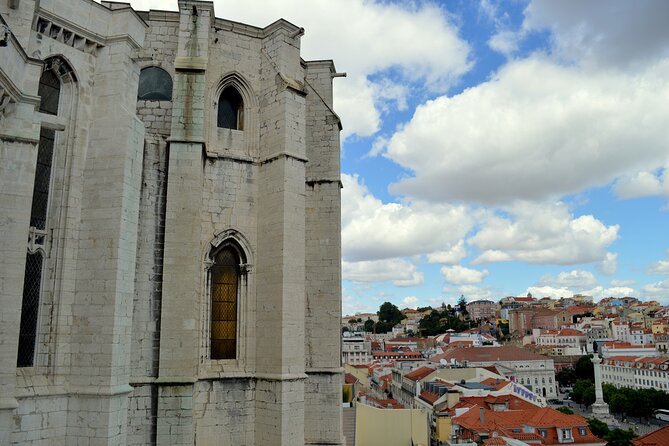
Carmo Monastery ruins, where the earthquake and later dark political history are tied to a real landmark
Chiado and Fernando Pessoa area, the poet-quarter vibe comes through without getting academic
Miradouro de Santa Catarina viewpoint, including views back toward the Tejo River, Christ the Redeemer, and the 25th of April Bridge
Time Out Market as a finish, where you can immediately eat and use the guide’s written suggestions
Why this 2-hour Lisbon highlights walk is a smart Day-One move
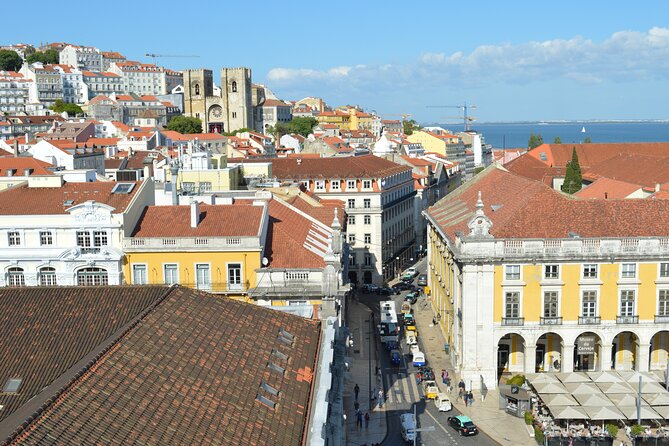
If Lisbon is your first stop in Portugal, you can spend too long just trying to orient yourself. This is built to fix that fast. In two hours you connect the dots between the lower town streets around Rossio, the hilly neighborhoods above, and the views people travel for.
What makes this style of tour work is the mix of “place” and “meaning.” You are shown recognizable landmarks, then the guide adds just enough context on Portuguese history and culture to make those landmarks click. You also get a sense of what Lisbon is working on right now, not just what it used to be. That matters, because Lisbon still has to balance tourism, neighborhood life, and everyday problems, and your understanding feels more realistic after the walk.
Another big plus: it is German-speaking, which is not the default for a lot of Lisbon tours. If you prefer to listen in your own language, you will likely feel more confident and ask more questions. And since the group is kept small (up to 12), the tour does not feel like you are trapped in a crowd.
You can also read our reviews of more city tours in Lisbon


Rossio (Praca Dom Pedro IV) to Santa Justa, the Lisbon orientation jump start
You begin at Rossio Square (Praca Dom Pedro IV) in the Baixa area, a central point that makes sense even if you are arriving by public transport. The “Baixa” part matters. Lisbon’s old core is walkable, but the hills and viewpoints can trick your sense of direction. Starting here helps you build a mental map quickly.
From there, the tour heads toward the Elevador de Santa Justa. You will get the elevator framed from below first, which is the best way to understand why Lisbon loves vertical solutions. Then you go up to the observation deck for views over the city, including a look toward Lisbon Castle.
Why this stop is valuable: it is a “height reference.” After you see the city from above, the rest of Lisbon becomes easier to read at street level. You stop thinking, Lisbon is confusing, and you start thinking, I know which direction the river and the castle are in.
Also, each stop is scheduled with short time blocks, so you are not stuck waiting around. You get time to look, take photos, and move on. That pacing is exactly what you want when you only have a couple of days.
Convento do Carmo ruins, Lisbon earthquake context without the history overload
Next comes Convento do Carmo, the monastery ruins that stand as a city landmark tied to the Lisbon earthquake and later periods of dictatorship in Portuguese history. Ruins can sometimes feel like, okay, we saw a pretty broken building. Here, the context makes the ruins feel like part of the city’s lived memory.
You should expect a calm stop with storytelling. The goal is not to hand you a textbook. The goal is to explain why this space still matters in Lisbon today, and how the city chose to leave the damage visible rather than erase it.
A practical note: this is one of those places where you get a quick emotional anchor for the whole city. After you learn what shaped Lisbon’s physical landscape, you notice details differently, from building styles to how neighborhoods evolved. It also helps you connect later viewpoints, because you understand the city has always been built around both risk and recovery.
Chiado and Praca Luis de Camoes: poets, tiles, and tram-life Lisbon
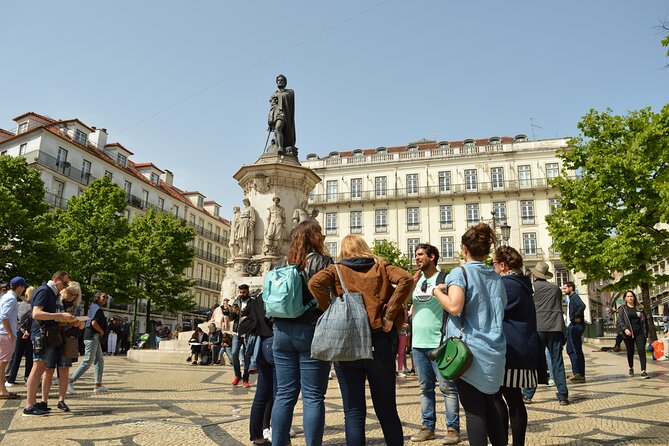
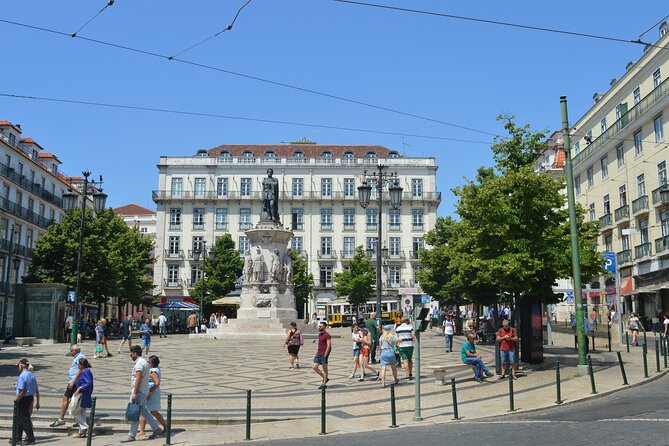
The tour moves into Chiado, often described as a poets’ quarter linked with Fernando Pessoa. You get a sense of the arts-and-streets personality here, and the walk helps you recognize why Chiado is not just a shopping district. It is a neighborhood with an identity.
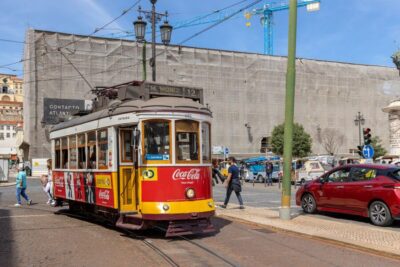
One of the strengths of this tour format is how it treats everyday Lisbon as part of the story. You go past beautiful tilework and see the tram scene around Praca Luis de Camoes, a square surrounded by the tram routes that visitors keep photographing.
You do not need to be a transit nerd to enjoy this stop, but it helps. Trams are not a gimmick here. They are part of the city’s movement system, and they connect neighborhoods that feel like they belong to different worlds. When you see how the squares and tram lines sit in the city, you get better at planning your own routes later.
You also get guide tips at this stage, which you will really appreciate. Chiado and the nearby squares can feel simple until you start walking and realize Lisbon’s geography is working against you. A short, well-timed set of recommendations can save you time the rest of the trip.
Bica Funicular and Miradouro de Santa Catarina, where the best photos meet real views
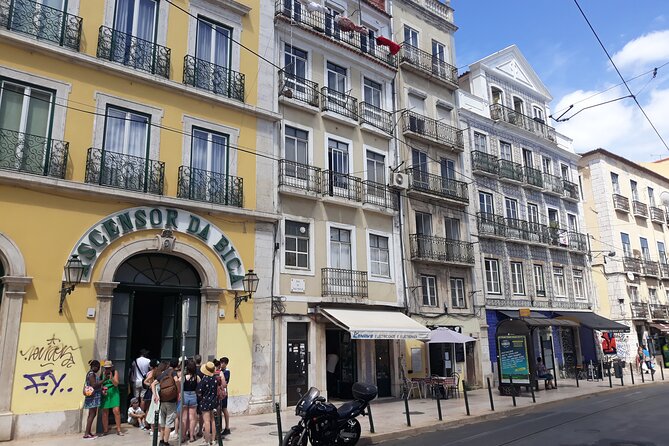
After Chiado, the tour heads to Bica Funicular, famous for being one of Lisbon’s most photographed funiculars. The funicular itself is worth a look, but the bigger value is the view angle you get from the area around it. It is one of those “you see why people bring cameras” moments.
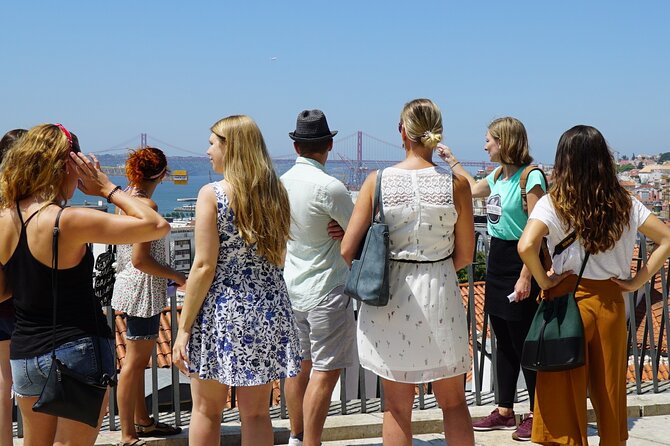
Then you reach Miradouro de Santa Catarina, one of the best viewpoints for getting your bearings. This is the stop where the tour expands beyond the city center into broad sightlines. You look over southern Lisbon and the Tejo River, and the viewpoint includes sightlines toward the Christ the Redeemer statue and the 25th of April Bridge.
Here is why I think this is a must-do on a short trip: viewpoints are not only for photos. They are orientation tools. Once you can see the river and bridge, you can plan the rest of your days without guessing which way you are supposed to go.
When guides talk about current Lisbon challenges at this stage, it also lands differently. From a high point, it becomes easier to imagine how construction, tourism pressure, and neighborhood changes affect views and daily life. You stop thinking of Lisbon as an open postcard and start thinking of it as a working city.
More Lisbon tours and experiences for the shortlist






Time Out Market Lisboa as your finish, plus written food and plan tips
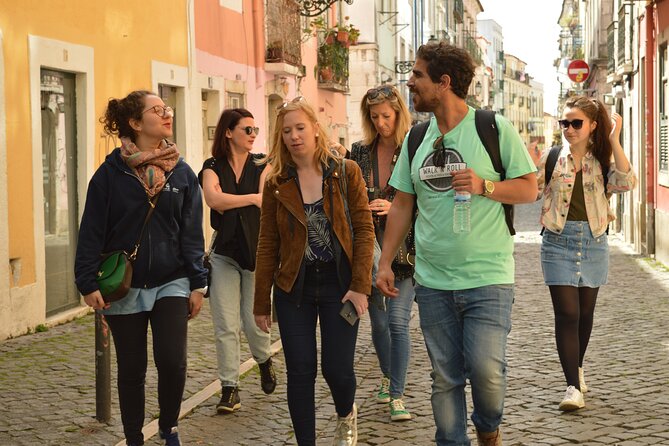
The tour ends at Time Out Market Lisboa in the Mercado da Ribeira area, close to the Tejo River. Finishing at a market hall makes sense. You do not have to hunt for a restaurant after walking for two hours. You can grab something quickly, then use the written recommendations from your guide to choose where to go next.
You also get a practical benefit here: the guide’s restaurant and more suggestions help you avoid the common trap of eating the first thing you see because you are tired. The end-of-tour tips are designed to extend your trip smoothly, so you can keep your momentum.
Even if you do not want to eat right away, this is a good place to regroup. You get to sit, review your plans, and decide whether you want to return to any viewpoint or explore a neighborhood you liked best.
Price and value: why $32.10 can be a bargain if you treat it as orientation
At $32.10 per person for about two hours, this tour is not trying to be a bargain bus ride. It is priced like a guided experience. So the key question is simple: what does it replace?
In my view, it replaces a lot of trial-and-error. The walk hits major landmarks (Santa Justa, Carmo ruins, Chiado, and two viewpoint areas) plus transit-flavored stops around squares and funiculars. Those are exactly the places that make Lisbon feel less confusing when you visit on your own.
It is also a strong value because the guide is German-speaking and the group is capped at 12 travelers. A smaller group usually means less waiting, more attention, and a better chance to get answers when something matters to you, like where to go for a specific view or what area is best for dinner.
One more detail that helps the value: the scheduled admissions at the stops are listed as free. So you are not paying extra along the route for each landmark you see.
That said, you should come prepared for the fact that snacks are not included. If you are visiting in peak heat or you like to snack while sightseeing, plan a water and small snack strategy before the tour or during your market stop afterward.
What to wear and how to pace yourself on Lisbon hills
This tour is designed for people with moderate physical fitness, but “moderate” in Lisbon can still feel like hills and stairs. You are moving through different levels between lower town streets and elevated neighborhoods.
My advice is practical:
- Wear comfortable, grippy shoes. Viewpoint areas can feel slippery if it has rained.
- Bring water, even if you do not expect a long day. Two hours can still add up quickly when you stop for views.
- If you get tired easily, take your time at each viewpoint. The tour has short scheduled time blocks, but you control how you use them.
Also, have your expectations set for walking pace. This is not a slow museum tour. It is a city highlights walk with enough time to look and ask questions, then keep moving.
Who this German city highlights tour is best for
This tour fits best if you want structure without feeling tied down. It is ideal for:
- First-timers who want to get your bearings fast
- German speakers who prefer to understand history and current topics clearly
- People who want major sights and viewpoints, but do not have a full day to wander
- Couples or small groups who like the idea of a guide who can respond to your priorities
If you are the type who loves to deeply research every church corner and spend hours in museums, you might find two hours a bit short. But if you want the framework to make the rest of Lisbon click, this is a strong fit.
Should you book this Lisbon highlights tour?
Book it if you want a high-impact introduction to Lisbon in a short time. The route hits the landmarks that matter for orientation: Rossio, Santa Justa, the Carmo ruins, the Chiado and tram square area, and two viewpoint moments centered on river and bridge views. You also leave with written food and activity ideas, which is exactly how you avoid wasting time on day two.
Skip it if you already know the city layout well and you prefer to explore completely on your own, with no guide structure. Also think twice if you expect a completely flat walk, because the viewpoints and funicular area mean you will feel the terrain.
One last planning note: this tour needs good weather. If conditions are poor, you can get a different date or a full refund, so it is worth booking with flexibility if your schedule allows.
FAQ
How long is the Lisbon highlights city tour?
It is about 2 hours.
What language is the tour in?
The city tour is conducted in German.
How much does it cost, and what is included?
The price is $32.10 per person and the German-speaking city tour is included. Snacks are not included.
Where do I meet, and where does the tour end?
You meet at Rossio1100-202 Lisbon, Portugal. The tour ends at Time Out Market (Mercado da Ribeira), Av. 24 de Julho, 1200-479 Lisboa, Portugal.
Is the tour good for people with moderate fitness?
Yes. The tour is described as suitable for travelers with a moderate physical fitness level.
Are tickets for the stops included?
The listed admissions for the stops are shown as Free.
How many people are in the group?
The tour has a maximum of 12 travelers.
Can I cancel for a full refund?
Yes. You can cancel for a full refund if you cancel up to 24 hours before the experience starts.
What happens if the weather is bad?
The experience requires good weather. If it is canceled due to poor weather, you will be offered a different date or a full refund.
More City Tours in Lisbon



More Tours in Lisbon





More Tour Reviews in Lisbon



Not for you? Here's more nearby things to do in Lisbon we have reviewed









Lisbon City Tours, side by side.
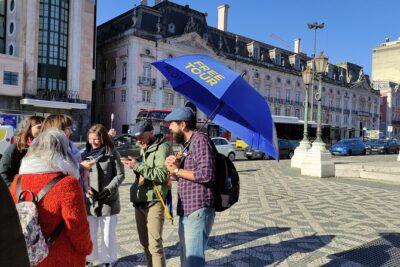 ★ 5.0Lisbon City Center Tour – The Unmissable LisbonTickets from $322,234 traveller reviews
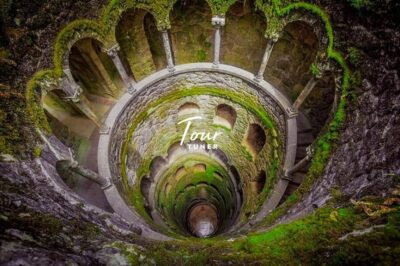 ★ 4.7Sintra, Pena, Regaleira, Cabo da Roca & CascaisTickets from $2319,656 traveller reviews
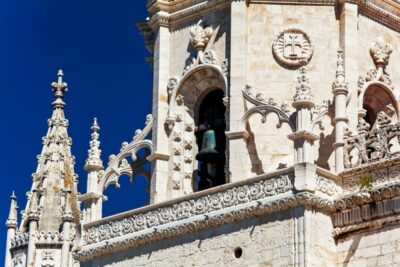 ★ 4.1Jerónimos Monastery Entrance TicketTickets from $2114,164 traveller reviews
 ★ 4.8History, Stories and Lifestyle Walking TourTickets from $2910,902 traveller reviews
 ★ 4.5Sunset Boat Party Cruise with DJ and Open BarTickets from $2710,378 traveller reviews
 ★ 4.7Pena Palace, Sintra, Cabo da Roca, & Cascais DaytripTickets from $919,981 traveller reviews
 ★ 4.6Oceanário de Lisboa Entrance TicketTickets from $299,943 traveller reviews
 ★ 5.0True 4Hour Private Tuk Tuk Tour: Discover Lisbon with a Local!Tickets from $1088,008 traveller reviews
More useful lists for this tour