
Review · ALFAMA TOURS
Full Day Lisbon Tour Baixa Chiado with Alfama and Belem
Lisbon in one packed day, on foot, makes sense. I like how the morning centers on the Portuguese Discoveries era in Belém, then you shift into the city’s classic viewpoints and historic streets. I also love the built-in food stop, including the original Pastéis de Belém. One thing to consider is simple, this is a long walk-heavy day, so you will want comfortable shoes and a steady pace.
What makes this tour feel worth it is the way the guide connects landmarks to the big story of Lisbon, from seafaring power to the rebuilding after 1755. Guides are consistently praised for making the history click, and names like João, Fernanda, and Teresa come up often for clear explanations and lively energy. The tradeoff is that some monument interiors have limits on what the guide can explain inside, so you may do a bit of quiet “look and read” on your own.
You start at 9:00 am and end near the São Pedro de Alcântara viewpoint. Expect a focused route from Belém to Baixa Chiado and then down through Alfama, with a lunch break built in, but lunch itself is not included.
Key highlights if you want the best version of Lisbon
- Discovery Age landmarks in Belém first, including Torre de Belém and a guided visit to Jerónimos Monastery cloisters
- Original Pastéis de Belém included, so you skip the guessing game and timing stress
- Baixa Chiado icons with smart viewpoint stops, like Miradouro de Santa Luzia and Miradouro São Pedro de Alcântara
- Small group size (max 20 adults), which keeps the walk manageable and the questions useful
- Entrance tickets stacked where it matters, including Jerónimos Monastery, Torre de Belém, and Arco do Triunfo
- A clear lunch window at Time Out Market Lisboa (90 minutes), with easy options nearby
Belém for the Discoveries: Tower views, winds, gardens, and Jerónimos
You begin in Belém, and the order is the point. Starting with the waterfront helps you understand why Lisbon’s power grew from ships, not just kings.
At Torre de Belém, you get a short visit with admission included. Even if you’ve seen photos before, being there in real light makes the structure feel sturdier and more purposeful. From there, you continue along the Tagus area with time to stroll and learn the Discovery Age context, which is the background that makes the monuments snap into focus.
Next comes the Padrão dos Descobrimentos, the big caravel monument with Henry the Navigator at the front. You do not enter it, but this stop still works as a quick landmark “reset” for the morning theme. It’s the kind of place where the guide’s explanation helps you read the symbolism before you move on.
You then hit the Rosa dos Ventos area, the wind rose design. It’s a small detour, but it’s one of those details that makes the whole Lisbon story feel practical, navigation was literally part of the art. A short walk through the space also helps you break up the longer stretches.
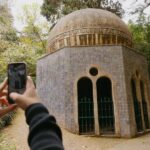
From there, you move into Jardim da Praca do Imperio, a garden tied to the 1940 Portuguese World Exhibition. The setting has a lot going on, from the luminous fountain to mosaic elements like the sundial, and the two lake area near the top. You are given time to look, not rush, which is nice because gardens reward slow attention.
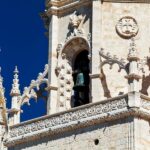
Then you arrive at Mosteiro dos Jerónimos, with admission included. The key moment is the cloisters, and this is where you see Manueline style at its most dramatic. The guide’s job here is to explain how the monastery fits into Vasco da Gama’s return and the wealth generated through trade with Africa and the Orient. Even if you only have an hour, that time feels concentrated.
There’s also a real “Lisbon rhythm” between monuments and food. The tour doesn’t treat pastries like a souvenir, it places them after the big historical stop, so the day feels earned.
More Lisbon tours and experiences for the shortlist


Pastéis de Belém: the included sugar pause you should actually savor
The tour includes the Original Pastel de Belém, which matters for two reasons. First, you avoid paying twice in different places just to find the classic version. Second, having it at the right moment in the itinerary means you aren’t hunting for lunch at the worst possible time.
The story behind them is part of the experience, tied to the area’s sugar refinery background and the recipe being passed along through the confectioners. That context is useful because it turns a pastry into a clue about Lisbon’s changes over time. You get a short stop, about 15 minutes, so plan to eat slowly but not leisurely.
If you’re thinking about what to do with the rest of Belém time, this included pastry stop gives you a reliable anchor before the lunch break.
Time Out Market Lisboa lunch break: freedom with a time limit
Lunch is set up at Time Out Market Lisboa, and this is one of the smartest parts of the tour. You get 90 minutes, and the value of your meal is not included, so you can choose your budget and what you actually want.
The market is a former food market with lots of stalls and options, including fish-focused choices. You can eat inside or elsewhere, which is handy if you want a quieter corner or a view route after lunch. The tour does not tell you what to order, so treat this as a meal freedom window.
Practical note: 90 minutes can feel short if you wander. Use the first 10 minutes to pick a stall, then spend the rest eating and regrouping for the afternoon walk.
Baixa Chiado icons: Praça do Comércio to Rua Augusta with history in your stride
After lunch, you shift into Lisbon’s classic center. This is where the day starts feeling like a string of “oh right, that’s Lisbon” moments.
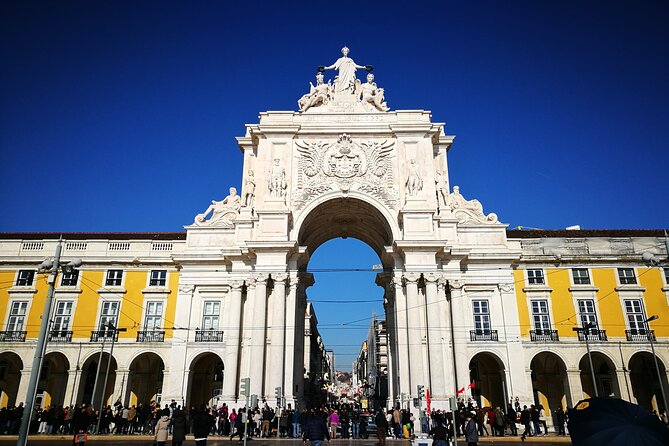
At Praça do Comércio (Terreiro do Paço) you see a huge square with arches, and you learn why it changed after the 1755 earthquake. Before the earthquake, it was tied to the royal palace and residence, and later it became the stage for the rebuilt city plan. Even without going inside anything, the scale helps you understand why Lisbon’s redesign was so ambitious.
Then you head toward Miradouro de Santa Luzia, one of the most romantic viewpoints in the city. The tile panels and the window-like framing make this a spot for photos, but also for breathing. You get about 20 minutes, which is enough to look at the roofs and the Tagus boats moving across daily.
Next comes the Lisbon Cathedral (Santa Maria Maior). It’s a major stop, but the admission is not included, so you will likely spend your time outside the paid areas depending on how the tour handles entry that day. If you love medieval architecture, this is a good one to consider buying separately, since the tour places it right in your route.
Across the neighborhood loop, you also stop at Church of Saint Anthony of Lisbon, where the current church was rebuilt after the 1755 earthquake. You get a short look at features tied to St. Anthony’s story, and admission is free.
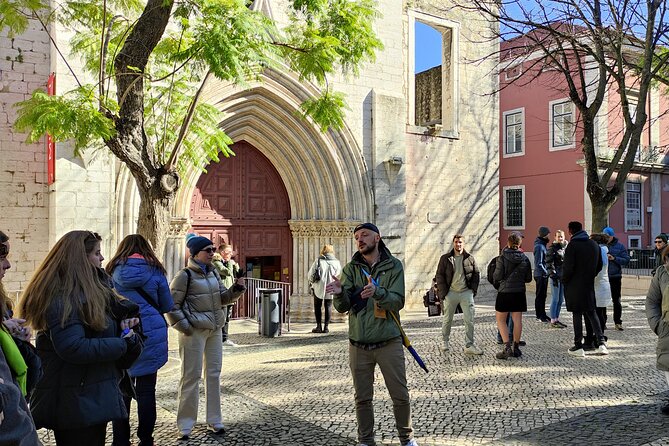
The tour also includes a quick stop at Igreja de Nossa Senhora da Conceição Velha, known for surviving Manueline elements. This is one of those “facade-first” moments, because the exterior detail is the payoff. You get about 10 minutes, which is short, but it’s usually enough to see the design language clearly.
Alfama: steep lanes, old walls, and the atmosphere that stays
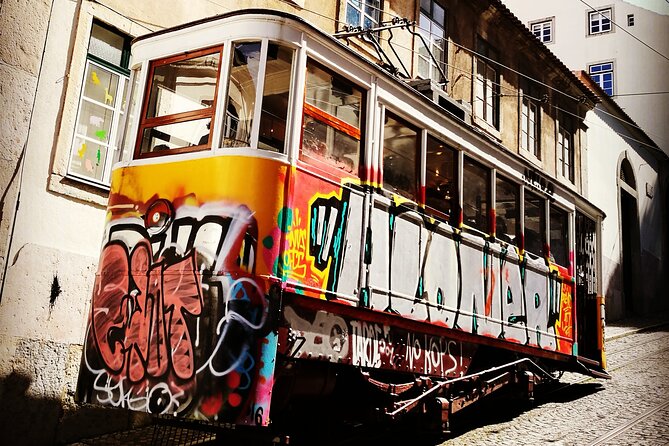
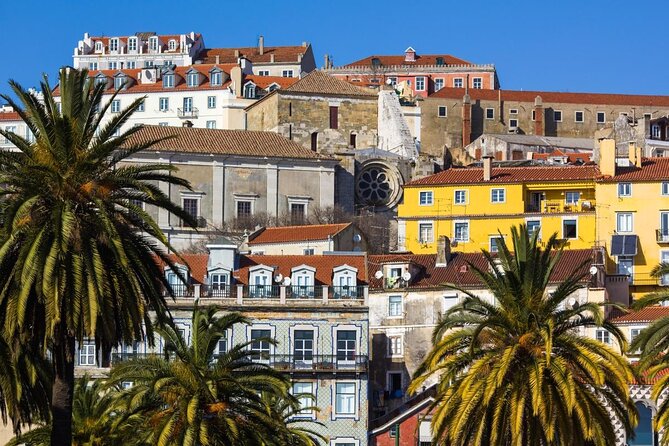
Alfama is the neighborhood that gives Lisbon its mood. The tour gives you about 40 minutes here, which is the right amount if you want to feel the street pattern without burning all your energy.
You walk through typical streets and alleys between the castle and the river, and the tour emphasizes that many facades withstood the 1755 earthquake. That fact changes how you look at the buildings, because you are not just seeing old stone, you’re seeing what survived.
If your feet get tired, this part is still worth it. Alfama rewards slow walking, small shops, and tavern stops, but your time is limited, so keep your eyes up and your steps steady.
You also get a stop near Casa dos Bicos, a building with diamond-shaped stone cladding linked to D. Brás de Albuquerque, and it’s tied to the José Saramago Foundation. Admission is not included here, but even a quick look at the “bicos” pattern helps you spot Manueline-era decorative thinking in real architecture.



Arco do Triunfo, Rua Augusta, and Rossio: the rebuilt city meets street life
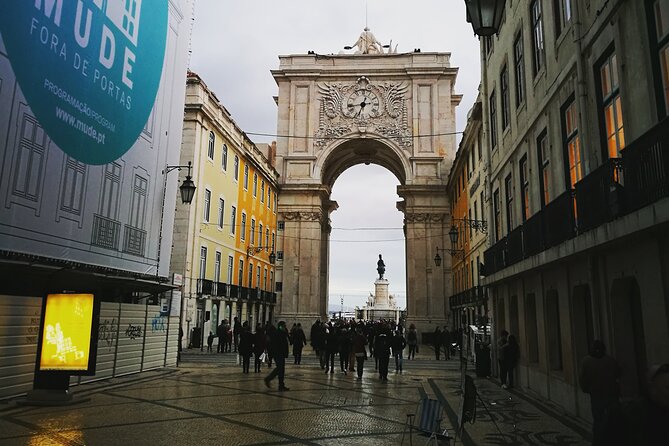
Then you pop into the grander Baixa layout, starting with Arco do Triunfo, and this is a stop where admission is included. It was built as an entrance portal to the Baixa Pombalina area after the earthquake, completed in 1873. The statues and river symbolism give you a feel for how Lisbon rebranded itself around global voyages and civic pride.
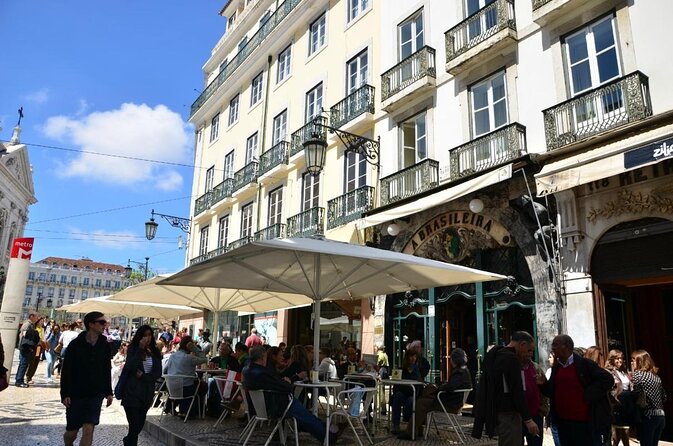
After that, the tour moves to Rua Augusta, one of the liveliest central streets. It connects Praça do Comércio to Praça do Rossio, and it’s been closed to traffic since the late 1980s, which makes it more walkable and more pedestrian-friendly. This is also a street where street artists and craftsmen show up, so bring your camera but also keep your focus on the buildings and street surfaces.
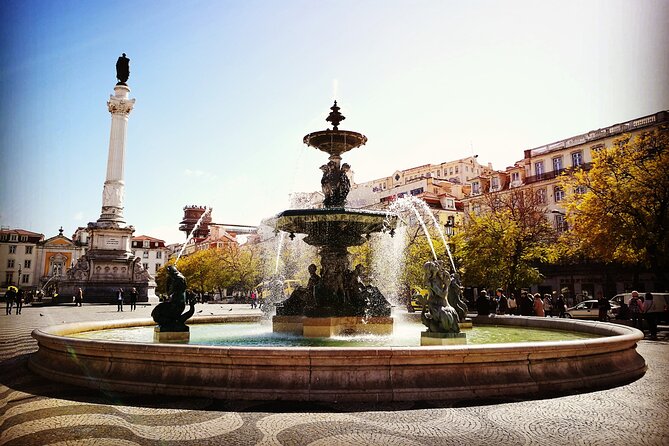
Next is Praca Dom Pedro IV (Rossio), the heart of Lisbon during the Middle Ages. You learn it was a site for fairs and festivals, then later it took on a different edge during World War II related to espionage and refugees waiting for visas nearby. It’s a square you can stand in and feel layers of time.
Churches and tiles: Carmo, São Roque, and the last viewpoint finish
The afternoon keeps the stops layered but efficient.
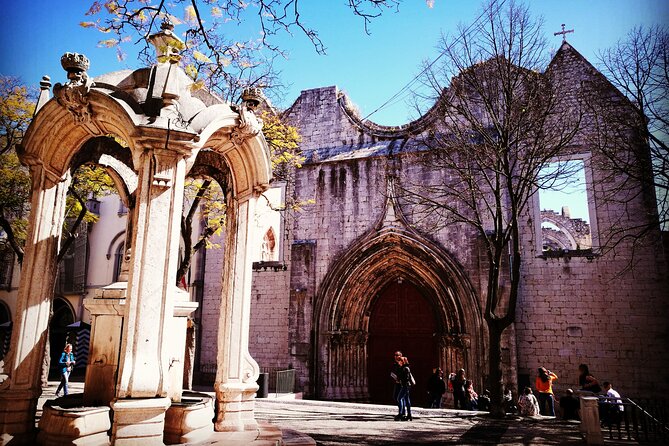
You visit Convento do Carmo, the Church of Carmo area tied to Gothic construction and the earthquake impact. Admission is not included, and it’s also one of those moments where the guide may be limited inside, so plan to focus on the exterior or any areas you can access with the group.
Then you reach Igreja de Sao Roque, which is one of the more interesting church stops because the outside stays simple while the inside is where the art is. Admission is not the issue here, admission is free on the tour side, and the tour highlights the mannerist facade and the fact that the church was completed by Italian architect Filipo Terzi. The payoff is that you understand why this church became important without needing to rush a paid ticket in your schedule.
You end with Miradouro São Pedro de Alcântara, and this is where the day lands perfectly. Lisbon’s viewpoints can feel like photo stops, but this one connects landmarks like Graça Church, São Jorge Castle, and the Cathedral through tile artwork. You get about 20 minutes, and you finish near the viewpoint, which is a relief when your legs are ready to quit.
Value and tickets: what’s included, what’s free, what you may need to pay
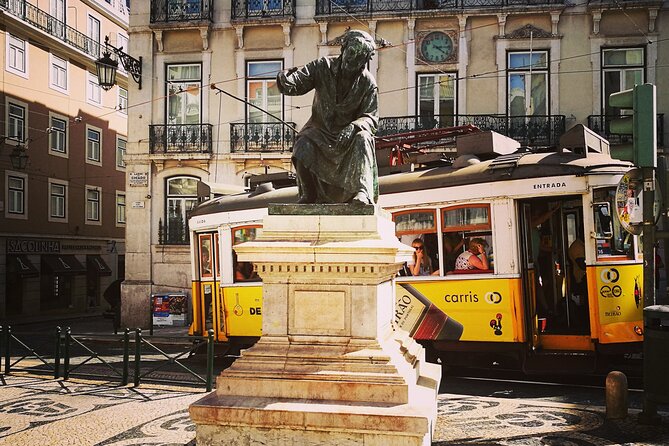
The price is $110.06 per person for about 9 hours, and the value comes from the combination. You get a professional guide, a group capped at 20 adults, one included Original Pastel de Belém, and admission for major stops.
Here’s how the money usually breaks down based on the tour design:
- Admission included at Torre de Belém, Mosteiro dos Jerónimos (cloisters), and Arco do Triunfo
- Admission free at several viewpoints and street-level stops, like Rosa dos Ventos, Santa Luzia, Alfama, and Igreja de Santo Roque on the tour schedule
- Not included for some major monuments you might want longer access to, such as Padrão dos Descobrimentos, Lisbon Cathedral, Convento do Carmo, and Casa dos Bicos
If you love architecture and want to go inside everything, this matters. The tour still gives strong external time and context, but you should be ready for the fact that a few “big name” interiors are outside the included ticket set.
Also, remember the tour notes that in some monuments the guide is not allowed to provide info inside. That usually means you get a guided explanation outside, then you go in and explore at your own pace.
Pacing, comfort, and the weather reality check
This is a walking tour with a lot of famous stops, so moderate physical fitness is the baseline. The day is built from many short visits, but short visits still mean steady walking, stairs, and turning corners constantly.
Start at 9:00 am, so arrive early enough to settle your group without stress. Wear shoes you trust, and bring water. Lisbon can surprise you with heat even when the morning feels pleasant.
The experience also requires good weather. If conditions are poor, the tour may be canceled and you’ll be offered a different date or a full refund.
Who should book this and who should skip it
This tour is a great fit if you want a guided day that covers the biggest “Lisbon geography” pieces in one go. I’d especially recommend it to first-time visitors who want Belém and central Lisbon without planning five separate half-days.
It’s also strong if you enjoy history explained with stories, not just facts. The guide style seems to be a standout across many different named guides, with people praising the ability to make Portuguese history understandable, including the Discovery Age.
Skip it if you want a slow, unstructured day with lots of free wandering and no fixed rhythm. Also, if church and cathedral interiors are your main focus, you may want to pair this with separate ticket planning since a few key entrances are not included.
Should you book this full day Lisbon tour?
Book it if you want the best value version of Lisbon in one shot, with major Belém sights, a real central-city walk, and viewpoints that finish strong. The included admissions and the Original Pastel de Belém turn this into more than a sightseeing stroll.
Don’t book it if you’re hoping for an easy, low-effort day. You’ll cover a lot, and while the stops are well timed, the overall pace is still that of a full day on your feet.
If you can handle walking and you like guided context, this tour is a smart way to get your bearings fast and still leave room for evening discoveries of your own.
FAQ
How long is the tour?
It runs for approximately 9 hours.
What time does it start, and where is the meeting point?
It starts at 9:00 am. The meeting point is Avenida Brasília (Av. Brasília, 1400-038 Lisboa, Portugal).
Where does the tour end?
The tour ends near Rua de São Pedro de Alcântara 85 (1200-089 Lisboa, Portugal), close to the São Pedro de Alcântara viewpoint.
Is lunch included in the price?
Lunch is not included. You have a 90-minute lunch break at Time Out Market Lisboa, and the value of your meal is not included in the ticket.
Which attractions include admission tickets?
Admission tickets are included for Torre de Belém, Mosteiro dos Jerónimos (cloisters), and Arco do Triunfo. The tour also includes the Original Pastel de Belém.
Is the lunch break at Time Out Market Lisboa?
Yes. You get 90 minutes at Time Out Market Lisboa for lunch, with options to eat at the market or elsewhere.
How big is the group?
The group is limited to a maximum of 20 travelers.
Do I need good weather for this experience?
Yes. This experience requires good weather, and if it is canceled due to poor weather, you will be offered a different date or a full refund.
What is the cancellation policy?
Free cancellation is available up to 24 hours before the experience’s start time for a full refund. If you cancel less than 24 hours before, the amount paid is not refunded.
More Full-Day in Lisbon



More Tours in Lisbon



More Tour Reviews in Lisbon
Not for you? Here's more nearby things to do in Lisbon we have reviewed








Alfama Tours, side by side.
 ★ 5.0Alfama Tour in Lisbon Old TownTickets from $34,936 traveller reviews
 ★ 5.0Private Lisbon Sightseeing Tuk-Tuk Tour: Alfama, Belém & MoreTickets from $524,277 traveller reviews
 ★ 4.8Hills, Alfama, and Mouraria Tour by Electric BikeTickets from $253,438 traveller reviews
 ★ 4.9Best of Lisbon Walking Tour: Rossio, Chiado & AlfamaTickets from $232,700 traveller reviews
 ★ 5.0Lisbon Small-Group Food Tour with 18 Tastings in Alfama DistrictTickets from $1261,967 traveller reviews
 ★ 4.5Lisbon E-Bike Tour Commerce Square, Mouraria and AlfamaTickets from $301,688 traveller reviews
 ★ 5.0Old Town TukTuk Tour and Scenic Viewpoints in AlfamaTickets from $35974 traveller reviews
 ★ 4.4Alfama Tour and Live Fado with Traditional DinnerTickets from $58970 traveller reviews
More useful lists for this tour