
Review · LISBON CITY TOURS
Private City Tour Lisbon Fundamental
Lisbon has more levels than you expect. This private tour strings together sweeping viewpoints, standout churches, and a quick look at the city’s key neighborhoods, all at a walkable pace.
I like that the route mixes major sights with human stories, not just photos. You also get a German native guide and a free, easy-to-plan set of stops, with a taste of Pastel de Nata. One thing to consider is the walking and hills, so you will want moderate physical fitness.
Key highlights
- Private and small-group pace: just your group, with room to adjust to your rhythm
- Miradouro time, without a theme park feel: viewpoints over Alfama, the Tagus, and the April 25 Bridge
- Major Lisbon eras covered fast: Jesuit Bairro Alto, revolutionary Largo do Carmo, 19th-century Baixa
- Church stops are free on the route: Igreja de São Roque and Sé are part of the plan
- A Pastry moment built in: you taste Pastel de Nata in Baixa
- Finish at the riverfront classic: Praça do Comércio gives you a clean ending point
Getting Your Bearings in Lisbon, the Easy Way
The best way to enjoy Lisbon is to stop trying to see it all at once. This tour is built for the opposite. In just over three hours, you get placed in the city, so your next days feel less like wandering and more like choosing.
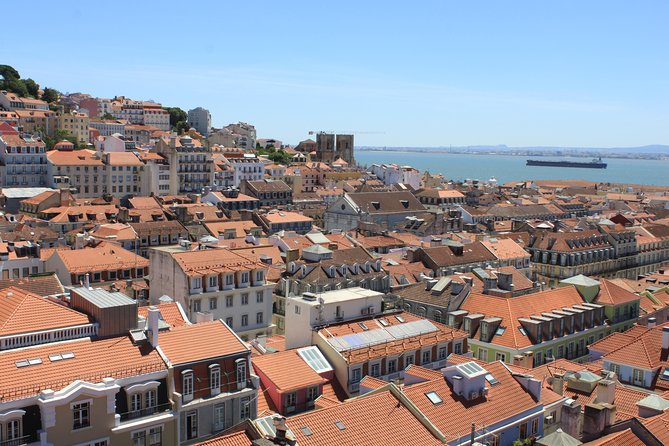
You start on the higher side of Lisbon, at Miradouro de São Pedro de Alcântara, and then the route drops and climbs in a natural way. That matters, because Lisbon is a city of viewpoints and neighborhoods stacked on hills. By the time you hit the riverfront, you’ll understand why locals talk about areas like they are separate worlds.
I also like the way the guide ties places to context. You’ll hear about Portugal’s political turning point at Largo do Carmo, and you’ll connect it to what you see in the streets around you. It turns landmarks into something you can place in your head.
The only real drawback is physical comfort. The walk is short in stretches, but the terrain can be steep. If you know stairs and hill climbs are not your thing, plan on slowing down. The tour is private, so you can set a pace that works.
You can also read our reviews of more city tours in Lisbon


Starting at Miradouro de São Pedro de Alcântara: Where Lisbon Makes Sense
Your tour begins at a viewpoint, not in a parking lot. Miradouro de São Pedro de Alcântara is a smart starting point because it gives you instant orientation. You get your first sense of how Lisbon’s layers stack, and you can see the logic behind where you are going next.
It’s also a practical choice. Since the meeting point is by a famous viewpoint, you are near public transportation and the area is easy to navigate. If you have luggage or you are arriving from another neighborhood, you won’t feel stuck trying to find a hard-to-reach corner.
From there, the tour flows into the older center with early stops that set the tone: churches with strong identities and neighborhoods that are busy with character, even when you only spend a few minutes there.
Igreja de São Roque and the Power of Jesuit Design
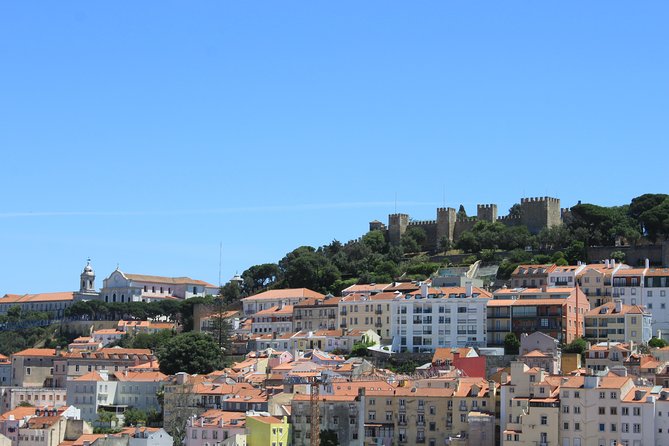
First up is Igreja de São Roque in the Bairro Alto area. This is one of those churches where the exterior is just the warm-up act. Inside, the Jesuit influence shows through in a dramatic, decorative style that feels intense without needing a museum ticket.
Even if you only take a short look, you will understand why this church gets people talking. It’s not a quiet “check the box” stop. It’s the kind of place that makes you pause and look up, because the artistry is designed to pull your attention.
One small practical point: churches can be cool and dim compared to the street. Bring your phone, but also be ready to enjoy it with your eyes. If you rush, you’ll miss the details the guide is aiming you at.
Igreja de S Domingos: Old Lisbon in a Small Time Window
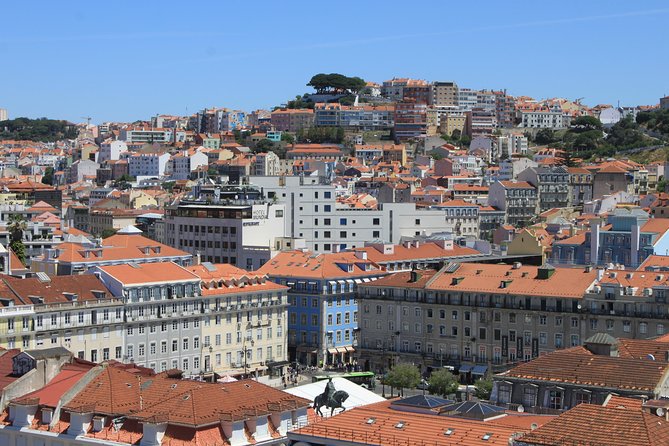
Next comes Igreja de S Domingos, described as one of the city’s oldest and most interesting churches. This stop is quick, but it works because it’s placed right after São Roque. You compare styles, eras, and how Lisbon’s religious architecture evolved.
If you like architecture more than crowds, this sequence is a win. Instead of bouncing randomly, you get a mini “history in buildings” lesson while keeping your total time focused.
Bairro Alto Walk: Stories in the Streets, Not Just the Sights
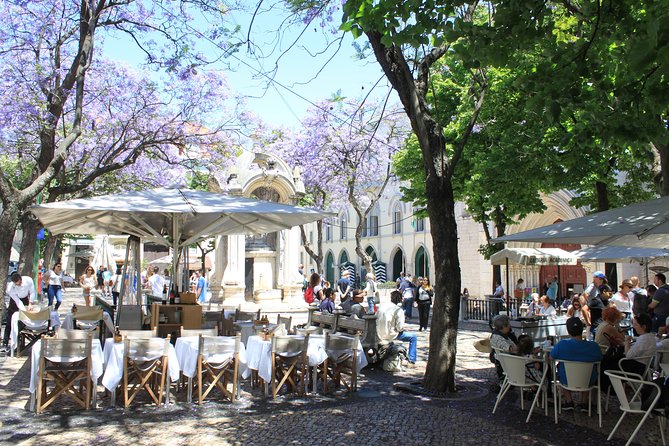
Then you shift into Bairro Alto, walking through the district. This is where the tour starts to feel less like a checklist. You are moving through the neighborhood fabric, hearing what makes it Lisbon and not just “another old district.”
Bairro Alto is also a helpful buffer before the next viewpoints. It gives you a chance to stretch your legs without immediately switching to a high lookout or a steep descent. The goal is simple: keep you moving, but keep you comfortable enough to take in what’s happening around you.
You can also read our reviews of more private tours in Lisbon





Largo do Carmo and April 25, 1974: A Revolutionary Story Stop
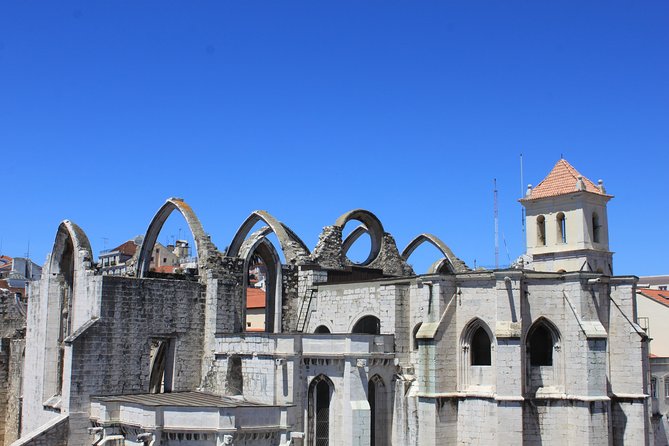
At Largo do Carmo, you hear about April 25, 1974. This is the tour’s most direct political moment, and it’s valuable because it turns a date into a place-based story.
You don’t need a lecture hall for this kind of history. When you stand in a square like this, you start to understand how public spaces can hold memory. The guide helps you connect what happened to the feel of the neighborhood today.
If you’re the type who loves understanding the “why” behind a country, this is one of the stops you will remember.
Santa Justa View, Without the Elevator Line
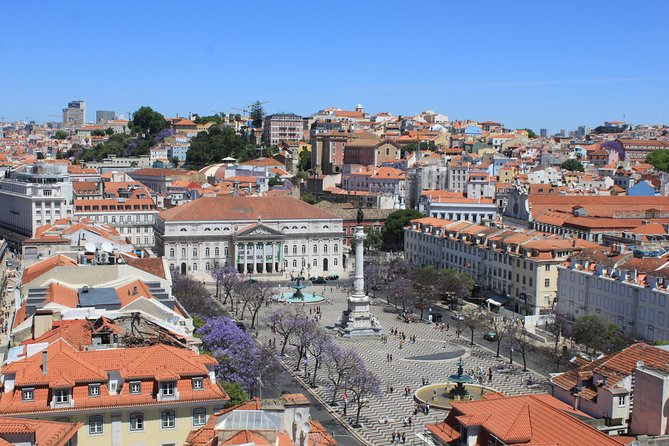
Next comes Elevador de Santa Justa with a viewpoint. The tour notes that you do not go by elevator, but you still get the benefit of a nice city view from that area.
This is a smart choice for a time-limited city tour. Going inside and riding the lift can add waiting time and queue stress. Here, you get the perspective without committing to the elevator experience itself.
So if your priority is seeing more of Lisbon in 3 hours 15 minutes, this approach makes the most sense. You still see the city’s scale and layout, and you avoid adding extra logistics to your day.
Chiado: Shopping District Energy and Fernando Pessoa
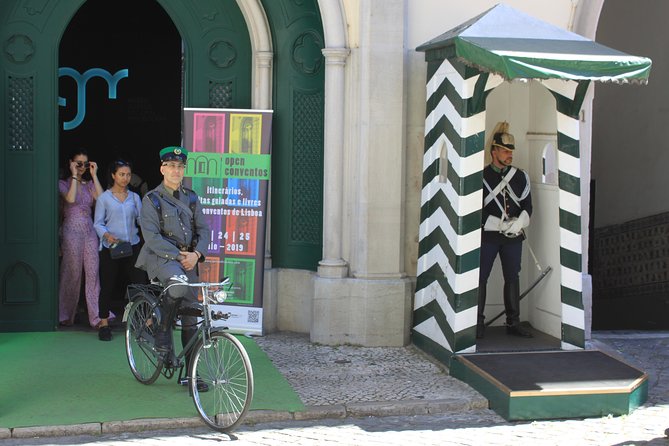
In Chiado, you learn about Fernando Pessoa and Café A Brasileira. This is a short stop, but it’s a good use of time because it ties a neighborhood to a cultural identity.
Chiado can feel more upscale and polished than places like Alfama. That contrast matters. Lisbon is not one single vibe. You need to feel multiple tones, and Chiado is one of the quickest ways to do it.
If you want a quick cultural hit without museum fatigue, this portion delivers. Even if you are not a literature superfan, the name-dropping has purpose when your guide frames it in context.
Baixa de Lisboa, Rossio Square, and Pastel de Nata
Now you move into Baixa de Lisboa, described as the 19th-century Lisbon you want to see early in your trip. This part helps you understand modern Lisbon’s layout, especially the way streets open up into famous squares.
You also taste Pastel de Nata here. That little bite is more than a snack. It gives you a real-world anchor. After you taste it, Lisbon’s food story stops being something you read and starts being something you remember.
The route also includes Rossio Square and Figueira Square, plus passing by older traditional shops. The time is brief, so you should keep your expectations realistic: you are seeing the highlights and the feel, not spending hours shopping.
One practical tip: eat the Pastel de Nata, then keep an eye on your hands. Lisbon walking means crumbs can be common.
Miradouros with Big Views: April 25 Bridge to the Tagus
The tour then spends time at multiple viewpoints, the Miradouros, which is where Lisbon really flexes.
You visit Miradouro Chao do Loureiro, with views over the 25th of April Bridge, Christ the Redeemer, the center of Lisbon, and both sides of the river. This is an excellent place to pause and let the city “click” in your mind. You can see connections that are invisible from street level.
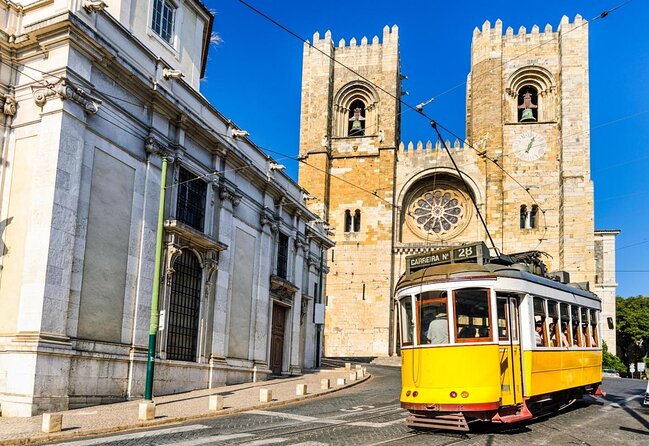
Then it’s Miradouro de Santa Luzia, overlooking Alfama and the Tagus River. This one feels more postcard, but it’s still useful because the guide frames the view in relation to what you will see in the cathedral and the older lanes later.
Finally, you get Miradouro das Portas Do Sol, which offers views of Alfama, the S. Vicente monastery, and the national Pantheon. This stop is short, but it sets you up to understand why Alfama is drawn the way it is on maps and in your mind.
If you want photos, bring them. If you want calm, go right at the start of the viewing window, when there’s often a little less chaos than later in the day.
Alfama Lanes and Lisbon Cathedral: Old Streets, Real Architecture
After the viewpoints, you walk through the traditional lanes of Alfama and then visit Lisbon Cathedral. This is a smart sequence: you’ve already seen Alfama from above, so walking inside it feels like moving into the picture.
Lisbon Cathedral is a key stop because it gives you a tangible sense of age. Even if you only spend a few minutes inside, you will feel how the cathedral sits at the center of the neighborhood’s identity.
This section also works well for people who like “slow travel in fast form.” You are not stuck in one museum. You are moving, looking up, and stepping into the religious and historic core of the city.
Praça do Comércio, Terreiro do Paco: Ending at the River Like a Pro
The tour finishes at Praca do Comercio (Terreiro do Paco), the river trading square that feels open after the tighter streets of Alfama and Baixa.
This is the perfect ending point for a city tour. You can go two directions from here, and you don’t feel trapped. It also makes sense psychologically. You start higher, you see viewpoints, and you end where the river holds the horizon.
If you are hungry, it’s also a practical place to regroup. And if you want to keep exploring on your own, you’ll find yourself oriented enough to choose what to do next.
Price and Value for a Private Tour Up to 2
At $214.45 per group (up to 2) for about 3 hours 15 minutes, this is priced as a private experience. That price point can feel high if you are comparing to group walking tours. But for this format, it often makes sense because you get focused time with a guide and a tight route that covers a lot of Lisbon without wasting effort.
What helps the value is the structure:
- Multiple major neighborhoods in a short window
- Free admission at the planned church stops
- Several viewpoints that would be time-consuming to coordinate on your own
- A built-in local food taste (Pastel de Nata)
If you are traveling as a couple, the per-person cost can be far more reasonable than it first looks. If you are solo, it’s still workable if you value a private pace and less crowd pressure.
Just keep your expectations matched to the format. This is a fundamentals tour. You are getting a strong first impression, not a deep academic seminar.
How the Guide’s Style Shows Up in the Experience
This tour is led by a German native city guide. The tour is listed as offered in English, so I recommend you confirm language preferences when you book.
One theme that comes through in the guide style is how well the stories connect to the places. People describe the experience as fun and informative, with a good mix of history and practical breaks. That matters because Lisbon can be tiring. When the route includes moments to slow down, the whole day feels easier.
There’s also a responsiveness element mentioned in feedback. That suggests it is not rigid. If you have kids with energy limits, or you want more photo stops at the viewpoints, it helps to communicate it early.
Who Should Book This Tour, and Who Might Want a Different Plan
You should book this if:
- You want a first-day orientation to Lisbon
- You like churches, viewpoints, and neighborhood walking more than big-bus stops
- You prefer a private pace over crowds
- You are a couple or traveling as a small group, up to 2 in one booking
You might skip or adjust if:
- Hills and steep streets are difficult for you
- You want lots of time inside major attractions rather than quick, targeted stops
- You are already very comfortable navigating Lisbon neighborhoods and just want one or two sights
This tour is ideal when you want to feel the city’s structure fast, then decide what to revisit later.
Should You Book Lisbon Fundamental?
Yes, I think this is a strong buy for the right traveler. It’s well-paced, it hits Lisbon’s key “see-it-once” areas, and it ends in a classic spot that makes the rest of your day easy to plan.
Book it if you want to get your bearings quickly, especially if it’s your first time in Lisbon. If you are the kind of traveler who likes meaning behind places, the April 25, 1974 stop and the cultural notes around Fernando Pessoa add real value.
If you have limited walking stamina, just be honest with yourself about slopes. Bring comfy shoes, take short pauses, and use the private format to set the tempo.
FAQ
How long is the Lisbon Fundamental private city tour?
It runs about 3 hours 15 minutes.
What is the group size for this private tour?
The price is listed per group for up to 2 people.
What language is the tour offered in?
The tour is offered in English, and it includes a German native city guide.
Where does the tour start and end?
It starts at Miradouro de São Pedro de Alcântara, R. de São Pedro de Alcântara, 1250-238 Lisboa, Portugal. It ends at Praça do Comércio, 1100-148, Portugal.
Do I need to buy admission tickets for the churches and sights?
For the listed stops, admission is marked as free.
Do you ride the Elevador de Santa Justa during the tour?
No. You get the view from the Santa Justa area, but the plan notes you do not go by elevator.
What food is included?
You taste Pastel de Nata during the Baixa de Lisboa portion.
Is lunch included in the price?
No, lunch is not included.
What fitness level do I need?
The tour asks for a moderate physical fitness level.
What is the cancellation policy?
Free cancellation is available if you cancel up to 24 hours in advance for a full refund.
More City Tours in Lisbon



More Tours in Lisbon




More Tour Reviews in Lisbon



Not for you? Here's more nearby things to do in Lisbon we have reviewed










Lisbon City Tours, side by side.
 ★ 5.0Lisbon City Center Tour – The Unmissable LisbonTickets from $322,234 traveller reviews
 ★ 4.7Sintra, Pena, Regaleira, Cabo da Roca & CascaisTickets from $2319,656 traveller reviews
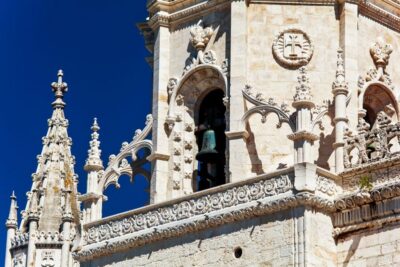 ★ 4.1Jerónimos Monastery Entrance TicketTickets from $2114,164 traveller reviews
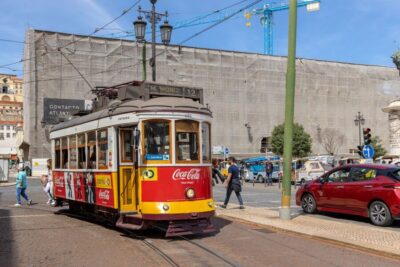 ★ 4.8History, Stories and Lifestyle Walking TourTickets from $2910,902 traveller reviews
 ★ 4.5Sunset Boat Party Cruise with DJ and Open BarTickets from $2710,378 traveller reviews
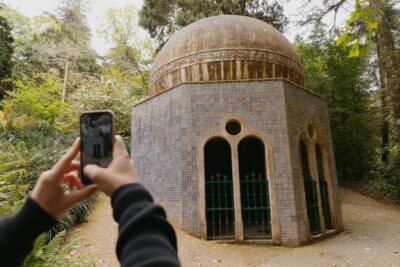 ★ 4.7Pena Palace, Sintra, Cabo da Roca, & Cascais DaytripTickets from $919,981 traveller reviews
 ★ 4.6Oceanário de Lisboa Entrance TicketTickets from $299,943 traveller reviews
 ★ 5.0True 4Hour Private Tuk Tuk Tour: Discover Lisbon with a Local!Tickets from $1088,008 traveller reviews
More useful lists for this tour