
Review · LISBON CITY TOURS
Lisbon City Center Tour – The Unmissable Lisbon
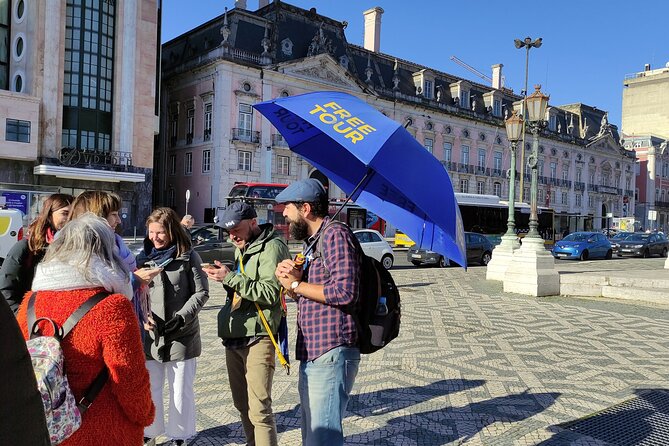
Lisbon rewards people who walk slowly. This 2.5-hour city-center tour strings together major squares, old churches, and hillside streets cars cannot reach, so you get a real sense of how the neighborhoods connect. I especially like the pay-what-you-think approach, because it makes the tour feel less like a fixed product and more like a fair local intro.
The second big plus for me is the guiding style. You will get stories that explain why places matter, plus practical pointers for what to do next. One drawback to plan for: it is history-heavy and you do cover a steady amount of walking on uneven streets, so if you prefer a lighter, more casual stroll, you may want to pace yourself and keep your expectations clear.
Key highlights worth your time
- Start and end at the two big anchors: Praça dos Restauradores and Praça do Comércio
- A walk that links Baixa, Chiado, and Bairro Alto without switching transport
- Meaningful stops like the memorial to the victims of the 1506 Jewish massacre
- Santa Justa from the outside via the elevator’s free area, for big views without over-planning
- Coffee, opera, and Portugal’s writers in one route at A Brasileira and São Carlos
- A payoff finish by the Tagus at Praça do Comércio, between the arch and D. José I
Restoradores to Rossio, the fast way to get your bearings in Lisbon
The tour begins in Praça dos Restauradores, at the Monumento dos Restauradores, where Avenida da Liberdade famously runs into the square. This is a smart starting point. You get that classic Lisbon “downstairs city” feel right away, and it also helps if you are coming in from the metro or a taxi drop off.
From there, the route gently pulls you away from the obvious tourist lanes and into streets where walking feels natural. You are not just moving from one landmark to the next. You are learning the logic of central Lisbon: squares first, then stair-stepped streets, then neighborhoods that feel like separate worlds a few turns apart.
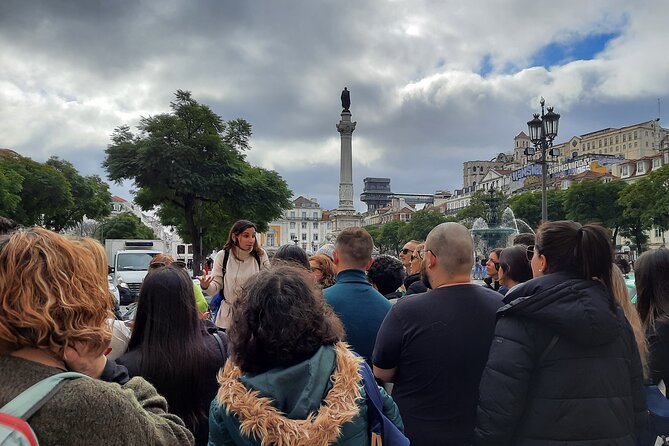
Rossio is the next big spatial lesson. Praça Dom Pedro IV (Rossio Square) has been the stage for major moments for centuries, so it works like an outdoor “timeline.” Even if you only catch the highlights, the setting helps you understand why locals still use these spaces for real life, not just photos.
You can also read our reviews of more city tours in Lisbon


São Domingos and the 1506 memorial, where the tour adds meaning
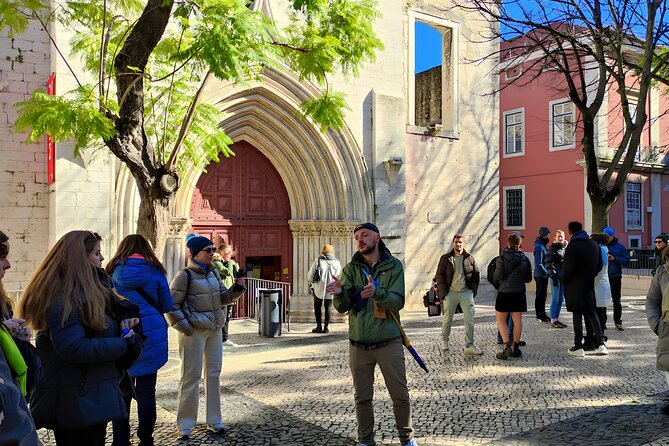
You will step into Igreja de São Domingos, and what makes it interesting is the contrast the guide draws out. It is described as one of the least adorned, yet it is also said to be among the richer churches in what it represents: peace, tolerance, and unity. That is not just poetic language. It frames how you should look at the church, not as decoration, but as a statement.
Right after, you come to the Memorial as Vítimas do Massacre Judaico de 1506. This stop changes the tone of the walk in a good way. It is a tribute from Lisbon itself to people who suffered religious intolerance and fanaticism. If you want a tour that connects history to what a city values, this is the part that does it.
Practical note: these are indoor and memorial stops that can feel quiet and reflective. If your goal is mostly big viewpoints and sweeping architecture, this section might feel like a breather. But if you want Lisbon to make sense beyond postcard shots, it is essential.
Rossio Station and Chiado, learning Lisbon’s “layers” on foot
After Rossio Square, the route brings you to Estação do Rossio. The station is imposing, and it is the kind of place where you pause without realizing you are pausing. The construction date is there for a reason: it reminds you that Lisbon has modern travel bones, not just old streets and tiles.
This matters because the tour is not only about where Lisbon is, it is about how it evolved. Lisbon built movement into the city over time. Walking here helps you see that instead of just reading it.
Then you head toward Chiado, the entrance to Lisbon’s most cosmopolitan neighborhood. “Cosmopolitan” can sound vague, but on foot it becomes concrete. Chiado feels like the middle link between the grand downtown and the lively upper areas. It is where you can sense cafes, culture, and a more stylish pace.
If you are jet-lagged, this stretch is a good moment to reset. The walking is still going, but the stops are close enough that you do not feel like you are sprinting city blocks.
Santa Justa and Largo do Carmo, views plus political energy
One of the most fun segments is the move to the Elevador de Santa Justa. You will access the free area of the elevator, which is a nice compromise if you want the landmark without turning the walk into a ticket-buying marathon.
Even if you do not ride it, the elevator gives you a clear “Lisbon moment.” It looks like it belongs to a different era of engineering, and it also frames the city below and around it. This is where I like taking a few minutes to look, not just snap. The streets you walk through later make more sense once you see how they stack vertically.
Next comes Largo do Carmo, described as the stage for passionate revolutions. This stop adds another type of context, the kind that explains why Lisbon has the moods it does. It is not just monarchy and churches. It is the city’s public life and how change played out in real space.
If you are a history fan, you will enjoy how the tour keeps tying events back to locations. If you are not, it still works because the locations are real and easy to visualize.
São Roque, Bairro Alto, and the walk up into Lisbon’s personality
I love how the tour shifts into a church stop that feels important but not boring: Igreja de São Roque. It is built in the 16th century and is described as the earliest Jesuit church in Portugal. Later it served as the society’s home church in Portugal for over 200 years, until the Jesuits were expelled.
That timeline is useful. It helps you understand why a single building can hold layers of belief, politics, and cultural change. And the tour points you toward what is inside, including mention of one of the world’s most valuable chapels. Even if you do not spend a long time in every room, you will have a better reason to look closely once you know what the guide is pointing out.
Then you move into Bairro Alto, Lisbon’s nightlife district with history going back more than 500 years. The tour frames it in a classic way: la bohéme, the Lisbon way. On foot, you can feel that energy even during the day, because the streets are narrow and the buildings crowd together like they are built for late-night conversation.
Largo do Chiado sits between Chiado and Bairro Alto, and it works as a natural transition stop. It is small, but that is the point. It helps you “switch gears” without the stress of figuring out the route yourself.




A Brasileira to São Carlos, when Lisbon mixes coffee culture and opera
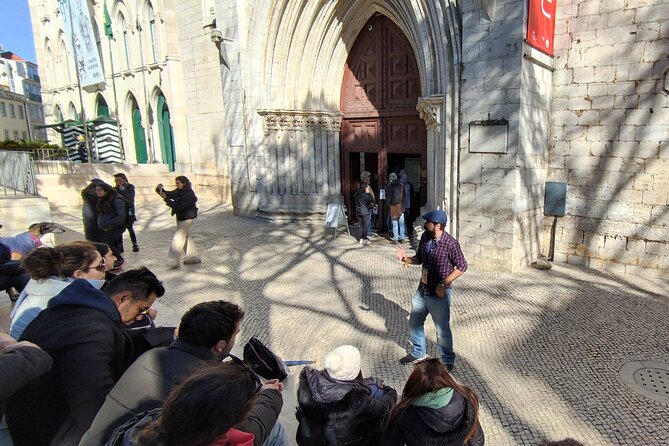
Now the tour gets fun in a different way. It brings you to A Brasileira, where coffee was launched, and where Fernando Pessoa and other intellectuals and artists created the modernist magazine Orpheu. That is the kind of fact that changes how you read a neighborhood. You start to notice what kind of place a street is: not just a street, but a meeting point for ideas.
Next is Teatro Nacional de São Carlos. The tour highlights that it is the only Portuguese theatre still geared toward producing and presenting opera and choral and symphonic music. It also notes the theatre opened in 1846, which is one of those dates that makes you realize how long Lisbon’s performing life has been formal and serious.
If you are into culture, this section gives you two anchors. You see the creative coffee-shop origin story, then you see the grand performance hall that comes later. If you are not into opera, you can still appreciate the building and the way Lisbon invests in arts infrastructure.
Rua Augusta and Praça do Comércio, the postcard finish that feels real
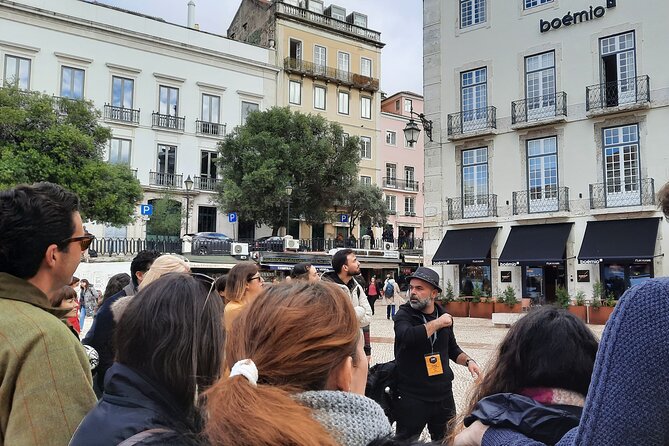
The route then hits the triumphal arch that anchors one of Lisbon’s most famous downtown streets: Rua Augusta. Rua Augusta is described as the most agitated and charming street in downtown Lisbon. That fits what you experience on foot. Even if it is not crowded when you go, it has that “downtown river” feeling where people keep moving toward and away from the riverfront.
After Rua Augusta, you reach Praça do Comércio. This is where Lisbon ends and the Tagus begins, and the tour does a good job of setting expectations. You will stand in one of Europe’s most beautiful squares, and it will not feel like a random detour. It feels like the natural finish line of central Lisbon.
You end in Praça do Comércio between the arch and the equestrian statue of D. José I, which is useful if you want to continue on your own afterward. You know exactly where you are. You also know which direction the river is in if you are aiming for sunset or a waterfront stroll.
Price and the pay-what-you-think model, why it can be great value
The listed price is $3.62 per person, and the bigger point is how the tour frames payment. It is pay only what you think the experience is worth, typically settled after the walking portion.
That model can be a win for you if you:
- want a solid orientation tour without paying a big fixed fee up front
- like to reward guides whose style works for you
- would rather decide value in person than accept a strict bundle price
Is it always a bargain? Not automatically. A low headline price can also attract people who treat tours like background noise. That said, the guide-centered quality is clearly the selling point here, and that is exactly what you should evaluate on the day. If you are getting engaging storytelling, useful local tips, and a smooth route through key places, paying fairly at the end feels right.
Also, with a maximum of 25 travelers, the tour is small enough that your questions land. You are not yelling over a crowd, and the guide can respond in a more human way.
Who this tour fits best (and where it might not)
This tour is ideal if you are:
- visiting Lisbon for the first time and need quick orientation
- the type who likes walking routes that connect neighborhoods naturally
- curious about how Portuguese history shows up in everyday places, from churches to memorials
It can be less ideal if you:
- want a slow sightseeing stroll with minimal facts
- hate uneven pavement and steep-feeling stretches
- prefer a highly visual tour with fewer “talk stops”
One more thing to keep in mind: the tour works best with good weather. When rain hits, picture opportunities usually shrink, even if the guide keeps morale up. The good news is that the experience is built for walking, not just staring at one viewpoint.
Practical tips for your 2.5-hour walk
Plan for a steady walk. It is not a “park and pose” circuit. You will be moving through central areas, including hillside streets and corners that need careful footing.
Wear shoes you trust. Lisbon sidewalks can be uneven, and the tour pacing assumes you can keep going without constantly stopping to untangle laces or adjust blisters. If your feet are happy, your brain stays focused, and you get more out of the stories.
Bring curiosity, not a checklist. This tour shines when you listen to how the guide connects places, like why the independence tribute square matters, why Rossio is still used for major moments, and why the Jewish massacre memorial deserves a pause.
If you want photos, take them early and then look again. Some stops are best for snapshots, like Rua Augusta and the Praça do Comércio finish. Others are better for slow looking, like inside the churches or memorial areas where you do not want to rush.
Finally, if you like extra planning help, lean into it. Guides often share follow-up tips after the walk. On past runs, some guides have sent a local tips document by WhatsApp, which is the kind of practical bonus you can actually use the next day.
Should you book the Unmissable Lisbon city center tour?
Book it if you want an efficient, friendly way to understand central Lisbon. You will get a well-shaped route from Restauradores to Praça do Comércio, a mix of major landmarks and meaningful memorial stops, and a guide-led approach that helps you navigate neighborhoods like you live here.
Skip it (or choose a lighter option) if you hate history talk or you want minimal walking. This is still a walking tour, and it leans into context, not just scenery.
My take: for most first-timers, this is one of the smartest early moves you can make. Do it early in your trip so the rest of Lisbon feels less like hunting and more like finding.
FAQ
How long is the Lisbon city center walking tour?
The tour lasts about 2 hours 30 minutes.
What is the meeting point and where does the tour end?
It starts at Monumento dos Restauradores, Praça dos Restauradores, 1250-188 Lisboa, and ends at Praça do Comércio, 1100-148 Lisboa, near the arch and the equestrian statue of D. José I.
What language is the tour offered in?
The tour is offered in English.
Is this a walking tour and how large are the groups?
Yes, it is a walking tour. The group size has a maximum of 25 travelers.
Do I get a mobile ticket?
Yes, it includes a mobile ticket.
Is the price fixed or do I pay what I think it is worth?
The tour is described as pay only what you think the experience is worth.
What happens if the weather is poor?
This experience requires good weather. If it is canceled due to poor weather, you will be offered a different date or a full refund.
Can I cancel for a full refund?
Yes. You can cancel up to 24 hours in advance for a full refund.
Are service animals allowed?
Yes, service animals are allowed.
More City Tours in Lisbon




More Tours in Lisbon






More Tour Reviews in Lisbon
Not for you? Here's more nearby things to do in Lisbon we have reviewed











Lisbon City Tours, side by side.
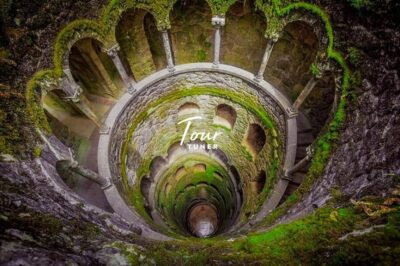 ★ 4.7Sintra, Pena, Regaleira, Cabo da Roca & CascaisTickets from $2319,656 traveller reviews
 ★ 4.1Jerónimos Monastery Entrance TicketTickets from $2114,164 traveller reviews
 ★ 4.8History, Stories and Lifestyle Walking TourTickets from $2910,902 traveller reviews
 ★ 4.5Sunset Boat Party Cruise with DJ and Open BarTickets from $2710,378 traveller reviews
 ★ 4.7Pena Palace, Sintra, Cabo da Roca, & Cascais DaytripTickets from $919,981 traveller reviews
 ★ 4.6Oceanário de Lisboa Entrance TicketTickets from $299,943 traveller reviews
 ★ 5.0True 4Hour Private Tuk Tuk Tour: Discover Lisbon with a Local!Tickets from $1088,008 traveller reviews
 ★ 5.0Sintra and Cascais Small-Group Day Trip from LisbonTickets from $607,018 traveller reviews
More useful lists for this tour