
Review · LISBON CITY TOURS
Walking tour: Lisbon in the Shadows of World War II
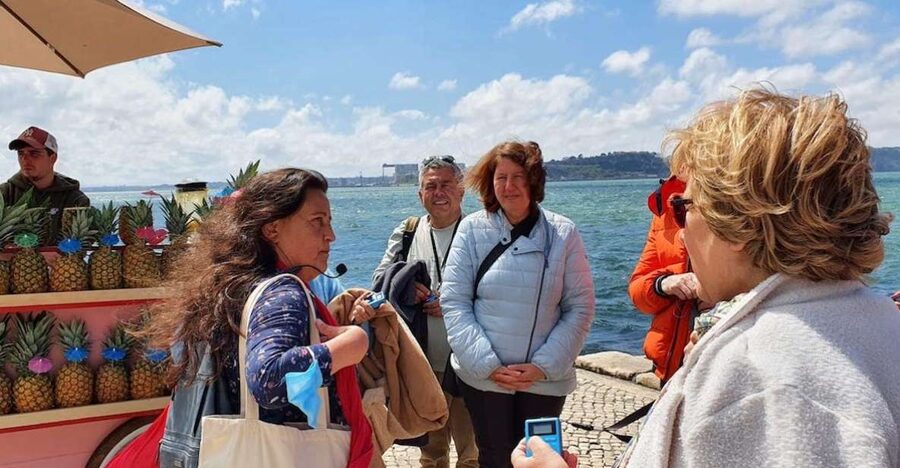
Lisbon turns into a different city when you walk it through WWII clues. You follow WWII refugees and spies through plain city streets, with a guide who keeps the story anchored in what you can actually see today. With guide Leonor Abrantes and her supplemental materials, you get more than facts, you get a sense of how the pieces fit together.
I especially like how this tour links everyday places to high-stakes events, like wartime conversations in cafés and the way Portuguese authorities watched the city. Second, I like the route logic: you move from major squares and avenues into the Baixa and Chiado zones, then finish at Cais do Sodré where you can keep the momentum with a quick bite. One drawback to plan around is that it is rain or shine, and the walking pace may not suit everyone, especially if you have mobility concerns.
Quick hits
- WWII Lisbon with names attached: Josephine Baker, Alfred Döblin, Leslie Howard, and others appear in the story.
- Neutral Portugal, heavy surveillance: you hear how neutrality under Salazar worked alongside the political police.
- Spy geography: British, German, and American espionage shows up in the way people moved and talked.
- Cafés with pressure in the air: Café Chave d’Ouro and Pastelaria Suiça become scene-setting stops.
- Built for a walkable arc: from Praça Marquês de Pombal to Chiado, then down to Cais do Sodré in 3 hours.
Lisbon under Salazar: why this walk feels different
Lisbon in the late 1930s and 1940s is not just a background setting. It was a destination, a waiting room, and a pressure cooker at the same time, shaped by Portugal’s neutrality under the dictatorship of António Oliveira Salazar.
What makes this tour work is the balance between personal stories and the larger system. You hear about refugees seeking visas to leave war-torn Europe, and you also learn how Lisbon became a stage where spies from multiple sides operated while the Portuguese political police watched closely.
You come away with a clearer mental map of why Lisbon mattered. It was not only safe because it was neutral. It was safe in a complicated way, with rules, monitoring, and fear threading through daily life.
You can also read our reviews of more walking tours in Lisbon



Starting at Praça Marquês de Pombal: getting your bearings fast
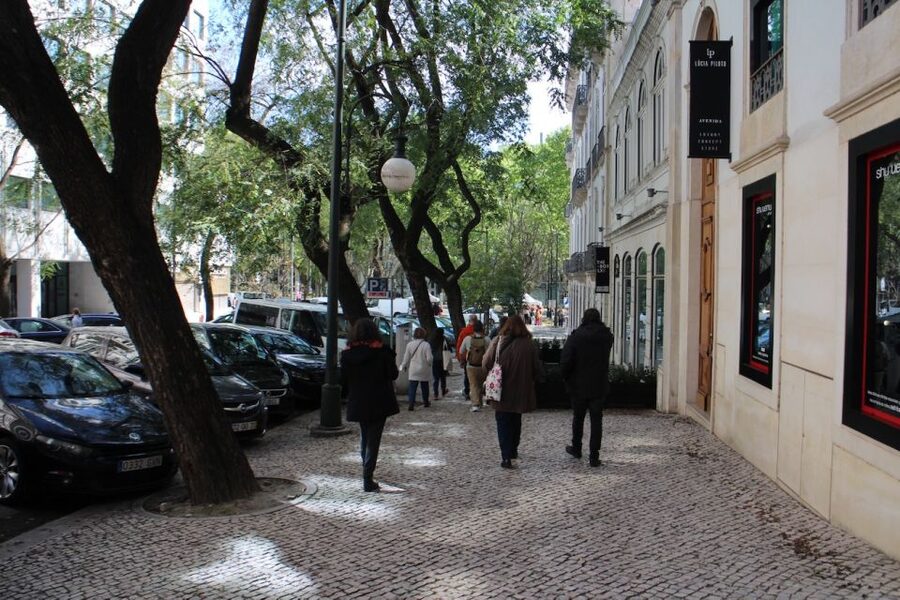
The tour starts at Praça Marquês de Pombal, in front of Café A Padaria Portuguesa, address Praça Marquês de Pombal 12. This is a useful starting point because it puts you near the city’s major arteries and gives you an immediate sense of scale.
From here, you get the wartime framing you need. The story connects the area to the once-famous Hotel Aviz, then shifts to the real-world places refugees relied on, like humble pensions and aid organizations. The big idea is simple: Lisbon functioned like a magnet and a funnel, pulling people in while visas decided who could leave.
Practical tip: because this is a walking tour, wear shoes you do not mind getting a little dusty or wet. If the weather turns, you will still be moving, since the tour runs rain or shine.
Parque Eduardo VII to Avenida da Liberdade: big views, small secrets
You head to Parque Eduardo VII next, with a photo stop and guided context around 15 minutes. Even if you do not spend a lot of time there, this stop helps you understand Lisbon’s layout in a way photos alone cannot. You learn how the city opens up visually, which matters when you are later hearing about monitoring and movement.
Then comes Avenida da Liberdade, about 20 minutes of guided tour time. This is where the tour’s logic becomes fun. Wide avenues are not just pretty, they become part of how people traveled, met, and kept an eye on one another in tense times.
The tour’s version of tension is not movie-style. It is about attention, timing, and the presence of watchers. Portugal’s political police are part of the explanation, and that detail changes how you read the streets. Suddenly, you notice how conversations in public spaces could feel risky, even when nothing dramatic happens in front of you.
Restauradores and Baixa de Lisboa: wartime news in ordinary streets
Next you visit Restauradores Square (around 15 minutes) and then move into Baixa de Lisboa for a shorter guided stop (about 10 minutes). This is the part of the walk where the story starts to feel close to the everyday.
You connect the city’s center to the refugee experience, and you also hear about how war news spread through cafés. That is where Lisbon’s neutrality becomes complicated. The war was everywhere, even if Portugal officially stayed out of it.
A helpful way to think about these stops: they show the contrast between public space and private fear. People might be enjoying coffee, but they are also processing rumors, hoping for visas, and watching for signs of who you can trust.
If you like history that feels human rather than textbook, this is one of the strongest stretches.
Chiado and the cafés: where spies could blend in
Chiado gets about 15 minutes, and this is a key storytelling zone. Lisbon’s cafés are a recurring theme, and here you see why.
You will spend time in (or at least closely tied to) historic café stops such as Café Chave d’Ouro and Pastelaria Suiça. The tour explains how news of the war brought both excitement and trepidation, with the added reality that spies from opposing factions were operating in the city.
That is the clever angle. You are not just learning that espionage happened. You are learning how it could happen in normal life, in places people used to relax and share information. The guide also brings in the idea of an Axis invasion threat, and how Lisbon prepared by planning protection for significant monuments and buildings in case of bombings.
Practical tip: if you tend to get hungry during walking tours, plan for it. This tour does not include food or drinks, and the café story might make you want a snack. The good news is you finish near places where it is easy to grab something after.


Praça Dom Pedro IV: Lisbon protecting monuments and reputations
From Chiado, you move on to Praça Dom Pedro IV, about 15 minutes guided. This stop helps you connect two big tour threads: refugees waiting for exits, and Lisbon bracing for outcomes it could not control.
When the tour talks about Axis invasion and the city preparing to protect key monuments, it gives you a sense of what the streets were doing behind the scenes. It was not only people who were at risk. The city itself, its landmarks, and its reputation mattered.
This part of the walk also reinforces why the tour feels “under the surface.” You keep hearing that Lisbon was neutral in official terms, but the fear was real. People could be excited about rumors and still afraid of what might come next. You feel that contradiction as you move through the urban scenery.
Ending at Cais do Sodré: time to reset your brain
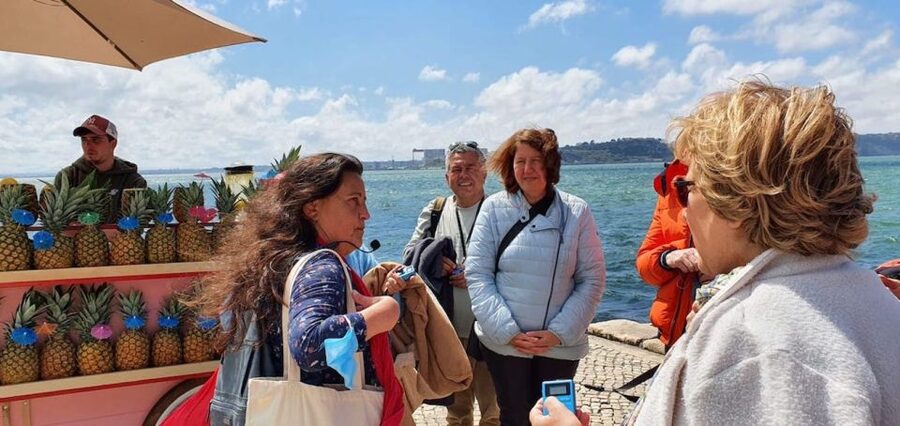
The tour finishes at Cais do Sodré, near the river. That ending matters because it gives you an easy off-ramp from history mode to normal vacation mode.
From there, you are within walking distance of Time Out Market, so you can grab a snack or light meal without needing a separate plan. I like endings like this because you can keep your energy up and avoid the classic problem of finishing a great tour and then wandering around hungry with no idea where to go next.
If you want to keep the story going after the tour, treat the riverside area as a place to reflect. You just heard about a city full of departures that might never happen, and about people waiting on visas. Watching the river after that kind of tour adds a quiet weight.
Guide Leonor Abrantes: the difference a prepared guide makes
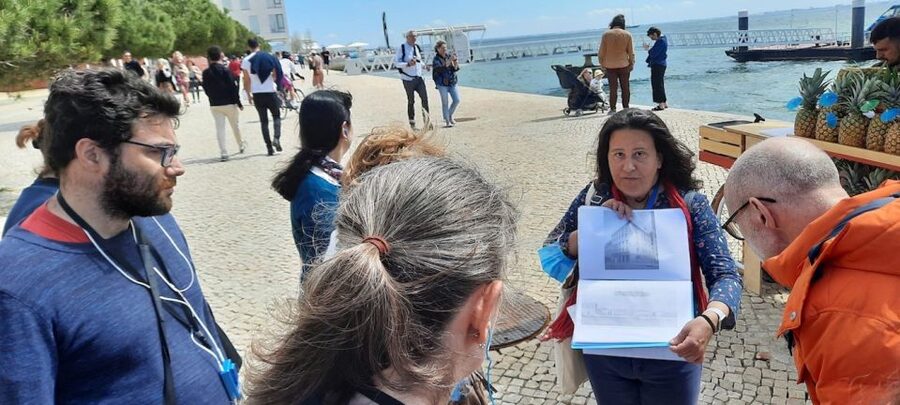
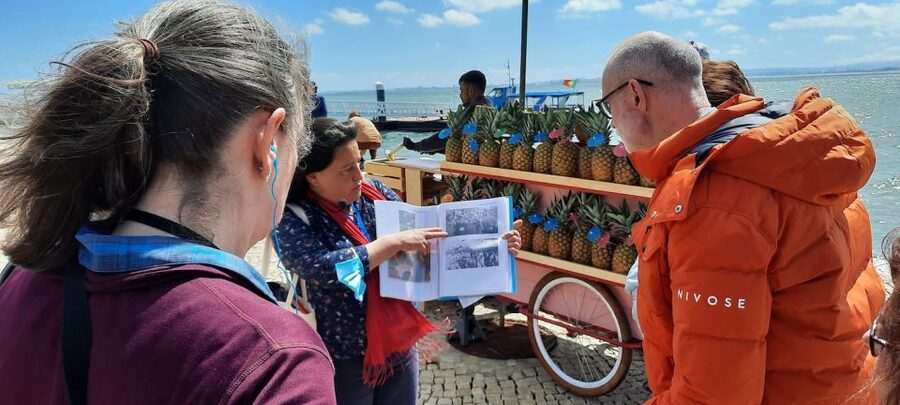
One of the clearest reasons people rate this tour highly is the guide. Leonor Abrantes comes with supplemental materials, and it shows in how the story is delivered.
That extra prep matters. It means you spend less time trying to connect dots on your own. You also get a steadier flow between the big themes, like neutrality and surveillance, and the specific details, like the named figures who passed through Lisbon during the period.
Two things I find especially valuable about this guiding style are:
- You get context fast, so the route does not feel like random sightseeing.
- You get small points that make the city feel specific, not generic.
If you are the type who likes to understand what you are looking at, you will probably love the way the tour turns familiar neighborhoods into evidence.
Price and group size: is it worth $170?
The price is $170 per group up to 6 people, and the tour is listed for small groups with a maximum of 12. On paper, that can sound like a niche spend. In practice, it can be good value if your group wants more than a basic walking loop.
Here is the value angle I think matters most: you are paying for tight storytelling, a live English and German guide, and a route that is organized around period themes, refugees, and espionage. You are also getting a 3-hour format, which is long enough for a real narrative arc without burning an entire half day.
You might still ask yourself one simple question: do you want Lisbon history that feels like a mystery? If yes, the price starts to make sense. If you want only casual sightseeing, you might feel it is too story-heavy for your taste.
What the 3-hour schedule really feels like
The duration is 3 hours, and it is structured as multiple guided stops plus some photo time. That pacing is a sweet spot for me because it gives you frequent story anchor points without long, repetitive monologues.
The route moves through:
- Parque Eduardo VII
- Avenida da Liberdade
- Restauradores Square
- Baixa de Lisboa
- Chiado
- Praça Dom Pedro IV
- Final stop at Cais do Sodré
Even when a stop is brief, the guide uses it to shift the story focus. That prevents the tour from turning into one long theme with no variation. You keep changing neighborhoods, and that helps your brain reset between heavy topics.
Also remember, no hotel pickup or drop-off is included. You meet at the café at Praça Marquês de Pombal, then you end at Cais do Sodré. So plan for transit on your own before and after, unless you are already close by.
Rain, walking, and mobility notes you should check
The tour runs rain or shine. That sounds standard until you remember it is 3 hours on foot. If you usually plan clothing around weather, you will want to do that here too.
On accessibility, the information includes both wheelchair accessibility and a note that it is not suitable for people with mobility impairments. Because those statements conflict, I suggest you contact the operator ahead of time and ask what the ground conditions and route demands are for your specific needs.
Who this WWII Lisbon walk suits best
I think this tour is a great fit if you:
- Want a Lisbon walk that explains what you see, not just where to stand for photos.
- Like WWII history with human stakes, refugees, and the reality of watching and being watched.
- Enjoy guided stories that point out specific places tied to the period.
It is also a strong choice for couples and small groups who want a shared focus. With a private group format and a small size, you should have a better chance of asking questions.
Should you book this Lisbon in the Shadows of World War II tour?
Book it if you want Lisbon history that feels like a living map. The combination of WWII context, named people like Josephine Baker and Leslie Howard, and concrete stops such as Café Chave d’Ouro and Pastelaria Suiça makes this tour more than a generic overview.
Skip it if you prefer light, purely scenic walking with minimal story pressure, or if 3 hours of rain-or-shine walking is likely to be uncomfortable. And given the mixed accessibility notes, if mobility is a concern, confirm details before you pay.
If your goal is to see Lisbon in a new way, through refugees, espionage, and the choices made under Salazar, this is a smart use of 3 hours.
FAQ
How long is the walking tour?
The tour lasts 3 hours.
How much does the tour cost?
It costs $170 per group, up to 6 people.
Where does the tour start?
The meeting point is in front of Café A Padaria Portuguesa at Praça Marquês de Pombal 12.
Where does the tour end?
The tour ends at Cais do Sodré.
Is food or drinks included?
No. Food and drinks are not included.
What is included in the price?
You get a small-group tour with a live guide. Small groups are listed at up to 12 people.
What languages are the guides available in?
The live guide is available in English and German.
Will the tour run in bad weather?
Yes. The tour runs rain or shine.
Is there a cancellation option?
Yes. Free cancellation is available if you cancel up to 24 hours in advance for a full refund.
More Walking Tours in Lisbon


More Tours in Lisbon



More Tour Reviews in Lisbon
Not for you? Here's more nearby things to do in Lisbon we have reviewed









Lisbon City Tours, side by side.
 ★ 5.0Lisbon City Center Tour – The Unmissable LisbonTickets from $322,234 traveller reviews
 ★ 4.7Sintra, Pena, Regaleira, Cabo da Roca & CascaisTickets from $2319,656 traveller reviews
 ★ 4.1Jerónimos Monastery Entrance TicketTickets from $2114,164 traveller reviews
 ★ 4.8History, Stories and Lifestyle Walking TourTickets from $2910,902 traveller reviews
 ★ 4.5Sunset Boat Party Cruise with DJ and Open BarTickets from $2710,378 traveller reviews
 ★ 4.7Pena Palace, Sintra, Cabo da Roca, & Cascais DaytripTickets from $919,981 traveller reviews
 ★ 4.6Oceanário de Lisboa Entrance TicketTickets from $299,943 traveller reviews
 ★ 5.0True 4Hour Private Tuk Tuk Tour: Discover Lisbon with a Local!Tickets from $1088,008 traveller reviews
More useful lists for this tour