
Review · BELEM TOURS
Tour Tuk Tuk Lisbon-Belem 4 H Free Pick-up
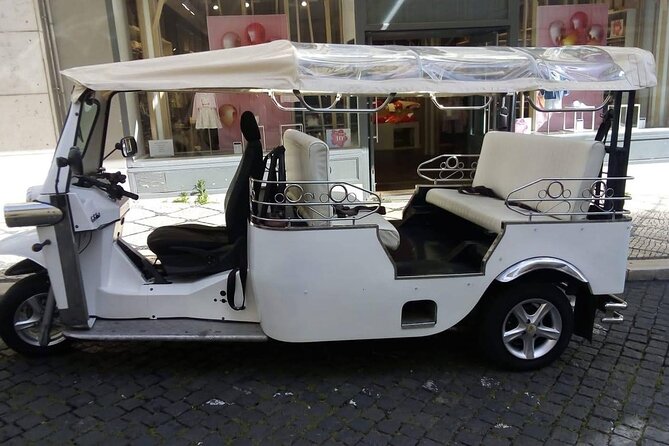
Four hours, ten Lisbon moments. This private tuk tuk loop strings together Alfama viewpoints and Belém landmarks with English commentary, and you get just enough time at each stop to see, photo, and move on. I love the fast hit of big-name sights plus the smaller street details you would miss on foot, but the one tradeoff is the ride can be bumpy on Lisbon’s cobblestones.
I also like that the tour is built for a first visit, with a smart mix of churches, squares, and lookouts that show you how the city is shaped. Guides such as Miguel, Filip, Rodrigo, Victor, and Isabel often get praised for friendly, clear English and keeping the pacing realistic. The tour is around 4 hours, costs $150.85 per person, and it runs best on a day when you can handle a quick, stop-and-go style.
Key points to know before you ride
- Private tuk tuk, your group only, so you are not squeezed in with strangers.
- One loop that links hills to the river, from Lisbon Cathedral viewpoints down toward Belém.
- Big sights plus short stops, including Santa Engrácia’s Pantheon area, Jerónimos, and Tower of Belém time.
- Mix of free and paid entries, with a few major churches or monuments where you may need to pay on the spot.
- Rain and road issues are handled, including clear rain walls on the tuk tuk when weather turns.
Tuk tuk ride feel: bumpy streets, quick stops, and real-world comfort
Lisbon is built on hills, and tuk tuk is one of the easiest ways to move without losing half your day to steep sidewalks. Expect the roads to be bumpy, especially over cobblestones, since that is part of the city’s texture and the vehicle has to work with it.
If it rains, the tuk tuk can have clear rain walls attached so you stay drier than you would on a normal bus or on foot. One small practical note for mobility or seniors, some guides have used a step ladder to help people get in and out more easily, but it is worth being ready for the fact that getting on and off is still physical.
Because stops are short, you should treat this as a highlights tour with context, not a slow museum day. The value comes from seeing a lot of neighborhoods in one outing, while your guide fills in the why behind each place.
You can also read our reviews of more tours and experiences in Lisbon.

Start at Lisbon Cathedral, then ride the viewpoints that explain the city
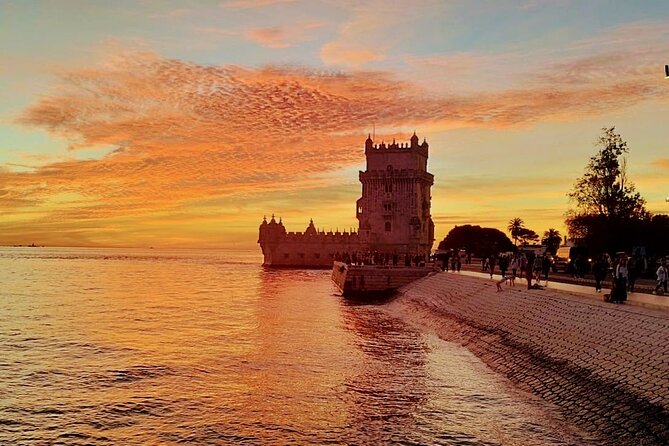
You kick off at Lisbon Cathedral, a major anchor for understanding the city’s shift from Moorish rule to Christian power. The current building traces to construction that began in 1147, and it is considered the oldest church in the Portuguese capital.
Plan for a quick stop and note that admission to the cathedral is not included. If you want inside time, treat it like a mini decision: do you want the exterior and the story, or do you want to pay to go in for deeper views and the interior.
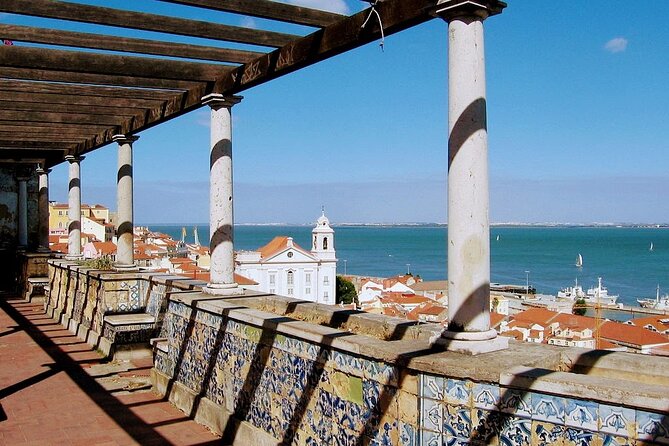
Then you head toward Miradouro Das Portas do Sol, a viewpoint with a name tied to the old Porta do Sol, which was part of the Moorish fence. You also get the 1755 earthquake context, since the old wall here was ruined in that disaster, and you can see parts of the remaining historic structure near Cerca Velha.
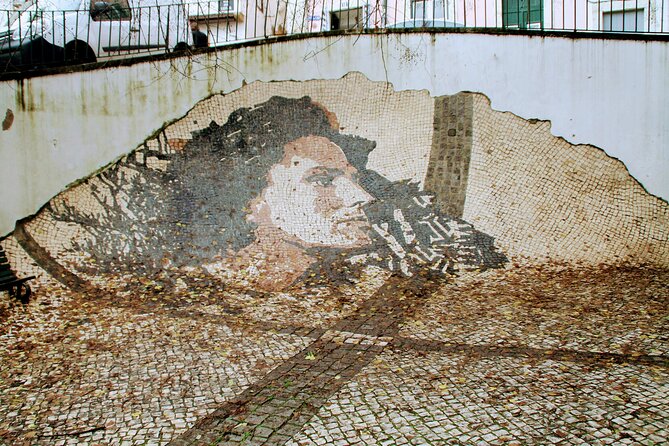
After that, you make room for street art and Lisbon’s modern layer, including the face of Amália Rodrigues rendered in Portuguese pavement. The work is by urban artist Vhils with involvement from the Escola de Calceteiros de Lisboa, which helps explain how local craft and national culture can show up in the smallest details.
Miradouro da Senhora do Monte: the big panorama plus a tiny old hermitage
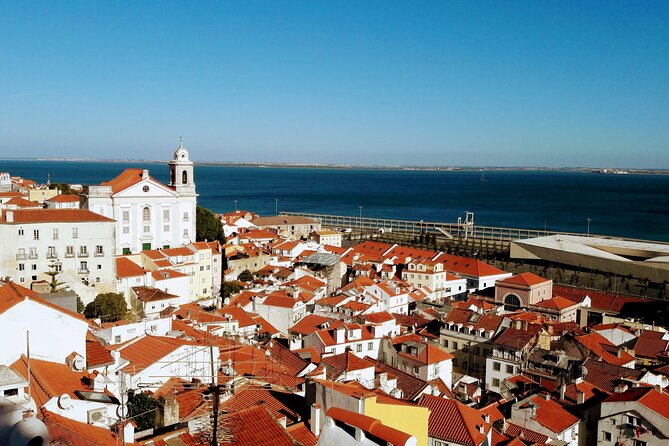
The tour then climbs to Miradouro da Senhora do Monte, one of those lookouts that makes Lisbon’s geography click. From here you can see areas such as São Jorge Castle and parts of Baixa, plus the Tagus River estuary stretching out in a way that helps you understand why the city grew the way it did.
This stop also includes a nearby ancient hermitage, Nossa Senhora do Monte, founded in 1147. The legend attached to the stone chair is the kind of local detail that makes the viewpoint feel more than just a photo spot. According to tradition, pregnant women who sat there had easier births, and there is even a story tied to D. Maria Ana de Austria, wife of D. João V, when she visited while pregnant with the heir.
You get only a short window here, so go straight to what you came for: the panorama, then a quick look around the hermitage area. The viewpoint stop is free, so you can decide how long you want to linger without worrying about entry fees.
São Vicente de Fora and Santa Engrácia: church architecture and royal burial power
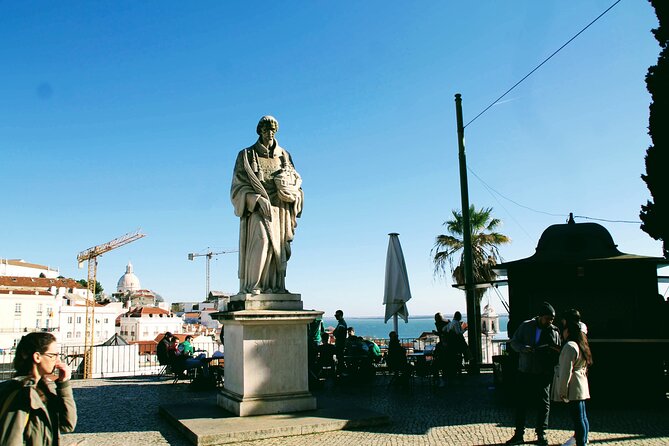
Next comes Igreja de São Vicente de Fora, a church whose construction began in 1582 on grounds linked to earlier religious plans from Afonso Henriques. The style mix matters here, since you can spot traces of Portuguese Mannerism alongside Gothic and Baroque influences.
This is also where Lisbon’s power history shows up in stone: the Pantheon of the Dukes of Bragança, with burials of Portuguese kings connected to the Bragança Dynasty. The church stop is marked as free, so this is one of the best “no extra cost” places on the loop if you want big artifacts and royal symbolism.
After that, you move to Panteao Nacional, located in the Church of Santa Engrácia. Construction began in 1682 and did not finish until 1966, which gives you a sense of how long-term projects shaped the city’s built environment.
This stop includes a few famous names: Amália (a fado diva), and football player Eusébio among the burials. Admission is not included here, so if you want the interior experience, budget time and money for it.
Alfama, then Lisbon’s squares and nightlife streets in one fast sweep
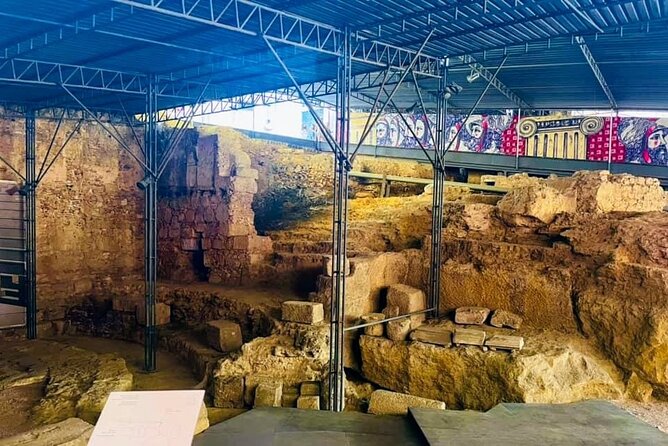
After the church stops, you shift into Alfama, Lisbon’s oldest neighborhood and one of the most typical. Its name traces to Arabic roots connected to baths and hot water, which is a useful clue for why the neighborhood developed where it did.
This part of the experience is less about a single monument and more about atmosphere. You are rolling through narrow streets and steep corners where small scenes add up, and Alfama works best as a transition between viewpoints and the more central squares.
Then the tour threads toward Praça do Comércio, one of Europe’s largest squares and the site of the Portuguese kings’ palace for around two centuries. Martinho da Arcada café appears here too, described as the oldest café in Lisbon and tied to Fernando Pessoa, which is a nice example of how literature and everyday life share the same streets.
On the north side, you pass the Rua Augusta Triumphal Arch, a marker for the noble entrance to Lisbon. The marble steps at Cais das Colunas are also part of the story, including a mention of prominent figures such as Isabel II of England and Gungunhana, which turns the riverfront into a stage for centuries of arrivals.
You also get a quick introduction to Rua Cor-de-Rosa, a nightlife center linked to the New York Times list of favorite streets in Europe. It is the kind of place that helps explain why people come back to Lisbon at night, even when the day sightseeing is already full.
From there, you head to Chiado, a bohemian, intellectual area tied to writers and artists. The Brasileira café is referenced here with a Fernando Pessoa statue, and you also get Largo Luis de Camões. If you like Baroque church details, the churches of Loreto and Our Lady of the Incarnation are part of the surrounding feel.


São Roque and São Pedro de Alcântara: Jesuit chapels and a perfect east view
I like this stretch because it slows the pace just enough to show you a different side of Lisbon. Igreja de São Roque, built at the end of the 16th century, was associated with the Society of Jesus and is described as the first Jesuit church in Portugal.
It is also noted as one of the churches that survived the 1755 earthquake unscathed, which makes it a real “there is the past still here” stop. The highlight inside is the Chapel of Saint John the Baptist, described as a 17th-century Italian art masterpiece.
The tour lists this stop as free, so it is another good value moment if you want architecture without extra entry fees. The surrounding story of plague cemetery ground outside the walls also adds a somber layer to what looks like lively public space nearby.
Then you reach Miradouro São Pedro de Alcântara, known as one of Lisbon’s standout viewpoints. It overlooks the east side of Lisbon, with views over part of Baixa, which means you get a different slice of the city than the earlier south-focused panorama.
Bairro Alto nights, then Belém day: palaces, church vows, and royal power
From viewpoints, you shift toward Bairro Alto, described as old and picturesque with narrow cobbled streets. The neighborhood also became a nightlife magnet since the 80s, with fado clubs and lots of bars and restaurants, which gives Bairro Alto a dual personality.
One practical note: if you are sensitive to crowds or noise, understand that Bairro Alto is a center of evening energy. During daytime, it still feels historic, but it helps to know it is not a quiet neighborhood.
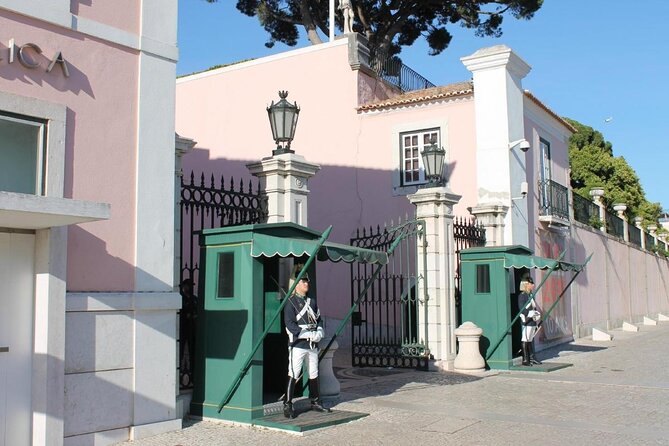
After you get your Lisbon center dose, you swing toward Belém with key stops that connect the city to Portugal’s overseas era. You pause at Belém National Palace, the official residence of the President of the Republic, built in 1559. The earthquake story comes in again here, since the royal family used tents on the palace grounds when fearing further quake risk, and the palace interior served as a hospital.
You also stop at São Bento Palace, the National Assembly building. It started as a monastery in the late 16th century and later changed names as the country’s political system evolved, going through Palácio da Cortes and Palácio do Congresso before it became the National Assembly site. Even just from outside, these palaces make Lisbon’s governance story feel close by.
Basilica da Estrela and the pastéis moment at Belém
Basilica da Estrela is a strong contrast to the older medieval stops, since its origins are tied to a royal vow. D. Pedro III and D. Maria I promised to build a church if they had a son to inherit the throne, and construction began in 1799.
That is where the story turns dramatic: the boy died of smallpox two years before the church finished. The design mix is described as Baroque in its final phase plus Neoclassical elements, with an interior of marble in several colors. There is also a strong royal burial detail here, since Queen D. Maria I is noted as not being in the Bragança Dynasty pantheon, but instead found in this basilica ordered by her.
Then comes Pastéis de Belém, the famous custard pastry with a clear origin story. In 1837, clerics from the Jerónimos Monastery sold pastéis de nata to survive, and Lisbon and Belém were connected by steamboats, bringing in visitors. After the monastery closed following the Liberal revolution, the recipe ended up with a Portuguese businessman from Brazil, Domingos Rafael Alves, and it remains in his descendants’ possession.
Your best move here is to treat it like a bite you plan around, since the tour itself does not list food and drink as included. You will likely have time to buy and eat your own, and the traditional way is warm, with powdered sugar and/or cinnamon.
One practical bonus: the tour time at Pastéis de Belém is a highlight for people who want to avoid the worst lines, and one guest specifically noted there was no waiting line for take-away during their visit. Still, lines can change, so keep your expectations flexible and use the time window wisely.
Jerónimos Monastery, Torre de Belém, and the Monument to the Discoveries
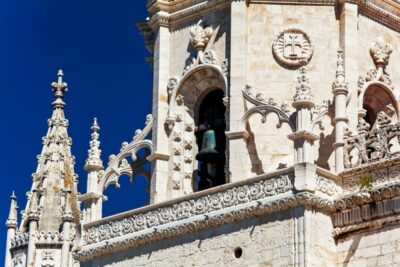
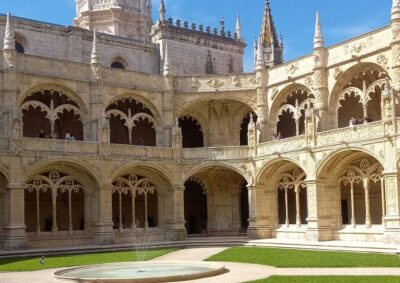
The Jerónimos Monastery stop is the heart of the Belém day. It was built by King D. Manuel I at the end of the 15th century and ties directly to Portugal’s sea voyages, since Infante D. Henrique ordered a hermitage in 1452 where great navigators held vigils before leaving.
The monastery replaced that hermitage, with construction phases stretching into the early 20th century. Important tombs are mentioned, including Camões and Vasco da Gama, and the monastery also serves as a pantheon.
This part of the experience is free of the “only one view” feeling. The monastery is large enough that even a short stop can still make an impact, especially if you are coming from the quick viewpoint pacing earlier in the tour.
Then you get Torre de Belém, a defensive tower formerly known as Torre de São Vicente a Par de Belém. The role here is direct: defending the Tagus riverbank, as part of a larger defensive formation that included towers at Caparica and Cascais.
Admission is not included for this stop, and the time window is short, so focus on the outside shape and the riverside context. If you are the type who likes naval history, this is where it clicks, because the tower’s job is easy to imagine.
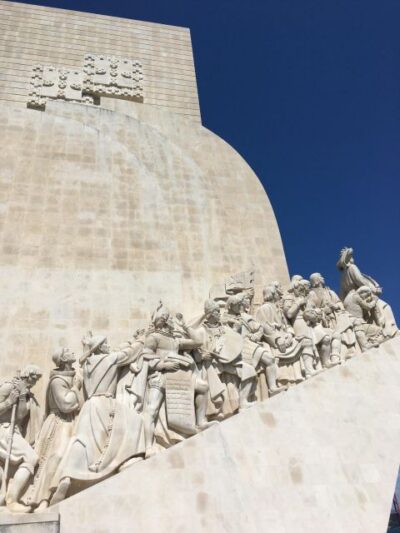
Finally, you visit Padrão dos Descobrimentos, the Monument to the Discoveries. It was built for the Portuguese World Exhibition in 1940, and the current replica was inaugurated in 1960. Even if you do not go deep into symbolism, it acts like a visual bookmark that connects Jerónimos to Portugal’s longer story of exploration.
Price and value: what you get for $150.85 per person
At $150.85 per person for roughly four hours, the value comes from combining three things that are hard to do efficiently on your own. You get private tuk tuk transportation, an English-speaking guide, and a tight route that touches both central Lisbon and Belém.
You also get a pattern that helps first-time visitors: you move from viewpoint to church to square to neighborhood, and each category reinforces the other. It is not just sprinting from one postcard to the next, you are getting context for why each spot matters.
The main cost caveat is admissions. Lisbon Cathedral, the Pantheon at Santa Engrácia, Torre de Belém, and the Monument to the Discoveries are listed with admission not included. You should treat those as optional pay-in decisions rather than automatic inclusions.
Also remember that food and drink are not included. You will probably want to buy at least one pastry at Pastéis de Belém, and this tour is best when you plan for that as your snack budget.
Who this tuk tuk tour is best for
This is a strong fit if you:
- Have limited time in Lisbon and want a high coverage loop.
- Want viewpoints plus churches plus Belém icons without wrestling with steep hills.
- Prefer short stops where you can choose what to go deeper on.
It is less ideal if you:
- Want long interior time in every church or monument. The visit windows are brief.
- Hate bumpy rides, since tuk tuk over cobblestones can be jarring.
- Need guaranteed, long photo-free time at every stop, since weather and road conditions can lead to adjustments.
Should you book this Lisbon to Belém 4-hour tuk tuk tour?
If your goal is to get your bearings fast and see Lisbon’s big themes in one outing, I think it is a smart booking. You get a private ride, lots of viewpoints and landmark context, and a Belém day that includes Jerónimos and the Tower area, plus a chance at the iconic pastéis.
Book it if you are happy with quick stops, and you are willing to pay any extra admission tickets for the places marked not included. Skip it if you want a slow, museum-like pace or you cannot handle a bumpy tuk tuk ride over cobblestones.
FAQ
How long is the tuk tuk tour?
The tour duration is about 4 hours.
Is the tour offered in English?
Yes, it is offered in English.
Is this tour private?
Yes, it is described as a private tour or activity, so only your group participates.
What is included in the price?
Private transportation and a mobile ticket are included.
What is not included?
Food and drink are not included. Admission tickets are also not included for some stops, including Lisbon Cathedral, Panteao Nacional, Torre de Belém, and Padrão dos Descobrimentos.
Are the viewpoints free to visit?
Some viewpoint stops are listed as free, including Miradouro Das Portas do Sol and Miradouro Da Senhora do Monte, as well as other viewpoint and church stops marked free.
Do I need good weather?
Yes. The experience requires good weather. If it is canceled due to poor weather, you are offered a different date or a full refund.
What is the average booking window?
On average, this tour is booked about 53 days in advance.
How does cancellation work?
You can cancel up to 24 hours in advance for a full refund.
Is there a mobile ticket?
Yes, the tour includes a mobile ticket.
More Tours in Lisbon



More Tour Reviews in Lisbon
Not for you? Here's more nearby things to do in Lisbon we have reviewed









Belem Tours, side by side.
 ★ 4.1Jerónimos Monastery Entrance TicketTickets from $2114,164 traveller reviews
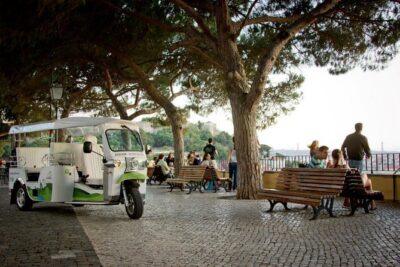 ★ 5.0Private Lisbon Sightseeing Tuk-Tuk Tour: Alfama, Belém & MoreTickets from $524,277 traveller reviews
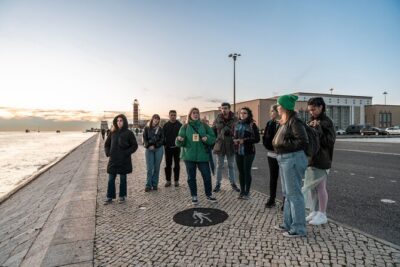 ★ 5.0Age of Discoveries Walking Tour in BelémTickets from $31,513 traveller reviews
 ★ 5.0Bike Tours Lisbon – Center of Lisbon to BelémTickets from $19686 traveller reviews
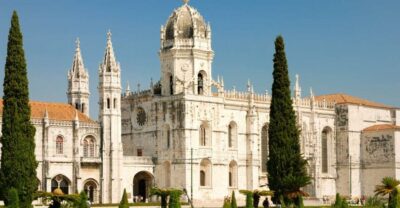 ★ 3.7Jerónimos Monastery E-Ticket and Audio GuideTickets from $33660 traveller reviews
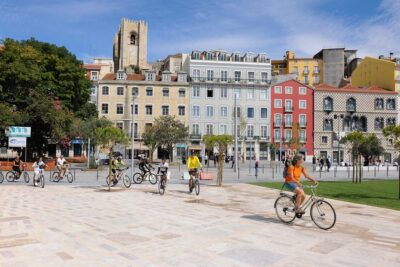 ★ 4.7Lisbon Bike Tour: Downhill Downtown Lisbon to BelémTickets from $45655 traveller reviews
 ★ 4.7Belem Walking Tour with Jeronimos Monastery TicketTickets from $61490 traveller reviews
 ★ 4.8Belem, Jeronimos Monastery, and Coach Museum TourTickets from $94478 traveller reviews
More useful lists for this tour