
Review · ALFAMA TOURS
Small-Group Alfama Walking Tour
Lisbon looks best from a viewpoint, then gets real on foot in Alfama. This 3-hour small-group walk strings together big panorama stops with neighborhood moments you normally miss, from Miradouros to working streets. I like that the pace stays human, with a guide focused on context, not a nonstop script.
Two things I really like: the small group size (max 8) means you can ask questions and actually hear the answers, and the route hits the sights people come for without feeling like you are on a factory conveyor belt. There is also a practical bonus if you are trying to orient yourself quickly, the Miradouros do that for you fast.
One consideration: this is not a flat walk. You will face steps and hills, and the tour is not recommended if you have difficulty walking. If you prefer long, easy strolls, you may want to plan for taxis for portions of your day.
Key things to know before you go
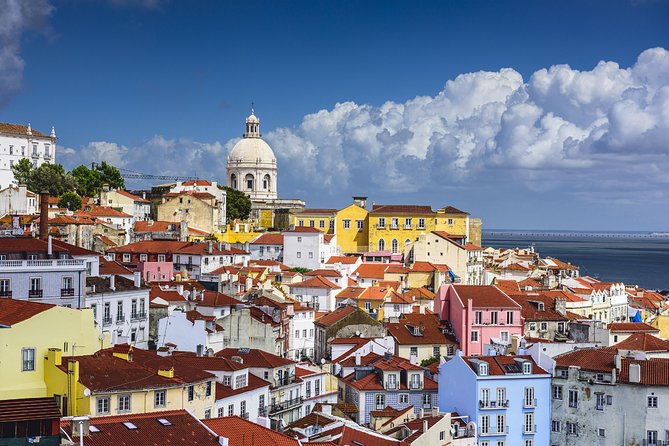
- Miradouro da Graça + Miradouro Nosso Senhora do Monte set the stage with postcard views before you go downhill into the old streets.
- You get church and convent stops tied to Lisbon’s long timeline, including the Augustinian convent and a church that survived the 1755 earthquake.
- If your day lines up with Tuesdays or Saturdays, you can experience Feira da Ladra, one of Lisbon’s older flea markets.
- The walk mixes big landmarks with everyday Alfama life, including stories connected to trade union activism and fado.
- Most stops are quick and free to enter, but National Pantheon exterior and Lisbon Cathedral interior are not included.
- Expect about 3 hours on foot, ending at Praça do Comércio near the water.
Small group Alfama walk: worth it for the human pace
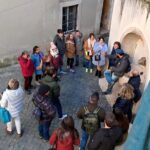
The best part of this tour model is the group size. With a maximum of 8 people, your guide can slow down when someone wants a photo, or when a question pops up about why a street looks the way it does. That matters in Alfama, where you can walk past something for years without realizing it has a story.
The route is built for variety in a short time. You are moving between viewpoints, churches, market energy, and local lanes. That blend keeps you from zoning out, and it helps you understand how Alfama works: high points for sweeping views, then down into the dense neighborhood fabric.
Guides can make or break a walk like this. The names I’ve seen associated with leading this experience include Andriy and Rui Fernandes, and they are praised for connecting Portugal’s history to what you see today, not just reciting dates. If you like when history explains the present, you’re in the right place.
You can also read our reviews of more walking tours in Lisbon



Miradouro da Graça to Miradouro Nosso Senhora do Monte: views that teach you the map
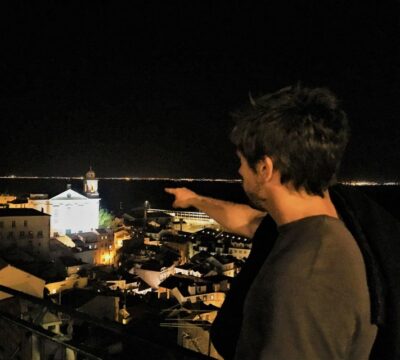
You start at Miradouro da Graça at Calçada da Graça. After a short intro with your guide, you begin with the kind of view that helps you instantly understand Lisbon’s layout. From up here you can spot downtown landmarks like Castelo de São Jorge, the old district of Mouraria, and the Tagus River shining behind it all.
This matters because Alfama can feel like a maze until you grasp what is above you and what is below you. The Miradouros do the heavy lifting. You learn how the hills shape routes, how sightlines influence where people gather, and why so many viewpoints became community anchors.
Also, the tour includes time at both Miradouro da Graça and Miradouro Nosso Senhora do Monte. You get more than one angle on the city, and that reduces the chance that you will feel like you saw everything from a single spot.
Churches and convents: where Lisbon’s timeline shows up in stone
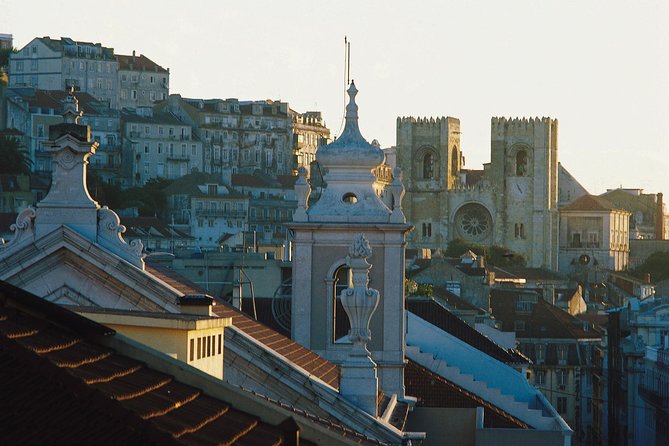
After the viewpoints, the walk shifts into places of worship, which is where Alfama’s character gets physical. You’ll admire Igreja & Convento da Graça, described as one of Lisbon’s oldest churches and convents, where Augustinian monks lived until 1834. Standing near buildings like this gives you a concrete sense of how long these streets have served the city.
Then comes Igreja de São Vicente de Fora, connected to Saint Vincent the Deacon, Lisbon’s patron saint. Churches in this area tend to be more than pretty facades. They act like cultural signposts, pointing you toward who held power, what the community valued, and how religion and civic life intertwined over centuries.
One stop you should be excited about, especially if you like survival stories, is Igreja de São Miguel, visited at the exterior. It is noted as a church that survived the 1755 earthquake. Even without going inside, that kind of detail adds emotional weight to the neighborhood. It turns a quick exterior look into a real “how is this still here?” moment.
The charming flower terraces and that fun Lisbon street feeling
Between the bigger landmark moments, you get time for smaller details. One segment is a visit to a charming little street lined with houses that have large terraces, decorated with buganvilia and other flowers.
This is more than sightseeing cuteness. Alfama buildings often look the way they do because people have always lived close together, then expanded outward where they could. Terraces and flowers are part of that living culture. You get a sense of how the neighborhood breathes in daily life, not just during official holidays.
If you’re the kind of person who likes to pause and absorb texture, you will appreciate these stops. They also give your legs a mental breather between hills.
Trade union activism and local stories: history beyond monuments
Not every walking tour in Lisbon focuses on the voices inside a neighborhood. Here, you learn about the history of trade union activism in Lisbon while walking through the area.
That matters because it adds a social layer. Monuments tell you what the powerful wanted recorded. Stories about labor and organization show you what ordinary people fought for. In a district like Alfama, where communities formed tightly, these kinds of stories help explain the neighborhood’s resilience and identity.
This is the kind of stop that makes the tour feel less like checklists. It helps you see Alfama as a living place, not only an old backdrop for photos.


Feira da Ladra: flea market energy on the right days
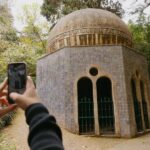
If your schedule lands on Tuesday or Saturday, you get Feira da Ladra. This is described as one of Lisbon’s oldest flea markets, and the point of this stop is atmosphere.
You get about 15 minutes, which is a practical window. It is long enough to wander the vibe and notice how people haggle, browse, and treat the market like a social rhythm. It is not long enough to trap you into shopping for an hour, which I appreciate when a tour is built around multiple stops.
Even if you do not plan to buy anything, the market is a useful lens into Lisbon life. It makes the surrounding streets feel less like scenery and more like a place with real routines.
Alfama walking segment: everyday life, not just viewpoints
A big block of time is devoted to getting acquainted with Alfama itself, including 30 minutes to understand the neighborhood and everyday life of its inhabitants.
This is where the route earns its name. Alfama is not just churches and viewpoints. It’s narrow lanes, tight corners, and the sense of a community still moving at its own tempo. When a tour gives you time here, you can actually connect the earlier viewpoints to what you see on the ground.
There’s also a stop that includes a viewpoint at Miradouro de Santo Estêvão, described as Alfama’s best viewpoint, paired with quick looks at tiny streets that characterize the historic neighborhood.
One more layer you get: an exterior visit linked to fado music. Fado is not a museum topic in Lisbon. It is part of social memory, and having the connection explained while you are walking helps it click, even if you never sit down for a full performance during the day.
National Pantheon and Lisbon Cathedral: what’s included, what might cost extra
At the National Pantheon, you’ll receive an exterior visit and admire its monumental scope. This is noted as a mausoleum to some of the greatest Portuguese men and women. It’s a good stop if you want to widen from the neighborhood scale to national significance.
Just note the catch: the National Pantheon admission is not included. Since you’re seeing it from outside here, you won’t feel like you missed a major portion. Still, if you are the type who loves interiors, you might want to plan a separate visit.
Later, you can tour Lisbon Cathedral interior with a detailed look inside. The cathedral stop is marked as not included, so that likely means you may pay on site if you choose to go in. The upside is that you get the chance to decide with your legs and your schedule.
Ending at Praça do Comércio: a calmer finish by the water
The walk ends at Praça do Comércio, a strong final move. It is near the river, which helps you decompress after the tight streets and step-heavy sections you just navigated.
That ending matters for practical Lisbon travel. You can use the area as a launch point for your next stop, whether you want a meal, a tram ride, or just time to sit and watch the water for a bit.
It also gives you a nice visual “reset.” Alfama pulls your senses inward, then Praça do Comércio opens the view back up.
Price and value: $39.50 for 3 hours of guided orientation
At $39.50 per person for about 3 hours, this tour is priced like a smart “orientation + highlights” experience, not a long, museum-heavy day. You’re paying for guided interpretation plus the convenience of a route that strings together major stops without you needing to plan the order.
The tour includes local taxes, a local guide plus a professional guide, and a tour escort or host. You also get a small-group walking format, which is often the difference between hearing details and just walking past stuff.
Most stops are free entry, but not all. National Pantheon exterior and Lisbon Cathedral interior are marked as not included. Still, because a large part of the route is free, the overall cost usually stays predictable.
If you are trying to avoid decision fatigue on your first or second day in Lisbon, this kind of structured walk can be a good value play.
Timing and walking reality: good for most people, not for everyone
The total time is about 3 hours. Most of the stops are short, which helps keep you moving. Still, this is Lisbon, and it is hilly. Even when the route trends mostly downhill, you can expect steps.
This is why the tour is not recommended for travelers with difficulty walking. If stairs and uneven footing are hard for you, you might feel rushed or uncomfortable. On the flip side, if you are a steady walker with the right shoes, you should handle it fine.
One practical tip: wear comfortable footwear with grip. You will be on stone and uneven street surfaces, and you want your focus on the neighborhood, not your next step.
Who should book this Alfama tour, and who should skip it
I’d point you to this tour if you want:
- A small-group introduction to Alfama with time at real viewpoints
- A guide who connects history to what you see now
- A day that includes churches, market atmosphere, and neighborhood storytelling
- A walk that ends in a useful location near the water
I would skip it or swap strategy if:
- You cannot handle steps or steep sections
- You only want low-effort, flat walking
- You prefer long time inside big attractions, since some key sites here are exterior only or may cost extra for interior access
Should you book this small-group Alfama walking tour?
Yes, if your goal is to understand Lisbon’s old soul in a few hours. This is a solid value for the combination of viewpoints, churches tied to the city’s timeline, and the neighborhood stories that make Alfama feel lived-in.
If you are choosing between doing everything solo and doing guided, I’d lean toward booking. The guide’s context, plus the tight group size, helps you see more than you would on your own, especially in a district where every corner looks similar until someone explains what matters.
FAQ
What is the duration of the Alfama walking tour?
The tour runs for approximately 3 hours.
How many people are in the group?
This experience is limited to a maximum of 8 travelers.
What language is the tour offered in?
The tour is offered in English.
Where does the tour start and end?
It starts at Miradouro da Graça (Calçada da Graça, 1100-265 Lisboa) and ends at Praça do Comércio (1100-148).
Are tickets included for all stops?
Most stops list admission tickets as free, but National Pantheon exterior and Lisbon Cathedral interior are not included.
Is the tour good for people with limited mobility?
It is not recommended for travelers with difficulty walking.
What days does the Feira da Ladra stop happen?
Feira da Ladra is included on Tuesdays and Saturdays.
Is there any cancellation protection if the weather is bad?
There is free cancellation, and if the experience is canceled due to poor weather, you will be offered a different date or a full refund.
If you tell me what day of the week you are going and your comfort level with hills, I can help you decide whether this is the right fit for your Lisbon schedule.
More Walking Tours in Lisbon



More Tours in Lisbon



More Tour Reviews in Lisbon
Not for you? Here's more nearby things to do in Lisbon we have reviewed










Alfama Tours, side by side.
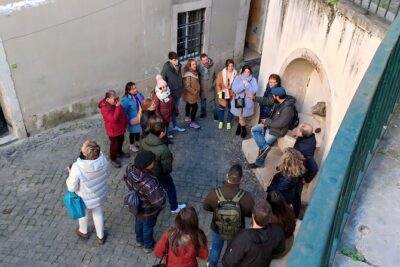 ★ 5.0Alfama Tour in Lisbon Old TownTickets from $34,936 traveller reviews
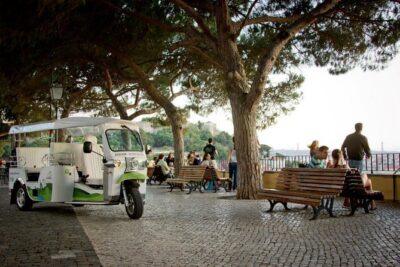 ★ 5.0Private Lisbon Sightseeing Tuk-Tuk Tour: Alfama, Belém & MoreTickets from $524,277 traveller reviews
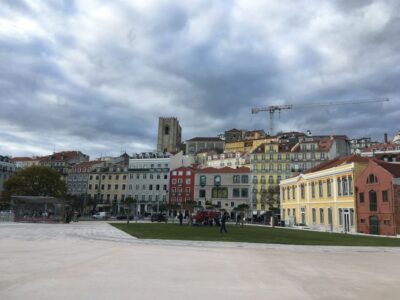 ★ 4.8Hills, Alfama, and Mouraria Tour by Electric BikeTickets from $253,438 traveller reviews
 ★ 4.9Best of Lisbon Walking Tour: Rossio, Chiado & AlfamaTickets from $232,700 traveller reviews
 ★ 5.0Lisbon Small-Group Food Tour with 18 Tastings in Alfama DistrictTickets from $1261,967 traveller reviews
 ★ 4.5Lisbon E-Bike Tour Commerce Square, Mouraria and AlfamaTickets from $301,688 traveller reviews
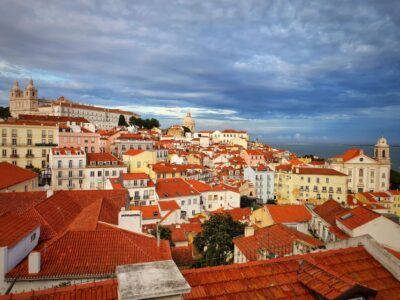 ★ 5.0Old Town TukTuk Tour and Scenic Viewpoints in AlfamaTickets from $35974 traveller reviews
 ★ 4.4Alfama Tour and Live Fado with Traditional DinnerTickets from $58970 traveller reviews
More useful lists for this tour