
Review · SETUBAL & SESIMBRA TOURS
Setúbal,Sesimbra & Palmela – Private tour, Nature & Culture
Morning in Portugal can change your whole perspective fast. This private nature and culture route threads together castles, fortifications, and Manueline church architecture, then tops it off with coast views from the Arrábida Natural Park and Sesimbra. It is a long day, but it is packed with variety, and the drive keeps you moving without wasting hours.
I especially like two things: the mix of big-picture history and quick, tangible moments. You get to climb or stand in places that were built for defense, then you shift gears to a working fish market and coastal sanctuaries where local life still matters. Second, I like that so many stops are free admission on paper, so your money goes more toward the day itself: the vehicle, the guidance, and the route that ties regions together.
One drawback to consider: this day can feel hilly and walk-heavy in spots. Palmela Castle, São Filipe Fort, Sesimbra’s walls, and the Arrábida viewpoints all ask you to step out and keep your footing, so wear proper shoes and expect some uneven stone.
Key highlights you will actually feel
- Palmela Castle: a high defense position tied to the Order of Sant’Iago da Espada
- Mercado do Livramento: tile-covered fish-market interiors, plus a real-world reputation
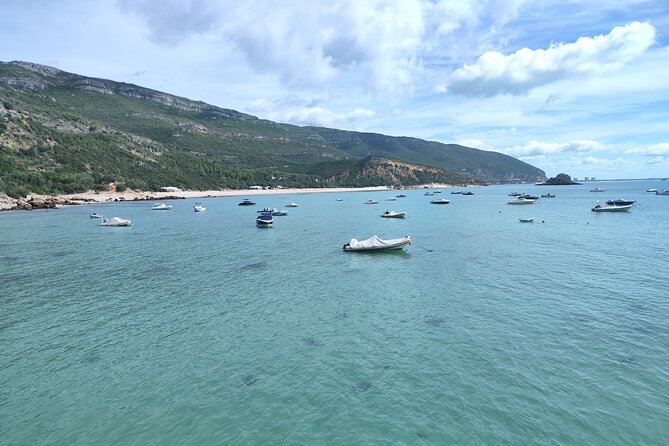
- Arrábida Natural Park: sea-and-cliff scenery near Setúbal, with beach time at Portinho da Arrábida
- Fortress to museum: Fortaleza de Santiago restored and paired with the Sesimbra Maritime Museum
- Cabo Espichel Sanctuary: a complex set of buildings within the Arrábida Natural Park
Why this day trip works: three towns, one storyline
Setúbal, Sesimbra, and Palmela can sound like a lot of stops, but the route makes sense when you think of it as a single coastal story. The theme is defense and faith along the water, then local food and working ports, then a final sweep of viewpoints that explain why people built here in the first place.
If you like travel days where you learn something and also feel like you are on vacation, this one fits. You are not stuck in one museum room. You are bouncing between viewpoints, old stone, and everyday sights like a fish market.
Also, the tour is built for comfort. You ride in an air-conditioned vehicle with WiFi on board, and you get guided monument time at the stops that matter most.
You can also read our reviews of more private tours in Lisbon



Price and value: what your $90.31 really pays for
At $90.31 per person for about 7 to 8 hours, the price sounds like a “day trip cost” until you see what is included. You are paying for private transportation, an expert driver-guide, and the time it takes to connect far-flung towns efficiently. You also have all fees and taxes handled, plus full insurance coverage.
Another value point: the itinerary lists free admission tickets at every stop shown. That does not mean you never spend anything (lunch is not included), but it does mean your ticket budget stays under control.
If you are traveling as a couple or small group and you want a guided route without parking and navigation stress, a private tour option is often where the math starts to work in your favor. You also get group discounts listed, which can help if your group size is on the higher end.
Start time, pickup, and how not to lose the morning
The tour starts at 9:00 am. If you select the shared setup, your meeting point is either Hard Rock Café, Lisbon or Casa da Baía, Setúbal. If you choose the private tour, pickup and drop-off are included in hotels, local accommodation, cruise terminals, and the airport.
You end back at the meeting point, so you are not scrambling to get home after the last viewpoint. For communication, use WhatsApp through the contact provided so you can lock in the exact pickup details without back-and-forth.
One practical tip: because the day is long and includes multiple heritage sites, treat this as a real outing. Bring water, plan for stairs and sloped streets, and keep your phone charged for photos from the forts.
Palmela Castle: defense at the highest point
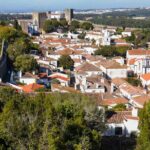
Your first big stone moment is Castelo de Palmela, set at one of the highest points in the Serra da Arrábida. That location is not just for views. It is the point: it is described as difficult to access, which is exactly what made it effective for territorial defense.
Here is the history thread you will hear: during the Christian Reconquista led by D. Afonso Henriques, Palmela sat along a defense line south of the Tagus. The king donated the territories of Palmela, Almada, and Alcácer to the Order of Sant’Iago da Espada, using the castle for defense and settlement. In 1205, D. Sancho I confirmed the donation and installed the chapter of the Order in the castle.
Later, the castle enters the architectural era. In the 15th century, D. João I ordered restorations, especially the keep, and directed the construction of a convent that became the seat of the Order from 1443 onward. The friars stayed there until the religious orders were extinguished in 1834.
How to enjoy it: spend a little extra time simply looking outward before you rush to photos. When you stand where defenders once stood, the coast and hills start to read like a map, not just scenery.
Time on site is listed as 45 minutes with free admission.
Mercado do Livramento: fish market energy and serious tiles
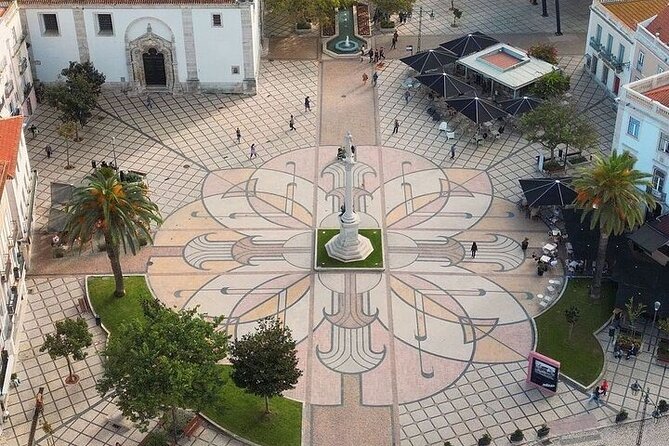
After the castle comes the sensory reset of Mercado do Livramento in Setúbal. This is a working market, and it is a short stop, but it is one of the best places to feel local rhythms without doing a long food crawl.
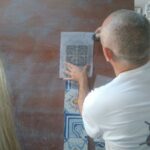
The market opened in 1930, after replacing another market demolished in 1876. The interior got a major remodel between 2010 and 2011, and the most eye-catching features are the tile panels inside.
These tiles show the city’s economic activities. They were designed by Portuguese engraver and painter Pedro Pinto, dating from 1929. At the north entrance, you also find two more panels by Rosa Rodrigues, with images of the city from 1944.
One of the most useful practical details: the market got international attention. In June 2014, USA Today recognized Mercado do Livramento as one of the best fish markets in the world. Even if you just peek in and don’t eat right away, it helps you understand why this is more than a random indoor bazaar.
Time on site is 30 minutes, free admission listed.



SetúbalSouv: a quick stop for cork-and-wood souvenirs
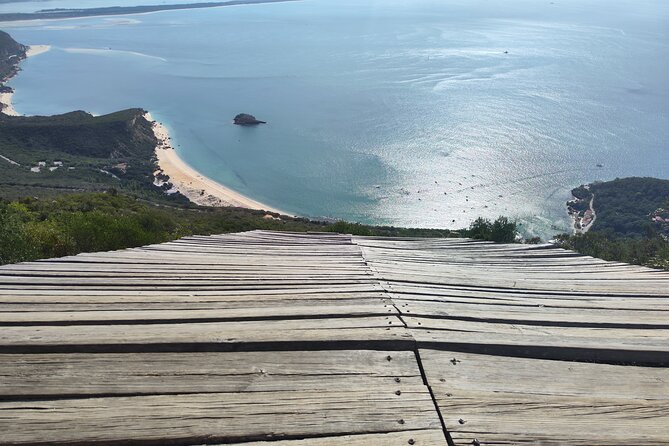
Between monuments, you get a light local stop: SetúbalSouv, a souvenir shop made by local artisans. The description calls out a fish-shaped building made of cork and wood, which makes it an easy “two minutes to browse, ten minutes to smile” kind of stop.
This is not a museum. It is for practical keepsakes, especially if you want something local that is not a mass-produced postcard. Time on site is 15 minutes, free admission listed.
The Church of Jesus: Manueline architecture without the slow grind
Next up is the Church of the former Monastery of Jesus. If you care about architecture, this stop has a strong payoff, but you do not have to spend all day to see why it matters.
The convent and church are presented as landmarks in Portuguese architectural history, marking the beginning of the Manueline style. Work began in 1490 and apparently ended in 1496, led by Diogo Boitaca, who also worked on major sites like the Jerónimos Monastery, Belém Tower, and Batalha Monastery.
The Church of Jesus is described as Portugal’s first attempt at a church-hall, designed as a homogeneously lit space. It also used inventive solutions for the time, including round arches, vaults based on lowered arches, and a network of ribs.
Time on site is 15 minutes, free admission listed. That brevity is ideal if you want a hit of architectural detail without turning the entire day into an indoor marathon.
São Filipe Fort: where the coast becomes a panorama

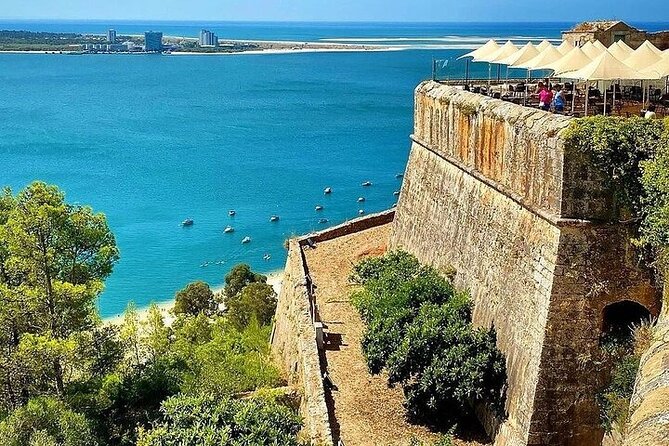
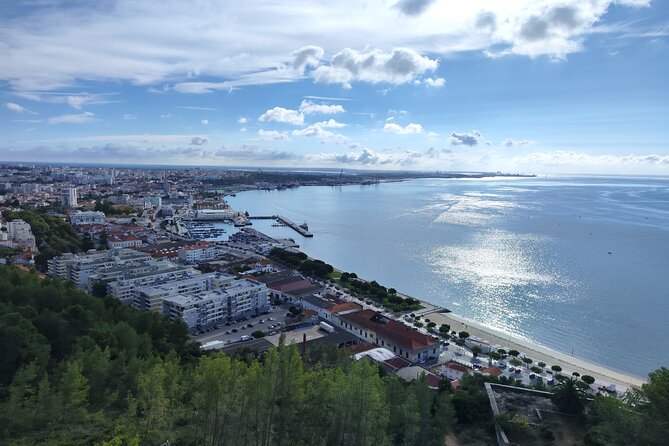
Setúbal’s Forte de São Filipe is one of those places that makes your camera work overtime. It was once an important defensive and control bastion for the city, and today it reads like a viewpoint package with history attached.
The fortification is linked to Spanish influence. It came from orders by Spanish monarch Philip II to fortify the coastline protecting Setúbal and the mouth of the Sado River. Designed by Captain Fratino in 1583, the fort has an irregular polygonal plan in the shape of a six-pointed star with six bastions. It sits on a steep slope over the sea and is protected on the north side by a second walled line.
What you should pay attention to while you are there: forts like this are not only about walls. They are about line of sight, controlling movement, and controlling approaches. From the fort walls, you get one of the most breathtaking panoramic views of Setúbal and the bay.
Time on site is 45 minutes, free admission listed.
Serra da Arrábida and Portinho da Arrábida: sea colors and park geometry
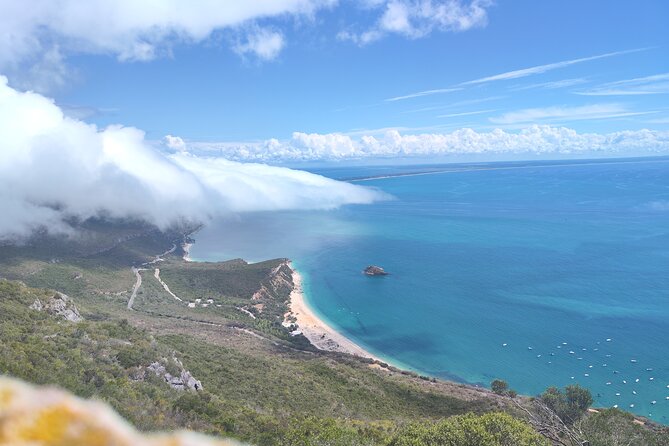
Now you get the nature portion, and it is not vague. Serra da Arrábida is part of the Arrábida Natural Park, close to Setúbal, and the tour positions it as an area of paradisiacal beaches, viewpoints, mysterious caves, and castles to visit. Your time on this stop is listed as 45 minutes, so treat it like viewpoint time, not a long hike.
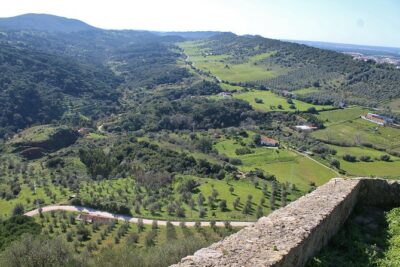
The natural park context helps you understand what you are seeing. It has very steep terrain across multiple mountain ranges: Serra do Louro, Serra de São Luís, and several others, with the highest point at 501 meters. The park covers about 10,800 hectares, stretching across Palmela, Sesimbra, and Setúbal.
Then you head to Portinho da Arrábida, a small town beach area near the village. Portinho da Arrábida’s big draw is the calm, clear, cold water and the setting at the foot of the mountain. The beach is rocky and has some beach facilities, including restaurants.
There is also a recognition note: in 2010, it won a distinction for being considered one of the 7 natural wonders of Portugal in the beaches category.
Time on site is 30 minutes, free admission listed.
Practical shoe and clothing advice: this is a day where you will want something comfortable for uneven ground near viewpoints and rocky edges.
Sesimbra Castle: the last sea castle feeling like medieval stone
After Arrábida, you shift to Sesimbra’s historic waterfront mood with Castelo de Sesimbra. The tour describes it as the last Portuguese sea castle that maintains its medieval design. It was classified as a National Monument on June 16, 1910.
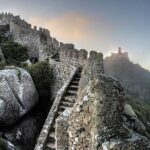
This stop comes with built-in structure: you can explore the site, where there are two permanent exhibitions about its history and a heritage interpretation center. There is also a church and a disused cemetery. You can walk along the walls for sea and town views, and there is a café with a terrace offering local products.
Even if you are not a museum person, castles are often best for the walk and the view line. Here, the walls are the star, and the views over Sesimbra and the region are specifically highlighted.
Time on site is 45 minutes, free admission listed.
Fortaleza de Santiago and the Sesimbra Maritime Museum
Next comes Fortaleza de Santiago, which has coexisted with the Sesimbra community for 365 years. It was built when danger came from the sea and maritime borders needed defense, but history later reduced its defensive role.
The tour notes careful restoration work that preserved as much of the original structure as possible. Fortaleza de Santiago opened to the public in July 2014. After that, visitors could understand the original functions of different spaces, including the magazine area, the Governor’s house, and dormitories, and how the fortifications worked.
In 2016, the space got its big museum connection: the Sesimbra Maritime Museum, covering the history of the sea, fishing, and the fishing community from early times to the present.
Time on site is 45 minutes, free admission listed.
My take on why this works: pairing a restored fort with a maritime museum gives you both the physical logic and the human logic. You do not just see architecture. You also get the context of how people lived and worked around the sea.
Cabo Espichel Sanctuary: legend, baroque buildings, and wide-open sky
Your next stop is Cabo Espichel, home to the Cabo Espichel Sanctuary, also known as the Sanctuary of Nossa Senhora da Pedra Mua. It sits within the Arrábida Natural Park, west of Sesimbra, marking the southwestern tip of the Setúbal peninsula.
The tour includes the legend: an apparition of Our Lady took place there. It also notes that the primitive sanctuary described in earlier visitations is gone, but worship continued through later developments.
Architecturally, this sanctuary is described as a collection of buildings with clear time periods. The church was built between 1701 and 1707 in a floor-to-ceiling style. There are two wings of inns built between 1745 and 1760, a water house dating from 1770 supplied by an aqueduct, and an opera house from the end of the 1800s.
If you like religious architecture, this stop offers a different kind of wow. It is not a single building, it is a whole complex that evolved as the sanctuary attracted pilgrims and services.
Time on site is 1 hour, free admission listed.
Cristo Rei: the final viewpoint over Lisbon and Almada
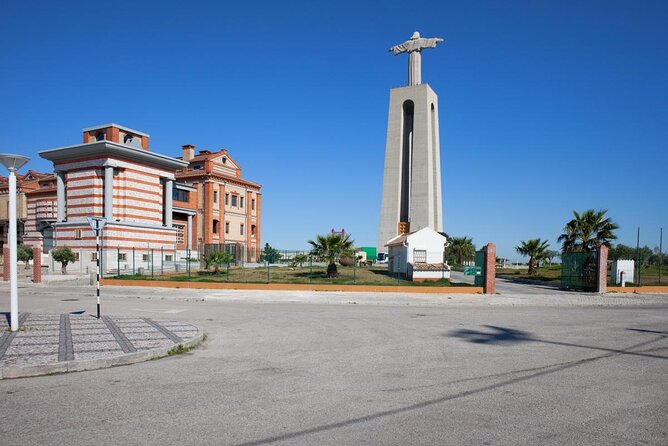
The last major stop is Santuario Nacional de Cristo Rei. This one is included for a reason: it gives you a 360-degree view connection back toward Lisbon.
The desire to build a monument to Christ the King began in 1940, when Portuguese bishops vowed to build a Monument to the Sacred Heart of Jesus over Lisbon if Portugal were spared during the war. Portugal stayed neutral during World War II, and that fact is described as decisive in launching a national fundraising campaign. Construction culminated in 1959, when the monument opened.
The monument rises 113 meters over Almada and Lisbon, with a panoramic view over both banks of the Tagus River and surrounding areas. Within the monument’s four pillars, you also find the Chapel of Our Lady of Peace. The image of Our Lady is described as a replica of one offered in Rome on the occasion of the Holy Year of 1950.
Time on site is 45 minutes, free admission listed.
If your energy is starting to dip, this stop is still worth it because you get the payoff of the day visually. The coast you just toured suddenly makes more sense from above.
Lunch strategy for a 7 to 8 hour circuit
Lunch is not included. The tour does say you will have a selection of incredible restaurants that never disappoint, but you still need to plan how you want to handle meals.
My practical suggestion: decide in advance whether you want a simple, fast meal or a slower sit-down lunch. With multiple sites, a slow lunch can eat time quickly. If you want a calm meal, build it into the middle of the day when you feel best, not at the end when viewpoints are waiting.
Also, bring a backup snack. The itinerary is short at many stops (some are 15 minutes). That is perfect for momentum, but you do not want to be hungry during the best photo windows.
About your guide: the Hugo factor
One name keeps showing up with this style of tour: Hugo. In the feedback, Hugo is described as knowledgeable and kind, and the tone is very human, like family. That matters because this route is a lot of content in one day. A good guide helps you connect the dots between defense, religion, and coastal life without turning it into a lecture.
If you want a day that feels friendly and not rushed, look for a guide style like Hugo’s. It is the difference between collecting photos and actually understanding why these places exist.
Who should book this, and who should consider another option
This is a strong fit if you want:
- A guided day that combines history and sea views
- A private-leaning experience that is still efficient for first-time visitors
- Multiple places with free admission listed, so you can spend on food and time instead of tickets
You might want a different kind of tour if:
- You do not handle hills and uneven stone well. Several stops are in elevated or fort-like areas.
- You prefer long beach stretches. Portinho da Arrábida is time-limited, and the Arrábida portion is more “viewpoints and scenery” than a long nature hike.
Should you book this private Setúbal, Sesimbra, and Palmela tour?
Based on the structure, it is a good choice if you like variety and want your day to feel full without feeling chaotic. You get transportation, guidance, WiFi on board, insurance coverage, and a route that ties together fortifications, market life, and coastal viewpoints.
The rating data is also encouraging: it has a 5 out of 5 rating from 15 reviews, with 100% recommendation. That lines up with the kind of experience this itinerary is built for, a clear sequence of places that add up to more than a checklist.
Book it if you want one day in the Setúbal and Sesimbra region that feels like you understand the coast, not just visited it. Skip it if you want a slow beach day or if you know you will struggle with stairs and steep ground.
FAQ
What time does the tour start?
It starts at 9:00 am.
Where do I meet for the shared tour?
For the shared tour, the meeting points are Hard Rock Café, Lisbon, or Casa da Baía, Setúbal.
What about pickup for the private tour?
For the private tour, pickup and drop-off are included in hotels, local accommodation (Airbnbs), cruise terminals, and the airport.
How long is the tour?
The duration is listed as 7 to 8 hours (approx.).
Is the tour offered in English?
Yes, the tour is offered in English.
Is admission included for the stops?
The itinerary lists free admission tickets for the stops shown.
What is included in the price?
Included items are an air-conditioned vehicle, WiFi on board, all fees and taxes, guided tour of the monuments, private transportation, and full insurance coverage.
Is lunch included?
No. Lunch and snacks are not included, and personal expenses and tips are not included either.
How many travelers are in the group?
The maximum is 16 travelers.
More Private Tours in Lisbon


More Tours in Lisbon



More Tour Reviews in Lisbon
Not for you? Here's more nearby things to do in Lisbon we have reviewed








Setubal & Sesimbra Tours, side by side.
 ★ 5.0Private Wine Tasting in the Setúbal Wine Region, from LisbonTickets from $151611 traveller reviews
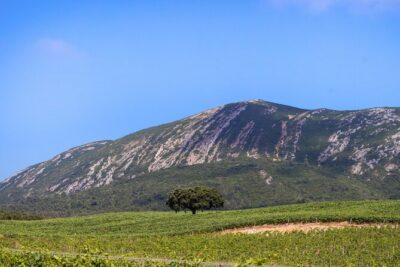 ★ 5.0Arrabida and Sesimbra Small-Group Day Trip from Lisbon with Wine TastingTickets from $90494 traveller reviews
 ★ 4.8Arrábida and Sesimbra Day Trip with WineTickets from $75366 traveller reviews
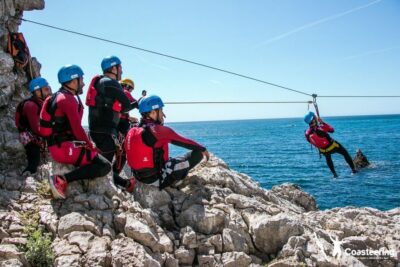 ★ 4.9Sesimbra/Arrábida Natural Park Coasteering AdventureTickets from $76345 traveller reviews
 ★ 4.9Arrábida Natural Park and Sesimbra Day TripTickets from $88232 traveller reviews
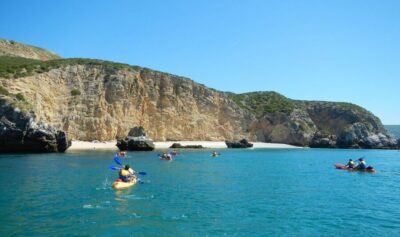 ★ 4.8Sesimbra: Arrábida Natural Park Guided Kayaking TourTickets from $47180 traveller reviews
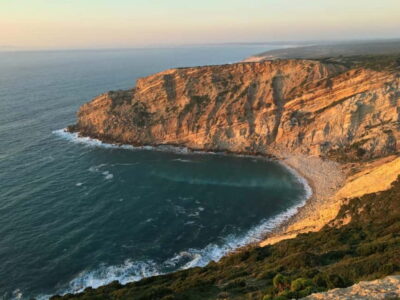 ★ 4.9Sesimbra & Arrábida National Park Tour with 5 Wines TastingTickets from $85153 traveller reviews
 ★ 4.5Setúbal Wine Tour with Visit and Tasting at 2 WineriesTickets from $117149 traveller reviews
More useful lists for this tour