
Review · WALKING TOURS
Mouraria: The Multicultural District – Private Walking tour
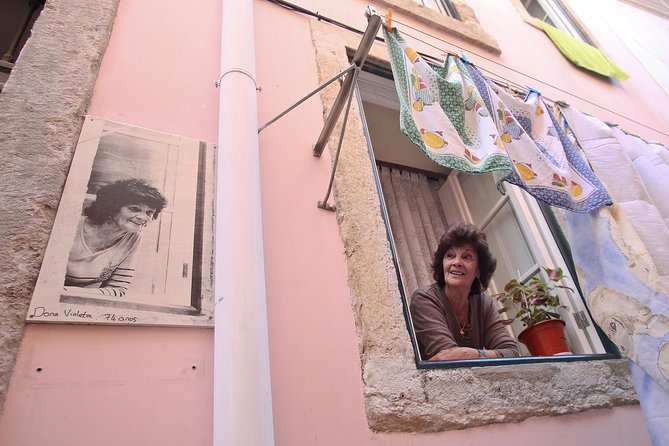
Mouraria is where Lisbon changes its outfit. This private 3-hour walk mixes street art on historic walls with a guided story of Moorish roots and why Fado is thought to have started here. I love how the route hits major sights without feeling rushed, and I love the personal attention that lets you ask questions as you go. One consideration: it is a walking tour, so bring comfortable shoes and expect some uneven old-street footing.
The bonus is that you get a true neighborhood flow, not just a photo stop tour. Each visit is kept short, and most places are ticket-free, so your time goes to seeing and understanding. With the guides working together, including a photographer guide, you will have an easier time getting great shots and still learning what you are looking at, even if you only have one afternoon.
Key things you should notice before you go

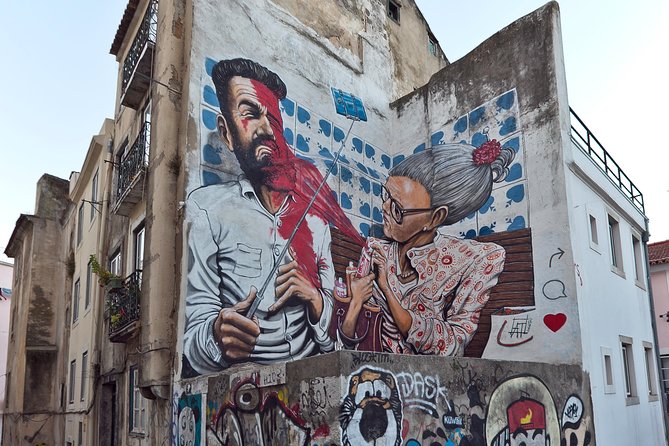
- Street art with context, not random murals, with named spots and local artists such as Camila Watson
- Moorish history to Fado connections, guided in a way that makes the neighborhood feel logical
- Short, high-yield stops, most around 15 to 20 minutes, so the whole route works in a 3-hour window
- A private format for your group only, which usually means a better pace for questions and photos
- A photographer guide included, helpful if you want better pictures but still want to keep moving
- Free admission for the key stops, so you can focus on enjoying the area instead of ticket logistics
Why Mouraria Works for a 3-Hour Lisbon Walk
If you only know Lisbon from postcards, Mouraria will correct that fast. This is a patch of the city with deep layers, where the buildings are old but the street culture is active right now. The tour’s best trick is balance: you get viewpoint drama, religious and architectural details, and contemporary street art in one flowing loop.
I like that you are not stuck in one theme. You start with a high viewpoint, then you move into a very specific church-and-square stop, then you shift to social spaces and murals. By the time you reach the Fado area and the multicultural squares, the neighborhood story feels less like trivia and more like a map in your head.
And yes, the value feels strong for a private tour. At about $32.51 per person for roughly 3 hours, you are paying for guided expertise, plus a photographer guide. That is a lot easier than building a self-guided plan and then trying to guess which turns will pay off.
You can also read our reviews of more walking tours in Lisbon



Price and what you really get for $32.51
This tour costs $32.51 per person and runs about 3 hours. The private part matters. When it is only your group, you are less likely to get swept along at someone else’s speed. It also makes the short stops work better, since your guide can tailor what you linger on based on your questions.
What sets this one apart is the guide lineup. You have a local guide, a professional guide, and a professional photographer guide. That combo makes the tour feel like two things at once: a real walking history experience and a photo-friendly route. If you like taking pictures, you will probably appreciate having someone who helps you plan where to stand and how to frame the street art and church facades.
Also, most planned stops are free in terms of admission. That means your money is going to people and time, not to a stack of ticket lines. One small caution, though: free admissions do not mean you avoid all walking. You still cover multiple neighborhood blocks, so plan on moving.
Your private route starts near Intendente
You begin at R. dos Fanqueiros 170, in central Lisbon, and your end point is Largo do Intendente Pina Manique. The meeting location is close to the Intendente underground station, which is handy because you can arrive, meet up, and start walking without a complex commute.
End near Intendente is smart for practical reasons. You will finish in an area where you can keep exploring on your own, or easily hop to public transport. That matters at the end of a walking tour, when you do not want to spend your energy on getting back across town.
Most people can join this tour, and it is offered in English. The tour can also be operated by a multi-lingual guide if needed, which is useful if your group includes different language preferences.
Stop 1: Miradouro Chao do Loureiro for your first Lisbon breath

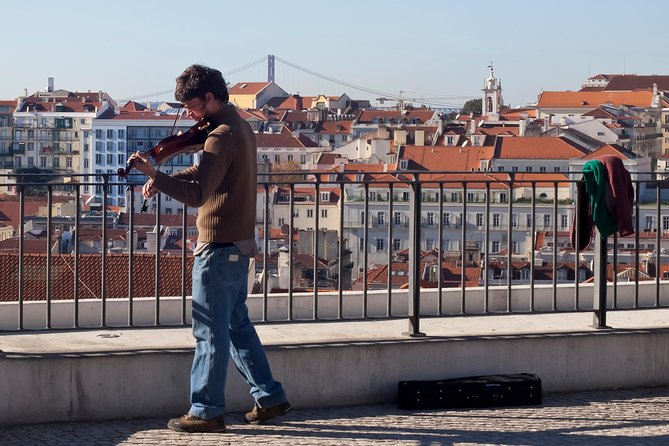
You start at Miradouro Chao do Loureiro. This viewpoint hangs over downtown Lisbon and sits somewhere between Alfama and Mouraria. You get about 20 minutes here, and admission is free.
I love this as a first stop because it resets your sense of direction. You look down, you spot where the neighborhood sits, and suddenly the later narrow streets make more sense. It is also a good warmup: you are not immediately dealing with the densest part of old Lisbon streets. You get to stand, look, and settle.
Practical tip: bring your camera, but also bring patience. Viewpoints attract people, and you may need to wait a moment to get a clear shot without blocking others. If the light is strong, consider taking one wide photo first, then a closer shot after the crowd shifts.
Stop 2: Igreja Paroquial de São Cristóvão e São Lourenço in one stop
Next you visit Igreja Paroquial de São Cristóvão e São Lourenço. The description alone tells you why it belongs on this route: it is a Mannerist church, a Baroque palace feel, a Gothic door, and it sits in one of the most popular squares in Mouraria.
This stop is about seeing layers in the same place. Lisbon often mixes styles because it keeps being rebuilt and re-used. Here, the mix is visible enough that you can practice “reading” the building. You look for the different styles in the door, the overall church structure, and the square setting.
Drawback to consider: squares are living spaces. Expect some noise and normal street activity around you. If you are the type who needs quiet for photos, you might prefer to focus on architectural details and step slightly aside from the busiest angles.
You can also read our reviews of more private tours in Lisbon





Stop 3: Casa da Achada and Mario Dionísio street art in medieval walls
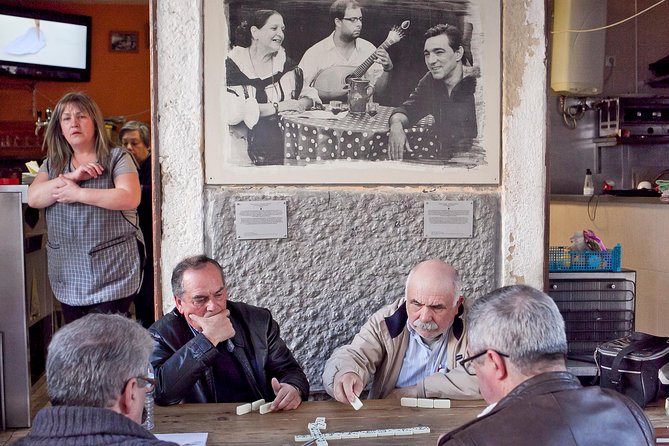
Casa da Achada is the next shift in mood. This social and cultural center connects to the legacy of Mario Dionísio and sits in medieval buildings. What you will notice is how the past frame meets 21st-century street art.
You get about 15 minutes here. Admission is free.
This is one of those stops where I think the guided context matters. Street art can feel like random decoration if you do not know where it fits in the neighborhood’s social life. The fact that it is tied to a specific cultural center and a named legacy gives you something to anchor on, so you can look with more intention.
Practical note: if you want photos, look for walls that give you both street art and architectural lines. Medieval building shapes can add structure to your images, making the murals feel less flat.
Stop 4: Largo dos Trigueiros and Camila Watson’s street projects

At Largo dos Trigueiros, the focus turns to street art projects by Camila Watson. You have about 15 minutes and admission is free.
What I like about this stop is the specificity. Named artists and named projects help you feel like you are not just chasing murals. You can spot the street art, then your guide can explain what it is doing in the street and how it fits the neighborhood identity.
One consideration: street art changes. Paint can fade. Pieces can get covered or altered. That is not a bad thing. It is part of street art living in the public world. Just know that your experience will be time-dependent, and that makes the tour’s timing feel important.
Stop 5: Rua Marquês de Ponte de Lima and the old remnant tower
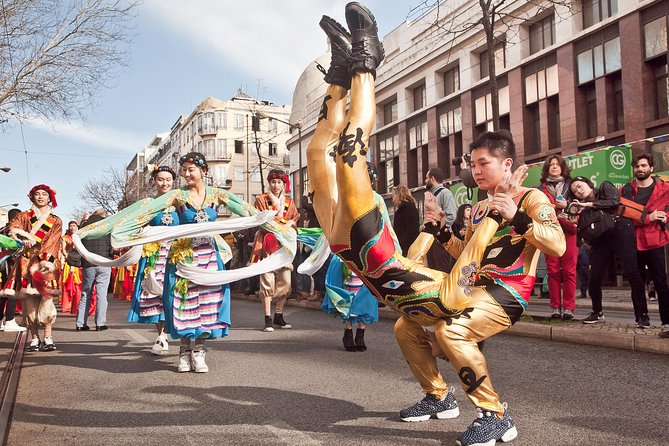
Rua Marquês de Ponte de Lima is next, with a story that is very Lisbon. It is described as the first modern street in Mouraria, contrasted with the oldest palaces, churches, and convents around it. You also get the only genuine tower of the Old Remparts.
You spend about 15 minutes here, and admission is free.
This is a good “pause and look up” street. Narrow old streets can trick your eye into seeing only walls. The tower detail helps you regain perspective. When you connect modern street planning with old defensive remnants, Mouraria starts to feel like a city that adapted over and over, instead of just a place stuck in the past.
Practical tip: if you want tower photos, pick a spot that lets you shoot upward without leaning too far into traffic flow. Use the photographer guide if you want help picking a safe angle.
Stop 6: Igreja de Nossa Senhora do Socorro and the Moorish suburb legacy
Now you reach Igreja de Nossa Senhora do Socorro, the hub of Mouraria since the time it was a Moorish suburb. This stop also highlights the Company of Christ legacy and an astonishing reference to the area as a little Punjab.
You get about 15 minutes, admission free.
This is where the tour’s historical thread becomes more than a headline. You are connecting earlier Moorish presence to later Portuguese cultural layers, then to a modern multicultural identity. Even if you already know Lisbon has multiple influences, it is the pairing here that helps the neighborhood feel real, not academic.
If you like stories that connect places to people, you will probably enjoy the way the guide handles this stop. One thing you should watch for is how the square and surrounding streets feel like a meeting point. A “hub” stops being a concept when you sense where people gather.
Stop 7: Largo da Severa, the cradle of Fado
Largo da Severa is about 20 minutes and is described as the cradle of Fado music. Admission is free.
This is the part of the tour that many people come for, even if they think they will be satisfied with pictures only. Fado is more than a sound in a venue. It is a feeling attached to place, and Mouraria is one of those districts often connected to the song’s early roots.
Practical tip: take a few minutes to slow down here. Even if you are not listening to a live performance at this exact stop, your guide will frame what you should think about when you later hear Fado in Lisbon.
Stop 8: Praca Martim Moniz for multicultural Lisbon in one square
Next is Praca Martim Moniz, one of the most multicultural squares in Lisbon. You spend about 20 minutes, admission free.
This is a useful transition. You finish the Fado cradle stop, then you shift to a modern public square that reflects how the neighborhood continues to change. It is not just old stones and legends. It is people living side by side, and the square is where that contrast shows.
I suggest using this stop to look for cues that answer simple questions for you: Who is moving where? What languages do you hear? How do people use the space? You are learning without needing a lecture.
Stop 9: Largo do Intendente Pina Manique and urban renewal
The final stop is Largo do Intendente Pina Manique. It is described as a case study in Lisbon urban renewal. You have about 15 minutes, admission free.
Ending here is smart because it leaves you with a “future” feeling, not just a “past” feeling. Urban renewal in Lisbon is not always pretty, but it is part of how districts survive and transform. This stop helps you connect Mouraria’s earlier reputation with how it functions today.
If you want one final photo idea, look for lines and building shapes that show how streets were reorganized. Even without extra details, you can often tell when a place was re-planned compared to when it just evolved street by street over centuries.
What makes this tour feel personal (and why that matters)
A private walking tour is not just marketing language. It changes the whole experience because your guide can adjust the pace and the focus. If you care more about churches and architecture, you can ask to spend a little extra time on the doorways and square settings. If street art is your priority, you can ask where the best murals are and how to photograph them.
The reviews you can read beforehand also point to guides like Luis, who is praised for passion and accommodating different needs. That type of guide energy matters in Mouraria because the neighborhood has a lot to notice, and you do not want to feel like you are getting a script.
You also get professional photographer guidance. Even if you normally just point your phone and shoot, you will likely benefit from small corrections like where to stand, how to avoid harsh shadows, and how to keep street art lines straight. That is the difference between a forgettable snapshot and a photo you actually like.
Who should book this Mouraria tour
I think this tour fits best if you want a mix of culture, art, and local storytelling without spending your whole day researching maps. It is ideal for:
- First-timers to Lisbon who want a neighborhood story beyond the big landmarks
- People who care about street art but want context
- Travelers who want a faster route through churches and squares than a museum day
- Anyone who prefers private pacing and the option to ask questions
It is less ideal if you hate walking, because the experience is built around multiple short stops across old streets. Also, if you need constant seating or you cannot handle uneven cobblestones, you might want to check alternatives before you commit.
Should you book Mouraria: The Multicultural District private walking tour?
Yes, you should consider booking it if you want Mouraria explained in a way that makes the neighborhood feel connected. The combination of street art, architectural stops, and Fado-linked places creates a route that feels like Lisbon’s story written on the street. The private format plus the photographer guide gives you better chances of getting both learning and photos, without dragging you through long ticket waits.
Book it especially if your time is limited and you want a route that is efficient but not shallow. At $32.51 per person for about 3 hours with multiple guides and mostly free admissions, it is good value for a private, themed neighborhood walk.
If you are unsure, decide based on your tolerance for walking and your interest in street art and local history themes. If both are your thing, this is the kind of afternoon that makes Lisbon feel personal.
FAQ
How long is the Mouraria private walking tour?
It lasts about 3 hours.
What is the price per person?
The price is $32.51 per person.
Is the tour offered in English?
Yes, it is offered in English.
Is it really a private tour?
Yes. It is private, so only your group participates.
What is the start and end point of the tour?
The tour starts at R. dos Fanqueiros 170, 1100-227 Lisboa, Portugal, and ends at Largo do Intendente Pina Manique, 1100-395 Lisboa, Portugal.
Are there any admission fees for the stops?
Admission is listed as free for the stops in the route.
What is included in the tour?
A local guide, a professional guide, and a professional photographer guide are included, along with the private tour.
What are the minimum group requirements?
A minimum of 2 people per booking is required.
What is the cancellation rule?
Free cancellation is available, and you can cancel up to 24 hours in advance for a full refund.
More Walking Tours in Lisbon



More Tours in Lisbon



More Tour Reviews in Lisbon

Not for you? Here's more nearby things to do in Lisbon we have reviewed










Walking Tours, side by side.
 ★ 4.8History, Stories and Lifestyle Walking TourTickets from $2910,902 traveller reviews
 ★ 5.0Best of Lisbon Small-Group Guided Walking TourTickets from $234,869 traveller reviews
 ★ 4.9Food and Wine Small Group Walking TourTickets from $724,082 traveller reviews
 ★ 4.9Best of Lisbon Walking Tour: Rossio, Chiado & AlfamaTickets from $232,700 traveller reviews
 ★ 5.0Age of Discoveries Walking Tour in BelémTickets from $31,513 traveller reviews
 ★ 5.0Sintra & Cascais Day Tour with Pena Palace Entry and Gardens WalkTickets from $92962 traveller reviews
 ★ 5.0Lisbon Roots – Small group Food & Culture Walking Tour w/tastingsTickets from $168910 traveller reviews
 ★ 4.9Starter Walking Tour to the highlights in GermanTickets from $33781 traveller reviews
More useful lists for this tour