
Review · LISBON CITY TOURS
Lisbon: See Lisbon Like a Local on a Private Walking Tour
Lisbon’s views taste better with ginja. This private 3-hour walk blends a traditional sour cherry liqueur stop at A Ginjinha, big photo moments from Miradouro de Graça, and a real feel for neighborhoods you usually only skim. My favorite parts are the food-and-view combo, and the way the route keeps moving through local streets in Alfama and Mouraria. One thing to plan for, though, is that the walk can include climbing on sloped streets, so it is not ideal if you have mobility limits.
I like that the experience leans practical, not just postcard pointing. On this kind of private tour, you can actually ask why fado sounds the way it does, and you get context as you pass places tied to Lisbon’s Moorish past. The guides I saw mentioned by name, like Alfredo and Joana, sound energetic and hands-on, with historical explanations you can connect to the streets in front of you.
For the cost, it is $82 per person for 3 hours, which is a fair deal when you factor in a guide, a ginja tasting, a coffee break, and multiple viewpoint stops that would take time to stitch together on your own. If you are hoping for a full meal or long sit-down breaks, you will need to handle food separately.
Key things I’d circle on this Lisbon private walk
- A Ginjinha sour cherry ginja tasting to start your walk with something very Lisbon
- Mouraria and the Moorish quarter angle that connects local street life to the roots of fado
- Miradouro de Graça coffee with panoramic city views built into the itinerary, not an afterthought
- Alfama’s narrow lanes and small squares, including areas considered unscathed by the 1775 earthquake
- Multiple churches, viewpoints, and convent stops that add depth without turning into a museum day
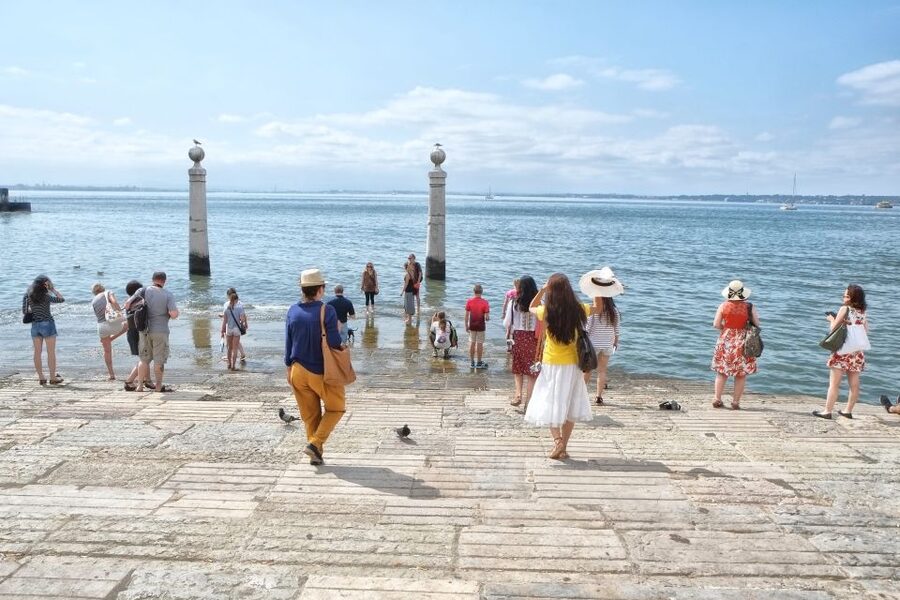
- Finish at Praça do Comércio by the Tagus, with dramatic harbor photos and the Cais das Colunas footbridge
Starting at A Ginjinha, with ginja on your first step
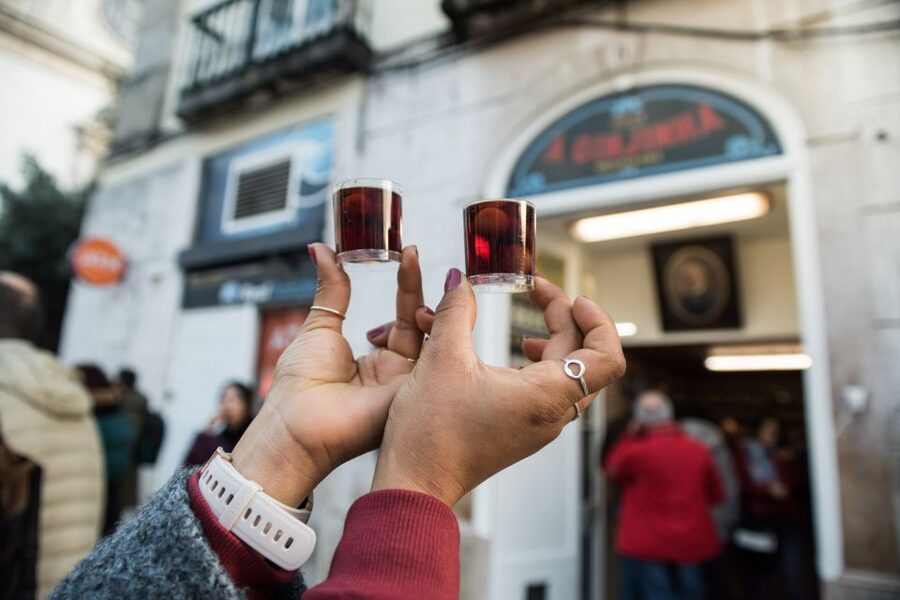
Most Lisbon tours start with a landmark. This one starts with a place you can smell. You meet at the entrance of A Ginjinha, a traditional bar known for its sour cherry liqueur, and you get your first guided stop right away.
You are not just being handed a drink and rushed on. The tour includes a tasting of ginja, and it is a simple way to understand local taste before you even reach the viewpoints. Sour cherry liqueur is strong, sweet-tart, and very much a Lisbon thing, and it sets the tone for the rest of the walk where you keep spotting details tied to everyday life.
Practical tip: if you do not drink alcohol often, go slow with the first sip. You still have a few hours of walking and stepping around corners.
And yes, you also get a coffee later on, so you are not stuck with a sugar hit for the full three hours. You are pacing your energy as you go.
You can also read our reviews of more walking tours in Lisbon


St. Dominic and the old-city feel you can’t get from quick photos
The next stop is the Church of St. Dominic, with a short guided visit. This is where the tour starts doing something I appreciate: it connects the look of Lisbon to how the city organized itself around religious buildings, streets, and viewpoints.
On a walking route, churches matter because they are not isolated. They anchor the neighborhood geography. You see how people move around them, how streets bend, and how the vibe changes from block to block.
You will likely notice something else too: short explanations at multiple spots. You are not stuck listening in one spot for a long time. Instead you get little bursts of context as you move from area to area. That is what makes the walk feel like exploring with a local, not like a timed checklist.
Mouraria’s Moorish Quarter, and why fado has an Arab-world link
Then comes the heart of the storytelling: the Moorish quarter of Mouraria, often tied to the birthplace of fado. This is one of the longer stretches, around 25 minutes of guided time, which tells you the guide plans to treat it as more than a quick pass-through.
What I like here is the specific angle: you learn about the origin of fado and its close relationship with the Arab world. Even if you already like fado, hearing the cultural connections while you are standing in a neighborhood shaped by that past makes a difference.
Mouraria is also a reminder that Lisbon’s history shows up in everyday street life. Narrow lanes, small turns, and old corners are not just pretty. They influence sound, movement, and the feeling of the place. You get the sense of why a music style tied to emotion and city life could grow here.
If you care about culture, this portion is the “why” behind the “what.” It turns Lisbon from a collection of views into a living story.
Caracol da Graça and the practical art of climbing with purpose
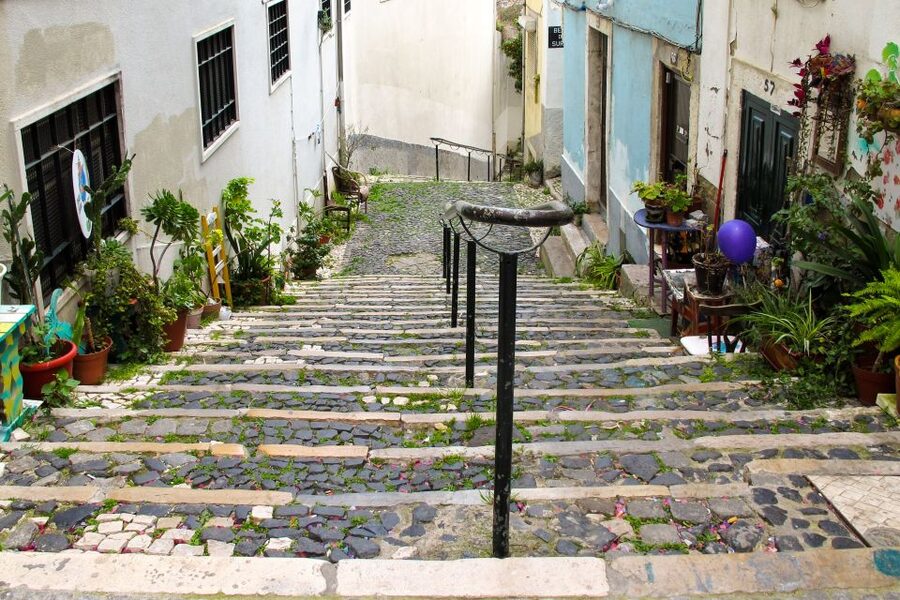
Next is a stop at Caracol da Graça, followed by more walking toward churches and viewpoints. You might think of this section as a breather on paper, but on the ground it is where you feel Lisbon’s slopes.
I appreciate that the itinerary does not treat climbing as punishment. It builds in stops you can orient yourself around, so each uphill segment has a payoff.
Even if you do not know the area well, the guide’s pacing helps you stop at just the right moments to reset. It is a small thing, but it keeps the walk enjoyable instead of tiring.
Wear shoes you trust. This is the kind of old-city walking where smooth soles can slip, especially if it rains. The tour runs rain or shine, so plan for that.
Church of Our Lady of Grace before Miradouro de Graça coffee
After Caracol da Graça, you visit the Church of Our Lady of Grace (another guided stop). This stretch keeps you moving through layered Lisbon, where religious sites, street corners, and viewpoint access are all connected.
Then you reach Miradouro de Graça, one of the best moments of the tour. You get a cup of coffee at the viewpoint, which is an easy win. You get to slow down, take in the city, and refill your energy without needing to hunt for a café on your own.
This stop matters because it gives you context for what you are about to explore next. When you can see the layout of the neighborhoods from above, the narrow streets below make more sense.
And you get time to snap photos before you head back down into Alfama’s tight, colorful streets.
You can also read our reviews of more private tours in Lisbon





São Vicente de Fora and then Alfama, Lisbon’s post-1775 street life
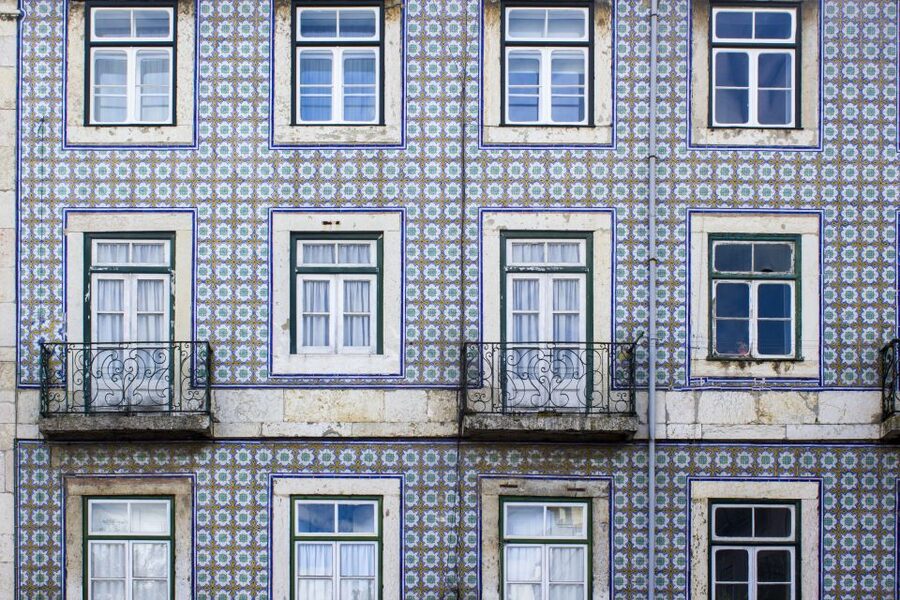
The itinerary includes the Monastery of São Vicente de Fora, another short guided stop that adds architectural and cultural weight to the walk. Monasteries are often where cities show how religion and power shaped daily life.
Then you move into Alfama, one of Lisbon’s most characterful districts. This part is a guided stretch of about 25 minutes focused on the streets themselves, including small squares, cafés, and charming boutiques tucked along sloping lanes.
There is also a specific detail that makes Alfama feel different from other old quarters: parts of Alfama were unscathed by the 1775 earthquake. You do not need a lecture to feel that idea. You notice it in the street continuity, in the way the lanes keep leading you to the same kind of everyday corners.
Alfama is also where the tour’s “see Lisbon like a local” goal really clicks. Instead of circling obvious highlights, you get guided movement through real neighborhood texture.
One more bonus that fits this section: the tour includes time to take in the vibe of flea markets. Even if you just catch a slice of it, it adds the sensory feeling of the city going about its business.
Santo Estêvão Belvedere and the quick culture break at Saramago
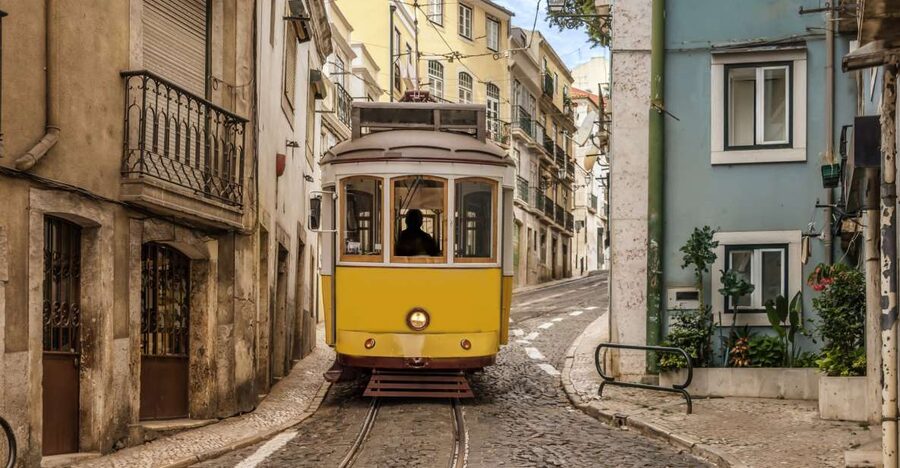
Next you stop at Santo Estêvão Belvedere, another viewpoint. This is one of those smart tour choices. You already had Miradouro de Graça, so you might wonder why add another. The answer is variety. Different viewpoints frame the city differently, and the guide can point out what to look for as you angle toward new streets.
Then there is a short stop at the José Saramago Foundation Museum. This gives the walk a modern cultural thread, so you are not only thinking in old-world terms. It helps the day feel like Lisbon today, not just Lisbon in the past.
After that, you visit Nossa Senhora da Conceição Church, another brief guided stop. It keeps the rhythm of Lisbon as lived space, not a series of separated attractions.
If you like tours where history and city texture stay connected, these quick stops work. If you are hoping for long museum time, you might find it light on content. But it fits the overall 3-hour walking style.
The big finish at Praça do Comércio, with the Tagus in your frame
Finally, the walk reaches Commerce Square, Lisbon, known as Praça do Comércio, and you finish there. This stop is dramatic for a reason. The space opens toward the water, and suddenly the city feels wide.
You get guided time at the square, plus a chance to relax and take photos of the Tagus River. A key detail to look for is the Cais das Colunas footbridge, described as once used by kings. Even if you only catch it in passing, it is a strong visual link between old power and today’s harbor life.
This is also where the tour becomes easiest to remember. When you end at a big, recognizable harbor square, you can orient yourself quickly for whatever comes next, whether that is dinner, a ferry ride, or just a stroll along the waterfront.
If your legs are tired by now, good. This ending is worth it.
Price and value: is $82 fair for a 3-hour private walk?
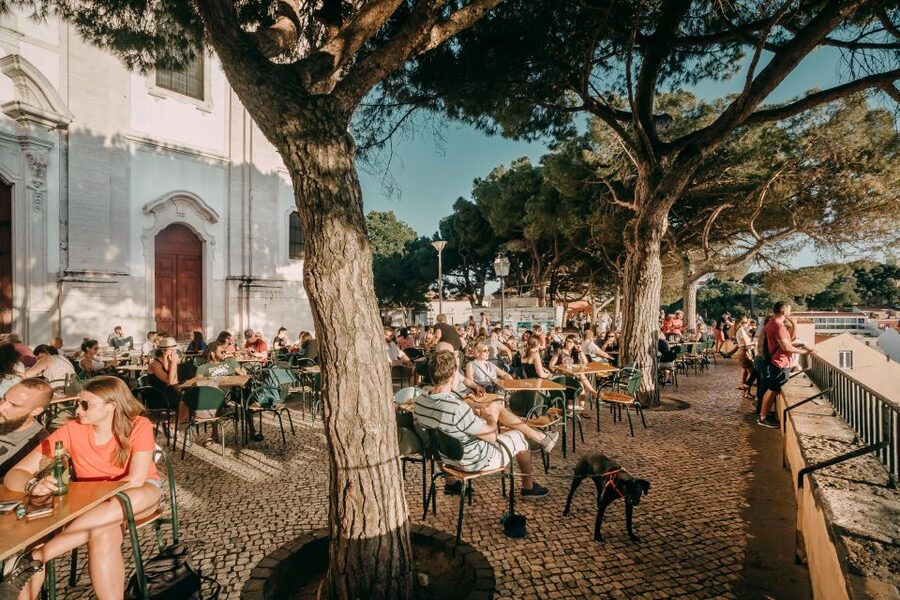
At $82 per person for a 3-hour private tour, you are paying for a few things that add up.
First, you get two included drinks, a ginja and coffee, plus guided time at multiple key stops. Those tastings are not just a gimmick. Starting with A Ginjinha sets your palate and your expectations.
Second, you are paying for routing. Lisbon’s old neighborhoods do not work well for DIY navigation if you want the best viewpoints at the right times. Here, viewpoint stops are built in, including Miradouro de Graça and Santo Estêvão Belvedere.
Third, you are paying for context. The fado angle in Mouraria and the cultural framing around Arab-world connections are the kind of detail that makes a walking tour feel worth the guide.
If you can do two or three separate stops on your own without losing time, this might feel pricey. If you want the walk to feel coherent, and you want the city explained while you see it, this is solid value.
Who this tour suits best, and who should reconsider
This tour is a great match if you want:
- Private pacing, so you can move at a comfortable speed
- A food-and-view start with A Ginjinha ginja tasting
- A guided focus on Mouraria and Alfama, not only the main postcard sights
- Lots of short stops at churches, viewpoints, and squares
It might be a tougher fit if you:
- Need a strictly flat walking route, since the tour may involve climbing
- Have mobility impairments, since the tour is listed as not suitable for that
- Expect food beyond the ginja and coffee, because food is not included
Weather is also a factor. The tour runs rain or shine, so pack for wet conditions.
Tips to enjoy it rain or shine, without killing your energy
Because this is an old-city walk, your comfort makes the whole experience better. Here’s what helps, based on what the tour requires:
- Bring comfortable walking shoes with good grip. Lisbon slopes are real.
- Dress for rain or shine. If it is wet, you will want a light rain layer.
- Pace your ginja sip. You want to enjoy it, not rush it.
- Bring a small camera plan. Since you hit multiple viewpoints, you will likely photograph more than you expect.
- Plan your food for before or after. You only get a ginja and a coffee as included stops.
If you do those basics, you will finish feeling like you actually understood Lisbon, not just walked past it.
Should you book this private Lisbon walking tour?
I would book it if you want a guided walk that combines Portuguese taste, fado context, and viewpoints that make the streets make sense. Ending at Praça do Comércio by the Tagus is also a strong payoff.
I would hesitate if hills and climbing are a deal breaker for you, since this is a walking tour in an old sloped neighborhood and the activity is not suitable for mobility impairments. I would also skip it if you want a meal-focused experience, because food is not part of what is included.
If you are flexible, comfortable on slopes, and curious about why Lisbon sounds and looks the way it does, this feels like a smart use of three hours.
FAQ
How long is the Lisbon private walking tour?
The tour lasts 3 hours.
What is the price per person?
The price is $82 per person.
Where do I meet the guide?
Meet at the entrance of the bar A Ginjinha.
What is included in the tour?
The tour includes the 3-hour guided experience, plus a ginja and a coffee.
Is food included?
No, food is not included.
What languages are offered for the live guide?
The guide is available in Spanish, English, Portuguese, and French.
Does the tour run in bad weather?
Yes, the tour runs rain or shine.
Is the tour suitable for people with mobility impairments?
No, it is not suitable for people with mobility impairments.
What is the cancellation policy?
You can cancel up to 24 hours in advance for a full refund.
More Walking Tours in Lisbon



More Tours in Lisbon



More Tour Reviews in Lisbon

Not for you? Here's more nearby things to do in Lisbon we have reviewed






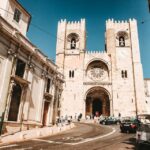
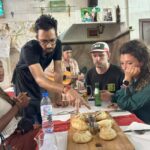
Lisbon City Tours, side by side.
 ★ 5.0Lisbon City Center Tour – The Unmissable LisbonTickets from $322,234 traveller reviews
 ★ 4.7Sintra, Pena, Regaleira, Cabo da Roca & CascaisTickets from $2319,656 traveller reviews
 ★ 4.1Jerónimos Monastery Entrance TicketTickets from $2114,164 traveller reviews
 ★ 4.8History, Stories and Lifestyle Walking TourTickets from $2910,902 traveller reviews
 ★ 4.5Sunset Boat Party Cruise with DJ and Open BarTickets from $2710,378 traveller reviews
 ★ 4.7Pena Palace, Sintra, Cabo da Roca, & Cascais DaytripTickets from $919,981 traveller reviews
 ★ 4.6Oceanário de Lisboa Entrance TicketTickets from $299,943 traveller reviews
 ★ 5.0True 4Hour Private Tuk Tuk Tour: Discover Lisbon with a Local!Tickets from $1088,008 traveller reviews
More useful lists for this tour