
Review · LISBON CITY TOURS
Lisbon: Jewish Quarter Guided Walking Tour
Lisbon hides its Jewish story in plain street corners. This guided walk does the heavy lifting, especially with Amber and her clear, question-friendly style, plus a small group size that makes the whole experience feel personal without being precious. I also love how the tour links medieval life to later chapters, including forced conversions and the IIWW refugee passage, not just museum-style facts. One thing to consider, though, is that you’re walking a lot in older neighborhoods, including hillier stretches, and some of what you hear will be about places where physical evidence is limited.
You’ll start in the grand open air of Praça do Comércio and then move through the city’s quarters where Jewish and New Christian stories shaped everyday Lisbon. The tour’s focus is very practical too, because you’ll learn what to look for as you go, from segregation patterns in Alfama to dark moments tied to Pessah in Rossio. If you’re hoping for only visible ruins and monuments, this tour may feel more like a guided reading of the streets than a sightseeing scavenger hunt.
The pacing and depth are a big part of why this tour lands well, and you’ll have plenty of chances to ask questions as you go. At the same time, you should know the tour leans historical, so if you want a lot about present-day Jewish life and community activity, you might find yourself wanting a bit more of that beyond what’s covered.
Key things you’ll notice on this walk
- Praça do Comércio to the Exodus theme, using Lisbon’s setting to frame older migration memory
- Alfama medieval segregation, explained in how the neighborhood functioned in practice
- Baixa and forced conversions, with the story tied to the city’s social and political pressure
- Rossio and the 1506 Pessah massacre, where public squares become part of the historical record
- Mouraria and IIWW refugee passage, connecting Lisbon to later movement and survival
- Small group of up to 10, so you can keep up on the steep streets and ask questions
Your walking classroom, from medieval judiarias to modern Lisbon
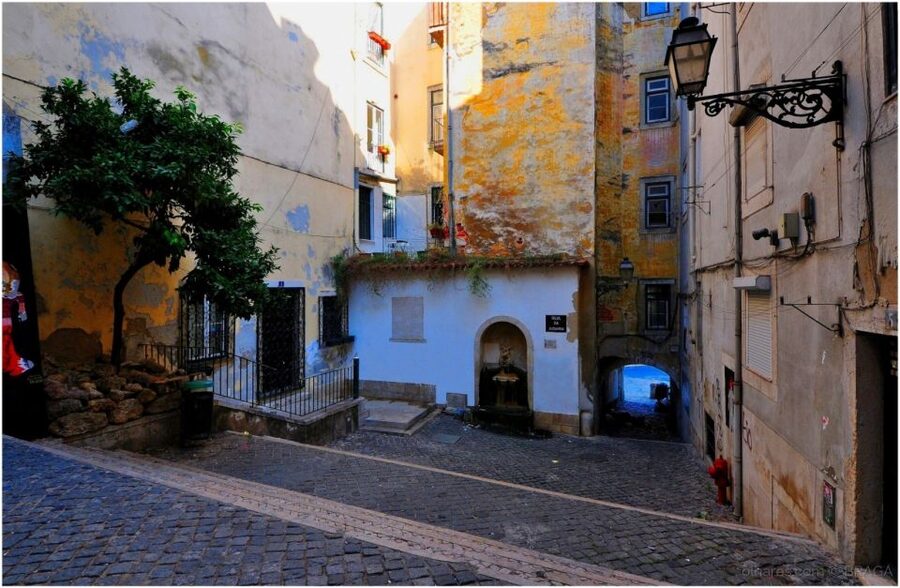
This tour works because it treats Lisbon like a living map of Jewish presence, even when the city no longer shows much on the surface. You don’t just hear dates. You learn how communities lived, how they were separated, and how pressure and policy changed ordinary routines over time.
What makes it especially useful for you is the range of themes packed into a 2-hour walk. You’ll cover medieval quarters and civic spaces, then shift to later chapters like the IIWW refugee passage and how Lisbon fit into a wider world diaspora spreading across the Atlantic, the Mediterranean, Asia, and northern Europe.
The tone matters here too. The guide, Amber, is known for speaking clearly and keeping the pace manageable. You’ll also get solid answers when you ask follow-ups, which is important when a topic like this can raise more questions than it solves.
You can also read our reviews of more walking tours in Lisbon



Start at Praça do Comércio, and let the Exodus theme guide your eyes
The tour begins at Praça do Comércio, where Lisbon suddenly feels like an entrance hallway to history. The key connection you’ll make here is the tour’s link between the square and the Exodus idea, using the location to frame departures, journeys, and memory.
From there, you’ll head past Praça do Município and along Rua do Comércio, moving from the big-open feel into streets that start to compress and slow you down. That change is more than scenic. It mirrors how you’ll be taught to think about history, from broad forces down to neighborhood life.
You’ll also pass notable landmarks like Casa dos Bicos and the Ribeira area, which helps anchor the stories in recognizable Lisbon textures. Even if you think you know the city’s center already, this route gives you a reason to look again, because the guide connects the physical street plan to what happened there.
Practical tip: wear comfortable shoes right from the start. This is not a sit-and-listen style tour, and the ground level changes as you move through Lisbon’s older quarters.
Alfama and castle hill: medieval segregation explained where you stand
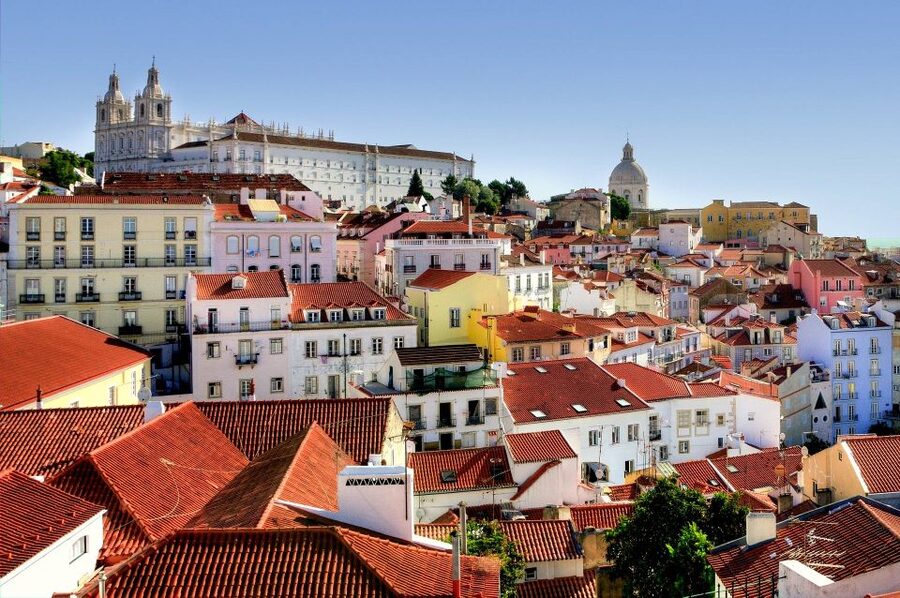
One of the strongest parts of the experience is how the tour brings you into Alfama and the areas around castle hill, where medieval segregation becomes easier to understand. Instead of talking in abstractions, the guide ties the story to the neighborhood’s layout and how communities were separated.
You’ll see Alfama referenced as a central “Jewish quarter” area in the tour’s highlights, and you’ll learn why segregation wasn’t only social, it was structural. The streets help you picture daily life under those conditions, which makes the history feel less like a lecture and more like a map you can navigate.
You’ll also walk toward the older core of Lisbon’s Judiarias, including the historical sites tied to Jewish presence. Some of what you’re learning is about what was controlled, what was limited, and what people had to adapt to when laws and expectations were different from the life they wanted.
A fair consideration for you: there is not always much visible evidence left. That can be frustrating if you expect to “see” everything. The upside is that if you’re okay with historical storytelling, this tour helps you read the city like it still leaves clues.
Baixa and forced conversions, plus the New Christian turning point
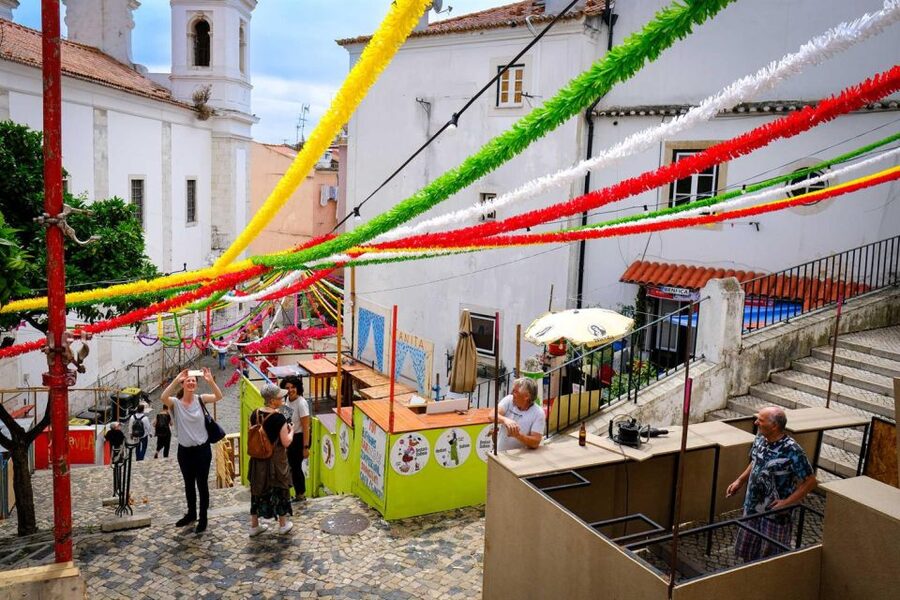
The tour’s shift from Alfama toward Baixa is where the story gets sharper. You’ll hear about forced conversions and how pressure shaped identity for Jews and later New Christians, not only through beliefs but through what people were expected to do in public.
Baixa matters because it’s tied to power, commerce, and the kind of city structure where policy can feel close to the ground. As you walk through these spaces, the tour helps you understand why conversion was not just a personal spiritual event, it was also a mechanism that reshaped social life.
There’s also attention to later Iberian shifts that helped redefine old versus new divisions. In the guide’s narrative, Lisbon reform and governance under King José I and Marquis de Pombal can show up as a symbolic hinge, especially as the tour transitions toward later eras. That gives you context for how one period’s rules led into another period’s outcomes.
This section is a good match if you like history that connects different centuries. If you prefer only one era, you might feel the story moves quickly. But the pace is kept in check, and you’ll be able to ask for clarifications as you go.
Rossio and the 1506 Pessah massacre in a public-square setting
Rossio is the tour’s emotional center. You’ll reach it after moving through squares like Praça da Figueira, and the guide frames Rossio as a place where public life and public violence can intersect.
The highlight here is the 1506 Pessah massacre, and the way it’s taught matters. A massacre isn’t just a date. It changes what safety means, and it changes what communities remember when they try to keep living in the same city afterward.
By the time you’re standing in these central squares, you can feel why the tour includes them. These are not alleyway stories. They are civic spaces tied to how cities respond, how crowds gather, and how authority shows itself in open places.
If you’re sensitive to heavy topics, this part can hit hard, in a realistic way. The upside is that the guide keeps it grounded and readable, and you’ll have the chance to ask questions so the story doesn’t float away into vague tragedy.
You can also read our reviews of more guided tours in Lisbon




Mouraria, Ribeira, and IIWW refugee passage, plus the Lisbon diaspora map
The tour doesn’t stop at medieval Lisbon. You’ll also pass through Mouraria and the Ribeira side of the city, and the guide connects those places to later movement, including the IIWW refugee passage in the 1940s.
Along the way, you’ll encounter the Resistance museum area, and the framing here helps you connect Lisbon’s role in later European upheavals to the longer story of Jewish movement. That matters, because it turns Lisbon from a single-era backdrop into a city that repeatedly appears on the route of history.
The diaspora theme is another standout. You’ll hear how communities spread from Lisbon across the Atlantic, into the Mediterranean region, and farther toward Asia and northern Europe. That big-picture thread is useful because it answers the question you might be carrying as you walk: what happened after people were forced to leave or forced to change?
For you as a planner, this is where the small group format helps. You’ll get enough time to keep track of the shifts across centuries, and you won’t feel like you missed the point just because the subject changed.
Is $57 for 2 hours good value? What you get for your time
At $57 per person for a 2-hour English walk, you’re paying mainly for guided interpretation, not for entrances or meals. The tour includes a guide, and it’s limited to 10 participants, which is the part that often makes the difference between a tour that feels rushed and one that actually answers your questions.
What you get in return is a lot of “city literacy.” You walk from Praça do Comércio through the core neighborhoods tied to the story, including Alfama and Baixa, and you end back at the meeting point. You also cover major events and themes, from the Exodus-linked framing to Rossio’s 1506 Pessah massacre, then into IIWW refugee context.
What’s not included is food and drinks, so plan to eat before or after. And because this is a walking tour across older streets, bring practical comfort. I’d treat it like an active city tour, not a museum visit.
One more note: the experience can be adapted to different time frames and starting points. If you’re trying to match it to your schedule, it’s worth asking how flexible they can be with your specific day.
Should you book this Jewish Quarter tour?
Book it if you want a guided walk that connects Lisbon’s streets to Jewish and New Christian experiences, not just surface-level sightseeing. It’s a strong fit if you like your history explained clearly, with time for questions, and if you’re willing to walk uphill in the older quarters.
Skip it or adjust expectations if you’re looking for a tour heavy on visible artifacts only, because a lot of what you’ll learn is about places whose physical traces are limited today. Also, if your main goal is current Jewish community life in Lisbon, you may want to pair this with something more present-day.
If you’re deciding right now, here’s the simplest test: do you enjoy learning how a city works and what its public spaces have witnessed? If yes, this one is a solid use of your time.
FAQ
How long is the Lisbon Jewish Quarter guided walking tour?
It lasts 2 hours.
What time does the tour start?
Starting times vary. Check availability to see the times offered.
How much does the tour cost?
The price is $57 per person.
Is the tour offered in English?
Yes, the live tour guide speaks English.
How many people are in the group?
The group is limited to 10 participants.
Where do I meet the guide?
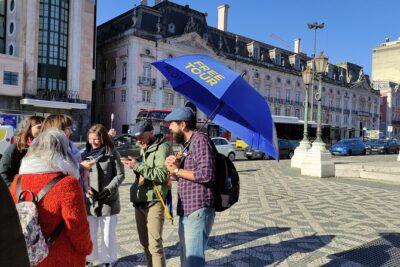
Meet at the designated location where your guide will be with a dark red umbrella and or a sign. Contact the number linked to your voucher via WhatsApp or iMessages to confirm.
What is included, and are food and drinks covered?
The only listed inclusion is the guide. Food and drinks are not included.
Can I reserve now and pay later?
Yes, you can reserve now and pay nothing today.
What is the cancellation policy?
You can cancel up to 24 hours in advance for a full refund.
More Walking Tours in Lisbon



More Tours in Lisbon




More Tour Reviews in Lisbon

Not for you? Here's more nearby things to do in Lisbon we have reviewed









Lisbon City Tours, side by side.
 ★ 5.0Lisbon City Center Tour – The Unmissable LisbonTickets from $322,234 traveller reviews
 ★ 4.7Sintra, Pena, Regaleira, Cabo da Roca & CascaisTickets from $2319,656 traveller reviews
 ★ 4.1Jerónimos Monastery Entrance TicketTickets from $2114,164 traveller reviews
 ★ 4.8History, Stories and Lifestyle Walking TourTickets from $2910,902 traveller reviews
 ★ 4.5Sunset Boat Party Cruise with DJ and Open BarTickets from $2710,378 traveller reviews
 ★ 4.7Pena Palace, Sintra, Cabo da Roca, & Cascais DaytripTickets from $919,981 traveller reviews
 ★ 4.6Oceanário de Lisboa Entrance TicketTickets from $299,943 traveller reviews
 ★ 5.0True 4Hour Private Tuk Tuk Tour: Discover Lisbon with a Local!Tickets from $1088,008 traveller reviews
More useful lists for this tour