
Review · LISBON CITY TOURS
Lisbon: Jewish History Tour of Lisbon
Lisbon has a way of telling big stories in small streets. This 1-day Jewish history walk traces Lisbon’s Jewish presence through Alfama and the Baixa, then reaches into the Rossio tragedy and the later refugee passage.
I like that the tour is built around real places you can stand in, from Praça do Comércio to Rossio. I also like that the guide connects medieval life, forced conversion, and later World War II refugee movement into one clear walking thread, with names and stories along the way.
One thing to plan for: you will not find many physical artifacts from the earliest Jewish community. Even with excellent guidance from people like Jose and Filipa, a lot of what you experience here is explained through context and location, not preserved relics.
Key things that make this tour worth your time
- Praça do Comércio as the starting anchor, tied to the origin story of the Exodus and Lisbon’s maritime gravity
- Alfama’s Jewish quarter sites and medieval segregation, explained on the ground as the city’s old lines of separation
- Baixa District forced conversions, with the story of power shifting into daily life
- Rossio and the 1506 Pessah massacre, where tragedy and Lisbon history meet at street level
- Mouraria plus resistance-era context, including a World War II refugee passage in the 1940s
- You walk a lot but it stays doable, with the focus on historical stops across castle hill areas and central neighborhoods
Getting oriented in Praça do Comércio, where the story starts
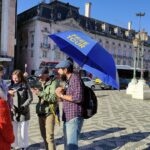
The tour’s rhythm begins at Praça do Comércio, looking up from the broad square toward the city’s past. The guide stands under the big triumph arch, and you’ll know them by the orange backpack or a Totebag with the Lisbon Walker logo. That matters, because you can lose your group in Lisbon fast, and you do not want to waste time hunting.
From this starting point, I like how the tour treats Lisbon as a gateway city, not just a pretty postcard. Praça do Comércio connects to the Exodus origin story and sets a theme of movement and diaspora, which keeps popping up later when the route moves from central squares to older quarters.
You’ll also pass by key city landmarks en route, including Praça do Município and Rua do Comércio. This is the part where you get your bearings and your timeline gets handed to you in walking order. If you prefer history with a backbone, this start does that job.
You can also read our reviews of more historical tours in Lisbon



The walking route from Rua do Comércio to Casa dos Bicos and Ribeira
After the big square, the tour narrows into streets that feel like they were designed for storytelling. Rua do Comércio and Casa dos Bicos show up early, giving you that immediate sense that Lisbon history is layered, with details tucked into everyday architecture.
Then you move toward Ribeira, where the city’s relationship with the water becomes hard to ignore. Even if you have visited Lisbon’s waterfront before, this part hits differently because the guide frames the area through what Lisbon meant to different communities over time.
This section also helps you understand the tour’s overall method. You’re not only visiting points on a map, you’re building a mental model of why people lived where they lived, and why authorities pushed where they pushed. That is especially useful later when the route shifts to segregation and forced conversion in older neighborhoods.
Alfama’s Jewish quarter: medieval segregation in real streets
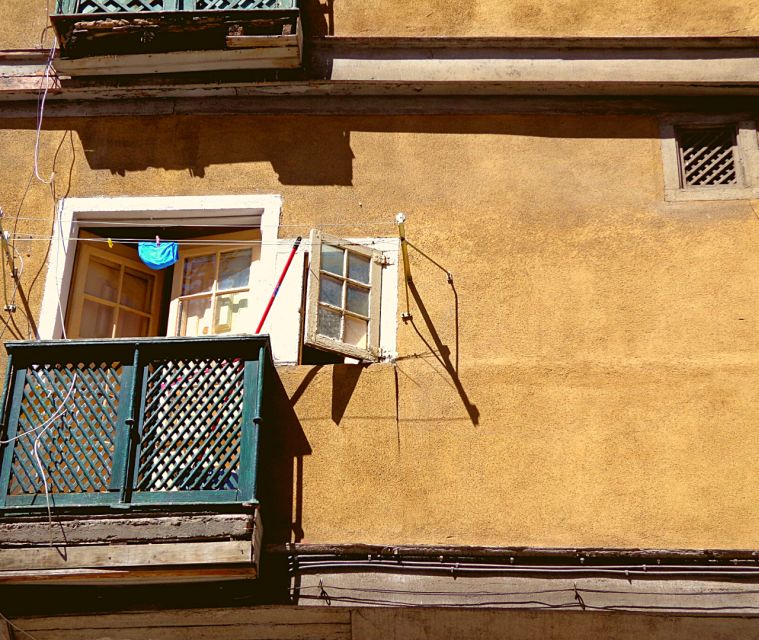
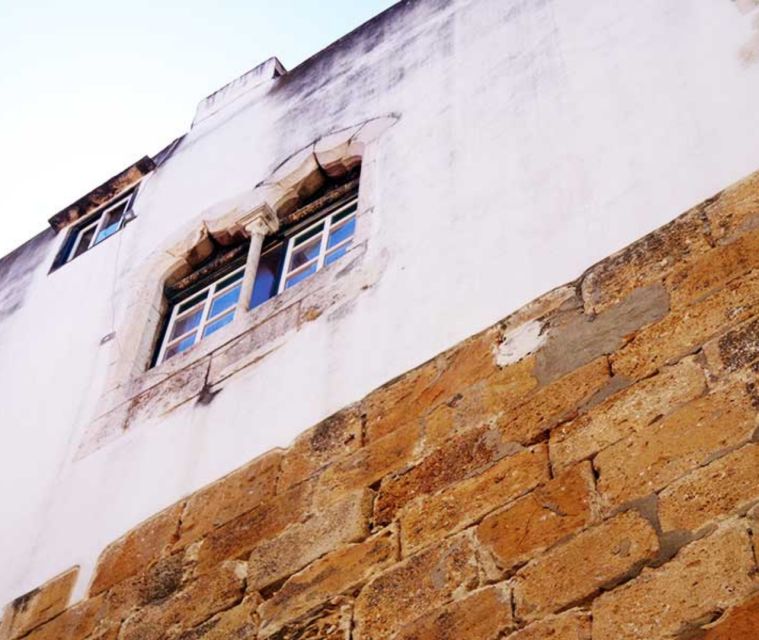
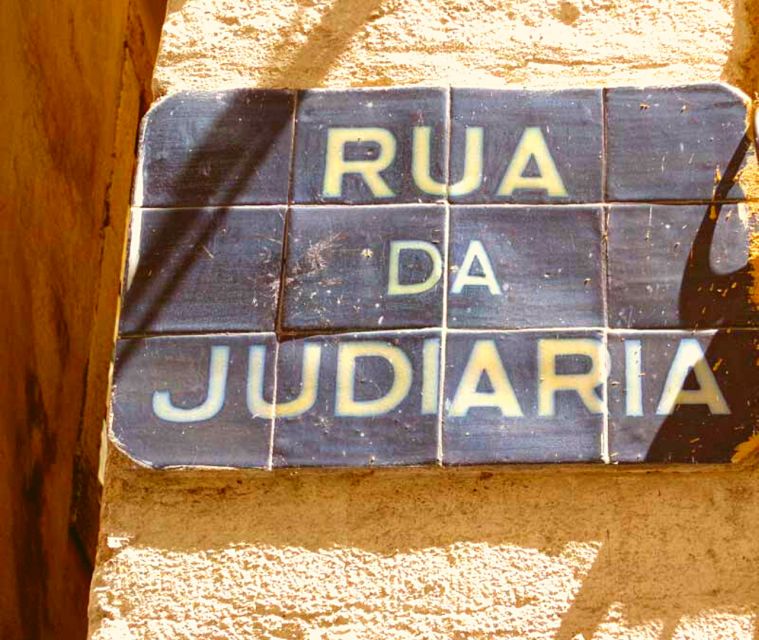
Alfama is where Lisbon history stops being abstract. The walk through the Jewish quarter and medieval segregation sites gives you a sense of how the city organized difference, and how everyday space became part of control.
I love that this tour does not treat Alfama as one generic “historic area.” Instead, it keeps pointing out patterns: where separation was enforced, how communities shaped their lives inside constraints, and what that meant for Portuguese Jewish legacy in culture, science, and even gastronomy.
And yes, there’s a practical reason to do Alfama on foot with a guide: the neighborhood is complicated. Streets curve, levels change, and it is easy to miss the key connections if you are on your own. With the guide leading, you focus on the story rather than the navigation.
Still, keep expectations honest. Many parts of this history are hard to physically verify today. That said, the best guides on this tour, including Jose and Filipa, use their story craft to connect the dots so the lack of visible artifacts does not feel like a blank wall.
Baixa District and forced conversions: when daily life changes
Then the tour drops you into the Baixa District, where Lisbon’s Jewish story takes a darker turn. This is the portion centered on forced conversions, which means the talk becomes about power and pressure, not only community life.
The route through Baixa helps you understand how policy can spread through ordinary spaces. You start seeing the city as an engine that could reshape identity, religion, and social standing. The guide keeps tying those shifts to specific locations, which is what makes the explanation stick.
This is also a good segment for your questions. If you care about how Judaism in Portugal transformed through persecution and conversion pressures, you’ll have plenty to unpack. People like Rita and Sofia, based on what’s shared during past tours, have been praised for keeping the pace engaging while still answering detailed questions.
One caution: Baixa is active. If you get tired easily, bring a slow pace mindset. The tour includes plenty of walking across central areas, and comfortable shoes are the smart move, not a nice-to-have.
Rossio and the 1506 Pessah massacre: tragedy at street level
Rossio is the emotional high point of the route, and it deserves your full attention. The tour connects Rossio to the 1506 Pessah massacre, grounding the tragedy in a place you can actually picture yourself standing in.
I like that the guide does not make this event feel like a distant footnote. The explanation is tied back to what Jewish community life looked like beforehand, and how violence could shatter it. When you understand the rhythm of life in the city first, the massacre feels more than a date.
Rossio also functions as a bridge. After hearing about segregation and forced conversion, you move into the stark consequences. That pacing works, because it does not jump around. The story advances step by step, from constrained coexistence to catastrophe.
If you’re the type who wants to understand not just what happened but why it happened in Lisbon’s specific setting, this stop will land well.


The Resistance museum and Mouraria: the later Lisbon chapter
One of the tour’s standout strengths is that it refuses to stop in the medieval past. You’ll pass by places tied to resistance-era context, plus Mouraria, and the guide brings in the modern chapter of Lisbon’s Jewish-related story.
This includes the passage of World War II refugees through Lisbon in the 1940s. That shift matters because it shows continuity in Lisbon’s role as a crossroads. You start with early Jewish presence, then you see forced conversion and persecution, and finally you witness how Lisbon continued to matter when people were trying to survive and move on.
Mouraria is a key stop for the way it frames community history as part of a living city. Even if you do not know the neighborhood deeply before you arrive, you’ll get a sense of how layers of different populations shaped local identity over time.
This portion can be a lot emotionally, but it’s also a relief. After the heavier medieval sections, the later story gives you a broader view of what Lisbon meant across centuries. It turns the tour into something bigger than one tragic arc.
The value of an oral-history tour when artifacts are scarce
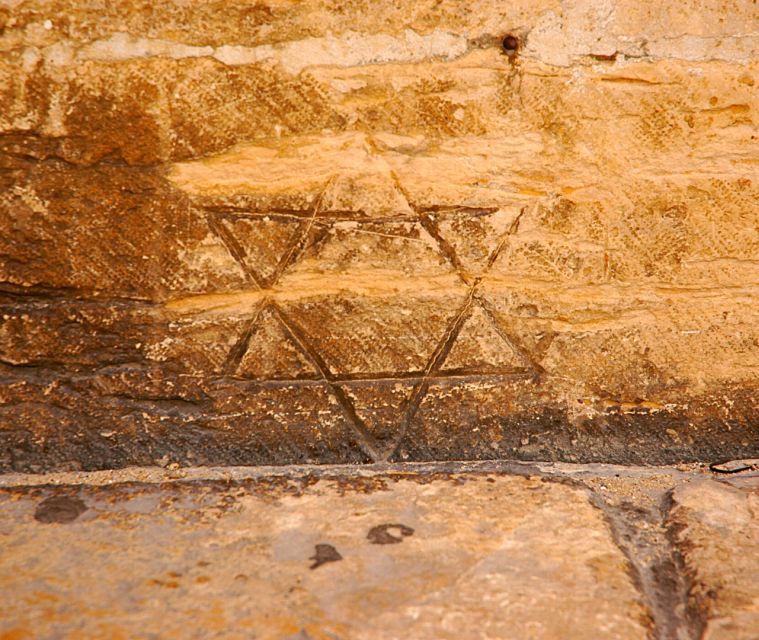
A bunch of people come in expecting to see lots of preserved Jewish artifacts. Here’s the reality: there are few if any physical remains you can point to as obvious relics of the earliest Jewish community in Lisbon.
That’s not a dealbreaker, but it should shape how you read the tour. The guide’s job is to use locations, architecture cues, and historical context to recreate what cannot be physically shown. Guides like Jose and Filipa get praised for making that work, especially when the visible evidence is limited.
In practical terms, you get the most out of this tour if you show up willing to listen and to connect. If you need etched stones, you might leave frustrated. If you want the human story of how communities lived, were constrained, and persisted in Portuguese culture, science, and gastronomy, you’ll probably come away feeling you finally got the framework.
I also appreciate how this approach can deepen your Lisbon trip beyond this tour. Once you’ve got the context, you start noticing details you would otherwise rush past.
Price and duration: does $106 for 3 hours make sense?
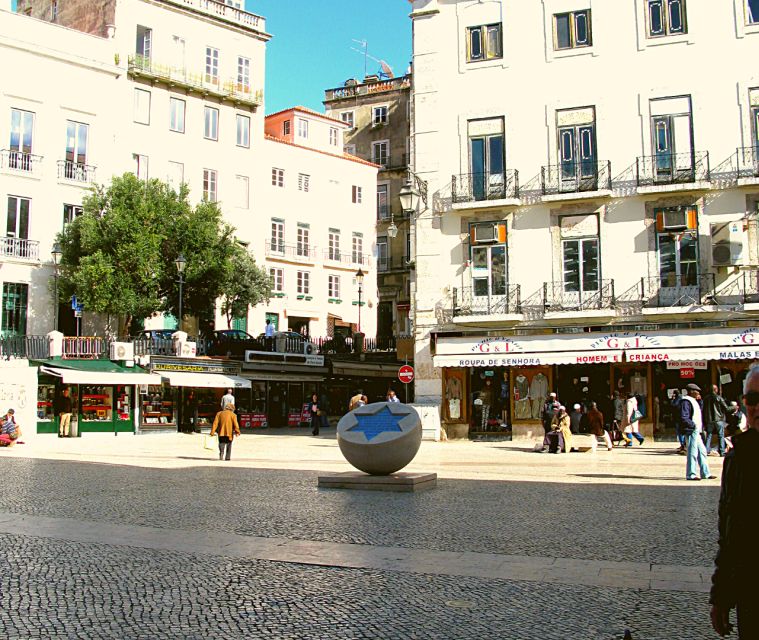
The price is $106 per person, for a 3-hour guided tour. For Lisbon walking tours, that’s middle-of-the-road, but the value depends on what you want.
If you love guided interpretation and you want a coherent narrative from the Exodus origin story through medieval segregation, forced conversions, Rossio in 1506, and the World War II refugee passage, the format is efficient. Three hours is long enough to build a timeline, short enough to stay focused without draining your day.
Also, you’re getting a private group experience, with a live guide in English or Portuguese. That helps if you want to ask follow-up questions, or if you prefer not to compete for attention in a large group.
What’s not included is also clear: no hotel pickup or drop-off, and no food or drinks. So if you plan to extend your day, budget for a snack and water, especially if you go in warmer months.
Meeting point and what to look for with your guide
Meet at Praça do Comércio, and look for the guide under the big triumph arch. The guide will be wearing an orange backpack or a Totebag with the Lisbon Walker big logo. That visual cue is worth remembering, because it cuts down the stress of figuring out where to wait.
From there, you’ll work your way through multiple neighborhoods, including castle hill areas, Alfama, and the Baixa. The tour is private group and includes an option to skip the ticket line, which matters most if you’re tight on time.
Who this Jewish History Tour of Lisbon is best for
I’d recommend this tour to three types of people.
First, history lovers who want a story with locations attached. If you like understanding medieval and early modern Portugal through the Jewish and New Christian legacy, this route makes sense.
Second, anyone who wants a Lisbon overview that goes beyond famous viewpoints. You’ll get central squares, older streets, and key stops tied to real events like the 1506 Pessah massacre.
Third, travelers who are okay with oral history style interpretation. Since artifacts are limited, the tour’s strength is explanation, not physical remains.
If you dislike walking or you have trouble with uneven streets, you should still consider it, but go in with realistic expectations about distance. Past tours note lots of walking, with some mention that hill climbing is minimal on at least some routes, but comfortable shoes are the baseline.
Should you book this tour?
If your goal is to understand Lisbon’s Jewish story in a structured, guided way, I think you should book it. The $106 price is easier to justify when the guide can connect medieval segregation, forced conversions, the Rossio tragedy, and the later World War II refugee passage into one clear route.
I would skip it only if you want a hands-on museum-style experience with many preserved artifacts. This tour is not built around that. It’s built around being in the right places and letting the guide turn the locations into meaning.
My bottom line: book it if you want context and clarity, and you’re ready for history that lives more in explanation than in surviving objects.
FAQ
How long is the Lisbon Jewish History Tour?
It is a 3-hour guided tour (listed as 1 day for availability).
How much does the tour cost?
The price is $106 per person.
What is included in the price?
The price includes the 3-hour guided tour.
Where do I meet the guide?
Meet at Praça do Comércio, looking for the guide under the big triumph arch.
What language is the tour offered in?
The live tour guide offers English and Portuguese.
Is hotel pickup or drop-off included, and is food included?
Hotel pickup and drop-off and food and drinks are not included.
More Historical Tours in Lisbon



More Tours in Lisbon


More Tour Reviews in Lisbon
Not for you? Here's more nearby things to do in Lisbon we have reviewed






Lisbon City Tours, side by side.
 ★ 5.0Lisbon City Center Tour – The Unmissable LisbonTickets from $322,234 traveller reviews
 ★ 4.7Sintra, Pena, Regaleira, Cabo da Roca & CascaisTickets from $2319,656 traveller reviews
 ★ 4.1Jerónimos Monastery Entrance TicketTickets from $2114,164 traveller reviews
 ★ 4.8History, Stories and Lifestyle Walking TourTickets from $2910,902 traveller reviews
 ★ 4.5Sunset Boat Party Cruise with DJ and Open BarTickets from $2710,378 traveller reviews
 ★ 4.7Pena Palace, Sintra, Cabo da Roca, & Cascais DaytripTickets from $919,981 traveller reviews
 ★ 4.6Oceanário de Lisboa Entrance TicketTickets from $299,943 traveller reviews
 ★ 5.0True 4Hour Private Tuk Tuk Tour: Discover Lisbon with a Local!Tickets from $1088,008 traveller reviews
More useful lists for this tour