
Review · LISBON CITY TOURS
Lisbon Fado History Cultural Walking Tour
Lisbon at night can feel like a stage, but this tour gives you the backstory. You walk in the Mouraria area in a way that helps explain how fado connects to place, people, and the city’s changing pressures, so later performances hit differently. I like that it is not just a sight-walk, it is framed as time-travel through streets you may not find on your own.
Two things I especially like: first, the itinerary is short and focused, with two meaningful stops and clear themes (Mouraria origins, fado history). Second, it is run as a small-group experience, maximum 6 travelers, which makes it easier to ask questions and actually talk with your guide. One drawback to consider is that the tour calls for moderate physical fitness, so if long uneven walking makes you uncomfortable, you’ll want to plan your pace.
Key things to know before you go

- Small group size (max 6): easier questions, less waiting around, more conversation.
- Short, thematic stops: Praça Martim Moniz (15 minutes) and Church of São Cristóvão (10 minutes) keep you focused.
- Fado context before the show: explanations help you understand the performance you may see later.
- Social evening energy: the experience is designed to meet people and share time, with dinner mentioned as part of the vibe.
- Mobile ticket: makes check-in simpler once you’re in Lisbon.
- Near public transportation: easier to reach the start at Rossio Square.
Entering Lisbon’s Mouraria, not just another map walk
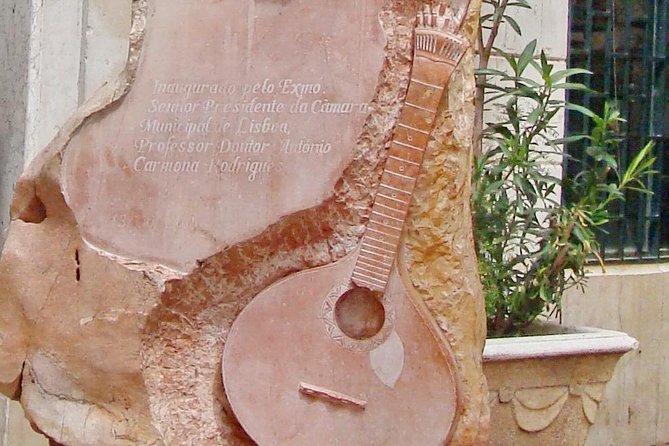
This tour is built around a neighborhood many people skip unless they have a reason to go. The guide’s pitch is simple: if you only see Lisbon’s famous viewpoints and pretty facades, you miss the human side where stories take root. Here, you spend your time in Mouraria and around São Cristóvão, and the walk is shaped to feel like you’re moving between eras.
What I like is that it does not treat fado as a random music label. Instead, it connects the idea of fado to the streets and social environment where it is said to have been born. That matters, because a lot of first-time visitors hear fado and appreciate it in the moment, but only fully understand it later when someone explains why that sound belongs to Lisbon.
There’s also a present-day angle. At the first stop, the tour addresses gentrification problems the city faces. That is not just a political talking point. It’s a practical way to understand what “authentic” means when a neighborhood is changing around you. You’ll be walking with that lens in your head, which makes the whole experience feel sharper.
The main practical thing to watch: this is a 3-hour walk and it expects a moderate physical fitness level. That doesn’t mean it’s a trek, but it does mean you should show up ready to walk and stay on your feet.
You can also read our reviews of more walking tours in Lisbon



Praça Martim Moniz: where Mouraria’s origin and today’s pressure meet
Your first stop is Praça Martim Moniz, and it’s the kind of square that works well as a kickoff. In about 15 minutes, the guide explains the origin of the Mouraria neighborhood and then connects it to current issues like gentrification.
Why that makes the tour worth it: Mouraria is not presented as a postcard. Instead, you’re given the social context that helps you interpret what you see later in the evening. When a neighborhood has a history, and then that history gets stressed by redevelopment, it changes how people experience the streets. Even if you don’t follow every local policy detail, you still come away with a better sense of why art, music, and community stories matter here.
This stop is also a good “orientation without boredom” moment. It’s short on purpose, so you don’t lose time before you even start moving. If you tend to get restless early in tours, that timing helps. And if you like understanding the big picture before you look at the buildings, this first stop is a strong start.
One more practical thought: you start from Rossio Square in central Lisbon, and Rossio is well-connected. If you’re trying to fit this tour into a busy itinerary, that location is convenient. You’ll be able to arrive by public transport and then transition into a slower-paced neighborhood walk without burning energy getting there.
São Cristóvão church area: the street art clue to fado’s roots
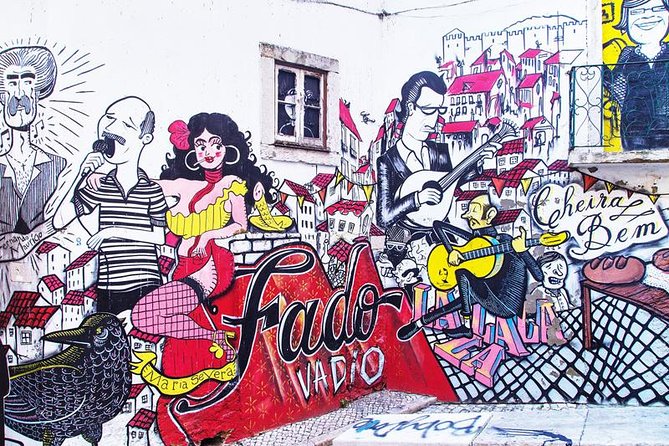
The second stop is the Church of São Cristóvão, scheduled for about 10 minutes. Right below the church area, the guide points out a famous urban art mural and uses it as a doorway into the history of fado.
I like how this is structured. The tour doesn’t ask you to treat fado history like a lecture. It uses something visual and local first, so you’re paying attention with your eyes as well as your ears. When you then hear the explanation of fado’s origins, it feels tied to the neighborhood’s real texture rather than something that lives only in theaters.
The mural piece is especially useful if you’re the type of traveler who enjoys seeing how different forms of expression talk to each other. Street art often records the current mood of a place. So when you connect that to fado’s roots, the tour helps you see Lisbon as a continuum of storytelling, not two separate worlds: old music in one room, modern visuals in another.
Could this stop be too quick for some people? Possibly. Ten minutes sounds short, but the tour is also only about 3 hours total, so you get less “loitering” time and more explanation time per stop. If you want long photo breaks at churches, you might find yourself wishing for more breathing room. Still, the format matches the overall goal: understanding fado’s meaning through place, in a limited time window.
A 3-hour small-group format that makes questions easy
This experience runs about 3 hours and caps at 6 travelers. That size changes the feel of the whole night. With a smaller group, you are not stuck listening from the back while people shuffle and you miss context. You’re more likely to hear the explanation clearly and be able to follow the guide’s pace.
It also means your interaction level can be higher. If something about Mouraria’s story connects with your travel interests, you can ask follow-up questions instead of relying on guesswork later. And because the stop durations are relatively specific (15 minutes, then 10 minutes), the guide can keep momentum without rushing you through the key ideas.
There’s another subtle benefit: small groups tend to reduce the stress of timing. Lisbon is full of tight streets and changing corners. A group of 6 is easier to keep together, so you spend less time waiting at transitions and more time actually understanding what you’re walking past.
The tour is also described as a social experience where you meet new people and enjoy company, with dinner mentioned as part of the evening. Even if you arrive solo, the format fits travelers who like walking talks, not silent sightseeing. You’ll likely feel like the evening has a natural arc: history and context, then time to relax with others.
Price and value for a focused fado history night
The price is $34.89 per person for a 3-hour experience with a mobile ticket. On paper, that can look like a “simple walking tour” price, but the value is in the way the night is packaged.
First, you’re paying for curated context, not just movement. The tour specifically aims to help you understand where and how fado was born, so when you later see fado, you’re not starting from zero. That’s a real value if you plan to attend a fado show during your trip.
Second, the stop tickets are included for both key moments: admission is included at Praça Martim Moniz and at the Church of São Cristóvão stop. That removes a common travel annoyance, where you end up paying extra at the exact moment you’re already thinking about dinner plans.
Third, the small-group cap means you are likely getting more personalized storytelling than you would in a larger crowd. That is hard to quantify, but it changes what you remember after the tour.
The main cost-related caution is timing, not money. This is scheduled for a Friday evening window listed as 7:00 PM to 10:00 PM. If your schedule on Friday is locked in, you might want to adjust, since this tour sits right in the prime time when people often want to do dinner first.
You can also read our reviews of more historical tours in Lisbon





How to plan your evening around the Rossio start and São Cristóvão finish
The tour starts at Rossio Square (Praça do Rossio, 1100-200 Lisboa) and ends at São Cristóvão (R. São Cristóvão 28, 1100-177 Lisboa). That start and end choice matters.
Rossio is one of Lisbon’s easiest central meeting points. If you’re arriving by transit, you can usually work from your hotel to Rossio without complicated transfers. The tour description also says it’s near public transportation, so you should have an easier time getting there than with meeting points tucked deep into neighborhoods.
The finish point near São Cristóvão is also convenient. If dinner is part of your night, you’re not sent back to the far edge of town where you still have to solve transportation later. Even if you plan to do dinner on your own, ending closer to your next stop saves energy.
Timing tip: since the overall experience is around 3 hours and the hours list shows a Friday evening slot, treat it like a real commitment in your itinerary. I’d avoid stacking two big activities back-to-back unless you enjoy rushing. A tour like this works best when you can stay relaxed after you finish, reflect for a few minutes, and then either eat or head to your fado show with your mind already warmed up.
What to expect from the guide, and why it shows up later
The biggest difference between a good Lisbon walking tour and a forgettable one is how the guide connects dots. Here, the “dot linking” is built into the plan: neighborhood origin, street-level art, then fado history, all tied to what you’re walking past.
In other Blue Emotion Tours experiences, guides like Alfredo are praised for being patient and helpful with practical next steps like getting the right bus connection. Telma comes up in reviews for being warm, humorous, and informative, and for making history feel memorable. Joao is described as enthusiastic and adaptable to group interest. Those are not guarantees about your exact guide for this specific tour, but they do give you a sense of the company’s style: storytelling with a human tone, and not just facts.
What you should do as a traveler: show up with a mindset of curiosity. If you go in thinking you’ll just collect a few stops and photos, you’ll miss half the point. If you go in expecting meaning, you’ll get more out of the short stop times because the guide is doing the heavy lifting of interpretation.
Also, keep your questions ready. Even one thoughtful question about Mouraria, Lisbon change, or how a mural relates to fado can make the experience feel more personal.
Should you book this Lisbon fado history cultural walking tour?

Book it if you want fado context tied to place, and you plan to see fado later on your trip. The tour is short, small-group, and designed to make the music story make sense before you hear it in a venue.
Consider skipping or swapping to a lighter format if you do not want a walking-based evening, since the tour expects moderate physical fitness and runs roughly 3 hours. And if you prefer long sightseeing pauses, note that the two main stops are timed fairly tightly.
If your goal is an authentic-feeling Lisbon night that connects streets, art, and music without turning into a long lecture, this one is a strong fit. At $34.89, you are paying for guided storytelling plus included admissions, and you’re ending conveniently in São Cristóvão so your night does not fall apart after the last stop.
FAQ
How long is the Lisbon Fado History Cultural Walking Tour?
The tour lasts about 3 hours.
What stops are included?
The tour includes two main stops: Praça Martim Moniz and the Church of São Cristóvão, with time built in for explanations at each location.
Where does the tour start and end?
It starts at Rossio Square (Praça do Rossio, 1100-200 Lisboa) and ends at São Cristóvão (R. São Cristóvão 28, 1100-177 Lisboa).
Is a mobile ticket provided?
Yes. The tour uses a mobile ticket.
Is this tour physically demanding?
It requires a moderate physical fitness level.
When does the tour run on Fridays?
The listed Friday time window is 7:00 PM to 10:00 PM.
FAQ
What is the price per person?
The price is $34.89 per person.
How big is the group?
The tour has a maximum of 6 travelers.
Is admission included at the stops?
Yes. Admission tickets are included for both Praça Martim Moniz and the Church of São Cristóvão stop.
What should I bring if I want to enjoy the walking pace?
You should be comfortable walking for about 3 hours and have a moderate fitness level.
Can I cancel for a full refund?
Yes, free cancellation is available. You can cancel up to 24 hours in advance for a full refund.
How close is the tour to public transportation?
The tour is near public transportation.
More Walking Tours in Lisbon



More Tours in Lisbon





More Tour Reviews in Lisbon



Not for you? Here's more nearby things to do in Lisbon we have reviewed











Lisbon City Tours, side by side.
 ★ 5.0Lisbon City Center Tour – The Unmissable LisbonTickets from $322,234 traveller reviews
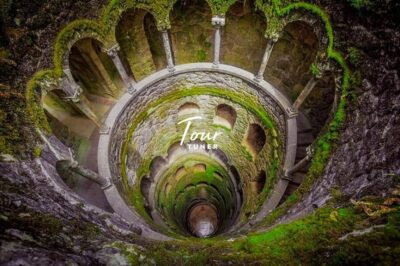 ★ 4.7Sintra, Pena, Regaleira, Cabo da Roca & CascaisTickets from $2319,656 traveller reviews
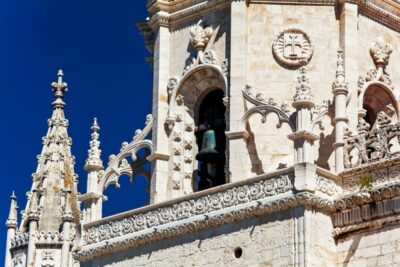 ★ 4.1Jerónimos Monastery Entrance TicketTickets from $2114,164 traveller reviews
 ★ 4.8History, Stories and Lifestyle Walking TourTickets from $2910,902 traveller reviews
 ★ 4.5Sunset Boat Party Cruise with DJ and Open BarTickets from $2710,378 traveller reviews
 ★ 4.7Pena Palace, Sintra, Cabo da Roca, & Cascais DaytripTickets from $919,981 traveller reviews
 ★ 4.6Oceanário de Lisboa Entrance TicketTickets from $299,943 traveller reviews
 ★ 5.0True 4Hour Private Tuk Tuk Tour: Discover Lisbon with a Local!Tickets from $1088,008 traveller reviews
More useful lists for this tour