
Review · LISBON CITY TOURS
Lisbon Essential Walking Tour: History, Stories and Lifestyle
Lisbon clicks into place fast when you walk it with a local. This 3 hour tour threads together Lisbon’s most essential sights with real neighborhood stories, plus an easy pace and included snacks. You’ll see the dramatic hills of Bairro Alto, the big church interiors in Chiado and the Carmo area, then wind down into Baixa and Alfama before finishing at Lisbon Cathedral.
I love how this tour gives you context, not just stops. The stories connect the earthquake-era reshaping of the city, the Jesuit influence at São Roque, and the political turning point at Carmo, so you start understanding why Lisbon looks the way it does today.
One drawback to plan for: it is mostly walking on hilly streets, and you will cover ground faster than you expect. I strongly suggest comfortable shoes and water, especially on warm afternoons.
Key things to know before you go
- Small group size (max 15) keeps the walk friendly and questions possible.
- Multiple viewpoint moments lets you see Lisbon from above before you drop into the streets.
- Real highlights in churches and convents give you art, architecture, and Lisbon’s political story in one route.
- Included café break with coffee and cake gives you a mid-tour reset instead of rushing onward hungry.
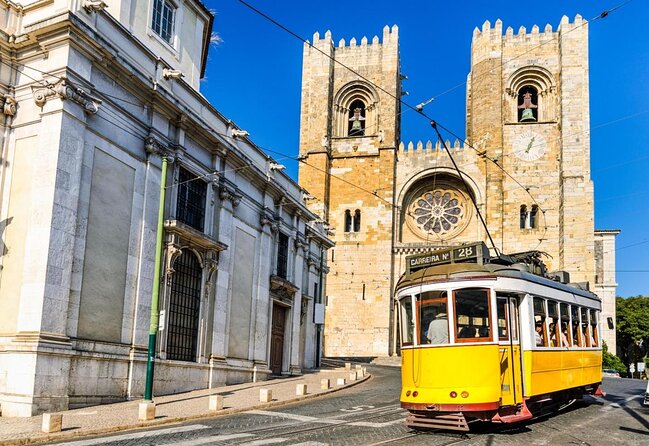
- Tram ride is part of the fun, and it helps you cover steep ground without burning out your legs.
- Santa Justa elevator ticket is not included, so if you want that ride, budget for it separately.
Why This Lisbon Walk Works on a First Day
Lisbon is one of those cities where a map helps, but a guide helps more. The hills alone can trick you. Streets look close on paper, then you realize you are climbing the next ridge. This tour handles that problem by turning the city’s steep layout into an easy, logical route.
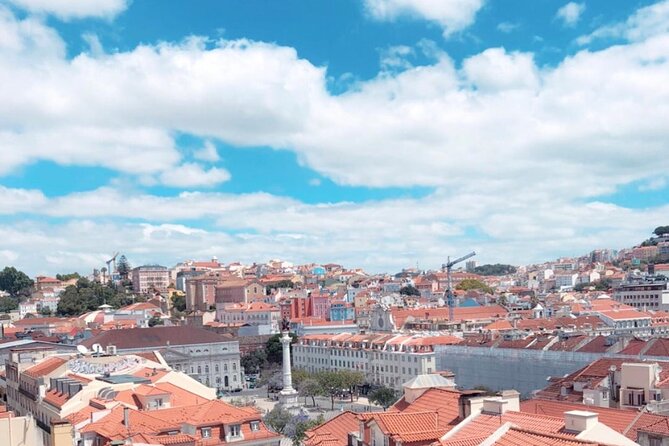
You start up high in Bairro Alto, then you work your way down through the center and toward the river. That downhill flow matters. It is easier on your energy. It also makes the viewpoints feel earned, not random.
The other big win is the mix of “show me” and “tell me.” You get churches and viewpoints, yes. But you also get the why behind them. That is what makes this a strong first-day choice if you want to explore on your own afterward.
You can also read our reviews of more walking tours in Lisbon



Bairro Alto, São Pedro de Alcântara, and the City’s Hill-Top Shape
The walk begins in Bairro Alto, a neighborhood with serious age and serious ups and downs. You will hear how Lisbon evolved over centuries, and how the city’s renewal changed where people lived. The post-1755 earthquake story is a key thread here, because it explains why certain areas filled in the way they did.
From there, you shift to a classic Lisbon move: gardens and viewpoints. At Miradouro São Pedro de Alcântara, you pause in the garden area and look back over Baixa and across the south bank of the Tagus River. This is not just a photo stop. It is a way to understand the geography that keeps repeating all over Lisbon: hills, sightlines, and the river pulling everything toward it.
Practical tip: pace yourself here. People often spend extra time photographing because the views really are that good. But if you take a minute to watch how the guide describes what you are seeing, the rest of your Lisbon day will feel less chaotic.
Igreja de São Roque and Igreja do Carmo: Art, Jesuits, and a Revolution Site
Next up is where Lisbon gets hands-on. You visit Igreja de São Roque, the Jesuit church and museum of San Roque area. The outside is austere, plain. Then the interior flips the switch with gilding, tiles, and paintings. This is where you get a dose of Mannerist and Baroque-style art in one concentrated place.
Why this matters for you: Lisbon has plenty of pretty streets, but its big interior experiences are what separate it from a quick “pretty city” visit. A church like São Roque is one of those moments where you realize the city has taste, money, and influence behind the scenes.
Then you head down toward Igreja do Carmo, a convent and church known for its Gothic architecture. This stop adds a different kind of intensity, because it is tied to the Carnation Revolution in 1974, the event that ended nearly 50 years of dictatorship. You will walk through the site with that context in mind, so it is not just stone and arches. It is a place where Lisbon’s modern history turns into a physical stop.
Small caution: these church visits are more meaningful if you slow down. The group can move quickly between points, so if you care about art and architecture, ask a question or two while you are inside. Your guide can tailor the explanation to what you notice.
Elevador de Santa Justa: A Scenic Optional Payoff
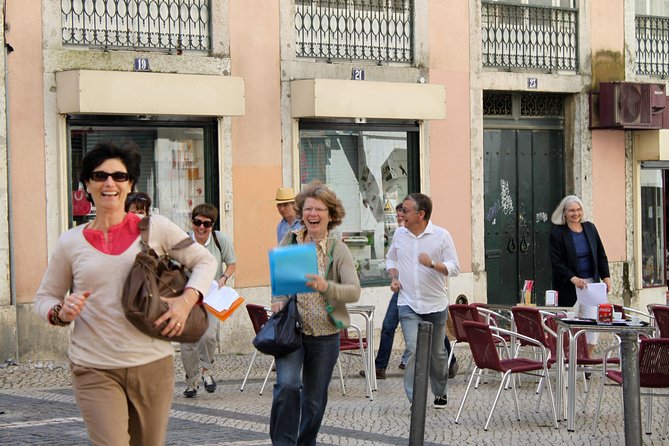
After the Gothic stop, you reach Elevador de Santa Justa. It is an imposing monument in Gothic Revival style, and it is one of the best places for city views.
Here is the thing you should plan for: the elevator ride itself is not included. That means you will likely have a few minutes to see it and decide if you want to pay for the viewpoint. If you are trying to keep your spending tight, you can still enjoy the exterior and surrounding area. But if you want that elevated perspective, budget for the ticket.
How to decide in the moment:
- If you hate lines or you know you will not ride later, it is a good time to go for it.
- If you think you will want more viewpoints later, you might skip the elevator and spend that money elsewhere.
Baixa Café Break and Praça da Figueira: Refill, Reset, Then Ride
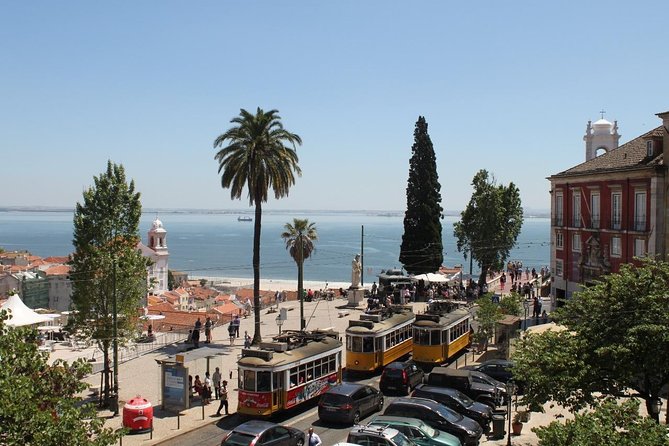
Now you move into Baixa de Lisboa, the downtown heart. You get an included break: coffee and a pastry. This matters more than it sounds. Lisbon walking can be deceptive. You can feel fine for an hour, then suddenly you hit a patch of extra steep cobblestones. That café stop gives you a real reset.
Next you visit Praca da Figueira. After a short pause, you take a tram ride that helps you connect back toward the viewpoint zones near the river. This is a smart way to keep the energy up while still seeing Lisbon’s signature streets and movement.
One note from how this tour typically runs: if you are the type who cares about classic Lisbon transport, ask your guide what the tram ride resembles and why the route is used. Some guides are especially good at pointing out small details, like how the tram helps you avoid steep walking segments.
Food tip: the included pastry break is usually enough to hold you over for the rest of the walk, but it is still smart to carry a small snack if you tend to get hungry later.
You can also read our reviews of more historical tours in Lisbon





Alfama and Portas do Sol: Fado Streets, Saint Festivals, and River Views
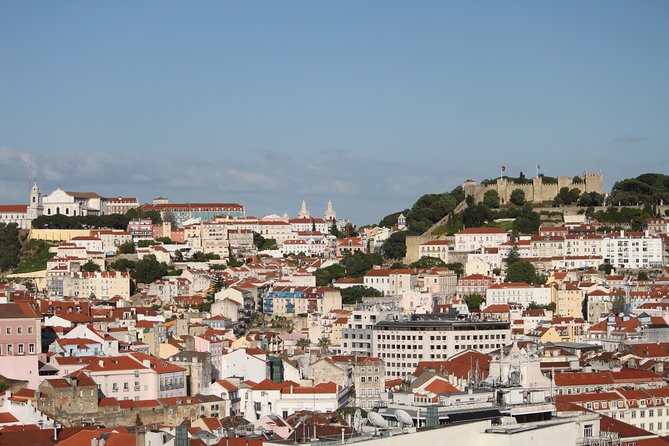
From the tram and down toward the river, you arrive at Portas do Sol and the Alfama area. This is where Lisbon feels old-school. Alfama is one of the oldest and most traditional neighborhoods, famous for fado houses and for saint festivals, especially St. Anthony.
What you get here is not a lecture. You get a lived-in maze of narrow streets and viewpoints, and the guide ties it back to why fado fits this geography so well. Alfama is steep, intimate, and community-centered. Those are the ingredients that make the music make sense in context.
You also pass by or see nearby landmarks around this zone, including the Monastery of São Vicente de Fora and the National Pantheon. Even if you do not go inside, seeing these from the right angle helps you spot them later when you return on your own.
Photo advice: use your first look for establishing shots, then revisit for tighter compositions. The streets twist, so you can often get multiple different angles from the same general area.
Ending at Lisbon Cathedral: 1150 Origins and Mixed Architectural Styles
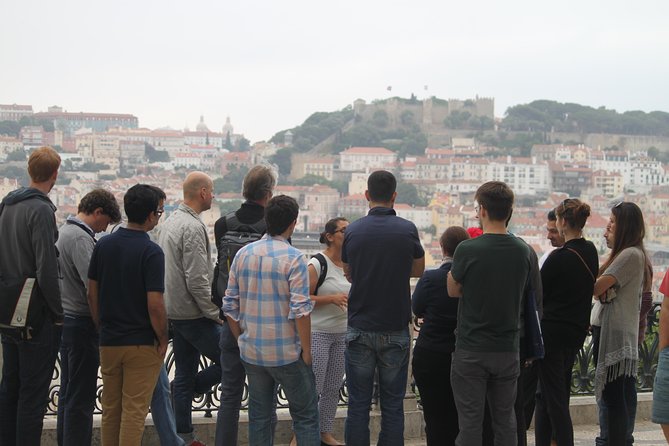
Your tour ends at Lisbon Cathedral, built in 1150, about three years after Lisbon was taken back from the Moors. Over time, it has gone through changes, leaving you with a mix of architectural styles rather than one pure look.
This closing stop is a good choice because it pulls your walking day into one final anchor. After hours of churches, viewpoints, and neighborhood stories, you finish at a major place that shows the city’s layering over centuries.
If you want to linger, this is the time. You may also find that the cathedral stop helps you understand the city’s timeline. It ties the earlier historical pieces into something you can point to and say, okay, I get why Lisbon is layered.
Price and Value for a 3-Hour Introduction
At $30.25 per person for about 3 hours, this is priced for serious first-day value. You are paying for more than the list of sights. You are paying for:
- A professional guide to connect the dots between neighborhoods and history
- An included tram ride, which saves energy on steep terrain
- An included coffee and pastry break, so you do not burn your budget on snacks midway
- A route design that keeps you moving efficiently without feeling like a rushed checklist
Could you do similar sights on your own? Sure. But you would spend extra time figuring out the order, walking more hills, and missing the story threads that make it all click. For first-time Lisbon visits, that is where guided tours tend to pay off.
Also, the tour caps at 15 travelers, so you are not stuck in a giant group shuffle.
How to Prepare: Shoes, Timing, and Asking the Right Questions
This is a walking tour, and you should treat it like one. One reviewer noted close to 4 miles of walking, so plan around that. A few hours can sound light until you factor in hills, cobblestones, and multiple stops.
Bring:
- Comfortable shoes (cobblestones are no joke)
- Water, especially in warm months
- A phone camera with enough space for viewpoint photos
If you want to get more out of the tour, ask targeted questions during the indoor stops. For example:
- What am I looking at in São Roque’s interior?
- Why does the Carmo site matter beyond the architecture?
- Where should I go next for fado, if I only have time for one night?
Guides like Paolo, Ana, Sofia, Beatrice, Ricardo, Lucie, and Joao come up repeatedly in the experience descriptions. Common themes are clear explanations, humor, and good personal tips. If you get Beatrice, she is known for being especially caring and for sharing restaurant and fado listening ideas, so it is worth asking her for a short recommendation list for your schedule.
Should You Book This Lisbon Essentials Walking Tour?
I recommend booking this tour if you want a structured, first-day introduction that goes beyond surface sightseeing. It is a smart way to orient yourself, get the history context you need, and still leave time to explore afterward on your own.
Skip it or pick a different option if:
- You have trouble walking hills or do not want a few indoor stops plus frequent stair and street movement.
- You prefer quiet, self-paced browsing where you control every minute. This route moves as a group.
If you are on your first visit and you want to understand Lisbon quickly, this is a solid choice. You will finish the walk with a clearer sense of where to go next, what to look for, and why the city feels the way it does.
FAQ
How long is the Lisbon Essential Walking Tour?
It lasts about 3 hours.
How much does the tour cost?
The price is $30.25 per person.
What is included in the tour price?
A professional guide, a tram trip, a coffee and cake break, and liability and personal accident insurance are included.
Is the Santa Justa elevator ticket included?
No. The elevator admission ticket is not included.
Where does the tour start and end?
It starts in Lisbon, Portugal, and ends at Lisbon Cathedral in Lisbon.
Is the tour offered in English?
Yes, English is offered. Other languages are also available, and you choose at booking.
How large is the group?
The tour has a maximum of 15 travelers.
Is there a mobile ticket?
Yes, the tour uses a mobile ticket.
What is the cancellation policy?
Free cancellation is available up to 24 hours in advance for a full refund. If you cancel less than 24 hours before the start time, the amount you paid is not refunded.
More Walking Tours in Lisbon



More Tours in Lisbon





More Tour Reviews in Lisbon



Not for you? Here's more nearby things to do in Lisbon we have reviewed











Lisbon City Tours, side by side.
 ★ 5.0Lisbon City Center Tour – The Unmissable LisbonTickets from $322,234 traveller reviews
 ★ 4.7Sintra, Pena, Regaleira, Cabo da Roca & CascaisTickets from $2319,656 traveller reviews
 ★ 4.1Jerónimos Monastery Entrance TicketTickets from $2114,164 traveller reviews
 ★ 4.8History, Stories and Lifestyle Walking TourTickets from $2910,902 traveller reviews
 ★ 4.5Sunset Boat Party Cruise with DJ and Open BarTickets from $2710,378 traveller reviews
 ★ 4.7Pena Palace, Sintra, Cabo da Roca, & Cascais DaytripTickets from $919,981 traveller reviews
 ★ 4.6Oceanário de Lisboa Entrance TicketTickets from $299,943 traveller reviews
 ★ 5.0True 4Hour Private Tuk Tuk Tour: Discover Lisbon with a Local!Tickets from $1088,008 traveller reviews
More useful lists for this tour