
Review · ALFAMA TOURS
Lisbon Downtown & Alfama with a guide Walking tour
Lisbon in two hours can feel like a magic trick. This walking tour is a fast, guided route through the oldest streets and viewpoints of Alfama, plus the grand open spaces of downtown where Lisbon’s story is written in stone. I like that you get a real guide to connect the dots between neighborhoods like Baixa, Chiado, and Bairro Alto, not just a list of sights.
Two things I love most are the small group format (so questions actually land) and the way the route uses landmark-to-landmark storytelling. You’ll also hit high-value culture stops like the Fado Museum without turning it into a long, ticket-hunting detour. One drawback to plan for: it’s still a lot of uphill walking and tight cobblestones, so bring good shoes and expect a solid pace.
Key Points I’d Use to Choose This Tour
- Small-group attention with a professional guide, capped at 20 people
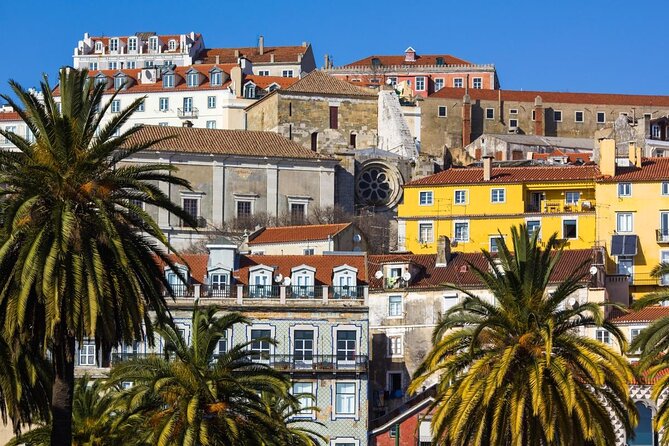
- Alfama on foot for medieval alleys, surviving earthquake history, and big viewpoints
- Downtown landmarks like Praça do Comércio to understand Lisbon’s 1755 turning point
- Culture stops including the Fado Museum, plus major church and monument areas
- Feira da Ladra timing built around Lisbon’s Tuesday and Saturday flea market culture
- Photo-friendly viewpoints from the old Cerca Moura gate and the route’s midpoints between castle and cathedral
A Two-Hour Sprint Through Alfama and Lisbon’s Center
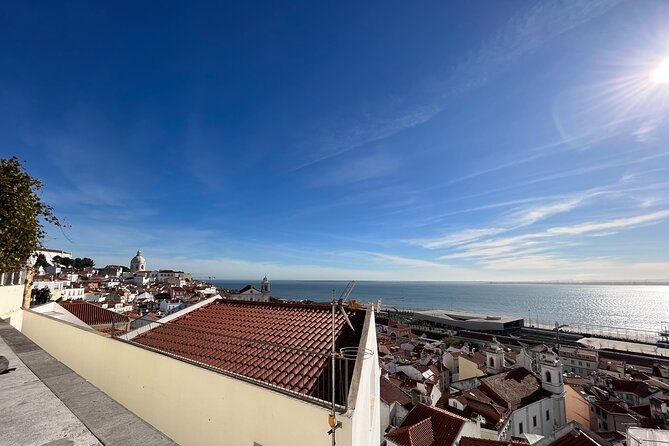
If you only have a short window, this tour is built for getting your bearings fast. The route mixes the dramatic squares of downtown with the twisty, medieval feel of Alfama, so you come away with a mental map you can use later when you roam on your own.
I also like that it’s organized around stops you can actually remember. You’re not just passing by photo spots, you’re learning why those spots matter, from earthquake-era rebuilding to the way religious sites stack different eras on top of each other.
One practical note: the tour lasts about 2 hours, but it’s still “walking tour” energy. You’ll want to start the day fresh, and you’ll thank yourself for wearing shoes you can survive in for a while.
You can also read our reviews of more walking tours in Lisbon



Where You Start (Rua dos Douradores) and Why Rossio Matters
The meeting point is Rua dos Douradores, 16, and you’ll finish at Rossio Square. That matters because Rossio is one of Lisbon’s main hubs for getting around later, whether you plan to take public transport, head to dinner, or keep exploring on foot.
If you like to structure your days, this end point is handy. It’s easier to flow from a historic walk into a meal, a show, or another self-guided wander without needing to backtrack across the city.
You should also know the tour runs twice daily, at 09:45 and 13:45. I’d pick the timing that matches your weather and energy level, because cobblestones plus sun or cold can turn “pleasant walk” into “why did I wear these shoes?”
Augusta Street Arch and Praça do Comércio: Lisbon Before and After 1755
Your route kicks off with the Augusta Street Arch. The tour frames it as Lisbon’s grand entrance vibe, with symbolic references that point back to Portugal’s layered identity. Standing in the big setting of Praça do Comércio, it’s a perfect opener because you see how the city tells its story in scale and symbolism.
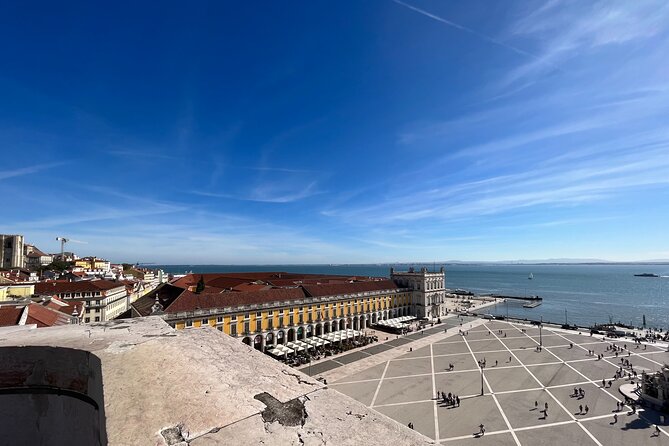
Then you land at Praça do Comércio (Terreiro do Paço), right by the Tagus River. This square is huge, and the guide’s history lens makes it more than scenery. The tour explains that the area was once home to the Paço da Ribeira until the 1755 Lisbon earthquake changed everything.
What I like here is the timeline feeling. You go from “this used to be where power was” to “this is what rebuilding looked like,” thanks to the Pombaline Downtown rebuilding ordered by the Marquis of Pombal. You also learn that from the 19th century onward, Praça do Comércio became the seat of important state departments, so the square isn’t just pretty, it’s political and practical.
The José Saramago Foundation Stop: A 1521 Building With a Nobel Prize Link

One stop takes you into a building originally built in 1521, a strong example of 16th-century Lisbon architecture. Today, it’s the headquarters of the José Saramago Foundation, dedicated to the only Portuguese author to have won the Nobel Prize for Literature so far.
This is one of those “quietly valuable” moments. You’re not paying for a long detour, but you get a sense of Lisbon’s intellectual side too, not only monuments and viewpoints.
If you’re a history person, you’ll appreciate how the tour ties eras together: old architecture gets a modern cultural role. That’s exactly the kind of continuity that helps you understand Lisbon beyond postcards.
Fado Museum: Why This Stop Helps You Hear Lisbon
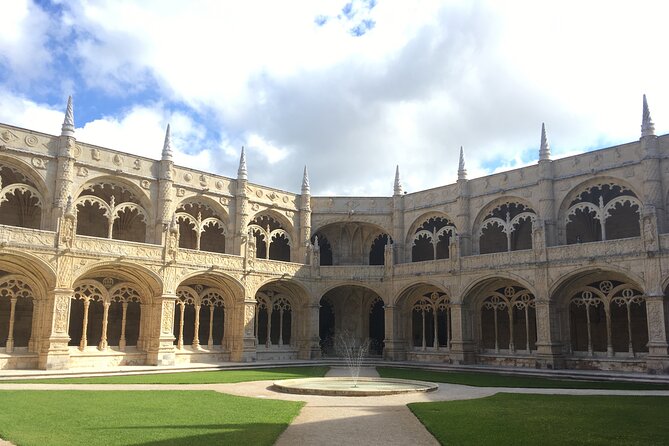
Next comes the Fado Museum, focused on the traditional Portuguese music style led by guitar. Even if fado is new to you, this kind of stop gives context fast, so later when you hear fado in a bar, you know what you’re listening for.
The tour keeps this as a structured moment rather than a random museum stop. That matters in a short walking itinerary because you want the guide to tell you what to notice, not just hand you an audio guide and hope you figure it out.
Fado is also cultural shorthand for Lisbon identity. A guided introduction helps you avoid the common trap of thinking it’s just entertainment. Here, it’s presented as a lasting cultural influence.
You can also read our reviews of more guided tours in Lisbon





Alfama: Medieval Alleys, Earthquake Survivors, and Viewpoint Payoff
Then you pivot into Alfama, Lisbon’s most emblematic quarter for walkers and photographers. This is where the city slows down and starts looking older than it feels.
The tour explains why Alfama has that survival story: dense bedrock helped it survive the 1755 earthquake. When you walk through residential alleys from the old city fabric, you’re not just seeing buildings, you’re moving through the kind of geography that helped Lisbon endure.
I love that the guide frames Alfama as a “step back in time” without turning it into a lecture. It’s practical too. Alfama’s slopes and angles naturally force you to look up, and the tour hits views along the way so you don’t spend the whole walk staring at your feet.
The 280-Year Building and the National Pantheon Vibe
Along the Alfama arc, you visit a building that took over 280 years to build. The tour describes it as the resting place of many Portuguese heroes, which gives the stop a gravitas level.
Even if you’re not a religious architecture expert, you’ll likely feel the mood shift here. Lisbon has plenty of pretty churches, but this kind of place changes how you see the city. It’s about commemoration and national identity, not only style.
If you’re the type who loves monuments but gets bored in long interiors, this stop works because it’s anchored in a story about people, not just stonework.
Feira da Ladra: Flea Market Culture Built Into the Walk
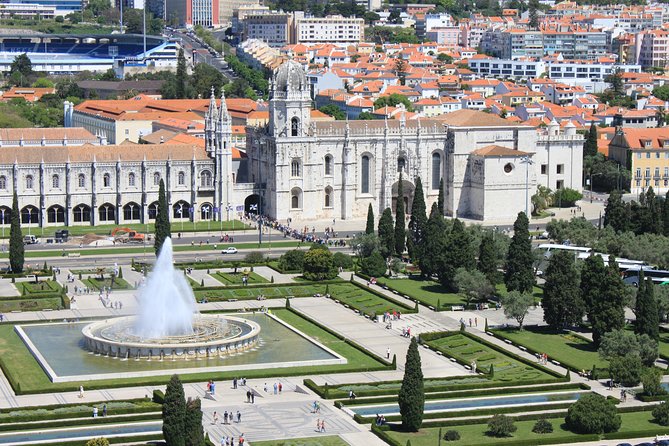
You also get a cultural rhythm stop: Feira da Ladra, the open-air flea market held every Tuesday and Saturday in and around the Campo de Santa Clara.
Even if you don’t plan to shop, this is a fun way to see Lisbon as locals do. A flea market gives you texture, smells, and that everyday energy you don’t get from major monuments.
The key is timing. If you’re in Lisbon on those days, you’ll benefit most. If not, you might still appreciate the guide’s explanation of why the market is part of local life.
Cerca Moura Gate Viewpoints: Photos With Context
The tour includes a viewpoint connected to the Cerca Moura, the Moorish city wall. You’ll see a view roughly at the midpoint between São Jorge Castle and the cathedral area, and the tour notes it’s reputed to be Lisbon’s oldest building.
This kind of stop is great because viewpoints are where your brain forms maps. If you’ve ever tried to navigate Lisbon after the fact, you know how much easier it is when someone shows you what aligns with what.
Another viewpoint comes from an old gate, which is where the city’s layers show up visually. You see Lisbon as a stack of eras, and the guide helps you make sense of the angles.
Knights of Malta Church: A 12th-Century Layer You Might Miss Alone
One stop points out a church originally built by the Knights of the Order of Malta in the 12th century. Places like this can be easy to overlook when you’re walking solo, because the exterior might not scream “major historical player.”
A guided route fixes that. The guide tells you who built it and why that order mattered, so when you look at the architecture, you understand it as a clue.
This is one of those “small details” that makes a walking tour feel worth it. It’s not just sights, it’s signals.
Lisbon Cathedral and the Saint Anthony Tradition at São Antonio
The route then moves into the heart of Catholic Lisbon at the cathedral (Sé). The tour explains it was commissioned by King Afonso I in 1150 and built where a mosque erected by Islamic Moors once stood.
You’ll also hear that the cathedral’s long series of collapses and renovations left it as a mixture of styles. That’s exactly how Lisbon works. It doesn’t cleanly separate eras into neat museum boxes. It layers them, sometimes awkwardly, always visibly.
Near the cathedral, you visit a church built on the purported birthplace of Saint Anthony of Lisbon. This is the kind of stop with a human tradition attached. The tour notes that single women might throw a coin to the statue, hoping to be married within a year.
Even if you don’t participate, this is a memorable “you are in a living city” moment. It also helps you understand why Saint Anthony matters in Portuguese culture beyond geography.
Monastery and the São Jorge Castle Neighborhood
The tour also includes a monastery stop described as a model for later church building in Portugal. It stayed in use until the abolition of religious orders in the early 19th century, so you get a clear historical endpoint too.
This is a good contrast to places that only tell you about origins. You learn what happened when the state and society changed.
You’ll also pass a small plaza within about 500 meters of São Jorge Castle. The stop is short, but location cues like this help you later decide whether it’s worth the climb for castle views on your own.
Door of the Sea and a Canned Fish Grocery Stop
Near the end, you’ll visit an area called the Door of the Sea. The tour says it got the name because it was one of the main entrances into the city from the beach and harbor when Lisbon was fortified.
This is a clever way to connect Lisbon’s inland alleys back to the waterfront life. Lisbon’s identity is tied to the sea, and the guide makes sure you don’t forget it while you’re deep in the old quarters.
Finally, there’s a family-owned grocery store that specializes in canned fish. It’s not a big “food tour” promise, but it’s a practical look at local staples and how people actually store and eat seafood in Portugal.
If you like small, local moments over big set-piece attractions, this is a solid closer.
Price, Group Size, and Value That Makes Sense
This tour is listed at a very low price point, around $3, and that changes how you should evaluate it. At this cost, you should treat it as a guided walking overview, not a day filled with paid entrances, meals, or private transport.
The value shows up because key stops are free where the tour indicates free admission, and the guide does the heavy lifting of interpretation. You’re paying for context, pacing, and route design, not for a long bus day.
The maximum of 20 travelers also matters. In a city like Lisbon, where sidewalks and alleys can get tight, small group size keeps the walk from turning into crowd management.
As for what’s not included: food and drinks aren’t covered unless specified, and there’s no hotel pick-up or drop-off. So plan a snack if you need one and decide your own meal strategy ahead of time.
What to Bring (So Lisbon Doesn’t Humble You)
Lisbon walking can be humbling if you show up under-prepared. The tour guidance is clear: wear tennis shoes or appropriate footwear, and bring water.
Season matters. In summer, bring sunscreen. In winter, it gets cold, so bring a jacket. That sounds obvious, but in Lisbon, the combination of wind, sun, and shade can surprise you.
Also, the experience uses a mobile ticket, and the operator mentions a Vox City app with free self-guided walking tours. So have your phone ready for the ticket and the audio tool, even if the phone itself isn’t provided.
Guides You Might Get, and the Style That Wins
The tour runs with professional guides, and names like Bruno, Marina, Mariana, Mihaela, Miguel, Daniel, Patricia, Ines, and Stanislaw have been highlighted as standout guides in past departures.
What I like about this pattern is the common thread: guides who know Lisbon history and can adjust pace. One guide focus you’ll likely feel is practical storytelling, where the history comes with a reason you’re standing where you are.
If you prefer an energetic, question-friendly style, small group size helps a lot. If you’re not a fast walker, look for a departure where you can keep up without sprinting, because the route includes slopes and older streets.
Should You Book This Lisbon Downtown and Alfama Walking Tour?
Book it if you want a guided route that helps you understand Lisbon quickly, especially the older layers in Alfama. This is a smart pick for first-time visitors who don’t want to spend their first day guessing where the viewpoints and key landmarks connect.
Skip it or choose a different format if you hate walking, or if you want long museum time and lots of food stops. This tour is built for moving, and the experience itself signals that you should be ready for a considerable walking day.
If you’re visiting on a Tuesday or Saturday, you also get the extra cultural energy of Feira da Ladra, which can turn the walk into more than sightseeing.
Overall, I’d call this a strong value way to get your bearings, learn the major Lisbon story points, and leave with enough context to explore independently afterward.
FAQ
How long is the Lisbon Downtown and Alfama with a guide walking tour?
It lasts about 2 hours.
Where does the tour start and where do you finish?
You meet at Rua dos Douradores, 16 and finish at Rossio Square (Praça do Rossio).
Is this a small group tour?
Yes. It has a maximum of 20 travelers.
What languages are available for this tour?
English, Spanish, and Portuguese are available all year round, and multilingual audio commentary is provided in English, French, Italian, Spanish, Chinese, and German.
Are any admissions included or free at stops?
Some stops are listed with free admission and you are given ticket guidance at those points. The tour also mentions a mobile ticket.
Is food included in the price?
No, food and drinks are not included, unless specifically mentioned.
Is the tour canceled in bad weather?
It will not be canceled unless there are warnings and alerts by official organisms.
What should I wear and bring?
Wear tennis shoes or appropriate footwear, bring water, and plan for weather by bringing sunscreen in summer or a jacket in winter.
Does the tour require a mobile device?
It uses a mobile ticket, and the tour mentions multilingual audio commentary through a Vox City app, so you should have your device ready.
What is the cancellation policy?
You can cancel for a full refund up to 24 hours before the experience start time. If you cancel within 24 hours, the amount paid is not refunded.
More Walking Tours in Lisbon



More Tours in Lisbon





More Tour Reviews in Lisbon


Not for you? Here's more nearby things to do in Lisbon we have reviewed











Alfama Tours, side by side.
 ★ 5.0Alfama Tour in Lisbon Old TownTickets from $34,936 traveller reviews
 ★ 5.0Private Lisbon Sightseeing Tuk-Tuk Tour: Alfama, Belém & MoreTickets from $524,277 traveller reviews
 ★ 4.8Hills, Alfama, and Mouraria Tour by Electric BikeTickets from $253,438 traveller reviews
 ★ 4.9Best of Lisbon Walking Tour: Rossio, Chiado & AlfamaTickets from $232,700 traveller reviews
 ★ 5.0Lisbon Small-Group Food Tour with 18 Tastings in Alfama DistrictTickets from $1261,967 traveller reviews
 ★ 4.5Lisbon E-Bike Tour Commerce Square, Mouraria and AlfamaTickets from $301,688 traveller reviews
 ★ 5.0Old Town TukTuk Tour and Scenic Viewpoints in AlfamaTickets from $35974 traveller reviews
 ★ 4.4Alfama Tour and Live Fado with Traditional DinnerTickets from $58970 traveller reviews
More useful lists for this tour