
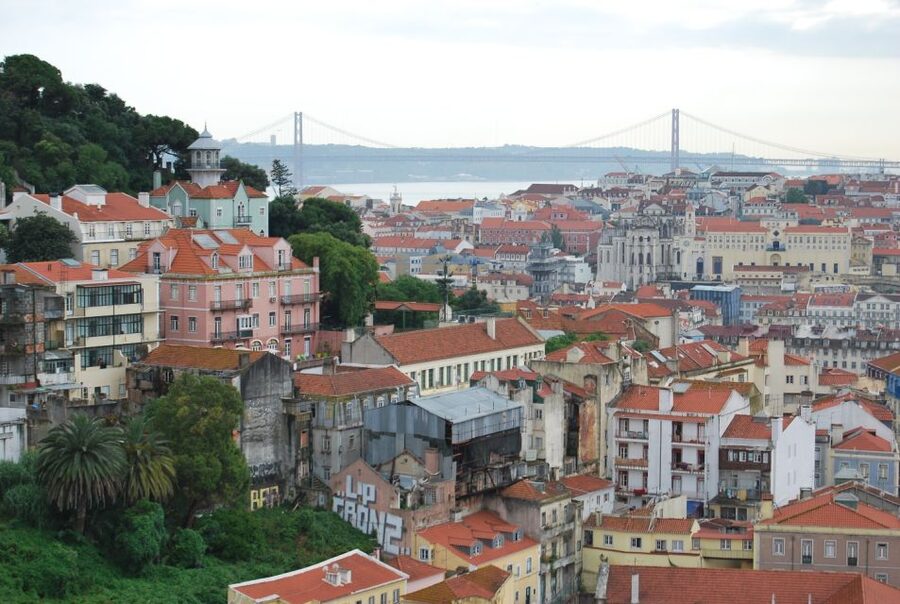
Review · ALFAMA TOURS
Lisbon: Alfama and São Jorge Castle Quarters Walking Tour
Alfama feels like walking through Lisbon’s DNA. In 150 minutes, I enjoyed Casa dos Bicos and its spike facade, plus the Portas do Sol lookout that makes the whole city feel close. The guide ties Roman Olisipo, Moorish Al-Hamma, and fado customs to the streets you step on. Just note the São Jorge Castle interior is not part of this walk, and it is not a good fit if you have mobility limitations.
I also like that this tour is built around real bearings: you start at a landmark you can’t miss, then you wind through alleys, interior patios, and hidden squares that make Alfama easier to navigate on your own later. The Lisbon Cathedral stop includes entry and a guided look at a 12th-century core shaped by different architectural eras.
If you want a half-day that turns Lisbon from a postcard into a place with layers, this is a smart way to do it. You’ll get a live guide in Spanish, Portuguese, German, English, or French, and you’ll also receive PPE (mask and disinfectant gel).
Quick hits you will notice

- Meet at Casa dos Bicos, the 1523 House of Spikes, still standing after the 1755 earthquake
- Walk the São Jorge quarter along the walls, without buying a castle entry ticket
- Learn Roman Lisbon clues at the Cetária and how Olisipo connects to hot waters
- Pass Largo do Chafariz de Dentro and hear how fado took shape in daily life
- See Lisbon Cathedral with its mix of architectural styles
- Finish with panoramic views from Portas do Sol
Starting at Casa dos Bicos, the spike house you use as your compass

Your tour begins at Campo das Cebolas by Casa dos Bicos, the House of Spikes. This is built around 1523 and is famous for surviving the 1755 Lisbon Earthquake, so it is more than a cute facade. It also gives you an instant landmark for figuring out where you are in the city later.
The meeting spot is easy to find if you orient yourself around the Casa dos Bicos, and the guide will be holding a black bag with the Lisboa Autêntica logo. That matters more than you might think, because the streets around Alfama can feel like a maze the first time you enter.
Before you start walking, you get PPE (mask and disinfectant gel) and then you move into the neighborhood with a plan. This helps the tour feel focused, not random wandering.
You can also read our reviews of more walking tours in Lisbon



Alfama alleys and São Jorge walls, a walk that teaches the map
The core of the experience is the walk through Alfama, Lisbon’s oldest neighborhood, following the city walls toward the São Jorge area. You’re not just looking at buildings, you’re learning how the geography shaped the city. Alfama’s steep streets and interior pockets explain why Lisbon developed the way it did, and why so much life seems to happen just off the main lanes.
The tour is framed around the historic Moorish castle area of São Jorge. You’ll learn what those fortification lines meant to the city, and you’ll get a sense of the old perimeter the way early Lisbon residents would have experienced it.
One practical point: the tour is listed as not suitable for people with mobility impairments. That is consistent with what Alfama is like in real life, lots of stairs, uneven surfaces, and tight turns. If you need step-free routes, plan a different option.
Also, one small reality check: there is no São Jorge Castle interior entry here. You’ll go to areas associated with the castle walls, but the castle itself is a separate choice for your later day.
Cetária and Olisipo, spotting Roman leftovers in everyday streets
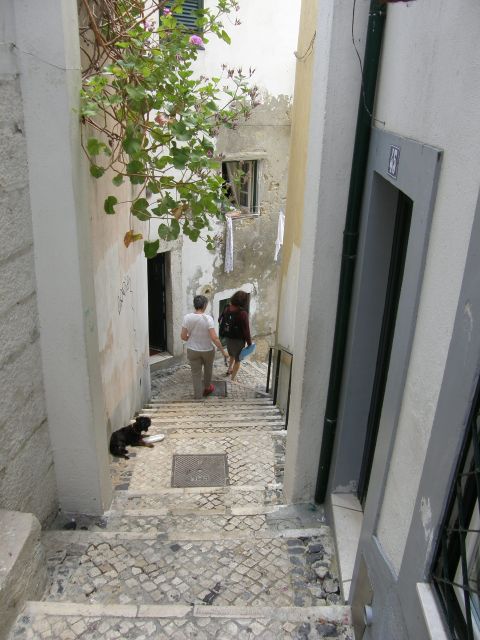
A standout moment on this tour is the Roman connection. You’ll stop at Cetária and see evidence of the old Roman salting tanks. That’s a fascinating detail because it shifts your view from Lisbon as just a scenic city to Lisbon as a working port and food-processing hub long ago.
Then the guide pulls you back further to the Roman era name Olisipo, Lisbon’s Roman identity. You’ll also hear how the Romans discovered the thermal waters of Alfama. Later, the Muslims gave them the name Al-Hamma, which links language directly to landscape.
This is one of those parts where the walking matters. If you were reading a plaque somewhere, you might miss the bigger idea. But on foot, with the route linking sites, the Roman and Moorish layers start to feel logical instead of like trivia.
I like this approach because it also changes how you look at Lisbon’s street life. You start noticing why particular neighborhoods cluster, where people likely gathered, and how the city’s physical setup shaped everyday routines.
Jewish Quarter traces, secret stairways, and hidden squares
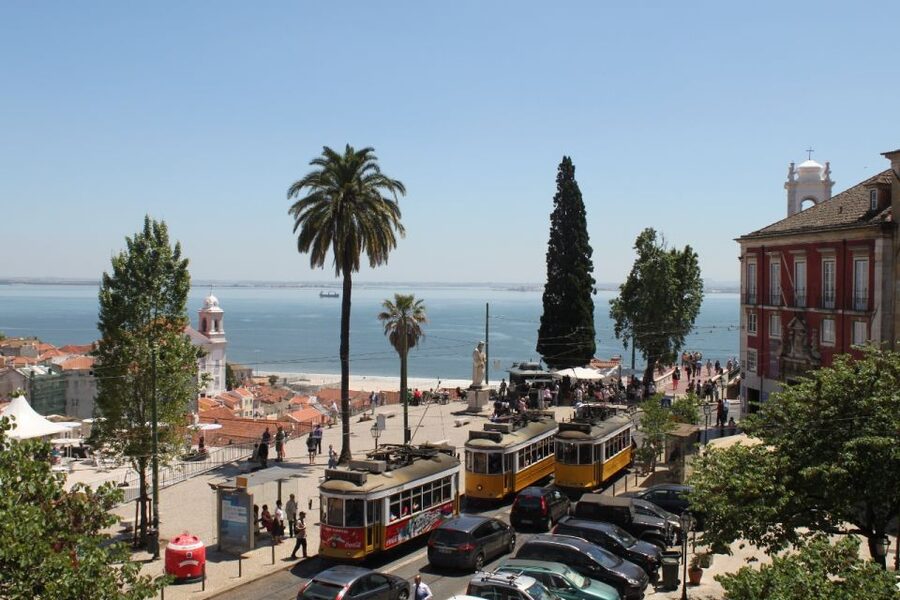
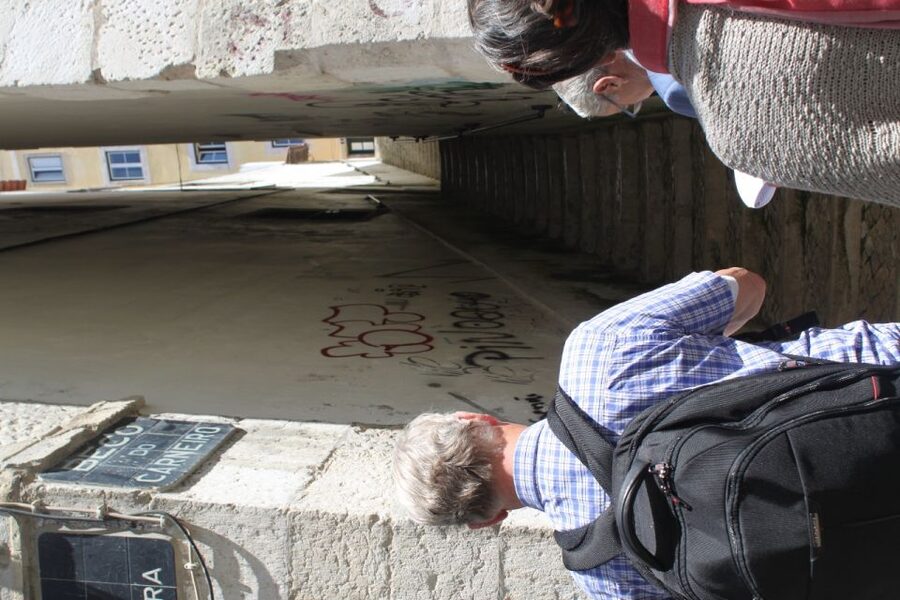
As you wander through Alfama, you’ll move through areas associated with the former Jewish Quarter. The tour highlights labyrinth alleyways, interior patios, and the kind of small-scale urban design that makes Lisbon feel intimate even when it is crowded.
You will specifically be guided to what used to be part of that community’s spaces, including secret stairways and hidden squares. Those are the moments that make Alfama feel alive, because they are easy to miss when you’re walking fast or using your phone map only.
This is also where a good guide earns their pay. A route like this depends on attention, not speed. When your guide points out a side entrance, a tucked courtyard, or a square you could walk past twice, the neighborhood suddenly makes sense as a connected system instead of separate photo stops.
The value here is not just visual. It is mental. You leave with a better understanding of how the neighborhood is stitched together, which is what you want when you plan to explore more on your own later.
Fado origins at Largo do Chafariz de Dentro, plus customs you can feel
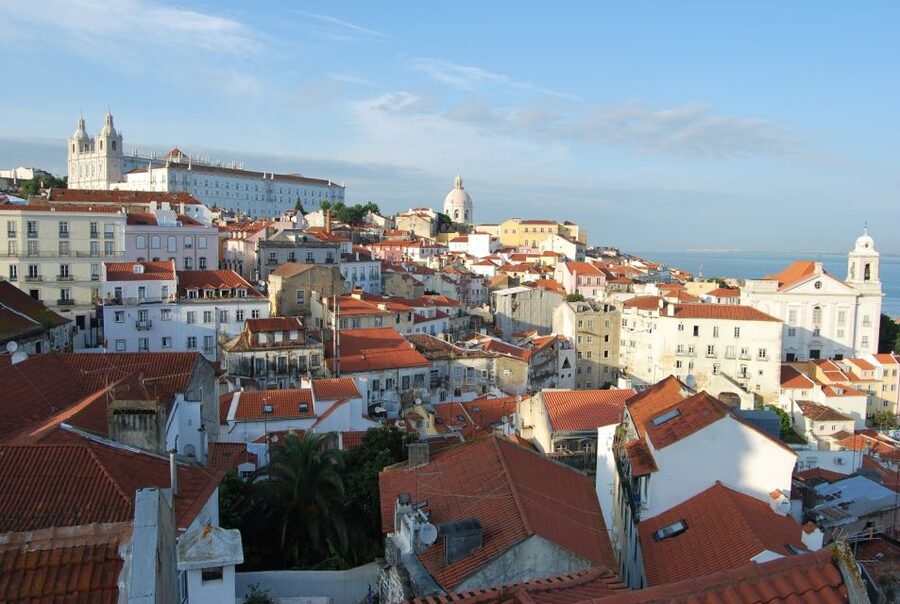
Fado is one of Lisbon’s most famous exports, but the best way to understand it is through the streets where it took shape. On this tour, you learn about the birth of fado and you also hear about customs tied to daily life.
A key stop for that is Largo do Chafariz de Dentro. The setting matters because it connects music to place, and place to routine. A fountain square, a neighborhood gathering spot, and the everyday rhythms around them all shape what kinds of songs people sing and how stories get told.
This segment is also where the tour can feel more human than purely architectural. Instead of saying, here is a wall, and here is a building, it helps you understand why people used to gather and how culture spread through ordinary street scenes.
If you care about music, this is the part that makes Alfama more than scenery. It turns fado into something tied to real geography, not just a performance you catch later.


Lisbon Cathedral inside a 12th-century core with many layers

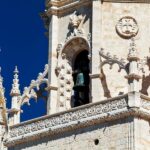
Next up is Lisbon Cathedral, built in the 12th century and modified over time with a mix of architectural styles. The tour includes entrance and a guided look, which is a smart inclusion because cathedrals are the kind of place you can underappreciate if you walk in with no context.
This is where you see Lisbon’s layered identity in architecture, not just in street layout. Different eras left their mark, and your guide helps you connect those changes to the city’s long timeline.
Even if you have seen other major churches, Lisbon Cathedral is worth your attention because it is directly tied to the city’s oldest neighborhoods and their evolving story. It also gives you a break from the steep street walking without turning the tour into a stop-and-stare museum moment.
Portas do Sol views, where you plan your next move
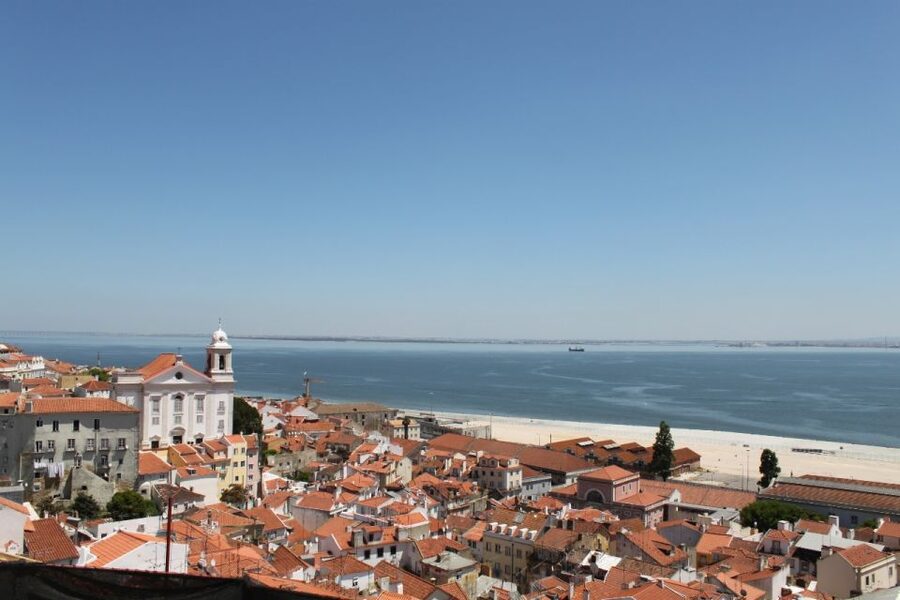
The tour finishes with panoramic views from Portas do Sol. This belvedere is the kind of spot where the city suddenly snaps into focus. From up here, you can see how Alfama spills down the slopes and why the winding street grid feels the way it does.
This ending is not random. It is a useful checkpoint, because by the time you reach Portas do Sol, you have already been trained by the route. You recognize the kinds of turns, the interior spaces, and the wall-adjacent shape of the city.
Your guide will also advise where to go next for the rest of your stay. That part is genuinely useful because it turns the tour into a planning tool, not just a single afternoon.
If you’re trying to get your bearings fast in Lisbon, this viewpoint helps you create a mental map you can actually use.
Price and value for $23, including Cathedral entry but not castle tickets
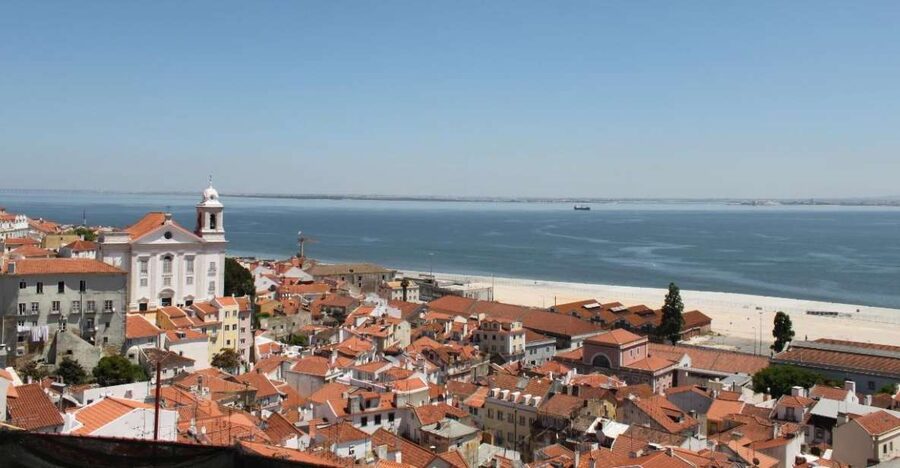
At $23 per person for a 150-minute guided experience, the value comes from what’s included, not just the time. You get a live guide, plus entrance and guided coverage of Lisbon Cathedral. That is often the difference between a walk that feels like sightseeing and a walk that feels like orientation.
You also get PPE supplied, and the route is designed to connect multiple eras and sites instead of treating them as unrelated stops. That kind of linking is what makes a walking tour feel worth your time.
What is not included is just as important. Transfers are not included, and São Jorge Castle entrance is not included. The tour still helps you understand the São Jorge area by walking near the walls, but if you want to go inside the castle itself, you will need to add that separately.
For $23, this is a good pick if you want a strong Alfama education in one half-day and you are open to doing the full castle visit on another schedule.
Who this Alfama and São Jorge walk suits best
This tour is a great match for you if you:
- Want to see how Lisbon’s layers connect, Roman, Moorish, and later Christian eras
- Like walking with meaning, not just following a list of photo spots
- Want fado context tied to the neighborhood, including the stop at Largo do Chafariz de Dentro
- Appreciate architecture explanations, especially the Lisbon Cathedral mix of styles
It also works well as a first-day or early-stay activity because you come away with bearings plus a sense of what to return to. A number of guides running this style of tour are praised for storytelling and for being engaging in the moment. Some names you may hear connected with these walks include Ricardo, Agatha, Helena, Lucy, Fatima, Beatrice, and Beatrix, and there are also mentions of guides adjusting the route when needed.
If you prefer minimal walking, skip this. The neighborhood includes steep segments, stairways, and interior passages, and the tour is explicitly marked not suitable for mobility impairments.
The main trade-off: São Jorge Castle interior is not included
The one drawback to keep in mind is that the tour is centered on the São Jorge area but does not include entrance to São Jorge Castle. You’ll learn from the surroundings, including castle-wall territory, but you will not do the full inside visit during this time block.
If you are the kind of person who loves castle interiors, add a separate castle visit later. If you are happy with views, walls, and the neighborhood context, you will likely feel this tour is exactly the right size.
Also, plan on comfortable shoes and comfortable clothes. Alfama’s streets and stairs mean you should dress for movement, not for looking perfect in every photo.
Should you book this Alfama and São Jorge walking tour?
I think you should book it if you want a focused half-day that turns Alfama into a story you can walk through. The combination of Casa dos Bicos, Roman clues at Cetária, fado at Largo do Chafariz de Dentro, and a guided stop inside Lisbon Cathedral is a strong blend of place, culture, and context.
Skip or consider another option if you need step-free access, because the route includes the kind of terrain Alfama is known for and the tour is not designed for mobility impairments. Also, if São Jorge Castle interior is your top priority, plan that as an add-on, since it is not included.
If you fit the walking-friendly category, this is a smart value way to learn Lisbon fast, and then use your new bearings to explore the rest of the city in your own rhythm.
FAQ
Where do I meet for the Lisbon Alfama and São Jorge walking tour?
You meet at Campo das Cebolas, Casa dos Bicos (the House of Spikes). The nearest metro station is Terreiro do Paço, and the guide will be holding a black bag with the Lisboa Autêntica logo.
How long is the tour?
The duration is 150 minutes.
What is included in the price?
The tour includes a live guide, entrance and a guided tour of Lisbon Cathedral, and PPE (mask and disinfectant gel).
Is São Jorge Castle entrance included?
No. Entrance to São Jorge Castle is not included, though the walk focuses on the São Jorge area and castle walls.
What languages are available for the guide?
The live tour guide is available in Spanish, Portuguese, German, English, and French.
Is the tour suitable for people with mobility impairments?
No, it is not suitable for people with mobility impairments.
Can I cancel, and how late can I do it?
You can cancel up to 24 hours in advance for a full refund.
More Walking Tours in Lisbon



More Tours in Lisbon



More Tour Reviews in Lisbon
Not for you? Here's more nearby things to do in Lisbon we have reviewed











Alfama Tours, side by side.
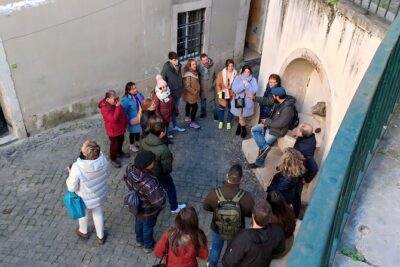 ★ 5.0Alfama Tour in Lisbon Old TownTickets from $34,936 traveller reviews
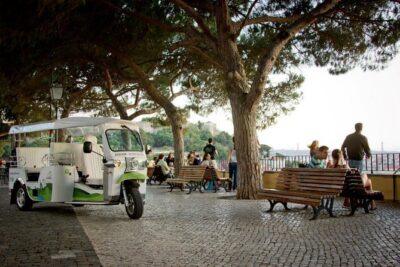 ★ 5.0Private Lisbon Sightseeing Tuk-Tuk Tour: Alfama, Belém & MoreTickets from $524,277 traveller reviews
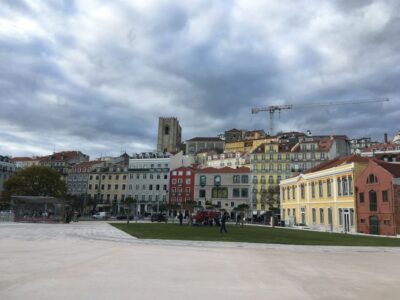 ★ 4.8Hills, Alfama, and Mouraria Tour by Electric BikeTickets from $253,438 traveller reviews
 ★ 4.9Best of Lisbon Walking Tour: Rossio, Chiado & AlfamaTickets from $232,700 traveller reviews
 ★ 5.0Lisbon Small-Group Food Tour with 18 Tastings in Alfama DistrictTickets from $1261,967 traveller reviews
 ★ 4.5Lisbon E-Bike Tour Commerce Square, Mouraria and AlfamaTickets from $301,688 traveller reviews
 ★ 5.0Old Town TukTuk Tour and Scenic Viewpoints in AlfamaTickets from $35974 traveller reviews
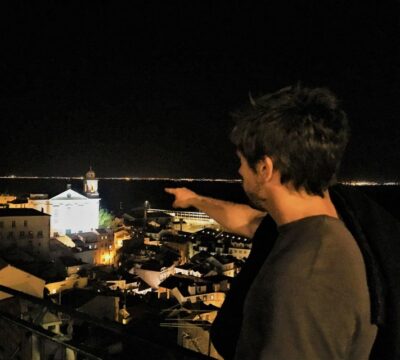 ★ 4.4Alfama Tour and Live Fado with Traditional DinnerTickets from $58970 traveller reviews
More useful lists for this tour