
Review · LISBON CITY TOURS
Lisbon: African History and Heritage Walking Tour
Lisbon hides African roots in plain sight. This 3.5-hour walk connects Moorish beginnings, social class, and the transatlantic slave route to what you see in Lisbon today, and I love how the streets do the teaching. I also like the honest tone when the story turns to forced migration and the slave trade. One heads-up: it is a walking tour with some uphill, and it is not suitable if you have mobility impairments.
You start at A Padaria Portuguesa, which makes it easy to find and easy to kick off on time. Guides can include people such as Jose, Al, Alcides, and Alfie, and their style is consistently story-driven, answer-heavy, and friendly. If you’re the type who likes to understand how a city got built and why it matters, this format is a good fit.
The route mixes famous squares with smaller street-level clues, so you will cover real neighborhoods instead of only postcard stops. You should plan for no food stop guarantee and bring your own patience for corners, steps, and hills. You’ll leave with a clearer mental map of Lisbon, and that is the whole point.
Quick takeaways before you go
- Built-environment storytelling: fountains, churches, and train-station design are used as evidence, not just scenery.
- Alfama to Rossio flow: you move through Lisbon’s oldest streets and then into the city’s 19th-century “golden times.”
- Slave-route context in plain language: the walk ties Lisbon’s role to the wider Atlantic story.
- Everyday integration, not only big events: the tour points out religious life, social class, and community presence.
- A walk you can actually enjoy: you get water, a guided pace, and frequent chances to ask questions.
Start at A Padaria Portuguesa, then let Alfama set the tone
Meeting at A Padaria Portuguesa is the kind of detail that helps you travel smarter. You show up, find the guide, grab a bottle of water if it’s handed out at the start, and then the walk begins with context instead of a random sightseeing sprint.
From there, you roll into Alfama, Lisbon’s oldest neighborhood. It’s known for winding streets, but on this tour it also becomes the “first chapter” for connections with North Africa and the Moors. The guide frames Alfama’s origins in terms of roots and movement, so you’re not just admiring old buildings, you’re learning how different peoples shaped this city.
Why this matters: if you only visit viewpoints, Lisbon can feel like a museum. Alfama makes it feel like a living crossroads, and that sets you up for every later stop.
Tip: wear comfortable shoes. One of the simplest lessons from past walks is that you will walk uphill at points.
You can also read our reviews of more walking tours in Lisbon

Alfama’s Moorish links and why Lisbon feels like crossroads
Alfama helps you see that Lisbon’s African connections are not a single event you tack on at the end. They show up as influence, contact, and long-term presence. The tour doesn’t treat Africa as a “side note.” It treats African presence as part of how Lisbon became Lisbon.
The guide uses this area to introduce Africa’s history, roots, and connections with other people, including the way Iberian history and North African history overlap. That framing is useful because it prevents you from viewing the later slave-trade chapter as an isolated horror with no local background.
In practice, you get the sense of how a city can hold multiple eras in the same street. Today’s traffic noise sits beside centuries-old stone, and the guide helps you read what you’re seeing.
Chafariz D’El Rei: a fountain that explains social class
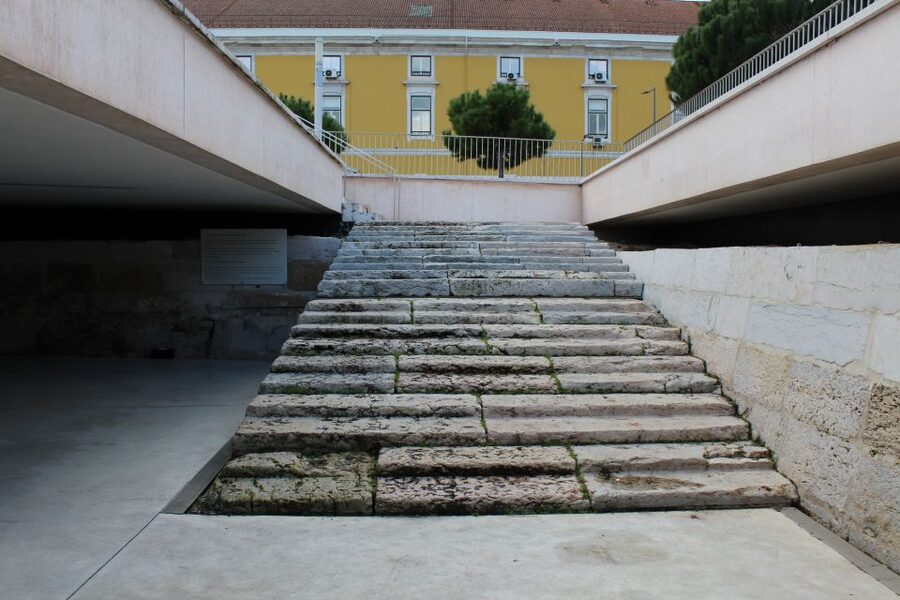
One stop that really changes how you look at Lisbon is Chafariz D’El Rei. Yes, it’s a fountain. But the guide uses it to explain medieval social division, and importantly, it includes Africans in the story of who was represented and who wasn’t.
This kind of stop is powerful because it makes a point without needing a big monument. You learn that class systems lived in everyday places, not only in royal palaces.
For you as a visitor, that means you start asking better questions. Instead of only asking what the building is, you’ll ask who benefited, who served, and who had access. That is a skill worth leaving with.
Campo das Cebolas and the port history behind the headlines
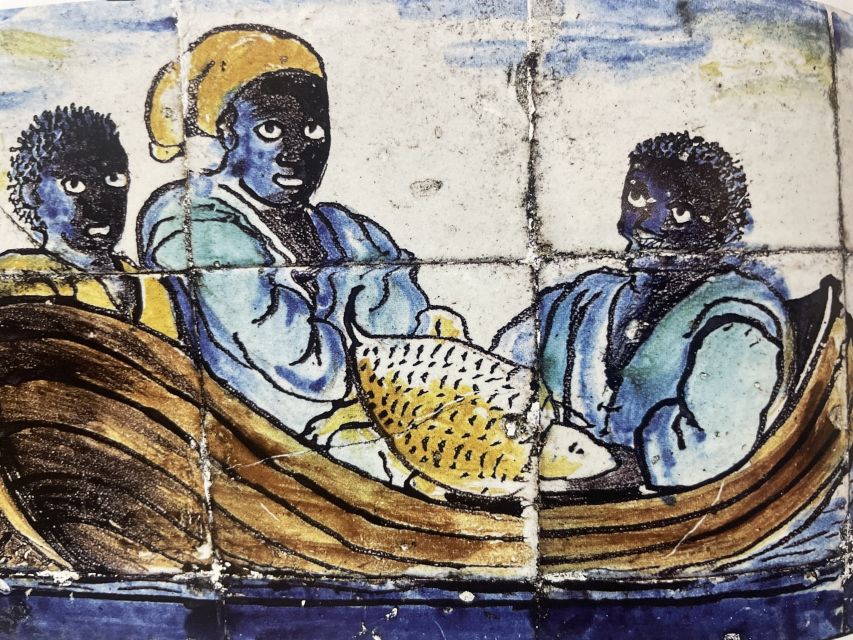
Campo das Cebolas is tied to Lisbon’s old port, and this is where the tour makes a sharp turn toward the Atlantic reality. The guide connects the square to the arrival of the first African slaves in Europe, anchoring the idea that Lisbon helped launch a transatlantic slave route.
Even if you already know the broad facts, the benefit here is location. You stand in a specific place that points to commerce, shipping, and movement. The guide’s job is to connect the dots between the port economy and the human cost, and the setting helps the explanation land.
Possible consideration: this section is emotionally heavy. It’s presented with “historical honesty,” and the tone is meant to be respectful, not sensational. If you prefer only light sightseeing, you might find this part challenging. If you want the full picture, it’s one of the tour’s most important strengths.
Praça do Comércio: the center of power, trade, and the slave trade
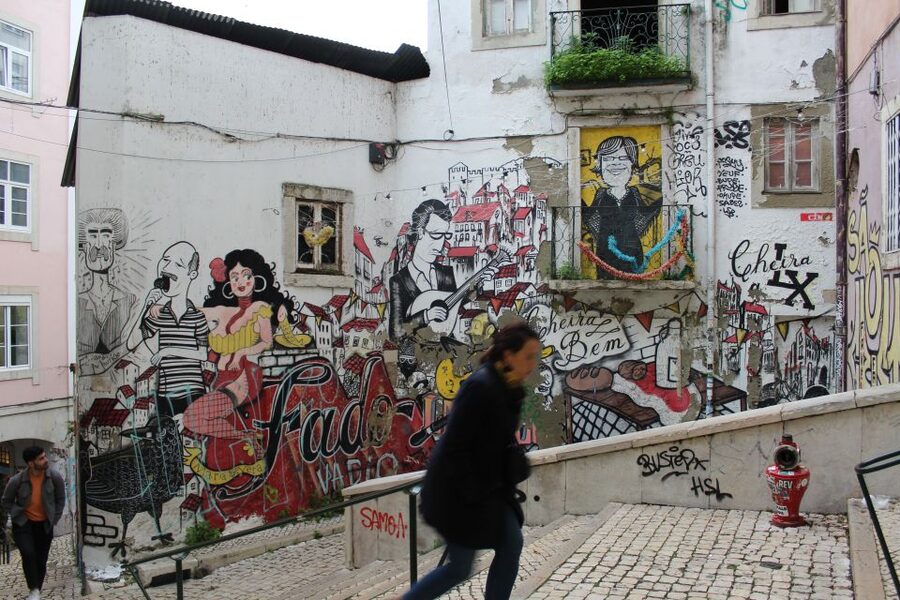
Praça do Comércio is one of Lisbon’s most emblematic squares, and the guide uses it as a historical anchor. This is where multiple events in Portugal’s history played out, and the tour places Lisbon’s role in the slave trade right here.
Standing in a grand public space like this can make you feel the scale of decisions. The guide ties public life and economic power together, which helps you understand how slavery was not only a private cruelty. It was supported by systems, policies, and trade routes.
And because the square is so recognizable, you’ll remember it long after the walk ends. That’s good value for your time.
You can also read our reviews of more historical tours in Lisbon





Baixa after the 1755 earthquake, and what integration looked like afterward
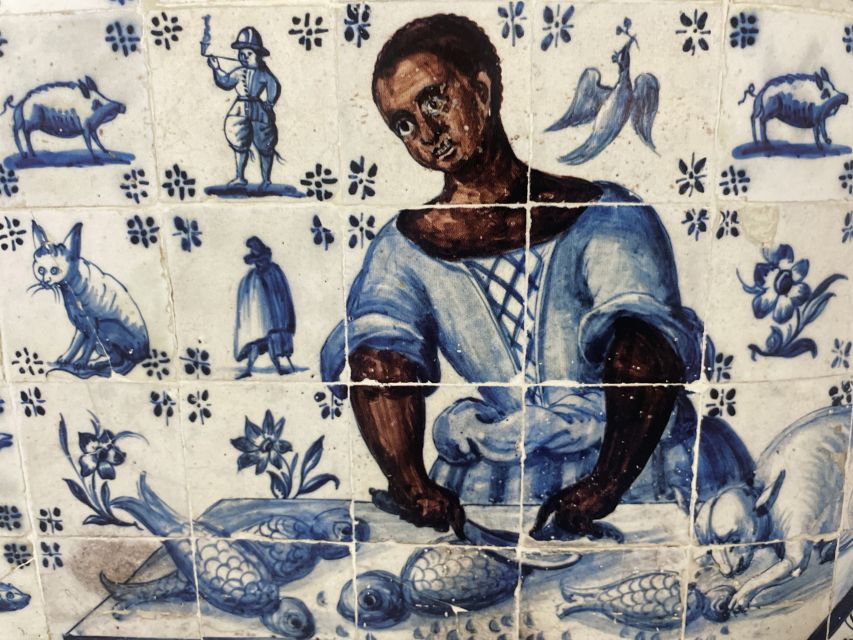
Baixa is the central neighborhood of Lisbon. It’s also a place you can instantly feel, because you’re walking through a district shaped by rebuilding after the 1755 earthquake. The guide uses that reality to talk about interaction of Africans in Portuguese society.
This is not a purely architectural stop. The point is how communities and identities continued, shifted, and formed in a city that had to rebuild. When you connect that to African legacy, you get a more grounded picture of integration.
For practical purposes, Baixa is also where you can see Lisbon’s “public face” after disaster. The guide keeps the story human, so the rebuilt city doesn’t feel like a blank slate. Instead, it feels like a continuation of social life.
Rua Cor de Rosa: seeing African women in the story of Lisbon
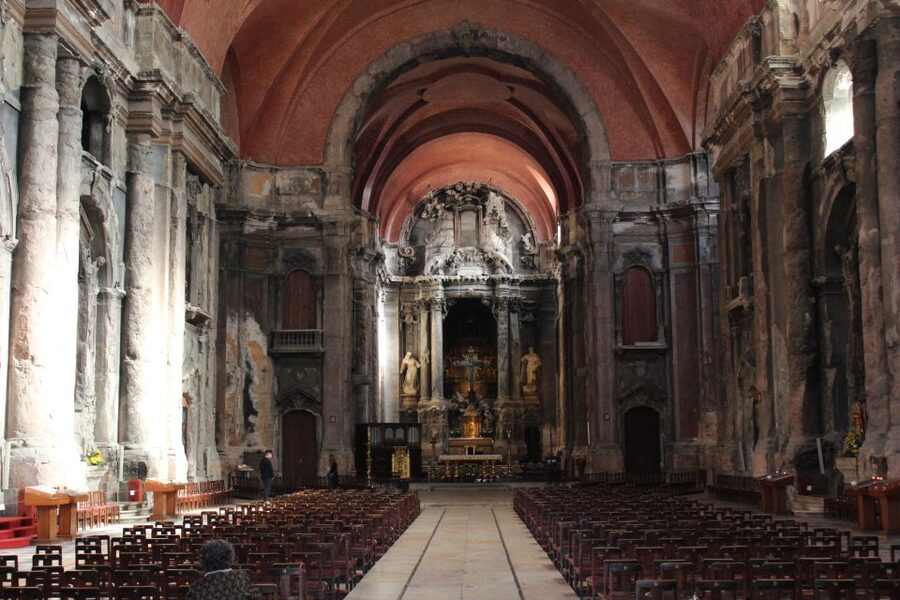
Rua Cor de Rosa is the kind of street that sounds like a postcard until you learn what it represents. Here, the tour discusses African women who provided services in that area. The guide uses the location to talk about gender, work, and how marginalized people were present in everyday Lisbon life.
This stop matters because it expands the story beyond elites and institutions. Integration is not only about churches and laws. It’s also about street life, labor, and survival.
A heads-up for your own expectations: the content here is direct. It’s part of the honest approach of the tour, so go in ready to learn, not just to browse.
Rossio and the busiest crossroads for community life
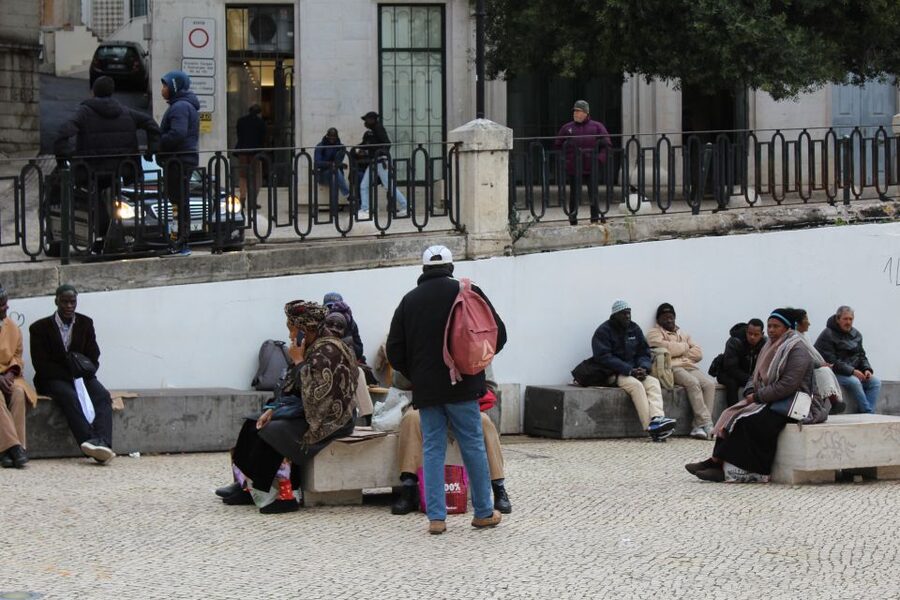
Rossio is central and busy, and that energy fits the tour’s subject. The guide uses Rossio to talk about integration of Africans and the creation of colonies, which gives you a sense of how community networks could form in a major urban hub.
Rossio also helps you understand Lisbon’s geography in a new way. You stop thinking of neighborhoods as separate bubbles. Instead, you see movement and mixing, which is exactly how cities grow.
And because Rossio is a major hub, it also feels like the kind of place where stories, people, and ideas would overlap. That’s why it works so well for this tour’s bigger theme.
Church of S. Domingos and the Catholic thread in the African legacy
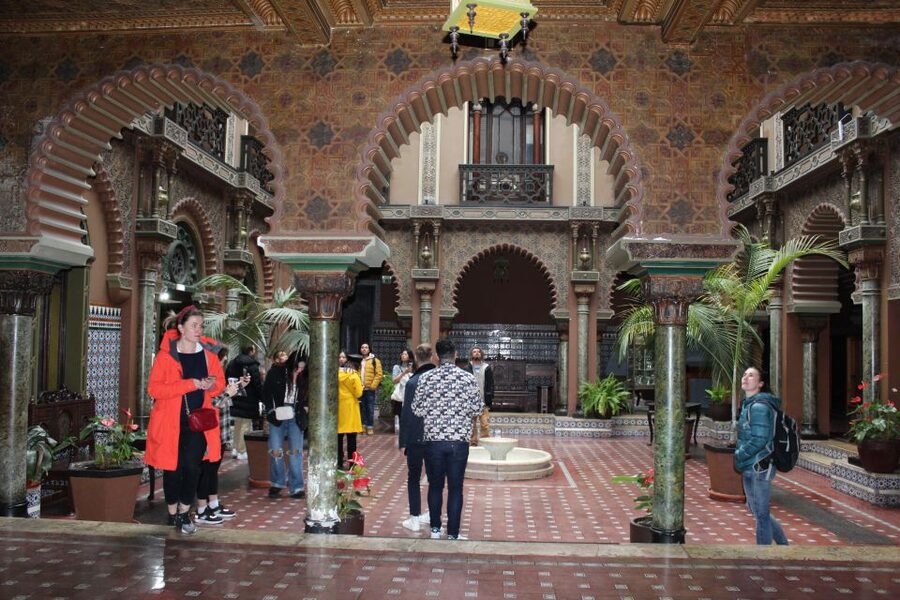
At the Church of S. Domingos, the tour looks at how Africans were integrated into Catholic religion. It also points out achievements connected to that process, so this isn’t only about conversion as an idea. It’s about lived faith and community presence.
This stop is useful if you want cultural context instead of only economic or political context. You leave with a sense that religion was one channel through which people connected, and that connection changed both sides.
Practical note: church interiors can mean you have to adjust pace for entry and respectful behavior. If you like photo stops, you might keep your camera ready, but follow the guide’s cues.
Rossio train station and the Berlin Conference connection
The tour’s final major historical “lens” comes near Rossio train station, built in the 19th century with Manueline architectural style. This is where the guide brings in Portugal’s place in Europe during its so-called golden times.
Then the story pivots to the Berlin Conference of 1884, which divided Africa into colonies. The guide connects the station’s style and national ambitions to that broader political context, so you understand how European power and colonial policies shaped the world around Lisbon.
Why it lands: it closes the loop. You start with roots and early connections, then you hit the transatlantic slave route, then you land in a period where Europe was formalizing colonial control. The station becomes more than a landmark. It becomes a symbol of how power gets built into stone.
Price and pace: what you get for $176 in 3.5 hours
At $176 per person for 3.5 hours, this is not a budget add-on, but it does offer real value if you want a guided, context-heavy walk. You get a live guide, a walking tour, and a bottle of water. What you do not get is hotel pickup and drop-off, and food and drinks are not included.
So here’s the smart way to plan around it:
- If you’re hungry, eat before you go or plan to refuel after.
- If you care about comfort, wear shoes built for hills and stairs.
- If you want maximum learning, come with a few basic questions about Lisbon’s maritime era and Iberian-Africa connections, and ask them on the spot.
Also, this tour has a very strong average rating, and the recurring theme is that the guide answers everything and connects the city’s details into a coherent story. That kind of guidance is exactly what you pay for on tours like this.
Who this tour is best for (and who should skip it)
This is a good fit if you want more than a “see the sights” Lisbon visit. If you like understanding how history shows up in street corners, fountains, churches, and train stations, you will enjoy it.
It’s also a good fit if you’re curious about the African legacy in Portugal and you want the story anchored in real locations, including Lisbon’s role in the transatlantic slave route.
Skip it if you need step-free access, because it is not suitable for people with mobility impairments. Also skip it if you only want light topics, because the walk includes the slave trade and related realities in an honest way.
Final verdict: should you book this African heritage walking tour?
I think this tour is worth your time if you care about honest context and you enjoy guided walking. It turns Lisbon from a pretty city into a place you can read, and it does it in a tight 3.5 hours.
Book it if:
- You want African heritage explained through Lisbon’s actual neighborhoods.
- You like asking questions and getting direct answers from the guide.
- You’re okay with heavy topics presented in a respectful way.
Consider another option if:
- Hills and uneven walking make you uncomfortable.
- You want a strictly celebratory, low-emotion tour.
If you do book, you’ll get what matters most: a clear sense that African influence in Lisbon is not a sidebar. It’s part of the city’s bones.
FAQ
How long is the Lisbon African History and Heritage Walking Tour?
It lasts 3.5 hours.
Where is the meeting point for the tour?
Meet your guide at A Padaria Portuguesa.
What is included in the tour price?
The tour includes a guide, a walking tour, and a bottle of water.
Is hotel pickup or drop-off included?
No, hotel pickup and drop-off are not included.
Are food and drinks included?
No, food and drinks are not included.
What languages is the live guide offered in?
The live tour guide is available in English, Spanish, and Portuguese.
Is the tour suitable for people with mobility impairments?
No, it is not suitable for people with mobility impairments.
Can I cancel the tour for a full refund?
Yes. You can cancel up to 24 hours in advance for a full refund.
Is there a pay-later option?
Yes. You can reserve now and pay later, keeping your plans flexible.
What major places will we visit during the walk?
The tour route includes Alfama, Chafariz D’El Rei, Campo das Cebolas, Praça do Comércio, Baixa, Rua Cor de Rosa, Rossio, the Church of S. Domingos, and the train station of Rossio.
More Walking Tours in Lisbon


More Tours in Lisbon

More Tour Reviews in Lisbon

Not for you? Here's more nearby things to do in Lisbon we have reviewed






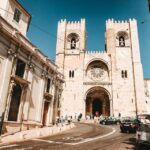
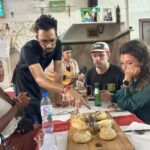
Lisbon City Tours, side by side.
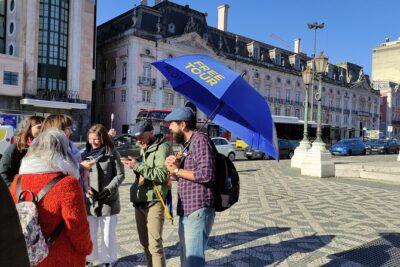 ★ 5.0Lisbon City Center Tour – The Unmissable LisbonTickets from $322,234 traveller reviews
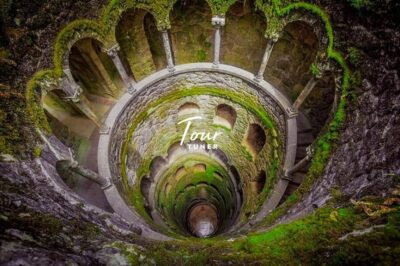 ★ 4.7Sintra, Pena, Regaleira, Cabo da Roca & CascaisTickets from $2319,656 traveller reviews
 ★ 4.1Jerónimos Monastery Entrance TicketTickets from $2114,164 traveller reviews
 ★ 4.8History, Stories and Lifestyle Walking TourTickets from $2910,902 traveller reviews
 ★ 4.5Sunset Boat Party Cruise with DJ and Open BarTickets from $2710,378 traveller reviews
 ★ 4.7Pena Palace, Sintra, Cabo da Roca, & Cascais DaytripTickets from $919,981 traveller reviews
 ★ 4.6Oceanário de Lisboa Entrance TicketTickets from $299,943 traveller reviews
 ★ 5.0True 4Hour Private Tuk Tuk Tour: Discover Lisbon with a Local!Tickets from $1088,008 traveller reviews
More useful lists for this tour