

Review · TOURS
East to West Tour in a Tukxi
A tukxi makes Lisbon click fast. This private east-to-west ride uses an electric vehicle to cover big-view spots and classic neighborhoods in about 3 hours.
I really like the hotel pickup convenience, and I also like that the driver can adjust stops if something grabs your attention.
You get a tidy, mobile-ticket easy setup, plus a small private group size of up to 4. That means you spend less time negotiating meeting points and more time actually seeing Lisbon’s hills and river views.
The main thing to think about is timing. Most stops are brief, and Lisbon Cathedral’s admission is not included, so plan for that if you want to go inside.
Key things to know before you ride

- Hotel pickup included, so you can start without hunting for a meeting point
- Private group up to 4 gives you flexibility and quieter stops
- East-to-west route helps you cover viewpoints and central areas efficiently
- Photo-friendly miradouros with short, focused breaks at major lookouts
- Fado-related street art stop at Calcada da Amalia adds a local culture angle
- Cathedral ticket not included, so budget a little extra if you’ll enter
Getting oriented on Lisbon’s hills with a private electric Tukxi
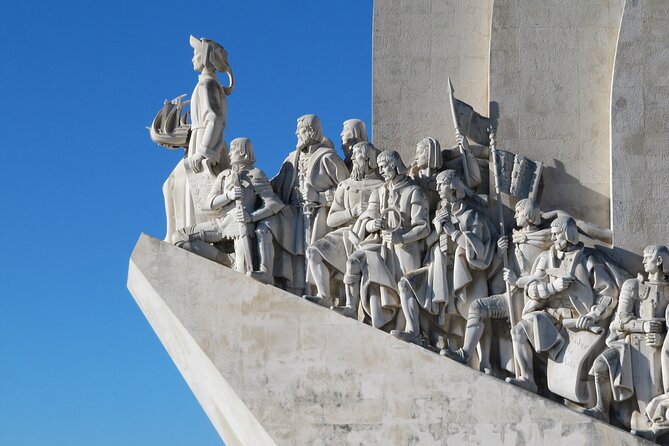
Lisbon is all angles. The river pulls you one way, the hills push everything uphill, and the streets twist just when you think you’ve got the map figured out. A private electric Tukxi tour is a smart way to get your bearings fast, without doing a heavy walking day.
This is designed as an east-to-west sweep, so you see a broad chunk of the city in one go. Instead of jumping randomly between neighborhoods, the route helps you build a mental picture: older religious landmarks near the start, big viewpoint breaks as the route rises and turns, then central Baixa and river-side history at the end.
And because it is private, it feels less like a checklist and more like a guided city scan. You can ask the driver- guide to slow down for a great photo spot, or to linger for a moment if a view or street scene catches your eye.
You can also read our reviews of more tours and experiences in Lisbon.



Price and value: what $252.86 per group buys you
The price here is $252.86 per group, with a cap of up to 4 people. On paper, that can look like a splurge if you compare it to group tours. But the value comes from how the day is structured.
In a 3-hour window, a Tukxi changes your math. You cover several miradouros and neighborhood highlights that would take a lot longer on foot, especially in Lisbon’s steep areas. And because this is private, you are not waiting around for strangers or getting rushed through stops.
Think of it as paying for time and comfort. Your group gets hotel pickup, a guide in English, and short but meaningful stops at viewpoints, churches, street art, and major monuments.
Hotel pickup and the blue-tile Tukxi start
You do not have to start this tour by guessing where to meet. Pickup is offered, and the Tuk tuks are decorated with blue Portuguese tiles, which makes it easier to spot the vehicle when you are getting out of a car or walking from the lobby.
The tour also uses a mobile ticket, so you do not need to worry about printing. Once you book, you receive confirmation at the time of booking, which helps you avoid that last-day scramble.
This is a nice setup if you want a first-day orientation or a mid-trip refresher. Lisbon is much easier to navigate once you have seen where the viewpoints, hills, and central squares connect.
Stop 1: Lisbon Cathedral for a Romanesque foothold
Most tours start with viewpoints because they look impressive. This one begins with Lisbon Cathedral, a Romanesque landmark tied to Lisbon’s religious past since the 12th century.
You get about 15 minutes, which is enough time to take in the scale and the atmosphere without turning it into a long museum visit. If you want to go inside, plan ahead: the stop notes admission ticket is not included.
Even if you only view the exterior and the immediate interior areas you can access during the time window, the cathedral helps set the tone. It gives you an anchor point for the rest of the day, because Lisbon’s viewpoints and hill neighborhoods feel more meaningful once you understand where the city’s early center sits.
Miradouro de Santa Luzia: terracotta rooftops and the river shine
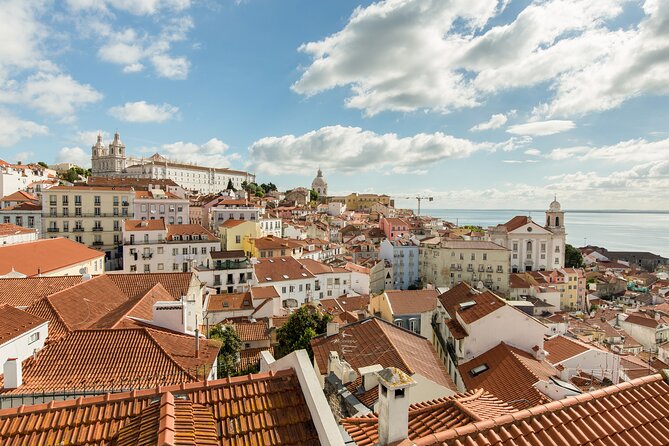
Next up is Miradouro de Santa Luzia. You get about 10 minutes, and the payoff is classic Lisbon: terracotta rooftops cascading down the hills and the Tagus River catching the light.
This is a great stop for orientation. From here, Lisbon starts looking like it does on postcards, but with enough surrounding buildings to help you recognize the hilllines later. It is also a good moment to reset your energy. Ten minutes is long enough to take photos, look around, and breathe, but short enough that you will not lose momentum.
Tip for your group: if you are juggling phone photos and video, decide quickly. Santa Luzia can be busy, and the next viewpoint is close in spirit but different in framing.


Miradouro Das Portas do Sol: views toward Alfama and São Jorge
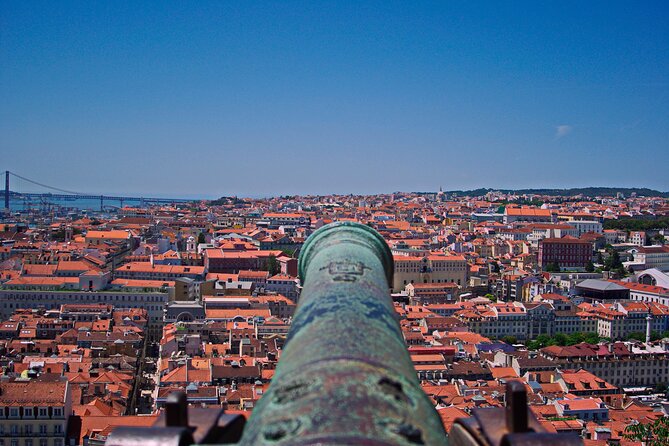
From Santa Luzia, you continue to Miradouro Das Portas Do Sol for another 10 minutes. This viewpoint is famous for its stretch of sight from the historic Alfama area toward São Jorge Castle.
If you are the type who likes to understand where you are looking, this stop helps. You can mentally connect the riverfront and central neighborhoods with the castle hill above them. The viewpoint works as a “bridge” in your understanding of Lisbon, linking old quarter streets below with the fortress above.
Like the previous miradouro, this is free, so your time is the only cost. Use it to pick out one or two directions you want to explore after the tour, then keep moving.
Baixa Chiado and the Elevador da Bica moment
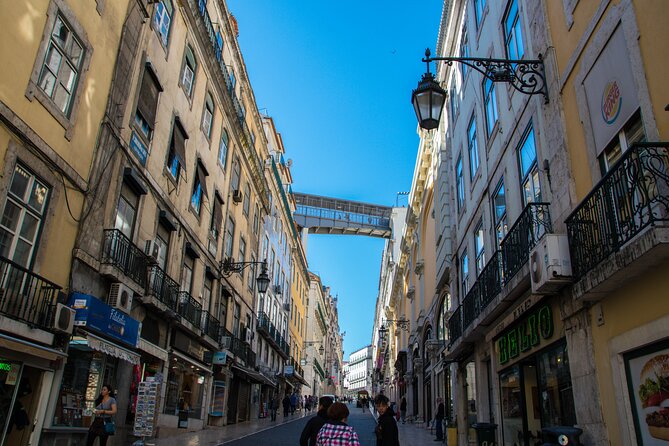
After the viewpoints, the tour slows into the city core. You spend time in Baixa Chiado, a central area known for grand boulevards, historic cafes, and bookstores. You also get a look at the iconic Elevador da Bica, the funicular that tackles Lisbon’s slopes.
You will not be asked to do a big walk here. The idea is to get a feel for the streets that connect the hills to the river, and to see where the central energy sits. This is also a good contrast after the miradouros, because Baixa Chiado feels more level, more built up, and more “city” than “lookout.”
Practical thought: if you want to ride the funicular, treat that as a separate plan. The tour highlights it, so you can spot it now and decide later based on lines and timing.
Baixa de Lisboa and Terreiro do Paço: the post-1755 rebuild in one pass

Then you reach Baixa de Lisboa, described as a UNESCO World Heritage Site, rebuilt after the 1755 earthquake. You also spend time near Terreiro do Paço, the waterfront plaza that anchors Lisbon’s river history.
This stop matters because it gives you more than beauty. Lisbon’s central grid, grand squares, and waterfront layout make sense when you remember the city had to rebuild. The tour framing helps you read the city instead of just watching it.
Because your time here is still within a short stop window, you might not see everything in detail. But you will leave with a clear sense of the shape of the core. That helps later when you want to wander on your own, especially if you are planning a return visit for a longer walk.
Stop 4: Miradouro da Senhora do Monte for the “almost birds-eye” view
Next is Miradouro da Senhora do Monte, in the Graça area, with about 10 minutes. This viewpoint is known for an almost birds-eye view over Lisbon’s hills, the Tagus River, and São Jorge Castle.
This is the third big view moment of the day, and it is not redundant. Each miradouro frames the city differently. Senhora do Monte tends to feel more high and sweeping, so you often get a stronger sense of the city’s layering. If you are trying to pick one viewpoint to remember, this one is a strong contender.
Free entrance here, too. If the weather is good, this is where you want your camera battery charged and your group ready to pause and look up, not just sideways.
Calcada da Amalia: street art that nods to fado
When the route reaches Calcada da Amalia, you get about 5 minutes. The focus is urban art, including a work by the artist Vhils and a portrait of Amália Rodrigues, a major figure in Portuguese fado.
This is a smart small stop because it adds texture to Lisbon. Miradouros are easy to photograph. Street art is harder, because it requires you to slow down and look at surfaces, not just horizons. The tour gives you that short reminder to notice the city’s modern layer.
Since the time is tight, I’d treat this as a quick scan first, then a focused second glance. If your group is into photos, pick one image you want most, then move. You do not want to lose the rest of the itinerary to a single wall.
Graça Church and Monastery at Miradouro da Graca
Then you shift into a calmer moment at Miradouro da Graca (Sophia de Mello Breyner Andresen). The itinerary includes time to visit the Graça Church and Monastery, a 16th-century site with intricate tilework, plus peaceful gardens.
You get about 10 minutes here, plus free admission listed for this stop. Even with a short window, this is enough time to notice the tilework details and to step into a quieter feel compared with the surrounding streets.
This stop also pairs well with the viewpoint theme. You get heights and views in the morning. Then you get something more grounded and human at the church grounds. It is a nice rhythm shift before the final monument stop.
Panteao Nacional: Portugal’s honored figures
The last major stop is the National Pantheon (Panteão Nacional) for about 10 minutes. It is a monument dedicated to Portugal’s most esteemed figures, with a focus on writers, military leaders, and national icons.
This ending works because it changes the kind of Lisbon you’re seeing. You started with Romanesque faith, moved through viewpoints and central civic space, and end with a national monument that frames the country’s identity.
Practical note: with only 10 minutes, decide your priorities quickly. If you want to read inscriptions or take interior photos, you might not have time for everything. Use the time to understand what this site is commemorating, then let the experience land rather than trying to collect every detail.
Who this Tukxi tour fits best
This tour is ideal if you want:
- A guided, high-impact Lisbon overview without lots of walking uphill
- An easy first-day orientation after you arrive
- A private experience with your own group, up to 4 people
- Photo breaks at multiple miradouros plus quick culture stops
It might feel less ideal if you want long entry tickets, extended museum time, or a relaxed pace with lots of wandering. With short stop durations, you will likely want to plan one or two follow-up areas on your own after the tour.
Guide quality: when the driver makes the day
One of the biggest strengths of this style of tour is the human part. The driving and guiding are fused here, so personality and road sense matter.
From what I’ve seen highlighted, people often call out specific guides for performance. Angelo gets strong praise for being friendly and for being a top-class driver, while Ale is noted as excellent and even for sharing a list of places to visit next. That kind of extra help can turn your 3 hours into a full day of smart choices.
Even if you do not get those exact names, I’d treat this as your cue to ask questions early. Ask what neighborhood to explore next, or which viewpoint to return to when the light changes. That’s how you turn a tour into a personal plan.
Should you book East to West Tour in a Tukxi?
Book it if you want a fast, guided sweep across Lisbon’s key viewpoints and central neighborhoods, with hotel pickup and a private up to 4 setup. It’s also a strong choice if your group prefers comfort and short stops over a long walking day.
Skip or switch to something longer if your priority is extended time inside attractions like Lisbon Cathedral, or if you dislike tight schedules. The tour works best as an overview that sets up the rest of your Lisbon days.
If you do book, go with a simple strategy: pick one or two stops you care about most before you ride, and use the short windows to grab photos and orientation, not to exhaust every site. After the Tukxi, you will know where to aim your next wander.
FAQ
How long is the East to West Tour in a Tukxi?
It lasts about 3 hours.
What is the price for this tour?
The price is $252.86 per group, for up to 4 people.
Is pickup included?
Yes, hotel pickup is included.
Is this a private tour?
Yes, it is private, and only your group participates.
What language is the tour offered in?
It is offered in English.
Do I need a printed ticket?
No, there is a mobile ticket.
Are there admission fees at the stops?
Lisbon Cathedral admission ticket is not included. The other viewpoint and attraction stops listed are marked as free.
Do I need good weather for this tour?
Yes. The experience requires good weather. If it is canceled due to poor weather, you will be offered a different date or a full refund.
Where do I meet the guide or driver?
Pickup is offered. The Tuk tuks are decorated with blue Portuguese tiles, which can help you identify the vehicle.
Is service animal access allowed?
Yes, service animals are allowed.
More Tours in Lisbon




More Tour Reviews in Lisbon
Not for you? Here's more nearby things to do in Lisbon we have reviewed











Tours, side by side.
 ★ 5.0Lisbon City Center Tour – The Unmissable LisbonTickets from $322,234 traveller reviews
 ★ 4.8History, Stories and Lifestyle Walking TourTickets from $2910,902 traveller reviews
 ★ 5.0True 4Hour Private Tuk Tuk Tour: Discover Lisbon with a Local!Tickets from $1088,008 traveller reviews
 ★ 5.0Winner 2025 Undiscovered Lisbon Food & Wine Tour by Eating EuropeTickets from $1256,390 traveller reviews
 ★ 4.8Sintra, Pena, Cabo da Roca, Cascais Tour with PickupTickets from $575,080 traveller reviews
 ★ 5.0Alfama Tour in Lisbon Old TownTickets from $34,936 traveller reviews
 ★ 5.0Best of Lisbon Small-Group Guided Walking TourTickets from $234,869 traveller reviews
 ★ 4.11-or 2-Day Hop-On Hop-Off Bus TourTickets from $254,774 traveller reviews