
Review · LISBON CITY TOURS
Award-Winning One-of-a-Kind Garum & Seafood Lisbon Food Tour
Garum tastes like Lisbon’s secret umami lesson. This Garum & Seafood tour turns preserved fish into a story you can taste, with Roman roots and modern Portuguese curing techniques front and center. I also really like the small group size, so the conversation stays warm and you are not shouting over a crowd.
What you get at the table is the real payoff: a 5-course meal with 14 tastings, plus two Portuguese wines and museum access before you start eating. The one thing to consider is that this is very fish-forward and focused on preserved seafood, so if you are not into cured, aged, or garum-style flavors, you may find it more intense than your average food tour.
Key things I think you will love
- Garum as a hands-on food story, tied to Roman-era production techniques
- A true small-group format (max 10 travelers), with time for questions
- 14 tastings across 5 courses, so you try a lot without feeling rushed
- Alfama to Baixa on foot with a short, mostly flat 600 meters (0.4 miles) walk
- Dietary flexibility for celiac, pescatarians, and nonalcoholic drinkers if you notify them 36 hours ahead
Where Garum Fits Into Lisbon Food Culture
If you think seafood in Lisbon is just about fresh grilled fish, this tour nudges you into a different lane. You spend the day learning how Portugal has long treated fish as a craft, not just an ingredient. Preserving, curing, aging, and fermenting are the point, and that is why the flavors can be so deep and so different from what you usually expect.
What makes it work is the pairing of place plus process. In other words, you do not just eat garum like a novelty. You see how people made fish last, why they did it, and what that means for taste today. The guide brings the historical thread from Greek and Roman ideas through later cultural influences, with a modern lens you can actually use when you are eating in Portugal.
And because it is a small group, you can ask simple questions like how cured fish should smell, how to taste saltiness versus fermentation, and why umami lands differently depending on the curing method. That is rare on big group food tours, where you end up collecting bites but not learning the why.
You can also read our reviews of more food & drink experiences in Lisbon



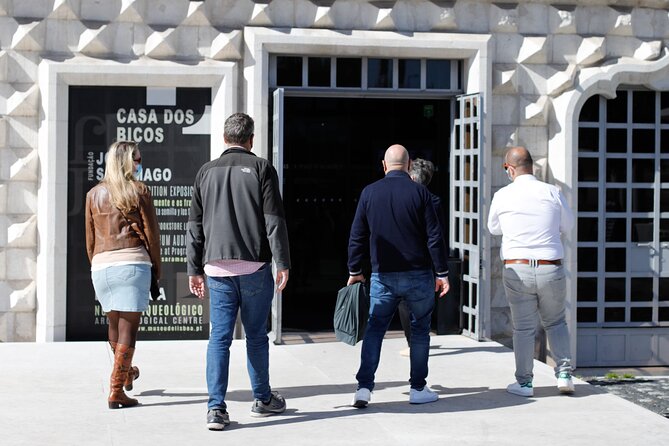
Stop 1: Casa dos Bicos, Alfama’s Garum Origins
Your tour starts in Alfama, at the Fado Museum area, a good choice because Alfama gives you that old Lisbon feeling fast. You meet near the river side, and you get oriented without doing a long scramble. From there, the first stop is Casa dos Bicos, Museu de Lisboa.
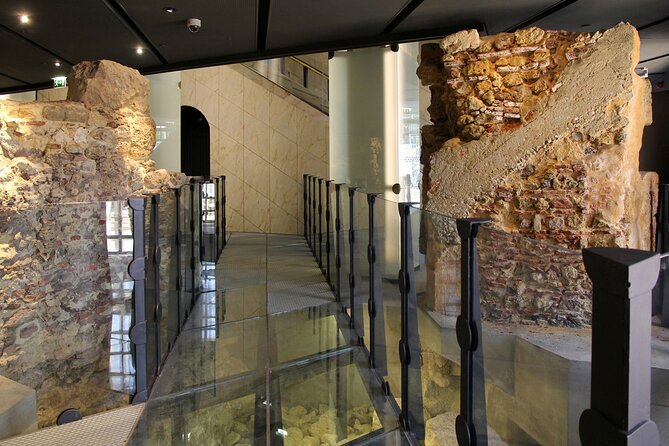
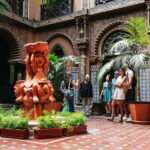
Here is what I think is special. You are not just standing near a history sign. You are taken to one of the oldest places where Romans produced garum, the famous fish sauce often described as having that concentrated, golden umami punch. The idea is to connect the name to something tangible. One guest specifically noted being able to see and even touch original stone basins used nearly two thousand years ago.
That matters because garum is hard to understand until you put it in context. It was not just a sauce. It was a technique, a way of processing fish at a time when refrigeration did not exist. When you see the basins and the production logic, the later tastings make much more sense. You go into the meal already thinking about salt, time, and transformation instead of just guessing flavors.
Practical note: this stop is short, around 20 minutes, so you will not lose momentum before the food part begins.
Stop 2: Praça do Comércio, a Tasting Room With Preserving Methods
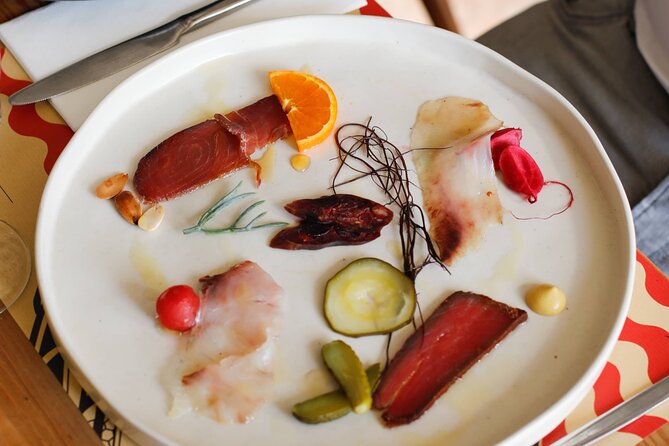
After Alfama, you walk a short distance to the Terreiro do Paço / Praça do Comércio area. You cross the old city wall on the way, and then the tour shifts from history into foodcraft. This second stop is where the tasting itinerary really starts.
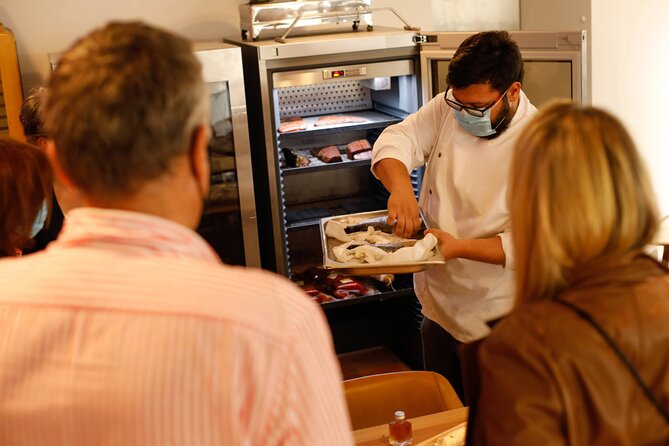
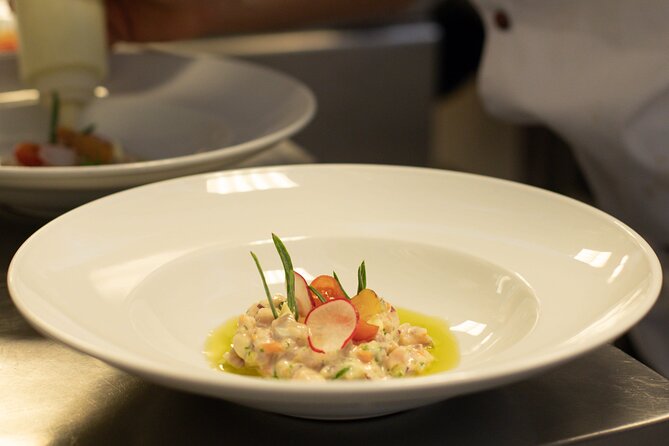
This is not a typical dinner-only situation. The space functions like a restaurant, a shop, and a kind of food laboratory where preserving methods are explored. That blend is part of the value. You taste, then you learn what you just tasted, then you see how it connects to technique.
The timing here is generous: about 2 hours. That gives you time to slow down and actually compare the flavors. And because there is a lot going on in the room, the guide can pace the tasting so you do not feel like you are just swallowing bites.
You also get a big head start on the experience right away, because this stop includes access to a local archeologic museum before the tastings. That sequencing helps. You are mentally in the same time period, so the meal feels like a continuation, not a separate event.
The Meal Part: 5 Courses, 14 Tastings, and Portuguese Wine
Let’s talk about what “included” really means. You get a lunch meal (or dinner) made of 5 courses with 14 tastings. That is a lot of food, and the tour clearly aims to make it feel like a guided tasting dinner rather than a quick walk-and-sip.
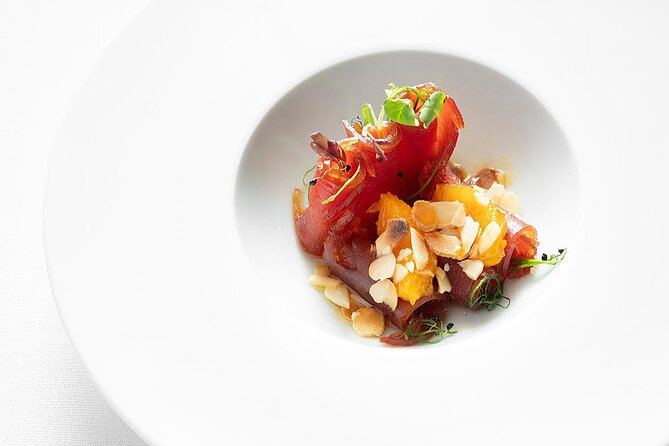
The tastings focus on preserved seafood sustainably sourced in Portugal, with examples like:
- tuna chorizo
- swordfish belly bacon
- Roman-style garum
- other cured and prepared seafood items built around the same preserving ideas
This is where the umami theme becomes practical. Preserved fish can taste like more than “salty fish.” In this format, you learn to distinguish salt-forward flavors from deeper fermentation notes, and you start to notice how fat, acidity, and time change the way something tastes on your palate.
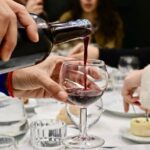
You also get two types of Portuguese wine paired with the tastings. If you prefer not to drink alcohol, the tour can accommodate nonalcoholic options, but you need to inform them at least 36 hours before. Same idea for dietary restrictions like celiac and pescatarians.
One review also highlighted that the tour is not just fish sauce roulette. It includes an egg-based Portuguese conventual sweet, Pudim Abade de Priscos, as part of the dessert course in this kind of menu setup. If you love trying sweets that are not the usual pastel de nata, this is a nice bonus.
What It Feels Like to Taste, Not Just Eat
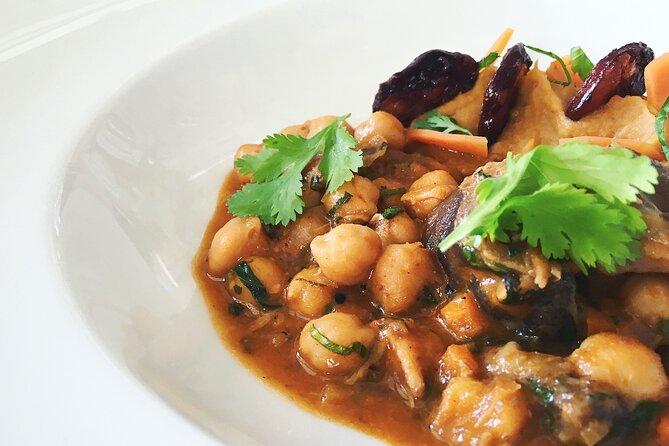
This tour is designed around learning through contrast. You will taste multiple preserved seafood expressions, and each one teaches you something different.
For example, cured items like “bacon” style preparations help you understand how fat and smoke or aging can create a familiar structure even when the ingredient is unusual. Garum-style elements give you the concentrated umami idea, which can feel almost like a flavor shorthand for the past. Then you compare those to other preserved preparations to see how method changes the outcome.
That is also why the guide matters so much. Guests have praised guides such as Marina and Lívia for being personable and for connecting the history, the flavor techniques, and modern relevance. One highlight in particular was how the guide linked Greek, Roman, and Moorish periods to what people ate and how they used preservation techniques.
You should expect a relaxed vibe, not a stiff lecture. You are guided through technique while still getting the social, dinner-table feel.
More Lisbon tours and experiences for the shortlist


Alcohol and Nonalcoholic Options, Plus Dietary Moves That Actually Help
A lot of tours say they are food-friendly. This one gives you more concrete options, as long as you communicate early enough. The tour can accommodate celiac, pescatarians, and also offers for nonalcoholic drinkers, as long as you tell them at least 36 hours before.
That timing matters. The tastings are built like a multi-course menu with pairings, so substitutions need planning. If you want to avoid surprises, send your dietary note promptly after booking.
Also, if you are the type who likes a plan, you will appreciate that this is scheduled and structured. You are not hunting down a salad option while everyone else eats. Everyone stays together through the same guided format, just with appropriate adaptations.
And yes, this is LGBTQ2S+ friendly, and the experience is followed by good suggestions for where to go after dinner.
How the Walk and Timing Work in Real Life
This is not a long hike tour. The walking is about 600 meters (0.4 miles) total, and it is described as having no hills. That makes a big difference in Lisbon, where cobblestones and slopes can wear you down faster than you expect.
The tour runs about 3 hours total. The pacing feels split in a simple way:
- a short orientation and history stop in Alfama
- then a longer, seated two-hour tasting experience in the Praça do Comércio area
Because the format is not over-fragmented, you stay in the flow. You do not get that tired feeling of doing too much moving between small tastings.
Start point: Fado Museum Alfama, Largo do Chafariz de Dentro 1, 1100-139 Lisboa
End point: Praça do Comércio, 1100-148 Portugal, roughly 10 minutes on foot from the start in a straight line.
If you are planning other activities that day, this fits well. You are done early enough to still enjoy Lisbon nightlife or a second bite elsewhere.
Value Check: Is $132.53 Worth It?
At $132.53 per person, it is not a budget snack tour. But it also is not just “a meal with stories.” You are paying for several things at once:
- a guided experience by a local food expert
- two historic Lisbon districts covered on foot (Alfama and Baixa area)
- museum access before the tastings
- a multi-course lunch or dinner with 14 tastings
- wine pairings (two types), with nonalcoholic options available if requested
When you price this out as a standalone dinner, add museum access and guided tasting instruction, the number starts to look more reasonable. You are basically buying a curated evening of seafood preservation education, with food you cannot easily recreate on your own.
Also, the maximum group size of 10 travelers improves the value in a quiet way. You get more attention and more ability to ask questions, which makes the education component feel real instead of scripted.
If you like Lisbon food tours where you learn technique, this price is easier to justify.
Who Should Book This Garum & Seafood Tour
Book this if you are:
- a seafood fan, especially someone who likes cured, aged, or fermented flavors
- curious about umami and how preservation changes taste
- the type who enjoys food history when it is tied to hands-on production ideas
- someone who wants a small-group meal instead of a chaotic food crawl
- traveling with dietary needs like celiac or who want nonalcoholic pairings (with advance notice)
Consider skipping if you:
- hate the idea of preserved seafood and want only fresh items
- get turned off by very fish-forward menus and would rather do a classic Portuguese comfort-food tour instead
- are extremely sensitive to smells, since curing and aging can be aromatic
One more important detail: this is not built as a raw fish tour. Based on the tour clarifications, it centers on dried-aged and other preserved fish, with raw fish not being the focus except for a ceviche component.
Should You Book It? My Straight Answer
I would book this tour if you want Lisbon food with a twist. It teaches you how preserved seafood created flavor long before refrigeration, and it does it in a way you can actually taste and remember. The combination of Casa dos Bicos context, the Praça do Comércio tasting setting, and the 5 courses with 14 tastings makes it feel like more than a dinner.
If you come hungry, you will likely leave full and smarter about what garum even means. If you are picky about fish intensity, decide based on your tolerance for cured flavors.
Either way, it is a smart, memorable way to spend your time in Lisbon, especially if this is your first or second day in the city and you want a strong sense of how Portuguese seafood culture works.
FAQ
What is the duration of the tour?
The tour runs about 3 hours.
How many people are in the group?
The tour has a maximum of 10 travelers.
What does the tour include?
You get a 5-course lunch (or dinner) with 14 tastings, two types of Portuguese wine, and access to a local archeologic museum before the tastings, plus a guided experience by a local food expert.
Is the tour offered in English?
Yes, it is offered in English.
Is this tour suitable for celiac and other dietary needs?
It can be suitable for celiac, pescatarians, and nonalcoholic drinkers if you inform the provider at least 36 hours before.
Where does the tour start and end?
It starts at Fado Museum Alfama, Largo do Chafariz de Dentro 1, and ends at Praça do Comércio.
Can I cancel for a refund?
Free cancellation is available if you cancel at least 24 hours in advance for a full refund. Canceling less than 24 hours before start time is not refunded.
More Food & Drink Experiences in Lisbon
More Tours in Lisbon





More Tour Reviews in Lisbon


Not for you? Here's more nearby things to do in Lisbon we have reviewed










Lisbon City Tours, side by side.
 ★ 5.0Lisbon City Center Tour – The Unmissable LisbonTickets from $322,234 traveller reviews
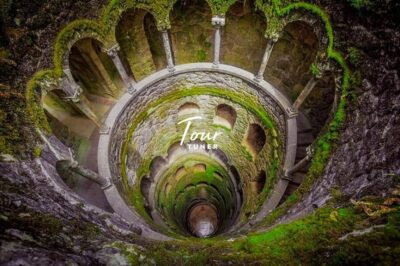 ★ 4.7Sintra, Pena, Regaleira, Cabo da Roca & CascaisTickets from $2319,656 traveller reviews
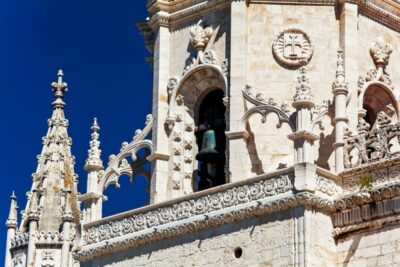 ★ 4.1Jerónimos Monastery Entrance TicketTickets from $2114,164 traveller reviews
 ★ 4.8History, Stories and Lifestyle Walking TourTickets from $2910,902 traveller reviews
 ★ 4.5Sunset Boat Party Cruise with DJ and Open BarTickets from $2710,378 traveller reviews
 ★ 4.7Pena Palace, Sintra, Cabo da Roca, & Cascais DaytripTickets from $919,981 traveller reviews
 ★ 4.6Oceanário de Lisboa Entrance TicketTickets from $299,943 traveller reviews
 ★ 5.0True 4Hour Private Tuk Tuk Tour: Discover Lisbon with a Local!Tickets from $1088,008 traveller reviews
More useful lists for this tour