
Review · ALFAMA TOURS
Alfama and Mouraria Tour – The oldest neighbourhoods in Lisbon
Lisbon’s old streets go uphill fast. This tour strings together landmarks and viewpoints in the city’s oldest neighborhoods, with stops that help you understand how Lisbon layers Moorish, medieval, and post-earthquake eras into one walkable map. I like that it keeps the pace active without feeling like a sprint, and I especially love how it puts the best photo angles right where the story is.
Two things I really like: you get a guided route through Alfama and Mouraria, and you hit multiple miradouros (viewpoints) in a short window. The lineup also makes sense if it’s your first visit, because you start near the waterfront and work your way into the hills.
One drawback to plan for: there is quite a bit of uphill walking and stairs. It’s not extreme by Lisbon standards, but it is enough that you’ll want comfy shoes and the mindset for short climbs.
Key highlights worth your attention
- Praça do Comércio start, which gives you a clear sense of where Lisbon’s old center sits
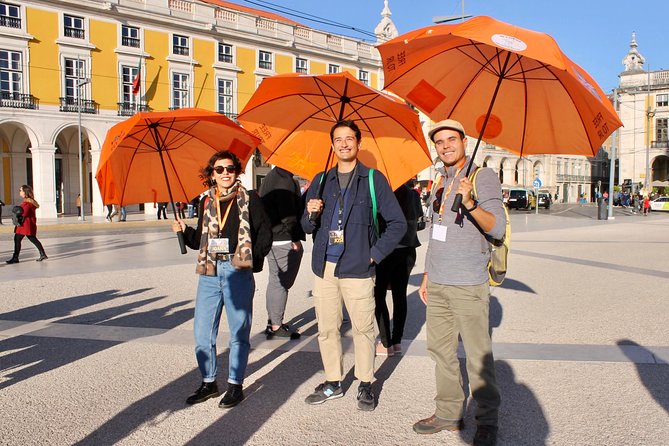
- Orange umbrella meeting point tip near the King Jose I statue, so you can spot your guide quickly
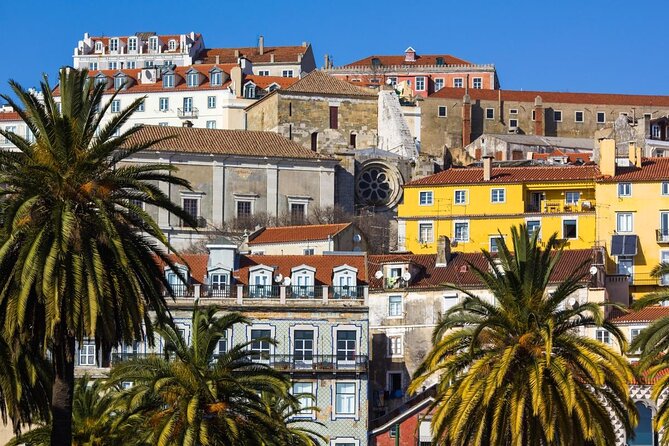
- Miradouros on the route, including Portas do Sol and Santa Luzia for big views without extra detours
- Alfama and Lisbon Cathedral close together, so you learn the neighborhood while you’re still looking at it
- Castelo de São Jorge angle, a quick stop that frames the castle’s Moorish roots
- Mouraria fado streets, with a dedicated walk around the neighborhood often linked to fado’s early home
From Praça do Comércio to Rossio, you’re mapping Lisbon as you walk
This route is built around a smart flow. You begin at Praça do Comércio, the grand square by the river, then the walk slowly forces your legs to learn Lisbon’s geometry. The end near Praça do Rossio is useful too, because it puts you back in an area with plenty of cafés and transport options, without you having to reverse course.
The tour is about 2 hours 30 minutes and capped at 20 people, which is big enough to feel social, but small enough that your guide can keep the group together on winding streets and stairways. It also uses a mobile ticket, so you’re not stuck hunting for paper confirmations.
One practical plus, the tour is offered in English, and the pace is structured with short stops. That matters on a day when it’s hot, windy, or both, since Lisbon’s hills can drain you faster than you expect.
You can also read our reviews of more tours and experiences in Lisbon.

Stop 1: Finding the guide by King Jose I, then setting the tone
You start at the statue area dedicated to King Jose I. Here’s the small detail that helps: your guide will be easy to spot, described as holding an orange umbrella between the big arch and the statue in the middle. If you’re the type who hates standing around, this is the kind of clue that makes a difference.
This first stop is brief, about 10 minutes, and it works like a warm-up. You’re not just looking at stone, you’re getting a mental anchor. Lisbon’s oldest neighborhoods can feel like a maze at first. Starting with a “main character” monument helps you build a sense of direction before the alleyways swallow you.
Also, since the tour starts near a major square, it’s usually easier to arrive on time. Still, I’d recommend arriving a few minutes early so you can match faces to that umbrella.
Stop 2 and 3: Praça do Comércio and Church of St. Anthony, Lisbon’s layers in miniature
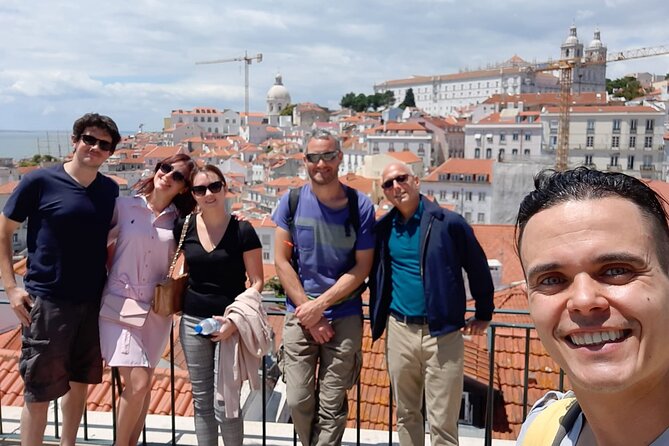
Praça do Comércio is your next hit, also around 10 minutes. This is Lisbon’s showpiece square, so even if you’ve already seen it from photos, being there makes the city layout click. You’ll feel why this area has always been important for movement and trade, then you’ll move on while the square is still fresh in your head.
Then you head to the Church of St. Anthony, described as being connected to the place where St. Antony of Padua was born. This kind of stop is short, about 10 minutes, but it adds texture. You start to notice how religious sites are embedded in neighborhood identity, not just placed at the edge of town.
If you like your sightseeing with context, these early stops are doing real work: they create a storyline so Alfama’s narrow streets won’t feel like a random climb.
Stop 4: Casa dos Bicos, the old house that explains style
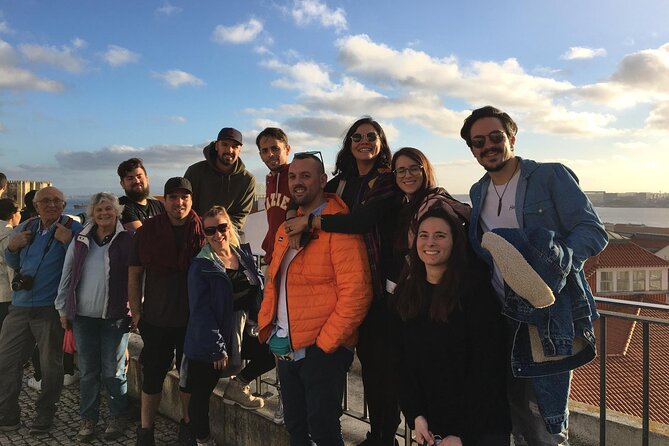
Casa dos Bicos-Museu de Lisboa is one of the more distinctive building stops on the route, around 10 minutes. You’re looking at an older house associated with Manueline style. The time you spend here is enough to appreciate the design without turning your day into a museum marathon.
Why this stop matters: it gives you a reference point for what “Lisbon old” looks like beyond churches. After you’ve seen the bicos (the pointy “beak-like” stone details), you’ll probably spot similar craftsmanship cues later in the neighborhoods as you wander on your own.
Stop 5 to 7: Alfama streets, Lisbon Cathedral, and the Pantheon stop that breaks the climb
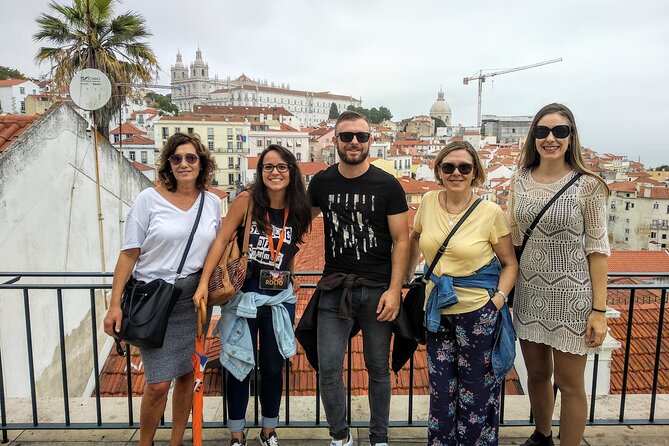
Now you enter the part most people came for. You get about 20 minutes of walking around Alfama, which is perfect for absorbing the neighborhood rhythm. Don’t expect wide streets. Expect turns, views squeezed between buildings, and street energy that feels older than the route map.
Next is Lisbon Cathedral, described as the oldest church in Lisbon, with about 10 minutes on it. This stop is valuable because it’s a major landmark that anchors Alfama’s identity. It also gives you a break in the walk, even if the surrounding streets still rise.
Then there’s a quick 1 minute stop at Panteao Nacional (the National Pantheon of Lisbon). It’s not the kind of stop where you linger. It’s more like a “look, remember this” moment. That can be a good thing, because on this route you’re already doing the hard part, the hills and the stairs.


Stop 8 to 10: Portas do Sol, Santa Luzia, and Castelo de São Jorge
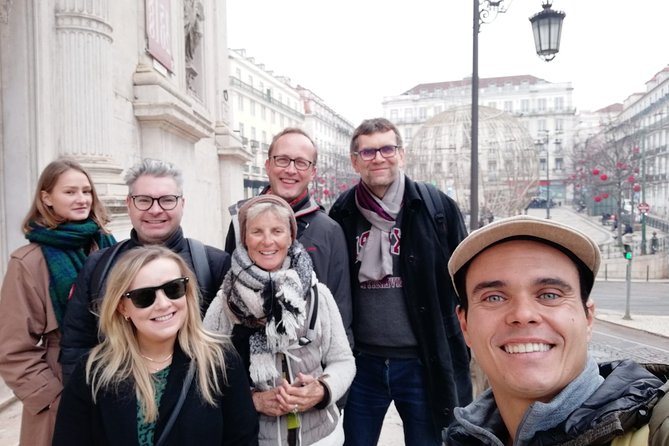
If you only do one thing well in Lisbon, do it with good shoes and good light. This tour schedules multiple viewpoints close together, and it’s one reason the walk feels so rewarding.
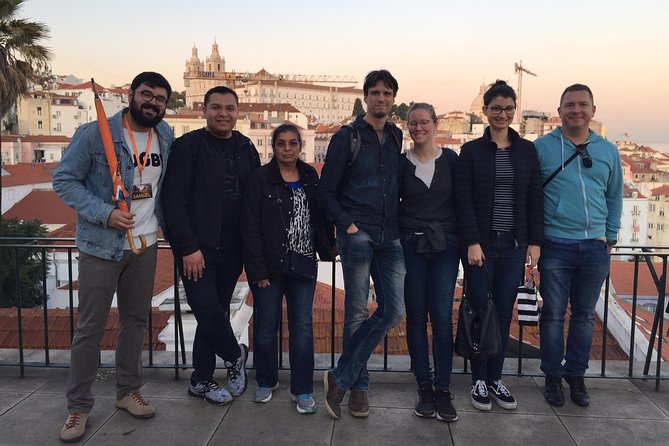
Miradouro das Portas do Sol is about 10 minutes and is specifically noted for beautiful views. You’re in the classic postcard angle territory here, where you can see why Lisbon got famous for looking down as much as looking out.
Then comes Miradouro de Santa Luzia, also around 10 minutes. It’s described as one of the more charming viewpoints. In practical terms, it’s a second “pause and breathe” moment after you’ve been climbing. You’ll likely take more photos here than anywhere else, so give yourself time to step back, not just shoot from the edge.
Finally, Castelo de São Jorge is listed for about 5 minutes. The tour frames it as an old castle built by the Moors in the 8th century. That’s a short stop, so think of it as orientation and viewpoint context, not a deep dive.
One note of caution I’d keep in your pocket: the official listing says the stops are free entry, but I saw an account from someone who tried entering the cathedral and castle on their own later and ran into charges. So, if a specific site matters a lot to you, double-check before you count on free entry that day.
Stop 11 and 12: Mouraria’s fado streets and Igreja de Sao Vicente de Fora
After Alfama, you transition into Mouraria. The walk around Mouraria is 20 minutes, with a stop described as Monumento Mouraria Berco do Fado, plus time to explore the surrounding streets. This is the part of the route that feels like it gives you Lisbon’s smaller-circuit story, not just the big monument checklist.
Mouraria is the neighborhood where fado’s early roots are often linked, so it works well for anyone who wants the cultural “why” behind the music, even if you’re not sitting for a performance during this tour.
You finish with Igreja de Sao Vicente de Fora, described as built in honor of St. Vincent. It’s a very short stop, about 1 minute. That last minute can feel rushed if you want a slow look, but it also helps keep the route moving so you actually end around Praça do Rossio as planned.
What you’ll feel on the ground, uphill pace and photo-stops
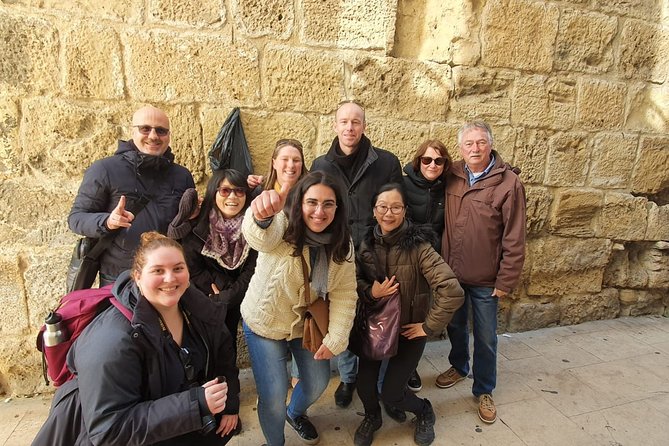
This tour includes a lot of movement on hills. That shows up in how the route is constructed: short church stops, then viewpoint stops, then short castle viewing, then more neighborhood walking. In practice, that structure helps you recover every so often without losing momentum.
In multiple accounts tied to this experience, different guides are praised for pacing and for stepping in with practical adjustments, like slowing climbs in stages and finding shade on hot days. You may meet guides such as Walter, Claudia, Hugo, Tiago, Jose, Rita, Ann-Elisha/Ann-Elisa, or Kate. The common thread is that the best versions of this tour work hard to keep you comfortable enough to actually enjoy the views.
Still, I’d plan for the hard parts:
- wear shoes that handle stairs and slick cobblestones
- keep your water handy, especially if it’s warm
- expect that the group might move faster than your solo sightseeing pace
If you’re with someone who tires quickly, ask your guide to check in with the slowest person at each corner. Small group or not, Lisbon streets don’t wait.
Price and value: a low cost route with a lot of map-building
At $1.25 per person, the value here is the headline. Even if that price doesn’t include anything beyond the walk and guidance, you’re still paying for two things that are hard to replicate alone: route design and historical context on the spots you would otherwise treat like background.
The route also targets high-impact places for first-timers. You start with a grand square, you build your mental map, and then you move into the tight oldest streets. You’re not just “seeing stuff,” you’re seeing how the neighborhoods connect.
One more value point: the tour ends near Rossio, not back at the meeting point. That means you can roll right into lunch, tram use, or a longer self-guided wander.
Given the tour is commonly booked about 17 days in advance, I’d book earlier if you’re traveling at peak times. Lisbon walks can sell out, and guides can get assigned by group flow.
Logistics that matter: meeting point, language, and group size
You’re meeting at Praça do Comércio (1100-148 Lisbon) and the tour ends around Praça do Rossio (1100-200 Lisbon). That start-to-finish change is part of the appeal, because it keeps your legs moving in one direction.
It’s in English, runs with up to 20 travelers, and you get confirmation at booking. The tour also allows service animals, and it’s said to be usable by most travelers. The key real-world condition is good weather. If it’s canceled due to poor weather, you should expect an alternate date or a refund.
One last logistics tip that can save stress: find your guide early. On this type of street maze route, being off by a minute or two can turn into a scavenger hunt. If instructions were unclear for someone else on a past day, that tells me you should take the meeting instructions seriously and arrive with a little buffer.
Who this tour suits best, and who might want a different plan
This is a great fit if:
- you’re in Lisbon for the first time and want old neighborhoods without getting lost
- you like history that walks beside the sights, not history in a lecture hall
- you enjoy viewpoint stops and photo breaks
- you want a guided route that gets you out of the flat, tourist-heavy corridors
It may not be ideal if:
- you need a fully flat route
- you dislike stairs and hill climbs
- you want long museum time at major interiors, because the stops are brief by design
If you’re traveling with kids or a mobility challenge, the “most travelers can participate” note helps, but the uphill nature still matters. In that case, you might consider a slower option or plan extra breaks. If you do book this one, tell your guide about your needs at the start.
Should you book Alfama and Mouraria?
I’d book it if you want a high-value Lisbon orientation through the oldest streets, with the payoff of multiple viewpoints. For the price, you’re buying something you can’t easily DIY well on day one: a route that hits major anchors (Alfama, Cathedral, castle viewpoint angles, Mouraria fado street references) and places them in a logical climb.
Skip it only if stairs will ruin your day, or if you hate short stops and prefer slow, sit-down sightseeing. Otherwise, go. Bring good shoes, arrive early, look for that orange umbrella, and treat the hills like part of the experience, not a problem.
FAQ
Where does the tour start and end?
The tour starts at Praça do Comércio (1100-148 Lisbon) and ends around Praça do Rossio (Praça do Rossio, 1100-200 Lisboa).
How long is the Alfama and Mouraria walk?
It runs for about 2 hours 30 minutes.
Is the tour offered in English?
Yes, it is offered in English.
How many people are in the group?
The tour has a maximum of 20 travelers.
Are the sites along the route free to enter?
The tour details list the admission for the stops as free. Still, it’s smart to be prepared in case a specific place has changes on the day you visit.
What if the weather is bad or I want to cancel?
This experience requires good weather. If it’s canceled due to poor weather, you’ll be offered a different date or a full refund. You can cancel up to 24 hours in advance for a full refund.
More Tours in Lisbon



More Tour Reviews in Lisbon
Not for you? Here's more nearby things to do in Lisbon we have reviewed










Alfama Tours, side by side.
 ★ 5.0Alfama Tour in Lisbon Old TownTickets from $34,936 traveller reviews
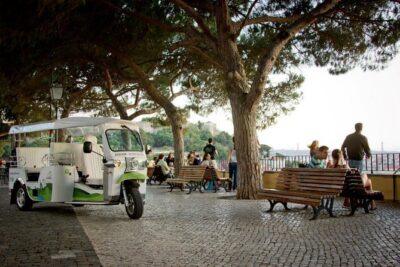 ★ 5.0Private Lisbon Sightseeing Tuk-Tuk Tour: Alfama, Belém & MoreTickets from $524,277 traveller reviews
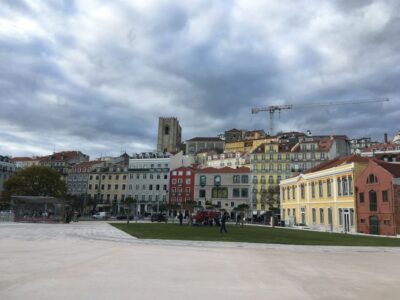 ★ 4.8Hills, Alfama, and Mouraria Tour by Electric BikeTickets from $253,438 traveller reviews
 ★ 4.9Best of Lisbon Walking Tour: Rossio, Chiado & AlfamaTickets from $232,700 traveller reviews
 ★ 5.0Lisbon Small-Group Food Tour with 18 Tastings in Alfama DistrictTickets from $1261,967 traveller reviews
 ★ 4.5Lisbon E-Bike Tour Commerce Square, Mouraria and AlfamaTickets from $301,688 traveller reviews
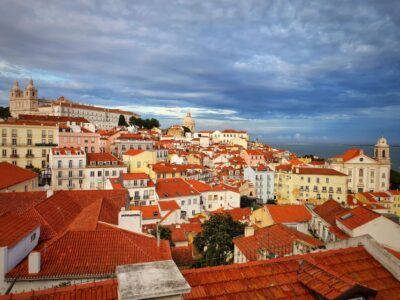 ★ 5.0Old Town TukTuk Tour and Scenic Viewpoints in AlfamaTickets from $35974 traveller reviews
 ★ 4.4Alfama Tour and Live Fado with Traditional DinnerTickets from $58970 traveller reviews
More useful lists for this tour