
Review · ALFAMA TOURS
Lisbon: Flexible Walking Tour of Alfama
Alfama works better when you wander on purpose. I like the Walkbox app approach, where audio plays automatically and works offline, plus you can pause, snack, or backtrack without waiting for a group. I also love how the route strings together famous viewpoints and lesser streets, with stops that make Lisbon Cathedral and the Portas do Sol area feel close, not like separate trips.
The main drawback is the start uphill. You’ll face about 8% average incline over roughly 700 meters, so wear shoes you trust and plan on taking it steady early on. This is also not a good fit if you use a wheelchair or have mobility limits.
Key highlights you should care about
- Offline Walkbox audio in multiple languages, with automatic playback while you walk
- Casa dos Bicos as a straightforward start and finish point in the Alfama core
- Big viewpoint payoff at Portas do Sol and Santa Luzia, plus a quieter lookout at Santo Estevão
- Old Lisbon details like the city’s oldest house (over 500 years) and a cobblestone portrait of Amália Rodrigues
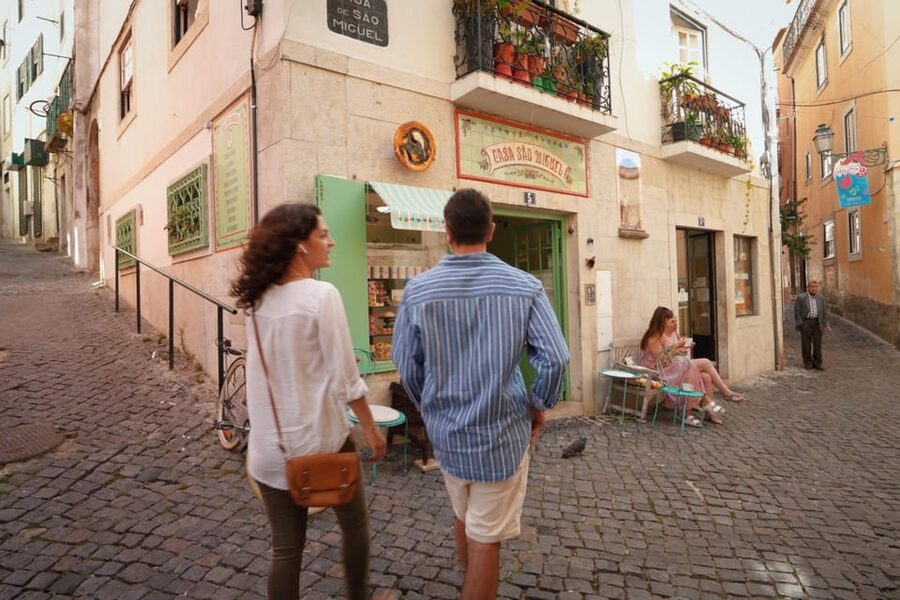
- Street-level flavor along Rua de São Miguel, with a recommended break at Casa São Miguel pastry shop
- Lisbon Cathedral as the final historic anchor before you head back down
A self-guided Alfama walk that respects your pace

If you want Lisbon without the stress of timing every step, this Walkbox-style experience fits well. Alfama is a neighborhood you should feel in your legs, not just in a photo feed, and the app helps you connect the dots between the turns.
I like that you are not locked into one pace. The audio guides you, then you choose where to linger, where to snap photos, and where to step aside so you do not block anyone in the tight alleys.
At $7 per person for a 4 km route with 60+ points of interest, this is one of the more value-heavy ways to see Alfama. You are essentially buying an organized story trail plus practical context, without paying for a live guide or expensive tickets.
You can also read our reviews of more walking tours in Lisbon



Getting oriented at Casa dos Bicos, then climbing into Alfama
Most walking routes in Alfama start somewhere, then dump you into confusion. This one begins at Casa dos Bicos in the downtown Alfama area, which is a good anchor point for your first minutes.
From there, you follow the route toward Chafariz de Dentro square. This is the kind of place where “small” details matter, because water features, street geometry, and old walls are part of the neighborhood’s identity.
Then comes the one part you should treat with respect. Early on, the tour includes an uphill segment with an average incline around 8% over about 700 meters. It is manageable if you go slow, but if you are sensitive to steep streets, treat the first stretch as your warm-up.
Chafariz de Dentro square, Lisbon’s water memory, and street logic
Chafariz de Dentro square is more than just a pause spot. Water fountains like this show how neighborhoods functioned before modern plumbing, and they also help you understand why Alfama’s streets feel the way they do.
You will likely notice how the route keeps you walking through “connective tissue,” not only landmark-to-landmark. That’s why this format works. You get context for turns you would otherwise treat like random shortcuts.
Practical tip: if the uphill feels like a lot, take a short pause when you reach the first flatter sections. The audio keeps playing your story, but you control the rhythm of your feet.
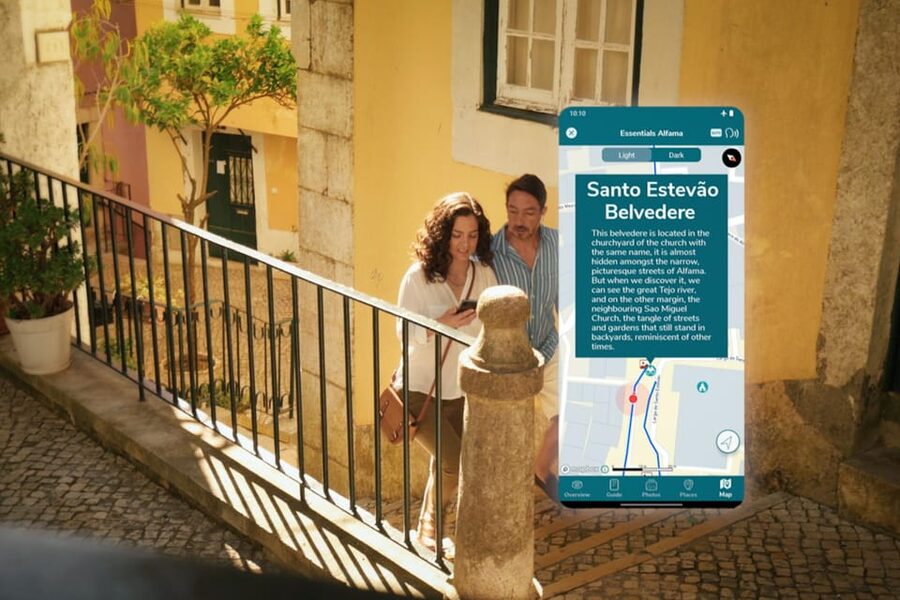
Santo Estevão belvedere, where Alfama opens up quietly
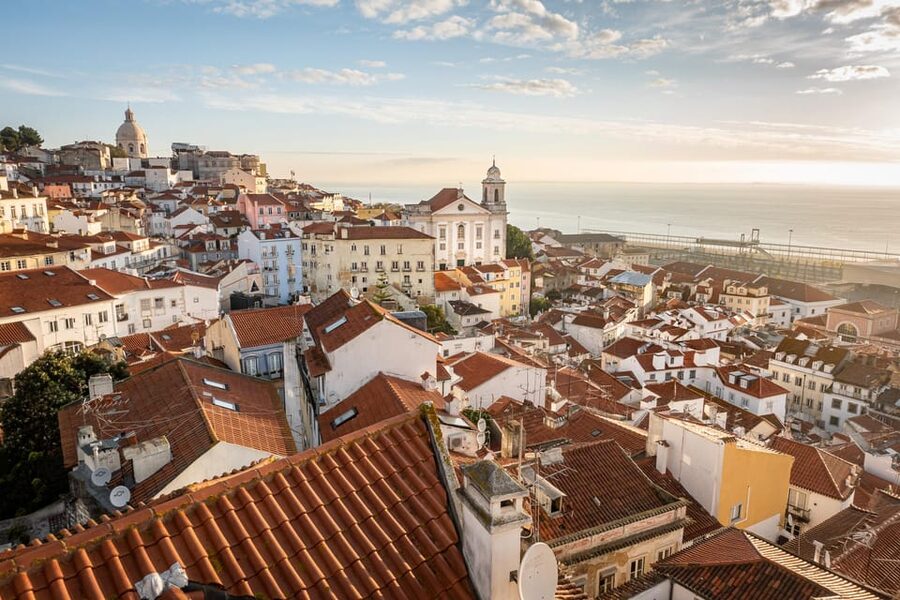
A big payoff of this walk is the stop at Santo Estevão belvedere. Belvederes in Lisbon are not just photo stops. They are places where you can finally see the street maze you just walked through.
This viewpoint tends to feel like a reward for doing the less glamorous part first, the alleys and the stair-like segments. If you like that slow satisfaction, you’ll feel it here.
If you want a practical strategy for views, try this: once you reach the lookout, scan the skyline for a minute, then take photos from the same angle twice. One shot from stillness, one shot after you adjust to how the light hits the rooftops.
Narrow alley magic, Rua de São Miguel energy, and a pastry stop
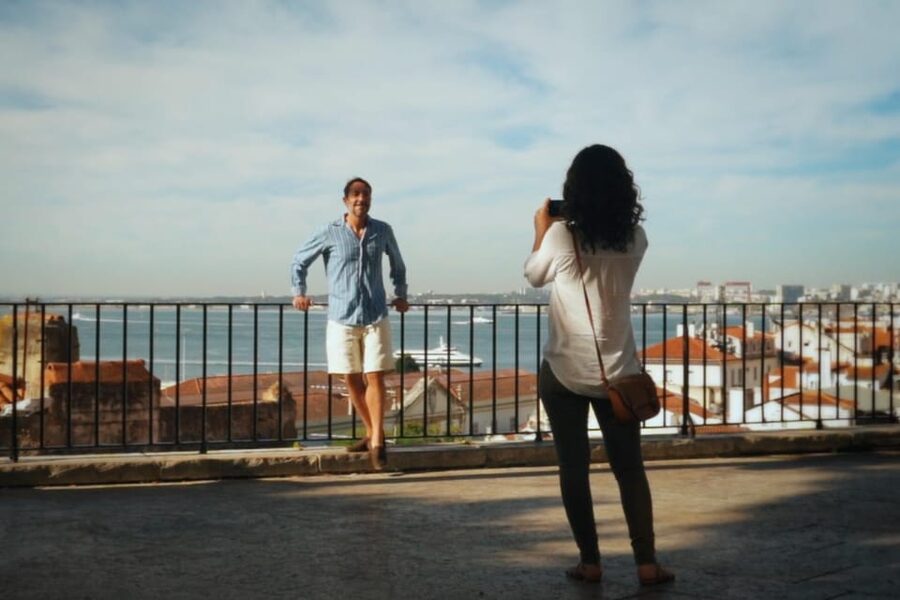
Alfama’s tight lanes can make you feel like you are walking inside a puzzle. The route includes Lisbon’s narrowest alley, which is exactly the kind of stretch you would miss if you only followed broad streets.
After that, the walk moves into Rua de São Miguel, a lively street where the neighborhood’s day-to-day life is easy to spot. This is a good part to slow down, because you’ll pass doorways, small shops, and street corners that make Alfama feel lived-in rather than staged.
You also get a strong suggestion to stop at Casa São Miguel pastry shop. If you do not plan a break, you will still want one around here, especially if you have been climbing.


The highest point: Lisbon’s oldest house and Amália Rodrigues in stone
Now you get to the “old Alfama” moments that make this walk worth it even if you think you already know Lisbon. The route climbs to Alfama’s highest point so you can see Lisbon’s oldest house, standing for over 500 years.
In the same area, you will notice a unique cobblestone portrait of fado icon Amália Rodrigues. It’s the kind of detail that works perfectly for a self-guided format, because you can stand there long enough to really look without worrying about the next stop.
If you care about fado, pay attention to how the route frames this neighborhood as part of the music’s landscape. It is not only about monuments. It’s about how Lisbon ties identity to streets, walls, and everyday life.
Portas do Sol and Santa Luzia: the classic views, timed by your pace
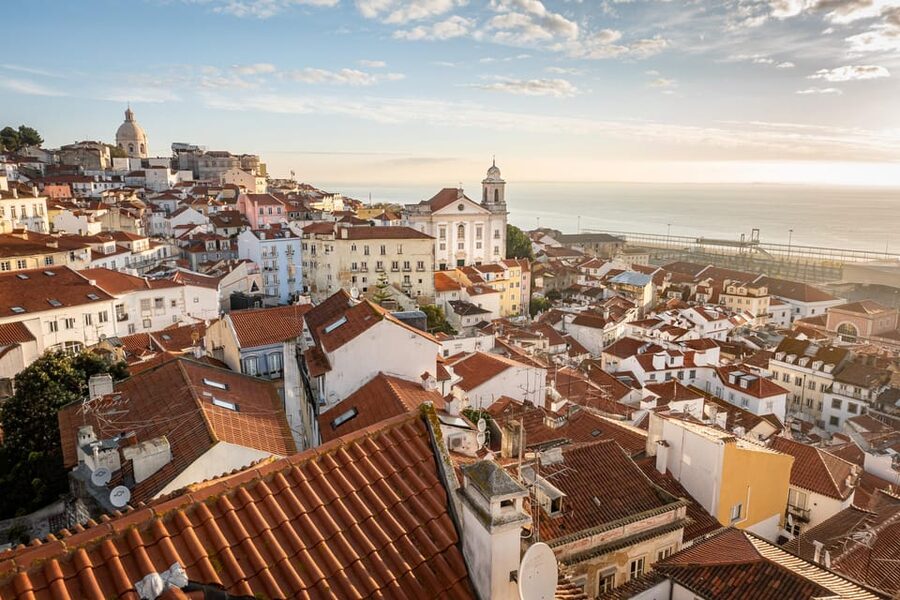
From the high point, the walk brings you to the famous viewpoint area around Portas do Sol. Then you head to Santa Luzia, which is only steps away.
These are the kind of places where you can see why people fall for Alfama. Even on days with haze, you get a sense of Lisbon’s layers, and you can watch how the rooftops and churches line up in the distance.
My advice is simple: do not rush this part. You are on foot, you earned it, and the viewpoints reward you for taking a breath. If you are going during busy hours, try a second look a bit later, once the first wave of visitors shifts.
Descending past Church of São Miguel and closing with Lisbon Cathedral

After the viewpoints, the route starts bringing you back down. You pass the historic Church of São Miguel, and the shift from lookout energy to street level is part of the experience.
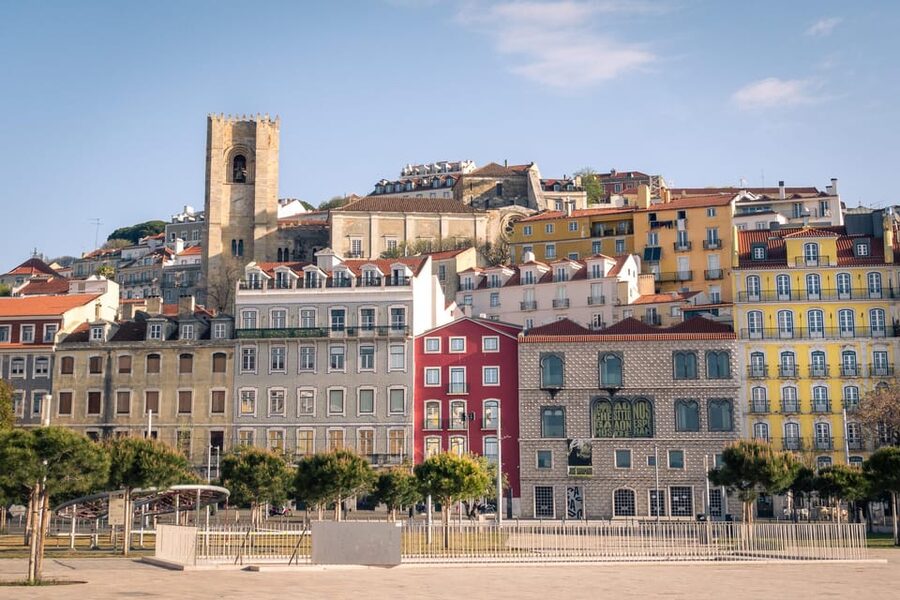
Then comes the major historic anchor: Lisbon Cathedral. The walk frames it as the city’s most ancient monument, and you feel that age instantly once you reach the area and look at how it dominates the space around it.
By the time you finish at Casa dos Bicos again, you should feel like you walked a coherent story, not just a loop of sights.
How this app-style tour works in real life (and why that matters)
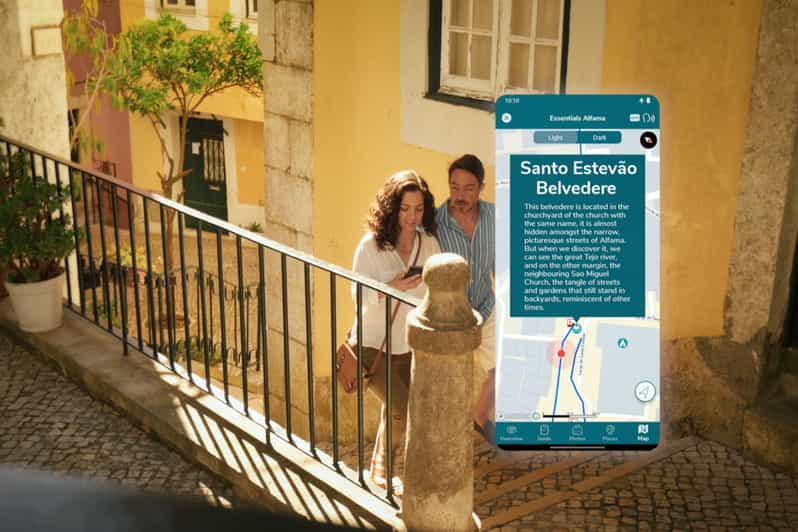
This is not a live guided tour. It is a Walkbox audio experience where you carry the guide in your pocket. That matters for two reasons.
First, you can do the full route or just sections. You have 5 days from booking to use it, which is handy when Lisbon weather changes your plans.
Second, the audio is available in English, Portuguese, French, and Spanish and it works offline. That means you can focus on walking rather than hunting for signal, plus you avoid the frustration of dead batteries in areas with weak reception.
One more practical detail that many people miss: book based on the number of smartphones you’ll use. If you plan to share phones, account for that up front so everyone who needs their own audio has it.
Price and value: $7 for a 4 km story trail
Let’s talk value. At $7 per person, you are paying for route planning, audio storytelling, and access to over 60 points of interest. There are no paid attraction tickets bundled, so your spending stays flexible.
If you compare this to paid guided tours, the savings can be big. You are also getting something different: control. You decide when to pause, when to cut a stop short, and when to linger at Portas do Sol and Santa Luzia.
Is it worth it if you hate steep streets? If you know you struggle with hills, I would not oversell it. But if you can handle a climb and you like exploring at your own pace, this price is hard to beat.
Who this Alfama walk is best for
This experience is a strong match if you want:
- Freedom to go at your pace, not a strict group schedule
- Offline audio guidance in multiple languages
- A route that mixes viewpoints with street-level texture
- A way to understand Alfama without paying for multiple separate stops
It is not a good match if:
- You have mobility impairments or you use a wheelchair, since the route is not suitable for those needs
- You do not want to deal with an uphill start
A quick word about support and safety
You get clear instructions after booking, and there is remote support available by WhatsApp or SMS between 8:00 AM and 8:00 PM. If something urgent comes up, emergency phone assistance is also included.
I like knowing help exists, especially for a self-guided plan in a neighborhood with lots of narrow ways. Even so, the best safety move is boring: stick with the route, give yourself extra time, and keep your smartphone charged.
One detail I picked up from real-world help: a support person named Bernardo was mentioned for helpful tips. That kind of human backup is a plus when you are navigating on your own.
Should you book this Alfama walking tour?
Yes, I’d book it if you want an easy-to-follow Alfama route with offline audio and you enjoy learning while you walk. The combination of Casa dos Bicos, viewpoint classics at Portas do Sol and Santa Luzia, and big historic anchors like Lisbon Cathedral makes it more than a random wander.
Skip it if hills are a hard no for you, or if you need wheelchair-friendly routes. For everyone else, it is a smart, low-cost way to experience Alfama like a local, get oriented fast, and hit the key places without rushing.
FAQ
How long is the Lisbon Alfama flexible walking tour?
The tour duration is listed as 3 hours, and the walking route is about 4 km with an estimated completion time of about 4 hours depending on your pace and the stops you choose.
Where does the tour start and end?
It starts and ends at Casa dos Bicos in downtown Alfama.
Is there a live guide with you?
No. Guidance is provided through the Walkbox app, not a live tour guide.
Does it work offline?
Yes. The Walkbox guide works offline.
What languages are available?
The tour content is available in English, Portuguese, French, and Spanish.
How difficult is the route?
The route is generally easy to follow and is about 4 km, but it includes one uphill section close to the start with an average incline of about 8% over 700 meters.
Is it suitable for wheelchair users or mobility impairments?
No. It is not suitable for wheelchair users and people with mobility impairments.
More Walking Tours in Lisbon



More Tours in Lisbon



More Tour Reviews in Lisbon
Not for you? Here's more nearby things to do in Lisbon we have reviewed











Alfama Tours, side by side.
 ★ 5.0Alfama Tour in Lisbon Old TownTickets from $34,936 traveller reviews
 ★ 5.0Private Lisbon Sightseeing Tuk-Tuk Tour: Alfama, Belém & MoreTickets from $524,277 traveller reviews
 ★ 4.8Hills, Alfama, and Mouraria Tour by Electric BikeTickets from $253,438 traveller reviews
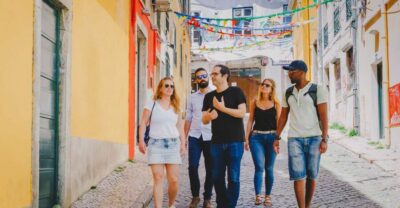 ★ 4.9Best of Lisbon Walking Tour: Rossio, Chiado & AlfamaTickets from $232,700 traveller reviews
 ★ 5.0Lisbon Small-Group Food Tour with 18 Tastings in Alfama DistrictTickets from $1261,967 traveller reviews
 ★ 4.5Lisbon E-Bike Tour Commerce Square, Mouraria and AlfamaTickets from $301,688 traveller reviews
 ★ 5.0Old Town TukTuk Tour and Scenic Viewpoints in AlfamaTickets from $35974 traveller reviews
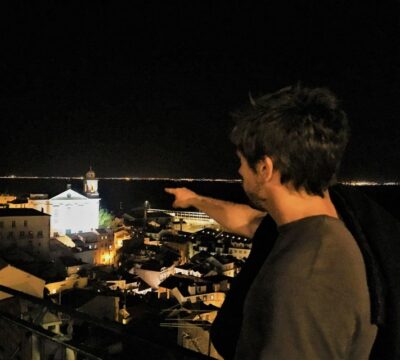 ★ 4.4Alfama Tour and Live Fado with Traditional DinnerTickets from $58970 traveller reviews
More useful lists for this tour