
Review · BELEM TOURS
Lisbon: Belem Walking Tour with Jeronimos Monastery Tks Included
Belém clicks into place quickly. What I like most is the guided inside look at Jerónimos Monastery and the story behind Portugal’s famous Pastéis de Belém. One thing to consider up front: the Torre de Belém can’t be visited right now due to restoration work.
You get a focused half-day loop, built around the Portuguese Age of Discovery era, with an expert English-speaking guide and a small group size. The pace is steady, and you’re not stuck reading signs alone.
Key Highlights You Should Know Before You Go
- 9:30 a.m. start matters: The tour enters Jerónimos at 9:30 sharp, so being late can cost you the first big set of rooms.
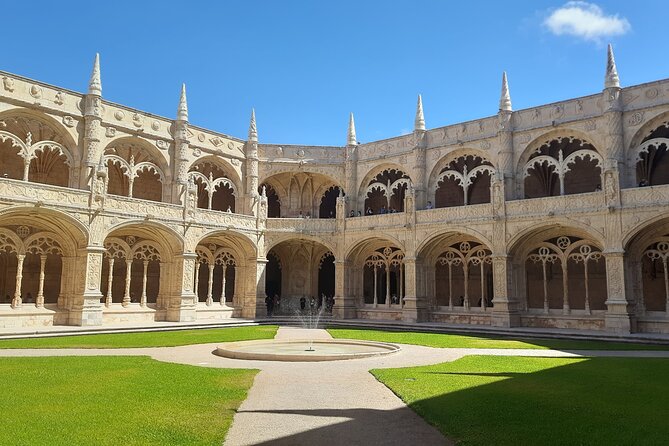
- Inside Jerónimos, not just outside views: You get the Upper Cloister viewpoints plus lower areas like the Chapter Room and the Refectory.
- Pastéis de Belém is built into the route: You don’t just eat it, you learn why it exists, and you get the tart included.
- Big empires reduced to 32 coats of arms: The Praça do Império garden connects Portugal’s former provinces to the 1940 exhibition.
- Two big Manueline moments: The monastery complex and the Belem-area monuments all tie back to Portugal’s distinctive architectural style.
- Tower plans may be exterior-only: With restoration ongoing, your time at the tower area is more about the setting than an admission ticket.
Jerónimos First, Because Belém Is One Big Story
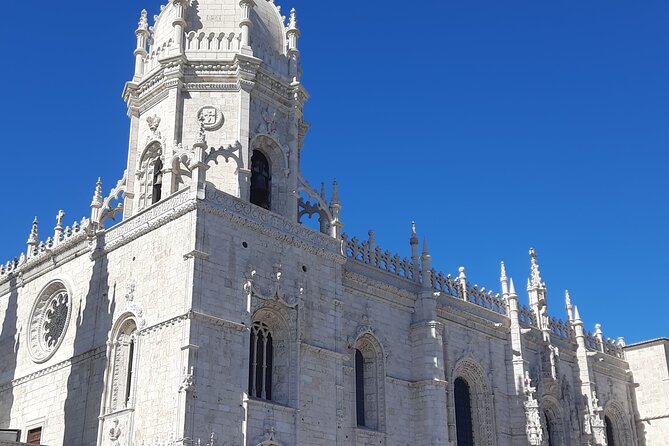
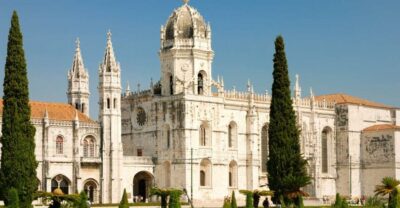
Start at Mosteiro Jerónimos in Belém, and you immediately understand why this area is such a draw. The monastery complex is not just a pretty building, it is where Portugal’s wealth, religion, politics, and maritime power start to connect in a way that feels real.
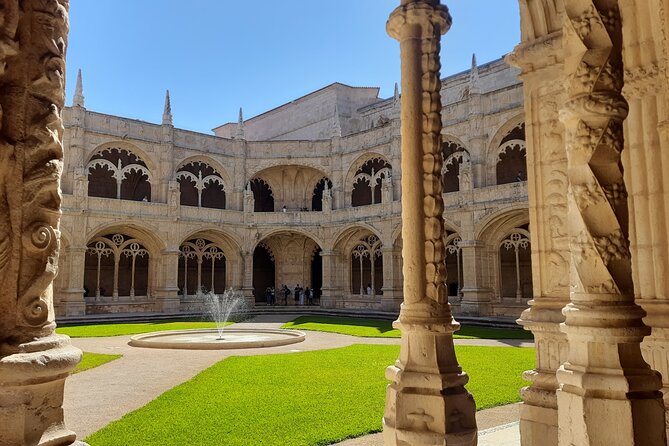
I also like that the tour doesn’t rush you through the architecture. You begin at the Upper Cloister, where the views help you see how the complex was designed, how space was controlled, and how art and power worked together in the 1500s. Then the guide adds the context, like what the construction meant to society at the time and how it connects to the Great Portuguese Navigations in the 15th and 16th centuries.
You can also read our reviews of more walking tours in Lisbon



Getting In on Time: The 9:30 Sharp Entry Plan
This is a “meet and move” tour, not a slow sightseeing stroll. You’ll want to arrive early enough to settle in before the group heads in, because the tour enters Jerónimos at 9:30 a.m. sharp.
Why that matters: Jerónimos gets busy, and getting inside early is a practical advantage. In the feedback people shared, guides like Federico and Luis were praised for keeping the group organized and getting the first entry timing, which makes a huge difference in how enjoyable the morning feels.
Practical tip: if you’re navigating by public transportation, give yourself buffer time. The meeting point is at Mosteiro Jerónimos (1400-206 Lisbon), and you’ll be walking as the group, so late arrivals can throw off everyone’s start.
Upper Cloister Views and the Meaning Behind the Design
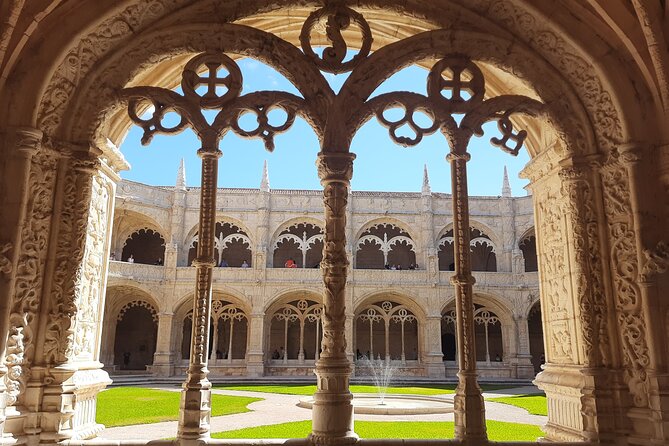
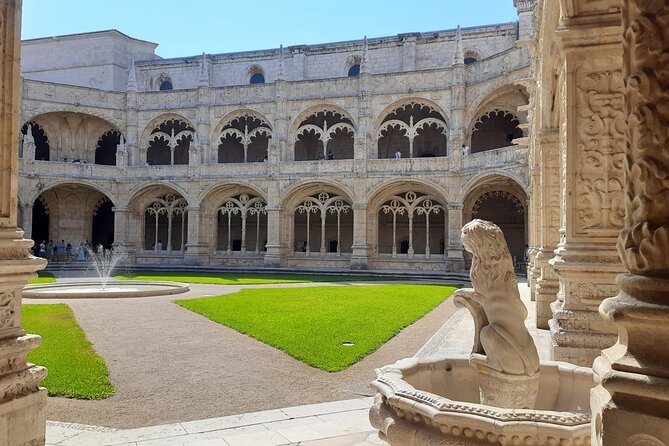
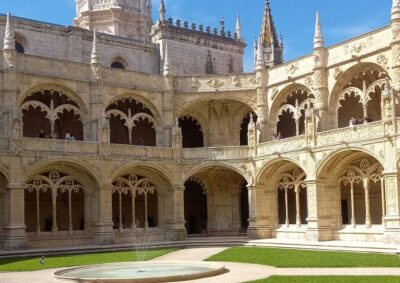
The first stop is Jeronimos Monastery, starting at the Upper Cloister. From here, you get spectacular views over the complex and you can take in the architectural beauty in a calm way before the more detailed indoor spaces.
What I value about this part is the “why it was built” framing. You get the meanings behind the construction and why it mattered to Portugal’s society during the era when ocean exploration was reshaping the country. Instead of treating the building like a museum object, you learn how it functioned as a statement.
Also, this isn’t only about what you see. The guide will connect design choices to the bigger story of Portuguese expansion, so when you later see the Discoveries monument and other Belem landmarks, you’ll recognize the theme immediately.
Chapter Room, Old Refectory, and Pessoa’s Moved Tomb
After the Upper Cloister, the tour shifts to key spaces in the lower section of the complex. You’ll have access to areas like the Chapter Room and the old Refectory, both of which help you understand how monastic life was organized around communal decision-making and shared routines.
One standout detail: the tomb of Fernando Pessoa is located here, moved to this space in the first half of the 20th century. That’s the kind of fact that makes the monastery feel bigger than its original era. It bridges Portugal’s medieval and early modern identity with Portugal’s modern literary voice.
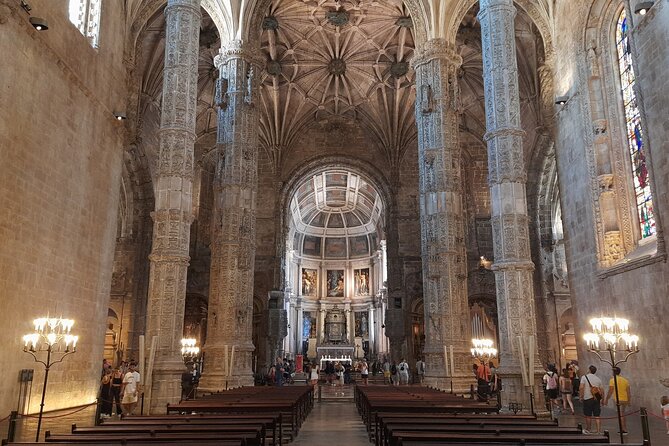
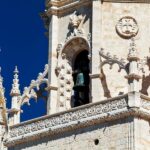
Then you move to the church within the complex. This is a majestic building and a clear example of Manueline architecture, Portugal’s style that blends late Gothic structures with Renaissance elements that developed around the early 16th century.
The Manueline Church: What Makes It Portuguese
The church visit is where you’ll notice Manueline details most clearly. The guide explains how this architectural style represents Portugal’s peak confidence during the Age of Discovery.
I like this approach: you’re not left to guess what you’re looking at. The tour explains the meaning behind the visuals, and it ties the church’s design to Portugal’s cultural and navigational ambitions. It turns a church visit into a “read the building” experience, not just a standing-and-looking one.


Sunday note: the church visit changes
If your day is a Sunday, plan for a different schedule. On Sundays, the church opens only from 2 p.m. For that reason, the visit to the church will not be held on Sundays.
So if church interiors are a key reason you booked, you’ll want to pick a non-Sunday date. It’s a small scheduling detail, but it affects the experience.
Pastéis de Belém: More Than a Sweet Stop
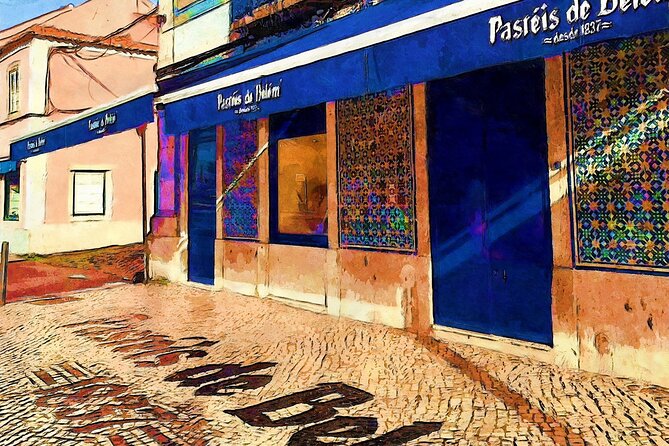
Then comes the food stop, and it’s handled well. Pastéis de Belém is where you learn that this is the original pastel de nata, tied to the Jerónimos Monastery monks. The recipe is described as ancient, and the pastries have been sold in the same establishment since the mid-19th century.
You get a snack included, and the tart itself is free as part of the stop. I find the best part is that it’s not only about eating. The tour connects the dessert to Portuguese history and the monastery setting that shaped the story.
One practical bonus: people also appreciated the chance to see the back area of the bakery along the way. Even if the view is brief, it makes the “legendary pastry” feel less like hype and more like a real production ritual.
Diet tip: if you have dietary restrictions, it’s worth asking in advance. In the feedback shared, Luis went out of his way to find a gluten-free option for a group member, so guides may be able to help depending on timing and availability.
Praça do Império Garden: Coats of Arms as Empire Flashcards
Next you move to Jardim da Praca do Imperio, a stop that works surprisingly well in the middle of a walking tour. This garden was built for the Portuguese World Exhibition in 1940, and it features a set of 32 coats of arms linked to former provinces of the Portuguese Empire.
Even if you’re not a museum person, this stop can click because it turns abstract empire talk into visual objects you can count and look at. It also gives your feet a tiny break while still keeping the theme moving forward.
It’s quick, about 10 minutes, so it’s best treated as a “pattern recognition” moment. You’ll see it as the tour’s bridge between the monastery era and the later 20th-century celebrations of discovery history.
Padrão dos Descobrimentos: Infante Henrique and the 1960 Memorial
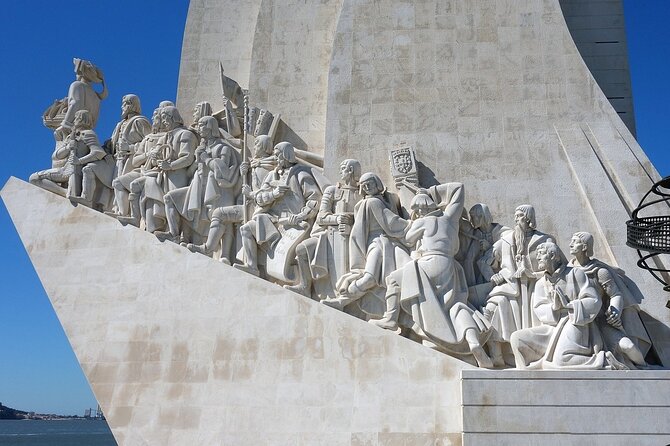
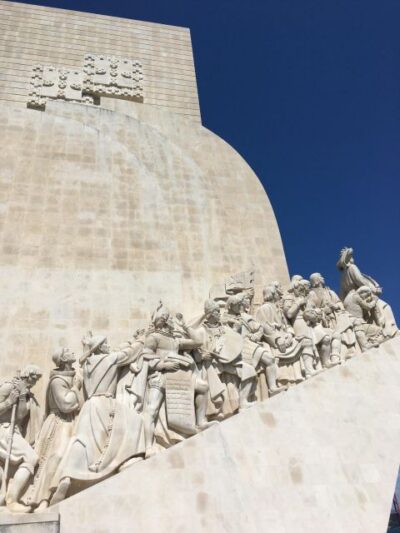
From the garden, you head to Padrao Dos Descobrimentos. This monument was built in 1960 to commemorate the 500th anniversary of the death of Infante D. Henrique, widely seen as a leading figure behind Portuguese navigation.
The stop also includes other important characters from the Great Navigation era who contributed to the expansion of Portuguese culture around the world. You’re not only looking at a single hero figure, you’re getting the idea that Portugal’s exploration was a team story, shaped by leadership, planning, and practical maritime capability.
At about 20 minutes, it’s enough time to take photos, read the main figures with your guide’s help, and connect it back to what you learned inside Jerónimos.
Torre de Belém: World Heritage Setting, But Restoration Changes the Plan
The tour includes the Torre de Belem area, and it’s a landmark for a reason. It’s another Manueline architecture example, built to serve as a defensive point against invaders trying to reach Lisbon. It is also considered a UNESCO World Heritage Site.
But here’s the honest part: the tower is undergoing restoration work and cannot be visited right now. That means your experience at the end of the tour is likely more about seeing the site and the setting than going inside.
If you’re booking because you want the full tower interior experience, you should consider that mismatch. The tour still makes sense as a route into Belém’s core discovery-era landmarks, but you’re paying for guided context plus monastery entry, not tower admission.
End point matters too. The tour finishes at Belém Tower on Av. Brasília, 1400-038 Lisboa, and your guide will give instructions on how to get around the city from there.
Pace and Group Size: Why It Feels Smooth
This is a group tour with a maximum of 20 travelers, and that small size typically keeps things manageable. In practice, guides were praised for being easy to hear and for keeping the group moving without feeling frantic.
You’re also working with a morning timing that tends to be kinder than later sightseeing. You’ll start at 9:30 a.m., and that usually means you spend the hottest part of the day already done with the heavy architecture.
Still, you should be ready for real walking. You’ll cover multiple landmarks on foot in about 3 hours 30 minutes. The tour is rain or shine, so bring an umbrella and sunscreen, especially in warmer months.
Good to know: restroom options are available during the tour. That sounds basic, but it is one of those practical details that makes or breaks a morning with multiple stops.
The Guides Make the Difference (Federico, Luis, Leo, Daniel, and Ruben)
The best part of this kind of tour is the guide’s ability to connect details into a story you can remember. In the feedback, certain names came up again and again, especially Federico and Luis, with other praised guides like Leo, Daniel, and Ruben.
Common threads in the way they present:
- Clear, engaging explanations that make the architecture and monuments feel connected
- Answering questions and not rushing people who want more detail
- Keeping energy up while still maintaining a calm pace
If you have the option to choose dates, I’d pick one that matches the most complete itinerary for your day. For Sundays, the church visit is skipped because it opens only from 2 p.m., so non-Sundays generally give you the fuller set of indoor highlights.
Price and Value for a 3.5-Hour Belém Primer
At $72.56 per person for about 3 hours 30 minutes, you’re paying for four things:
- Entrance ticket to Jeronimos Monastery
- An expert English-speaking guide
- A planned route with multiple landmarks so you don’t waste time figuring it out
- A snack included at Pastéis de Belém, meaning you’re not deciding on a pastry stop on the fly
On value alone, I like this structure. You’re not just buying a ticket. You’re buying interpretation. Jerónimos is a big complex, and without context, it can turn into a checklist. With the guide explaining the Upper Cloister, lower spaces like the Chapter Room and Refectory, and the church’s Manueline style, the entry price starts to feel like a translation service for your eyes.
The walking tour format also helps you cover the major discovery-era sites in a compact half-day. That’s useful if you only have a limited amount of time in Lisbon.
One trade-off: lunch isn’t included. So you’ll want a plan for after the tour, especially since the tour ends near Belém Tower.
Who Should Book This Tour?
I think this is a great match if you want:
- A guided entry into Jerónimos Monastery and the church
- A story-led way to understand Belem’s role in Portuguese discoveries
- A morning route that reduces decision fatigue, especially if it’s your first time in Lisbon
It’s also a solid fit for couples, solo travelers, and small groups who want structure. The group size limit helps keep it from turning into a chaotic mob.
If you care most about the interior of Torre de Belém, though, you should double-check your expectations. Restoration work prevents the visit, so you’d get less than you might hope from that specific site.
Should You Book This Belém Walking Tour?
Book it if you want an organized half-day that connects Jerónimos, the pastry legend, and the Portuguese discovery monuments into one coherent theme. The included monastery ticket and guide interpretation are the real value, and the free Pastéis de Belém stop is a fun payoff.
Skip or adjust your expectations if your main goal is entering Torre de Belém right now. Restoration blocks the visit, and the tour’s value becomes about context and route more than tower interior access. Pick your day wisely too, especially if you’re traveling on a Sunday and the church opening schedule matters to you.
FAQ
What is included in the tour price?
The tour includes an entrance ticket to Jerónimos Monastery, an expert English-speaking tour guide, and a snack of an original custard tart at the Pastéis de Belém shop.
How long is the walking tour?
The tour lasts about 3 hours 30 minutes.
What time does the tour start?
The tour enters Jerónimos Monastery at 9:30 a.m. sharp, so you should arrive early enough to be on time.
Where does the tour start and end?
It starts at Mosteiro Jerónimos, 1400-206 Lisbon, Portugal, and ends at Belém Tower, Av. Brasília, 1400-038 Lisboa, Portugal.
Can I visit the Torre de Belém during the tour?
No. The Torre de Belém is currently undergoing restoration work and cannot be visited.
Does the itinerary include the church at Jerónimos Monastery on Sundays?
On Sundays, the church opens only since 2 p.m., so the church visit will not be held on that day.
What is the group size?
The tour has a maximum of 20 travelers.
Does the tour run in bad weather?
Yes. The tour takes place rain or shine, so bring an umbrella and sunscreen.
Is it free to cancel?
Yes, cancellation is free up to 24 hours in advance for a full refund.
More Walking Tours in Lisbon



More Tours in Lisbon



More Tour Reviews in Lisbon
Not for you? Here's more nearby things to do in Lisbon we have reviewed










Belem Tours, side by side.
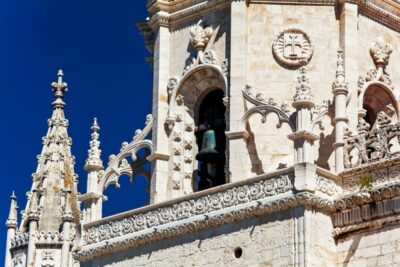 ★ 4.1Jerónimos Monastery Entrance TicketTickets from $2114,164 traveller reviews
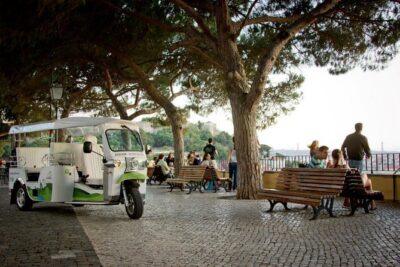 ★ 5.0Private Lisbon Sightseeing Tuk-Tuk Tour: Alfama, Belém & MoreTickets from $524,277 traveller reviews
 ★ 5.0Age of Discoveries Walking Tour in BelémTickets from $31,513 traveller reviews
 ★ 5.0Bike Tours Lisbon – Center of Lisbon to BelémTickets from $19686 traveller reviews
 ★ 3.7Jerónimos Monastery E-Ticket and Audio GuideTickets from $33660 traveller reviews
 ★ 4.7Lisbon Bike Tour: Downhill Downtown Lisbon to BelémTickets from $45655 traveller reviews
 ★ 4.7Belem Walking Tour with Jeronimos Monastery TicketTickets from $61490 traveller reviews
 ★ 4.8Belem, Jeronimos Monastery, and Coach Museum TourTickets from $94478 traveller reviews
More useful lists for this tour