
Review · LISBON CITY TOURS
Lisbon Small Group Tour
Lisbon’s hills hit you fast. This 5-hour small-group tour (max 8 people) gives you efficient city bearings plus standout stops like Pastéis de Belém and multiple viewpoints from across the city. I like that it’s driven and scheduled for you, not for endless hopping, though the pace means a few stops involve short walks and some uphill ground.
What makes it especially smart is the mix of angles. You get classic Alfama and Sé views, then you’re over on the Belém waterfront for the big Manueline monuments, with breaks built in for photos and photos only (most stops are listed as free admission). The only real catch is time, you’ll want comfy shoes and a realistic attitude about quick looks rather than long museum-style visits.
Key Things I’d Pay Attention To
- Max 8 people, so you’re less lost in a crowd and more able to hear the guide
- Miradouros as the backbone of the day, with multiple high viewpoints across Lisbon
- A Belém cluster in one morning, including Jerónimos and Torre de Belém
- Photo-friendly city variety, from Sé Cathedral area to Eduardo VII Park and the Aqueduct
- A guided sweet stop, Pastéis de Belém, timed for the best break in the schedule
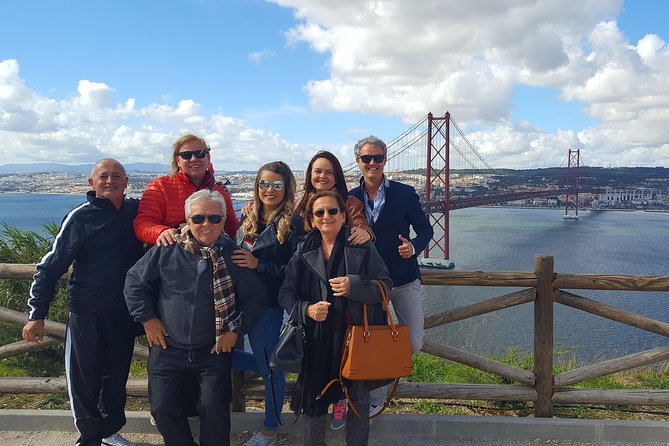
- A driver-led route, including the 25 de Abril Bridge and a Christ King replica viewpoint
A Max-8 Group Means You Actually Hear the City
Lisbon is hilly, winding, and made for slow wandering. This tour works because it keeps the group small, up to 8 people, which matters when the “main event” is spotting views from tight viewpoints. With fewer people, you’re not constantly waiting while everyone figures out where to stand. You’re also more likely to ask questions and get straight answers.
I also like how the tour is built for first-timers. The plan jumps between areas that normally take a lot of time to connect yourself, like Baixa and Alfama, then over to Belém, then back toward central promenades like Avenida da Liberdade. It feels like you’re getting a map in motion, not just a list of attractions.
A consideration: it’s still about breadth over depth. Each stop is time-limited, so you’re looking at highlights and learning what to notice next, not settling in for hours at a single church or monument.
You can also read our reviews of more tours and experiences in Lisbon.


Getting Started at 9:30am from Praça do Marquês de Pombal
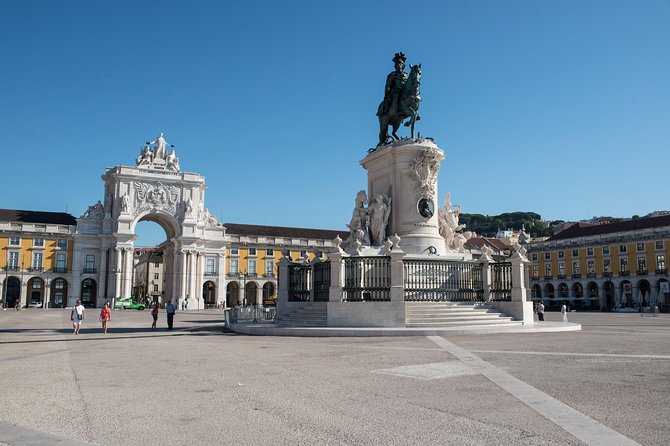
The meeting point is Praça do Marquês de Pombal 8, and the start time is 9:30am. The day is designed as a loop that ends back at the same meeting point, which is convenient when you’re trying to plan lunch and later wandering.
You’re traveling in an air-conditioned vehicle with WiFi on board and bottled water. Even in mild weather, that comfort can be a lifesaver because Lisbon’s hills mean frequent stops and short walks. Since breakfast and lunch are not included, this is a great morning option if you want to see the city first, then eat after.
One more practical note: the itinerary lists admission ticket free for the stops you’ll spend time at. That helps keep the day straightforward, but you should still be ready for brief transitions, quick photo moments, and some outdoor standing in between.
Miradouro da Senhora do Monte: Lisbon’s South, Sea, and Castle Views
Your first major viewpoint is Miradouro da Senhora do Monte in Graça (São Vicente). The belvedere sits in front of the Chapel of Our Lady of the Mount, so you get a classic Lisbon scene right away, a lookout framed by a landmark building.
From here, the views are described as stretching south toward the sea of the Straw, with the Castle of São Jorge and parts of Baixa visible in the distance. You can also see toward Bairro Alto and the Monsanto Forestry Park, plus the valley of Avenida Almirante Reis to the north. That mix is exactly why this stop is a good opener: it gives you a “broad picture” of Lisbon’s layout before you start moving into narrower historic streets.
The drawback is simple. Viewpoints are weather dependent and can get windy, and you’ll probably be standing for the 20-minute slot. Bring a layer if the morning is cool, and treat this as your orientation moment, not the time for deep exploration.
São Vicente de Fora: Lisbon’s Patron Saint and Manuel-Seeing Streets
Next is Igreja de São Vicente de Fora, a church with roots that stretch back further than the current building. The site connects to an earlier primitive temple built under the invocation of St. Vincent, who became the patron of Lisbon in 1173 when relics were transferred from the Algarve to a church outside the city walls.
Construction of the church you’ll see began in 1582, with the later major work starting in 1590. The itinerary notes the architect and engineer Filippo Terzi, working from a drawing by Juan de Herrera, and highlights Baltasar Álvares as another key figure. If you’re the type who enjoys architectural “why it looks like that,” this stop gives you some real anchors to hold onto while you move through the neighborhood.
This is also a smart midpoint between viewpoints. You’ve just been looking out over the city, and now you’re stepping into one of the places that made Lisbon a major religious and political hub.
Miradouro das Portas do Sol and Lisbon Cathedral in the Sé Area
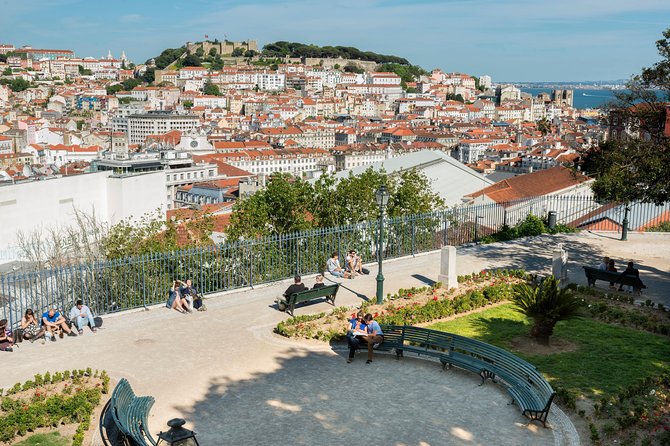
After São Vicente de Fora, you’ll go back to the Alfama side for Miradouro das Portas do Sol. This one comes with place-name meaning. The miradouro derives its name from the old Porta do Sol, an original gate integrated in the Moorish fence of Lisbon. The area is linked to Alfama’s narrow streets, winding down toward the Tagus.
The view is described as looking across the eastern zone of Lisbon, with the Tagus River in the frame. There’s also a connection back to the church you just saw, because the itinerary specifically notes seeing the Church of São Vicente de Fora from this viewpoint. That kind of “see the same thing from two angles” is one of the hidden benefits of a good small-group route.
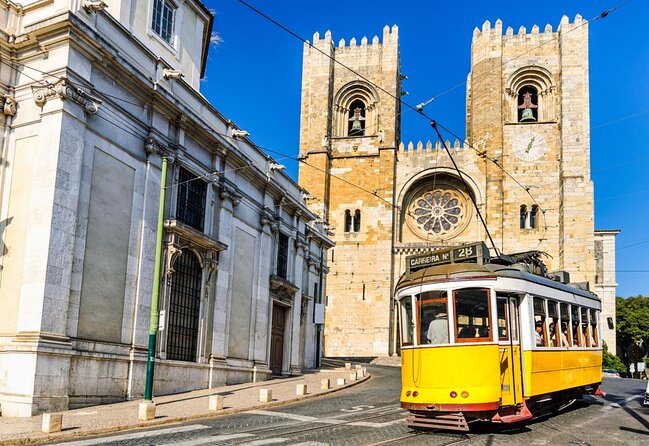
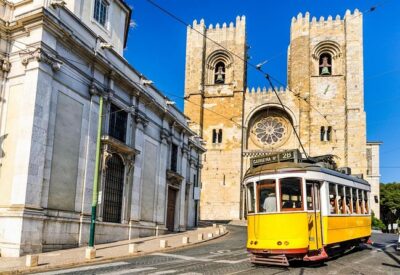
Then the tour continues to Lisbon Cathedral (Church of Santa Maria Maior), the seat of the Patriarchate of Lisbon and the Parish of Sé. Construction began in the late 1100s after Lisbon was recaptured from the Moors under D. Afonso Henriques, and the building you see today is a mix of architectural styles. It’s classified as a National Monument since 1910.
Why this matters on a short tour: Sé is where the city’s old spine still shows. You come away understanding why Lisbon looks the way it does, even when you’re only standing there for 20 minutes.


Church of Santo António: A Short Stop with Real-World Local Traditions
Right in the Sé neighborhood, you’ll spend time at the Church of Santo António. The itinerary notes that it is associated with the place where St. Anthony was born, near the old port access to medieval Lisbon. There’s also a small museum next door, and the area is treated as a sanctuary.
What I find more interesting than dates is the lived-in tradition. The church has a wedding ritual: on the day of marriage, young men visit, pray, and leave flowers for Saint Anthony, seen as the intercessor for newlyweds. The site also has a panel of modern tiles celebrating Pope John Paul II’s visit in 1982, which gives you a clean bridge between medieval reverence and more recent Portuguese Catholic life.
This stop fits well in the day because it contrasts with the big “monument scale” you’ll see later in Belém. Santo António is more human scale, and it helps the city feel personal, not just photographed.
Eduardo VII Park and the Águas Livres Aqueduct, Plus a Bridge Drive
As the route moves beyond the medieval core, you’ll reach Parque Eduardo VII, the largest park in central Lisbon. The itinerary explains the park’s connection to Eduardo VII of the United Kingdom, including that it was baptized in 1903 in his honor after his visit to Lisbon to reaffirm the alliance. Before that, it was known as Freedom Park.
Then you’ll head to Aqueduto das Aguas Livres. This is one of Lisbon’s great engineering stories, built by King João V in the 18th century, originating from sources in Belas, Sintra. The aqueduct was reinforced and expanded through the 19th century, and the itinerary notes it survived the 1755 earthquake.
This is a good place to stop mentally and switch from “tourist Lisbon” to “how a city worked.” When you’re staring at aqueduct arches, it becomes easier to appreciate why Lisbon could grow the way it did.
Also, the tour overview includes scenic driving highlights. You’ll cross the 25 de Abril Bridge, often compared to the Portuguese Golden Gate Bridge, and you’ll enjoy a view from the Statue of Christ King viewpoint, described as a replica of Christ the Redeemer in Rio de Janeiro. Those moments are less about museum learning and more about scale and perspective, and they help break up the day before Belém.
Belém’s Big Three: Jerónimos, Torre de Belém, and the Discoveries Monument
Belém is where this tour earns its keep. The schedule is packed but logical: the big Manueline monuments are close enough to group, so you gain time without feeling like you’re crisscrossing the city.
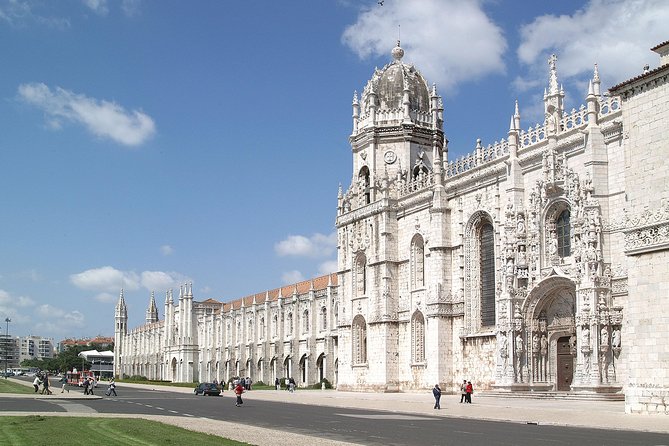
First up is Mosteiro dos Jerónimos. The itinerary describes it as a Portuguese monastery of the Order of St. Jerome built in the 16th century, a culmination of Manueline architecture. Construction began under King Manuel I at the start of the 1500s and lasted for about a hundred years, with a leadership group that includes João de Castilho. Since 2016, it has the status of National Pantheon.
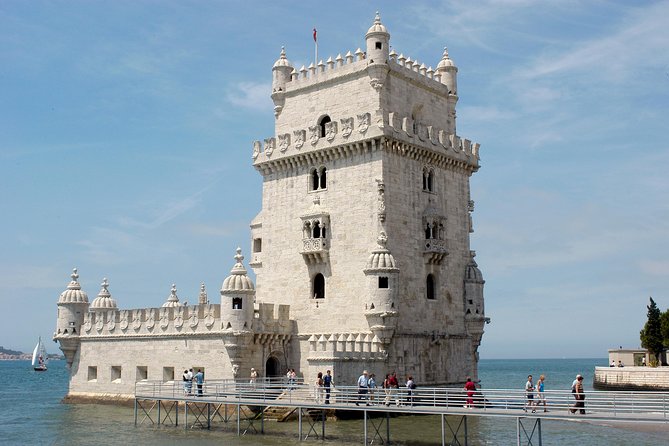
Then comes Torre de Belém (Torre de São Vicente). The tower was originally surrounded by water and is now more land-connected than it used to be. The itinerary notes it as an icon of Manuel I’s reign, combining medieval tower tradition with a modern bulwark and artillery use. It also points out how its defensive function against the Tagus bar faded over time.
After that, you’ll visit Padrão dos Descobrimentos, the Monument to the Discoveries on the right bank of the Tagus. It was inaugurated in 1960, with architectural design by Cottinelli Telmo and sculptures by Leopoldo de Almeida. Even if you only spend a short period there, it helps you connect the monuments to Portugal’s era of navigation.
And yes, there’s a food moment in this Belém block. The tour overview calls out Pastéis de Belém, the original cream pastry from the area, described as using an original recipe that only a handful of people know. I’d treat this as your reset. You get the sweet, local ritual, and then you’re back to monuments.
Praça dos Restauradores, Dom Pedro IV, and Avenida da Liberdade: Lisbon’s Central Showpiece Walk
On the way back toward central Lisbon, the tour shifts into the Baixa and boulevard style that many visitors miss when they only chase hills and churches. You’ll stop at Praça dos Restauradores, home to a tall obelisk called the Monument to the Restorers. The itinerary notes it is 30 meters high, inaugurated in 1886, and commemorates the liberation of the country from Spanish dominion on 1 December 1640.
From there, you’ll reach Praça Dom Pedro IV, also known as Rossio. The description is poetic but practical: it was historically called Valverde, and the square has long been associated with fairs and markets. It’s the kind of central plaza where you understand why Lisbon is both old and active.
Finally, you’ll go along Avenida da Liberdade, one of the city’s main avenues connecting Praça dos Restauradores to Marquês de Pombal. The itinerary notes it’s about 1,100 meters long and 90 meters wide, with gardens and Portuguese sidewalk styling. It also shares the boulevard’s origin as Passeio Público, started in 1764, with design changes in the 1830s and 1840s by architect Malaquias Ferreira Leal.
This stretch is where I like to take a slow breath on a tour day. After hills and monuments, it feels more open and airy, and it’s an easy spot to picture where you’ll roam later on your own.
Is This Lisbon Tour Worth Booking for $115.19?
At $115.19 per person for about 5 hours, this tour prices itself as a high-efficiency intro. You’re paying for a small group, air-conditioned transport, and a route that strings together a lot of major areas without you needing to stitch neighborhoods together on your own.
You’re also getting a schedule that includes both viewpoints and anchor sites. In a city where you can spend hours just moving uphill and downhill, that matters. The fact that bottled water and WiFi are included, plus multiple stops are listed as free admission, keeps the day from turning into a surprise-cost marathon.
The main tradeoff is depth. If you want to linger in museums, read every panel, or do long interior visits, you’ll probably want a separate, slower outing after this tour. Think of this as a smart morning foundation.
Should You Book It?
If you want a first-time Lisbon orientation with major sights in one pass, this is a solid pick. It’s especially good if you’re traveling with limited time, or you don’t want to fight navigation across hills and historic streets on your own.
I’d skip it only if you dislike short stopovers, hate standing at viewpoints, or you’re hoping for a deep dive into a single neighborhood. Otherwise, with its small group size, guided stops, and Belém plus Alfama coverage, it’s the kind of tour that helps you choose what to do next, with confidence.
FAQ
How long is the Lisbon Small Group Tour?
It’s about 5 hours (approx.).
What is the group size limit?
The tour is limited to a maximum of 8 people.
How much does the tour cost?
The price listed is $115.19 per person.
Where do I meet the tour?
You meet at Pç do Marquês de Pombal 8, 1250-160 Lisboa, Portugal.
What time does the tour start?
The start time is 9:30am.
What does the tour include?
It includes an air-conditioned vehicle, private transportation, WiFi on board, and bottled water.
Are meals included?
No. Breakfast, lunch, and dinner are not included.
Is this a mobile-ticket tour?
Yes, the tour includes a mobile ticket.
Is admission required for the stops?
The itinerary lists admission ticket free for the stops shown.
Can I cancel for a full refund?
Yes. Free cancellation is offered, and you can cancel up to 24 hours in advance for a full refund. The experience can also be canceled due to poor weather, in which case you’re offered a different date or a full refund.
More Tours in Lisbon



More Tour Reviews in Lisbon
Not for you? Here's more nearby things to do in Lisbon we have reviewed










Lisbon City Tours, side by side.
 ★ 5.0Lisbon City Center Tour – The Unmissable LisbonTickets from $322,234 traveller reviews
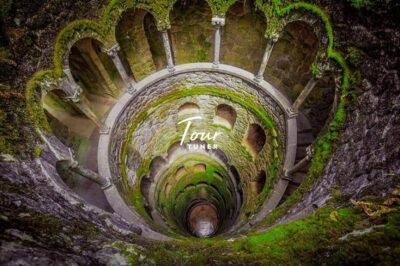 ★ 4.7Sintra, Pena, Regaleira, Cabo da Roca & CascaisTickets from $2319,656 traveller reviews
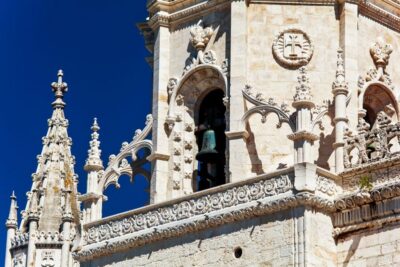 ★ 4.1Jerónimos Monastery Entrance TicketTickets from $2114,164 traveller reviews
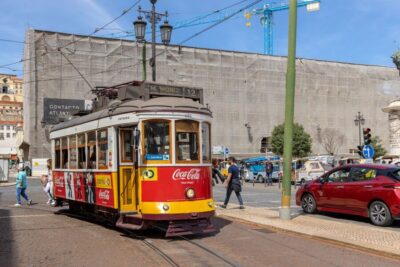 ★ 4.8History, Stories and Lifestyle Walking TourTickets from $2910,902 traveller reviews
 ★ 4.5Sunset Boat Party Cruise with DJ and Open BarTickets from $2710,378 traveller reviews
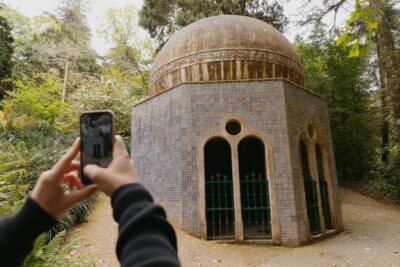 ★ 4.7Pena Palace, Sintra, Cabo da Roca, & Cascais DaytripTickets from $919,981 traveller reviews
 ★ 4.6Oceanário de Lisboa Entrance TicketTickets from $299,943 traveller reviews
 ★ 5.0True 4Hour Private Tuk Tuk Tour: Discover Lisbon with a Local!Tickets from $1088,008 traveller reviews