
Review · FATIMA DAY TRIPS
Private Tour Fátima – Nazaré – Batalha – Óbidos
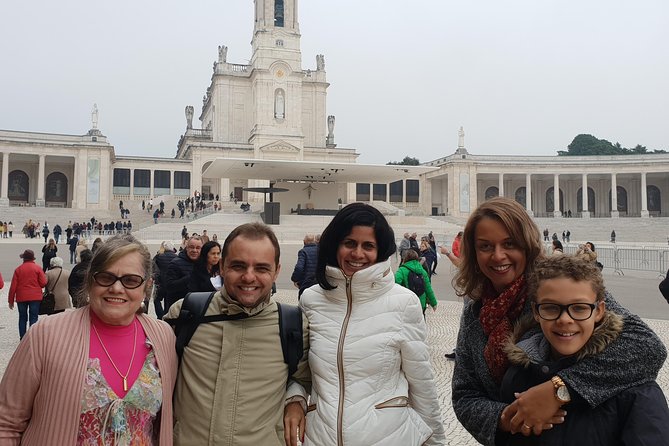
A holy morning plus medieval afternoons sounds like a perfect mix. This private outing links Portugal’s most famous Catholic pilgrimage site, Fátima, with two stand-out stop-and-stroll towns and one UNESCO-recognized monastery. I love that it gives you real time at Fátima (up to four hours) and that the guide work is the heart of the day, with names like George and Jorge Santos showing up in the kind of feedback that says you’ll get context, not just driving.
My other favorite part is the smooth comfort setup: pickup from your hotel area, air-conditioned transport, bottled water, and even USB charging. The one thing to keep in mind is that it’s a full 10-hour day and lunch is not included, so plan for a food break without assuming the tour will handle it.
Key points you’ll care about
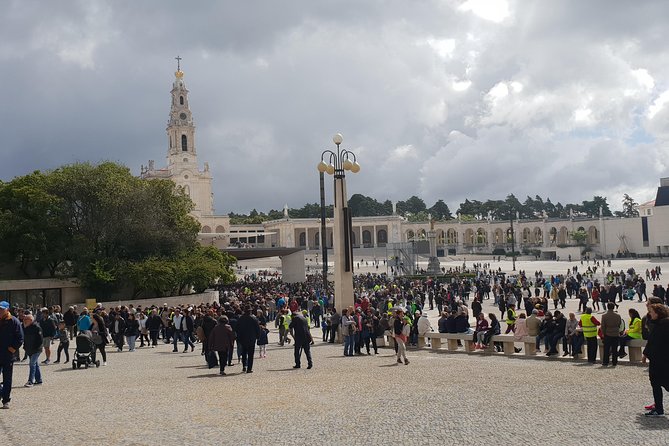
- Fátima first, with up to 4 hours to see the basilica area and the story of the three children
- Private format so the pace can fit your group, not a packed bus rhythm
- Batalha Monastery is 1 hour, and its admission is not included
- Nazaré is built around crafts and design (Artesanato e design de Autor) with a free-entry stop
- Óbidos is all about wandering, including the ginjinha tradition served in a chocolate cup
- Comfort perks like bottled water, free Wi-Fi, and USB ports on board
A private route that connects Fátima, coast culture, and medieval walls
This tour is basically four different Portugal moods in one day. You start with the gravity of Fátima, then shift into stone-and-prayer architecture at Batalha, then head to Nazaré for local craft and design time, and finish in Óbidos, where the medieval village walk is the whole point.
The private side matters more than people think. When a day is long and the places are popular, “flexible” is not a luxury, it’s how you keep the day enjoyable. With a smaller group, you’re less likely to feel rushed at the monastery or lose time trying to find your way around a steep little street in Óbidos.
If your goal is to maximize highlights from Lisbon without spending multiple days on logistics, this is a good fit. You’ll cover a lot, but you’re not just stamping tickets. The stops are chosen to tell different parts of Portugal’s story, from religious pilgrimage to monarchy-era architecture to a village that still trades on its old-town vibe.
You can also read our reviews of more private tours in Lisbon



Price and logistics: what $238.28 per person buys you
At $238.28 per person, this sits in the middle-to-higher range for a Lisbon day trip, but it’s not just “a car and a checklist.” What you’re paying for includes transport in an air-conditioned minivan, travel in a private vehicle, live commentary, and a few practical perks.
Here’s what that means in real life:
- You get pickup at hotels, villas, and apartments, starting at 9:00 am. No separate rendezvous hunt.
- You have bottled water, plus free Wi-Fi and USB sockets for charging your phone.
- It’s offered in English, with live commentary on board.
- You also get a mobile ticket setup.
Two costs to watch closely are tour-lunch and one admission. Lunch is not included. Also, admission for Batalha Monastery is not included, while Fátima and the other listed stops come with free admission tickets based on the tour details.
So the value check is simple: if you want a guided day with comfort features and you don’t want to manage trains, parking, or transfers, the price can make sense fast. If you’re traveling as a very budget-focused solo and you’re comfortable driving yourself, you could find cheaper. But you’re also giving up the convenience and the commentary that helps you read what you’re seeing.
The 9:00 am start that helps you beat the day’s stress
A 9:00 am pickup can sound early until you do the math. Fátima gets serious visitor volume, and you do not want your day plan collapsing into late-afternoon fatigue. The order of stops also helps: you tackle Fátima while you still have time to slow down after you absorb the place.
Dress code is listed as smart casual, which is a helpful clue. For Fátima especially, you’ll want to look prepared for a church environment, not a beach day. Bring layers, too. Portugal weather can swing, and stone buildings can feel cooler even when the afternoon is warm.
One smart move for a long day: eat something small before you go. With lunch not included, you’ll be glad you started with energy. And keep an eye on the time you spend in Óbidos, since it’s an easy place to lose track of minutes while you wander.
Fátima: why the shrine matters more than the crowds
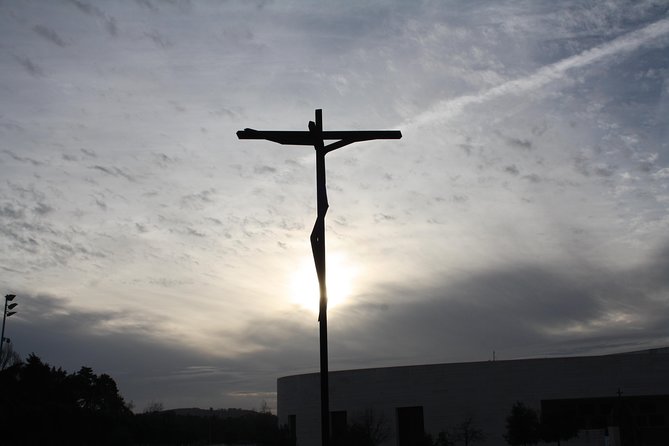
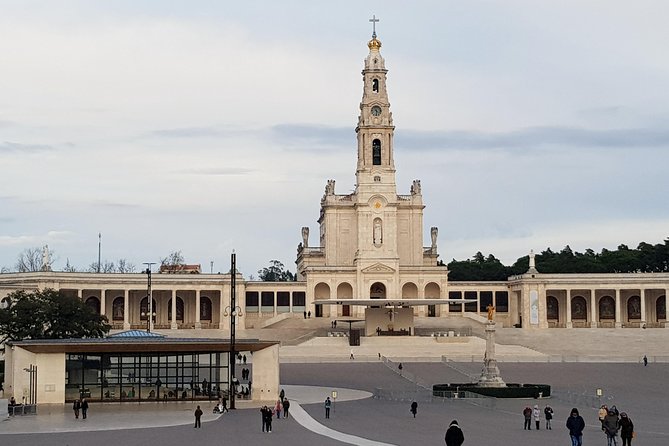
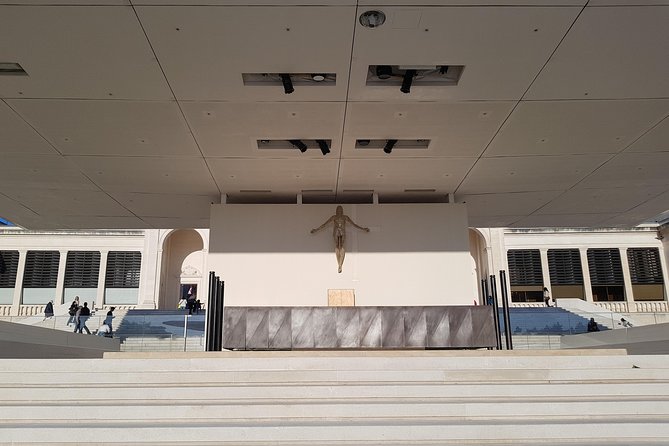
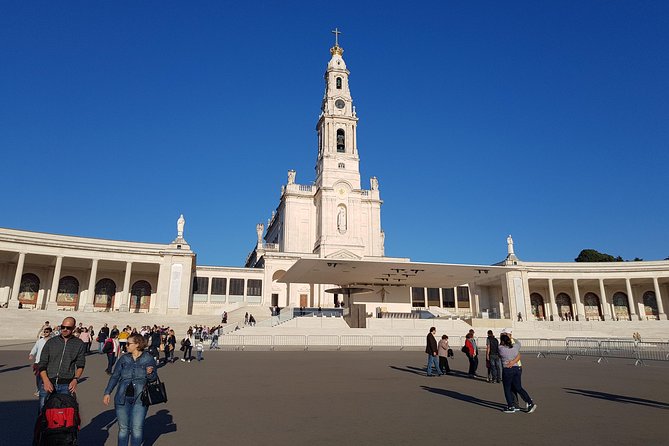
Fátima is not just another church stop. It’s one of the Catholic Church’s most important Marian shrines and the largest international religious tourism destination, with around six million visitors a year. That scale can feel intense, but it also means the sanctuary is set up to hold people who come with different kinds of devotion and curiosity.
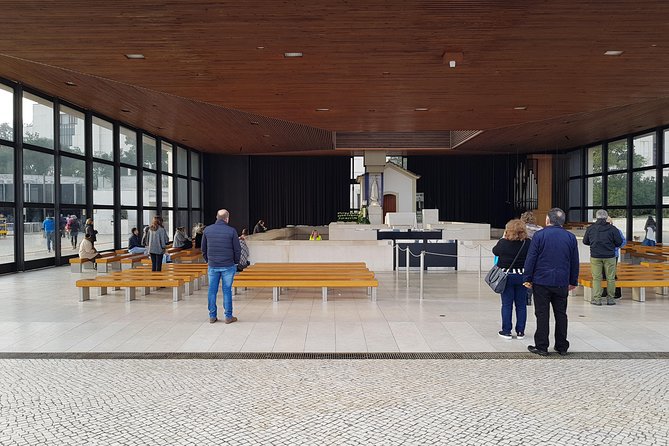
You’ll spend about four hours at the Basilica de Nossa Senhora do Rosario de Fátima area, and admission is listed as free for this stop. The heart of it is the place tied to the 1917 apparitions of Our Lady to three little shepherds: Lúcia dos Santos, Francisco, and Jacinta Marto. The tour also frames the burial site of the three children, which is a key part of how visitors connect the story to the physical location.
Here are the details worth knowing before you arrive, because they change how you look:
- The construction of the sanctuary began in 1919, starting with the Chapel of the Apparitions.
- The shrine has been visited by major popes, including Paul VI (1967), John Paul II (1982, 1991, and 2000), Benedict XVI (2010), and Francisco (2017).
- It was distinguished with three papal gold roses.
A guide with a good sense of story makes all that click. You’re not memorizing facts, you’re understanding why the place is built the way it is and why people come back. If you’re even slightly curious about how pilgrimage sites operate, this is where you’ll “get” it.
Practical note: when a site is that important, the flow of visitors can feel like its own weather. Going in with calm expectations helps. You’ll want comfortable shoes and the patience to move at the pace of the place.
Inside the sanctuary complex: what to focus on during your time
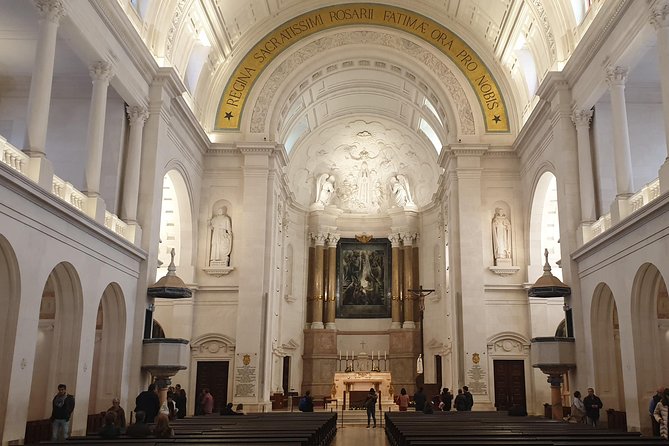
At Fátima, your four hours can be either rewarding or exhausting depending on how you spend it. The tour time is generous, so you’re not stuck doing everything at speed.
Focus on the places that connect the story to the setting:
- The chapel area tied to the apparition memory
- The basilica setting where the devotion takes center stage
- The burial context of Lúcia, Francisco, and Jacinta, since the tour highlights it as part of what you came to see
The key value here is interpretation. The shrine’s importance isn’t just about its size. It’s about how it preserves the memory of the events that led to its foundation, in a space designed for prayer and public gatherings.
One more reason this stop is worth your attention even if you’re not intensely religious: Fátima is also about how Portugal became a destination for millions of visitors with a shared reason to travel. When you understand that, the rest of the day makes more sense. You stop looking at the itinerary and start seeing a theme of Portugal’s identity through faith, architecture, and community.



Batalha Monastery: Gothic and Manueline in one hour
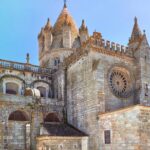
Then you jump from pilgrimage to architecture. Batalha Monastery, officially the Monastery of Santa Maria da Vitória, is usually called the Monastery of Batalha. It was built in 1386 by King João I of Portugal as thanks to the Virgin Mary for the Portuguese victory against Castilian rivals in the battle of Aljubarrota.
This monastery is not a quick photo stop. It took a long time to become what you see today. Construction ran over two centuries until about 1563, across the reigns of multiple Portuguese kings. The Dominican Order of St. Dominic played a role, with friars living there starting in 1388.
The architecture is described as Gothic, and Manueline style is part of the conversation. Either way, the UNESCO recognition is the clue: this is world-heritage-level craft, not a simple historical backdrop. You’ll get about one hour here, and admission is not included according to the tour details.
How to get the most in that time:
- Look for the blend of style cues. Manueline details are often the ones that catch your eye once you slow down.
- Let your guide point out the story behind why it exists, not just what it looks like.
With only one hour, you won’t do deep slow-study mode. But with a good guide, you can still leave feeling like you understand why this place is famous, and why it’s not just another old church.
Nazaré and Artesanato e design de Autor: a calm pause with local flavor
After Batalha, the day shifts again. The Nazaré stop is listed as Artesanato e design de Autor, with about one hour and free admission. That tells you what the tour wants you to do here: browse and connect with Portuguese design and craft rather than rush through another landmark.
This is a nice counterbalance to heavy religious and architectural stops. Instead of concentrating on one building’s story, you get to shift to smaller human-scale details: how objects are made, how local artists express themselves, and how souvenir culture can be more than generic plastic.
Because the tour details don’t mention a specific museum or attraction here, treat this as a browsing window. Walk at an easy pace. If you’re the type who likes to pick up a useful item you actually use later, this is where you’re most likely to find something that feels like it belongs in your life, not just in a drawer.
Óbidos medieval village: the ginjinha ritual and why it’s fun
Finally, Óbidos. This is the kind of place that pulls you into the streets without asking permission. The tour frames the big tradition: you’ll have the chance to drink ginjinha, cherry liqueur, in a chocolate cup. That little ritual is silly in the best way, and it’s a perfect end-of-day treat because it matches the town’s theme.
Óbidos is also a historical timeline you can walk through:
- It was taken to the Moors in 1148
- It received its first charter in 1195 under D. Sancho I
- It became part of the dowry of Portuguese queens, including D. Urraca of Castile, Queen Santa Isabel, D. Filipa de Lencastre, D. Leonor de Aragão, and others
- In 1527, there were 161 inhabitants
Admission is listed as free for this stop, and you’ll have about two hours. Two hours is enough to enjoy the village without feeling trapped. It’s also long enough to do a slow wander, stop for the ginjinha, and still have time to backtrack when you notice a street you missed.
Practical tip: Óbidos is a walking village. Comfortable shoes are more important here than at most stops. Take your time with the lanes and viewpoints, but don’t wait until the last minute for the chocolate cup ritual. The line and the mood can change fast depending on the crowd flow.
The real difference-maker: guides like George and Jorge Santos
The best part of this tour is the human factor. The feedback includes guides George and Jorge Santos, and both names come with the same theme: clear explanations, friendly energy, and a sense of humor that keeps the day from turning into a lecture.
That matters because these stops can feel disconnected if you only treat them as places to visit. A good guide turns them into a connected story:
- Why Fátima became a global pilgrimage magnet
- Why Batalha was built when it was, and what political victory meant at the time
- How craft and design reflects local identity
- Why Óbidos holds onto traditions so tightly
There’s also an important detail from the feedback: the guide George was described as accommodating and friendly when the day ran over the scheduled time. That’s not something you should count on blindly, but it’s a hint that the guiding approach aims to be flexible to your needs.
Still, keep one practical caution in mind: if every stop is a must for you, read your confirmation and confirm the sequence. One disappointment in the feedback was that a stop mentioned in the confirmation did not end up happening during that specific outing. You can reduce the risk by verifying the plan before you go and by having the mindset that timing can shift in a 10-hour day.
What to bring, and how to handle the lunch gap
This is a full day, so you want to travel light but prepared.
From the tour details:
- Lunch is not included
- You’ll have bottled water on board
- You’ll get Wi-Fi and USB charging
- Dress is smart casual
So bring:
- A small bag with a layer for cooler basilica spaces
- Comfortable walking shoes for Óbidos
- A plan for lunch, even if it’s simple. Grab something when you have a chance rather than waiting for the perfect spot.
Also, consider your phone battery and charging needs. With USB ports available, it’s easier to keep maps and photos running without draining power early.
Should you book this Fátima, Nazaré, Batalha, Óbidos private tour?
If you want a one-day highlights plan from Lisbon that actually makes sense thematically, I’d book it. Fátima gives you time to absorb the sanctuary story. Batalha adds UNESCO-level architecture. Nazaré offers a calmer craft/design pause. Óbidos ends with a fun ritual and an easy walking vibe.
Choose this tour if:
- You value a private format and want the pace to feel more personal
- You like guided explanations that add context to what you’re seeing
- You want a lot of variety without managing transit on your own
Skip it or at least double-check details if:
- Lunch is a deal-breaker for you and you hate planning food breaks
- You are strict about every single stop happening exactly as listed, every time, with no timing changes
Overall, the comfort touches and live commentary make the price feel more reasonable than it first appears, and the sequence is built to keep your day moving without turning every stop into a sprint. If that’s your travel style, this is a strong way to experience Portugal beyond Lisbon in a single day.
FAQ
What time does the tour start?
The start time is 9:00 am.
Is hotel pickup included?
Yes. Pickup is offered at the hotel, villas, and apartment.
How long is the private tour?
It runs for about 10 hours.
What stops are included on the route?
The tour includes the Basilica de Nossa Senhora do Rosario de Fatima, Batalha Monastery, Nazaré (Artesanato e design de Autor), and Óbidos village.
Is lunch included in the price?
No. Lunch is not included.
Is admission included at each stop?
Fátima and Óbidos are listed as free admission tickets, Nazaré is also listed as free admission, and Batalha Monastery admission is not included.
More Private Tours in Lisbon


More Tours in Lisbon

More Tour Reviews in Lisbon
Not for you? Here's more nearby things to do in Lisbon we have reviewed









Fatima Day Trips, side by side.
 ★ 4.7From Lisbon: Fátima, Nazaré, Batalha, and Óbidos Guided TourTickets from $473,060 traveller reviews
 ★ 4.7From Lisbon: Fatima Batalha Nazaré & Óbidos Small-Group TourTickets from $792,563 traveller reviews
 ★ 5.0Fatima, Nazare, Obidos 8-People Small Group, Day-Tour from LisbonTickets from $71995 traveller reviews
★ 5.0From Lisbon: Fátima, Nazaré, Batalha and Óbidos Guided TourTickets from $55922 traveller reviews
 ★ 4.8From Lisbon: Fátima, Batalha, Nazaré, and Obidos Tour by VanTickets from $80893 traveller reviews
 ★ 4.7From Lisbon: Fátima, Batalha, Nazaré & Óbidos Full-Day TourTickets from $94881 traveller reviews
 ★ 4.0The Best of the West – Fátima, Nazaré, Óbidos & BatalhaTickets from $92856 traveller reviews
 ★ 4.3From Lisbon: Fátima, Batalha, Nazaré and Óbidos Day TourTickets from $88782 traveller reviews
More useful lists for this tour