
Review · NAZARE & OBIDOS DAY TRIPS
Alcobaça & Óbidos: Self-guided tour
A half day can still feel big here. You get a bus ride out of Lisbon plus smartphone-led exploring inside two very different historic towns, including UNESCO-listed Monastery of Alcobaça. It is a smart setup if you want structure for the travel, then freedom for the wandering.
What I like most is how the day balances guided support and independent pacing. You meet a guide assistant in Lisbon, get your device sorted, then you can choose how long you linger at Óbidos’ walled streets and churches instead of being herded at group speed.
One thing to consider is that you are doing a moderate amount of walking, and the bus has no bathroom onboard. Also, the castle is extra, so check the cost of the Castelo de Óbidos ticket before you count on everything being included.
Key highlights you will actually use

- Smartphone as your guide: interactive directions in Óbidos, plus an info folder and map to help you plan on the fly
- Alcobaça in 1 hour: UNESCO Monastery of Santa Maria de Alcobaça with access to royal tombs, including Inês de Castro
- Medieval Óbidos circuit: Rua Direita and the churches you can pair into a logical walking loop
- Castle views, with an extra ticket: get time on top of the walls, but budget for the Castelo de Óbidos admission
- Small group size: up to 20 travelers, with transport handled by minibus or bus depending on group size
- Local help at the start: a guide assistant sets you up and provides tips so you do not have to figure everything out from scratch
Half-day value: how this day trip makes sense
This is the kind of trip that fits real life. You leave Lisbon at 9:00 am and come back to the same meeting point after about 6 hours, so you are not losing an entire day to logistics. For many people, that is the difference between seeing these places and never getting around to it.
You also get a “split personality” itinerary. First, you do Alcobaça, which is all about a major monument and its royal connections. Then you shift to Óbidos, where the medieval walls and lanes are the whole point, and you control the pace with an interactive smartphone.
And because it is capped at 20 travelers, the day feels manageable. You are not trying to interpret a dense historic town while squeezed shoulder-to-shoulder in a huge group.
You can also read our reviews of more guided tours in Lisbon



Lisbon start point and the moment you switch to self-guided mode
The meeting point is Cityrama Gray Line Portugal, at Alameda Edgar Cardoso, 1070-051 Lisboa. There is no hotel pickup, so you will want to plan how you reach that spot on your own.
Once you are together, the process is simple. You meet the guide assistant, then you familiarize yourself with the interactive device (one smartphone per customer, including children). This matters because a half-day self-guided trip can fall apart if the tech setup eats time, and here that setup is handled for you.
You should also know what kind of help to expect. The guide assistant is there to get you started and give helpful tips, but this is not a full narration-style tour for every moment. The intent is that your device carries the heavier interpretation as you walk.
Alcobaça: the UNESCO monastery you can actually see in limited time
Alcobaça is your first stop, and it is a great choice for a half-day plan. You get about 1 hour here, with free admission for the Royal Monastery of Santa Maria de Alcobaça. Even with that time limit, it is one of those places where the “wow” factor is immediate.
The big date to remember is 1178, when construction began by order of King D. Afonso Henriques. The monks occupied the monastery in 1223, and the complex became one of the largest and best-preserved Cistercian sites. If you like architecture and the feel of religious spaces that shaped a whole region, this is where you get it.
Now for the personal story thread that makes the visit linger. King D. Pedro chose the church of the monastery as the burial site for himself and his beloved, Inês de Castro, whose tombs you can visit. That royal burial choice links Portuguese history to a physical place you can stand in, not just read about on a screen later.
Practical tip: with only an hour, decide before you arrive what you want to prioritize. I would pick the church and the area tied to the tombs, then use the rest of the time for a slower look around the larger complex.
The journey to Óbidos: arriving prepared for medieval walking
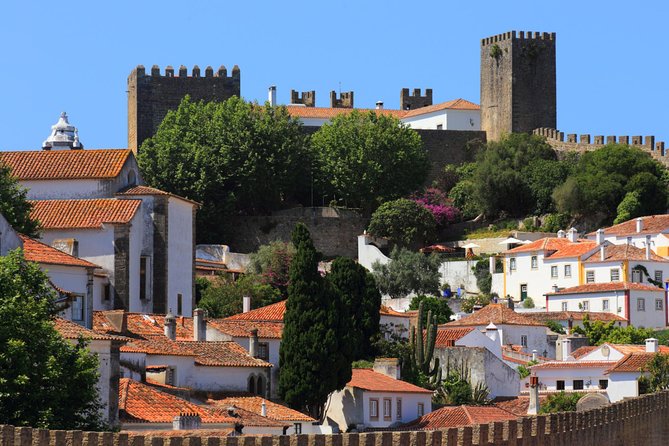
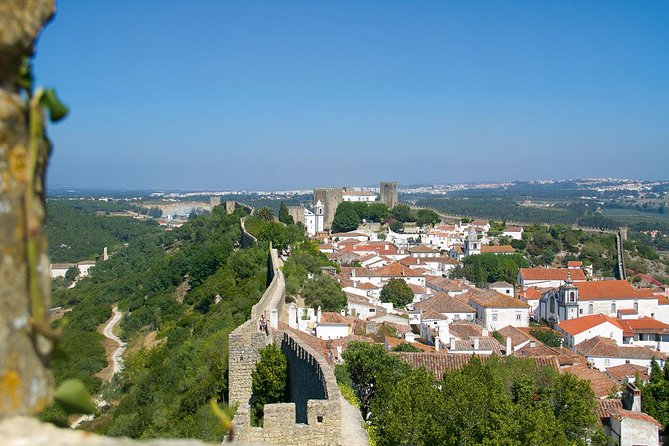
The day flows from Alcobaça into Óbidos, and that transition is part of why this tour works. Óbidos is built for wandering: medieval walls, narrow lanes, and a layout that rewards turning corners without overthinking.
Transport is included both ways, and the ride is handled by minibus or bus depending on group size. Plan for the bus rules too. There is no bathroom onboard, which means you will want to use restrooms before boarding and then think of your first bathroom stop once you’re settled in town.
Dress code is listed as smart casual, so you do not have to dress formally, but you should also wear shoes that handle cobblestones and uneven stone. If you are traveling with lighter footwear, be honest about how much walking you can do comfortably.
Óbidos village history, in the kind of way that helps you notice details
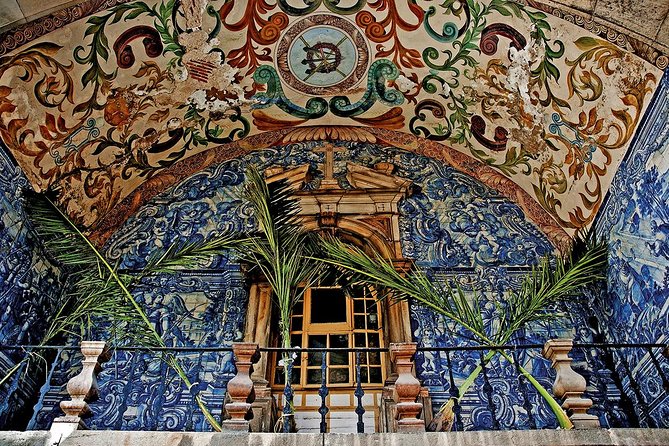
Óbidos is not just picturesque, it is layered. You get around 2 hours in the village area, and the history is not abstract. It starts with the idea that Óbidos may have been founded by the Celts around 308 BC, with later studies linking it to the ancient Roman city of Eburobrittium. After that came different waves of control, including Moors, and then Portuguese reconquest.
In the Portuguese story, Afonso Henriques conquered the village from the Moors. Then, in the 18th century, Óbidos held noble status as a royal summer holiday spot. King John V stayed in Óbidos for eight years, advised by doctors to go bathing in Caldas da Rainha to treat arthritis and obesity.
Why this matters for your visit: when you understand that Óbidos has been important across centuries, you stop treating it like a photo backdrop. You start looking for why the town is shaped the way it is, where the main routes lead, and what would have mattered to people living there long ago.
More Lisbon tours and experiences for the shortlist






Rua Direita: your built-in route for first impressions
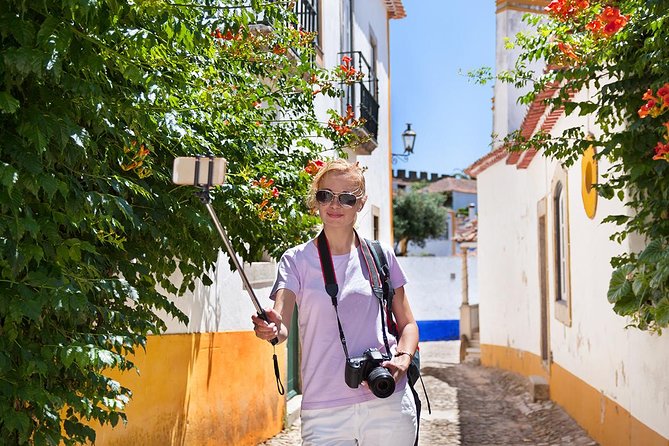
Once you are in the medieval core, your path starts with Rua Direita, the main street. You will move through a kind of living maze of lanes, and the walking time here is about 45 minutes, with free admission.
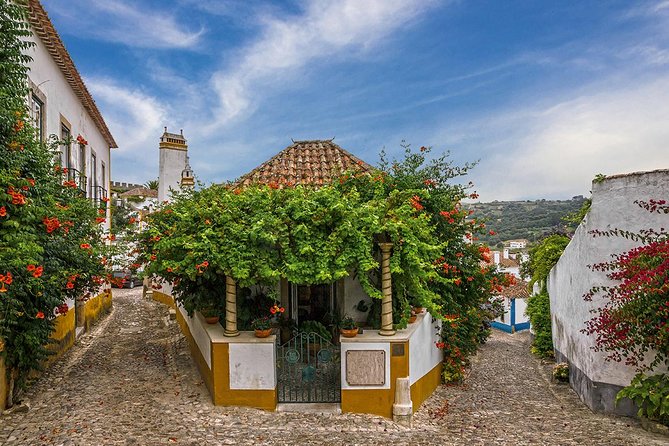
This is the street where the town’s style becomes clear. The route includes Manueline porticos, flowered windows, and smaller broad-like passages that feel made for slow strolls. If you want a simple strategy for exploring without getting lost, Rua Direita is it. You get oriented by the main flow of the town, then you can branch out.
Also, Rua Direita naturally funnels you toward the church area, so it helps you plan your next stop without constantly checking your phone.
Igreja de Santa Maria: the main church, and why it works on a short visit
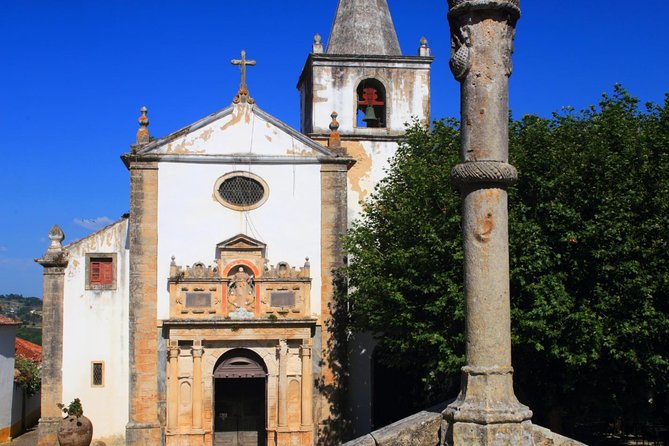
Your tour includes time at Igreja de Santa Maria (also called Igreja Matriz de Óbidos). It is about 45 minutes, and admission is listed as free.
This church is tied to the key period of the town’s Portuguese Christian expansion. It was founded between 1148 and 1185, which is exactly the kind of timeline that makes the walls and street layout feel like part of one continuous historical moment. Even if you are not a church scholar, the founding date gives you a baseline for what you are looking at and why it mattered.
Practical tip: treat this stop as your “anchor.” Once you have seen the main church, you understand the town’s center, and your later time near the castle feels more purposeful, not random.
Castelo de Óbidos: the viewpoints, plus the extra ticket reality
You will get another 45 minutes here at the Castelo de Óbidos, but admission is not included. That is the one fee-related surprise on this otherwise very inclusive day.
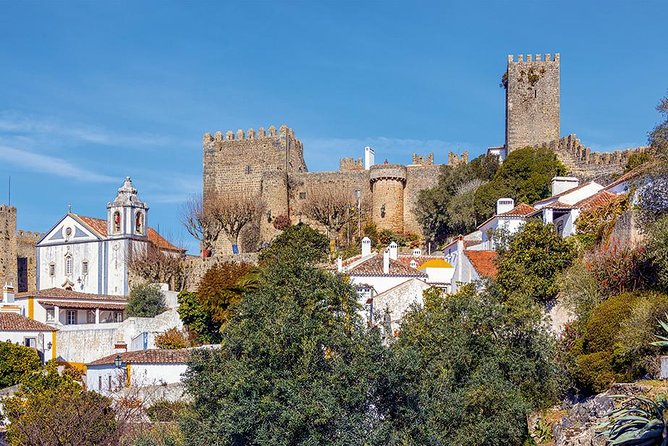
The castle story starts earlier than you might expect. It was originally built by the Arabs on a site that had already been occupied by Lusitanians, Romans, and Visigoths. In the context of Portuguese expansion and reconquest, D. Afonso Henriques took this castle around 1148.
So the top of the hill gives you more than scenery. You are standing at a spot that kept changing hands across major eras, and you can feel that “strategic location” logic when you look out.
What to do with your time: go for viewpoints first, then use any remaining minutes to take in the structure up close. With only 45 minutes, trying to do both equally can leave you rushed.
Church of Saint Peter: a quieter stop with earthquake-era clues
The final church stop is Igreja de São Pedro (Church of Saint Peter). It is about 45 minutes and listed as free.
This one has a layered timeline. It is described as a medieval church, founded in the 17th and 19th centuries, and it was rebuilt after the earthquake of 1755. That detail matters. When a church is rebuilt after a major quake, you can often sense changes in the structure and design choices, even if you do not know the architectural terms.
If you enjoy variety, this stop gives you contrast after the main church. It also makes your day feel more like a thoughtful circuit rather than just hitting the biggest “must-sees.”
The Pousada clue: history converted into a modern stay
One of the highlights mentions the first Pousada ever restored from a historical building. You may notice this theme as you walk around Óbidos, where older structures have been reused in practical ways.
Even if you are not staying overnight, this is the kind of detail that changes how you view the town. It is not only about monuments frozen in time. It is also about how historic places keep being used, adapted, and valued.
Why the included map and info folder matter more than you think
On a self-guided day trip, the biggest risk is decision fatigue. You arrive, you have a phone, but you still have to choose what to do next, and that costs time.
Here, you get both an information folder and a map, plus the smartphone itself acts as your guide. That trio helps you keep moving without feeling like you are speed-running the town.
My advice: use the device for navigation between major points, then use the printed map and folder to set a rough order. That way, you can still improvise, but you are not starting from zero every time you turn a corner.
Price and value: what $50.88 covers, and what it does not
At $50.88 per person, this tour is priced like a structured day that includes real support. You get transport from Lisbon to Óbidos and back, the guide assistant, an interactive smartphone guide (one per customer including kids), plus the info folder and map.
The main “not included” item you should plan for is the Castelo de Óbidos ticket. That is it on the core sightseeing list, since the other major stops listed have free admission.
If you compare this to doing both towns independently with transportation figured out on your own, the value comes from how little you have to coordinate. Someone else handles the travel, you get set up with the device, and you still get to wander where you want once you arrive.
Who this tour fits best, and who might want something else
This is a strong pick if you want freedom with training wheels. You like exploring but you also want help getting started, plus a route that makes sense for a short day.
It is also a good fit for travelers who benefit from a phone-based format. The tour provides an interactive device, and you have help from the guide assistant at the start, which lowers the learning curve.
Two groups should think twice:
- Anyone who hates walking on uneven stone, since the day includes a moderate amount of it and the bus has no bathroom onboard.
- Anyone expecting a nonstop live explanation at every stop. This works best when you are happy letting the smartphone do much of the interpretive talking, while the assistant focuses on setup and tips.
My booking advice: should you choose this one?
If your goal is to see Alcobaça and Óbidos in one day without wrestling with directions, I think this tour is a smart choice. The combination of transport, small group size, and phone-based guidance makes the day feel organized while still letting you linger where it clicks.
I would book it if you enjoy medieval towns, want to walk inside the walled area, and appreciate seeing churches and monuments with some context rather than just checking off photos. I would hold off if you need long time at a single site, or if you are likely to struggle with walking and timing when there is no restroom onboard.
Finally, arrive at the Lisbon meeting point on time. The day depends on everyone being ready to start the device setup, and that is when things run smoothly.
FAQ
How long is the Alcobaça and Óbidos self-guided tour?
The tour lasts about 6 hours.
What time does the tour start in Lisbon?
It starts at 9:00 am.
Is hotel pickup included?
No. There is no hotel pickup and drop-off, and the activity ends back at the meeting point.
Is there a bathroom on the bus?
No, there is no bathroom on board the bus.
Which parts have free admission, and which cost extra?
Alcobaça (Monastery of Alcobaça) is free, Óbidos village areas listed on the route are free, and both Igreja de Santa Maria and Church of Saint Peter are free. The Castelo de Óbidos admission is not included.
How many people are in the group?
The tour has a maximum of 20 travelers. Transport is by minibus or bus depending on group size.
More Guided Tours in Lisbon


More Tours in Lisbon






More Tour Reviews in Lisbon



Not for you? Here's more nearby things to do in Lisbon we have reviewed











Nazare & Obidos Day Trips, side by side.
 ★ 4.5Three Cities in One Day: Porto, Nazare and Obidos from LisbonTickets from $1333,572 traveller reviews
 ★ 4.7From Lisbon: Fátima, Nazaré, Batalha, and Óbidos Guided TourTickets from $473,060 traveller reviews
 ★ 4.7From Lisbon: Fatima Batalha Nazaré & Óbidos Small-Group TourTickets from $792,563 traveller reviews
 ★ 4.5From Lisbon: Day Trip to Porto, Óbidos, and NazaréTickets from $971,311 traveller reviews
 ★ 5.0Fatima, Nazare, Obidos 8-People Small Group, Day-Tour from LisbonTickets from $71995 traveller reviews
★ 5.0From Lisbon: Fátima, Nazaré, Batalha and Óbidos Guided TourTickets from $55922 traveller reviews
 ★ 4.8From Lisbon: Fátima, Batalha, Nazaré, and Obidos Tour by VanTickets from $80893 traveller reviews
 ★ 4.7From Lisbon: Fátima, Batalha, Nazaré & Óbidos Full-Day TourTickets from $94881 traveller reviews
More useful lists for this tour