
Review · LISBON CITY TOURS
Historical Walking Tour of Lisbon
Lisbon has a way of layering eras on top of each other, and this walk keeps them in your hands. You start at Praça Dom Pedro IV and work your way through the city’s main downtown spine, with history that actually explains why the streets look the way they do. I like the small-group size and the energy of the guides, including storytellers like Logan, Nuno, and Bruno who stay sharp, answer questions, and keep the pace friendly.
The second thing I really like is that you get viewpoints and practical next-step advice, not just photos. You finish near Carmo and take in a birds-eye view from Elevador de Santa Justa. One possible drawback: this route takes you over cobblestones and includes uphill sections, so comfy shoes matter a lot.
Key highlights you should care about
- Rossio to Rua Augusta in one flow, so you understand how downtown fits together
- 1755 earthquake context tied to real places, not just dates
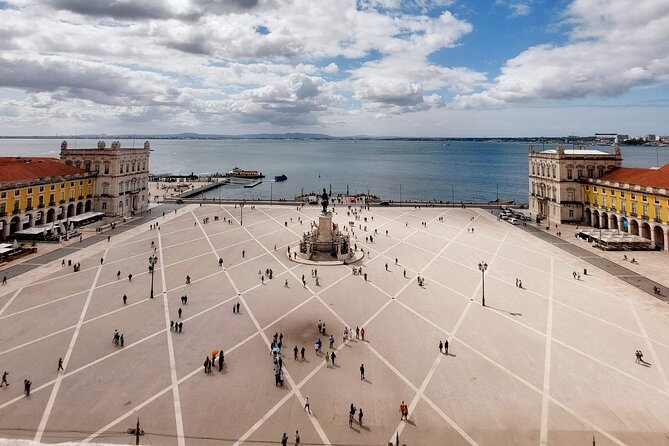
- Age of Discovery stories anchored in Praça do Comércio
- Chiado and literature stops, with a chance to visit Lisbon’s oldest bookshop
- Convento do Carmo and the Carnation Revolution connection, with a clear why-this-matters story
- Elevador de Santa Justa viewpoint, plus guide tips for food and places to go next
A great Lisbon intro route from Rossio to Santa Justa
This is a downtown walking tour built like a story with chapters. You move through major squares and streets where the city’s modern look still shows older decisions, from Enlightenment-era planning to rebuilding after the 1755 earthquake. By the end, you’ll not only recognize landmarks, you’ll understand how Lisbon got to this version of itself.
Expect a route that’s mostly central, walkable, and designed for a first-timer to get bearings fast. The full tour runs about 2 hours 45 minutes, with short stops that keep things moving, but not frantic. And with a maximum of 20 travelers, it usually feels like a guided walk with room to ask questions.
If you only have a day or two and you want Lisbon to click, this kind of route is a smart move. It’s also good if you love history, but you want it tied to places you can point at, not just a lecture.
You can also read our reviews of more walking tours in Lisbon



Stop 1: Praça Dom Pedro IV and 3,000 years in one square
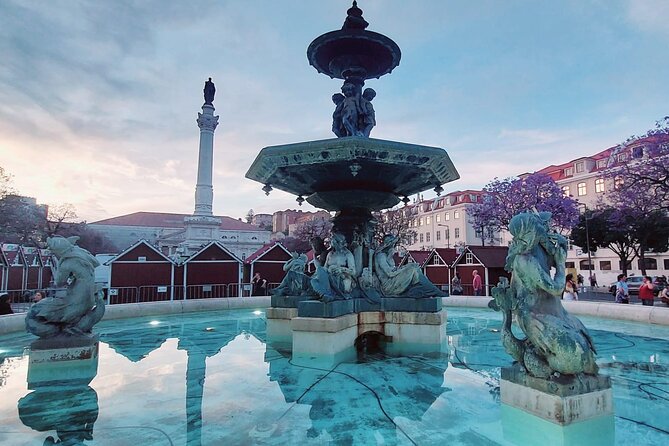
You begin at Rossio Square, officially Praça Dom Pedro IV. The focus here is how Lisbon’s story starts long before the postcard buildings. You’ll learn about some of the first inhabitants who established themselves about 3,000 years ago, while you look at the square’s detailed floorwork.
This is a strong opening because it gives you a mental “before-and-after” for the whole city. Once you’ve got that timeline, the later stops about the earthquake and the rebuild efforts make more sense.
The practical angle: Rossio is a central starting point and easy to find if you’re using public transport. The stop is about 15 minutes, so don’t expect a deep museum-style explanation, but do expect a clear foundation.
Stop 2: Praça da Figueira, the 1755 earthquake, and royal power struggles
Next you head to Praça da Figueira, also called Figueira Square. Here the story turns toward the disaster and the politics surrounding it. You’ll hear about a large public hospital that was destroyed in the 1755 earthquake, and you’ll also learn about critical battles over the crown between Portugal and its neighbors.
This stop matters because it shows how big events change everyday life. A hospital isn’t abstract. It’s where people went for care, and when it disappears, the city’s priorities and structures shift.
Another plus is that the stop stays flexible. You get the core context quickly, then move on while the group energy stays high. Like the first stop, it’s around 15 minutes.
If you’re the kind of traveler who likes to understand “why this happened here,” this square is a good place to slow down for a minute and really listen.
Rua Augusta: the Enlightenment’s design in Lisbon’s main artery
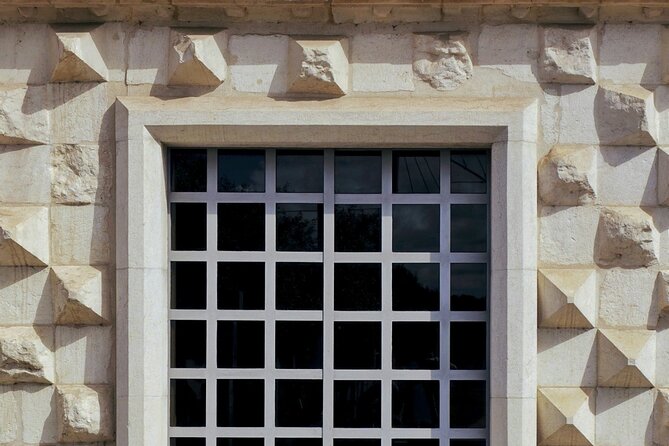
After the squares, you walk downtown along Rua Augusta, Lisbon’s main artery. This section is more than a transfer between sights. The point is architecture and influence, especially how the Age of Enlightenment shaped the street’s look.
Rua Augusta can be busy, especially during peak hours, but that’s part of the experience. It’s a living corridor, so you can feel the difference between a street as design versus a street as function. As you walk, the guide’s explanations help you read the city like an outdoor textbook.
Practical tip: keep an eye on how the crowd flows. If you want photos, give yourself a few chances off to the side rather than trying to stand in the thickest part of the street.
Stop 3: Praça do Comércio and the Age of Discovery rebuild story
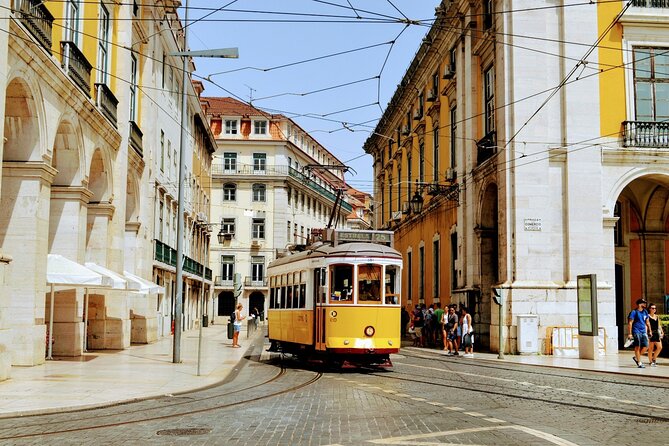
You move to Praça do Comércio (Terreiro do Paço), Lisbon’s main square and a historic entry point for the city for millennia. This is where the tour leans into the bigger forces: the Age of Discovery, the 1755 earthquake, and the rebuild efforts with the heroes who pushed the work forward.
This stop often becomes a turning point for first-timers. It’s one thing to hear the word “earthquake,” but seeing where the city’s public face and entry point would have mattered makes the story feel real. You’ll leave this stop with a better mental map for Lisbon as a port city and a trading hub, not just a hillside town.
The time here is about 30 minutes, so it’s longer than the earlier squares. That extra time is used well, because it gives you a chance to connect multiple eras in one place without rushing.
You can also read our reviews of more historical tours in Lisbon





Stop 4: Chiado, poets, and a shot at Lisbon’s oldest bookshop
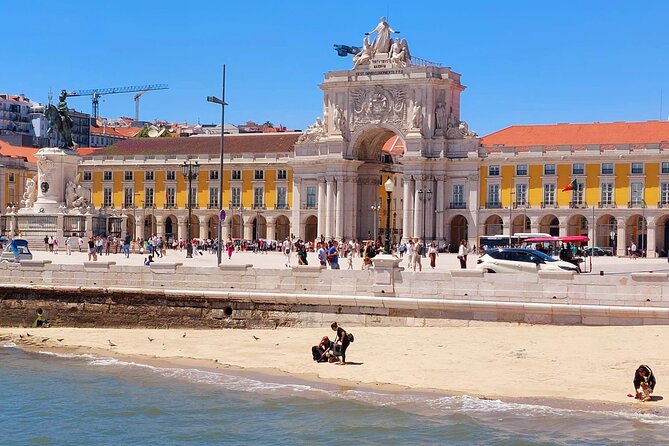
Then you shift into Chiado, Lisbon’s art district. The atmosphere changes here. You get cafes, theaters, bookshops, and that after-dark energy that makes Chiado feel like a living neighborhood rather than a museum district.
The tour focuses on writers and poets tied to the area, and you may also have a chance to visit the oldest bookshop in the world. Even if you do not step inside, the guide’s context helps you see why book culture belongs in the story of this city.
This stop is about 20 minutes, which is perfect if you want the flavor without turning the tour into a long series of line-ups. It also works well if you want to come back later under your own schedule.
One small strategy: take note of any shop signs or streets the guide points out. Chiado is a place where wandering is fun, and your memory will help you pick the right lanes later.
Stop 5: Largo do Carmo and Convento do Carmo’s survival
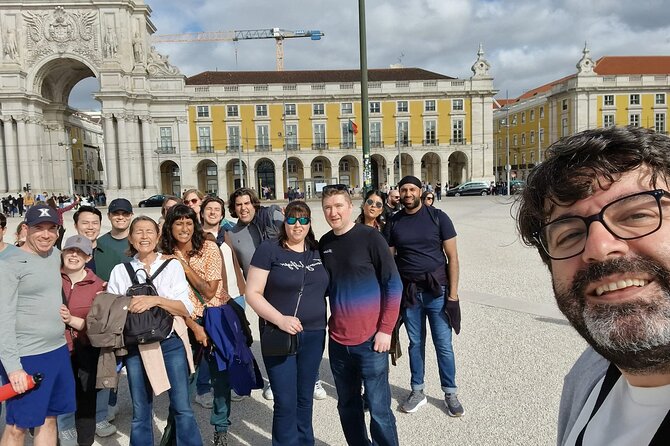
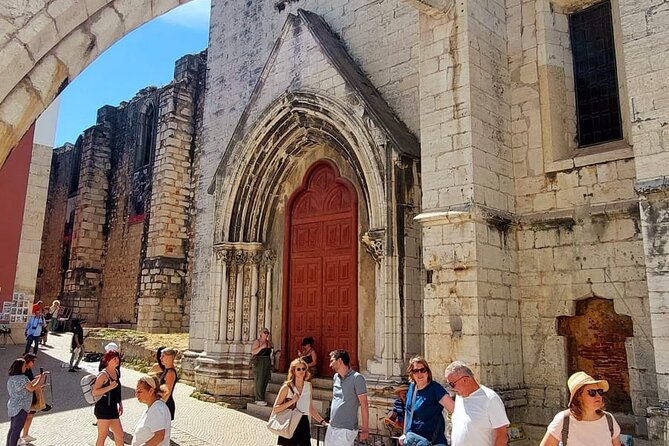
Next comes Largo do Carmo, home to Convento do Carmo, described as the second oldest building in the city. This stop is a direct link to the 1755 earthquake. You’ll hear how the convent barely resisted the devastation, and why that survival matters to Lisbon’s memory.
The story then reaches into the modern era with the 1974 Carnation Revolution. The guide connects it as one of the emblematic social events in Portuguese history and even frames the coup with a lively sense of why people remember it that way. The result is a stop that doesn’t feel stuck in the past.
Time here is about 30 minutes, so you get enough to absorb the weight of what you’re looking at. If you’re tired from walking, this is also a great moment to slow your pace, because the square gives you a place to stand and take in the building.
Stop 6: Elevador de Santa Justa viewpoint plus local food and sights tips
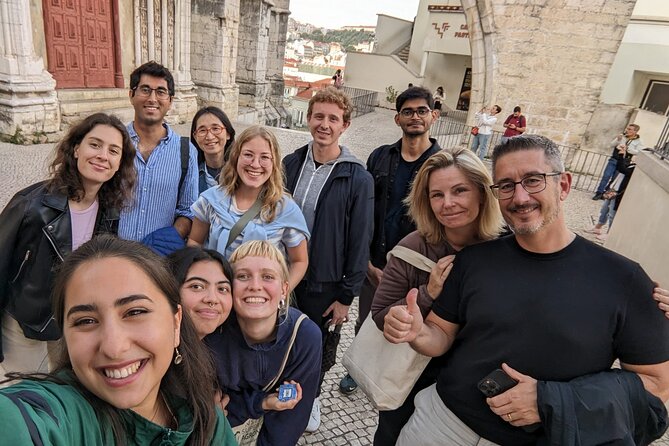
You wrap up with Elevador de Santa Justa, where you get a birds-eye view of downtown Lisbon. This is a smart closing choice. After squares, streets, and historic interiors, you finally get height, perspective, and the chance to see how steep streets and neighborhoods connect.
The guide also uses this time to deliver hand-picked suggestions for making the most of your stay. You’ll get advice that’s practical, especially about local food and other viewpoints. It’s the kind of guidance that helps you spend the rest of your trip wisely instead of guessing.
The tour ends in the upper part of downtown where you’ll enjoy those city views. So plan for the last stretch to be more about perspective and comfort than sprinting for another photo.
Pacing and practicalities: hills, cobblestones, and smart prep
This is a walking tour, so the real variable is your legs. Lisbon’s sidewalks often mean uneven cobblestones, and the route includes hills. The good news is that the tour is designed so most travelers can participate, and the short stop durations help you keep going.
From the guidance style you’ll see in this tour’s history, the group stays friendly and the guides check that everyone can keep up. People also consistently recommend comfy shoes and bringing basics like water and sunscreen, because daylight plus walking time adds up quickly.
A small strategy that helps on this specific route: wear shoes you trust on slick stone. If you’re carrying a bag, keep it light. Chiado and the downtown squares can mean lots of stopping and turning, so you want your hands free.
If you want to go further after the tour, ask the guide how they would navigate hills efficiently. Some guides have pointed people toward using transit options like the metro to move between levels, which can save energy for later sightseeing.
Price and logistics, and why $3.62 can still be a good value
Let’s talk money. The price is listed at $3.62 per person, which is strikingly low for a guided walking tour that runs close to three hours. Even if you don’t convert it mentally into restaurant meals, you should recognize the deal structure: you’re paying for a professional guide, storytelling, and local recommendations, not for lots of paid entrances.
The tour also uses a mobile ticket, and the stops listed are marked as admission ticket free, which helps keep your out-of-pocket costs down. Add in the small-group limit of 20, and you’re getting more personal attention than you would on a giant bus-style city tour.
One more value angle: this route is built as an orientation walk. A good city intro can save you time later. Instead of spending your first day trying to figure out which squares connect to where, you get a line-of-thought explanation for Lisbon’s layout, plus names and themes to guide your independent exploring.
Potential drawback on logistics: it’s point-to-point within downtown, so you’ll end your tour at Carmo area rather than back at the starting square. That’s normal for tours like this, but it means you should plan your next activity with that ending location in mind.
Who should book this Lisbon walking tour, and who might skip it
This fits best if:
- You want a first introduction to Lisbon downtown that links sights to historical turning points like the 1755 earthquake and the Age of Discovery
- You enjoy stories told in a way you can remember, especially if you like sweeping connections across centuries
- You’re a fan of walking through Praça do Comércio, Chiado, and Convento do Carmo, then finishing at a major viewpoint
You might consider another option if:
- You’re sensitive to uneven cobblestones or you prefer very flat walking routes
- You have very limited stamina for hills and stairs near downtown
- You’re visiting only on a day when weather looks uncertain, since the experience notes that it requires good weather
If you like bringing questions, this tour is also a good choice. Guides often respond with more context and additional suggestions, and several of the guide stories you’ll hear associated with this tour highlight a conversational, Q-and-A friendly style.
Should you book this walking tour of Lisbon?
Yes, if you want a guided, story-driven introduction that helps Lisbon make sense fast. The mix of major squares, the way the tour ties the 1755 earthquake and Age of Discovery to specific places, and the ending at Santa Justa viewpoint create a strong first-day experience.
At $3.62, it’s also hard to ignore the value, especially with free-admission stops and a small group size. Just come prepared for walking. Bring water, sunscreen, and shoes with good grip, and give yourself a little extra time to enjoy Chiado on your own right after the tour.
If you’re deciding between random sightseeing and a planned route, this one leans toward the practical side. You get direction plus atmosphere, which is exactly what helps Lisbon stick in your mind.
FAQ
How long is the Historical Walking Tour of Lisbon?
The tour lasts about 2 hours 45 minutes.
Where does the tour start and end?
It starts at Rossio Square, Praça do Rossio (Praça Dom Pedro IV), and it ends at the upper part of downtown near the Carmo Archaeological Museum, Largo do Carmo.
What language is the tour offered in?
The tour is offered in English.
What is included in the tour price?
The price includes a professional, passionate guide and hand-picked suggestions to enjoy Lisbon.
Is admission included for the stops?
The listed stops on the route are marked as admission ticket free.
How big is the group?
The maximum group size is 20 travelers.
What should I bring for a walking tour?
Wear comfortable shoes. The route involves walking on cobblestones and can include uphill sections. Bringing water and sunscreen is also a good idea.
What happens if the weather is poor?
This experience requires good weather. If it’s canceled due to poor weather, you’ll be offered a different date or a full refund.
What is the cancellation policy?
Free cancellation is available up to 24 hours in advance for a full refund. If you cancel less than 24 hours before the start time, the amount paid is not refunded.
More Walking Tours in Lisbon



More Tours in Lisbon





More Tour Reviews in Lisbon



Not for you? Here's more nearby things to do in Lisbon we have reviewed











Lisbon City Tours, side by side.
 ★ 5.0Lisbon City Center Tour – The Unmissable LisbonTickets from $322,234 traveller reviews
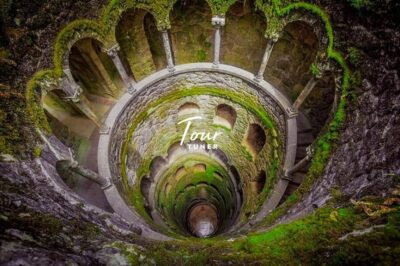 ★ 4.7Sintra, Pena, Regaleira, Cabo da Roca & CascaisTickets from $2319,656 traveller reviews
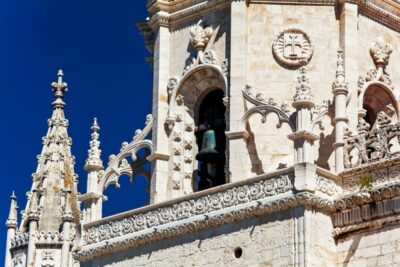 ★ 4.1Jerónimos Monastery Entrance TicketTickets from $2114,164 traveller reviews
 ★ 4.8History, Stories and Lifestyle Walking TourTickets from $2910,902 traveller reviews
 ★ 4.5Sunset Boat Party Cruise with DJ and Open BarTickets from $2710,378 traveller reviews
 ★ 4.7Pena Palace, Sintra, Cabo da Roca, & Cascais DaytripTickets from $919,981 traveller reviews
 ★ 4.6Oceanário de Lisboa Entrance TicketTickets from $299,943 traveller reviews
 ★ 5.0True 4Hour Private Tuk Tuk Tour: Discover Lisbon with a Local!Tickets from $1088,008 traveller reviews
More useful lists for this tour