

Review · LISBON CITY TOURS
Lisbon Highlights Guided Segway Tour
First-time Segway riders usually grin fast. This guided Lisbon highlights tour mixes easy training with a smart route through big squares and riverside viewpoints, so you cover a lot of ground without feeling like you’re sprinting on steep hills. I especially liked the weather-proof touches (ponchos provided) and the fact that the guide work keeps you feeling safe in real city traffic. The main consideration is that you will still feel the pace and the hills, so bring decent footwear if you’re doing the full stretch.
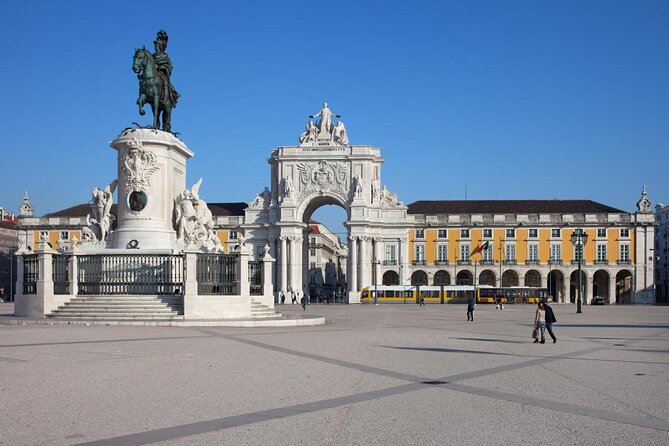
You’ll spend more time looking at Lisbon and less time repositioning on foot. Expect stops like Praça do Comércio, the Arco do Triunfo, the clock at Cais do Sodré, and photo breaks near the Tagus. One drawback to plan for: there’s no public restroom included, so it helps to use one before you start.
Key highlights worth aiming for
- Ponchos in hand means you are not stuck canceling plans if clouds show up
- Safety training first so first-timers can get comfortable before rolling into traffic
- Big-sight route in 1 to 2 hours with multiple photo stops in central Lisbon
- Tagus River views and piers for that classic Lisbon postcard angle
- Great guide care with patient pacing for slower riders and hill changes
- Small group size (max 15) makes it easier to move together smoothly
Lisbon on a Segway: why this route feels efficient
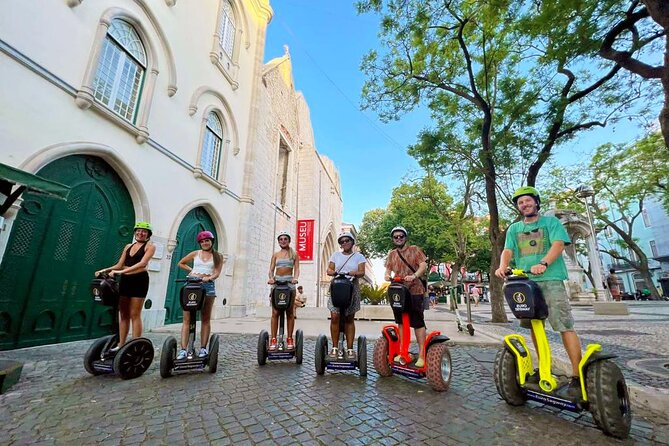
Lisbon is gorgeous, and Lisbon is also hilly. A Segway tour is one of the simplest ways to see the city’s highlights while avoiding that slow, sweaty uphill grind. For a one to two hour outing, it’s a practical format: you get a guided route, you stop for photos, and you cover enough neighborhoods that your day feels “anchored,” not random.
The price is $39.92 per person, and what makes it feel reasonable is the mix of things you get for your time. There’s a supervised start with training, you don’t pay for admissions at the stops, and you’re riding through a dense cluster of central sights. If you only have a short window in Lisbon, this can be a good first-or-second day activity to help you understand where everything sits.
This also helps if your legs need saving. Even with only a few minutes here and there on the route, Lisbon’s elevation changes add up fast when you’re walking. Segways let you keep a steady rhythm so the city comes to you instead of the other way around.
You can also read our reviews of more guided tours in Lisbon



Where the tour begins and what to expect right away
The meeting point is R. do Cais de Santarém 28, 1100-522 Lisboa, Portugal, and the tour ends back at the start. Since you return to the same place, it’s easy to plan a meal afterward in that wider Cais do Sodré or downtown area.
Before you roll, you’ll do a supervised test drive and safety training. Helmets are mandatory, and ponchos are provided if the weather turns. That combination matters. It reduces the “new gear stress” and the “wet clothes panic,” two things that can sour a first Segway experience.
Practical note from real-world riding comfort: one guest mentioned the ride can be tough on the soles of your feet if you’re out longer than an hour. If you know you get foot pain, wear supportive shoes. Avoid brand-new sneakers that haven’t been broken in.
The Segway training: confidence first, speed later
The best Segway tours feel calm at the start. This one follows that style, with a mandatory helmet and a step-by-step practice period. Guides slow things down early so everyone can get the basics before you hit busier streets.
In the ride stories shared by guests, the consistent theme is careful handling in traffic. Guides make sure riders understand uphill and downhill changes, and they watch crossings closely. If you’re nervous, that’s a good sign. Several guests described guides as patient with inexperienced riders, especially when hills make you want to overthink.
You’ll likely hear practical coaching like this: keep your balance, relax your grip, and let the machine do the work. Then it clicks. Once you’re comfortable, the city becomes a moving classroom.
Praça do Comércio: Lisbon’s grand riverfront welcome
Stop 1 is Praça do Comércio, still often called Terreiro do Paço. This square sits downtown by the Tagus River and was once the site of the kings’ palace for about two centuries. Today, it’s partially home to government departments, which gives the place a lived-in, official feel rather than a purely tourist backdrop.
What I like about starting here is the “orientation boost.” Praça do Comércio is big enough that you can quickly map where the river runs, where downtown spreads out, and how the rest of your route fits together. If you want to understand Lisbon’s layout, this first stop does the job.
You also get a wide-open sightline for photos. Even if you’re not a photographer, you’ll appreciate having one clear, iconic starting point before the route tightens into smaller streets and squares.
Arco do Triunfo and the city center core
Next up is the Arco do Triunfo, a triumphal arch completed in 1875. It has sculpted figures and gives views of the city center, which makes it a good “pause and look” moment.
This is also where the tour shifts from riverfront grandeur to central Lisbon density. Expect the guide to point out sight lines and landmarks you would struggle to spot quickly on foot. A Segway makes it easier to stay focused on what you’re seeing instead of wrestling for position in a crowd.
Photo time is usually the main reason to stop here. The arch structure gives you a natural frame for pictures, and the city view behind it helps you connect the monuments to the neighborhoods around them.





Cais do Sodré’s clock: a quirky timekeeping stop
Then you roll toward the Relógio do Cais do Sodré. The story here is wonderfully specific. A guardhouse built in 1914 helped issue the legal time for the city and especially for ships anchored in the Tagus. The mechanical clock was connected directly by electric cable to the Lisbon Astronomical Observatory.
Even if you don’t care about timekeeping details, it’s a great example of how Lisbon mixes daily life with science and maritime logistics. It also breaks up the tour with something different from arches and squares.
This stop tends to feel short, but it’s memorable because it’s so oddly Lisbon. You’ll likely hear the guide explain why it mattered for ships and why such a connection existed.
Cais das Colunas pier: sunset-ready Tagus vibes
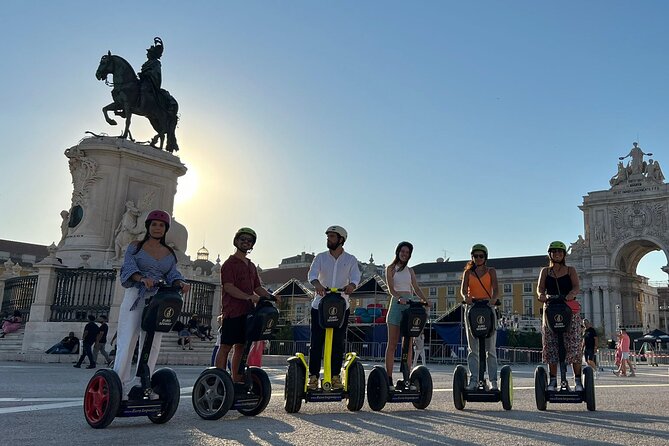
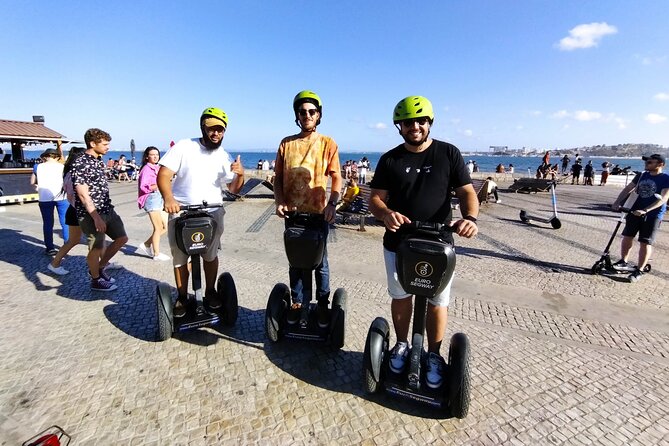
You’ll also stop near the Cais das Colunas pier, an 18th-century pier with two columns flanking marble stairs. If you’re catching the ride later in the day, this is one of the spots where the Tagus turns into that classic warm-light Lisbon look.
This is a good “exhale” stop. After the big square and the monument moments, you get open sky and a smooth visual line along the river. It’s also where the tour becomes more about atmosphere than architecture.
Even on a cloudy day, the river still gives a sense of scale. Lisbon can feel compact until you see it next to the Tagus.
Municipal Square and the Lisbon Pillory details
Municipal Square is tied to local government, since it houses the seat of the Lisbon City Hall and Council. In the center is the Lisbon Pillory, a sculpted stone column with symbolic political, administrative, and judicial significance.
This is one of those stops where a guide’s narration matters. From a distance, it can look like another old stone feature. With context, it becomes a marker of how Lisbon governed and controlled public life.
The stop also works well for photos and quick comprehension. You’ll see the square’s layout and understand why it functioned as a civic centerpiece.
Chiado and Largo do Carmo: shopping streets and monastery ruins
From there, you pass through Chiado, one of Lisbon’s main shopping areas. One of the neat points here is the sense of time. Some stores still carry the look from the 1920s, so it feels less like a generic shopping zone and more like a living district.
Then you reach Largo do Carmo, a charming little square covered in jacaranda trees. It also holds the ruins of the Carmelite Monastery, described as one of the most important squares in the Portuguese Republic history.
This section of the route gives you a contrast: street life and shopping energy on one side, historical ruins and atmosphere on the other. It’s also a good reminder that Lisbon highlights tours work best when they alternate “big monumental moments” with smaller, moodier stops.
Praca Dom Pedro IV (Rossio): central squares, vintage cafés, and the station story
Praca Dom Pedro IV is known as Rossio and is one of Lisbon’s main central squares. Expect fancy shops and quaint cafeterias with a vintage look, which is exactly what you want in a highlights tour. It makes Lisbon feel like a real place, not just a museum.
There’s also a architectural moment linked to a Manueline style building inaugurated in 1891, with romantic architecture and cast-iron techniques. If you’re into design, this part is worth listening to. Manueline details can feel like decoration until you realize they signal national style and craftsmanship.
Rossio is often the “everyone knows this place” stop, but on a Segway you can experience it in context. You’re not just staring at a square. You’re moving through its connections to surrounding streets and viewpoints.
Martim Moniz views: the hill part you actually want
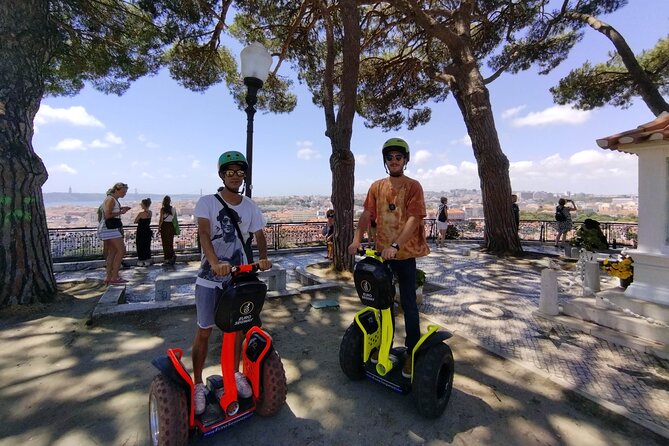
Next is Praca Martim Moniz, a wide square that was once the gates of Lisbon. The big payoff is the view of the Castle of St. George in the distance.
This stop gives you a practical sightseeing benefit. If you plan to visit the castle later, this is a helpful “map in the mind” moment. You can see what direction it sits in and how high it feels.
It also helps you understand why Lisbon is steep. This square sets expectations for the uphill and downhill segments, and it gives you the visual reward that makes those transitions worth it.
Praca da Figueira and rebuilding after 1755
Then you pass by Praca da Figueira, right in the center of Lisbon. The tour notes that it was part of the city reurbanised after the 1755 Lisbon earthquake.
This is not just trivia. It gives you a sense of Lisbon as a city shaped by recovery and reinvention. When you see squares like this after the fact, you understand that the layout you enjoy today was rebuilt with purpose.
If you like walking tours, you’ll recognize the pattern. Lisbon highlights always come with layers. This is one of your “layer reminders” without having to read a book to get it.
Casa dos Bicos and the food street energy
Another stop is linked to a colorful street dedicated to good food and ambiance. It also points out Casa dos Bicos, known as an interesting example of Portuguese architecture from the 15th century.
Even if you do not stop long enough to eat, you’ll feel the energy. Food streets keep a city moving. And Casa dos Bicos is distinctive enough that it adds a memorable visual anchor.
On a Segway, you can catch the look of the building and the vibe of the street without getting stuck at the pace of pedestrians. It’s a nice middle ground between sightseeing and neighborhood texture.
Alfama: optional only for private tours
Alfama is listed as an optional point for private tours only. That means if you’re on a standard group run, you should not assume you’ll roll into Alfama. If Alfama is a must for you, ask before booking, or plan a separate visit.
The value of mentioning it for private tours is obvious. Alfama is one of Lisbon’s most characterful districts, with winding streets and a strong identity. If your schedule allows, pairing this Segway highlights ride with a separate Alfama wander can work very well.
What makes the experience really work: guide style and pace
The biggest praise across guide stories is care. People mention a friendly, professional approach, and they point out that guides make beginners feel comfortable. Names that came up include David, Kimani, Cristiano, Cris, Ian, and Roy. That variety matters because it suggests the experience is built around consistent training and group handling, not just one charismatic guide.
Another common theme is that the guides pay attention while crossing streets and adjusting for hills. One guest specifically described a guide waiting patiently when their pace slowed on an uphill section. That’s how you keep the ride fun instead of stressful.
You also get the benefit of a guided explanation that turns stops into meaning. When you’re moving, it’s easy to lose the story. With these tours, the guide keeps it moving but still connects the landmarks to Lisbon’s history and geography.
And yes, you’ll get photo moments. Even short stops feel worthwhile because the route chooses iconic points with clear visual payoff.
Price and value: is $39.92 a fair deal?
For $39.92, you’re buying time, not just transportation. Here’s why it tends to feel like good value:
- You get safety training and a supervised test drive before the city ride starts
- You hit multiple highlights without spending the whole day repositioning
- Stops are described as free for admissions at the key sights
- You are riding through central Lisbon, which is where walking gets slow and steep
If you are traveling with limited time, the value gets stronger. One to two hours is often the sweet spot for a first pass through Lisbon’s main anchors.
If you have plenty of time and you love slow strolling uphill, you might prefer walking plus public transport. But if you want an efficient “see it all” orientation, this is one of the easiest ways to do it without burning your legs.
Simple tips so you enjoy every minute
A few things will help you get the most from the ride.
Wear comfy, supportive shoes. At least one guest noted the soles can feel the ride if you go longer than an hour. If your feet are sensitive, plan for that.
Dress for weather because Lisbon weather can flip. You’ll have ponchos provided, but you’ll still want layers you can move in.
Arrive a bit early so you’re not rushed during helmet fitting and training. The start sets the mood. If you’re calm and ready, the rest of the tour feels fun.
Lastly, remember there’s no included restroom. That’s not a deal breaker, but it’s a real timing factor if you’re drinking coffee or planning a big sightseeing day.
Should you book this Lisbon Segway highlights tour?
Book it if you want a fun, efficient way to see central Lisbon in about 1 to 2 hours, especially if hills might slow you down. It’s also a great choice if you’re a first-time Segway rider, because the training and the patient guide style are clearly part of the experience.
Skip or rethink it if you hate the idea of standing on a board for the whole ride, or if you need a tour that includes bathroom access. And if Alfama is your top priority, look for a private version or plan a separate Alfama day, since it’s optional only for private tours.
If your goal is highlights with good pacing and lots of photo-ready moments, this one is an easy yes.
More Guided Tours in Lisbon



More Tours in Lisbon





More Tour Reviews in Lisbon
Not for you? Here's more nearby things to do in Lisbon we have reviewed










Lisbon City Tours, side by side.
 ★ 5.0Lisbon City Center Tour – The Unmissable LisbonTickets from $322,234 traveller reviews
 ★ 4.7Sintra, Pena, Regaleira, Cabo da Roca & CascaisTickets from $2319,656 traveller reviews
 ★ 4.1Jerónimos Monastery Entrance TicketTickets from $2114,164 traveller reviews
 ★ 4.8History, Stories and Lifestyle Walking TourTickets from $2910,902 traveller reviews
 ★ 4.5Sunset Boat Party Cruise with DJ and Open BarTickets from $2710,378 traveller reviews
 ★ 4.7Pena Palace, Sintra, Cabo da Roca, & Cascais DaytripTickets from $919,981 traveller reviews
 ★ 4.6Oceanário de Lisboa Entrance TicketTickets from $299,943 traveller reviews
 ★ 5.0True 4Hour Private Tuk Tuk Tour: Discover Lisbon with a Local!Tickets from $1088,008 traveller reviews