
Review · LISBON CITY TOURS
Food & Wine Lisbon Tour with Local Guide in Private Eco Tuk Tuk
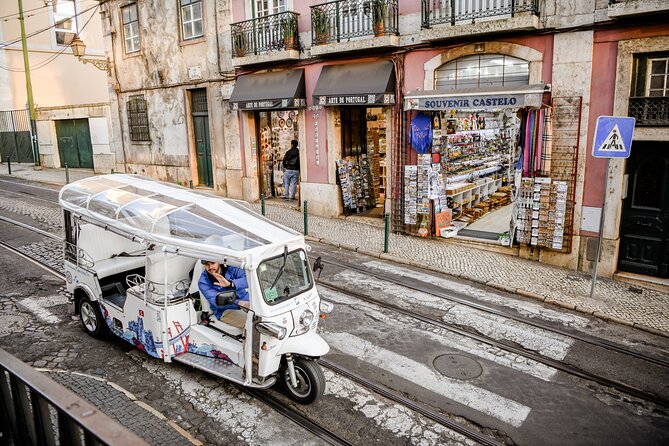
Lisbon hits different when you ride high and slow. This private eco tuk tuk tour threads together food tastings and picture-perfect neighborhoods, with a guide who explains what you are seeing as you roll between viewpoints. Two things I especially like: the personal feel of a private ride and the fact that you do not waste time in lines, since the tour starts with no queues or waiting.
You also get a practical comfort package for a city that can surprise you with sun, wind, or drizzle, thanks to blankets and rain or wind covers in the vehicle. The possible drawback is that the food portion is more snacks and tastings than a full sit-down meal, so if you want a heavy food crawl with deep culinary stops, go in with the right expectations.
Key Highlights You’ll Care About
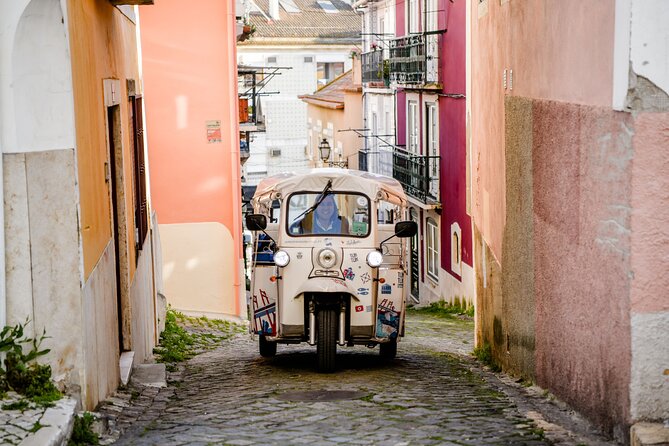
- Private, 100% electric tuk tuk for your group only, with help getting on for seniors
- No queues or waiting at the start, plus preset photo stops along the route
- Wine, cheese, and snack tastings designed around the neighborhoods you pass through
- Vegetarian-friendly adjustments available when you need them
- Historic viewpoint circuit across Baixa, Chiado, Bairro Alto, Alfama, Graça, and the Tagus waterfront
How a Private Electric Tuk Tuk Changes Your Lisbon Day
This tour is built for Lisbon’s street reality. Many of the areas you will see are made of narrow lanes, steep grades, and tight corners where a normal bus feels wrong. A private tuk tuk gives you that slow, flexible pace so you can take in street life while still getting to several major viewpoints in just about 3 hours.
Because it is private, the guide can steer the day around your group. That means you are not stuck listening to a scripted monologue for strangers. I like that the experience is scheduled as a fixed route with photo stops, rather than a messy choose-your-own-adventure. When the route is set, you spend your energy looking and tasting, not negotiating logistics.
You are also starting from the cruise port side, so this works well if you want something structured that still feels local. The vehicle is 100% electric and sustainable, and it comes with protective gear for wind and rain. Lisbon can turn weather into an activity, so having covers ready is genuinely useful.
One note on group size: the tuk tuks are booked privately, and the price is fixed based on how many tuk tuks your group needs, with a legal maximum of 4 passengers per tuk tuk. Translation for you, if you have a larger party, you may need more than one vehicle.
You can also read our reviews of more food & drink experiences in Lisbon


Starting at Lisbon Cruise Port, Jardim do Tabaco Quay, and Getting Moving
If you are doing this from a cruise, the start point is Lisbon Cruise Port, Jardim do Tabaco Quay at Av. Infante Dom Henrique. You are told to stay next to the main building exit door, and not to wander off to another pickup spot. If you think you might be walking a long way from where you dock, give yourself buffer time, because delays over 15 minutes can cause cancellation with no refund.
The good part is that the tour is designed to begin without queues. That matters when your ship day is short and your patience is shorter. The tour also ends back at the meeting point, so you are not left hunting for a return transfer in a neighborhood with confusing turns.
If you are not cruising, pickup at the hotel is not included. Pickup outside the tour route is also not part of the package, so plan to meet at the designated location.
Cais do Sodré and the Ribeira Market Food Pulse
Your route begins in the riverside zone of Cais do Sodré, a neighborhood known for nightlife and restaurant energy. Even if you arrive earlier in the evening, the vibe here makes sense: you are near the Tagus, and you are close to places where locals mix quick meals with long hangs.
From there, you connect to the 19th-century Ribeira Market area. This is described as the food court hub with eclectic stalls, so it is a perfect start for a food-and-wine concept. You get to understand that Portuguese eating is often about variety and sharing, not just one single signature dish.
You will also pass by Pink Street, which is closely associated with bars and fado music. I like how this frames Lisbon’s food culture as something you hear and see, not only something you eat. The tour’s pacing lets you connect the dots between the music scene and the dining scene.
Practical tip: if you are bringing a drink-less mindset, remember that this tour is built for tastings, so you will likely be sampling wine along the way.
Chiado and the Old-City Café Culture
Next up is Chiado, the center-of-it-all zone between Baixa and Bairro Alto. This area is known for elegant architecture, squares, and a creative, intellectual tradition, which you can feel just by looking at the mix of old institutions and modern energy.
The highlights here include Café A Brasileira, Livraria Bertrand (the world’s oldest operating bookstore), and the São Carlos Theater. That set of stops matters for a food and wine tour because it shows a key Lisbon truth: people have been meeting, talking, reading, and eating in these neighborhoods for a very long time.
Chiado also works as a palate cleanser. After the riverside area, you move into a more refined street rhythm. It makes you notice details, like how café culture is built into the city’s layout, not added on as an attraction.
If you want the most from this stop, do not just look straight ahead. Glance up at façades and signage. Those visual cues help the guide explain the neighborhood’s character.
Bairro Alto: Cobblestones, Fado Venues, and Nightlife Streets
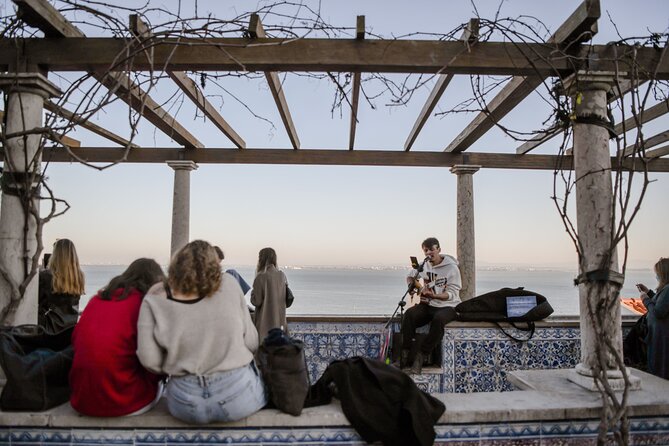
The route continues into Bairro Alto, one of Lisbon’s most famous seven-hill areas. You get the feel of a bohemian, late-night maze: narrow cobblestone lanes, small businesses, and plenty of fado music venues.
The tour gives you the best of Bairro Alto without needing to walk every step. That is a big deal because these streets are not designed for heavy foot traffic. Even if you are comfortable walking, a tuk tuk ride can cut the fatigue so you stay sharp for the tastings.
Daytime Bairro Alto can feel more relaxed, with antique shops and galleries. As the evening approaches, the vibe shifts. On this tour timing is flexible depending on the day and route flow, but you still get the sense of a neighborhood that changes its mood fast.
More Lisbon tours and experiences for the shortlist



Baixa and the Post-1755 Lisbon Rebuild Story
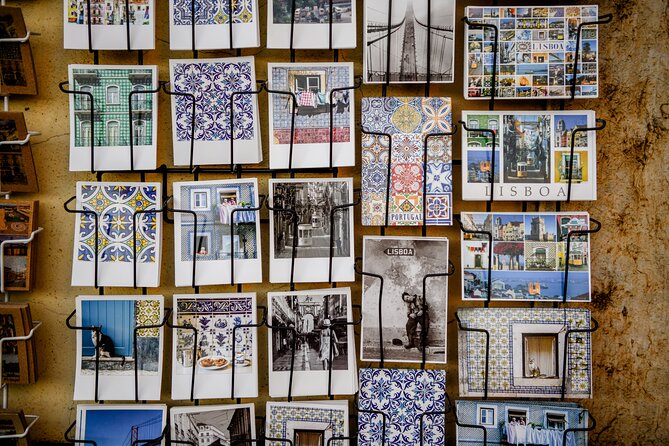
Then you head into Baixa, Lisbon’s downtown architectural heart. Baixa is known for its grand neoclassical buildings and wide boulevards, but the key story here is the rebuilding after the 1755 earthquake. Lisbon rebuilt much of this district into a more organized street grid under the Marquis of Pombal, and the neighborhood still reads like a plan.
This stop is ideal for a guided food tour because it helps you understand why Lisbon looks the way it does today. When people taste and drink in Baixa, they are doing it in a city that went through major transformation.
You also pass or focus on major landmarks like Praça do Comércio and Rossio Square in the broader Baixa orbit, plus the Arco da Rua Augusta and the Santa Justa Lift area. Even if you do not ride the lift, seeing it from the outside helps you place Lisbon’s viewpoint culture into the geography of the city.
One practical thing: Baixa is a strong visual zone. If you like photos, you will likely appreciate the preset photo stops because this area fills your camera fast.
Sé de Lisboa: A Cathedral Stop That Adds Weight to the Day
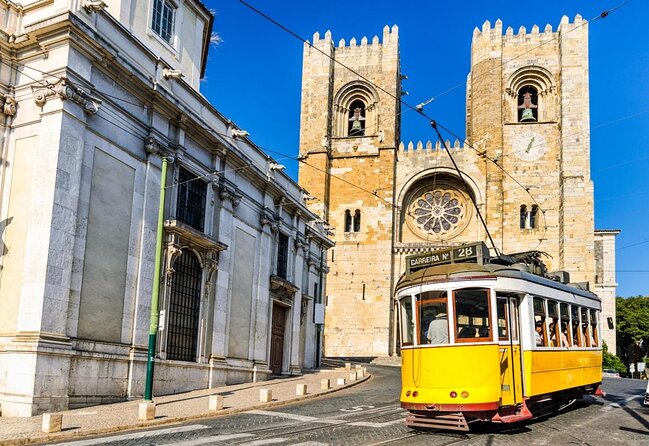
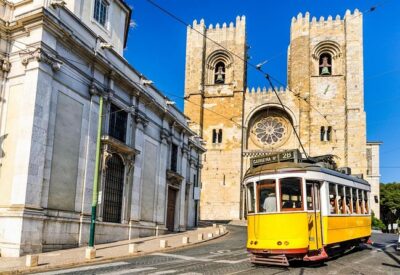
A major historical checkpoint on the route is Sé de Lisboa, also known as the Basilica of Saint Mary Major of Lisbon, and described as the oldest church in Lisbon. Construction began in 1148, soon after Afonso Henriques conquered Lisbon.
I like adding a religious landmark mid-tour because it changes your mental pace. Up to this point you have been moving through neighborhoods and food-adjacent streets. Here you get something more grounded and long-lasting, which makes the viewpoint stops later feel more meaningful.
For photo lovers, this is also a practical pause. Cathedral exteriors give you clean lines and strong shapes, and the guide can point out the context without turning it into a lecture marathon.
Largo das Portas do Sol: Alfama’s Iconic View Point
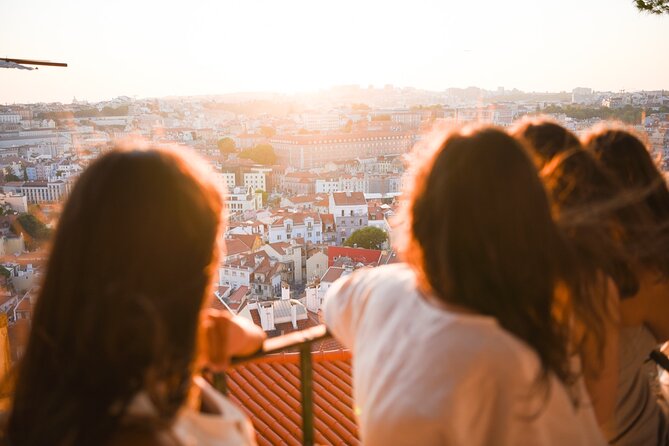
Next comes Largo das Portas do Sol, in the Alfama area, known for one of Lisbon’s most recognizable panoramas. The view can sweep across the Tagus River, the Baixa Pombalina area, and Castelo de São Jorge.
The name Portas do Sol connects to old city walls and an east-facing gate meant to catch the morning sun. That little history is exactly why a viewpoint stop belongs in a food and wine tour. It explains why people have gathered here for generations, not just why it looks pretty.
The square is also described as a good launching spot for exploring Alfama’s narrow streets. On this tour you are seeing it mainly from the route and viewpoint angles, but you still get the sense of how local life is built into the streets around you.
Graça, Miradouro Nossa Senhora do Monte, and the High-View Lisbon Habit
One of the most memorable segments is the viewpoint stop at Miradouro Nossa Senhora do Monte in Graça. The viewpoint includes the Chapel of Nossa Senhora do Monte, and the area is tied to the city’s reconquest era with history going back to the 12th century.
The chapel is also framed as a long-time pilgrimage site dating back to the 13th century, and it mentions renovations after the 1755 earthquake. You can see why this place keeps showing up on Lisbon itineraries. It is not only scenic. It also connects to why Lisbon’s religious and community landmarks show up on hills.
Graça itself is described as traditional, community-focused, and often less touristy than the flashier nearby zones. You get narrow cobbled streets, cafes, and multiple miradouros, the lookout points that define Lisbon’s sightseeing style.
A practical note for you: viewpoints can mean wind. That is where the tour’s blankets and covers can be a real comfort.
São Vicente de Fora and Santa Engrácia: Monastery to Pantheon
The route continues to the Monastery of São Vicente de Fora, located at the intersection of Graça and Alfama. It is called de fora because it stood outside the city walls at a time when that parish was not under the Lisbon bishop’s jurisdiction.
After that, you reach the area connected to the National Pantheon of Portugal, located in the Church of Santa Engrácia. The current building sits on a site that already had a church erected in 1568 by order of Infanta Maria. The space became a pantheon in 1916.
This is a strong pairing for a Lisbon day because it takes you from monastic, historic Lisbon to a national commemorative space without changing neighborhoods. You end up with a cleaner mental map of what each landmark represents.
Chafariz de El-Rei: Lisbon’s Water Story in a Single Stop
Next is the Chafariz de El-Rei, described as the first public ornamental fountain in Lisbon. Built in the 13th century during the reigns of Afonso III and Denis I, it also takes advantage of Alfama’s groundwater.
This fountain stop adds a cool historical detail: water channeling connected to the Age of Discovery, which included supplying ships. The fact that Lisbon’s exploration story ties back to a public fountain is exactly the kind of contextual detail a good guide can give you in a short tour.
The fountain’s present façade is from 1864, and it is described as having a classical architectural composition. It also once had nine gutters reserved for different social groups, which is a reminder that everyday infrastructure is always tied to how a society works.
Praça do Comércio: Tagus Waterfront Power and the Wide-Square Feeling
To wrap up, you land back at Praça do Comércio, still commonly known by its former name, Terreiro do Paço. It sits right by the Tagus and was the palace site for Portuguese kings for about two centuries, before becoming partly occupied by government departments.
It is also described as one of Europe’s largest squares, with about 36,000 m², and bordered by 79 arches. That scale is hard to capture from small photos, so even if you only get a viewpoint from the tuk tuk, the sense of space is part of the experience.
This square gives you a final theme shift from tight streets and hilltop views to open waterfront. For food and wine lovers, it is a satisfying ending because it feels like Lisbon’s public life on full display.
Wine, Cheese, and Snacks: What You Should Expect to Taste
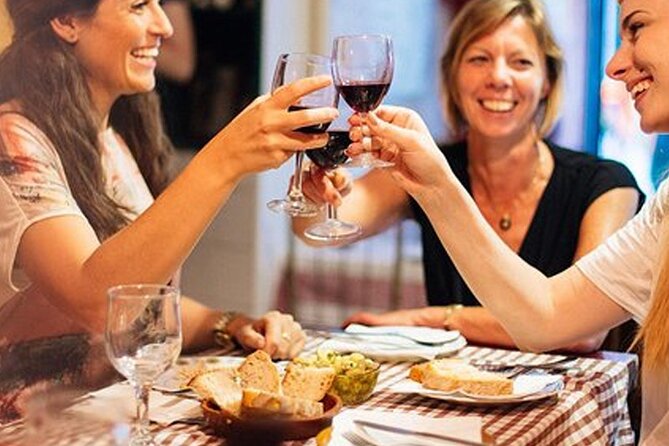
This is the part where you should set expectations based on what is actually included. The tour includes snacks and different tastings of wine, cheeses, and more. There is an option to adapt the menu for vegetarians.
One detailed tasting style that comes up is a lineup like olive oil, bread, and cheeses, paired with wine. In particular, I would expect tastings that could include:
- multiple olive oil types with bread
- cheese samples
- a Portuguese meat item in some cases, such as Iberian pork sausage cooked on site
- wine tastings such as white, red, and sometimes port
If you were hoping for a full set-piece where each stop equals one signature meal, you might feel the food emphasis is lighter than expected. The good news is that the tastings still cover the classic Portuguese flavor range, and the neighborhood context makes the tastings feel less random.
Vegetarian planning: if you are vegetarian, tell the operator in advance that you need the vegetarian adaptation. It is offered, but the exact items can vary, so confirm your preferences when booking.
Value and Price: Is $107.03 a Good Deal?
At $107.03 per person for about 3 hours, the value depends on what you want from the day. This is not priced like a budget walking tour, but it does not pretend to be a long, multi-hour food festival either. For many people, this sits in the sweet spot because you get three things at once:
1) movement through multiple neighborhoods by an efficient electric vehicle
2) a guided narrative tying history, culture, and cuisine together
3) tangible tasting items, including wine and cheese
The private format also matters. You are not sharing your ride with strangers, and you can keep your group together for viewpoints and photo stops.
If you have a small party, private tours can still feel like a fair deal when you compare it to paying for separate tickets, transit time, and the extra stress of trying to coordinate multiple food stops on your own.
Who This Tour Fits Best
This tour makes the most sense if:
- you want a guided food and wine experience, but do not want a full meal schedule
- you like historic neighborhoods and viewpoint stops, especially around Alfama and Graça
- you value comfort and access, since the vehicle supports seniors and avoids long climbs on foot
It is also a strong option for cruise day planning because the route is structured and includes photo stops. If you are traveling with limited time and still want Lisbon’s big visual hits, this delivers.
If you are a hardcore foodie who wants heavy culinary craft at each stop, you may find yourself wanting more. In that case, treat this as a tasting-and-view tour rather than a full-on food mission.
Final Verdict: Should You Book It?
I think you should book this tour if you want Lisbon in one smooth, private package: viewpoints, landmark neighborhoods, and tastings that fit the ride. The fact that the tuk tuk is 100% electric, the guide support is emphasized, and the route is set up to avoid early waiting makes it feel efficient without feeling rushed.
I would skip it or pair it with an extra plan if your top priority is a meal-focused food crawl with very specific dishes. The food is there, but it is more tasting-based than dinner-level. And if you love the social, cozy feel of a guide, look for a guide like Arthur, who is repeatedly praised for making the experience feel special.
If that sounds like your kind of Lisbon day, this private eco tuk tuk tour is a smart, comfortable way to get your bearings fast and taste the city while you do.
FAQ
How long is the Lisbon Food and Wine tour?
It runs for about 3 hours (approx.).
Is this a private tour?
Yes, it is private, and only your group participates.
Does the tour include food and wine tastings?
Yes. The tour includes snacks and different tastings such as wine and cheeses.
Can the tastings be adapted for vegetarians?
Yes, the menu can be adapted to vegetarians.
Where is the meeting point for the tour?
The meeting point is Lisbon Cruise Port, Jardim do Tabaco Quay, at Av. Infante Dom Henrique, 1100-651 Lisboa. You should stay next to the main building exit door and not leave the terminal.
Is pickup from a hotel included?
No. Pick-up and drop-off at the hotel is not included.
What happens if I am late to the tour?
If you are delayed by more than 15 minutes, the activity will be cancelled and the amount paid will not be refunded.
More Food & Drink Experiences in Lisbon
More Tours in Lisbon



More Tour Reviews in Lisbon

Not for you? Here's more nearby things to do in Lisbon we have reviewed






Lisbon City Tours, side by side.
 ★ 5.0Lisbon City Center Tour – The Unmissable LisbonTickets from $322,234 traveller reviews
 ★ 4.7Sintra, Pena, Regaleira, Cabo da Roca & CascaisTickets from $2319,656 traveller reviews
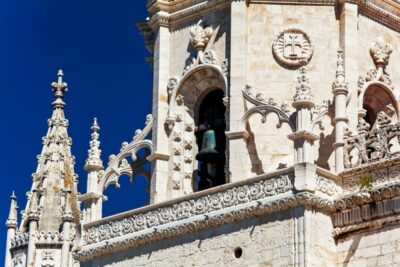 ★ 4.1Jerónimos Monastery Entrance TicketTickets from $2114,164 traveller reviews
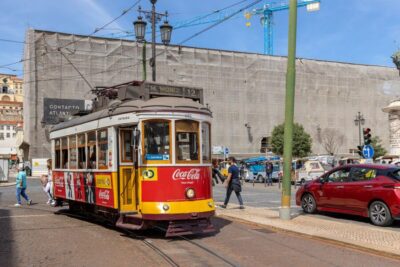 ★ 4.8History, Stories and Lifestyle Walking TourTickets from $2910,902 traveller reviews
 ★ 4.5Sunset Boat Party Cruise with DJ and Open BarTickets from $2710,378 traveller reviews
 ★ 4.7Pena Palace, Sintra, Cabo da Roca, & Cascais DaytripTickets from $919,981 traveller reviews
 ★ 4.6Oceanário de Lisboa Entrance TicketTickets from $299,943 traveller reviews
 ★ 5.0True 4Hour Private Tuk Tuk Tour: Discover Lisbon with a Local!Tickets from $1088,008 traveller reviews
More useful lists for this tour