

Review · LISBON CITY TOURS
Lisbon: Baixa Chiado Quarter Walking Tour
Lisbon’s story starts at ground level. This Baixa-Chiado walk strings together Praça do Comércio, Rossio, and elevator viewpoints, plus a free Vox City map for smart, on-your-own follow ups. Baixa-Chiado is the heart of the city, and the route helps you understand how Lisbon’s hills connect to its busy center. Vox City map included.
I really like how the tour uses big, famous stops as anchors, then fills in the details that make them make sense. The Santa Justa and Gloria elevator area is a great example, because you see the viewpoints that link Bairro Alto with the downtown grid. In one guide example, a team member named Barbara was praised for clear, friendly explanations that kept the group engaged.
One possible drawback to keep in mind is timing. While it’s listed as about 2 hours, one account describes the tour running long, and confusion when pace-related changes were mentioned mid-walk. If you’re tight on time, leave a buffer after the tour.
Key highlights worth planning around
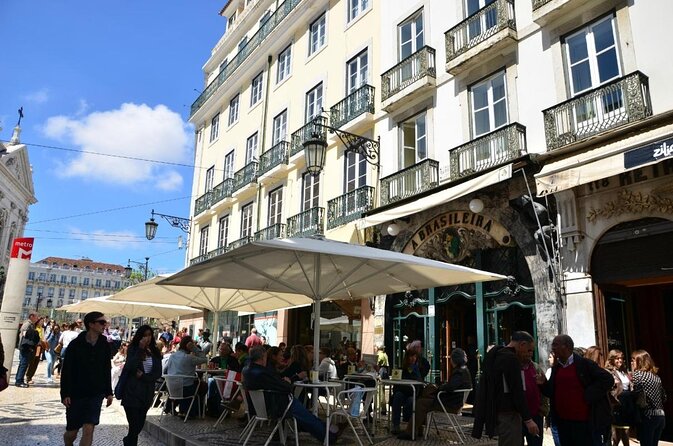
- Vox City app included with a Lisbon map and multiple self-guided walking options
- Elevator views built into the route connecting downtown to the Bairro Alto hills
- Landmarks tied to the 1755 earthquake including Carmo Convent ruins and the rebuilding plan
- Bertrand Bookstore stop at the long-running location first opened in 1732
- Chiado and Camões Square culture with traditional paving and the Camões Monument
- São Pedro de Alcântara viewpoint plus classic tram sightings on the walk
Why this Baixa-Chiado route feels efficient
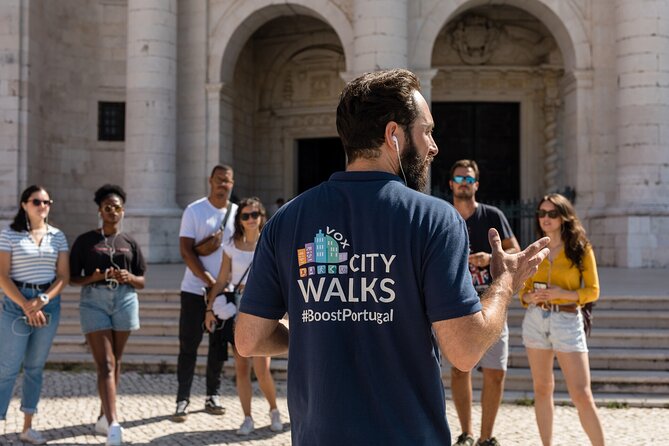
A lot of Lisbon walking tours cover the same postcard spots and then rush. This one works because it’s built around how downtown Lisbon actually functions: a flatter grid by the river that rises quickly once you move toward Chiado and Bairro Alto.
You’ll start at R. dos Douradores 16 and end back at the same meeting point, which is a simple win for planning. With a group capped at 25 travelers, you’re less likely to get lost in a crowd, and the guide can usually keep everyone moving at a livable pace.
The “value” here is not just that you’ll see famous places. It’s that you’ll walk through the layers that explain Lisbon: pre-earthquake rhythms, the 1755 shock, and the planned rebuilding. Even when you’re just glancing at a façade, the story behind it helps you read the street better.
You can also read our reviews of more walking tours in Lisbon



Entering the route at Rua dos Douradores
Before you even hit the first major landmark, you get a sense that this is a downtown-focused tour. Rua dos Douradores is in the Baixa area, so you begin near the center of the shopping and banking district that stretches from the riverfront up toward Avenida da Liberdade.
That matters because Lisbon’s hills can drain your legs fast. Starting in the Baixa helps you get comfortable with the terrain before the route moves you toward viewpoint territory.
And because the tour includes a mobile ticket and you’ll download the Vox City app, you’ll have a backup plan if you want to keep wandering after the guided portion ends. You do not need to line up another day just to find your next streets.
Praça do Comércio and the Augusta Street Arch: symbols you can read

The first real “wow” moment is the Augusta Street Arch, often treated as a grand entrance tied to Portugal’s history and symbolism. What makes it a smart stop is that it sits in a big, open plaza area, so it’s easy to take in the details without constantly weaving through narrow sidewalks.
Right after that, you hit Lisbon City Hall, completed in 1880 in a neoclassical style. Architect Domingos Parente da Silva built it after a long 15-year construction. Even if you’re not a building-nerd, this stop helps you understand Lisbon’s shift toward a more formal public-life downtown after the earthquake era.
Practical note: plazas can get windy. Bring a light layer, especially in shoulder seasons.
Bertrand Bookstore and Camões Square: culture stops that last

One of the most satisfying segments is the Bertrand Bookstore stop. You’re not just seeing a shop sign. This is described as the oldest and longest operating bookstore in the world, founded in 1732 by Pierre Bertrand, and serving the Chiado neighborhood in its original location since then.
That kind of longevity changes how you look at a place. You stop thinking of it as a tourist photo point and start seeing it as part of the neighborhood’s daily memory.
Then you move into Luís de Camões Square, a calmer open space with trees and stone benches. At the center is the Camões Monument, a bronze statue of the poet the plaza is named for. The traditional Portuguese paving and the open-air layout make this a good “reset” moment inside a walking tour.
If you like places with continuity, these are the kinds of stops you’ll remember later, because they’re not just monuments. They’re working cultural anchors.
Santa Justa and the elevator connection to hills
Lisbon loves an elevator story, and this tour highlights that in a smart way. You’ll see the glory of the Santa Justa Elevator and the related elevator panorama points that connect downtown to the hills.
There’s also a built-in explanation of how the Santa Justa got its start. It was opened in 1902, and the engineer was inspired by Paris’s Eiffel Tower model. Early operation used a steam engine elevator system, then later switched to an electrical motor.
That historical detail matters because it turns a photo stop into a “how Lisbon solved a problem” story. Lisbon has steep ridges. Elevators and funicular railways are not extras, they are part of the city’s logic.
Important for your planning: the tour does not include entry to attractions. So you’ll likely get the exterior and viewpoint experience as part of the route, not a guaranteed ride inside. If you want the full elevator experience, budget separately.




Baixa Pombalina: the grid, the rebuilding, and why you feel it
Another standout stop is the Baixa Pombalina area. This is where you see the planned shopping and banking district stretching from the riverfront toward Avenida da Liberdade.
The tour frames it around the rebuilding after the 1755 earthquake, connected to Marquês de Pombal. When you walk this part, you can feel the logic: streets designed to work as a system, not just random lanes. Even if you never read a historical map, the street layout gives you the answer.
This is also where you’ll want to keep your eyes up. Lisbon is not only about “walk and look.” It’s about watching how buildings face the street and how the open areas create light and airflow in dense neighborhoods.
Bairro Alto without the chaos: streets, art, and tascas
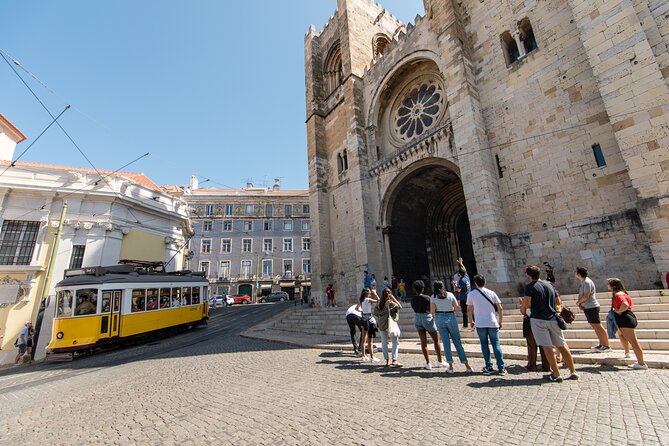
When the tour moves into the Bairro Alto side of the world, it shifts in tone. The route points out the streets that are linked with cultural activities, workshops, and boutiques, plus street art mixed with older architecture.
This is the kind of stop that works best if you don’t try to do everything. Let yourself slow down for a minute. Look at how the art sits next to older stonework. That contrast is part of Lisbon’s personality.
The tour also mentions tascas, family-owned taverns. Even if you’re walking during daytime, it helps to know that at night these narrow lanes become social stages. If you’re deciding whether to come back after the walk, this section gives you the cue.
Bica elevator: a steep ride you can appreciate from the street

You’ll also encounter the Bica elevator, described as an electrified funicular that winds up steep ridges. The tour notes that some stretches reach around 12 degrees of inclination.
Even if you never ride it, you’ll get the “why” behind the structure. This is Lisbon adapting to slope, again and again. It’s a city where transportation is also scenery.
If you’re sensitive to steep walks, pace yourself here. The funicular is not a small detail, it’s part of what makes Lisbon’s neighborhoods feel connected even when they are dramatically raised above each other.
Carmo Convent ruins: Lisbon’s earthquake memory in stone
One of the most emotionally grounded stops is the Carmo Convent. The tour frames it as a site devastated by the 1755 earthquake, tied to a Carmelite congregation. What remains is the roofless shell, stone arches and walls with open sky.
This stop hits differently because it doesn’t pretend the past was neat. It’s not a fully restored landmark built for smooth sightseeing. It’s a scar you can walk up to.
Practical tip: take a couple of quiet minutes here. The surrounding area can feel lively, but the convent ruins are a natural place to slow down and read the texture of the past.
Rossio Square and Queen Maria II National Theatre: public life on one stage
The route heads to Rossio Square, and it gives Rossio a bigger backstory than most walking tours. The area goes back to the 13th century, and it was once accessible to people regardless of social rank. Rossio hosted bullfights, public shows, and royal declarations.
Then the tour connects Rossio to darker Inquisition-era public spectacles, including executions. It’s heavy context, but it helps you understand why this central square feels like a main civic room rather than just a market square.
Near here, you also visit the Queen Maria II National Theatre, said to be one of Portugal’s most prestigious historical venues. It’s described as built in 1450, and historically it served as a headquarters for the Portuguese Inquisition and lodging for foreign noblemen.
If you’re wondering why a theatre can feel like it carries extra weight, this stop answers that.
São Pedro de Alcântara viewpoints: seeing the city’s shape
Lisbon is a city of sightlines, and this tour builds in viewpoint time, including São Pedro de Alcântara. This part is valuable because it gives you a “map in your head.”
Once you look out from a viewpoint, the rest of the walking route starts making more sense. You understand where the downtown grid ends and the hills begin. And you can gauge where you might want to return later with your own time and pace.
If your legs get tired, this is the moment to lean into it. Take in the view, then continue on foot with a calmer heart.
Trinity Theatre and a Jesuit-run church you should not rush
The itinerary includes a stop in Chiado at one of the oldest theatres still open, built in the mid-19th century. It’s the kind of building that looks grand even when you’re just passing, but it becomes more interesting when you know it’s still operating.
The tour also notes an early Catholic church in Portugal run by Jesuits, connected to education. The key takeaway is that this stop isn’t only about architecture. It’s about how institutions shaped Lisbon, long before modern tourism did.
Since the tour does not include attraction entry, you may see these buildings from the street. Still, taking time to notice the façade details can make these quick stops feel richer, without needing ticket lines.
Price and logistics: $107 for two hours, what’s the value?
At $107 for about 2 hours, you’re paying for guided storytelling plus the included Vox City app map and multiple self-guided options. You’re also getting a route that links several major neighborhoods quickly, rather than you assembling it yourself.
Where the math gets tricky is attractions. The tour does not include entry to attractions. Since it highlights major elevator landmarks and major theatres, you might still want to pay for at least one ride or interior visit depending on your interests and time.
So I think the value works best if:
- you want an organized orientation walk that explains what you’re seeing
- you like culture stories, not just “take a photo, move on”
- you’ll actually use the Vox City app afterward for extra walking days
It works less well if:
- you expect ticketed access to the elevator interiors
- you need an extremely strict schedule with no drift
- you prefer self-guided tours only
One more logistics point: if you’re very time-sensitive, build a cushion after the tour ends. Walking tours can run long if the group is moving slower, stopping for photos, or asking questions.
Who should book this walking tour
This is a great fit if you want a downtown-centric introduction to Lisbon that doesn’t skip the important context. You’ll enjoy it most if you like walking, city structure, and the “why” behind famous places.
It’s also a solid choice for couples and small groups, because the route makes sense and the group size is capped. And it’s designed for most travelers to participate, with service animals allowed.
If you struggle with steep terrain, take your time during any uphill moments, and plan to use viewpoints as your recovery points. Lisbon’s slopes are real, and a tour like this can be as much about pacing as it is about sightseeing.
Should you book this Lisbon Baixa-Chiado walking tour?
Yes, if you want a well-connected introduction to Lisbon’s core neighborhoods, with elevator viewpoints, Rossio’s civic stories, and the Bertrand Bookstore stop that actually has something to say.
I’d be cautious if you are on a tight schedule, because the experience is described as about 2 hours but pacing can drift. Also be sure you’re not assuming entry into the attractions, since tickets and entry are not included.
If you want a guided route that helps you understand Baixa, Chiado, and the hills above them, this one is worth booking, especially with the included Vox City app to extend your walk beyond the 2-hour window.
FAQ
How long is the Lisbon Baixa-Chiado walking tour?
The tour lasts about 2 hours.
Where does the tour start and end?
It starts at R. dos Douradores 16, 1100-161 Lisboa, Portugal, and it ends back at the same meeting point.
What is included in the price?
The tour includes the Downtown, Baixa-Chiado Walking Tour, a free Vox City sightseeing app with multiple self-guided walking tours, and an evening walking tour only available in high season.
Is public transportation included?
No. Public transportation tickets are not included.
Are entry tickets to attractions included?
No. Entry to attractions is not included.
What about the Santa Justa Elevator or other landmark visits?
You will see and learn about major landmarks as part of the route, but entry to attractions is not included.
Is the Vox City app really included?
Yes. Downloading the Vox City app with the map of Lisbon is included in the price.
More Walking Tours in Lisbon



More Tours in Lisbon




More Tour Reviews in Lisbon
Not for you? Here's more nearby things to do in Lisbon we have reviewed












Lisbon City Tours, side by side.
 ★ 5.0Lisbon City Center Tour – The Unmissable LisbonTickets from $322,234 traveller reviews
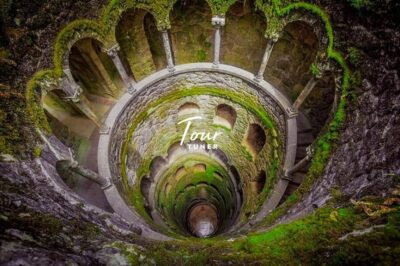 ★ 4.7Sintra, Pena, Regaleira, Cabo da Roca & CascaisTickets from $2319,656 traveller reviews
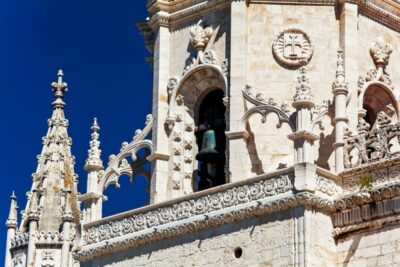 ★ 4.1Jerónimos Monastery Entrance TicketTickets from $2114,164 traveller reviews
 ★ 4.8History, Stories and Lifestyle Walking TourTickets from $2910,902 traveller reviews
 ★ 4.5Sunset Boat Party Cruise with DJ and Open BarTickets from $2710,378 traveller reviews
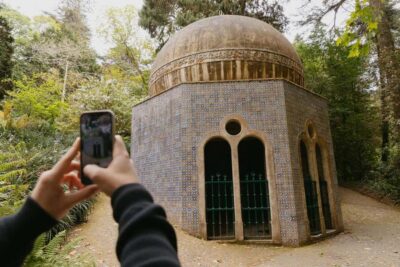 ★ 4.7Pena Palace, Sintra, Cabo da Roca, & Cascais DaytripTickets from $919,981 traveller reviews
 ★ 4.6Oceanário de Lisboa Entrance TicketTickets from $299,943 traveller reviews
 ★ 5.0True 4Hour Private Tuk Tuk Tour: Discover Lisbon with a Local!Tickets from $1088,008 traveller reviews
More useful lists for this tour