
Review · LISBON CITY TOURS
Half-Day Walking Tour about the African Presence in Lisbon
Africa hides in plain sight on Lisbon streets. That is the point of this small-group walk focused on the African presence in the city. I love the way the route turns famous corners into history lessons, and I love that the experience stays on foot so you actually feel the city’s rhythms. One possible drawback is the price, since you are paying mainly for the storytelling, not for a lot of built-in attractions or extra activities.
This route is built around a tight loop through central Lisbon, with stops chosen for how they connect to centuries of movement, trade, faith, and community. In reviews, guides like Alcides and Al get praised for turning locations into clear, human stories, not just dates on a slide. Expect a moderate walking pace and good time outside, so plan around that.
If you like Lisbon for the layers, this tour fits. If you want a quick sightseeing checklist with minimal talking, you may find it long on context and short on breaks.
Key moments you will not forget
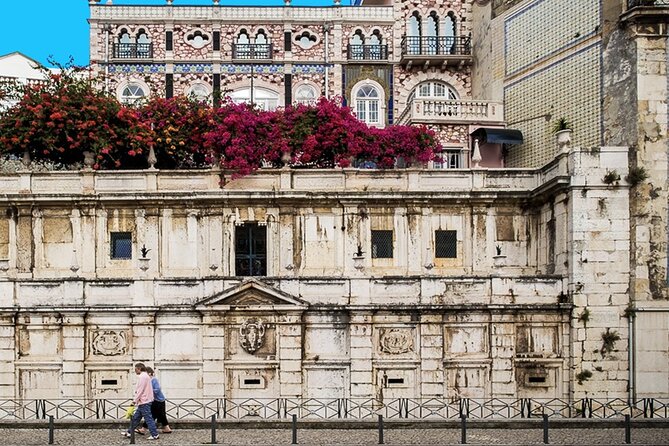
- Alfama’s beginnings: a neighborhood route that frames Africa’s roots in Lisbon’s older story.
- Chafariz D’El Rei: a fountain stop used to explain social class divisions where Africans are shown too.
- Campo das Cebolas to Terreiro do Paço: the walk links the port era to the reality of slavery.
- Rua Rosa de Lisboa and Time Out Market: everyday spaces tied to African women’s work and past labor.
- Jardim Dom Luis to Igreja de São Domingos: monuments and Catholic sites used to talk about abolition and faith.
Why Africa’s story matters on Lisbon streets
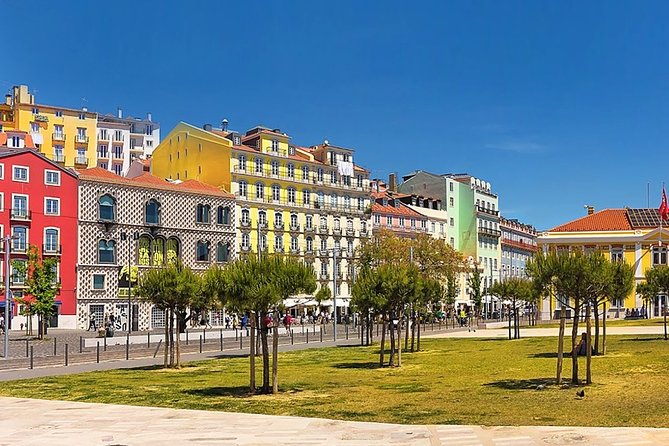
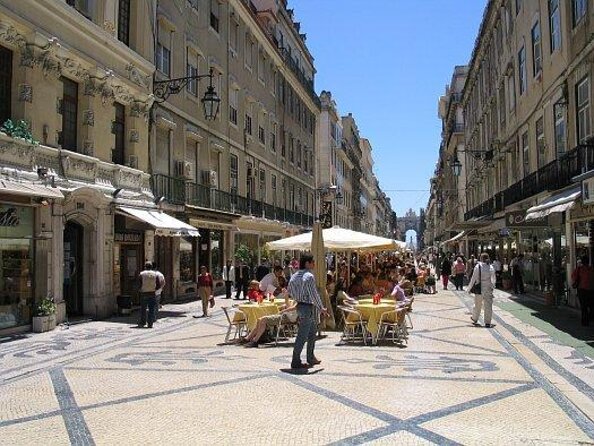
Lisbon can be easy to experience as postcard scenes, tiled walls, and hilltop views. This tour nudges you to look again, but it does it on the ground, not in a classroom. You walk through real neighborhoods and learn how Africa connects to Lisbon in ways the city does not always foreground.
What I like is that the tour keeps its focus. Instead of trying to cover everything, it builds a chain of locations that point to big themes: settlement and early connections, social structure, slavery and transatlantic traffic, work and community, and how faith shaped public life. The strongest part is that those themes are tied to specific corners you can locate later, which helps the story stick.
You also get a modern lens. One stop is right in front of the Consulate-General of Brazil, where the discussion turns to transatlantic slave traffic and its consequences. That kind of framing matters because it connects the past to the present, without pretending history is simple.
You can also read our reviews of more walking tours in Lisbon

Price and group size: what you get for $179.74
At $179.74 per person for about 3 to 4 hours, this is not the cheapest walking tour in Lisbon. The value comes from three things the pricing reflects.
First, it is a small group with a maximum of 15 travelers. That size is big enough to feel social, but small enough that you can ask questions and get more than canned answers.
Second, many of the stops are listed as free admission, which means your money goes mostly toward the guide and the interpretation. You are paying for the “why this place, why this story” part.
Third, the tour is designed to keep you moving. It runs in English, uses a mobile ticket, and stays close to public transportation. In practice, that saves time you would otherwise spend sorting routes on your own.
If you are price sensitive, consider this: you are not buying a museum ticket or a theme-park experience. You are buying a guided walk that turns the city into a lesson. If that is your travel style, it can feel like great value. If you just want light background during sightseeing, the cost might feel steep.
Starting at Praça dos Restauradores: easy meetup, strong start
The tour begins at Praça dos Restauradores at 9:00 am, right where you can find city connections and foot traffic. This matters because Lisbon days can get messy fast. A clear meeting point in a central square helps you get oriented without stress.
Also, the route is described as returning to the meeting point. That means you are not stuck hunting for your next connection far away at the end of the walk.
One practical tip: bring comfortable shoes and expect steady walking. This tour is marketed as a “walking tour,” and reviews back that up. There is also a moderate physical fitness requirement, so plan for hills and uneven sidewalks.
Alfama: the oldest layers and Africa’s early connections
The first major stop is Alfama, described as Lisbon’s oldest neighborhood, founded by Arabs, and used here to introduce Africa’s history, roots, and connections. Even if you have visited Alfama before, this framing changes the vibe. You stop seeing it as just old streets and view it as part of a wider web of cultures that shaped Iberian history.
The stop time is short, around 20 minutes, so you are not doing a deep dive at one address. Instead, you get an opening story that sets expectations for the rest of the route. That structure is useful because it prepares you to notice details later, even when you are just passing by.
Why this stop works: Alfama’s streets are naturally “slow.” They force you to look around and listen. When your guide ties the physical neighborhood to the larger theme of connection, it feels less like lecturing and more like you are walking through a living timeline.
Chafariz D’El Rei: social class, water, and who gets seen
Next up is Chafariz D’El Rei, the fountain stop. Here the tour uses the fountain to explain the division of social classes during the Middle Ages, and it notes that Africans are represented too.
This is a good example of what makes this tour more than a list of monuments. Water sources like fountains were practical infrastructure, but they also reflect how a city organizes daily life. By focusing on a fountain rather than a palace, the tour points you toward the kinds of histories that are easy to overlook.
The stop is only about 10 minutes, so you want to be mentally ready to pay attention quickly. If you tend to chat and wander early in a tour, you might miss how the guide turns the setting into the lesson.
More Lisbon tours and experiences for the shortlist



Campo das Cebolas and Terreiro do Paço: where the port story becomes real
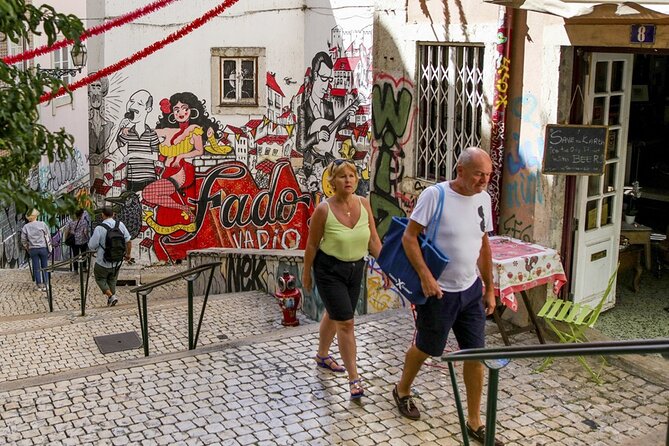
The route then moves to Campo das Cebolas, tied to the old port of Lisbon, and described as the place where the first African slaves arrived in Europe. Even if the exact phrasing is heavy, the value is in the clarity. This is not a vague “Lisbon had connections” story. It explicitly names arrival and slavery.
Time is tight at about 10 minutes, so the discussion likely does not try to explain everything from scratch. Instead, it places you at a key geographic point and links it to a turning point in European history.
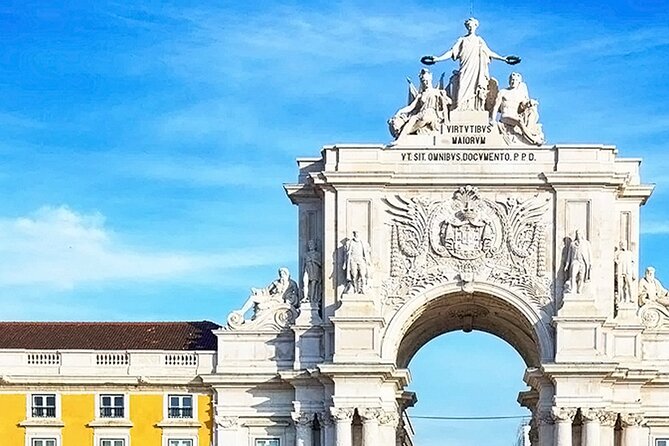
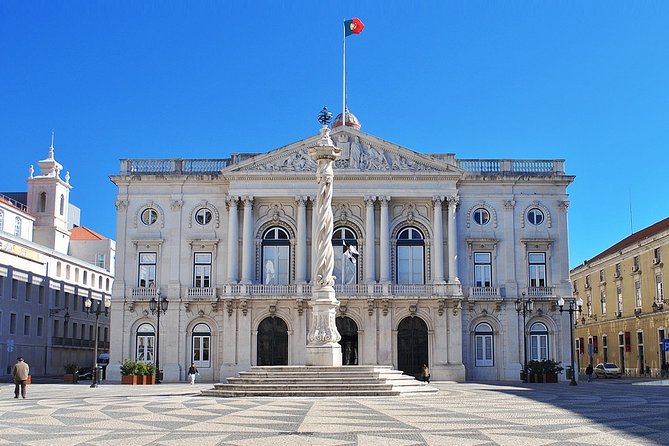
Then comes Praça do Comércio (Terreiro do Paço), where several events in Portugal’s history took place and where it is described as an important place in the slave trade. This is a huge square with big sightlines, which changes how the lesson lands. You can see how port power and public space connect. You are not in a hidden alley. You are in a stage.
If you are the type who likes respectful pacing with uncomfortable topics, you might appreciate how the tour keeps returning to place. That makes the history feel less abstract.
Rua Rosa de Lisboa and Time Out Market: work, services, and shifting city meaning
One of the most specific stops is Calle Rosa de Lisboa (Rua Rosa de Lisboa), described as the place where several African women provided services. The stop is short at around 10 minutes, but the content is direct. It is about labor, public life, and the social role of Black women in Lisbon.
I like that this tour does not only focus on the political extremes. It points to the everyday economy. That is where a lot of history lives, even when it is easy to skip.
Then you spend a brief time at Time Out Market Lisboa. Today it is known as a food marketplace. The tour uses it to talk about the past, when it was the place of work for many Africans. That contrast is powerful because it forces you to notice how urban functions change while people’s contributions can get erased from the story.
Practical note: since this is a market-style area, you might see lots of people moving and eating around the stop. Stay with the group and focus on the guide’s framing, because the surroundings can distract you if you let them.
Jardim Dom Luis and abolition: a statue with a message
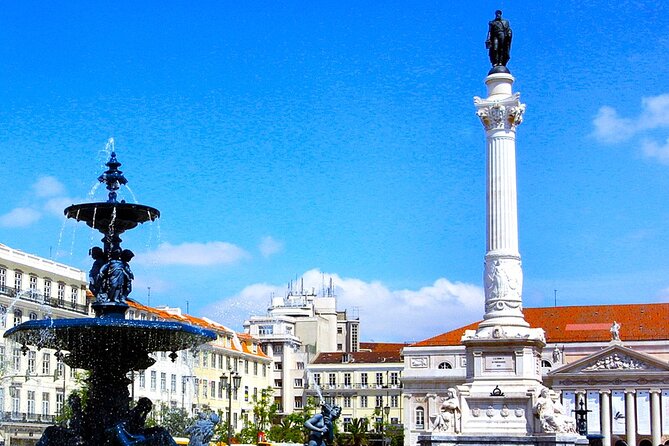
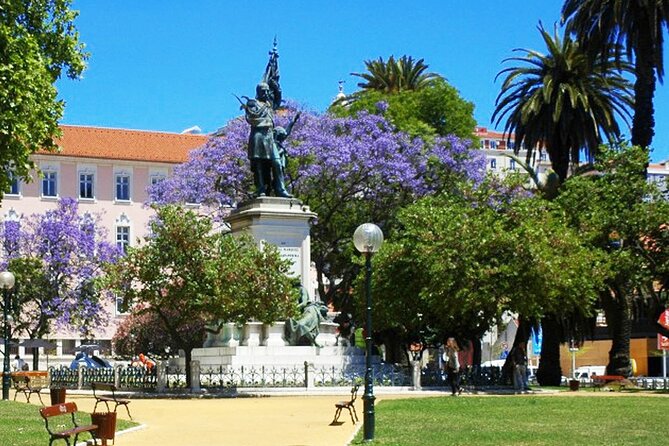
At Jardim Dom Luis, the tour points you to a specific monument, the statue of the Marquis Sá da Bandeira, described as responsible for the abolition of slavery in Portuguese territory and colonies. The stop time is short, about 5 minutes.
This is one of those “you remember the detail later” moments. When you know a statue name and what it is connected to, you can look at Lisbon landmarks with more depth instead of just admiring them.
Also, this stop quietly balances the heavier parts of the story. It does not erase them, but it acknowledges that abolition exists in public space. That can help you walk out of the day with more than weight. You leave with a fuller picture of how a society changed, even if slowly.
Churches, Brazilian ties, and faith in Igreja de São Domingos
Later, you visit the Consulate-General of the Federative Republic of Brazil in Lisbon. In front of the consulate, the tour discusses transatlantic slave traffic and its consequences. This is another modern anchor, and it fits Lisbon’s real identity as a city tied to the Atlantic world.
Next you reach Praça Dom Pedro IV, a central busy square where the tour talks about integration of Africans and the creation of colonies. Squares like this are great for stories because they are where many lives overlap. You get a sense of public movement, not just private streets.
Then comes Igreja de São Domingos, where you can understand integration of Africans in the Catholic religion and achievements. The stop is about 10 minutes.
This is an important kind of stop. It addresses a question visitors often have, even if they do not ask it directly: How did faith function in integration? The tour keeps it focused on Catholic life and what people could build within that system, rather than treating religion as just a backdrop.
Rossio station, the Berlin Conference, and Portuguese claims on the world stage
The route includes Estação do Rossio, built during the 19th century with Manueline architectural style. The tour connects it to Portugal’s golden times and to the Berlin Conference of 1884, including the way European countries divided Africa into colonies.
This is a smart choice because architecture is not just decoration. Styles, monuments, and major stations often reflect power, national pride, and global ambition. By linking Rossio to colonial-era decisions, the tour turns a transport hub into a political symbol.
The stop time is about 10 minutes, so you will want to listen closely. This is not the place for slow wandering. Let the guide point out the connection, then look at the station with different eyes.
Independence from Spain: a square where African slaves fought
The walk ends with another central stop described as a square connected to Portugal’s restoration of independence from Spain, where many African slaves fought. The name of this stop is not specified in the route notes you provided, but the key theme is clear: African people were part of major Portuguese political events.
This is one of those “wait, what?” moments that can stick for years. It challenges the idea that Black people only appear in Lisbon history as background figures tied to slavery. Here, the tour frames African participation in the fight for independence.
Practical tips so you enjoy the walk
- Wear real walking shoes. This tour is meant for moving. Reviews specifically advise good footwear and even note bringing pain relief if you are sensitive to walking days.
- Plan for hills and old streets. Lisbon sidewalks can be uneven and steep. Moderate physical fitness is required, so treat that as a real guideline.
- Arrive a few minutes early at Praça dos Restauradores. One review flags that meeting place matters. Start on time so the stories do not get rushed.
- Come with curiosity, not just comfort. The tour covers slavery and social class. If you are emotionally sensitive, take breaks in your own mind by stepping out a bit during transitions, then rejoin the group.
- Ask questions. Multiple reviews praise the guides for being patient and responsive. With a max group size of 15, your questions actually fit into the flow.
- Expect storytelling to drive the experience. The $179.74 price is mostly for interpretation, so the guide really matters.
Who should book this tour, and who might skip it?
This tour is a great fit if you want to see Lisbon with a critical lens, but without turning the day into doom and gloom. You will likely enjoy it if you like history tied to real streets, and if you like learning from a guide who can connect architecture and place to people’s lives.
It is also a good match for travelers who appreciate small groups. Reviews highlight intimacy and the ability to ask questions, which is a big deal when you are paying for more than sightseeing.
You might skip it if you prefer tours that are more about scenery than context, or if you feel the price is hard to justify for a primarily discussion-based format. One review mentions a late start and an experience that felt over priced, so if timing and delivery style matter to you, read that as a consideration.
Should you book the African Presence in Lisbon walking tour?
If you want a Lisbon walk that actually changes how you see the city, I’d book it. The stops are well chosen, from Alfama to Rossio, from fountains to market spaces, and from churches to consulate frontages. That range makes the story feel connected instead of random.
I also like that the tour is built for flow: it is about 3 to 4 hours, returns to the start, uses free-admission stops on the route, and runs in English. With a max group size of 15, you are not just another face.
If you are on the fence because of price, think of it this way. You are not paying for tickets. You are paying for a guide to put names, systems, and consequences onto the places you will walk past later anyway.
FAQ
How long is the Half-Day Walking Tour about the African Presence in Lisbon?
It runs for about 3 to 4 hours.
Where does the tour start and where does it end?
The tour starts at Praça dos Restauradores in Lisbon and ends back at the same meeting point.
What time does the tour start?
The start time listed is 9:00 am.
Is the tour offered in English?
Yes, it is offered in English.
What is the group size limit?
The tour has a maximum of 15 travelers.
Are tickets or admissions included for the stops?
The stops in the route are listed with free admission.
Is a mobile ticket used?
Yes, the tour includes a mobile ticket.
What physical condition do I need for this tour?
You should have a moderate physical fitness level.
Are service animals allowed?
Yes, service animals are allowed.
Can I get a refund if I cancel?
You can cancel for free up to 24 hours in advance for a full refund, if you cancel at least 24 hours before the start time.
More Walking Tours in Lisbon


More Tours in Lisbon



More Tour Reviews in Lisbon

Not for you? Here's more nearby things to do in Lisbon we have reviewed


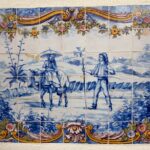
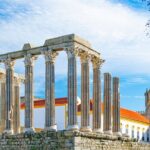





Lisbon City Tours, side by side.
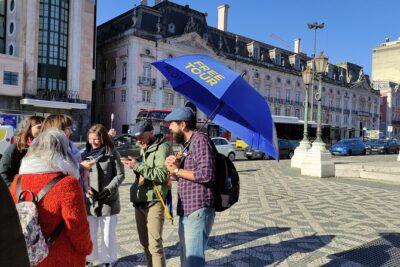 ★ 5.0Lisbon City Center Tour – The Unmissable LisbonTickets from $322,234 traveller reviews
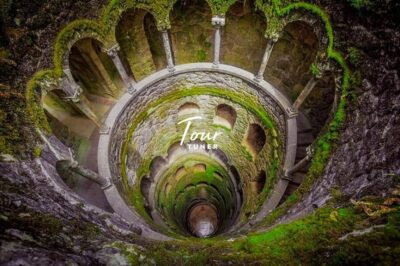 ★ 4.7Sintra, Pena, Regaleira, Cabo da Roca & CascaisTickets from $2319,656 traveller reviews
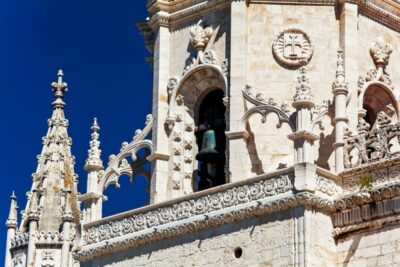 ★ 4.1Jerónimos Monastery Entrance TicketTickets from $2114,164 traveller reviews
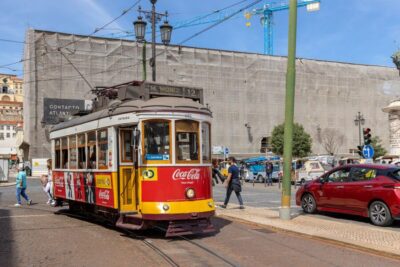 ★ 4.8History, Stories and Lifestyle Walking TourTickets from $2910,902 traveller reviews
 ★ 4.5Sunset Boat Party Cruise with DJ and Open BarTickets from $2710,378 traveller reviews
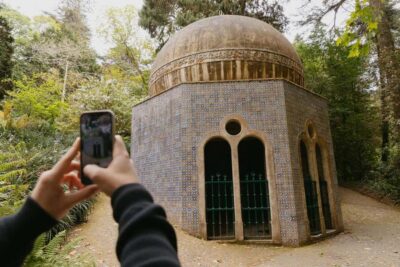 ★ 4.7Pena Palace, Sintra, Cabo da Roca, & Cascais DaytripTickets from $919,981 traveller reviews
 ★ 4.6Oceanário de Lisboa Entrance TicketTickets from $299,943 traveller reviews
 ★ 5.0True 4Hour Private Tuk Tuk Tour: Discover Lisbon with a Local!Tickets from $1088,008 traveller reviews
More useful lists for this tour