
Review · FOOD & DRINK
Private Food and Wine Tour: From Street to Gourmet
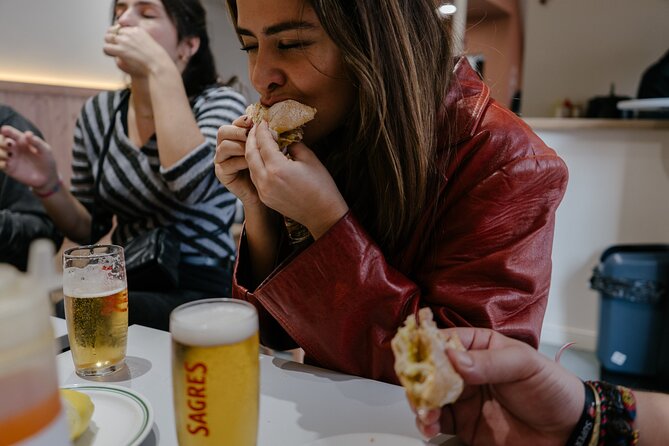
Lisbon snacks with city views sounds like a cheat code. This private food and wine tour takes you from classic viewpoints down into historic neighborhoods, then back into restaurants for 16 tastings paired with local wine, Port wine, and beer. I love how it mixes food with real Lisbon context, and I love the chance to try a wide spread, from seafood to street food. One thing to consider, the meeting address can be easy to misread, so I’d confirm the exact spot before you leave.
The best part is that you get a flexible, private setup, so your guide can steer the day to your pace instead of herding you through a script. It also helps that the guides are consistently praised for English and for turning history into something you can taste, not just memorize.
The only potential drawback is that the alcohol and tasting count may not feel identical to what you expect from the description, so if you’re very specific about Port or beer, ask your guide what’s planned for your exact date.
Key Highlights You Should Not Miss
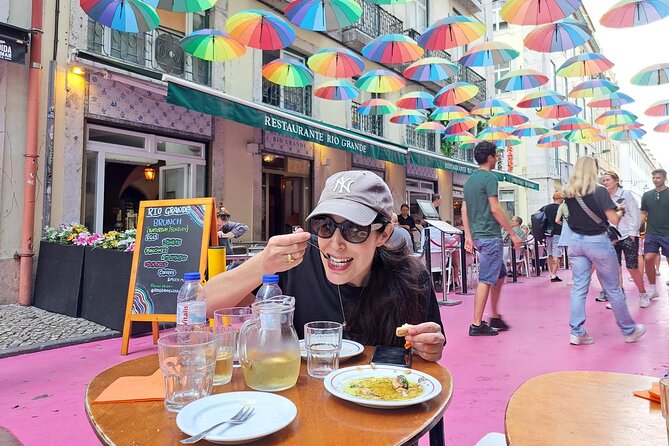
- 16 tastings across seafood, meat, fish, cheese, pastries, and street food, paired as you go
- Portuguese wine lineup plus green wine, red and white, and Port wine
- Panoramic Lisbon stops at Miradouro da Senhora do Monte and Miradouro das Portas do Sol
- Alfama and Mouraria focus, including the fado neighborhood context around Mouraria Berço do Fado
- Private guide energy, praised by name, including Antonio, Thomas, Martim, Carolina, and Gabby
- Vegetarian and pescatarian accommodations available if you tell the operator ahead of time
Is This Tour Really Food-First, or Just Sightseeing?
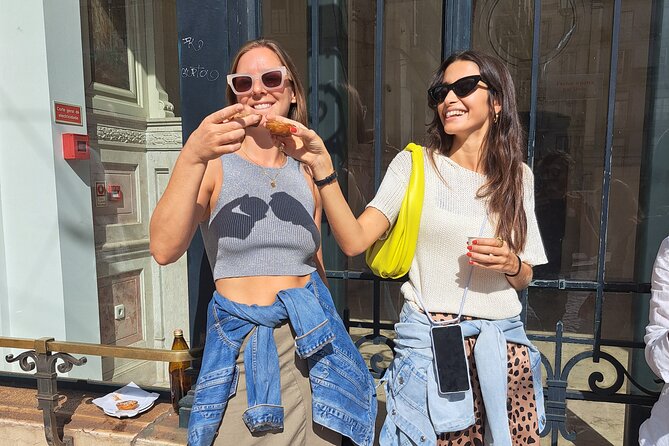
This is a food tour that uses Lisbon as the setting, not the other way around. Yes, you’ll walk through iconic areas and hit viewpoints. But the backbone is the tasting sequence, with meals and drink pairings built into the route.
That matters because Lisbon food can be vague if you wing it. You can wander Rua Augusta and Baixa all day and still miss the connections between Moorish history, Atlantic seafood, and the city’s colonial-era influences. Here, you’re actually given a reason for what you’re eating, then you taste it.
I also like that it does not feel like a one-dimensional tasting ladder. You’re not only sampling the same few flavors. The menu is described as spanning Mediterranean, Indian, and African influences, and you get that through the variety of dishes and the different drink pairings.
You can also read our reviews of more food & drink experiences in Lisbon


The Neighborhood Route: Panoramas, Old Streets, and Lisbon’s Food Mood
The day is designed to move through the neighborhoods people associate with Lisbon identity, but with a practical walking rhythm. You start at Largo da Graça, then the route loops through Graça viewpoints, Alfama’s lanes, Mouraria’s fado roots, and the central core around Rossio and Rua Augusta. Even the church stops are chosen for how they connect to Lisbon’s past and architecture.
Miradouro da Senhora do Monte: Views First, Appetite Next
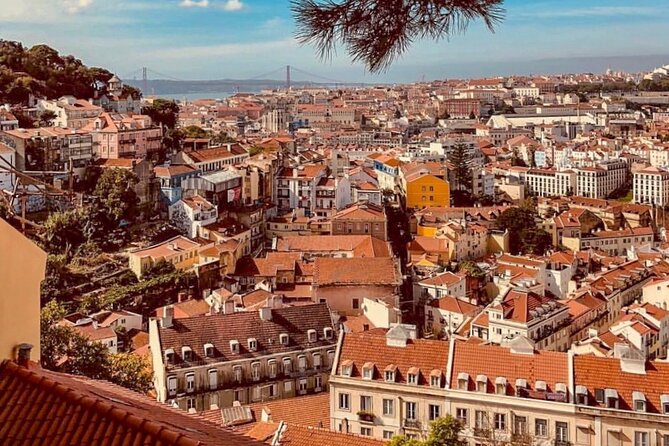
You begin at Miradouro da Senhora do Monte, with a laid-back introduction and a free, panoramic look over the castle area, the river, and the stacked colorful houses of the hills. The tour schedule gives you about 20 minutes here.
Practical note: this is a viewpoint, which means you’ll want comfy shoes and a light layer, especially if wind shows up. The upside is huge. It helps you understand why Lisbon is so food-rich. When you see how neighborhoods stack and spill downhill, you get why people relied on markets and local specialties close to home.
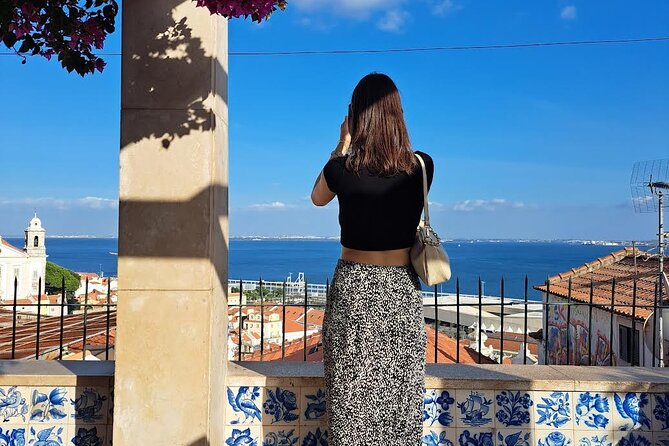
Miradouro das Portas do Sol: Alfama’s Big Picture
Next is Miradouro das Portas do Sol, again about 20 minutes. From here you look over Alfama, plus the São Vicente Monastery and the National Pantheon.
This is one of those spots that makes your photos look like you planned a perfect itinerary. More important though, it sets the stage for the food story. Alfama is where you’ll later feel that old-world layering in the cuisine and the way people live close together.
Alfama: Get Lost, Then Find the Flavor
You head into Alfama for around 30 minutes. The tour frames it as a traditional village inside a big city, and that’s exactly the vibe. You’ll walk through a maze of streets, plus you’ll have time to spot murals.
This stop is less about a single landmark and more about orientation. When you see Alfama’s street pattern, you understand why food is often eaten fast, on foot, or in small places where locals feel at home. It also builds momentum for the tasting portion, since walking loosens you up.
More Lisbon tours and experiences for the shortlist



Lisbon Cathedral: Moorish Control to Roman-Catholic Roots
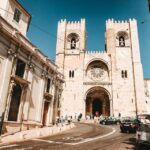
Then you reach Lisbon Cathedral, about 20 minutes. The description gives a clear historical arc: built on the site of the principal mosque during Moorish control, and by 1147 it became Lisbon’s first Roman Catholic cathedral.
You do not need to be a history nerd for this to land. It simply adds context. If you’ve ever wondered why Portuguese food can taste both familiar and slightly surprising, that’s the same kind of mix Lisbon’s culture went through over centuries.
Castelo, Alfama, and Mouraria Area: Afonso Henriques in the Background
You spend about 40 minutes around Castelo, Alfama, and Mouraria, tied to Lisbon’s conquest by Portugal’s first king, Afonso Henriques, in 1147.
This stop is mostly for the setting and the story. It also creates a natural bridge into Mouraria, because once you leave the main view zones and start moving through street-level Lisbon, history stops being a lecture and turns into a walk.
Monumento Mouraria Berço do Fado: Where Fado Was Born
About 20 minutes takes you to Monumento Mouraria Berço do Fado. The tour highlights this neighborhood as the birthplace of fado and notes its diverse population today.
Even if you think you already know fado, the food pairing angle is what makes this worthwhile. You’re connecting an art form to a place, and then you taste the types of flavors people carried and adapted over time.
Igreja de S Domingos: A Church That Survived the Worst
You get a shorter stop, about 10 minutes, at Igreja de S Domingos. The tour focuses on history and architecture, and it calls out its survival across multiple fires and a major earthquake, describing it as one of Portugal’s most special churches.
This is a quick “pause and look” moment. If you normally skip churches, you can still appreciate it because it’s not abstract. The guide’s talk ties the building to Lisbon’s survival story, which pairs well with a food tour because Lisbon’s food culture also reflects resilience.
Rua Augusta and Baixa’s Heart: Rebuilt After 1755
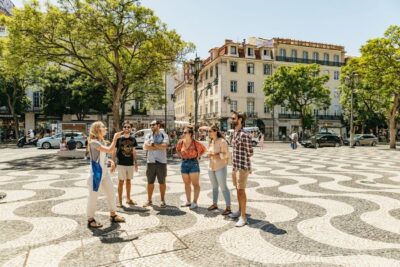
Finally you reach Rua Augusta, about 20 minutes. The route describes it as the beating heart of the city and notes it was rebuilt after the 1755 earthquake by Marquês do Pombal.
This stop is a practical finish line. It’s central, easy to picture on your map, and it sets you up to end near Rossio Square. Even if you do not go into every side street later, you’ll leave knowing how this whole part of Lisbon connects.
The Tastings: What 16 Samples Feels Like in Real Life
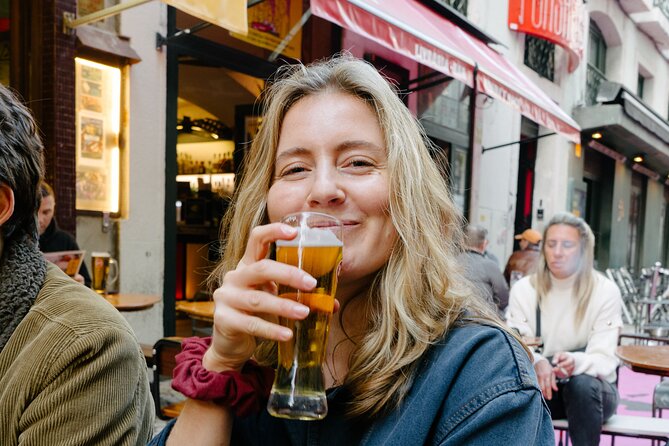
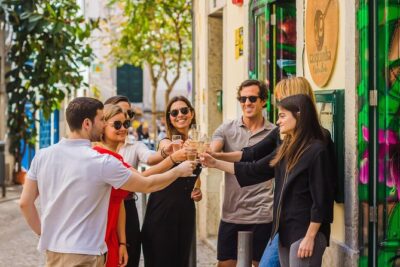
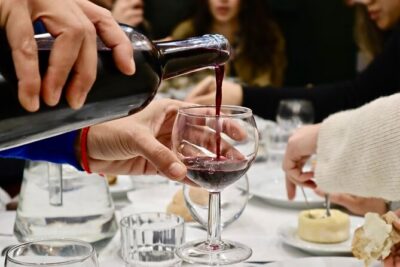
The tour promises up to 16 typical tastings, with paired drinks. The lineup includes Port wine, white, red, and green wine, plus local beers. You can also get a Portuguese liqueur listed as part of the pairing plan.
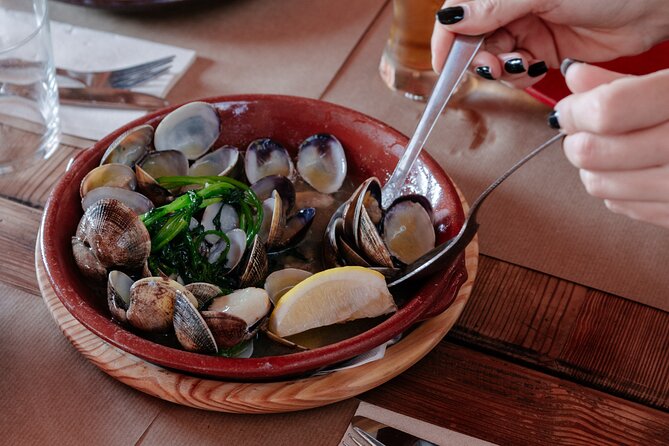
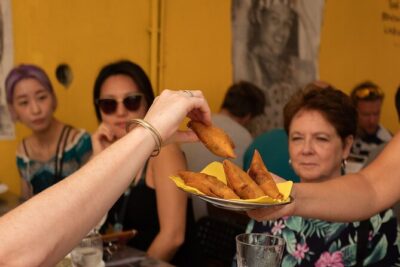
It also claims a wide range of foods: seafood, meat, fish, cheese, pastries, and beverages paired with each tasting. There’s mention of a secret dish, which is one of the best perks of a guided tasting, because it keeps you from second guessing every bite.
One standout claim in the description is that you’ll try the dish chosen as the best seafood dish in the world. It does not give the dish name in the details you provided, but the fact that the tour leans into seafood matters. Lisbon does seafood well, and having a guide helps you avoid the generic tourist seafood trap.
Alcohol Pairings: Great for the Curious, Not Forced
You’re offered alcoholic beverages suitable for vegetarians, pescatarians, and non-drinkers, as long as you tell the operator ahead of time. That’s important. If you want the food side but prefer minimal alcohol, you can still enjoy the pairings without feeling left out.
Also keep in mind a real-world caution from tour experience patterns: the number and type of drinks you get can vary by day. One guide-led food-and-wine day can run slightly differently depending on restaurant flow and what’s available that day. If Port wine is your must-have, I’d ask your guide early in the walk what’s on your drink schedule.
Lunch or Dinner: How the “Meal” Part Works
The details list food as lunch and dinner, with the same kind of tasting structure, meaning the tour is set up to feed you heavily through the walk. In practical terms, you should treat this as a meal replacement.
Plan your day around it. Do not schedule a late dinner right after. You’ll likely be full in a good way, the kind where you want to stroll, not sprint.
The pacing also matters. Many guides on this tour are praised for a pace that feels right, not rushed. People specifically called out that there was plenty of food and that they stayed stuffed in the best way. That tracks with a private route where the guide is managing your group energy.
Guide Quality: What You Gain From Private and Named Hosts
This is a private tour, which means you get one local food expert guiding your tastings and a guide covering historical context. That split is what makes the experience more coherent. You are not just eating, you’re being told why the flavors make sense in Lisbon.
The reviews are full of praise for guides by name, including Antonio, Thomas, Martim, George, Carolina, and Gabby. Multiple people also highlighted English ability and a friendly, high energy approach. One person even mentioned that the guide made accommodations for a vegetarian in the group, which is exactly what you want from a private setup.
If you’re the type who asks questions, you’ll get space to do that. If you’re the type who prefers a smooth flow, the guide can usually set the pace, based on what your group needs.
Value Check: Does It Make Sense for $193.57?
Let’s be honest. $193.57 per person for a 4-hour private tour is not cheap on paper. But this isn’t just a walk and a few bites. You’re paying for at least four things that can otherwise cost money and time separately:
- Access to 16 tastings in restaurants, paired with wine and beer
- Port wine and a full drink pairing plan, not just water and a snack
- Private guiding, which usually means fewer time delays and more attention
- Neighborhood expertise, including multiple viewpoint stops and historic stops
If you were to replicate this yourself, you’d spend money on meals anyway, plus you’d likely pay for drinks that add up fast. What you’re buying here is the structure and the local filtering. That’s where the value lands.
I’d still suggest one thing: message your operator before the tour with your dietary needs. The info clearly says you should inform them about pescatarian options, no pork, or alcohol preferences in advance. That small step can prevent a disappointing substitution.
Practical Tips Before You Go
Here are the moves that help the tour go smoothly.
- Wear comfortable walking shoes, because you’re moving through hills and old streets.
- Bring a light layer. Viewpoints like Senhora do Monte can feel windy even on mild days.
- If you’re doing pescatarian or vegetarian, contact the operator ahead of time and say what you need.
- Confirm the meeting spot clearly. There was an account of arriving at the wrong address due to map or ticket confusion, leading to stress and extra transport cost. A quick check can save your whole day.
Who This Tour Is Best For
This is a strong fit if you want a first-or-second day Lisbon overview that still feels like eating like a local. It’s also ideal if you care about history but want it connected to food instead of read from a placard.
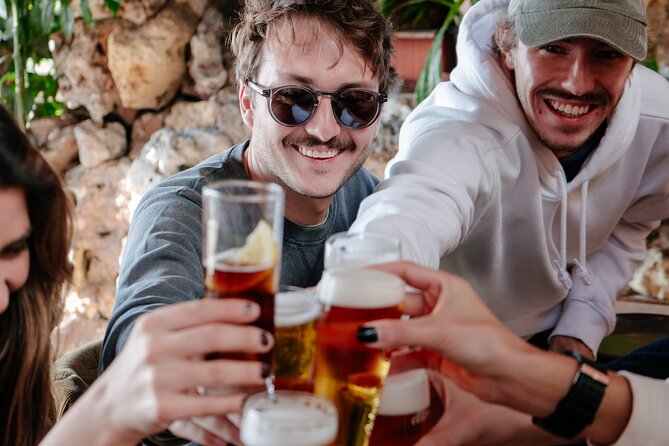
It works well for couples, families, and small groups, because you get private attention and can have the tastings adapted. The age range listed is very broad, from 1 to 99, and the guide can adapt the tastings for your group.
If you hate walking or you want a full day of museums instead, this might feel too food- and street-focused.
Should You Book This Lisbon Food and Wine Tour?
Book it if you want a structured Lisbon food education paired with sweeping views and historic context, with enough tastings to replace a full meal. The private format and the consistently praised guides, including Antonio, Thomas, Martim, and Carolina, suggest you’re not just buying food stops, you’re buying a guide who can connect dots.
Don’t book it if you’re extremely sensitive to meeting-point confusion or you need every drink type to match a perfect plan. In that case, do your homework: confirm the meeting location and send dietary and drink preferences in advance.
If you get those two basics right, this tour is one of the easiest ways to learn Lisbon through your senses, not just your phone.
More Food & Drink Experiences in Lisbon
More Tours in Lisbon




More Tour Reviews in Lisbon

Not for you? Here's more nearby things to do in Lisbon we have reviewed








Food & Drink, side by side.
 ★ 5.0Winner 2025 Undiscovered Lisbon Food & Wine Tour by Eating EuropeTickets from $1256,390 traveller reviews
 ★ 4.9Food and Wine Small Group Walking TourTickets from $724,082 traveller reviews
 ★ 5.0Lisbon Small-Group Food Tour with 18 Tastings in Alfama DistrictTickets from $1261,967 traveller reviews
 ★ 4.9Baixa District Food Tour with Dinner and DrinksTickets from $821,870 traveller reviews
 ★ 5.0Devour Lisbon: The Ultimate Portuguese Food TourTickets from $951,782 traveller reviews
 ★ 5.0Lisbon Food Tour with 10+ Tastings of Local Delicacies & WinesTickets from $971,339 traveller reviews
 ★ 5.0Award-Winning Original Lisbon Food Wine Tour: 19 Curated TastingsTickets from $1371,288 traveller reviews
 ★ 5.0Lisbon Roots – Small group Food & Culture Walking Tour w/tastingsTickets from $168910 traveller reviews
More useful lists for this tour