
Review · FATIMA DAY TRIPS
Fátima Private Tour And Batalha Nazaré & Óbidos
Fátima hits different on the coast. This private day tour stitches together Portugal’s biggest faith sites, including the holm-oak tree memory, then shifts gears to Nazaré’s sea views and the medieval calm of Óbidos. I really like the mix of pilgrimage places and ocean viewpoints, so the day never feels like one-note travel.
I also love the air-conditioned minivan setup with hotel pickup and drop-off, because an 8 to 9 hour day runs much smoother when you skip the transit hassle. You get bottled water and WiFi on board too, and guides such as Luis and Filipe Silva are specifically praised for being attentive and helping the group get close to the best parts of Nazaré.
One possible drawback: it is a long day, so if you crave lots of free time, this schedule can feel a bit tight. Expect comfortable walking but also enough movement that comfortable walking shoes matter.
Key highlights at a glance
- Hotel pickup plus private group: you stay together and start from Lisbon without juggling public transport.
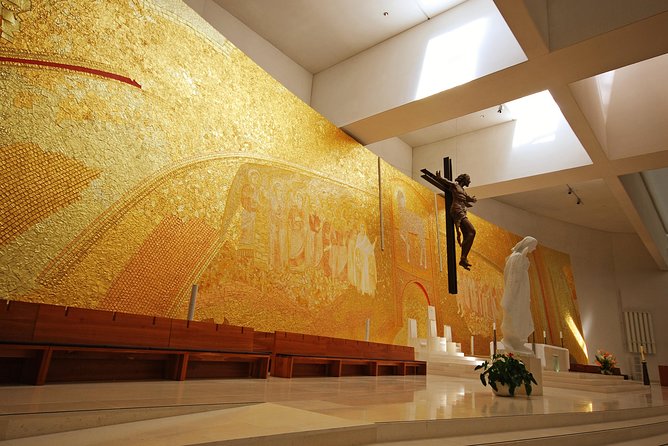
- Modern Fátima architecture: the round Church of the Most Holy Trinity (built for huge crowds).
- The holm-oak tree story: the Chapel of the Apparitions marks the site where the rosary began.
- Valinhos Via-Sacra route: key chapels plus the Hungarian Calvary area.
- Nazaré’s viewpoint at Sítio: panoramic coast views from Largo de Nossa Senhora da Nazaré.
- Óbidos’ medieval shell: a quick but satisfying walk through an old walled town.
Getting to Fátima: pickup, timing, and a modern round church
This tour runs out of Lisbon with a 9:00 am start, and it is built around a single-day loop. The first win is practical: hotel pickup and drop-off plus transport by air-conditioned minivan means you are not spending your morning figuring out how to reach Fátima. You also travel with bottled water and WiFi on board, small details that make a long day feel less draining.
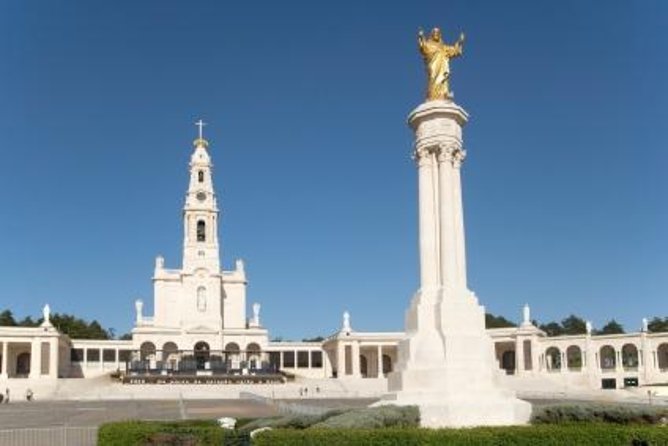
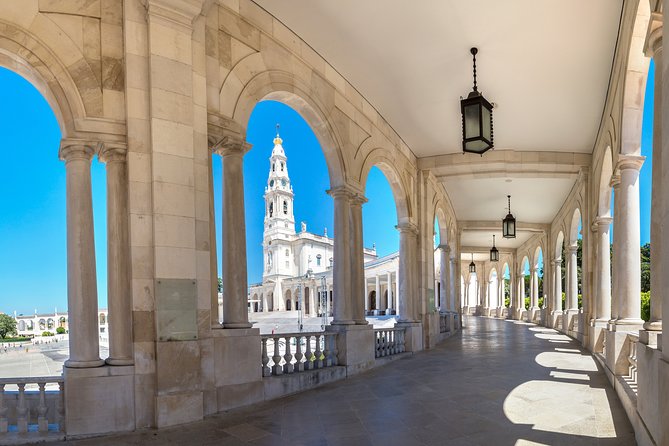
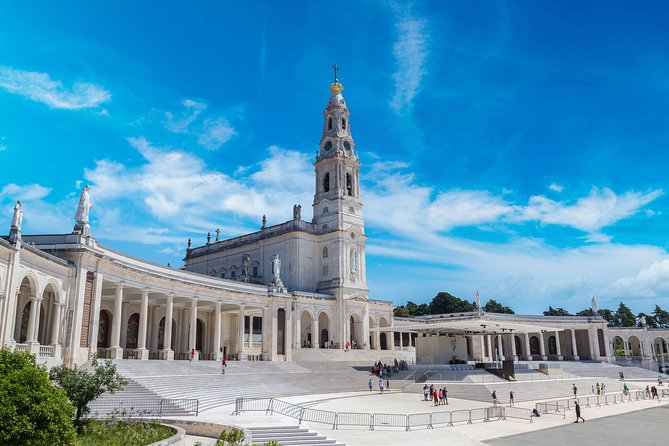
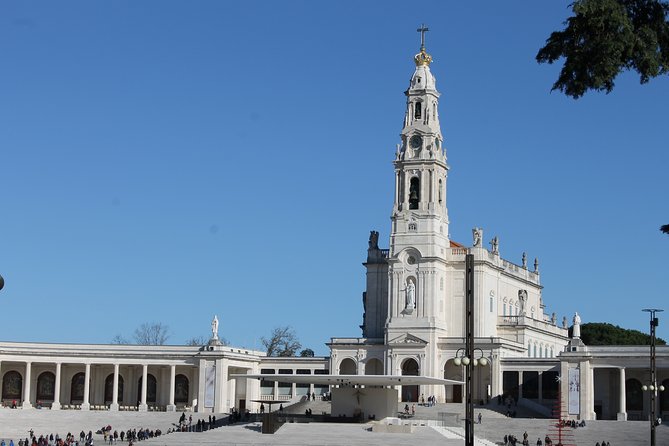
Once you arrive in the Fátima Sanctuary area, you start with the Church of the Most Holy Trinity (Basílica da Santíssima Trindade). What I like here is how modern it feels compared to the more rustic chapel stories that follow. It is a huge round, white building inaugurated in 2007, but planned since 1973, when it became clear the older basilica was not big enough for average pilgrimage turnout. The design is striking: it is 125 m in diameter with no intermediate support, so the interior space reads like one big unified hall for worship.
That architecture matters for your experience. It is not just a photo stop. It helps you understand why Fátima can handle crowds, why services scale up, and why people come for more than a quick look. Even if you are not deeply religious, you can still feel the intent of the builders.
Practical note: this stop is listed at about 30 minutes. That is enough time to get oriented and appreciate the shape, but it is not a slow sit-down. If you like to linger, plan to come back later or accept that the day is about movement.
You can also read our reviews of more private tours in Lisbon



Chapel of the Apparitions: the holm-oak tree memory in a modest setting
Next comes the Capela das Aparições, built in 1919 by local people in response to a request made by Our Lady during the apparitions. The first mass there took place in 1921. What I find powerful is the contrast: despite the massive sanctuary that surrounds it, the chapel itself is described as modest, with a rough design similar to a simple hermitage.
This stop is about place and memory. The image of Our Lady marks the spot of the holm-oak tree, the location tied to the apparitions. The actual tree disappeared over time as believers took it twig by twig. People came to say the rosary there, with the shepherds among those who gathered.
Even if you are coming for cultural travel rather than faith travel, this is the moment where the story becomes tangible. You are not just looking at a monument. You are standing where the ritual began, at least as the tradition describes it.
Time here is about 30 minutes. That usually works best if you treat it like a slow walk, not a checklist. Take a minute to notice the surroundings, then move on before the group starts to compress around you.
Basilica of Our Lady of the Rosary and the Valinhos shift
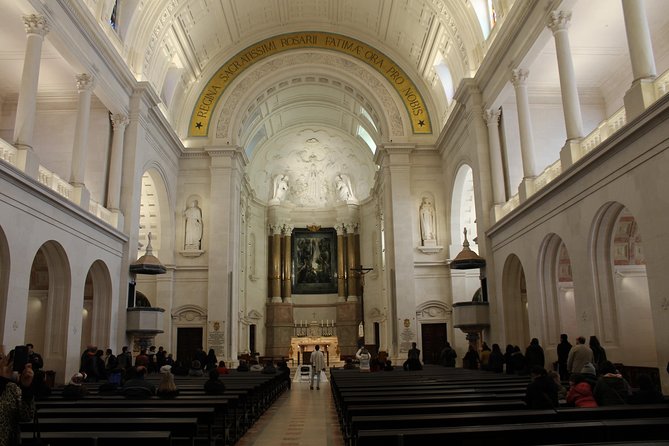
After the Apparitions Chapel, you go to the Basilica of Our Lady of the Rosary (commonly called the Basilica of the Rosary). This basilica integrates with the Fátima Sanctuary and sits in the Cova da Iria area. The stop is also listed at about 30 minutes, and that brief window is mostly for orientation and appreciation of the scale.
From there, you continue deeper into Fátima’s route at Valinhos. This is where the tour starts to feel like a journey, not just a cluster of buildings. Valinhos is visited by thousands of pilgrims who take the route of the Via-Sacra to the Hungarian Calvary. You also visit the Chapel of St. Stephen of Hungary and then the House of Lucy and the House of Francis and Jacinta Marto in the village of Aljustrel.
One standout detail I appreciate: the sculptures of the Angel of Portugal and the stations of the Via-Sacra are written by Maria Amélia Carvalheira da Silva. It is the kind of creative credit that turns a general sightseeing stop into something more specific. You can actually connect what you see to the person behind the work.
The main consideration at Valinhos is pacing and walking. Even though the tour stops are timed in the data at about 30 minutes per listed highlight, the feel of Valinhos depends on how crowded it is and how much you naturally slow down at each chapel and house area. The good news is that it is still doable in a day because the itinerary keeps transitions tight.
Batalha Monastery: where a medieval victory reshaped Portugal
After Fátima, the day turns toward national history at the Monastery of Santa Maria da Vitória, also known as the Monastery of Batalha. This is one of those places where the building and the story are glued together.
The key event happened near this site on August 14, 1385: Dom João, Master of Avis and the future king of Portugal, overcame Castilian armies in the Battle of Aljubarrota. The victory ended a dynastic crisis that had dragged on since 1383, after the death of King Ferdinand. His only daughter was married to the King of Castile, and that marriage fueled a claim to the Portuguese throne.
Dom João dedicated the monastery to the Virgin Mary. That means the monastery is not only a beautiful monument. It is also a political and spiritual landmark, tied to the moment Portugal’s future direction became clearer.
Your listed time at Batalha is about 30 minutes, and you should treat it as a “see the big picture” visit. The monastery is fascinating, but a short stop means you will likely focus on standout views and key architectural impressions, not detailed, hour-long museum study. If you love architecture and could spend longer, you will want to build a return trip later.
The practical upside: with only half an hour here, Batalha works well as a bridge between the religious intensity of Fátima and the coastal energy of Nazaré.
Nazaré’s Sítio: sea views, legend, and real fishing-town texture
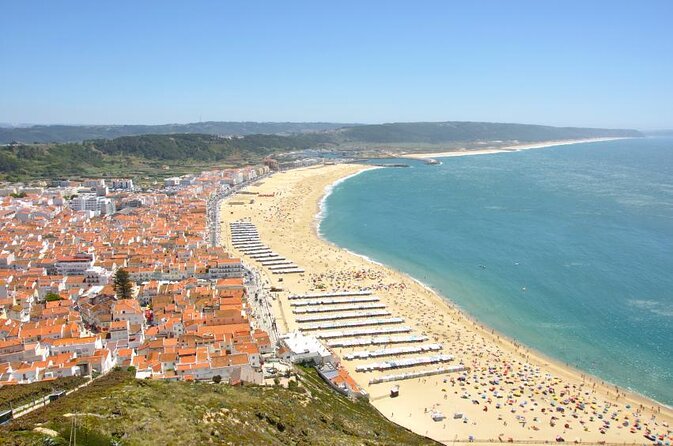
Then comes Nazaré, and the vibe changes fast. You first reach the Sítio da Nazaré area, home to one of the most impressive coastal lookouts. The tour describes Largo de Nossa Senhora da Nazaré as a balcony over the region where you can see the Serra de Mira de Aire and Serra dos Candeeiros, plus the coast stretching from Nazaré to Peniche.
This viewpoint is the kind of stop where I think most people feel a quick jolt of awe, even if they have seen ocean views before. It is wide, and it helps you place Nazaré on the Portuguese coast map, not just as a name.
The tour lists about 1 hour here, and you will use that time well if you do two things: first, find a stable spot for the view; second, then walk a bit around the area to orient yourself. Views can feel different depending on where you stand, and this is the part of the day that rewards getting your bearings fast.
Also, Nazaré is not only about the view. The town itself is a classic fishing community. Even with summer resort crowds, you can still spot fish sellers and carapaus (horse mackerel) laid out to dry in the streets. That detail makes the place feel lived-in, not staged.
There is also the legend tied to Our Lady of Nazaré. According to a 12th-century story, Dom Fuas Roupinho was hunting a deer when he was about to fall into an abyss with no possible salvation. Our Lady was invoked, and the cult developed from that promise of rescue. It gives context for why the Sítio area and its religious sites matter here, not just in Fátima.
From what I learned about the guides leading this day, this is often where they shine. Luis, for instance, was described as going out of his way to get close to the action in Nazaré, and that kind of on-the-ground help matters because the best viewing and photo angles can be a bit tricky when you have a group to manage.
Practical note: funicular access is mentioned for the Sítio district. That means you might be dealing with some stairs or transit connections depending on where you start. Keep your shoes comfortable, and do not plan on moving in dress shoes.



Óbidos: walled medieval streets and the Queens’ Estate connection
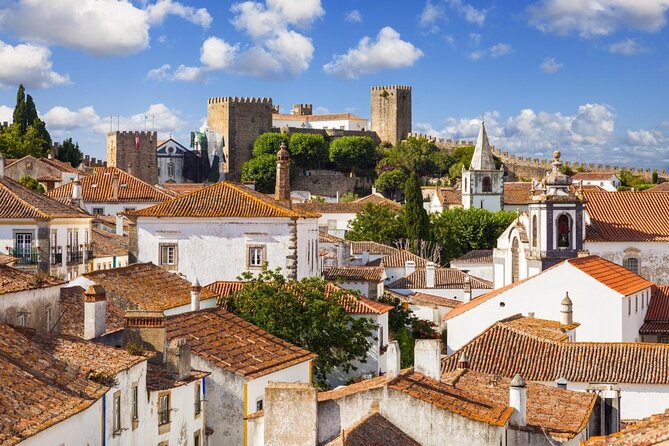
Finally, you land in Óbidos, a medieval town that is known for being especially well preserved. It sits on high ground near the Atlantic coast and had strategic importance in the region. It was settled prior to the Romans arriving in the Iberian Peninsula, and it later prospered when chosen by the royal family.
The story you will actually feel walking around is tied to royalty. King Dinis offered Óbidos to his wife, Queen Isabel, in the 13th century. It then became part of Casa das Rainhas, the Queens’ Estate, and the queens enriched the town across dynasties. One result of that history: there is a high concentration of churches in a place that is relatively small.
Your time here is about 1 hour. That is enough for a short circuit around the old streets, taking in the walls and church density without turning it into a marathon. Since you end the day with Óbidos, it also acts like a mental reset. Fátima and Nazaré are both intense in their own ways. Óbidos gives you a quieter, more leisurely atmosphere, at least by comparison.
If you like photo stops, Óbidos is a good finish. If you like shopping, this is where you might look for local crafts, but you should still keep an eye on the clock so you do not get stuck too far from your pickup point.
Price and value: what $290.89 buys in a one-day loop
At $290.89 per person, this is not a budget half-day. But you are buying a lot of structure: private tour, hotel pickup and drop-off in Lisbon, air-conditioned minivan transport, bottled water, and WiFi on board. The day also covers multiple major sites, which is hard to do efficiently on your own without turning your day into a logistics project.
Another value point is time. The tour is designed for an 8 to 9 hour day, which means fewer lost hours on transfers and more hours at the actual places you came for. If you were to piece this route together independently, you would likely spend a surprising amount on transport and scheduling, especially for a day that includes both inland Fátima and coastal Nazaré plus Óbidos.
One more nuance: admission is listed as free for several stops in the itinerary details, but the tour data also says tickets are not included. That means you should plan to check what, if anything, you must purchase on site. Often, you will still be fine, but it is worth verifying before you arrive.
Group discounts are listed as a feature too. If you can travel with friends, you may be able to reduce the per-person price compared with traveling solo, even though it is a private group experience.
What kind of traveler should book this day tour?
This tour fits best if you want a guided route that links faith landmarks, national history, and coastal scenery in one hit. It also suits you if you like learning a place has a specific narrative, not just a pretty building.
I think it is especially good for:
- Couples or small groups who want private flexibility and a guide to explain the why behind the wow.
- History-minded visitors who will enjoy Batalha’s connection to Aljubarrota and Portuguese consolidation.
- People who want Nazaré for the viewpoint and the town feel, not only for big-wave surfing headlines.
If you are the type who hates group schedules or wants deep museum time, you might feel rushed. The stop durations shown for the highlights suggest quick, meaningful visits, not long free-roam wandering.
The dress code is smart casual. Plan for some walking and some outdoor time, then adjust your layers as the coastal air changes.
Should you book Fátima, Batalha, Nazaré, and Óbidos?
If your goal is a packed but well-organized single day that connects major Portuguese stories, I think this is a strong choice. You get private comfort from Lisbon, plus a guide who can add context at places that otherwise feel like monuments. The strongest reasons to book are the standout Fátima sites, the Batalha history that connects to Portugal’s turning point, and Nazaré’s viewpoint paired with a real fishing-town atmosphere.
Book it if you are okay with an 8 to 9 hour pace and you want breadth over slow depth. Skip it if you want unstructured time, because the itinerary is built to hit several key stops in one day.
If you do book, my best tip is simple: wear shoes you can walk in, and keep your camera ready for Nazaré’s Sítio. That view is the kind of payoff that makes the whole day feel worth the effort.
FAQ
How long is the Fátima Private Tour and Batalha Nazaré & Óbidos?
The tour duration is about 8 to 9 hours.
What time does the tour start?
The start time is 9:00 am.
Do I get hotel pickup and drop-off?
Yes. Hotel pickup and drop-off are included.
Is this tour private?
Yes. It is a private tour, and only your group participates.
What is included in the price?
Included items are bottled water, transport by air-conditioned minivan, hotel pickup and drop-off, private tour, and WiFi on board.
Are entrance tickets included?
Tickets are not included, even though the itinerary lists free admission for some stops. You should check what is required at each location.
What should I wear?
The dress code is smart casual, and comfortable walking shoes are recommended.
Do I need a passport?
Yes. A current valid passport is required on the day of travel.
Can I cancel for a refund?
Yes. You can cancel up to 24 hours in advance for a full refund.
More Private Tours in Lisbon


More Tours in Lisbon

More Tour Reviews in Lisbon
Not for you? Here's more nearby things to do in Lisbon we have reviewed








Fatima Day Trips, side by side.
 ★ 4.7From Lisbon: Fátima, Nazaré, Batalha, and Óbidos Guided TourTickets from $473,060 traveller reviews
 ★ 4.7From Lisbon: Fatima Batalha Nazaré & Óbidos Small-Group TourTickets from $792,563 traveller reviews
 ★ 5.0Fatima, Nazare, Obidos 8-People Small Group, Day-Tour from LisbonTickets from $71995 traveller reviews
★ 5.0From Lisbon: Fátima, Nazaré, Batalha and Óbidos Guided TourTickets from $55922 traveller reviews
 ★ 4.8From Lisbon: Fátima, Batalha, Nazaré, and Obidos Tour by VanTickets from $80893 traveller reviews
 ★ 4.7From Lisbon: Fátima, Batalha, Nazaré & Óbidos Full-Day TourTickets from $94881 traveller reviews
 ★ 4.0The Best of the West – Fátima, Nazaré, Óbidos & BatalhaTickets from $92856 traveller reviews
 ★ 4.3From Lisbon: Fátima, Batalha, Nazaré and Óbidos Day TourTickets from $88782 traveller reviews
More useful lists for this tour