
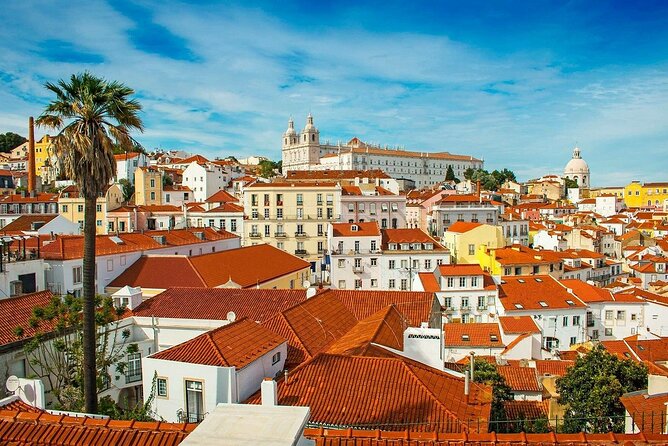
Review · ALFAMA TOURS
Private 4-Hour Tuk Tuk Tour: Alfama, Belém & Lisbon’s Hidden Gems
Lisbon feels less like a checklist when you ride in a tuk-tuk. This private 4-hour electric tour strings together iconic sights and hilltop viewpoints, with stops chosen to make photos easy and stories practical. I especially like the live local guide who can answer questions and keep the commentary tuned to your group, and I like that you move fast between neighborhoods without the stress of navigation. One trade-off to plan for: you mostly see each place from the outside, and some major attractions have tickets not included.
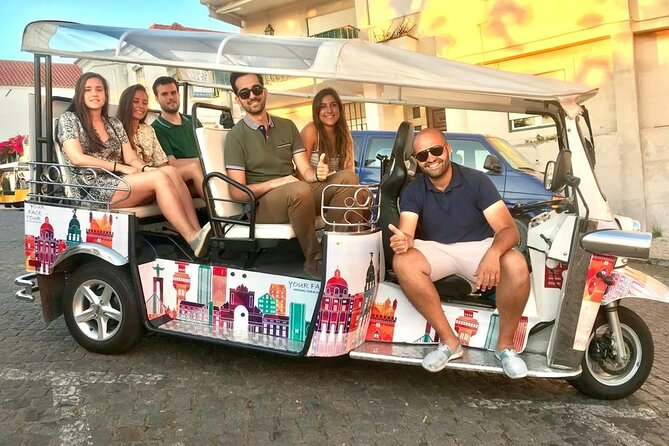
You get a tight mix of old Lisbon and riverfront Lisbon, from earthquake-era survivors in Alfama to UNESCO landmarks in Belém. The route is timed so you can enjoy viewpoints, churches, and public squares without spending the whole day in lines. Also, the tuk-tuk fits up to 6, but comfort is best around 4 people per vehicle.
For the money, this is strong if you want a guided “best-of” day that still feels personal. It is not the best choice if you want long, in-depth museum time at every stop, because the schedule favors highlights plus photo moments.
Key highlights worth knowing before you go
- Private electric tuk-tuk pace: you cover a lot of ground in about 4 hours without draining your feet.
- Viewpoints built into the plan: Portas do Sol and Senhora do Monte are quick stops with big payoff.
- Earthquake stories that make the city make sense: you see how Lisbon rebuilt after 1755 and where the damage still shows.
- Outside viewing with photo time: most stops are designed for photos and explanations rather than deep museum wandering.
- Guides praised for personality and customization: guides like Patricio, Diego, Alessandro, and Emanuel are described as funny, patient, and tailored to the group.
- Food and riverfront breaks included: you roll through Praca do Comercio and can add a Belém pastry stop.
Private 4 hours by electric tuk-tuk, what the timing really buys you
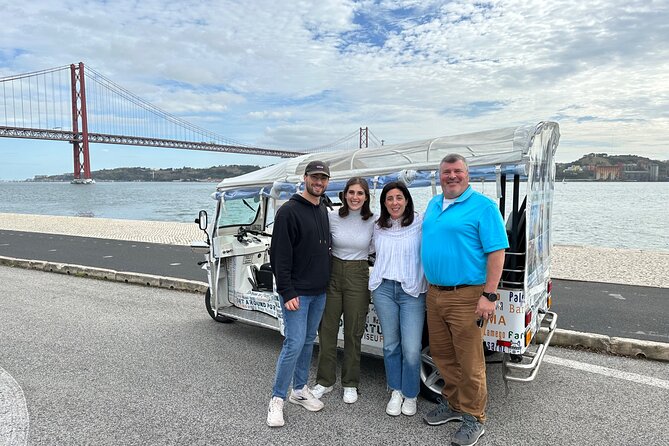
A 4-hour window in Lisbon is short enough that you normally have to choose. Here, the schedule is built to reduce that choice fatigue. You start with landmarks up on the hills and then swing toward the river, so you see the city in layers rather than one neighborhood only.
Because it is private, your guide can slow down when your group is curious and speed up when you just want the view. That flexibility matters in Lisbon, where streets and angles can turn one photo into a dozen, depending on where you pause. The tuk-tuk is also a practical way to get around on steep bits of road without constant walking.
This is not a quiet, sit-still tour. You’ll be moving between multiple stops, often for about 5 to 15 minutes each, with time for photos and stories along the way. If you hate the idea of quick stops, you may feel rushed. If you like sampling, asking questions, and building your own route for later, this timing is a good fit.
The vehicle can hold up to 6 people, and the tour recommends 4 people per tuk-tuk for the most comfort. If anyone in your group has limited range of motion in their knees, getting in and out may be tricky, since you’ll be climbing into the seat area.
You can also read our reviews of more private tours in Lisbon



Lisbon Cathedral, Roman ruins, and Alfama’s hilltop start
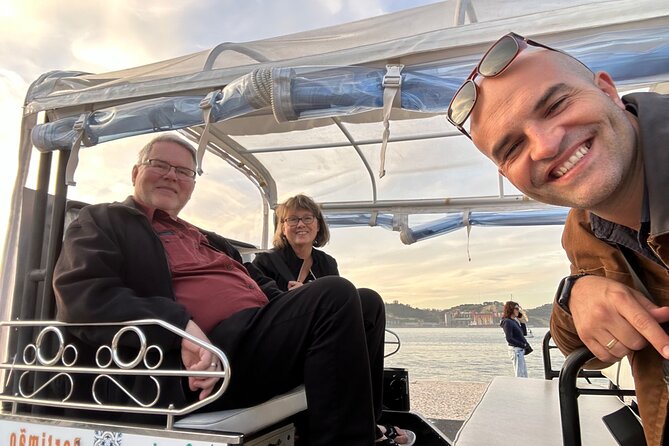
The day kicks off at Lisbon Cathedral (Sé de Lisboa), built in 1147 and still standing after the powerful earthquake of 1755. That one fact changes how you look at the stone. Instead of treating the cathedral like a postcard stop, you get context for why Lisbon’s older buildings have that tough, survival energy.
Right near it, you can also stop at Museu de Lisboa – Teatro Romano. The Roman theater was uncovered under rubble after 1755, and the idea of seeing layers of time like that is the point. Your time here is short, about 5 minutes, so use it to spot what you can and let your guide explain how the ruins connect to the city’s rebuilding story.
Next come the viewpoint moments that make Alfama feel instantly iconic. Miradouro Das Portas Do Sol is basically a giant balcony above the Alfama neighborhood. You’re not there for a long stay, but you are there at the right time to get the sweep of rooftops and the feel of old streets dropping down toward you.
Then you head toward Miradouro da Senhora do Monte, which is Lisbon’s highest lookout point. From there you get panoramic views across Lisbon, from the old quarters and castle area toward the downtown district and beyond. In a single stop, you get the geography lesson that makes everything you see later feel more “mapped” in your head.
The church and monastery stop at Igreja de Sao Vicente de Fora adds another layer. It is a 17th-century site, and your short stop works well if you want architecture and atmosphere without a long detour. Finally, the plan includes Alfama itself, and that’s where you get the neighborhood vibe, not just a landmark photo.
What makes this section work for you
This first stretch does three things at once: it gives you earthquake context, it puts you on high ground for real views, and it gets you into Alfama’s oldest streets without making you plan routes by hand. If you’re visiting for a first time and don’t yet know what belongs where, this is a strong start.
Possible drawback to watch
Most of these stops are short and are designed for outside viewing with photo time. If you want to sit inside each church for a long period or if you expect museum-grade time at the Roman ruins, you’ll likely want to add separate ticketed visits later.
Panteão Nacional and the viewpoints that make the climb feel optional
One stop that fits well into this hill-and-view theme is Panteao Nacional. It is described as a national pantheon and a final burial place for many important Portuguese figures. Even if you are not there for a deep dive, seeing a landmark like this helps you understand Lisbon beyond sightseeing, since it connects to national identity.
Then you get your second big viewpoint hit, still within the first half of the tour day. The miradouros are where the electric tuk-tuk really earns its keep. You’re close enough to take the photos you want, but you’re not spending all your energy climbing stairs and steep lanes.
The trick is to treat each miradouro like a mini mission: take your first wide shot quickly, then let your guide point out what you’re looking at. Lisbon’s hills can make things feel confusing until someone connects the dots. With a guide who can answer questions, those minutes become more valuable than you might expect.
If you’re traveling as a couple or with friends who want variety, this section hits a sweet spot. It is not just “look, photo, move on.” It is short, guided, and designed to help you orient yourself.



Praca do Comercio, Time Out Market Lisboa, and a smart Belém food stop
Once the tour leaves the older hill zones, you roll toward Praca do Comercio, one of the most beautiful squares in all Europe, opening southward onto the huge Tagus estuary. This is a key change in atmosphere. Instead of tight streets and rooftops, you get open space, the river air, and a more grand, official feel.
From there, the route includes Time Out Market Lisboa, a modern Portuguese food hall in the historic Mercado da Ribeira in Cais do Sodré. Your stop is listed with admission ticket free, but the real value is the option to snack or grab coffee if you want a break during the day.
A food stop that Lisbon does particularly well is pastries. That’s why Pastéis de Belém is part of this tour. You get about 10 minutes at the stop, and the idea is simple: you taste the famous thing without turning your schedule into a bakery marathon. Pastéis de nata are described as slightly crispy outside with a semi-sweet creamy inside, and the short timing is enough to get the experience and move on.
Why this pacing matters
A common mistake in Lisbon is stacking too many monuments in one day and ending with nothing but tired legs and lukewarm enthusiasm. This section prevents that by mixing “big visual moments” (Praca do Comercio) with a real bite of local life (Time Out Market and Pastéis de Belém). You get a calmer tempo, and it helps you keep energy for the UNESCO stops next.
One practical consideration
Because each stop is timed, this is not the tour to linger for a full meal unless your group is happy to shorten a later stop. I’d think of it as a “snack and reset” section, not a sit-down lunch tour.
Jerónimos Monastery and Torre de Belém, UNESCO moments on the river
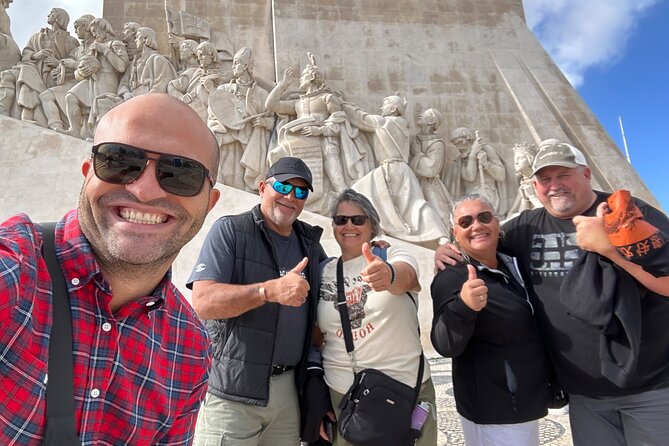
Belém is where Lisbon turns ceremonial. Jerónimos Monastery is along with the Tower of Belém one of the most visited sights in Lisbon, and it is a UNESCO World Heritage Site (listed in 1983). Your time here is about 15 minutes, with admission ticket not included.
Then you go to Torre de Belem. It is described as the last line of defense of Lisbon’s ports, an island fortress that would impress pirates and Portuguese alike. You’ll have about 10 minutes here, again with admission ticket not included.
How to make the most of the short stop
When you only have minutes, you want your brain to do more work than your feet. Before you arrive, I’d recommend having a quick sense of what each place is known for, or ask your guide to give you the “one big idea” for the monastery and the tower. In a tour like this, that kind of context makes the architecture feel less random.
Also, plan your photos strategically. The monastery frontage and the tower area offer different angles depending on where you pause. Since you’re not doing a full museum loop, a few well-chosen photos can be enough to jog your memory later.
The value trade-off
This section gives you the UNESCO highlights without paying time penalties for ticket lines, but because admission tickets are not included at these stops, you may need to budget for that separately if you want to go inside. If your top priority is interior exploration, you may consider pairing this with another half-day focused on these sites.
MAAT, Basilica da Estrela, Principe Real, and the ruined Carmo Convent
After the riverfront classics, the tour shifts into a more modern-and-neighborhood mix.
First, there is MAAT (Museu de Arte, Arquitetura e Tecnologia). It is described as an international museum for art, architecture, and technology, launched in October 2016. You get about 10 minutes and admission ticket not included, so think of this as a design stop. Your guide can point out the thinking behind the place, and you get a quick sense of Lisbon’s contemporary side.
Next you visit Basilica da Estrela for about 10 minutes. It’s listed as admission ticket free, so the barrier here is more about timing than cost.
The tour then moves to Príncipe Real, described as the most cosmopolitan neighborhood in Lisbon. Even though your stop is short and admission ticket free, this area works as a vibe check. It’s a good place to feel Lisbon shifting from historic hills and monuments to a neighborhood with more lifestyle energy.
After Príncipe Real, you head to Miradouro São Pedro de Alcântara. This viewpoint is described as one of the best, with views from the Bairro Alto district over to Alfama and Lisbon Castle. In a route that already has two major miradouro stops, this one helps you compare sightlines and see Lisbon from a slightly different angle.
Then you pass through Chiado, Lisbon’s more elegant meeting point for coffee, shopping, and evenings out in the neighboring Bairro Alto area. It’s listed with admission ticket free, so it is more about walking atmosphere and the feeling of the streets than about ticketed sites.
The finale is Convento do Carmo, the ruined Carmo Convent. This is one of the most haunting images in Lisbon, and it’s easy to see why. It was Lisbon’s greatest medieval building, but the 1755 earthquake destroyed most of the city. The roof collapsed during Mass on All saints’ Day, and the ruins never got rebuilt. The Gothic arches remain, with architecture that dates back to the 1300s and later additions like Manueline windows.
Why ending here can be perfect
By the time you reach Carmo, you’ve already seen the earthquake story in different forms, from the cathedral to Roman ruins. Ending with a ruin that visually holds the memory makes the whole day snap into a single theme.
How to get the most out of this outside-viewing, photo-heavy route
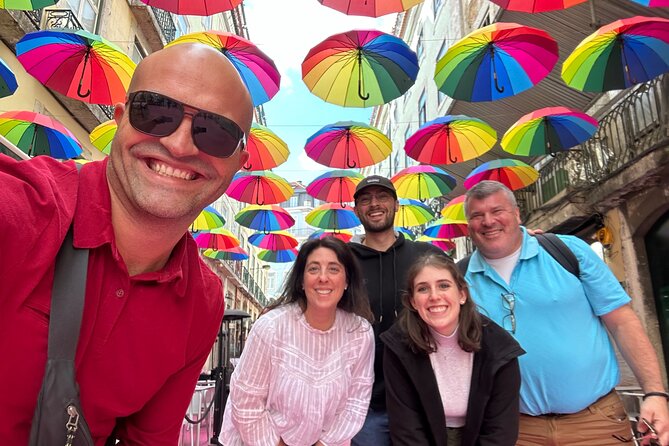
Because the tour is set up to explore attractions from the outside, you should treat your guide like your in-city interpretation engine. Ask the question that would normally cost you time later, like why certain buildings survived, or what you’re meant to notice at each viewpoint.
If you want the best photos, aim for two shots at each viewpoint: one wide shot that shows the whole sweep, and one tighter angle that frames a street or landmark. Your guide is also positioned to help you choose angles, and some guides on this route are even praised for being great photographers, like Diego.
The stops are short, so come ready to move. Wear shoes that work on uneven pavement, and if you get motion-sensitive, tell your guide. Since this is a private setup, the guide can adjust the rhythm.
This kind of tour is ideal when you want to:
- get your bearings fast in a city with steep hills
- see multiple neighborhoods in one day
- learn the why behind what you’re looking at, not just names
It can be less ideal if you want a relaxed day with long indoor time at every major museum.
Should you book this private tuk-tuk tour?
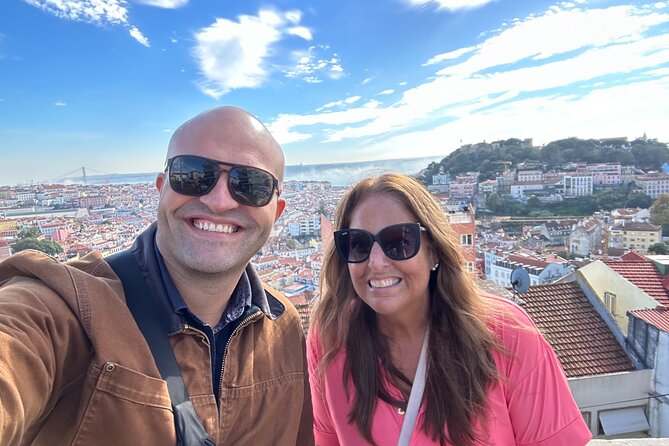
Book it if you want a guided, efficient Lisbon day that blends Alfama, Belém, river views, and multiple viewpoints without exhausting your legs. The private format helps, and the guide factor seems to be a major strength, with people like Patricio, Diego, Alessandro, and Emanuel singled out for patience, humor, and customization.
Skip it or pair it with extra visits if your dream day is mostly inside-ticket museums and churches. This tour is built for outside viewing and photo time, so you’ll likely still want a separate longer stop later for the sites with admission not included, especially Jerónimos Monastery and Torre de Belém.
If you’re spending only a couple days in Lisbon, this is one of the better ways to build a strong first mental map of the city.
FAQ
How long is the Private 4-Hour Tuk Tuk Tour?
It lasts about 4 hours.
Is this tour private or shared with other groups?
It is a private tour/activity, so only your group participates.
Do you pick up from my hotel?
Yes, pickup and drop-off are offered for hotels and Airbnbs in Lisbon’s city center. If your lodging is outside the city center, you meet at Avenida da Liberdade 3, right across from Hard Rock Café Lisbon.
Is admission to the attractions included in the price?
Not always. Some stops list admission ticket not included, while others are listed as free. Your guide will help you understand what applies at each stop.
How many people can fit in the tuk-tuk?
The tuk-tuk fits up to 6 people, but for comfort the tour recommends 4 people per tuk-tuk.
Is the guide available in English?
Yes, the tour is offered in English.
Can I cancel for free?
Yes, you can cancel for free up to 24 hours in advance for a full refund. If you cancel less than 24 hours before the start time, the amount paid is not refunded.
More Private Tours in Lisbon


More Tours in Lisbon



More Tour Reviews in Lisbon
Not for you? Here's more nearby things to do in Lisbon we have reviewed









Alfama Tours, side by side.
 ★ 5.0Alfama Tour in Lisbon Old TownTickets from $34,936 traveller reviews
 ★ 5.0Private Lisbon Sightseeing Tuk-Tuk Tour: Alfama, Belém & MoreTickets from $524,277 traveller reviews
 ★ 4.8Hills, Alfama, and Mouraria Tour by Electric BikeTickets from $253,438 traveller reviews
 ★ 4.9Best of Lisbon Walking Tour: Rossio, Chiado & AlfamaTickets from $232,700 traveller reviews
 ★ 5.0Lisbon Small-Group Food Tour with 18 Tastings in Alfama DistrictTickets from $1261,967 traveller reviews
 ★ 4.5Lisbon E-Bike Tour Commerce Square, Mouraria and AlfamaTickets from $301,688 traveller reviews
 ★ 5.0Old Town TukTuk Tour and Scenic Viewpoints in AlfamaTickets from $35974 traveller reviews
 ★ 4.4Alfama Tour and Live Fado with Traditional DinnerTickets from $58970 traveller reviews
More useful lists for this tour