

Review · LISBON TUK-TUK TOURS
1 Guide 1 Tuk Tuk — Complete Historical Tour — True Local Guide
Lisbon clicks faster from a tuk tuk. In this 4-hour private ride, you get major viewpoints and church-and-earthquake stories without spending half the day on long walks or steep climbs. The one drawback to plan for is that each stop is short, so you will need to be ready to look, learn, and move on.
I like that the tour is built for real seeing: you travel in an open-sided tuk tuk (great for photos) while your guide handles the tricky narrow streets and hills. The host here is driver and guide Gonçalo Seabra, and you meet the group by spotting the tuk tuk with colorful Mandala designs.
Key highlights you will feel right away
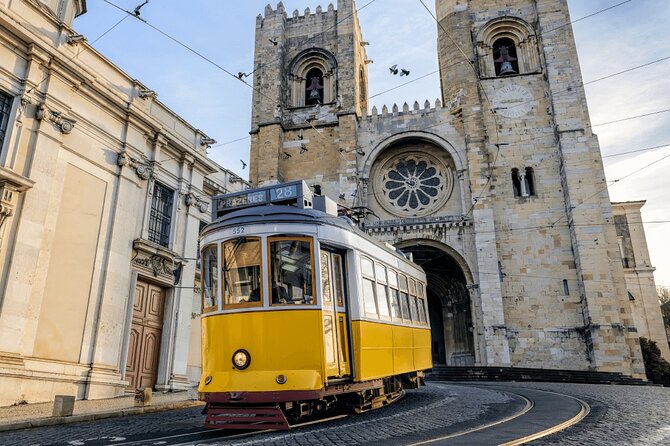
- Private tuk tuk for up to 6 people, so the pace matches your group
- Open-sided vehicle that makes viewpoint photos easier than from a window seat
- Santa Justa viewpoint with a quick, free top-platform visit
- Two big Miradouros in Alfama territory, designed for skyline and rooftops
- A guided path through Lisbon’s major religious sites and squares, including earthquake-era memory
- Stop for ginjinha at Ginjinha Sem Rival, plus a quick chance to compare
Why this 4-hour tuk tuk tour works better than a day-long bus plan
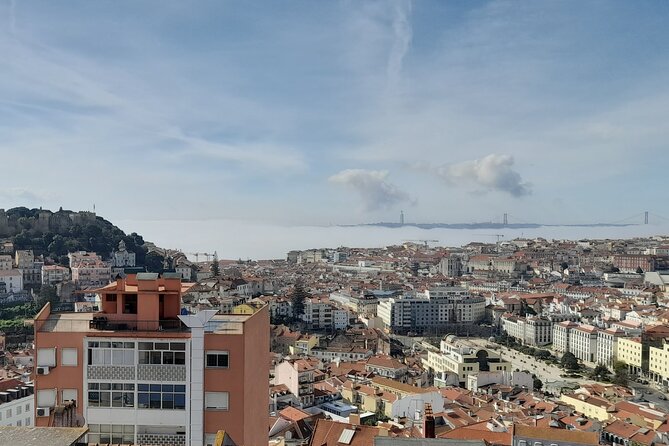
A half-day in Lisbon can feel like either a sprint or a slow meander. This format hits a sweet spot: about 4 hours with just enough time at each place to understand what you are looking at, and still get moving through the city. It is especially useful if you are staying close to the center but do not want to fight for transport up and down hills all day.
Because it is a private tour for up to 6 people, you are not stuck with a one-size-fits-all pace. Your guide can also tailor stops to your interests, and that matters if your group leans more toward viewpoints, churches, or snack breaks.
One practical note: the time you are not at stops is used for driving between locations, with brief explanations along the route. So if you want long sits, this is not the tour for you.
You can also read our reviews of more guided tours in Lisbon



Meet Gonçalo Seabra and find your Mandala tuk tuk
The experience is run by Castles & Waves Tours, and you are guided by Gonçalo Seabra. Pickup is offered, and the meeting point detail is simple: look for the tuk tuk with colorful Mandala patterns.
That matters more than it sounds. In Lisbon, you can lose time just figuring out where to be and where the route starts. Here, the visual cue helps you lock in quickly, then focus on the ride and the stories.
The tour is offered in English, uses mobile tickets, and is built so that most travelers can participate. Service animals are allowed, and there is no mention of special equipment beyond your comfort for getting on and off a tuk tuk.
The viewpoint loop: Santa Justa plus Miradouros over Alfama
Lisbon viewpoints can be either life-changing or just crowded photo stops. This tour chooses viewpoints that give you context, not just pretty rooftops, and they come in a smart order.
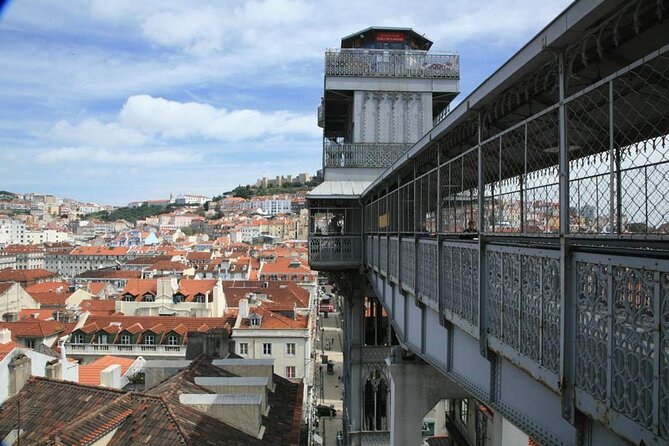
Elevador de Santa Justa, stop at the top
You start with a visit linked to the Elevador de Santa Justa viewpoint. It is scheduled as a free visit to the platform at the top, about 15 minutes. Even if you only see it from the viewing area, the pay-off is that you immediately get a downtown overview before you head into the older neighborhoods.
Why this helps: it gives you a mental map. Once you understand where you are relative to the river and the city center, every later stop makes more sense.
Miradouro de Santa Luzia, iconic rooftops
Next, you hit Miradouro de Santa Luzia for about 15 minutes. It is described as the most photographed viewpoint in Lisbon, looking over rooftops of Alfama, the oldest neighborhood.
The value here is the perspective. You are not just standing somewhere pretty. You are seeing how Alfama’s tight streets and layered buildings stack up on the hills.
You can also read our reviews of more historical tours in Lisbon






Miradouro Das Portas Do Sol, sister viewpoint
Then comes Miradouro Das Portas Do Sol, another 15 minutes with a related skyline view. Think of it as a chance to see the same area from a different angle, without having to plan extra stops on your own.
If you are the type who likes comparing angles and light, this is a good structure. If you prefer one perfect viewpoint and done, you might feel like two close together is a bit much.
Miradouro Da Senhora Do Monte, panoramic finale
The final big “wow” viewpoint is Miradouro Da Senhora Do Monte, scheduled for about 15 minutes. It is positioned as the best viewpoint in the city, with over 200 degrees of panoramic view.
You are looking for the bigger picture here, including visibility toward major landmarks mentioned on the tour: the castle, the Christ, the bridge, downtown, and even a reference to Cristiano Ronaldo’s top-priced apartment. That kind of detail is usually what turns a viewpoint from a snapshot into a story you remember.
Ginjinha Sem Rival: a quick, local-style sweet stop
At about 10 minutes, the tour stops for Ginjinha Sem Rival. It is described as the best where knowledgeable locals go, and it is about 133 years old. There is also a fun practical framing: it calls out that another well-known place is nearby, so you can compare.
Why I like this stop on a history tour: it gives your break a purpose. Instead of a random snack, you get a taste connection to Portuguese culture, right in the middle of the day when energy dips.
What to expect: you will have a short window, so keep your decision simple and order quickly.
Churches and cathedrals: Lisbon’s faith sites as living history
Lisbon is famous for churches, but not all church stops are equally rewarding. This tour plans for variety, moving beyond the usual “pretty facade” routine.
Igreja de S Domingos, unusual details in a big setting
You spend about 20 minutes at Igreja De S Domingos. The tour description focuses on why it feels different from the usual Roman Catholic churches you may have seen: it is tied to major royal events like baptisms and marriages, and it connects to the Portuguese Inquisition. There is also an instruction-style element, basically saying not to search it beforehand because the experience will make more sense in person.
Practical tip: if you care about architecture and symbols, give this stop your full attention. When churches are only glanced at, you miss the “why this matters” part.
Lisbon Cathedral, ancient ground with layered temples
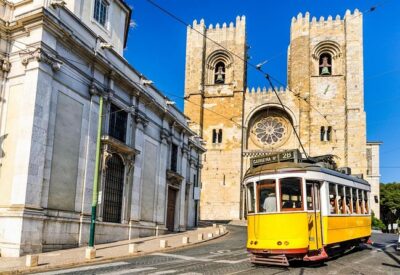
About 5 minutes go to Lisbon Cathedral. The big idea is time depth: the grounds have been sacred for at least 2,000 years, with different temples over the centuries, and the cathedral is framed as the first Portuguese church in Lisbon.
Even if you do not go deep into interior details in only five minutes, you will get the timeline concept. It is a fast “anchor point” stop that helps everything else feel less scattered.
Church of St. Anthony, a birth room and a blessing ritual
Next is Church of St. Anthony, around 15 minutes. It is described as the birthplace of Saint Anthony of Padua in Lisbon, with a visit to his birth room. The tour also mentions a tradition where single visitors can try their luck with a blessing for the right partner.
Balanced view: if you are not interested in ritual traditions, you might still enjoy it as a story-driven stop. If you do like folk elements, this one gives you a human dimension beyond dates and plaques.
A major church and convent stop
The itinerary includes a stop described as one of the biggest churches and convent in the city of Lisbon. The description does not provide a name in the details given, but the slot matters because big religious complexes usually mean bigger architectural scale and stronger “center of gravity” energy for the neighborhood.
If you want a tour that keeps moving, you will like the time-boxed approach. If you prefer to wander freely inside large sites, you may want additional standalone time later.
Another major Lisbon church tied to the patron saint
There is also a later stop described as the biggest inside the city dedicated to Lisbon’s patron saint, with a note that the saint is not Portuguese. Again, the name is not provided in the details given, but the framing is clear: it connects faith to identity and local meaning.
This is also a good place to ask your guide what the reference means, since the tour description hints that context is part of the point.
The Pantheon of important Portuguese figures
The route then includes a pantheon that houses tombs of some of the most important Portuguese. Since only that description is provided, the best way to treat this stop is as a memory stop. Spend your time noticing who is commemorated and how Portugal chooses to memorialize national figures.
Squares, Roman layers, and the 1755 earthquake thread
A good historical tour is not just “look at things.” It connects the threads that shaped the city. This route does that through squares and story beats.
A historical square tied to the 1755 earthquake and the dictatorship era
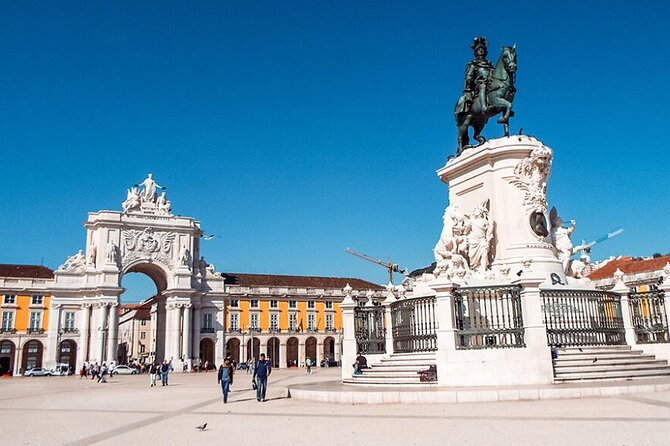
The tour begins with a stop at a historical square tied to events connected to the 1755 earthquake of Lisbon and to the end of the Portuguese dictatorship. Even without extra time inside a museum, this kind of stop matters because it tells you what later streets and buildings are responding to.
In practice, squares like this are where Lisbon’s power and public life have repeatedly played out, so understanding the timeline helps you interpret what you see from the tuk tuk.
The oldest square, from Roman times to 1755
Another square stop is framed as the oldest square in the city, described as marking the northern limits of the city going from the Roman Empire until the great earthquake of Lisbon. That is a big claim, and the reason it is valuable is simple: you get a clear before-and-after story in one place.
If you like history that feels physical, this is the type of stop that makes the city click.
Museu de Lisboa, Teatro Romano, and the earthquake connection
At about 10 minutes, you visit Museu de Lisboa – Teatro Romano. The tour description highlights how a building built 2,000 years ago connects with Portuguese history and the great earthquake of 1755.
This is a strong inclusion for a few reasons. It shows that Lisbon is not only about medieval churches and later kings, but also about how older structures and disasters shaped what survived and what changed.
Alfama: the neighborhood moment that ties everything together

Toward the end, you move into Alfama, the oldest neighborhood, known for its narrowest streets and a labyrinth-like layout. The tour allows about 15 minutes to explore.
This short walk slot is built for orientation. You get enough time to feel the neighborhood pattern and how it differs from the broader downtown grid. And because the tour already brought you to the Miradouros over Alfama, the streets make sense when you finally see them up close.
If your group loves wandering, you might want to extend Alfama on your own after the tour. The tuk tuk can get you in, but only real time on foot reveals all the side streets.
Food, pace, and photo strategy for your 4-hour plan
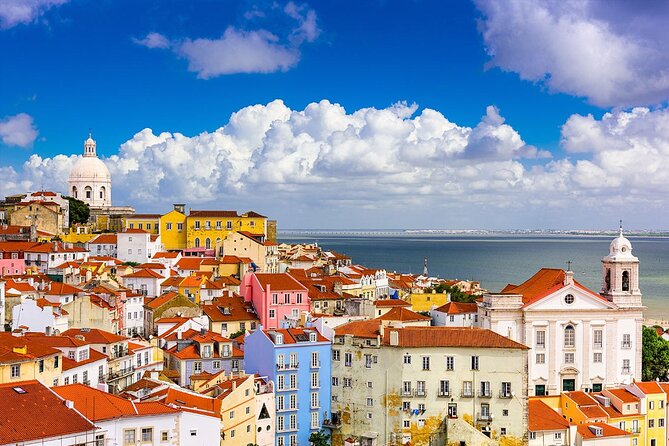
The tour’s structure is basically three things working together: viewpoints for context, churches and squares for story, and short breaks so you do not run out of steam.
The open-sided tuk tuk is a big deal for photos. You are not trapped behind glass, and you can usually position yourself for quick angles while the driver handles the traffic and tight lanes.
Timing is the only area where you should be realistic. Many stops are listed at 5 to 20 minutes, with free admission noted at several points. That means you will get the highlights, not a slow museum day.
Who this tour fits best
This tour is a great match if:
- you want a guided history sampler without long lines or extended transit
- your group includes different interests, since the guide can tailor the flow
- you care about views over Alfama and the city overview that helps you plan the rest of your trip
- you prefer a private experience where you can ask questions without sharing with strangers
It might feel less ideal if:
- you want to spend a long time in large churches or interiors
- you do not like moving every 15 minutes or so
- your group expects a detailed museum-style visit rather than story-driven stops
Price and value for a private group of up to 6
The price is $432.50 per group, up to 6 people, for about 4 hours. That is a meaningful number, so here is the simple math: if you fill all 6 spots, you are around $72 per person. If you have fewer people, the per-person cost rises, but you still get the private tuk tuk advantage.
What you are really paying for is time efficiency and guide handling. The route packs multiple viewpoints, multiple major religious sites, and key historical squares into one ride, with pickup and driving through narrow streets and hills. It is also built around easy wins: several stops are described as free admissions or free access to key areas (like the Santa Justa platform).
So if your goal is to get your bearings fast and cover the core highlights with someone who connects the dots, the value can feel strong. If you only care about one or two sights, you might not use enough of the route to feel the same value.
Should you book this Lisbon historical tuk tuk tour?
Book it if you want a short, well-guided Lisbon history arc with photo-friendly viewpoints, smart stops, and a local guide in Gonçalo Seabra steering the day. The biggest reasons to choose it are the mix of city overview from Santa Justa and the Miradouros, plus the way the route ties stories to places, including references to the 1755 earthquake and later political moments.
Skip or pair it with other plans if you know you want deep, slow time inside churches or you dislike frequent transitions. This is a “see it, understand it, move on” style of tour.
If you do book, go in with one mindset: treat the stops like chapters. Let the viewpoint give you orientation, then let the squares and churches give you meaning. That is when the 4 hours feels like much more than a quick drive.
FAQ
How long is the tour?
It runs for about 4 hours (approx.).
How much does the tour cost?
The price is $432.50 per group, up to 6 people.
Is this a private tour?
Yes. It is private, and only your group participates.
Do you offer pickup in Lisbon?
Pickup is offered, and the driver is Gonçalo Seabra. You should look for the tuk tuk with colorful Mandalas.
What language is the tour in?
The tour is offered in English.
Are admission tickets required for the stops?
Many stops are listed as free, including items like the Santa Justa platform viewpoint and several churches and landmarks on the route.
Where does the tour end?
The activity ends back at the meeting point.
Is the tour suitable for families with young children?
There is no children under 3 policy stated.
Are service animals allowed?
Yes, service animals are allowed.
More Guided Tours in Lisbon



More Tours in Lisbon





More Tour Reviews in Lisbon



Not for you? Here's more nearby things to do in Lisbon we have reviewed











Lisbon Tuk-Tuk Tours, side by side.
 ★ 5.0True 4Hour Private Tuk Tuk Tour: Discover Lisbon with a Local!Tickets from $1088,008 traveller reviews
 ★ 4.9Private Guided Tuk-Tuk Tour with Hotel PickupTickets from $1534,552 traveller reviews
 ★ 5.0Private Lisbon Sightseeing Tuk-Tuk Tour: Alfama, Belém & MoreTickets from $524,277 traveller reviews
 ★ 5.0Lisbon Highlights: Private Tuk Tuk Tour Adventure SightseeingTickets from $843,284 traveller reviews
 ★ 5.0Welcome Lisbon Tour with Local Guide in Private Eco Tuk TukTickets from $171,691 traveller reviews
 ★ 4.9Private City Tour by Eco Tuk TukTickets from $281,215 traveller reviews
 ★ 5.0Old Town TukTuk Tour and Scenic Viewpoints in AlfamaTickets from $35974 traveller reviews
 ★ 5.0Explore Lisbon by Tuk Tuk: History and ViewpointsTickets from $19840 traveller reviews
More useful lists for this tour