
Review · ALFAMA TOURS
Alfama: The Kaleidoscopic District – Private Walking Tour
One stair-step away from the best angles in Alfama. This private walking tour strings together Lisbon’s classic viewpoint, Romanesque cathedral remains, odd medieval architectural details, and fado culture, with a guide who thinks like a photographer. You also get a real local pace, not a rushed checklist.
What I like most is the private guide setup, which makes it feel tailored to how you walk and what you notice. I also love that the route mixes big landmarks with small visual puzzles, so you keep getting fresh little surprises, not the same view again and again.
One consideration: this is a walking tour that runs about 3 hours, so you’ll want comfortable shoes and a weather-friendly plan. If you hate wandering outdoors with frequent stops, you might feel it more than you would on a busier, shorter option.
Key points before you go
- Photographer-led guidance that helps you see (and frame) Alfama’s angles
- Free-entry stops at every listed site, so your $36.12 goes further
- Mix of grand and quirky, from Lisbon Cathedral to a medieval fake window
- Real fado context, with a stop at a fado house connected to archaeological layers
- Great variety in 3 hours, viewpoints, churches, manor houses, market streets, and a medieval gate
Alfama from the inside: what makes this tour feel different

Alfama is the part of Lisbon where you can’t just look. You need to walk, glance up, and accept that the city is a little chaotic on purpose. This tour fits that reality. It’s private, it’s guided with intention, and it moves through spots that help you understand why Alfama looks the way it does.
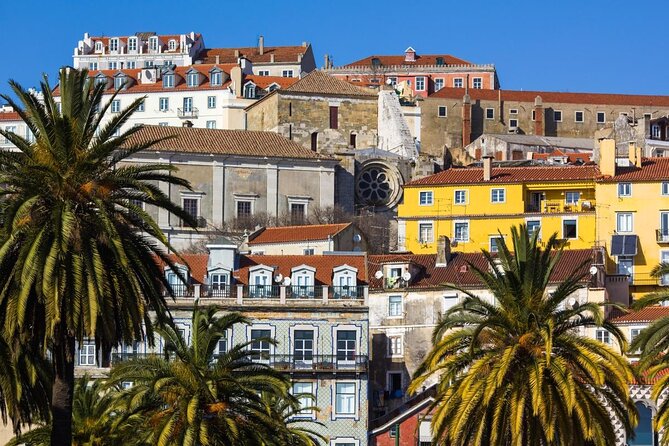
The big win is the balance between scale. You start with an open view that shows how Alfama hangs over the river and the South Bank. Then you drop into tighter streets and buildings where details matter: fortress-like cathedral walls, a fake window that reads like a stage prop, and ceramic-tile work that makes you stop and stare.
And because the guide is also a photographer, the tour has an extra layer of attention to how you see. You’re not just collecting facts. You’re learning to look.
You can also read our reviews of more walking tours in Lisbon


Starting at Largo Portas do Sol, then heading for Miradouro de Santa Luzia
The walk begins at Largo Portas do Sol (by the cruise terminal and Terreiro do Paço area). From there, you move toward one of Alfama’s best “pause and breathe” moments: Miradouro de Santa Luzia.
This is your first payoff. The viewpoint gives you a wide view over Alfama’s whimsical skyline, with the river and its South Bank stretching out beyond the rooftops. This matters because it sets the map in your head early. After you see the big picture, the later tight streets and church corners start to make sense.
At this stop, plan to slow down. People rush viewpoints, then wonder why they feel disoriented later. Here, you’re doing the opposite. You’re building orientation first, then letting the rest of the route click into place.
Lisbon Cathedral: Romanesque monument, church plus fortress energy

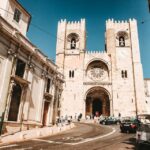
Next up is Lisbon Cathedral, one of the most historically layered stops on the walk. The tour frames it as the city’s first and only Romanesque monument that remains, which is a big deal when you’re walking through a district famous for older traces and later rebuilding.
The best way to think about this cathedral is its dual personality. It reads as half church and half fortress, and that impression comes through even before a guide explains the story. You’ll also hear how it was radically rebuilt in the 1930s of the 20th century. That timing helps explain why it can feel almost like a new medieval cathedral, while still carrying very old identity.
Practical tip: give yourself a moment to look at the structure as a whole, then at the edges and transitions. When you see it as both sacred space and defensive-looking architecture, the building stops feeling like just another church and starts feeling like a clue.
The fake window and the tile-covered smithy on Rua das Cruzes
Right after the cathedral, the tour gets playful with a stop at Fachada do Edificio na Rua das Cruzes da Se 13-15. This is where the district earns its nickname as a place of optical surprises.
You’ll see an awesome medieval fake window opened in the south wall of the cathedral cloister. A “fake” opening sounds like a gimmick, but it isn’t just decoration. It’s the kind of detail that shows you how buildings communicated, framed views, and controlled what you could see.
Across the road, you also get a very different visual. There’s a nineteenth-century smithy with a façade covered in rare ceramic tiles. This contrast is exactly why I like mixing big sights with street-level curiosities. Your brain learns faster when you’re not walking from one monument to the next in a straight line.
Igreja Sao Joao da Praca: miracles, public hangings, and fado nearby

At Igreja Sao Joao da Praca, the tour goes into the layered side of Lisbon storytelling. This church is described as a place of miracles and public hangings. Those two ideas in one stop sounds shocking, but that’s part of why Alfama feels honest. The district doesn’t sanitize its past, it folds it into the present.
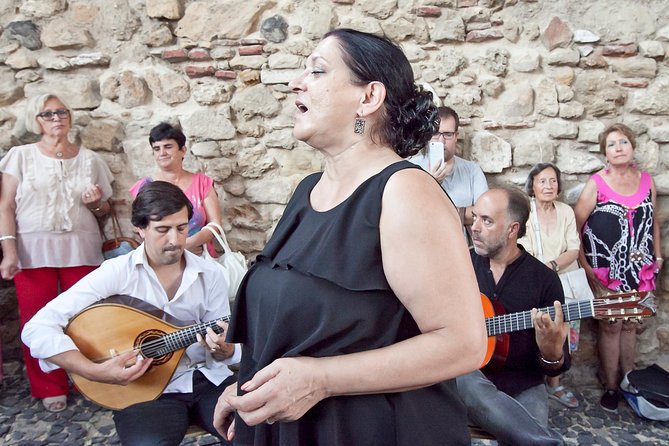
This stop also helps you understand how fado lives in the neighborhood. The tour points out that some of the best fado houses are around the corner, along with a wonderful baroque small church. Even if you are not planning to enter another church or attend a fado night meal, it’s useful to know where the culture sits spatially. In Lisbon, music is not always in a concert hall. Often it’s stitched into the same streets as daily life.
If you want a smooth experience here, keep your senses open. Notice what changes when you turn a corner: more sound, more activity, more storefront energy. That shift is part of the lesson.
You can also read our reviews of more private tours in Lisbon





Casa de Fado Porta d Alfama: what Alfama means, plus archaeology inside
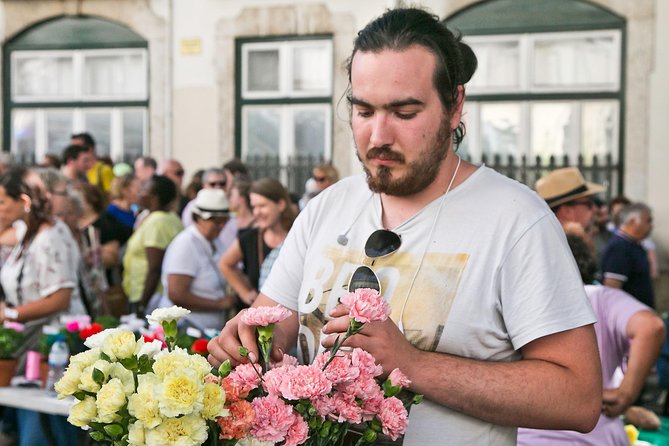
Then you land at Casa de Fado Porta d Alfama, where the tour ties the neighborhood identity directly to the word Alfama. That alone makes this stop different from a simple church or viewpoint visit. You’re not only learning what to see, you’re learning how the district got its name and meaning.
This stop is also connected to a fado restaurant that includes an archaeological museum inside. That combination is practical for your trip planning. If you’re trying to understand Lisbon beyond postcards, it’s handy to have a place where you can mix music culture and physical history in one go.
Even if you only stop briefly, it helps to realize you’re walking through a district that stacks time. Streets lead to doors, doors lead to performances, and under and within those buildings you can find older layers.
Casa dos Bicos and Museu de Lisboa: the manor house that survived
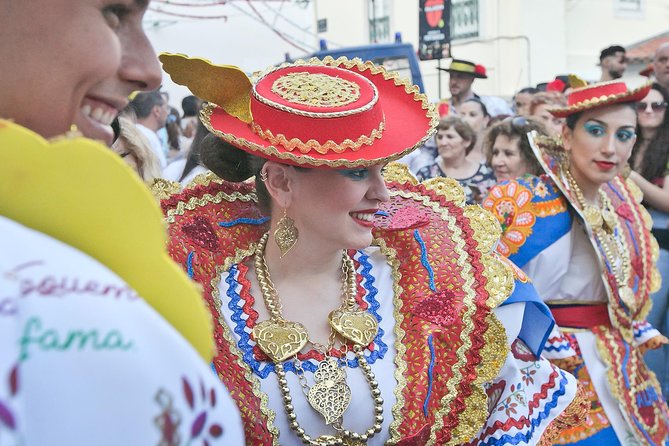
One of the most interesting stops on the route is Casa dos Bicos-Museu de Lisboa. The tour calls it one of the rare surviving manor houses from the Age of Maritime Exploration, which is exactly the kind of detail that makes Alfama feel tied to Lisbon’s wider global story.
This building also hosts the Foundation José Saramago, which gives the stop a modern cultural anchor. So you’re not only thinking about medieval or exploration-era Lisbon. You’re also connecting Lisbon’s literary identity to a place that still holds older architectural traces.
The tour also notes astonishing archaeological findings on the ground floor. That matters because it reinforces the core experience of the day: Alfama is not just scenery. It has physical evidence. The neighborhood feels older because it is.
If you like museums but don’t want a full museum day, this is a good compromise. It’s short, focused, and connected to what you’ve been seeing outside.
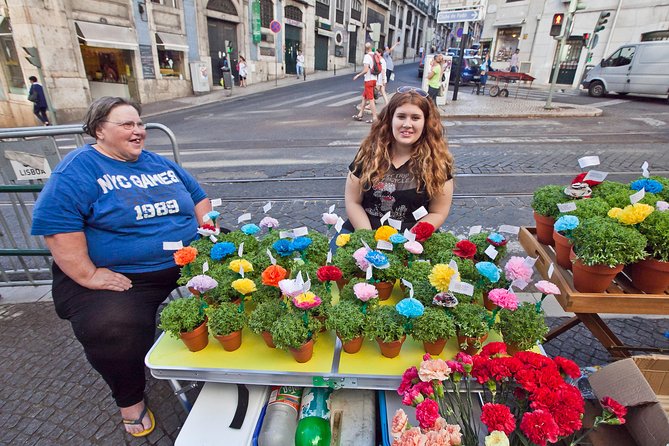
Rua dos Bacalhoeiros: from old onion market to garden energy

After the manor house, the tour moves into Rua dos Bacalhoeiros. Here, the story turns from architecture to city life.
The tour describes it as the old onion market, now converted into a garden, plus refurbished shops around it. That mix is a sweet spot for visitors because it feels like Lisbon at human speed. You get greenery, you get street rhythm, and you see how the market identity evolved rather than disappearing.
This stop is listed as part of the route because it’s lively right now. For me, that makes the tour feel grounded. You’re not only visiting “important” places. You’re also seeing what life is like between them.
If you’re photographing, this is a good place to slow down again. Gardens and storefronts give you lots of texture without asking you to climb for another lookout.
Porta do Mar: one of the medieval doors into Lisbon
The final sightseeing stop is Porta do Mar, described as one of the 12 doors that were daily opened in Medieval Lisbon. That is a great detail to understand the neighborhood’s shape.
You’ll see it framed by two noble houses. One is waiting to be refurbished, and the other is described as a five stars hotel with its own archaeological treasures. That pairing is another Alfama lesson: the district is full of contrasts. Old walls, new use. Past stories, present-day functions.
Porta do Mar also gives you a sense of how the district worked as a gate system. Streets weren’t random. They were connected to entrances, protection, and movement into and out of the city.
It’s also a fitting ending point. You start with the wide view and end with the literal gate idea, so the tour closes both the visual and the historical loop.
Why $36.12 feels like solid value for a private 3-hour walk
Let’s talk money, because this is a private tour and private tours usually cost more.
At $36.12 per person for about 3 hours, the value comes from two things. First, it’s private, so you are not sharing your pace with strangers. Second, the listed stops have free admission tickets. That matters because you’re not paying extra again and again just to see what’s on the route.
You’re also paying for a guide with a specific angle: a professional photographer guide. Even if you’re not chasing Instagram shots, the photographer mindset changes the experience. It encourages you to notice composition, light, and architectural details instead of just scanning for the next headline monument.
Add in that it’s offered in English, and you get a mobile ticket for smoother entry. For a short half-day in a tough-to-navigate district, this combination is a practical buy.
Morning or afternoon: which one fits your day
The tour gives you a choice of morning or afternoon departure. I can’t tell you which will be best without knowing your schedule, but I can help you decide how to pair it with the rest of Lisbon.
If you’re the type who likes finishing strong, afternoon can work because it sets you up for a more relaxed evening. If you prefer to start with structure, morning gives you that early orientation, then you can wander the neighborhood later with better instincts.
Either way, you’ll leave with a cleaner sense of Alfama’s layout, and that’s what makes the rest of your day easier.
Who this tour is for (and who should skip it)
This tour is a strong fit if you want:
- A private guide rather than a group pace
- Alfama explained through both big landmarks and small street details
- A route that includes fado culture context, not just churches and overlooks
- A guide-led way to photograph and see better, with a professional photographer skillset
You might want a different option if:
- You hate walking and would rather do shorter, more stop-and-go experiences
- You’re looking for food and drinks included, because this one does not include meals or alcoholic beverages
- You want hotel pickup and drop-off, because that is also not included
Should you book Alfama: The Kaleidoscopic District?
Yes, if you want an efficient, story-driven way to understand Alfama in about 3 hours. This route gives you the classic viewpoint moment, the Romanesque-and-fortress cathedral experience, the oddball architectural details like the medieval fake window, and then it lands you in the lived-in neighborhood fabric with fado context and the market-turned-garden feel.
The main reason I’d book it is simple: private guiding plus free-entry stops plus a photographer-led way of looking. That’s a lot of value packed into a short window, and it helps you enjoy Lisbon more after the tour ends.
FAQ
FAQ
How long is the Alfama private walking tour?
It runs for about 3 hours.
Is this tour private?
Yes. It is a private walking tour, with only your group participating.
What language is the tour offered in?
The tour is offered in English.
Where does the tour start and end?
It starts at Largo Portas do Sol, 1100-411 Lisboa, Portugal, and it ends at Chafariz d’El-ReiR. do Cais de Santarém, 1100-104 Lisboa, Portugal.
What are the departure options?
You can choose either a morning or afternoon departure.
Is there a mobile ticket?
Yes, the tour includes a mobile ticket.
What is included in the price?
Included are a professional local photographer guide, a private walking tour, and a local guide.
What is not included?
Food and drinks, hotel pickup and drop-off, use of bicycle, and alcoholic beverages are not included.
Are the listed admissions free?
Each listed stop notes admission ticket free.
What is the cancellation policy?
Free cancellation is available if you cancel up to 24 hours in advance for a full refund.
How soon will I get confirmation after booking?
Confirmation is received at the time of booking.
More Walking Tours in Lisbon


More Tours in Lisbon



More Tour Reviews in Lisbon

Not for you? Here's more nearby things to do in Lisbon we have reviewed







Alfama Tours, side by side.
 ★ 5.0Alfama Tour in Lisbon Old TownTickets from $34,936 traveller reviews
 ★ 5.0Private Lisbon Sightseeing Tuk-Tuk Tour: Alfama, Belém & MoreTickets from $524,277 traveller reviews
 ★ 4.8Hills, Alfama, and Mouraria Tour by Electric BikeTickets from $253,438 traveller reviews
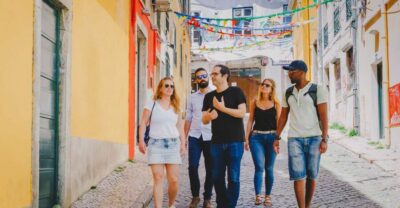 ★ 4.9Best of Lisbon Walking Tour: Rossio, Chiado & AlfamaTickets from $232,700 traveller reviews
 ★ 5.0Lisbon Small-Group Food Tour with 18 Tastings in Alfama DistrictTickets from $1261,967 traveller reviews
 ★ 4.5Lisbon E-Bike Tour Commerce Square, Mouraria and AlfamaTickets from $301,688 traveller reviews
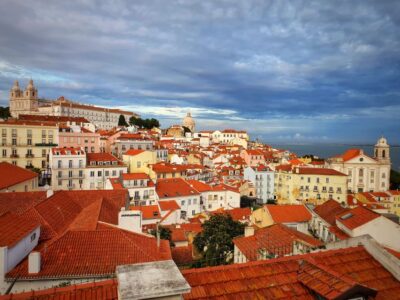 ★ 5.0Old Town TukTuk Tour and Scenic Viewpoints in AlfamaTickets from $35974 traveller reviews
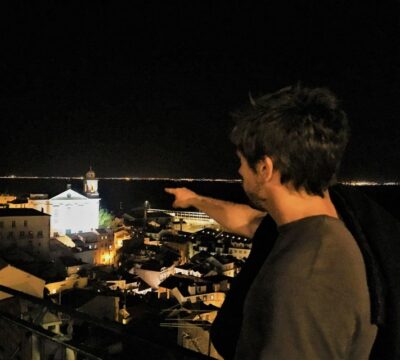 ★ 4.4Alfama Tour and Live Fado with Traditional DinnerTickets from $58970 traveller reviews
More useful lists for this tour