

Review · LISBON CITY TOURS
Roman Lisbon Tour
Roman Lisbon is hidden in plain sight. I love the way this tour starts at Portas do Sol to frame the Roman-era city, then locks in with the Roman Theater, still standing inside the walls of a European capital. I also like that you do not just look at ruins, you get the big picture of Lisbon’s role as a key Roman trading hub.
One thing to consider: it is a fast 3 hour circuit, and you will move between several archaeological stops, including sections that go underground. If you prefer slow, lounge-style sightseeing, this may feel a bit busy, but if you like walking and learning as you go, it is a strong fit.
Key Points I’d Highlight Before You Go

- Portas do Sol sets the Roman-era geography before you step into the sites
- Roman Theater inside a capital wall gives you a rare, high-impact stop
- Lisbon Cathedral cloister reveals Roman street remains right in the city’s living center
- Bath and Temple of Cibele connect daily life with worship
- Casa dos Bicos ties the visible city to Roman walls and production spaces
- Underground archaeology shows garum factories, houses, streets, and more
Why Roman Lisbon Feels Different Than the Usual Sights

Most Lisbon sightseeing focuses on viewpoints, tiles, churches, and miradouros. This tour gives you another layer, the Roman Lisbon that sits under and around the places you already recognize. The tone stays practical and story-driven, the guide connects what you see to how people lived, traded, and built.
I especially like that the tour is not only about monuments. You get details on how Romans lived in Lisbon, and you get a sense of the power Lisbon held during the Roman Empire as a trading place. That combination turns scattered archaeology into something you can picture and understand.
You can also read our reviews of more tours and experiences in Lisbon.


Route Overview: From Portas do Sol to Garum Underground
The flow works because it moves from big picture to hands-on evidence. You begin at a top viewpoint, then go to the Roman Theater, continue into Lisbon Cathedral’s cloister area, and keep building the story with a Roman bath and the Temple of Cibele. After that, you shift to Casa dos Bicos, where you see traces of Roman walls and production.
Then comes the part that changes how you see Lisbon completely, the underground segment. This is where the tour points out archaeological structures you would not find on your own, including upper-class houses, streets, garum factories, and even swimming pools and other artifacts. If you love the feeling of seeing the past physically under your feet, this is the payoff.
Portas do Sol Viewpoint, Setting the Roman Stage

You start at Portas do Sol viewpoint, and it is more than just a pretty warm-up. Lisbon’s oldest layers are easy to miss when you are moving from street to street at ground level. Getting a view first helps you grasp the city’s shape and why certain areas mattered to Roman settlement and trade.
This opening also keeps the tour’s pacing honest. After the viewpoint, you move into archaeology for the real work of the day. In other words, you get context up front, not random ruins with no anchor.
Expect a bit of standing and walking as you transition from the viewpoint into the city sites. Comfortable shoes are not optional, the route is built for moving.
Roman Theater Inside a Capital Wall, and Why It Matters
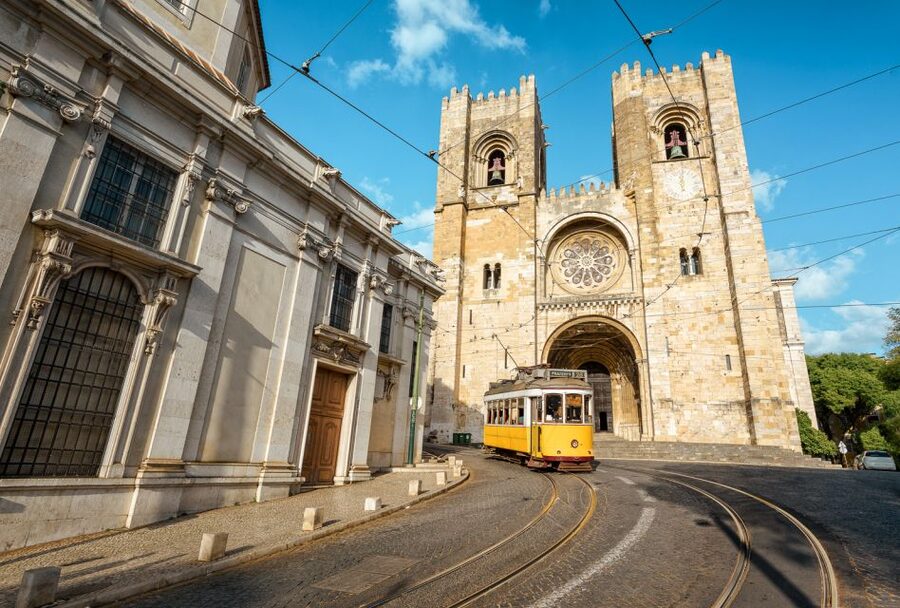
The Roman Theater is the kind of stop that instantly upgrades your trip. The tour notes that it is the only theater like this that exists within the walls of a European capital after Rome, and that alone makes it memorable. A theater is also a social instrument, it signals what a city valued, where gatherings happened, and how authority showed up in public life.
On this tour, the theater is not treated like a photo op. The guide uses it to explain Roman presence in Lisbon, and to connect the site to Lisbon’s importance in Roman times. If you like learning why buildings look the way they do, this is a strong moment in the route.
A practical note: you will want to have your attention switched on here. This is one of the stops where the guide’s explanation makes the site click.
Lisbon Cathedral Cloister, Roman Streets Underfoot
Next you head to the cloister of Lisbon Cathedral, where you find parts of Roman streets of Lisbon. That detail is the kind that changes how you interpret a city. Instead of seeing one era replaced by another, you see the same urban fabric re-used, built over, and preserved in fragments.
This stop also helps you understand something subtle: Lisbon’s center is not empty history. It is active history, layers that remain part of the city’s current identity. The cloister setting makes it easier to accept the idea that Roman life is physically present around you.
If you are the type who likes atmosphere, the cathedral area brings that. If you are rushing, you might not give it enough time, but the cloister stop is designed to be an insight moment, not a quick photo and move on.


Roman Bath and the Temple of Cibele, Religion and Routine
After the cloister, the tour moves into daily-life archaeology with the Roman bath and the Temple of Cibele. This is where you start to see Romans not only as builders and traders, but as people with routines and beliefs.
A Roman bath tells you about comfort, public or semi-public life, and the social side of cleanliness and relaxation. The Temple of Cibele adds the religious thread, the way worship and civic identity were built into the built environment.
What I like here is balance. You are not stuck in one category of ruins. You see the everyday alongside belief, and that makes Roman Lisbon feel more complete.
You can expect more guided explanation than reading-only sightseeing. The value is in how the guide helps you connect what you see at each stop to the broader Roman story.
Casa dos Bicos, Roman Wall Sections and Factory Clues
Casa dos Bicos is a high-value stop for anyone who likes architecture and city archaeology. The tour uses it to show part of the Roman wall and Roman factories. That is important because it shifts you from grand public spaces to the systems that kept the city running.
Factory clues matter, because trade and production are what turn a city into a hub. Lisbon is described as a major trading place in the Roman era, so seeing production-related evidence helps you understand why Romans would care about this location. It also adds texture to the tour beyond theaters and temples.
One practical thought: Casa dos Bicos and nearby archaeological points are not the kind of place where you can skim. Go at the guide’s pace, and you will get more out of the stop.
Going Underground: Upper-Class Homes, Garum, and Swimming Pools
The underground segment is the tour’s most imagination-stretching part. It is where Lisbon’s Roman story stops being only something you look at, and becomes something you can almost picture from the inside.
The tour describes archaeological structures including upper classes houses and streets, plus garum factories and swimming pools. Garum is not just a random detail, it is a clue about food production and trade networks, because fermented fish sauce was widely used in the Roman world. Seeing factory-related spaces inside an archaeological context helps you understand how a trading city could scale production.
You also see other artifacts, so this is not an empty walk into darkness. It is a guided look at how the city functioned beneath the streets.
Since the tour includes underground areas, go in with a mindset of slower looking. You may find it darker and more confined than the outdoor stops, so pace yourself and listen closely to the guide’s directions.
Guides, Group Size, and the 3 Hour Pace
This is a private-group tour with a live guide who is listed as graduated in history. That matters because Roman Lisbon is not simple, you need a person who can connect sites without turning everything into a memorization exercise.
The guide experience shows up in past tours. Ingo has been praised for being prepared and for connecting Portuguese history across time periods. Paulo has been recognized for cultural and historical insight along with kindness and real passion for Lisbon. Sandra also earned strong praise for making the tour a good match for Roman history fans, including kids.
If you care about depth without boredom, private group format helps. Even when the pace is still fairly brisk, you tend to get clearer explanations and more focused attention.
Price and What You Get for $88
At $88 per person for a 3 hour tour, the value depends on what you usually pay for in Lisbon. Here, you are not only buying a guide. Entrance is included to the Roman Theater, the cathedral cloister, and other archaeological sites along the route.
So you get guided time plus multiple entry points into places that are otherwise hard to string together into one coherent plan. If you want Roman Lisbon as a connected story, you are likely paying less than the combined cost of separate tickets plus the effort of figuring out where to go next.
This is a smart choice if Roman archaeology is your thing, or if you want a structured introduction without piecing together fifteen websites and maps. If you are in Lisbon for a very light overview and do not care about Roman layers, then $88 may feel like a lot for three hours of walking and underground stops.
Practical Tips: Shoes, ID, and What to Leave Behind
Plan around comfort. The tour specifically tells you to bring comfortable shoes, which makes sense given the number of stops and the change in environments, from viewpoints to cloisters to underground spaces.
Bring your passport or ID card. The tour lists this as required, so do not assume you can show only a photo on your phone.
You do also want to respect the rules, alcohol and drugs are not allowed. That helps keep the tour focused and smooth.
For gear, keep it simple. The tour does not call for special equipment, but good shoes and steady attention will do more than any gadget.
Who This Tour Fits Best
I think this tour is ideal if you are:
- A Roman history fan who wants more than one or two isolated ruins
- Someone who likes Lisbon’s older layers, especially the idea of archaeology inside active city spaces
- A family with a kid who gets excited by Roman details, since Roman history passion was specifically mentioned as a strong match
It is also a good fit if you prefer guided context. The stops come with enough variety that the guide’s job is essential, from the Roman Theater to the Temple of Cibele to underground garum factory spaces.
If you strongly dislike underground areas or you want a slower, sit-and-stare kind of day, you might find parts of the route a stretch. Still, the structure is built to keep you moving toward understanding, not just checking boxes.
Should You Book the Roman Lisbon Tour?
Book it if you want Roman Lisbon turned into a guided story, not a scatter of stones. The combination of Portas do Sol context, the Roman Theater, the cathedral cloister with Roman streets, and the underground evidence of garum factories makes it feel like one connected experience.
Skip it only if you are after a casual highlights loop, or if the idea of underground archaeological spaces does not sound appealing. Otherwise, this is a value-friendly way to see major Roman sites in a single half-day, with entrances included and a live guide in multiple languages.
If you are choosing between doing Romans on your own versus hiring a guide, I would pick the guided version for this one. It is designed to help you see the city layers in the right order.
FAQ
How long is the Roman Lisbon Tour?
The tour lasts 3 hours.
Where does the tour meet?
It meets next to the entrance of the Arts Decorativas Portuguesas Museum.
What is included with the tour price?
The tour includes a guided tour with a guide graduated in history, plus entrance to the Roman Theater, cathedral cloister, and other archaeological sites.
What sites will I visit during the tour?
You will see the Roman Theater, the Lisbon Cathedral cloister, the Roman bath, the Temple of Cibele, Casa dos Bicos, parts of the Roman Wall and Roman factories, and underground archaeological structures including upper-class houses, streets, garum factories, swimming pools, and other artifacts.
What languages are available for the live guide?
The guide is offered in Spanish, English, French, and Portuguese.
Is a meal or drinks included?
No. Meals or drinks are not included.
How much does the tour cost?
The price is $88 per person.
What should I bring?
Bring a passport or ID card and wear comfortable shoes.
Is alcohol allowed during the tour?
No. Alcohol and drugs are not allowed.
Can I cancel, and is there free cancellation?
Yes, free cancellation is available up to 24 hours in advance for a full refund.
More Tours in Lisbon




More Tour Reviews in Lisbon
Not for you? Here's more nearby things to do in Lisbon we have reviewed











Lisbon City Tours, side by side.
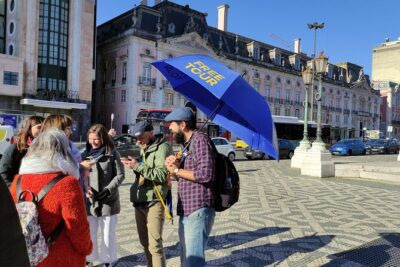 ★ 5.0Lisbon City Center Tour – The Unmissable LisbonTickets from $322,234 traveller reviews
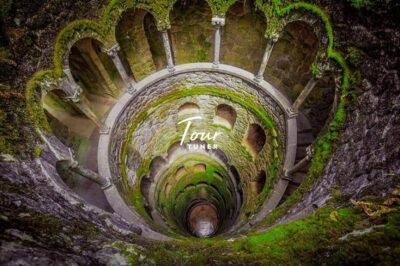 ★ 4.7Sintra, Pena, Regaleira, Cabo da Roca & CascaisTickets from $2319,656 traveller reviews
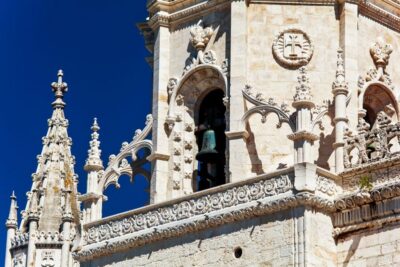 ★ 4.1Jerónimos Monastery Entrance TicketTickets from $2114,164 traveller reviews
 ★ 4.8History, Stories and Lifestyle Walking TourTickets from $2910,902 traveller reviews
 ★ 4.5Sunset Boat Party Cruise with DJ and Open BarTickets from $2710,378 traveller reviews
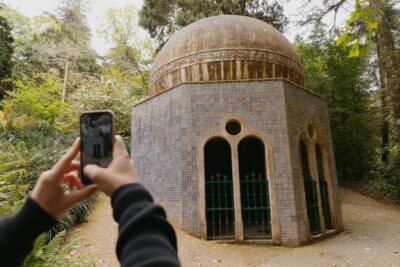 ★ 4.7Pena Palace, Sintra, Cabo da Roca, & Cascais DaytripTickets from $919,981 traveller reviews
 ★ 4.6Oceanário de Lisboa Entrance TicketTickets from $299,943 traveller reviews
 ★ 5.0True 4Hour Private Tuk Tuk Tour: Discover Lisbon with a Local!Tickets from $1088,008 traveller reviews