
Review · LISBON CITY TOURS
Lisbon: Private Guided Electric Tuk Tuk Tour with Tastings
Lisbon looks best when you can slip into the side streets. This private electric tuk tuk tour gets you there fast, with a route that links Belém classics to the old neighborhoods people miss on foot. I also love the pairing of Pastéis de Belém and Alfama ginjinha tastings, because it’s not just sightseeing, it’s Lisbon flavors right where the city story lives. One practical note: you’re riding for about four hours in a small vehicle, so it can feel bumpy, and it is not suitable if you have back problems.
The upside is that you get a relaxed, guided city overview without the usual hop-on hop-off chaos. Your guide can also steer the day to your pace, so you can lean more toward viewpoints, churches, or food instead of forcing every stop. Just know the tour route covers lots of ground, so you’ll want comfortable shoes and a little patience for narrow streets and hills.
Key things you’ll notice on this Lisbon electric tuk tuk tour
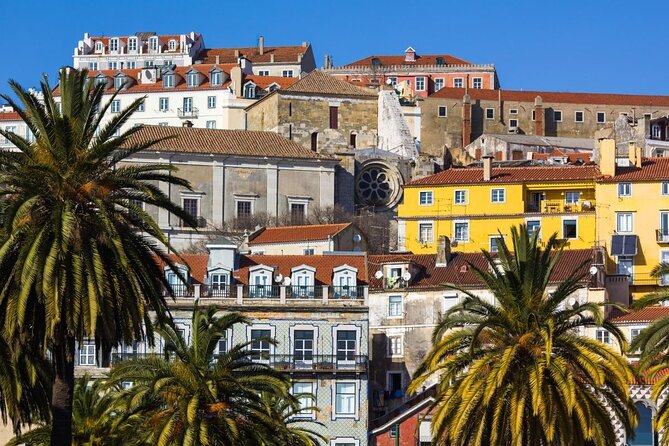
- 100% electric tuk tuk riding helps you reach lanes and small squares with less fuss than walking
- Belém plus Alfama in one day, so you see two different Lisbon moods without planning a route
- Tastings that match the neighborhoods: custard cream at Pastéis de Belém, then ginjinha in Alfama
- A guided overview that’s adjustable, letting you spend more time where you care most
- Skip-the-line via a separate entrance, so you lose less time at popular stops
Why a private electric tuk tuk tour makes sense for Lisbon

Lisbon is a city of angles, stairs, hills, and sudden viewpoints. On foot, you can absolutely explore, but you’ll spend a lot of energy just getting to the next view. On a tuk tuk, you gain something you cannot easily buy elsewhere: momentum. You move through the city while your guide points out what to look for, and you still get that Lisbon feel of turning a corner and seeing something unexpected.
This one is also private, which matters more than it sounds. Instead of fighting for position in a bus line, you can ask questions in real time, stop briefly for photos when the light is good, and adjust if you want more time in a neighborhood you love. I like that it’s designed for a group of up to two, so the guide can keep things personal without rushing you.
Finally, the transport is 100% electric, which fits the tour’s style of being easy on the city and comfortable for your ride.
You can also read our reviews of more guided tours in Lisbon



Meeting at Largo do Regedor and setting the rhythm for the day
You start at Largo do Regedor 10, behind the D. Maria II National Theatre. It’s a good anchor because it places you close to the center, without feeling like you’re beginning in the far edge of the city. Once you meet your guide, the day clicks into place quickly: a first stretch toward Belém, a tasting moment, then a loop through the historic center and viewpoints.
A four-hour tour can either feel long or fly by, depending on pacing. Here, it’s split into guided time and tasting time, so you’re not locked into constant driving. You also get a clear rhythm: look, learn, ride, pause, taste, and then ride again. That pacing is helpful for families too, since you can keep energy up without forcing long stair climbs.
Important comfort note: the tour is not suitable for people with back problems. If that applies to you, don’t treat it as a maybe. Choose a walking-friendly alternative.
Belém first: monasteries, towers, and the Lisbon of the voyages

Your day starts by heading toward Belém, Lisbon’s “at the water” district and home to the landmarks people associate with Portugal’s age of discoveries. This is the part of the trip where you get the broad overview your future self will thank you for. When you later walk on your own, you’ll recognize what you’re seeing.
Jerónimos Monastery area, where scale hits you
Jerónimos Monastery is one of those places where you instantly understand why it became famous. From the tuk tuk, you get a quick sense of the complex and its surroundings, plus context from your guide about how it fits into Lisbon’s story. You’re not just staring at stone. You’re learning why the site matters and what to notice in the details.
Belém Tower and the “why here” feeling
Then comes Belém Tower, a landmark that feels even more dramatic once you’re guided through the significance. It’s easy to think of it as a postcard building. With a guide, you learn what its setting communicates and why it’s so tied to Portugal’s maritime identity. This is the kind of context that turns a photo stop into a real stop.
You can also read our reviews of more private tours in Lisbon





Discoveries Monument, plus a fast way to connect the dots
The Discoveries Monument helps bridge the idea of exploration from stone and symbols to an actual sense of Lisbon’s past. Even if you don’t spend hours inside museums, you’ll leave with a mental map that helps the rest of the city make sense.
Pastéis de Belém tasting, where you stop for a reason
The tour includes a tasting at Pastéis de Belém Bakery, where you try the famous custard cream tart. It’s one of the clearest values in the whole experience, because it’s both food and place-based context. This is not a generic snack stop. It’s the real deal in the neighborhood that made the pastry famous.
You also benefit from a separate entrance for the skip-the-line experience. That can be the difference between enjoying the moment and feeling stuck in a crowd while your timetable evaporates. If you hate waiting, this one is worth it.
The ride through Lisbon’s center: squares, viewpoints, and church stops that feel useful
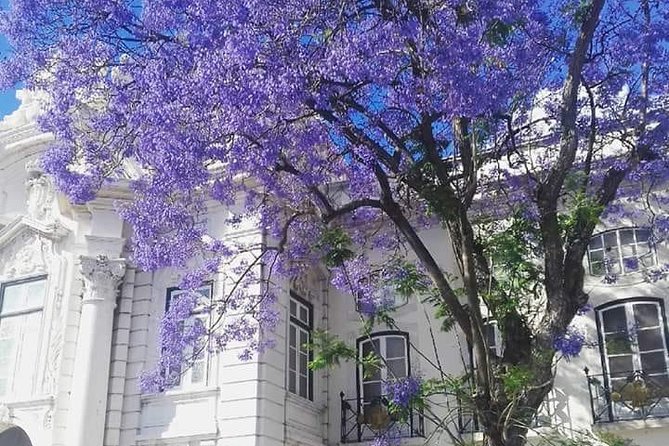
After Belém and the tasting, you pivot toward Lisbon’s older fabric. This is the part where you start seeing the city the way locals do: not just monuments, but the web of small squares, alleys, and viewpoints that connect them.
Comércio Square: the big open pause
Comércio Square is a natural reset after Belém. It gives you an open space where you can orient yourself. From here, it’s easier to understand why Lisbon’s geography funnels people into certain paths. Your guide’s job is to make that orientation feel effortless, and the tuk tuk helps because you can move quickly while everything clicks into place.
Chiado and São Roque: a calmer, more architectural kind of Lisbon
Chiado brings a different texture than Belém. Instead of the harbor vibe, you get Lisbon as lived-in city center, with streets that feel like they belong to everyday life. São Roque Church adds an architectural or religious layer to the day, and it’s a good stop because it teaches you how to look at façades and location. The ride makes it easier to take in the surroundings without losing the ability to move.
São Pedro de Alcântara viewpoint and Príncipe Real: seeing the city’s shape
Viewpoints are a major reason people fall for Lisbon. Here, you get several, and they’re spaced so you’re not overloaded at once. São Pedro de Alcântara viewpoint and the Príncipe Real neighborhood give you higher angles and a sense of how the hills roll into the older districts.
This matters because Lisbon’s viewpoints are not all the same. Some are wide panorama spots, others are more intimate angles over rooftops and winding streets. When you have a guide, you learn what each viewpoint reveals, so you’re not just collecting photos.
Carmo Square and Santo António Church: details that add up
Carmo Square and Santo António Church help fill the gaps between iconic sights. On your own, you might pass them while chasing the next big name. With the guided flow, they become part of the storyline. You learn how churches and squares anchor community life and why Lisbon’s layout pushes you toward certain landmarks.
Alfama time: cathedral areas, Roman ruins, and ginjinha at street level
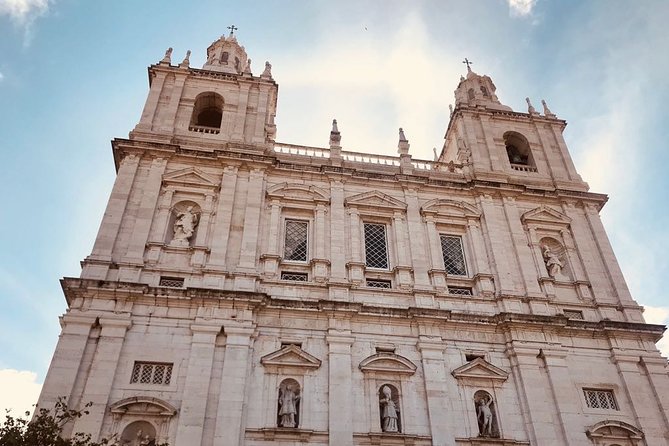
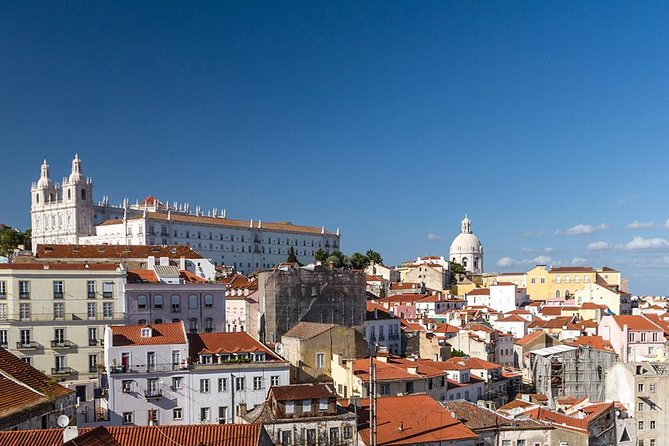
Lisbon’s Alfama is where you feel the city’s age in your legs, even if you are riding in the tuk tuk. This section brings you through some of the most recognizable historic blocks, plus a few stops that make the day feel like more than a highlights reel.
Sé de Lisboa and the Cathedral area: a strong sense of place
Sé de Lisboa (the Cathedral) is a powerful anchor. It gives you a landmark to understand scale, and your guide can point out how the area fits into the old city. This is one of those stops where even a brief look is enough to make later walks more meaningful.
Roman Theatre area: Lisbon as layers
The Roman Theatre stop is one of the best “wait, really?” moments on the tour. Lisbon is often framed as medieval, but this adds an earlier layer. Seeing it through a guide’s explanation helps you connect Roman presence to how the city evolved over centuries, even when you are only seeing part of the site from street level.
Portas do Sol and Senhora do Monte viewpoints: classic views, paced well
Then you get Portas do Sol and Senhora do Monte viewpoints. What I like about the way these stops are integrated is the pacing. You go from streets to heights in a way that feels like a guided route, not a checklist. When you stand and look, you can actually tell where you are looking, which makes the viewpoint experience more rewarding.
São Vicente de Fora Monastery: adding another historic thread
São Vicente de Fora Monastery continues the “layers” theme. You’re not only collecting buildings. You’re understanding how Lisbon’s spiritual and civic history coexists in the same neighborhoods. It’s the kind of stop that gives you an emotional memory of the city, not just information.
Feira da Ladra: if your day matches, add this to the plan
The tour includes Feira da Ladra on Tuesday and Saturday. If you’re visiting on those days, it’s worth leaning into it if your guide suggests it. Market energy changes the feel of Alfama immediately, and a guided timing can help you see more without feeling rushed.
Alfama ginjinha tasting: the end that tastes like Lisbon
To finish, you reach Alfama for the ginjinha tasting. This is smart because it ends in the neighborhood where you get the best sense of Lisbon’s street culture. Ginjinha is not just a drink. It’s a local ritual, and the guide’s timing makes it feel like a natural conclusion rather than a random food stop.
Personalizing your route, without losing the big Lisbon hits
One of the biggest strengths here is that your itinerary can be personalized. That means you can spend more time on what you care about, whether it’s viewpoints, churches, or a slower pace through older streets.
Think of it like this: you get a strong default route that covers Belém and the historic center. Then your guide can adjust the order or add emphasis based on your interests. If you love architecture, you’ll likely get slightly different emphasis than if you want maximum photo time. If you want to shop for ceramics or local snacks, you can ask and build those micro-stops in where it makes sense.
This customization is also useful when your group has different energy levels. A private setup can keep everyone happy instead of splitting up into people who move fast and people who do not.
Price and value: what $452 per group up to 2 really buys
At $452 per group up to two, this is not a budget tour. It is a value tour. Here’s why.
First, you are getting a private guide for about four hours, plus a 100% electric tuk tuk that covers neighborhoods you would struggle to connect efficiently by foot. Second, you’re paying for access that saves time at at least one major stop via the separate entrance. Third, the included tastings are not symbolic. You get custard cream at Pastéis de Belém and ginjinha in Alfama, both tied to the neighborhoods you’re touring.
If you split the cost across two people, it can feel more reasonable, especially compared with piecing together separate guided experiences. You’re effectively buying convenience plus context plus two food moments.
That said, if you are traveling solo and expecting a cheap ride, this probably won’t feel like a bargain. If you value a curated, time-efficient route and want the experience to feel relaxed, the price starts to make sense quickly.
The main drawbacks to consider before you book
No tour is perfect, and tuk tuk rides come with tradeoffs.
The clearest one is comfort. The tour is not suitable for people with back problems, and four hours in a small vehicle can challenge anyone with sensitivity to bumpy roads or motion.
A second consideration is route planning. In one instance, a guide got lost and took the tuk tuk on a highway route twice, which made it feel scary. That is not the norm you should expect, but it is a reminder that you are relying on the guide’s experience and the quality of their planning.
Lastly, entrance fees are not included for monuments. That means you should expect potential add-on costs if you decide to go inside specific places rather than view them from outside during the tour.
Should you book this Lisbon electric tuk tuk tour?
Book it if you want a private, efficient overview that mixes Belém and Alfama, and you love the idea of tastings in the exact places they belong. I also think it’s a great match for couples and small families because it avoids long stair marathons while still giving you real neighborhood variety.
Skip it or switch if you have back issues, if you strongly prefer walking, or if you know you get motion sick easily. Also consider whether you are content with exterior views and guide-led context, since entrance fees are not included.
If you want Lisbon to feel like Lisbon, not just a list of monuments, this tour is a smart way to start your explorations and end your day with local flavors you will actually remember.
FAQ
Where is the meeting point for the tour?
Meet your guide at Largo do Regedor 10, behind the D. Maria II National Theatre.
How long is the Lisbon private electric tuk tuk tour?
The tour lasts 4 hours.
Is this a private tour or shared?
It’s a private group tour.
What languages does the live guide speak?
The guide speaks Spanish, English, and Portuguese.
What tastings are included?
You get two tastings included in the tour: ginjinha in Alfama and a custard cream tart at Pastéis de Belém.
Do I need to pay monument entrance fees?
Yes, monuments entrance fees are not included.
Is line skipping included?
Yes, you skip the line through a separate entrance.
What vehicle is used?
You ride in an eco-friendly 100% electric tuk tuk.
Is the tour suitable for people with back problems?
No, it is not suitable for people with back problems.
When is Feira da Ladra included?
Feira da Ladra is included on Tuesday and Saturday.
More Guided Tours in Lisbon


More Tours in Lisbon




More Tour Reviews in Lisbon


Not for you? Here's more nearby things to do in Lisbon we have reviewed










Lisbon City Tours, side by side.
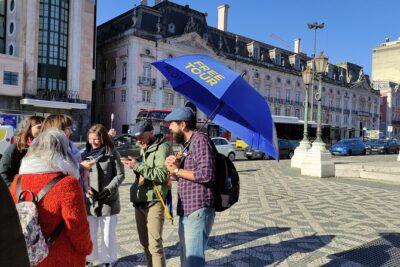 ★ 5.0Lisbon City Center Tour – The Unmissable LisbonTickets from $322,234 traveller reviews
 ★ 4.7Sintra, Pena, Regaleira, Cabo da Roca & CascaisTickets from $2319,656 traveller reviews
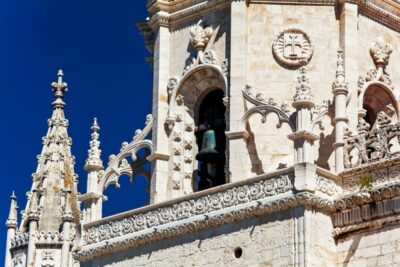 ★ 4.1Jerónimos Monastery Entrance TicketTickets from $2114,164 traveller reviews
 ★ 4.8History, Stories and Lifestyle Walking TourTickets from $2910,902 traveller reviews
 ★ 4.5Sunset Boat Party Cruise with DJ and Open BarTickets from $2710,378 traveller reviews
 ★ 4.7Pena Palace, Sintra, Cabo da Roca, & Cascais DaytripTickets from $919,981 traveller reviews
 ★ 4.6Oceanário de Lisboa Entrance TicketTickets from $299,943 traveller reviews
 ★ 5.0True 4Hour Private Tuk Tuk Tour: Discover Lisbon with a Local!Tickets from $1088,008 traveller reviews
More useful lists for this tour