
Review · EVENING EXPERIENCES
Sunset and Night Cruise with Champagne
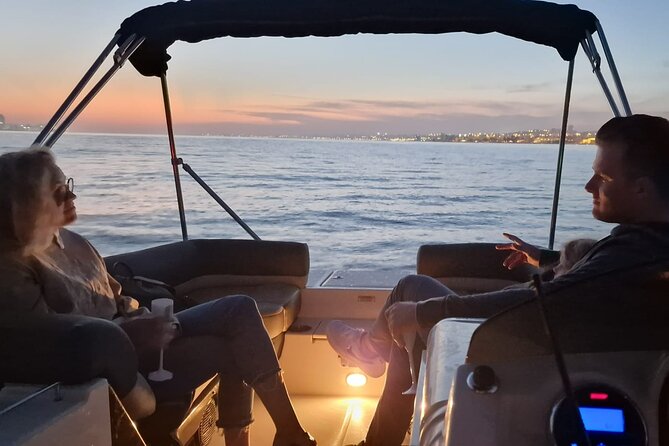
Lisbon glows best from the Tagus at dusk. I love the small-group boat feel and the champagne served while the sky shifts colors, and this route gives you classic Lisbon sights from water, not just from streets. The one catch is that each stop is short, so you have to treat it like a photo and viewpoint cruise, not a long walk-and-explore day.
You start at Marina Belém, right by the Padrão dos Descobrimentos, and you end back at the same meeting point. The operator, BUBBLE Sea Events, runs a CLEAN & SAFE certified setup, and the vessel is designed to allow wheelchair access and reduced mobility.
At about 2 hours, this is a sweet spot if you want “sunset to night” without committing to an entire evening program. It also runs with a maximum group size of 12, and you get a mobile ticket for the ride.
Key things to know before you go
- Champagne plus water are included on board, so your sunset plans are handled.
- Small group size keeps the boat comfortable and the experience calmer.
- Marina Belém departure means you’re already in the Belém sightseeing zone.
- Many quick photo stops help you cover a lot of waterfront landmarks in 2 hours.
- Good weather matters, and the company plans for weather-related changes or refunds.
- Wheelchair access is built in, and service animals are allowed.
How the cruise works in real life
This isn’t a slow, meandering sightseeing float. It is a timed route that hits major riverfront landmarks on both banks of the Tagus, giving you great angles for photos while the light is doing its best work. Expect a mix of views over Lisbon proper and views across the river toward Almada, plus a transition from sunset glow to night illumination as you move through the center.
The boat trip is designed around brief stopovers for pictures and contemplation. That makes it ideal if your time in Lisbon is tight or you are trying to fit in a lot without spending your whole day climbing hills. But if you love lingering at viewpoints or going inside monuments, you will likely want to pair this with a separate, slower walking day.
Two details are worth noting up front. First, the itinerary focuses heavily on what you can see from the water: bridges, plazas, fortifications, and museum exteriors along the river. Second, the cruise is priced as a premium experience for the timing and the included drinks, not as a budget transport option.
You can also read our reviews of more boat tours in Lisbon

From Belém to Almada: the big, dramatic river icons
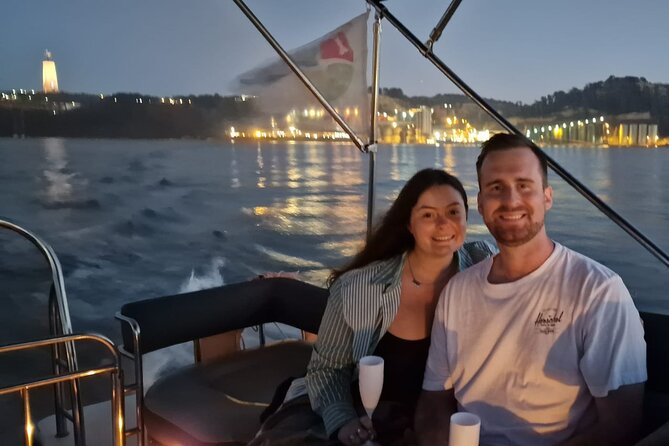
The itinerary starts in Belém, next to the Padrão dos Descobrimentos, which sets the tone fast: you are near the river where Portuguese ships once set sail for the Age of Discovery. From there, the route heads into some of the most photogenic sights on the Tagus.
Ponte 25 de Abril: Lisbon’s bridge moment
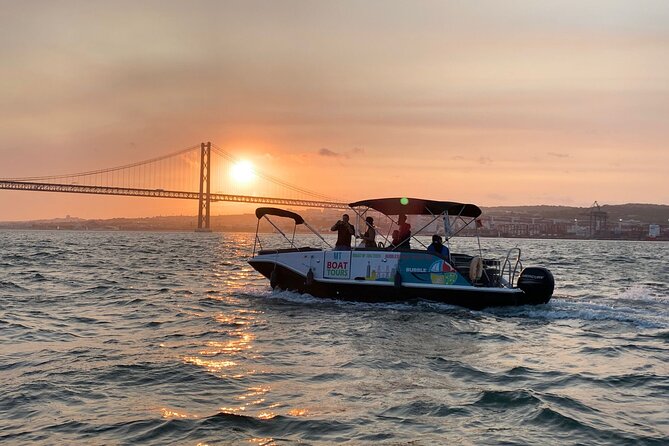
One of the first highlights is the Ponte 25 de Abril, the suspension bridge connecting Lisbon to Almada. It stretches 2,277 meters across the water, and from a boat you can frame the bridge like a ribbon cutting through the skyline. If you like bridge photos that look cinematic without needing fancy editing, this is the stop you want to prep for. Quick tip: bring your camera grip ready before the boat reaches the best angle, since the stops are meant for fast photo work.
Cristo Rei: the view that echoes Rio
Next comes the Santuario Nacional de Cristo Rei in Almada. This is a Catholic shrine overlooking Lisbon, and it was inspired by Brazil’s Christ the Redeemer statue after a Lisbon church leader visited the monument there. It was inaugurated in 1959, and it was built partly as a gratitude symbol after Portugal was spared the worst direct effects of World War II. Even if you do not plan to visit the sanctuary on foot, seeing it from across the river gives you a clean sense of how the city’s religious landmarks sit above the waterline.
Porto Brandão and the fisheries ruins: industrial Lisbon on the move
As you continue, the route passes by Porto Brandão and the Portuguese Fisheries Company ruins. This is the kind of location you often miss when you only focus on Belém Tower and tram lines. The Tagus has long been a working river, and these remnants connect Lisbon’s maritime past to the industrial expansion across the river, including the move from Santos pier operations toward the Almada side.
You likely will not get a long on-foot visit here. The value is in the view and context, so treat it as a “spot it, photograph it, move on” moment.
You can also read our reviews of more wine tours in Lisbon





Ginjal and Cacilhas: gardens, elevators, and waterfront texture
The cruise then leans into riverfront scenery around Ginjal. There is a Jardim do Rio area here, with a refreshing walking space along the escarpment and a panoramic elevator at Boca do Vento that links to viewpoints above the Tagus. From a boat, you get a more layered sense of depth, from cliff to river to the city glow in the distance.
After that, Pontal de Cacilhas brings you to the south bank neighborhood of Cacilhas, which faces Lisbon across the water. It is a classic setting for river photos because the buildings and waterfront line up naturally with the Tagus in between.
The naval and submarine stop that surprises people
Two stops in Almada area are the wildcard in this itinerary: a naval frigate and a submarine.
Fragata D. Fernando II e Glória: a restored sailing warship
You will spot the Dom Fernando II e Glória, a Portuguese Navy wooden-hulled frigate with 50 guns. It was launched in 1843, made its maiden voyage in 1845, and was the last Portuguese sailing warship built, tied to the Carreira da Índia, the regular military connection to colonies in India. After a fire in 1963, the burned hull sat beached for 29 years before restoration began, returning it to public view.
From the boat, this turns the cruise into more than just a scenic ride. You get a sense of Portugal’s maritime ambition without needing a museum ticket.
Barracuda submarine: the practical detail of real hours at sea
Just across the river you can also see the Barracuda submarine, which served for 40 years and logged more than 52,000 hours. It is one of those Lisbon details that many people never realize is visible from the river. Even if you are not a naval-history person, it is a fun visual because the object is so specific and so “real,” not just a stone monument.
If you want photos that feel different from the usual castles-and-towers shots, these stops are your best bet.
Back toward Lisbon: squares, castles, and night life glow
Once you turn back toward Lisbon’s main riverfront, the cruise focuses on city landmarks that show well from the Tagus. This is where the “sunset to night” effect starts to matter most, since the bright river-facing facades and waterfront plazas catch the light quickly.
Praça do Comércio: the big harbor-facing plaza
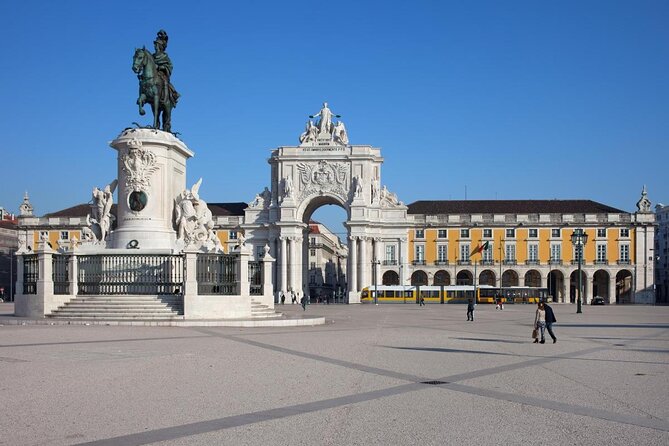
The cruise passes Praça do Comércio, also known as Terreiro do Paço. This large harbor-facing plaza sits south of the Tagus, with its story tied to the 1755 earthquake that destroyed the Paço da Ribeira. After the earthquake, the area was remodeled as part of the Pombaline rebuild ordered by the Marquis of Pombal. From the water, you get the scale, and that square-with-the-river look is hard to replicate from street level.
If you want photos that feel grand, aim to have your camera ready for this broad, open framing.
Castelo de São Jorge and Panteão Nacional: fortifications and the dome-shaped silhouette
Next comes the Lisbon skyline’s muscle: Castelo de São Jorge. The hill is occupied since at least the 8th century BC, with fortifications dating to the 1st century BC, and it later passed through Phoenician, Carthaginian, Roman, and Moorish control before Portuguese conquest in 1147. Over time it served as a royal palace, military barracks, and even the site of the Torre do Tombo archive, now functioning as a national monument and museum.
Close by in the river view area is the Panteão Nacional, the Church of Santa Engrácia. Originally a 17th-century church, it was later converted into Portugal’s National Pantheon for important Portuguese personalities. From the water, it reads as a landmark silhouette, especially at dusk when contrast helps.
Cais do Sodré: from old rough edges to tonight’s lights
Cais do Sodré and nearby Santos used to be rough areas, and Cais do Sodré was known as part of the capital’s red light district. Today, the area has shifted toward nightlife, with bistros, cafés, and design-driven changes in the warehouses and dock structures around Santos.
On a night cruise, this matters because it is the part of Lisbon where the mood turns fast. Even from the water, the riverfront atmosphere starts to feel current.
MAAT area: contemporary architecture on the river
The itinerary includes MAAT, the Museu de Arte, Arquitetura e Tecnologia. It is a modern cultural project focused on art, architecture, and technology, and it sits along the Tagus near Belém. The museum building was designed by Amanda Levete Architects, and it is placed to connect with the Tejo Power Station, an important industrial architecture landmark from the first half of the 20th century.
There is also mention of the Circuito Central Elétrica, integrated into MAAT as part of the former Electricity Museum in the old Central Tejo. From the cruise perspective, this is valuable because it gives you a sense of Lisbon as a living city, not only a postcard of older monuments.
The Belém finish: Discovery-era icons and the river’s “big finale”
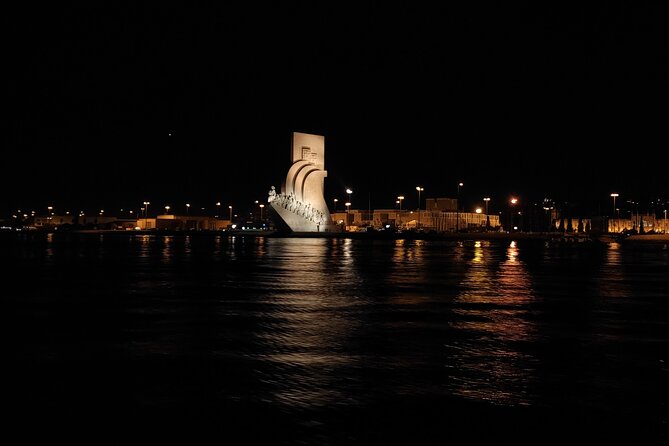
Your cruise comes back around toward Belém and wraps with the landmarks most people picture when they think of Lisbon by the water. This is also where sunset to night really makes a difference. Belém Tower and the Discovery monument are already striking in daylight, but at dusk they look sharper, and the river reflection helps your photos.
Padrão dos Descobrimentos and the Belém Tower
You start near the Padrão dos Descobrimentos, a monument celebrating the Portuguese Age of Discovery during the 15th and 16th centuries. It marks the river zone where ships left for India and the Orient.
Then you reach Torre de Belém, officially the Tower of Saint Vincent. Built in the 16th century as a fortification and gateway to Lisbon, it showcases Manueline style with hints of other influences. It is made from lioz limestone and has a bastion and a 30-meter, four-storey tower. Since 1983, the tower has been a UNESCO World Heritage site, along with Jerónimos Monastery.
From a boat, the tower is one of the easiest landmarks to shoot because it frames cleanly against the Tagus, and you get multiple angles as the cruise moves.
Champalimaud Foundation and the seaplane statue
Finally, the route includes Largo da Fundação Champalimaud, a private biomedical research foundation created in 2004. It is part of Lisbon’s modern identity, right next to the older river monuments.
There is also a statue of Gago Coutinho and Sacadura Cabral with a reproduction of the Lusitânia seaplane. It marks the first South Atlantic crossing toward Brazil in 1922, and the monument was inaugurated in 1991. This is a fun closing note because it connects Lisbon’s maritime past to aviation and exploration history.
Champagne on deck: what the included drinks change
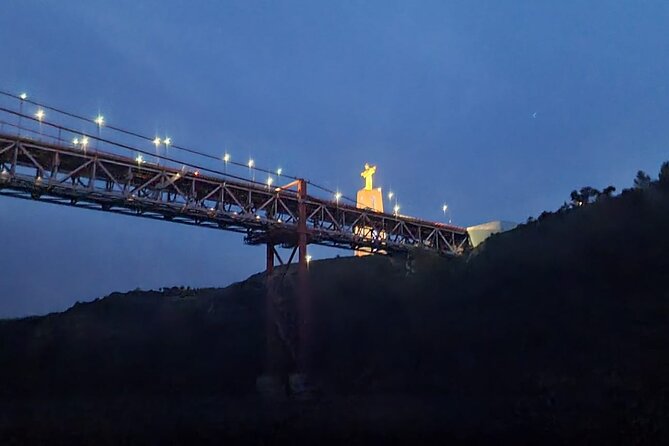
This cruise includes champagne and water on board. For me, that is not just a nice perk, it is part of the logic of the experience. Sunset is time-sensitive. If you have to buy drinks at the last minute, you lose part of the “golden hour mindset.” Here, you can settle into viewing mode and keep your hands free for photos.
The ride is also set up for comfort and safety, and the company emphasizes maximum safety and comfort. The vessel can accommodate wheelchairs and people with reduced mobility, so the experience is built for more than just able-bodied, quick-walk tourists. Service animals are allowed too, which you appreciate if that is part of your travel needs.
One practical point: even if you do not plan to get sea-sick, wind and river air can feel chilly after sunset. Bring a light layer so you can enjoy the later part of the cruise without getting cold.
Price and value for a 2-hour Lisbon night cruise
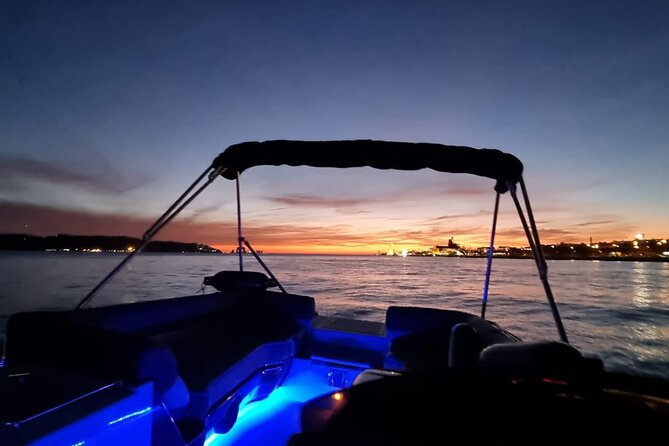
At $62.23 per person for about 2 hours, you are paying for three things at once: time on the Tagus at a prime hour, a guided route that hits multiple landmark views, and the included champagne and water.
This is also priced in a way that makes sense if you compare it to the cost of a full evening program. You are not just paying for transportation. You are paying for a structured, photo-friendly loop that covers Belém, the central waterfront, and Almada, without you needing to coordinate transit and timing across multiple neighborhoods.
The maximum of 12 people matters here. A small group usually means less jostling, easier viewing, and a calmer vibe when everyone is trying to frame the same bridge, tower, or dome.
If your budget is tight, this is still worth considering only if you can commit to going at sunset. The entire value proposition depends on that light and the night transition.
Who should book this cruise, and who might prefer something else
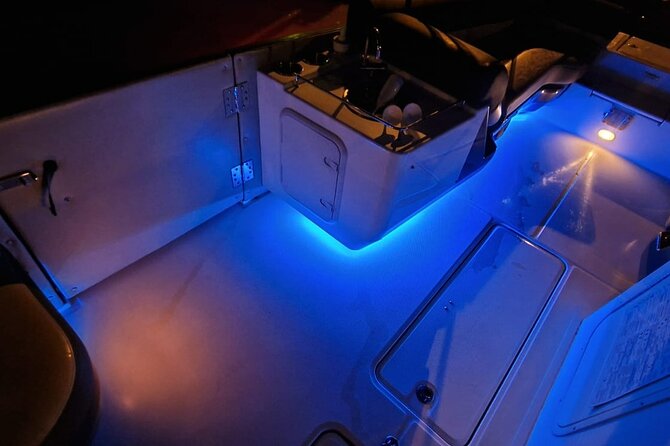
This is a great fit if you want to see Lisbon from the water, enjoy a relaxed pace, and like getting a lot of landmark coverage without doing a long walking day. It also works well for people who want wheelchair access, because the boat is described as allowing that.
It is less ideal if you want deep, guided explanations on shore or long museum-style visits. The stops are short, with time mainly for photos and viewing. Think of it as a “watch Lisbon happen” evening, not a replace-your-itinerary solution.
If you are traveling with mixed ages, the format is also practical. Two hours is easy to plan around dinner, and the river views keep everyone engaged.
Should you book this Lisbon sunset and night cruise with champagne?
I would book it if your top goal is a great Tagus sunset plus night views, and you want included champagne without extra planning. The small-group setup, the Belém to Almada to downtown route, and the variety of sights from bridges to castles to modern museums all point to a strong value-for-time experience.
Skip it only if you know you want lots of time on land at each monument. This cruise is designed for quick viewpoint stops and strong photo angles, so you need to be comfortable moving on.
If the weather is good, it is a smart use of an evening in Lisbon.
FAQ
What time does the sunset and night cruise last?
The cruise runs for about 2 hours.
Where does the experience start in Lisbon?
It starts at Av. Brasília 1400-038, Lisboa, at the Marina Belém area next to the Padrão dos Descobrimentos. The tour ends back at the meeting point.
Is champagne included?
Yes. Champagne and water are offered on board.
How big is the group?
The tour has a maximum of 12 travelers.
What’s the ticket like for this experience?
You receive a mobile ticket.
What happens if weather is poor?
This experience requires good weather. If it is canceled due to poor weather, you will be offered a different date or a full refund.
More Wine Tours in Lisbon


More Boat Tours & Cruises in Lisbon

More Tour Reviews in Lisbon


Not for you? Here's more nearby things to do in Lisbon we have reviewed








Evening Experiences, side by side.
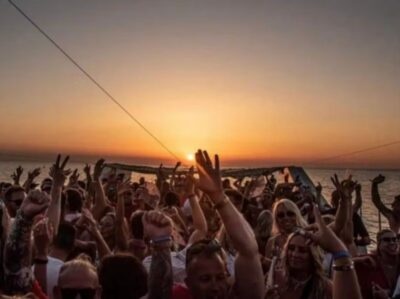 ★ 4.5Sunset Boat Party Cruise with DJ and Open BarTickets from $2710,378 traveller reviews
 ★ 4.9Daytime/Sunset/Night City Sailboat Tour with DrinkTickets from $413,114 traveller reviews
 ★ 4.4Sunset Cruise with Welcome Drink and SnacksTickets from $353,021 traveller reviews
 ★ 4.6Sunset Boat Tour with Music and DrinksTickets from $222,973 traveller reviews
 ★ 4.7Sunset Catamaran Boat Tour with Music and DrinksTickets from $262,834 traveller reviews
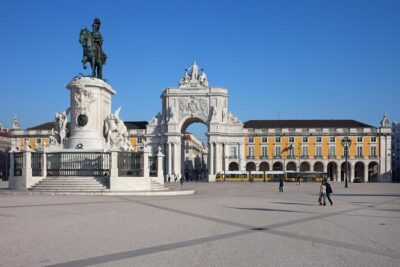 ★ 5.02 Hour Lisbon Sunset and Wine Sailing TourTickets from $662,680 traveller reviews
 ★ 4.2Tagus River Sunset Tour with Snacks and DrinkTickets from $322,543 traveller reviews
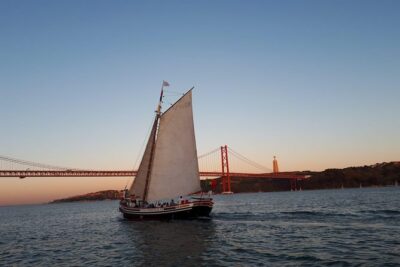 ★ 4.52-Hour Lisbon Traditional Boats Sunset Cruise with White WineTickets from $422,091 traveller reviews
More useful lists for this tour