
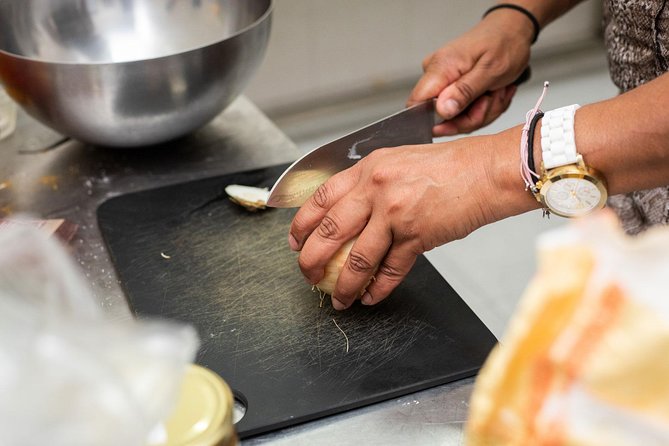
Review · LISBON CITY TOURS
Private Traditional Portuguese Cooking Class in Lisbon with Paula
The smell of frying cod brings you right in. This private class in Almada mixes hands-on cooking with a real-home vibe, plus a short ferry ride that makes the day feel extra local. I especially liked the chance to cook Portuguese and Portuguese-Goan flavors side by side, and the way you get to eat what you make at Paula’s table.
I also liked how flexible the menu feels. You can choose between a Portuguese main and a Goan main, and vegetarian options are easy to accommodate. One consideration: this is an in-home experience, so the kitchen space can feel small and the home is shared, including Paula’s cat, which may matter if you’re sensitive to clutter or germs-adjacent details.
Key Highlights to Know Before You Book
- Private and small-group feel: Only your group cooks and eats together.
- Almada start with a ferry crossing: You meet in Cacilhas and cross from Lisbon’s side before heading to Paula’s home.
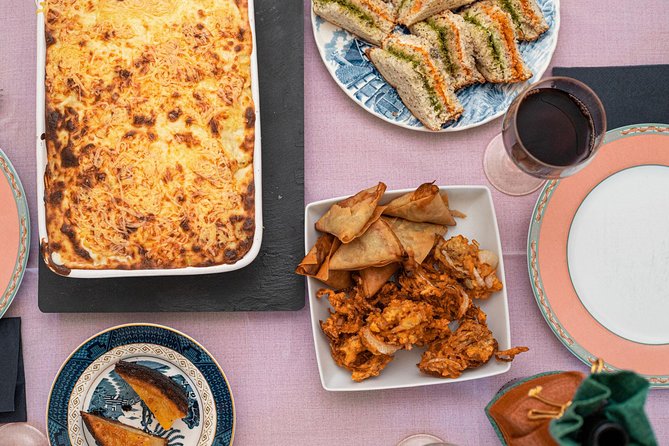
- Hands-on starters that teach technique: You’ll make two appetizers such as pataniscas de bacalhau and Goan bojas.
- Choose your main style: Portuguese option like bacalhau a braz, or a Goan curry.
- Dietary flexibility: Vegetarian options can be catered for.
- Not a commercial cooking school: Expect a home kitchen cultural evening more than a glossy demo class.
Lisbon’s Almada Ferry Ride Sets the Tone Fast
This experience is based in Almada, just across the river from Lisbon. Paula meets you at the ferry stop in Cacilhas, then you cross by ferry for about 7 minutes and spend roughly 10 minutes walking through the center of town to reach her apartment. It sounds like simple logistics, but it changes the whole mood of the evening. You’re not rushing between landmarks, you’re moving through a neighborhood rhythm that feels like Lisbon’s everyday life.
The meeting point is at Dá Cacilhas (LG Alfredo Dinis, 2800-252 Almada, Portugal). It helps that it’s near public transportation, so you can get there without stress. And because the tour is private, you’re not stuck waiting around while a larger crowd shuffles through.
If you’re the kind of traveler who likes “the real version” of a place, Almada is a smart choice. You get the familiar view of Lisbon from the river, but you end up eating in a home in Portugal that feels lived-in, not staged.
You can also read our reviews of more private tours in Lisbon



Welcome Drink, Appetizers, and Paula’s Home Table
Once you arrive, you start with a welcome drink of Portuguese wine plus appetizers. That first round matters because it loosens everyone up. You’re about to cook with your hands, fry, assemble, and talk, and the wine and snacks help you transition from tourist mode to participation mode.
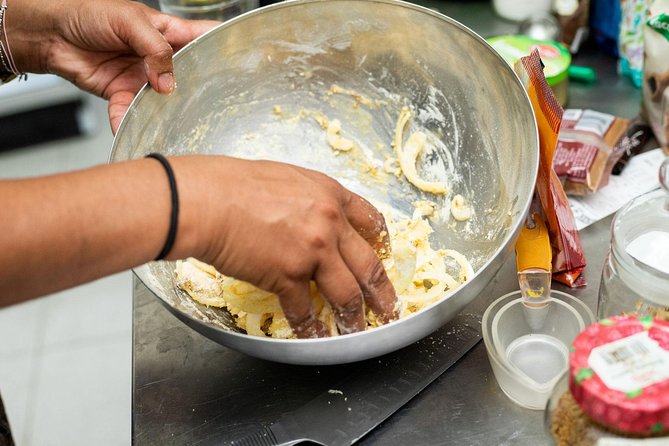
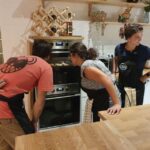
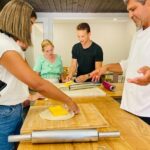
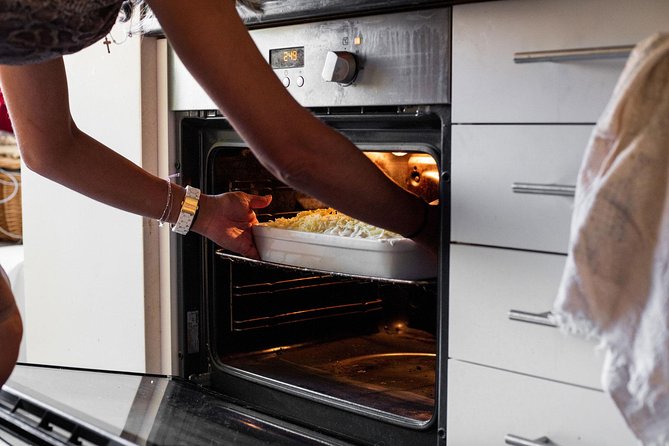
Paula will guide you in her home kitchen, but the whole experience has a cultural layer, not just a recipe layer. You learn how Portuguese cooking feels in practice, not as a list of ingredients. The format is practical: you’ll be cooking 2 to 3 dishes total, with instruction while you do the work.
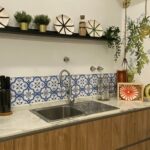
A quick heads-up on the home setting. Paula shares her home with family, and she has a cat. The home may be a bit cluttered. That doesn’t mean it’s chaotic, but it does mean this won’t feel like a sanitized studio kitchen. If you’re traveling with someone who needs strict cleanliness standards, or you’re very uncomfortable around pets, it’s worth considering ahead of time.
Learning by Doing: Pataniscas de Bacalhau and Goan Bojas
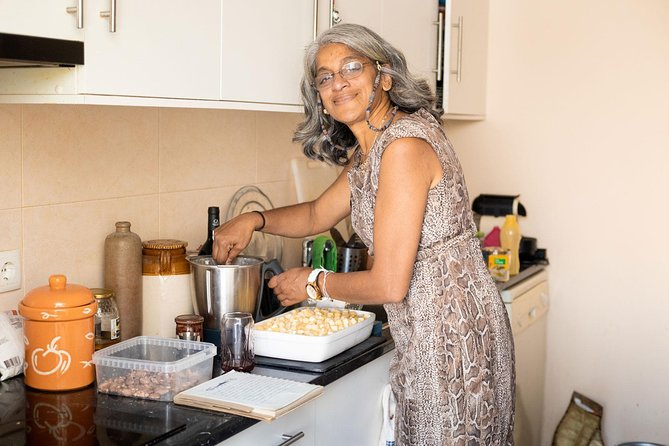
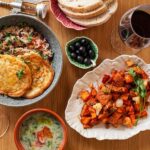
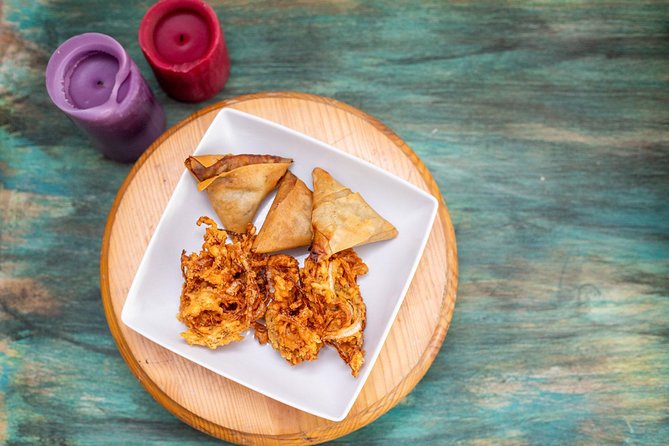
The class has a clean teaching structure. First you make two appetizers side-by-side, so you can compare textures and flavors while you’re still fresh and ready to concentrate. Common pairings include pataniscas de bacalhau (traditional Portuguese cod fritters) and Goan bojas (gram flour fritters with onion and cumin seeds).
Pataniscas de bacalhau
For the cod fritters, you’re working with a batter and frying technique that’s central to how Portuguese food handles seafood. Even if you’ve cooked before, fritters have their own rules, because small changes in batter thickness or frying temperature show up fast in the final crunch.
Goan bojas
Then you switch gears to the Goan style. Bojas use gram flour and carry spice through ingredients like onion and cumin. This part is fascinating if you like food journeys where two cuisines share an ingredient language but speak different flavor dialects. You’re not just learning a dish, you’re learning how a different regional pantry changes the same kind of fried bite.
You can also read our reviews of more cooking classes in Lisbon


A note on vegetarian options
Vegetarian options are said to be easy to cater for. That’s a meaningful benefit here because you’re cooking in a home, not ordering from a menu. Still, because the class is menu-driven and Paula works with what’s available, I’d treat vegetarian needs as something to confirm directly with her via WhatsApp.
Main Course Choice: Bacalhau a Braz or Goan Curry
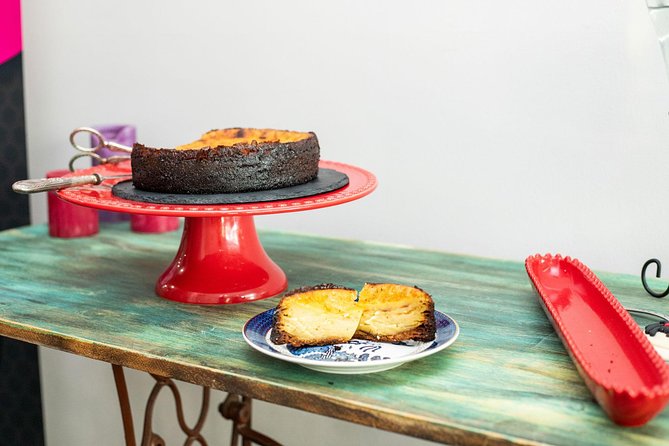
After starters, you move to the main. This is the part where you get a real choice between Portuguese and Portuguese-Goan flavors, rather than just watching one set menu get plated. Typical options include bacalhau a braz, and a Goan curry.
Bacalhau a braz
Bacalhau a braz is often described through its signature components: shredded potatoes and egg with cod. It’s hearty, and it’s the kind of dish that tastes like a full meal even when you’re not sure what’s coming. If you love Lisbon’s cod culture, this is a great anchor dish.
Goan curry
The Goan curry option brings a different pacing and aroma. Curry in this context is not just “spice.” It’s a flavor system, and it helps you understand how Portuguese influence and Indian culinary patterns can blend in a home kitchen.
One reason this main-course choice is a value is that it protects your time. You don’t just take a generic class where you eat what you’re given. You cook what fits your preferences, then you sit down and eat it.
Where You Eat: Table at Home or Studio Across the Street
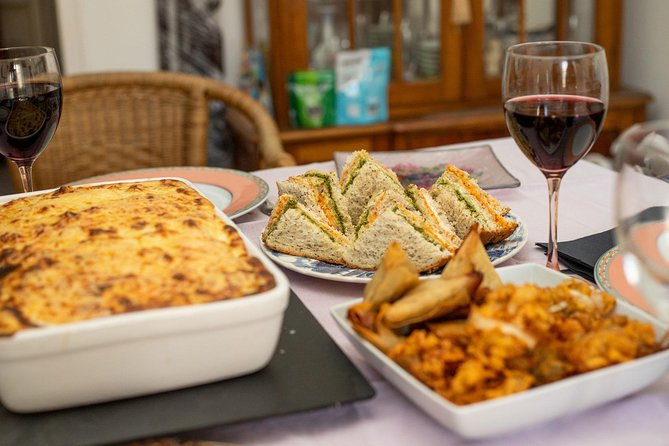
After cooking, you sit down together. The meal happens either at Paula’s dining table or at a cooking studio table across the street, depending on how the evening is set up.
This is one of those details that can sound minor, but it changes your experience. If you’re eating in the same home space where you cooked, you feel the arc of the evening more strongly. Either way, you get to eat the dishes you made, which is the entire point of taking a class like this in the first place.
The dinner also doesn’t end with the main. You finish with dessert plus coffee or tea. People love that wrap-up because it turns the meal into a complete Portuguese-style evening rather than a half-step cooking session.
Recipes You Can Recreate, Plus Optional Natas Memories
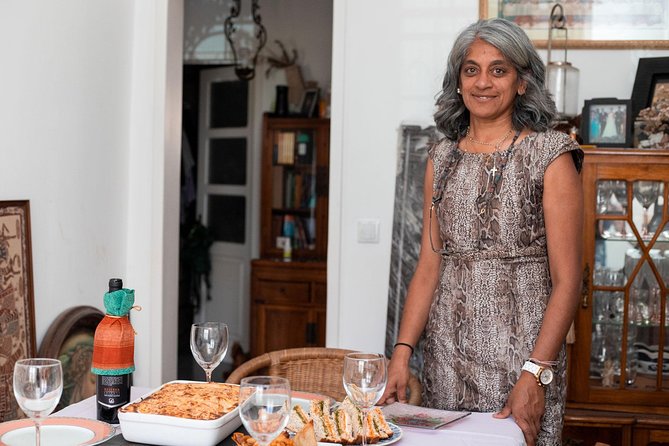
A big compliment across feedback is that Paula doesn’t just send you home with full stomachs. She’s described as sharing recipes after the experience and offering helpful cooking tips so you can recreate dishes later.
Some participants also highlight natas or pastel de nata as part of their experience, at least in the way desserts and pastry moments were handled. Since the tour description here emphasizes dessert in general rather than promising one specific pastry, the safest move is simple: if natas are a must for your trip, message Paula ahead of time on WhatsApp and ask what’s possible for your day. She’s explicitly open to questions about menu and meeting location.
Price and Value: What You Get for About $84
At $84 per person for about 3 hours 30 minutes, this class is priced like a premium food experience. The good news is that the structure justifies the cost for the right traveler.
Here’s where the value is coming from:
- Private setup: Only your group participates, which typically makes the per-person cost feel more fair.
- Hands-on cooking: You’re not just sampling. You cook multiple dishes, including two appetizers plus a main you choose.
- Full meal included: You start with wine and appetizers, then you cook, then you eat dessert with coffee or tea.
- Cultural context: It’s explicitly not a professional cooking school. It’s an in-home cooking and cultural experience.
Where you should calibrate expectations: it’s not described as a professional production. One lower score did complain about the level of hands-on time and the kitchen conditions. That doesn’t negate the many strong ratings, but it does tell you to choose this class for the right reason. If what you want is a classroom with polished equipment and a perfectly controlled studio flow, you might be happier with a cooking school. If what you want is a warm home evening with real Portuguese and Goan dishes, you’re likely to be happy.
Also, the experience is booked around 40 days in advance on average, so don’t wait until the last minute if your schedule is tight.
Getting There and Timing: Simple, But Don’t Rush It
Timing is straightforward, but it depends on the ferry and a short walk. Plan to be on time at the ferry stop in Cacilhas where Paula meets you. If you run late, the setup is home-based, so it’s not something that will scale like a restaurant class.
Dress for comfort. You’ll be walking for about 10 minutes through the town center after you meet up. Wear shoes you can handle on sidewalks that might be uneven.
You’re also allowed service animals, and the meeting point is near public transportation. That helps if you’re coordinating with a broader Lisbon plan.
Who This Cooking Class Fits Best (And Who Should Think Twice)
This is a great fit if you:
- Want a private cooking experience in Lisbon without crowds.
- Are food-focused and curious about Portuguese-Goan flavors.
- Like learning techniques you can repeat, not just tasting.
- Prefer spending an evening with a real person and a real kitchen.
It may be less ideal if you:
- Need a strictly professional kitchen environment.
- Are uncomfortable with pets in a home setting.
- Expect a highly standardized, classroom-style course where every participant does the exact same tasks in the exact same way.
Given that the class is in an apartment kitchen, space and movement may be tight. That matters especially if your group is larger within the private booking. If that’s your situation, communicate early and ask what the setup will be like.
Practical Tips That Make the Evening Smoother
I’d do three things before you go:
- Message Paula on WhatsApp with any dietary needs and ask how they’ll handle your menu selection.
- Mention whether you’re hoping for natas/pastel de nata if that’s part of what you want. Dessert is included, and some participants have had pastry moments, but ask to confirm what’s realistic for your day.
- Arrive ready to participate. This is a cooking class in a home, so the fun comes from rolling up your sleeves and staying focused while you fry, mix, and assemble.
If you’re a first-time cook, you still should be fine. The structure is guided: appetizers first, then main. And if you’re an experienced cook, you’ll likely enjoy the technique differences between Portuguese cod fritters and Goan-spiced gram flour fritters.
Should You Book Paula’s Portuguese and Goan Cooking Class in Almada?
I think you should book it if you want an evening that feels like Portugal from the inside. The combination of a ferry ride, a warm welcome with wine, and hands-on cooking of recognizable Portuguese dishes plus Portuguese-Goan specialties is a smart way to spend time in Lisbon without turning your day into another checklist.
The main reason not to book is expectation mismatch. This is not a glossy cooking school with a perfectly sterile kitchen. It’s in a real home with a cat and shared spaces, so go in with that awareness. If you’re comfortable with that, and you like learning by cooking, you’re likely to love it.
If you want a one-sentence rule: book this when you’re hungry for authentic flavors and human connection, not when you need a professional lab-grade kitchen experience.
FAQ
Where is the cooking class located and how do you get there?
It takes place in Almada, across the river from Lisbon. Paula meets you at the ferry stop in Cacilhas, then you take a short ferry ride and walk about 10 minutes to her apartment.
What is the meeting point?
The start point is Dá Cacilhas, LG Alfredo Dinis, 2800-252 Almada, Portugal.
How long is the experience?
The cooking class lasts about 3 hours 30 minutes.
Is it private, and what languages are available?
Yes, it is private, and your group is the only group that participates. It’s offered in English and Portuguese.
What dishes will I cook?
You’ll learn to make 2 to 3 Portuguese and Portuguese-Goan dishes. Starters can include pataniscas de bacalhau (Portuguese cod fritters) and Goan bojas (gram flour fritters), and the main can be either bacalhau a braz or a Goan curry.
Can dietary needs be accommodated and is free cancellation available?
Vegetarian options can be catered for. Free cancellation is available up to 24 hours in advance for a full refund.
More Cooking Classes in Lisbon
More Private Tours in Lisbon



More Tour Reviews in Lisbon






Not for you? Here's more nearby things to do in Lisbon we have reviewed











Lisbon City Tours, side by side.
 ★ 5.0Lisbon City Center Tour – The Unmissable LisbonTickets from $322,234 traveller reviews
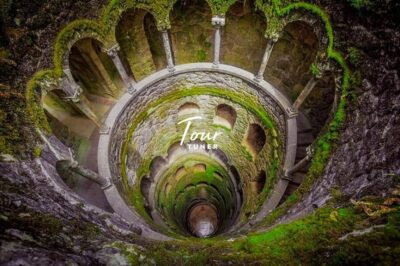 ★ 4.7Sintra, Pena, Regaleira, Cabo da Roca & CascaisTickets from $2319,656 traveller reviews
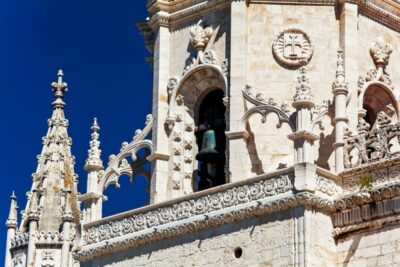 ★ 4.1Jerónimos Monastery Entrance TicketTickets from $2114,164 traveller reviews
 ★ 4.8History, Stories and Lifestyle Walking TourTickets from $2910,902 traveller reviews
 ★ 4.5Sunset Boat Party Cruise with DJ and Open BarTickets from $2710,378 traveller reviews
 ★ 4.7Pena Palace, Sintra, Cabo da Roca, & Cascais DaytripTickets from $919,981 traveller reviews
 ★ 4.6Oceanário de Lisboa Entrance TicketTickets from $299,943 traveller reviews
 ★ 5.0True 4Hour Private Tuk Tuk Tour: Discover Lisbon with a Local!Tickets from $1088,008 traveller reviews
More useful lists for this tour