
Review · LISBON CITY TOURS
Private group Lisbon Roots, Food & Cultural Walk
A half-day food walk in Lisbon is more than snacking, it is your shortcut into local life. This private group route steers you away from the busiest sights and into Mouraria, where fado was born and neighborhood history is written into the walls. You also get a strong mix of food, wine, and old-town landmarks in about 3.5 hours on foot.
I like that the experience is built around real tastings and wine culture, not just photo stops. I also like the pace and payoff, the route includes viewpoints, churches, and squares with stories that make the city feel connected instead of random.
One consideration, expect a medium walk with uphill cobblestones, plus steps going up and down typical of old Lisbon. If you have mobility limits, you may want to think twice or plan for a slower day after.
Key things I’d optimize for on this walk

- Mouraria first, explanation built in: You start in the neighborhood most people skip, then everything you eat and see connects to fado and local identity.
- 10+ tastings plus wine moments: You should show up hungry, the stops are designed around small bites and drinks at multiple venues.
- Local guides with personality: You get a human, local perspective, and the vibe is often funny, relaxed, and history-laced.
- Church and square stops that actually matter: You pause at places that survived Lisbon earthquakes, fires, and religious conflict, not just landmarks for postcards.
- Santa Justa is optional financially: The tower viewpoint is a highlight, but the elevator ticket is not included.
What You Really Get From Lisbon Roots: Food Plus Local Context
This is the kind of tour that makes Lisbon feel smaller in the best way. You walk through neighborhoods with meaning, then you taste that meaning. Instead of bouncing between major attractions, you get a guided thread that ties food culture, music, and survival through disasters into one story.
Price-wise, $325.60 per person is not “cheap,” but it is also not just for walking. The tour includes food tastings, wine tasting, alcoholic beverages, snacks, and coffee or tea. And it is private, so you are not squeezed into a big group where your guide cannot slow down for questions.
The “private group” part matters here. Lisbon is a city where the details pay off, and a small group keeps it from feeling like a race. If you like asking why something exists, or you want help figuring out what to order later, this setup fits well.
You can also read our reviews of more walking tours in Lisbon



Starting at Largo São Domingos: The Neighborhood That Powers the Whole Story
The walk begins at Largo São Domingos, a square that locals use daily, including an African community. The location is not just convenient, it is thematic. From the first minutes, you are in the Lisbon layer that tourists often miss.
A key thing you will notice is the monument mural that reads Lisbon, City of Tolerance in 34 languages, tied to the 1506 massacre and the Jewish victims. Even if you are not a deep-history person, the mural gives you a lens for the next stops. It also sets expectations that this tour will not sanitize the past.
Practical note: in this area, you are surrounded by cafes and shops. The guide will likely steer you toward what matters, but you can also use your free time afterward to keep tasting. One famous stop in the square is A Ginjinha, associated with cherry brandy.
Mouraria and the Fado Connection: Why the Walking Feels Personal
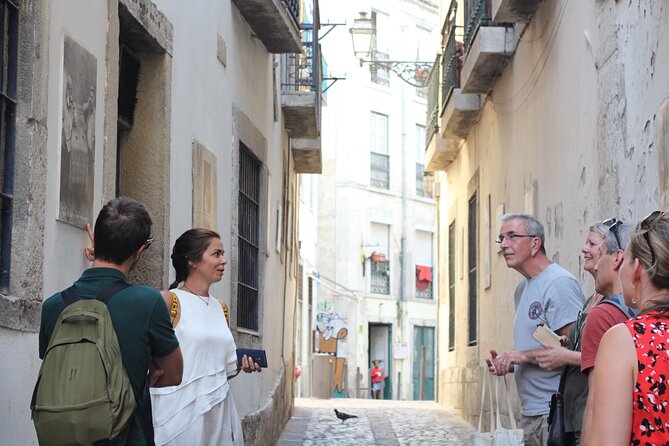
A big reason this route works is that it treats Mouraria as more than a backdrop. This is described as the birthplace of fado and one of Lisbon’s most multicultural neighborhoods. When you hear that while walking, the neighborhood becomes understandable, not just pretty.
You will pause at Monumento Mouraria Berço do Fado, a carved marble tribute where a Portuguese guitar is etched into the stone. It is dedicated to fado’s origins in the alleys and to named figures like Maria Severa and later 20th-century fado icons. This is the kind of stop that makes you listen differently later, even if you are not planning to attend a fado show that night.
Also, Mouraria is a place of slopes, steps, and close streets. That means your “culture walk” comes with a workout. If you are traveling on short shoes, you will feel it on cobblestones.
The Food Part That Makes It Worth Doing: Tastings, Wine, and Snacks

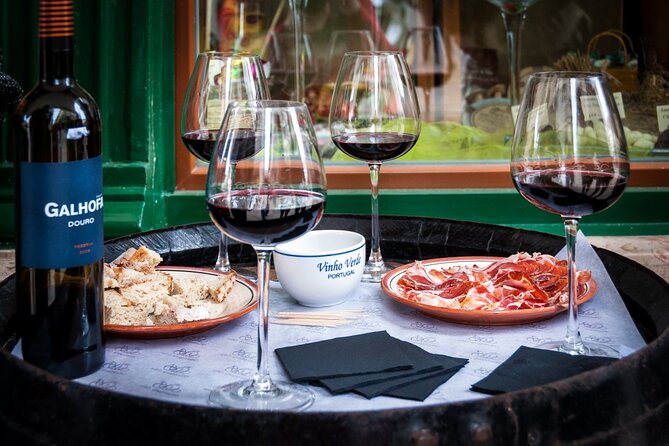
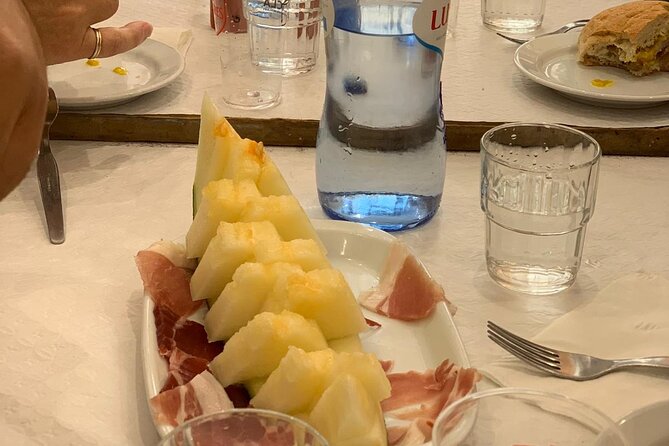
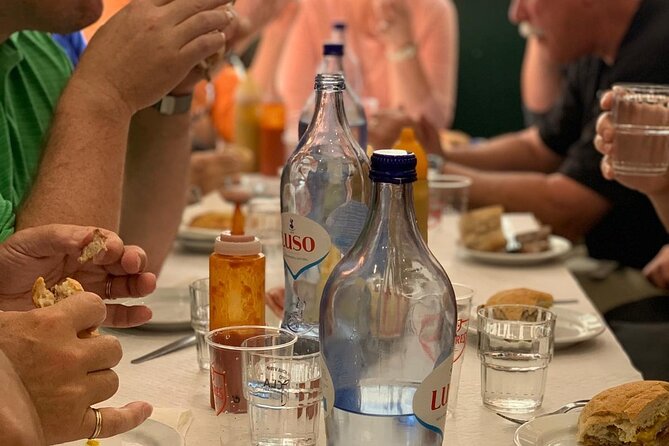
The heart of the experience is built around more than 10 tastings across local places. You are also offered wine tasting and alcoholic beverages as part of the progression. The tour is designed so you do not hit each stop and think, what now? Instead, each one is a stepping stone into what Portuguese eating feels like day to day.
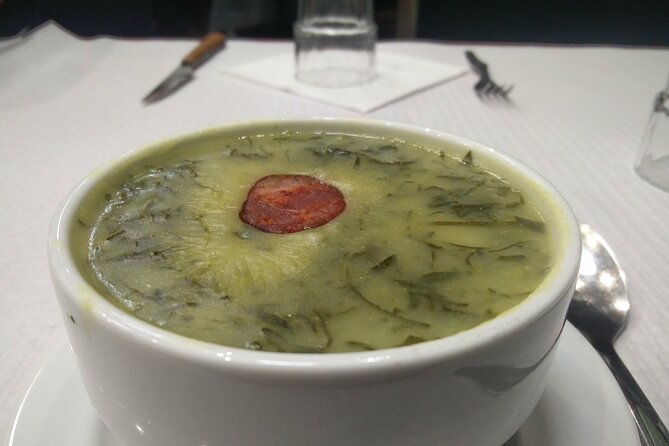
From the tour style and what is described, you should expect a mix of small bites, and likely some classic flavors you can later recognize on your own. People often mention variety like soup or tapas-style sampling, plus dessert and coffee in the flow. In other words, this is not a single snack meal. It is a guided sampler.
If you drink wine, plan to take it slow enough that you can still enjoy the walk. The guide typically paces tastings so you are not overwhelmed, but you are still tasting multiple servings over a few hours.
Dietary limits: the one thing you must handle early
This tour asks about dietary restrictions during booking. The important part is that tastings may not be adjusted if you do not tell them in the booking form. If anyone in your group is vegetarian, gluten-free, or avoids specific ingredients, send the details up front.
And if someone in your group is vegetarian, it is good to know accommodation has been mentioned as possible when restrictions are communicated.
You can also read our reviews of more food & drink experiences in Lisbon




São Domingos Church and the “Lisbon After Disaster” Story
You will stop at Igreja de São Domingos, originally from the 13th century. The description connects it to centuries of faith and conflict, then it links the church’s damage to Lisbon’s earthquakes and a major fire. After the devastating fire of 1959, it stayed closed for decades.
What is striking is the reopening timeline and the interior feel described as simply restored, still echoing what the ruins looked like after the fire. This kind of stop changes how you look at old buildings in Lisbon. You stop seeing them as fixed postcards, and you start seeing them as survivors.
Admission here is free, so you are not paying to step inside, you are paying in attention. It is also a good moment to rest your legs for a few minutes before moving toward the next stretch.
Rossio and Praça da Figueira: Squares Where Lisbon’s Business and Politics Met
The route includes major downtown squares, and the guide uses them to explain Lisbon’s pulse.
Praça da Figueira
At Praça da Figueira, you learn it was tied to the All-Saints Hospital before the 1755 earthquake, with foundations later revealed during construction of an underground car park. Today it is more about buildings, shops, cafes, and the bronze equestrian statue of D. João I from 1971.
You also get context for why this area is so connected to transit, including the Rossio metro station on the Green Line, plus bus and tram lines. Even if you are not using metro during the walk, this helps you plan how to get back later.
Admission is free and the stop is short, so it is ideal for quick orientation without dragging your day out.
Rossio Square (King Pedro IV)
You will also see Rossio, the name many people use for Praça de D. Pedro IV. The square is described as a main meeting point since the Middle Ages, tied to revolts, celebrations, bullfights, and executions, with flower vendors and lots of everyday movement around it.
This is where the tour becomes practical. You are finishing one storyline and starting another. It is also a good place to take a breather if the cobblestones have started to feel like a personal attack.
Elevador de Santa Justa: The View Break You Should Plan Around
One of Lisbon’s best-loved landmarks on this walk is Elevador de Santa Justa, also known as the Elevator of Carmo. It was built in 1902 by Raoul de Mesnier du Ponsard, a Portugal-born French architect, described as an apprentice of Gustave Eiffel.
A few details help you appreciate why people love it:
- It was originally powered by steam
- The structure is 45 meters tall
- At the top, you can reach the viewpoint via a spiral staircase
And here’s the practical part: the admission ticket is not included. So if you want the viewpoint, you should expect an extra cost on top of the tour price. Since the tower offers views over Rossio Square, the castle, and the river, it is the kind of add-on that can feel worth it if you are already paying for a walking route.
Even if you decide not to ride, the exterior and engineering details are still worth a pause.
Capela de Nossa Senhora da Saude and the “This City Survived” Theme
Next you head toward Capela de Nossa Senhora da Saude in Mouraria. This chapel was built in 1505, initiated by artillerymen of the Lisbon garrison. It was dedicated first to St. Sebastian, associated with protection from evils including plague.
Later, it was dedicated to Our Lady of Health, with her image welcomed in 1662, and it underwent works after damage from the 1755 earthquake. The portal is attributed to João Antunes from the early 18th century.
This stop is free. It works as a reset in the middle of the walk, and it gives you a clear reason why Portuguese religious art and dedications often tie to public health and survival.
If you are someone who enjoys seeing how cities remember hardship without turning it into a museum exhibit, this is a strong moment.
Largo de São Domingos and the 1506 Memorial: A Tough Pause, Done With Respect
At Largo de São Domingos, you get not just daily life but remembrance. A monument mural inaugurated in 2008 ties directly to the episode of 1506 and pays tribute to Jewish victims. That is a heavy theme, and the tour treats it as a real historical anchor.
The description of the 1506 massacre highlights how accusations and fear escalated after a mass, including a claim of a miracle and the violent response when the explanation did not align with what the crowd wanted to hear. It also ties this to later Inquisition-related suffering and executions connected with Lisbon’s institutions.
You do not need to be a history fanatic to benefit from this. It makes Lisbon’s “color and tiles” feel less like decoration and more like lived memory. It also helps you understand why tolerance themes show up in public art.
Ending at Praça da Figueira and Confeitaria Nacional: Close With a Sweet Landing
The walk ends at Confeitaria Nacional on Praça da Figueira (Praça da Figueira 18B). That ending makes sense because you finish where people naturally want coffee and dessert.
Even without any planned extra stops, this is a useful way to end: you are near a central square, and from there you can decide what to do next based on your energy. Want to keep it light and sit? Great. Want to take a slow tram ride to work off the tastings? Also great.
Also, since the tour includes coffee or tea as part of the experience, you are not left empty-handed at the end.
Walking Practicalities: Cobblestones, Steps, and Staying Comfortable
This is marked as medium physical level. The route involves uphill walking on cobblestones, plus climbing down steps. Old Lisbon streets are beautiful, but they are not flat, and this tour makes sure you feel the real terrain.
If you want an easy win, wear shoes with grip. If you are traveling with anyone who struggles on stairs, plan your pace and communicate quickly with the guide so you are not spending the whole tour trying to catch up.
Also, since you are tasting alcohol, think about staying hydrated. Lisbon weather can also surprise you, so bring a light layer, especially if you are walking in the evening hours.
Who Should Book This Private Group Walk
I would recommend this tour if you want three things at once:
- Food with context, not just food
- A route that focuses on local neighborhoods, especially Mouraria
- A walking experience that gives you a built-in understanding of Portuguese culture, including fado connections
It also fits well if you like guides who mix humor with history. Names like Pedro, Dani, Ricardo, and Daniel show up in the guide stories attached to this experience, and the pattern is consistent: people mention a fun, personal style plus strong city knowledge.
You might skip it if you need a mostly flat, low-step route, or if you hate ticket add-ons since the Santa Justa elevator is not included.
Price and Logistics: Is $325.60 per Person Good Value?
Let’s talk value in plain terms.
You pay $325.60 per person for a private 3.5-hour walk with:
- Food tastings
- Wine tasting plus alcoholic beverages
- Snacks
- Coffee or tea
- A guide focused on both culture and gastronomy
For Lisbon, that is not a budget price. But it can be a good deal when you compare it to the cost of doing similar tastings on your own without a guide, plus the value of having an insider stitch neighborhoods together for you.
Two practical logistics notes matter:
- Hotel pickup and drop-off are not included.
- There is no transportation to/from attractions provided.
So you are walking from a central start point at Largo São Domingos and finishing at Confeitaria Nacional, Praça da Figueira. That is workable if you know how to use the city streets, and it is easier if you are already staying near downtown.
Should You Book Lisbon Roots, Food and Cultural Walk?
Yes, I’d book it if you want a Lisbon food experience with real neighborhood grounding. This tour is built around Mouraria, fado connections, and landmark context like São Domingos Church and Capela de Nossa Senhora da Saude, then it rewards you with tastings and wine along the way.
Book it if:
- You like walking and you are okay with uphill cobblestones and steps
- You want multiple food and drink stops in a structured route
- You prefer a private group pace so you can ask questions and move at your comfort level
Skip it if:
- You need an easy, flat route
- You are not comfortable with the idea that the Santa Justa elevator ticket is extra
- You have dietary restrictions you can’t (or won’t) provide at booking time
If that all sounds like your kind of Lisbon day, this one is a strong choice for getting beyond the tourist track and tasting the city’s real rhythms.
FAQ
Is this tour private or shared?
It is a private tour/activity, so only your group participates.
How long is the walk?
The duration is about 3 hours 30 minutes.
What is the physical difficulty?
The physical level is medium. You can expect uphill walking on cobblestones and some climbing down steps.
What food and drinks are included?
The tour includes food tasting, wine tasting, alcoholic beverages, and snacks, plus coffee and/or tea.
Are tickets to attractions included?
Some stops are marked as free admission, and Santa Justa elevator admission is not included.
Where do you meet and where do you end?
You start at Largo São Domingos and end at Confeitaria Nacional, Praça da Figueira 18B.
Is hotel pickup included?
Hotel pickup and drop-off are not included.
Is transportation provided to attractions?
No. Transportation to/from attractions is not included.
What should I do if someone in my group has dietary restrictions?
You should answer questions about dietary restrictions in the booking form, because the tour notes that tastings may not be adaptable on the day if you do not inform them in advance.
More Food & Drink Experiences in Lisbon
More Walking Tours in Lisbon



More Tour Reviews in Lisbon


Not for you? Here's more nearby things to do in Lisbon we have reviewed







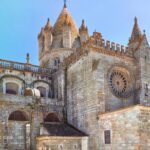

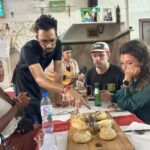
Lisbon City Tours, side by side.
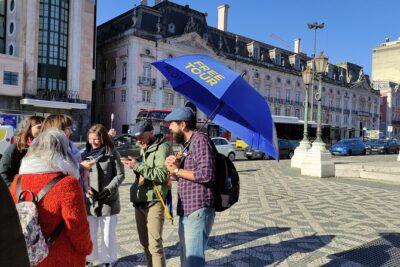 ★ 5.0Lisbon City Center Tour – The Unmissable LisbonTickets from $322,234 traveller reviews
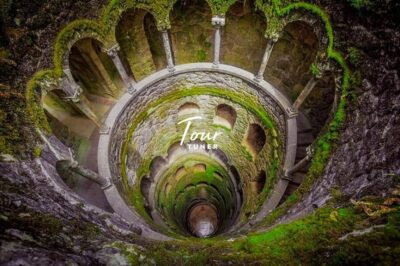 ★ 4.7Sintra, Pena, Regaleira, Cabo da Roca & CascaisTickets from $2319,656 traveller reviews
 ★ 4.1Jerónimos Monastery Entrance TicketTickets from $2114,164 traveller reviews
 ★ 4.8History, Stories and Lifestyle Walking TourTickets from $2910,902 traveller reviews
 ★ 4.5Sunset Boat Party Cruise with DJ and Open BarTickets from $2710,378 traveller reviews
 ★ 4.7Pena Palace, Sintra, Cabo da Roca, & Cascais DaytripTickets from $919,981 traveller reviews
 ★ 4.6Oceanário de Lisboa Entrance TicketTickets from $299,943 traveller reviews
 ★ 5.0True 4Hour Private Tuk Tuk Tour: Discover Lisbon with a Local!Tickets from $1088,008 traveller reviews
More useful lists for this tour