

Review · WINE TOURS
Evora & Alentejo Wines: A Journey Through History and Flavors
Évora plus wine in one long day. This private tour from Lisbon strings together the big hitters of Évora, then swaps the stones for a tutored Alentejo tasting at Cartuxa, with comfortable transport handling the in-between time.
I love how the route hits major monuments in a logical order, from Praca do Giraldo straight through the medieval core. I also love the payoff at Enoturismo Cartuxa, where the wine stop is built into the day instead of feeling like an add-on you have to chase down.
The only real catch is travel time, since you are looking at about a 1 hour 15 minute drive each way. And lunch is not included, so plan a snack break or budget for a meal on your own.
Key things that make this day trip work
- Private group, private pace, so your questions do not get cut off
- Évora’s top stops efficiently grouped, from Roman remains to gothic churches
- Chapel of Bones (Capela dos Ossos) with the Church of Mercês sacred art connection
- Tastings at Enoturismo Cartuxa focused on Alentejo wine with a guide
- Ruínas Fingidas in a public park, plus a fun peacock moment
- Hotel pickup and drop-off in Lisbon, so you start and end stress-free
Évora and Alentejo, the smart pairing for one day

Évora is the kind of town that makes you slow down without trying. The streets feel lived-in, but every few steps you hit another landmark, from Roman leftovers to grand gothic churches. Add the Alentejo wine experience and you get a full cultural day, not just a museum sprint.
What I like for your planning is that this tour is built around a rhythm: walk a compact historic centre, then switch to a guided tasting where you sit down and refocus. That pacing matters when you are doing a long day out of Lisbon.
Also, Évora’s monuments tend to be spread around slightly, and that can eat up time if you go solo. Here, transport and timing do the heavy lifting, so you spend more of your energy looking up at façades and less time checking maps.
You can also read our reviews of more historical tours in Lisbon



Price and value: what $114 buys you
At $114.02 per person for about 9 hours, you are paying for four main things: a professional guide, a private transfer by luxury car or mini van, entrance coverage for several key stops, and a guided tasting at a real Alentejo wine property.
Is it cheap? Not really. Is it fair for what you get? Yes, especially because the day is not just “see one sight, then wander.” You get multiple major Évora highlights, then a structured wine tasting window at Cartuxa.
One thing to keep your expectations realistic: lunch is not included. If you skip lunch, your wine tasting will feel shorter and you may end up shopping for food later with less time. If you want the day to feel smooth, plan to eat before or after the tour.
Lisbon pickup to Évora drive: how to use the time

You get pickup at your hotel or accommodation, then you return there at the end. That matters in Lisbon, where getting to the right starting point can turn into a small project.
The day is long enough that the drive time is part of the experience. You are looking at roughly a 1 hour 15 minute trip each way, so bring water and think about a small snack. If you have sensitive stomachs, go easy with coffee right before you leave, since you’ll be traveling and walking in the same day.
This is also a good time to set your own mini goals. Decide what you care about most: Roman Évora, gothic churches, or wine. When you know your priorities, the guide can tailor the day’s emphasis while staying within the schedule.
Praca do Giraldo: the easy first step in Évora
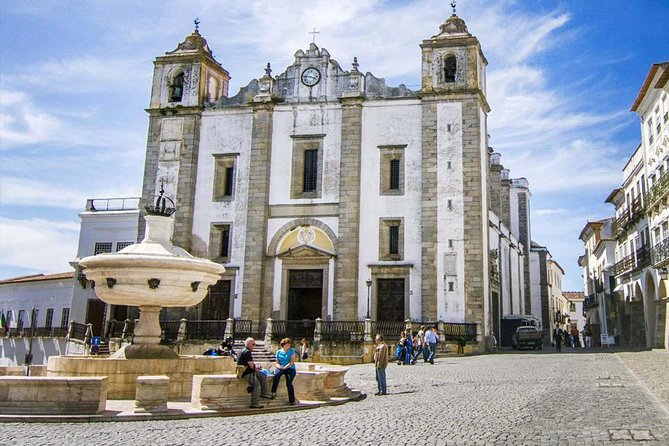
You start in Praca do Giraldo, right in the historic centre. This is the kind of place where, within minutes, you can get your bearings, notice the pace of local life, and orient yourself before you start climbing into the heavier monuments.
This early stop is short, which is a good thing. It keeps momentum while you still have energy, and it also gives you a visual anchor for the rest of the day. After this, everything else feels closer and more connected, not like separate stops on a scatter route.
If you like photos, this is also where you can reset your camera settings and take a couple quick frames before the day gets busier.
Chapel of Bones at Évora: Capela dos Ossos and the sacred art angle
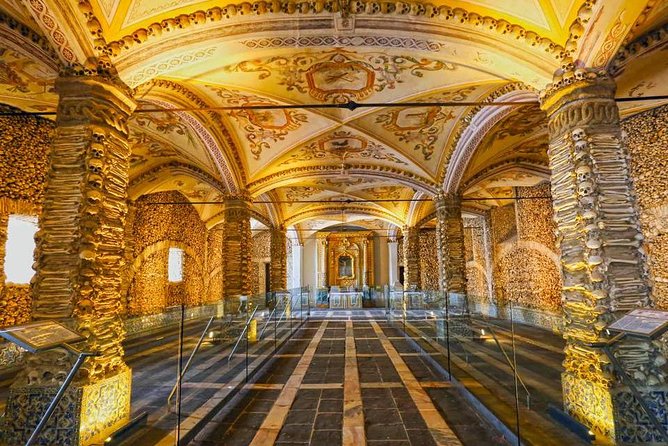
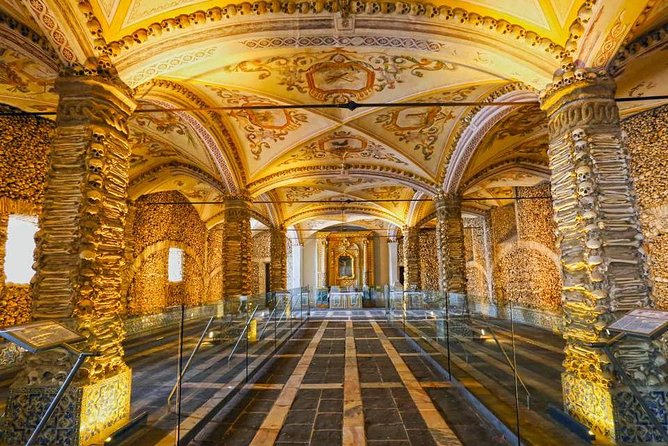
The Chapel of Bones is one of those places that makes people go quiet, even if they came in joking. Here, you get around 45 minutes, and the visit connects the monument to the Nucleus of Sacred Art of the Church of Mercês.
What makes this stop valuable is that it is not only the shock factor. The chapel sits within a broader church context, so you are not just looking at a strange display, you are seeing how the church frames meaning around mortality. That shift tends to make the visit stick.
A practical note: the Chapel of Bones can feel emotionally intense for some people. If you are traveling with kids, keep in mind the tour requires children to be accompanied by an adult, and this is not the kind of site that feels playful.
You can also read our reviews of more wine tours in Lisbon





Templo de Diana (Roman Temple): quick, iconic, and worth it
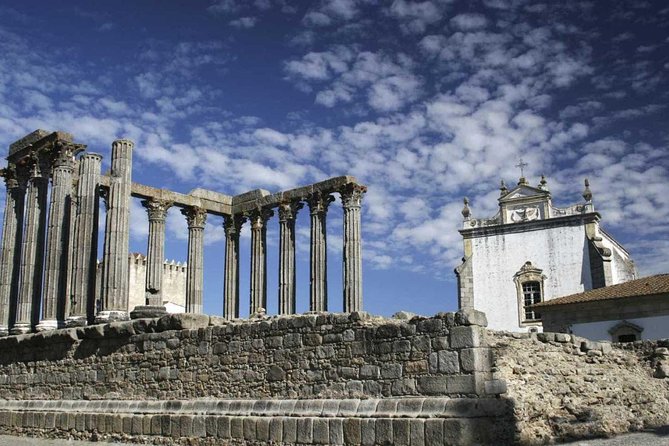
Then you step into Roman Évora at the Templo Romano de Evora, also known as the Temple of Diana. You get about 20 minutes, with the admission ticket listed as free.
This is a “blink and you miss it” kind of stop if you are walking without a plan. The guide’s job is to point out what you are actually seeing, so you do not treat it like a random stone block. Look for proportions and angles, because Roman architecture reads fast when someone helps you interpret it.
If you enjoy quick historical contrasts, this works well back-to-back with the gothic cathedral later. It highlights how different eras left their fingerprints on the same city.
Sé Cathedral of Évora: Portugal’s biggest gothic cathedral
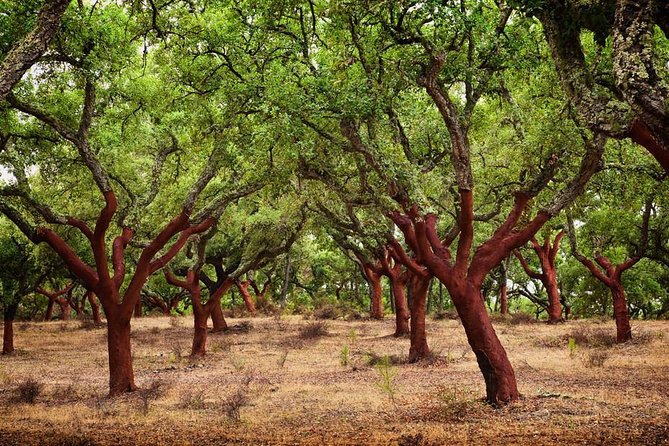
The Sé Catedral de Evora is one of the big statements of the day. You will have about 40 minutes here, and admission is included.
Portugal’s biggest gothic cathedral is a label, but the real value is in how the scale feels when you are standing inside it. With this kind of building, the guide can help you notice shapes and features that you might otherwise rush past.
For planning: give yourself a moment before you go in to take in the exterior, then go slow inside. If you try to do cathedral speed-walking, you miss the details that make the place memorable.
Gothic churches in sequence: São Francisco and São Tiago
After the cathedral, you move into two churches that feel different in mood but connected in style.
Igreja de São Francisco
You get around 15 minutes at Igreja de Sao Francisco. It is described as an imposing gothic-style church. With a short stop, you want to focus on the overall impression, plus one or two details pointed out by the guide, rather than trying to see everything.
Igreja de São Tiago, frescoes, and tile panels
Then you hit Igreja de São Tiago. This stop is only about 15 minutes, but the details are the point.
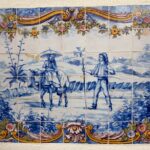
Inside, it features a single nave and a barrel vault covered with frescoes that include sacred and profane decorative elements. Along the side walls you can see tile panels attributed to ceramist Gabriel del Barco, showing biblical scenes. The one caution here is that it may not have regular visiting hours, so you are partly dependent on access being available during your visit.
If you care about religious art and Portuguese azulejo style, this is the church stop that feels most specific. It turns your short time into “I learned something concrete.”
Ruínas Fingidas: a quirky park moment with peacocks
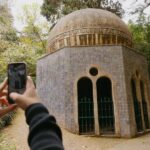
Ruínas Fingidas are located within a public park, and there is said to be little onsite information. You also get about 10 minutes, enough to walk around, take in the atmosphere, and move on.
This is one of the more unusual stops. The ruins are believed to be a folly made using items saved from the demolition of monasteries around the turn of the 20th century. It sounds odd, but that is the point: it creates an unexpected mix of history, recycling, and imagination.
And yes, the peacocks help. Even if you are not a bird person, this little park pause turns the day lighter. It is also a good moment to step away from major monuments and just breathe.
The palace and former convent in the park
After Ruínas Fingidas, there is another stop described as a solid palace and former convent set in a well-kept park with historical artefacts.
You are not given a long time block for this part, so I suggest treating it like a “look and appreciate” stop rather than a full exploration. Parks in historic towns can be soothing, and when the schedule is tight, a short stop in green space can actually make the rest of the day feel more enjoyable.
If you are sensitive to long walks, this kind of brief break matters more than you might think.
Cartuxa wine tasting: Alentejo flavors with a guide
The best reset on this tour happens at Enoturismo Cartuxa. You get about 45 minutes for a tutored tasting.
Cartuxa is one of the well-known names in Alentejo wine, and the value here is that you taste with guidance. That means you are not just doing a random sip-and-swallow. You get context for what you are tasting, how to think about the flavors, and why the region’s style tends to show up the way it does.
One practical tip: pace yourself. A 45 minute tasting can feel quick, especially after walking in heat or bright sun. Drink water between tastes if it is offered, and do not feel forced to finish every pour.
Also note the balance: a wine stop is personal. If your priority is architecture and you barely care about tastings, this may feel like less of a win. But if you want one structured regional wine experience, this is one of the best parts of the day because it is scheduled and guided, not improvised.
How the guide can shape your day, like João did
A private tour is not just less crowded. It also gives the guide room to adjust based on your interests.
One example is João offering a slightly alternative plan, looping in places like the Mercado do Livramento (fresh market) and showing where cork gets processed. That kind of bonus is exactly why I prefer private formats for destinations like Évora, where the main monuments are fixed but the “color” around them does not have to be.
If you love Celtic-looking stones or prehistoric sites, there was also an instance where the guide could fit in a brief visit to Almendres cromlech when it was requested. That tells you something important: ask good questions, and if time allows, your guide might steer you toward what you actually care about.
Who this tour is ideal for
This tour is a good match if you want a single day that hits major Évora landmarks plus a guided wine moment, without the hassle of planning transport and sequence.
It also works well if:
- you prefer private, on-the-spot guidance
- you want a structured schedule so the day does not sprawl
- you like seeing different eras in one city, Roman to gothic to modern wine
It might be a weaker fit if:
- you hate long transit days, since you have a drive out of Lisbon
- you are very strict about wine tasting expectations and do not want to pay for a tasting stop
- you want a full meal included, since lunch is not part of the package
Should you book this Évora and Cartuxa day trip?
If you want a balanced Évora day with the big monuments in a tight sequence, plus a guided Alentejo tasting that is built into the schedule, I would book it. The combination is practical, and the private format means you can ask for emphasis on what matters to you.
If you are the type who gets cranky after hours in a car, then factor that into your decision. This is not a short hop. But if you come prepared for a long day, wear comfy shoes, and plan a meal outside the tour window, the payoff tends to feel worth the effort.
FAQ
FAQ
How long is the tour from Lisbon to Évora?
It runs for about 9 hours.
What is the price per person?
The price is $114.02 per person.
Is pickup included, and where does it happen?
Yes. Pickup is offered from your hotel or accommodation, and you are also dropped off there.
Is this tour private?
Yes. It is a private tour/activity, so only your group participates.
What language is the tour in?
The tour is offered in English.
Does the tour include wine tasting?
Yes. You stop at Enoturismo Cartuxa for a tutored Alentejo wine tasting (about 45 minutes).
Are tickets for the main monuments included?
Tickets are included for some stops, including the Chapel of Bones and the Cathedral of Evora. Other stops list free admission tickets during the visit.
Is lunch included?
No. Lunch is not included.
Is there a cancellation window with full refund?
Yes. You can cancel up to 24 hours in advance for a full refund.
Are children allowed?
Children must be accompanied by an adult.
More Wine Tours in Lisbon
More Historical Tours in Lisbon



More Tour Reviews in Lisbon


Not for you? Here's more nearby things to do in Lisbon we have reviewed







Wine Tours, side by side.
 ★ 5.0Winner 2025 Undiscovered Lisbon Food & Wine Tour by Eating EuropeTickets from $1256,390 traveller reviews
 ★ 4.7Live Fado Show with Port Wine in Historic CenterTickets from $174,166 traveller reviews
 ★ 4.9Food and Wine Small Group Walking TourTickets from $724,082 traveller reviews
 ★ 5.02 Hour Lisbon Sunset and Wine Sailing TourTickets from $662,680 traveller reviews
 ★ 4.52-Hour Lisbon Traditional Boats Sunset Cruise with White WineTickets from $422,091 traveller reviews
 ★ 4.9Champagne Sailing ToursTickets from $581,366 traveller reviews
 ★ 5.0Lisbon Food Tour with 10+ Tastings of Local Delicacies & WinesTickets from $971,339 traveller reviews
 ★ 4.8Fado Show with Wine in a Historic VenueTickets from $191,294 traveller reviews
More useful lists for this tour