
Review · ALFAMA TOURS
Alfama Photo Walk – Lisbon Photography Experience Led by a Local
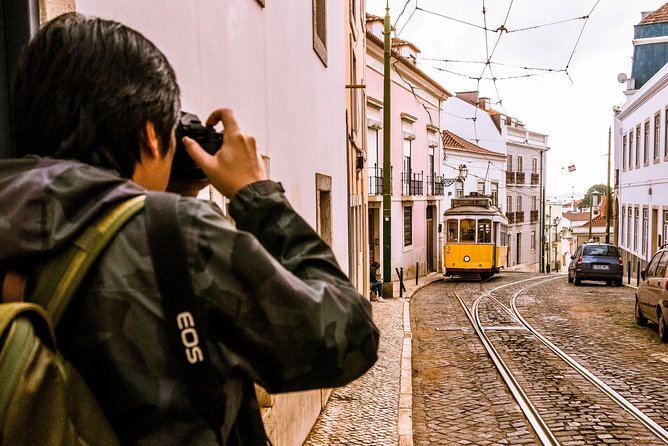
Alfama looks different through a lens. This 3-hour Lisbon photo walk strings together some of the district’s best street scenes with practical shooting tips from a local guide who understands how to work the light and the streets.
I love two things most: the max 5 traveler group size, which keeps the feedback personal, and the way the guide actually helps you find usable frames, from narrow lanes to viewpoints over the Tagus. You are not just sightseeing, you are learning how to photograph what you are seeing.
The main tradeoff is that you bring your own camera (and your own stamina). Lisbon hills are real, and you will be walking between stops while you look for the right angles.
Key highlights worth caring about
- Max 5-person group means you get real guidance instead of generic “look here” pointers
- Carlos Reveles brings local context, plus camera help geared to your experience level
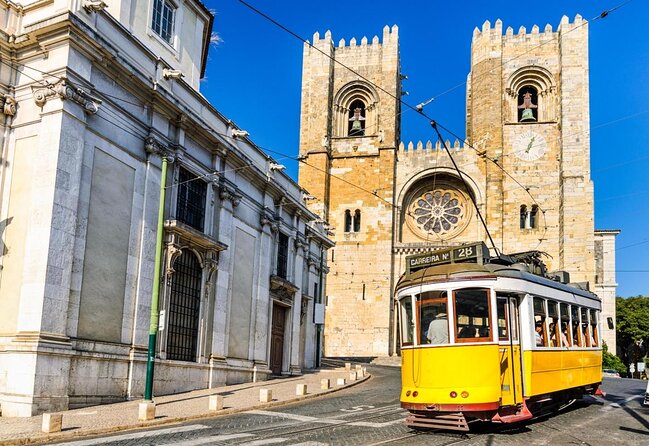
- A route that mixes everything: street life, trams in motion, rooftops and river views, churches, and cathedral architecture
- Free site access at every stop, so you are paying for instruction, not admissions
- A paced walk for composing shots, with time to reposition and shoot
- Most of the experience is outdoors, so weather matters
Why Alfama is a smart pick for street photography
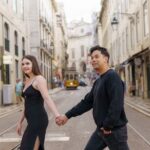
If you care about street photos, Alfama is one of Lisbon’s easiest neighborhoods to “read” through a camera. The streets are narrow. The buildings funnel light. People are out. Trams and everyday life collide in ways that feel natural, not staged.
What makes this walk work for photography is that the guide does not treat it like a casual stroll. You get directed to practical spots to shoot, and you learn how to adapt when the light changes. In a place like Alfama, that is the difference between a decent shot and one that has mood.
You will also walk through scenes that are classic Lisbon without needing to force them. The goal is to photograph daily life, the geometry of old streets, and those “how did I get this angle?” moments you normally miss while moving too fast.
You can also read our reviews of more walking tours in Lisbon


Price and what you actually get for $112.82
At $112.82 per person for about 3 hours, you are paying for a few specific things:
- Photography instruction tailored to your equipment and experience level
- Local insights tied to the places you pass
- A thoughtfully paced route that leaves time for composition and creativity
That combination is the value. Self-guided photography tours can be cheap, but they rarely teach you how to pick positions, time your shots, or handle moving subjects. Here, the guide is the difference maker.
Also, the stops themselves are listed with admission as free. So your money goes to the guiding and instruction, not extra ticket costs.
What is not included is also important for value: you need your own camera, and there are no snacks or drinks. If you tend to shoot for hours, plan to eat before you start and bring water if you feel you need it.
Meeting at Chafariz das Moiras, ending near Lisbon Cathedral
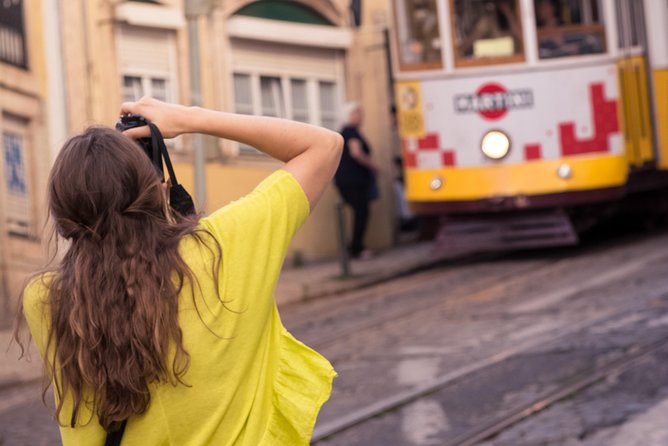
The walk starts at Chafariz das Moiras, Largo do Correio-Mor, 1100-179 Lisboa and ends at Largo da Sé, 1100-401 Lisboa. That end point is close to the cathedral area, which is handy if you plan to keep exploring after your photo walk.
It is near public transportation, and that matters because you will not have hotel pickup or drop off. You are expected to get yourself to the meeting point, then make your way back via the neighborhood at the end.
Practical tip: be at the meeting point a little early. One of the hard lessons I picked up from the guide’s public responses is that things can go wrong when messages are missed or schedules do not line up. You want the start to be smooth because the best photo light often does not wait around.
Stop 1: Alfama backstreets, light reading, and real street scenes
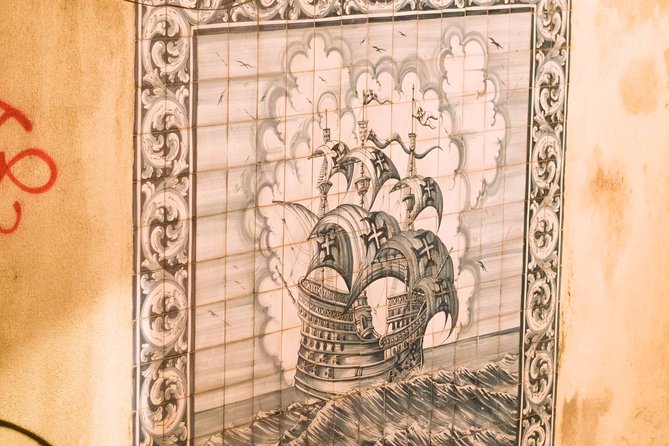
You kick off in Alfama, where the photo possibilities are endless for three reasons: narrow streets, changing lighting, and authentic daily life moments.
This is where the walk does its main teaching. The guide helps you locate practical shooting positions, then teaches you how to read the light as you move through the neighborhood. That sounds simple, but it is the core skill for street photography in Lisbon. Alfama can go from bright to shaded fast, and your camera settings and timing need to match.
You will also be shown how to connect the camera technique to the place. In Carlos Reveles’ feedback style, there is a pattern: he shares local tidbits along the way, and he is focused on getting you to iconic viewpoints without turning the walk into a rushed checklist.
What to watch for here:
- Watch for backlit edges and shaded corners. Alfama rewards contrast.
- Look for small layers: a doorway, a wall texture, then a sliver of sky above.
- If you are waiting for the “right” moment, that patience is built into the pacing.
Possible drawback at this first stop: it can be a lot of visual input at once. If you are new to street photography, you might feel like you need to shoot everything. Try to pick one theme for the hour, like doors and windows, trams and movement, or people and gestures.
Stop 2: Graca and São Vicente for tram motion and architectural frames
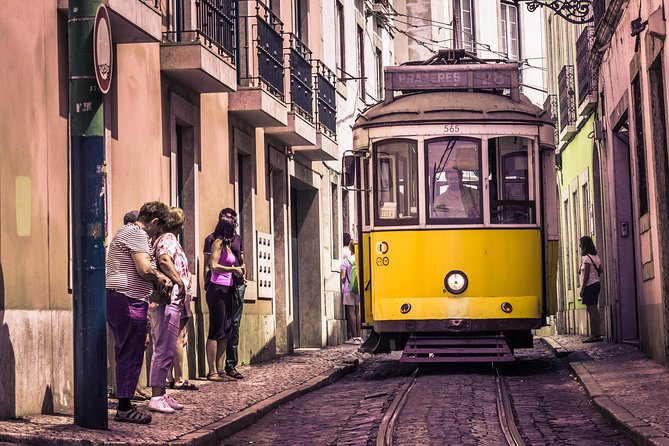
Next is Graca & São Vicente. This part of the route is all about mixing moving subjects with static architecture.
You practice photographing trams in motion along Calçada de São Vicente and you also focus on architecture at Igreja de São Vicente de Fora. The guide teaches you how to balance a moving subject (the tram) with stable elements (buildings, church structure, stonework).
That skill is useful beyond this tour. Once you learn how to “hold” the frame while something moves, you start seeing better results when you travel anywhere with transit, scooters, bicycles, or street action.
If you shoot with a phone, you still benefit, because the guidance is about timing and positioning, not just camera settings. If you shoot with a DSLR or mirrorless camera, this stop is where shutter speed and framing logic become real.
Small caution: trams and street photography can tempt you to aim too broadly. Try a tighter plan: find a background you like first, then wait for the tram to enter your composition.
You can also read our reviews of more photography tours in Lisbon


Stop 3: Miradouro de Santo Estêvão for wide rooftop and river views
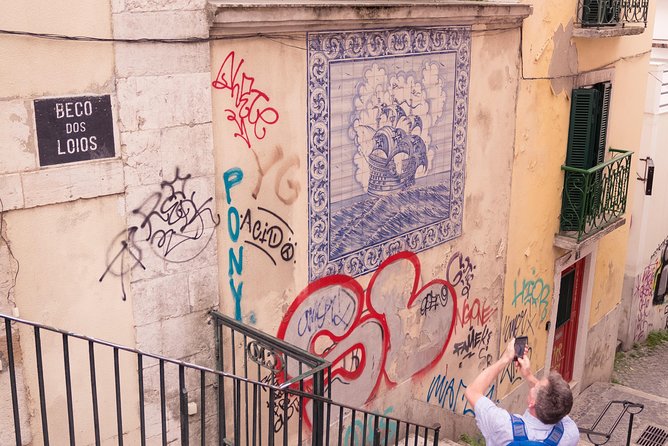
At Miradouro de Santo Estêvão, you switch from street-level details to a bigger picture. The goal here is wide views over Alfama’s rooftops and the Tagus River, especially useful for setting up landscape-style compositions (think broad, structured horizons, and strong foreground-to-background layers).
This stop is shorter, so you want to move efficiently: get your orientation fast, then shoot a couple of variations. Try one wider frame for context, then one tighter crop if your camera or phone supports it.
Why this stop matters: it resets your eyes. After hours of narrow lanes, miradouros help you learn Lisbon’s layout. That makes the next and final church stops feel more intentional, because you start seeing how the city layers stack up.
Stop 4: Igreja de São Miguel square framing and local activity
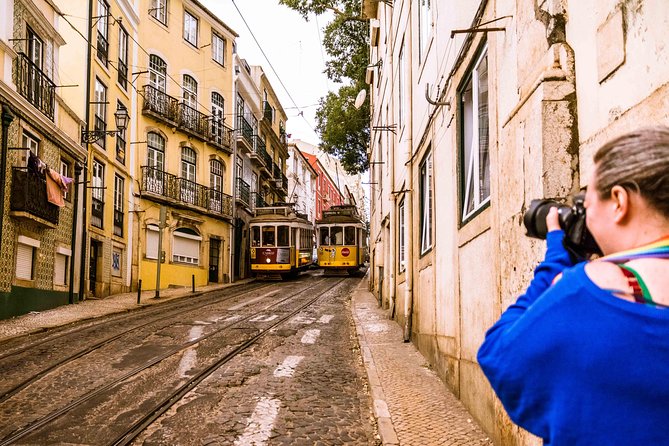
The walk continues to Igreja de São Miguel, a neighborhood square with classic Lisbon visuals: small chapels, local activity, and multiple framing options.
This is a nice change of pace. Squares often give you better shooting control because you can position yourself and wait for patterns. You can frame a statue or doorway, then let people move through the scene naturally. When you are learning street photography, that “controlled chaos” is gold.
Look for:
- Angles that use the church as a strong anchor in the frame
- Shadows and light pockets around the square
- Simple compositions that show Lisbon life without overcomplicating the shot
Based on the guide’s approach in the feedback he shared publicly, he tends to suggest angles and waiting spots, then lets you work your own way. That balance is key. Too much direction can make your photos feel forced. Too little can leave you stuck.
Stop 5: Lisbon Cathedral for dramatic light and architectural close-ups
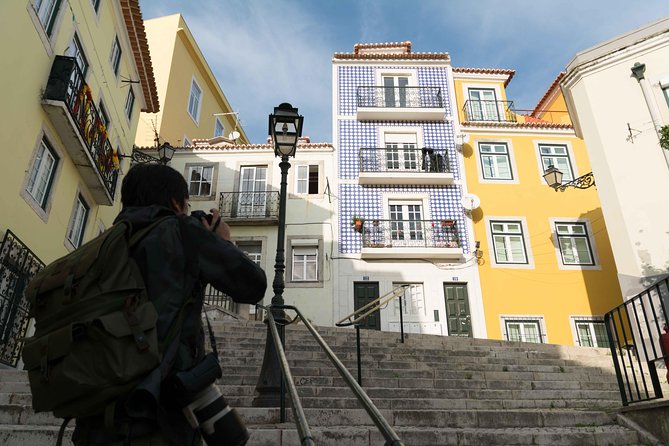
You finish at Lisbon Cathedral, the oldest church you will be photographing on this route. This last stop focuses on architecture close-ups, dramatic light opportunities, and urban layers.
Cathedral scenes are often easier to “solve” than busy street corners because the geometry helps you. You can focus on:
- Lines in the stonework and doorways
- A close-up detail that tells a story
- A wider shot that captures the building’s relationship to the surrounding neighborhood
It is also a good way to wrap up the skill training. If you have been practicing composition, light reading, and timing, the cathedral gives you a structured subject where those skills show clearly.
What I think about the pacing and group size (and why it matters)
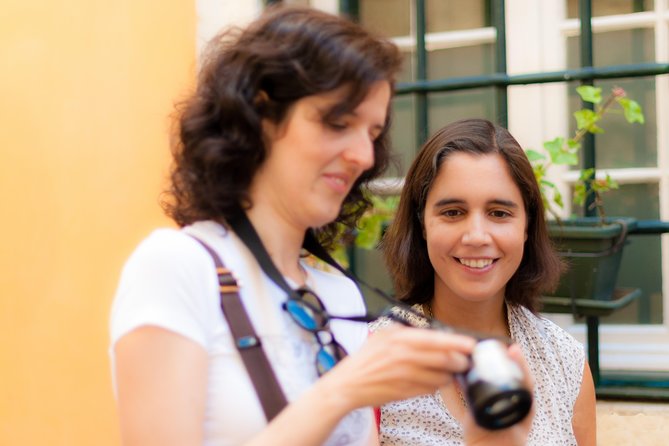
This tour caps at 5 travelers, which is a huge deal for photography instruction. You are not competing for attention. You can ask questions without feeling rushed, and the guide can watch your framing choices, then adjust his advice.
Pacing is also built into the walk. Each stop is time-boxed, and the guide provides instruction while still leaving breathing room to shoot and reposition. In practice, that means you do not have to choose between learning and getting photos.
Also, this walk is offered in English, which helps if you want camera tips clearly explained. You will also receive a mobile ticket, so you are not dealing with paper or complicated printouts.
One more practical note: because this is on foot and in a hilly district, wear shoes you can trust. One of the most consistent bits of advice from the experience’s feedback is exactly this. Lisbon is beautiful, but your legs need respect.
Who should book this Alfama photo walk
This is a great match if you want:
- A street photography focused walk, not just a generic city tour
- Guidance on composition and light, especially in a place with shifting shadows
- A route that covers multiple photo types in a short time, from tram motion to church architecture
It is also a good first stop on your Lisbon trip because Alfama can feel confusing until you see it framed. You get orientation in an interesting way, while still making photos you will actually keep.
You might want to skip or consider a different format if:
- You are not interested in walking and hills
- You do not want to bring your own camera (equipment is not provided)
- You want a long, slow photography session rather than a paced 3-hour route
The one thing to watch for: communication and meeting point timing
This tour is not private, so there can be other bookings in the group. That sounds obvious, but it affects expectations around changes, confusion, or no-shows.
My practical takeaway is simple: confirm the meeting details, then show up on time. If you message ahead about timing questions, keep your replies clear and quick. If you are traveling with a shifting schedule, build in buffer time before the start.
When everything clicks, the guidance sounds excellent. When it does not, it can turn into stress fast.
Should you book this Alfama photo walk?
If you care about street photos and you like getting real, usable guidance, this is an easy yes. You are paying for a local photographer-led route that teaches you how to shoot, not just where to stand. With the small group size and the focus on light, tram motion, and church frames, the value is strongest for people who want to improve while traveling.
Book it if you:
- Want street photography instruction in Alfama without planning every shot yourself
- Like walking to multiple subjects in about 3 hours
- Can bring your own camera and comfortable shoes
Consider passing if you:
- Hate hills or cannot handle steady walking
- Expect someone to provide gear or snacks
- Need a fully private, no-change experience
If you are ready to work a camera for a few hours, this walk is one of the more practical ways to turn Alfama into a set of photos with meaning.
FAQ
How long is the Alfama Photo Walk?
The tour lasts about 3 hours.
What is the price per person?
The price is $112.82 per person.
What language is the tour offered in?
The tour is offered in English.
How many people are in the group?
The maximum group size is 5 travelers.
Where does the tour start and where does it end?
It starts at Chafariz das Moiras (Largo do Correio-Mor, 1100-179 Lisboa) and ends at Largo da Sé (1100-401 Lisboa).
Is entry included for the places you visit?
Each stop lists admission ticket free, so you do not pay separate entry fees for those sights on the tour.
Is photography equipment provided?
No. You need to bring your own photography equipment.
Is food or drinks included?
No. Snacks, food, and beverages are not included.
Does the tour run in bad weather?
It requires good weather. If it is canceled due to poor weather, you will be offered a different date or a full refund.
More Photography Tours in Lisbon
More Walking Tours in Lisbon
More Tour Reviews in Lisbon
Not for you? Here's more nearby things to do in Lisbon we have reviewed

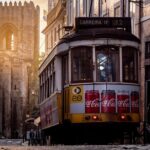
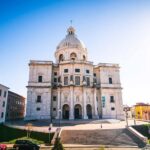

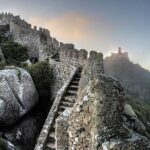
Alfama Tours, side by side.
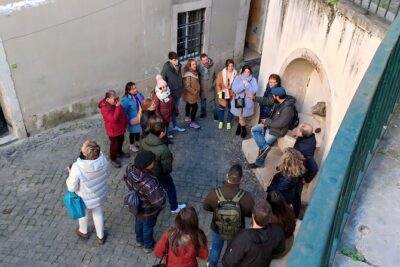 ★ 5.0Alfama Tour in Lisbon Old TownTickets from $34,936 traveller reviews
 ★ 5.0Private Lisbon Sightseeing Tuk-Tuk Tour: Alfama, Belém & MoreTickets from $524,277 traveller reviews
 ★ 4.8Hills, Alfama, and Mouraria Tour by Electric BikeTickets from $253,438 traveller reviews
 ★ 4.9Best of Lisbon Walking Tour: Rossio, Chiado & AlfamaTickets from $232,700 traveller reviews
 ★ 5.0Lisbon Small-Group Food Tour with 18 Tastings in Alfama DistrictTickets from $1261,967 traveller reviews
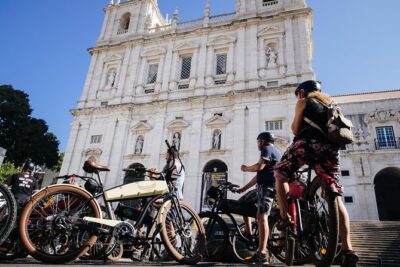 ★ 4.5Lisbon E-Bike Tour Commerce Square, Mouraria and AlfamaTickets from $301,688 traveller reviews
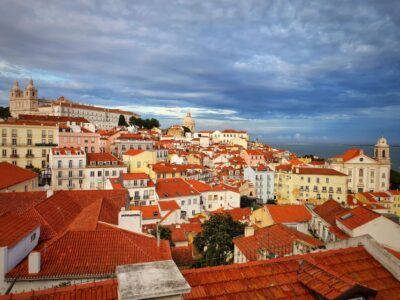 ★ 5.0Old Town TukTuk Tour and Scenic Viewpoints in AlfamaTickets from $35974 traveller reviews
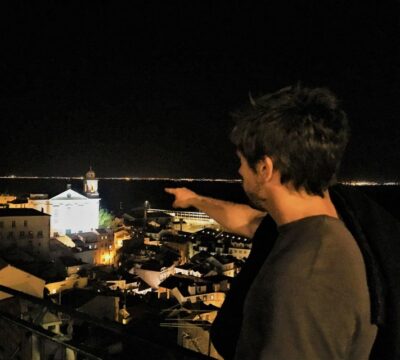 ★ 4.4Alfama Tour and Live Fado with Traditional DinnerTickets from $58970 traveller reviews
More useful lists for this tour