
Review · BELEM TOURS
City Center – Belém
Lisbon has a lot going on, but this quick bus loop helps you place it fast. I really like the onboard Wi-Fi for checking what you are seeing, and I love that Portuguese snacks plus tea or coffee are included so you are not hunting for a bite mid-route. The biggest consideration is also the most common one with bus tours, you mostly view landmarks from the road, so you will not get that hands-on, inside-the-building experience unless you plan a follow-up walk later.
This route is built for people who want a clean overview, with commentary that links each spot to Lisbon’s story. The price is $15.43 per person for about an hour, and with A/C, mobile ticketing, and a small group size (up to 44), it can be a solid value day-plan.
Key Points Before You Go
- One hour, lots of landmark context, so you leave with names, locations, and a clearer map of Lisbon
- Onboard Wi-Fi so you can look up details and plan your next stops
- Portuguese pastries plus tea, coffee, or juice included, with an A/C vehicle for comfort
- Belém end point near Jerónimos and the Planetarium, handy if you are continuing on foot
- No restroom on board, plan your timing accordingly
- Good fit for first-time Lisbon visitors, and anyone who wants a low-effort orientation
Why This 1-Hour Lisbon City-Center Bus Loop Is Worth Your Time

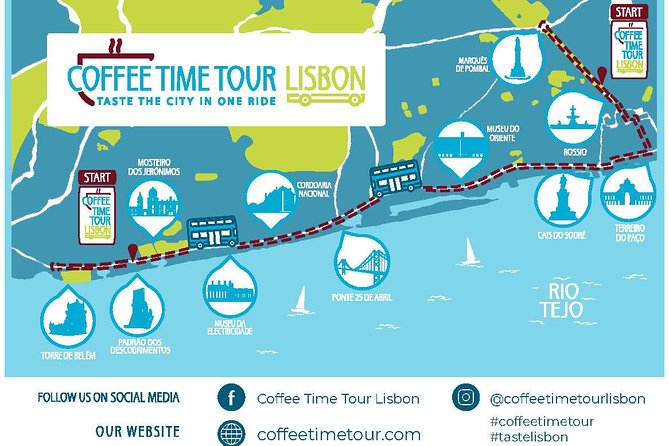
If you only have a day, or you want an easy way to get your bearings, this tour hits a sweet spot. In about an hour, you travel through Lisbon’s key city-center squares and then push out toward Belém, passing major landmarks you would otherwise spend longer trying to line up on your own.
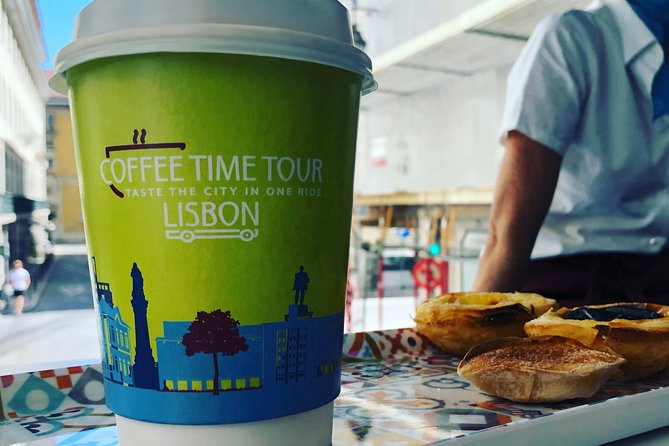
The value comes from the mix of comfort and small extras. You are in an air-conditioned vehicle, you get onboard Wi-Fi, and you are offered snacks plus something to drink (tea, coffee, or juice). That means your brain stays on the sights and the stories, instead of on the question of where the next cafe is.
Price-wise, $15.43 for a guided city pass plus refreshments is not a budget-busting splurge. It is also not trying to replace longer museum time. Think of it like this: you are paying for a guided orientation and a smoother route between neighborhoods.
The high-level feedback score is strong (4.5, with 93% recommending), which lines up with the tour’s likely strengths: convenience, clear landmark coverage, and those included bites and sips that make the ride feel complete rather than rushed. One caution from a past booking is a report that a provider linked to this activity may have had closure issues after Covid. Before you go, double-check that the operator named on your confirmation matches Coffee Time Tour Lisbon and that the tour you booked is active on your travel dates.
You can also read our reviews of more city tours in Lisbon


Start at Restauradores, Then Learn Lisbon’s Layers Fast
Your tour begins at Restauradores, then works through the city center in a way that helps you connect the dots. If you have ever arrived in Lisbon and felt like everything looks beautiful but you still do not know what is where, this style of route is built to fix that.
Monumento dos Restauradores: Liberty in Obelisk Form
The first major stop area is the square dominated by a tall obelisk, the Monumento dos Restauradores, about 30 meters high. It was inaugurated on April 28, 1886, tied to the country’s liberation from Spanish rule on December 1, 1640.
Why I like this as a starting point: it gives you a Lisbon theme right away, political identity and independence. The bronze figures on the pedestal represent victory, with a palm and a crown, and a symbol of Liberty. Even if you only see it from the bus, you walk away with a real anchor, not just a pretty landmark.
Avenida da Liberdade: Where Lisbon Shows Its Prestige
Next you pass along Avenida da Liberdade, one of Lisbon’s main avenues. It connects Restauradores Square to Marquês de Pombal Square, so it is a practical corridor for understanding how the city is laid out.
This is also a good segment to notice the vibe shift. You get the sense of Lisbon’s more formal, boulevard-side identity compared with the older, tighter-feeling squares.
Marquês de Pombal: Planning Lisbon’s Shape
Then comes Marquês de Pombal, linked to major architectural changes in Lisbon. The figure is described as being born in 1699, and the key idea is that his influence shaped how parts of the city were rebuilt and organized.
If you are walking Lisbon later, this stop helps because you start to recognize why some areas feel planned rather than purely medieval in their feel.



Rossio Square: The Long-Running Stage of Lisbon
You then reach Rossio Square, described as one of the oldest and most beautiful squares in Lisbon. It has served as the setting for important events for more than six centuries.
This is a smart stop for orientation. Rossio is one of those places where, once you know it by name, you will keep seeing it show up in directions and day plans. Even from the bus, you are learning the geography of everyday Lisbon life.
From Terreiro do Paço to the Clock of Lisbon’s Old Trade
After the city-center squares, the route moves you toward the riverfront and the parts of Lisbon that grew around commerce. This is where the commentary can make a big difference, because the streets and buildings look busy, but the reason they developed that way is what gives it meaning.
Praça do Comércio: Europe-Scale Riverfront Space
At Praça do Comércio, also called Terreiro do Paço, you get one of the largest squares in Europe, about 36,000 square meters (180 m x 200 m).
This matters because squares like this were built to stage power, trade, and movement. On foot later, you will understand why the space feels open and monumental. From the bus, it is still worth noting because it gives your mental map a clear “riverfront anchor.”
Cais do Sodré and Praça dos Remolares: Workers, Tugboats, and Time
The next area connects ideas that sound unrelated but really do fit Lisbon’s working history. The designations Cais do Sodré and Praça dos Remolares were common for a long time before the statue of the Duke of Terceira was built in 1877.
Remolares, as described, relates to workers connected to carpenters of oars and tugboats. Then in 1906, the Regulador clock was built, and for years it marked the legal hour of Lisbon.
Why you should pay attention to this: you get a reminder that Lisbon ran on schedules, trade, and labor, not just on viewpoints and postcards. That makes the city feel more real when you visit the waterfront on a later day.
Ribeira Velha Market and Casa dos Bicos: Merchants Moved In
Lisbon is described as always being a city of merchants. With the discoveries in the 16th century and the rise of merchants, there was a concern to rearrange the city and place merchants in specific spots. That leads to the creation of Ribeira Velha Market, located in front of Casa dos Bicos.
This segment is a great example of how a bus tour can be better than you expect. You are not just seeing buildings, you are learning why those buildings exist in that exact place.
A Surprising Lisbon Detour: Christ the Redeemer’s Local Link
One of the fun moments on this route is the connection between Lisbon and Rio de Janeiro. The statue of Christ the Redeemer in Brazil is described as inspiring, in 1934, a similar monument in Lisbon, linked to a visit by Cardinal-Patriarch of Lisbon, Mons. Manuel Gonçalves Cerejeira.
This is the kind of detail that makes your photos feel smarter later. If you spot the monument while walking, you now know it has a Lisbon-to-Brazil story, not just a random presence on a skyline.
The 25 de Abril Bridge, MAAT, and Tejo Central: Modern Lisbon Meets the River

Once you move toward the Tagus River, the tour shifts from older city-center markers to Lisbon’s modern identity and its riverfront architecture.
25 de Abril Bridge: Lisbon’s Big Suspension Statement
You pass the 25 de Abril Bridge, a suspension bridge on the Tagus River (Rio Tejo) connecting Lisbon (north bank) to Almada (south bank). The details matter: it crosses the Tagus in the final and narrowest part, the Tejo bottleneck, and the design is described as similar to San Francisco’s Golden Gate.
The story also includes a structural detail, that the project was conceived ahead of its time and later supported the addition of the train that exists today.
If you like engineering facts, this is your moment. Even without getting out to walk on the bridge, the guided context helps you understand why the span looks the way it does and why it became such a defining Lisbon structure.
Cordoaria Nacional: The Portuguese Navy’s Rope Factory
Next, you pass Cordoaria Nacional, also called the National Factory of Cordoaria. It was a factory establishment of the Portuguese Navy, and the Cordoaria made cables, sisal ropes, sails, and flags to equip Portuguese ships. The building dates to 1771 and is currently a national monument.
This is a strong stop for anyone who likes historical industries. Lisbon’s maritime identity is not just about ships, it is about the materials and the infrastructure that kept them moving.
MAAT: Contemporary Art With a River-Facing Design
Then comes MAAT, the Museum of Art, Architecture and Technology. The description highlights a design approach that emphasizes the river-facing facade over the back portion meant to merge with the urban space.
If you have ever wondered why some museum buildings look like they were designed as much for the outside as the inside, this is the answer. The architecture is part of the attraction, especially when you are already traveling along the river.
Tejo Central: Western Iron Architecture, Built Through Many Phases
You also pass Tejo Central, originally known as the Tejo Central. Built between 1908 and 1951, it saw several stages of expansion. Its structure is described as following western iron architecture with bricklaying, with sides decorated in artistic styles ranging from new art to classicism.
Why this helps your visit: Lisbon’s riverfront is full of reused and reinterpreted industrial spaces. Even if you do not enter anywhere specific, seeing the shapes and styles from the road helps you recognize what you are looking at later.
Belém’s Royal and Cultural Landmarks, Ending Near the Planetarium

The tour finishes in Belém, near the Planetarium area, in the vicinity of Mosteiro Jerónimos. That is a smart ending point because Belém is best when you can keep walking after the bus ride.
Palace of Belém: Where Presidents Live
You pass the Palace of Belém, described as the official residence of the President of the Republic starting in 1912. There is also an interesting detail included: presidents of the First Republic had to pay income to the state to reside there, to avoid accusations tied to privileges from the previous regime.
It is the kind of detail that turns a palace from a generic “big building” into something with real political context.
The Monastery: Five Centuries, Kings and Poets
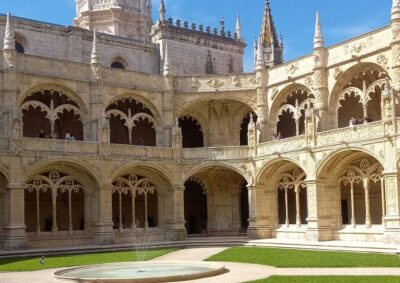
Next is the monastery described as a cultural landmark with five centuries of existence. It notes reception and burial of kings, then later poets. Then it explains a shift from historic landmark to a cultural and conference center, with the definitive project decided at the beginning of 1988 and transformation in 1993, emphasizing music, theatrical arts, and photography after Lisbon’s European Union presidency.
Even if you are not stepping inside during the tour, you are learning why this area is such a magnet for culture.
Torre de Belém and the Discoveries Monument Story
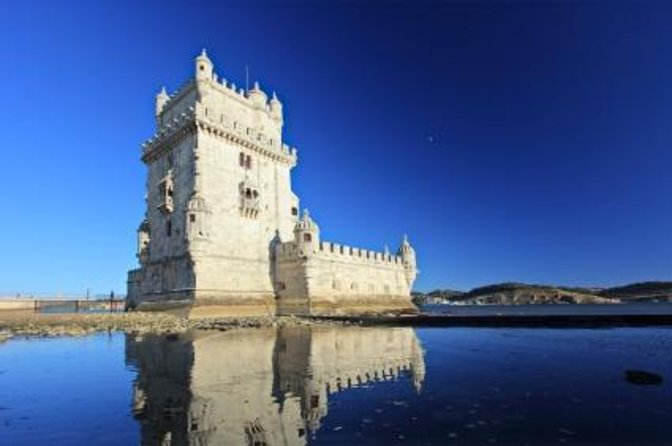
Finally, you get the story of Tour de Belém, officially Torre de São Vicente, described as located where Belém beach once existed, originally surrounded by waters around its perimeter. Over the centuries, it became surrounded by the beach and is incorporated today on the mainland.
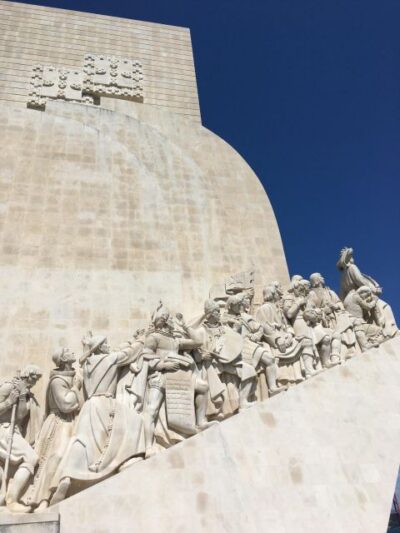
The description also includes that a monument was built on the occasion of the Portuguese World Exhibition in 1940, designed by Cottinelli Telmo as a tribute to Infante D. Henrique. It becomes the Monument of the Discoveries, celebrating not only the Infante but also his collaborators and followers.
This is an emotional closer. You start with Liberty symbolism, you move through maritime industry, bridges, and modern architecture, and then you end on the big idea of exploration and Portuguese influence.
Practical Tips to Make the Most of the Ride
A one-hour tour can feel short, but it can also be packed. Here is how to get more out of it without turning it into homework.
- Plan a quick snack strategy: pastries and coffee/tea or juice are included, but you will still feel best if you arrive a little hungry rather than stuffed.
- If you need a bathroom, do it before you board. There is no restroom on board.
- Use the onboard Wi-Fi for quick lookups. Search names you hear from the commentary so your photos make more sense later.
- Dress for comfort more than style. You are in A/C, but Lisbon weather can still shift, and you will likely be walking in Belém right after the tour.
- Keep your camera ready for riverfront views. The bridge and modern river buildings are easier to recognize once you can match them to the story you heard.
Should You Book This Lisbon City-Center and Belém Bus Tour?
Book it if you want a fast, comfortable orientation to Lisbon and Belém, especially if it helps you connect the city’s squares, riverfront, and landmark names in one go. The included snacks and drinks plus onboard Wi-Fi make it feel like more than a simple ride, and the end location near Jerónimos and the Planetarium is convenient if you plan to keep exploring on foot.
Skip it if you know you want to go inside monuments, because this is designed around passing by major sights with commentary rather than extended stops. Also, if you are traveling with a child under 6, this one is not an option, since children under 6 are not allowed on board.
If you do book, do one smart check before your day: confirm the operator name on your confirmation (Coffee Time Tour Lisbon) and that your date is active, since there has been at least one unhappy report about a tour offering disappearing after Covid.
FAQ
How long is the Lisbon city-center and Belém bus tour?
It runs for about 1 hour.
What is the price per person?
The listed price is $15.43 per person.
What’s included during the tour?
You get Portuguese pastries as snacks, coffee and/or tea (and juice is also offered), onboard Wi-Fi, and an air-conditioned vehicle.
Is there Wi-Fi on board?
Yes, Wi-Fi is included on board.
Do I have a restroom during the tour?
No, there is no restroom on board.
What kind of ticket do I receive?
You receive a mobile ticket.
Where does the tour start and end?
It starts at Restauradores (1249-970 Lisbon) and ends in front of the Planetarium at Belém, near Mosteiro Jerónimos.
Are children allowed, and is there an age limit?
Children under 6 are not allowed on board. Child prices apply for ages 6 to 14.
More City Tours in Lisbon



More Tour Reviews in Lisbon
Not for you? Here's more nearby things to do in Lisbon we have reviewed










Belem Tours, side by side.
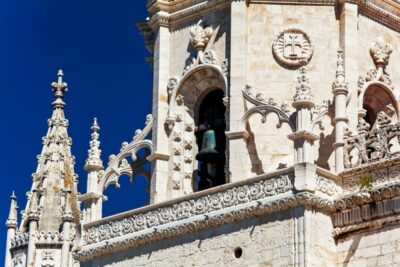 ★ 4.1Jerónimos Monastery Entrance TicketTickets from $2114,164 traveller reviews
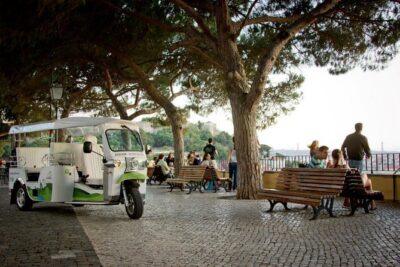 ★ 5.0Private Lisbon Sightseeing Tuk-Tuk Tour: Alfama, Belém & MoreTickets from $524,277 traveller reviews
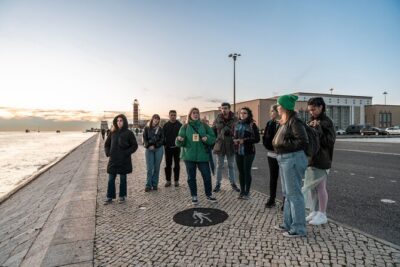 ★ 5.0Age of Discoveries Walking Tour in BelémTickets from $31,513 traveller reviews
 ★ 5.0Bike Tours Lisbon – Center of Lisbon to BelémTickets from $19686 traveller reviews
 ★ 3.7Jerónimos Monastery E-Ticket and Audio GuideTickets from $33660 traveller reviews
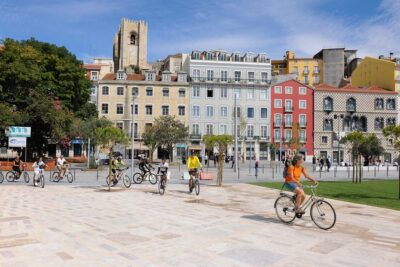 ★ 4.7Lisbon Bike Tour: Downhill Downtown Lisbon to BelémTickets from $45655 traveller reviews
 ★ 4.7Belem Walking Tour with Jeronimos Monastery TicketTickets from $61490 traveller reviews
 ★ 4.8Belem, Jeronimos Monastery, and Coach Museum TourTickets from $94478 traveller reviews
More useful lists for this tour