
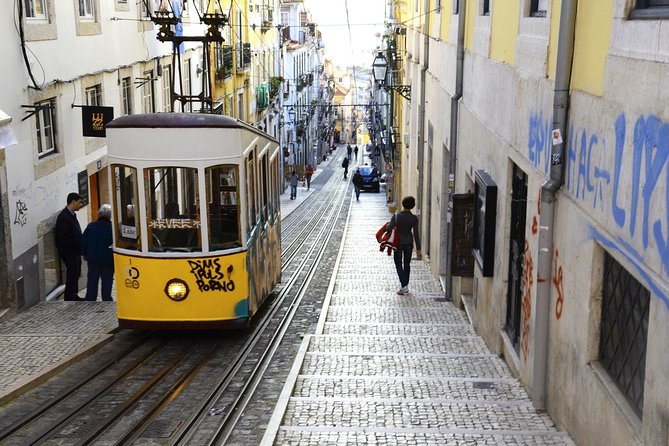
Review · LISBON CITY TOURS
Walk Lisbon Like a Local: Bairro Alto & Downtown Experience
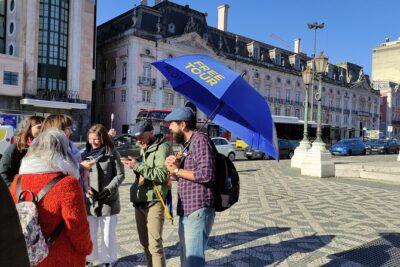
Lisbon’s best stories are on foot. This 2.5 hour walk connects Rossio and Bairro Alto with practical wayfinding plus legends that make the streets feel like a living book. I really like that most stops are free to enjoy, so you spend your money on a guide and your time on great views and history you would normally skip.
Two standouts for me: the Rossio Station façade walk-by that explains the Neo-Manueline details, and the Bairro Alto section that ties together the city gate area, churches, and even the darker plague-era background. One drawback to consider is the pace is walking-focused, not museum-style, so if you want lots of indoor ticketed sights, this is not that kind of tour (and the Santa Justa elevator is not included).
Key highlights before you start
- A tight Rossio to Bairro Alto route in about 2.5 hours, ending at Miradouro de Santa Catarina for an easy finish point
- Rossio Train Station’s Neo-Manueline design, with the intertwined horseshoe portals and a temple-like façade
- Praça Luís de Camoes context, including Os Lusíadas, Vasco da Gama, and Ceuta
- Bairro Alto’s layered past, from an old city entrance to the plague-cemetery story and the Saint Roque relic
- Largo do Carmo’s founding story, tied to Nuno Álvares Pereira and the Battle of Aljubarrota
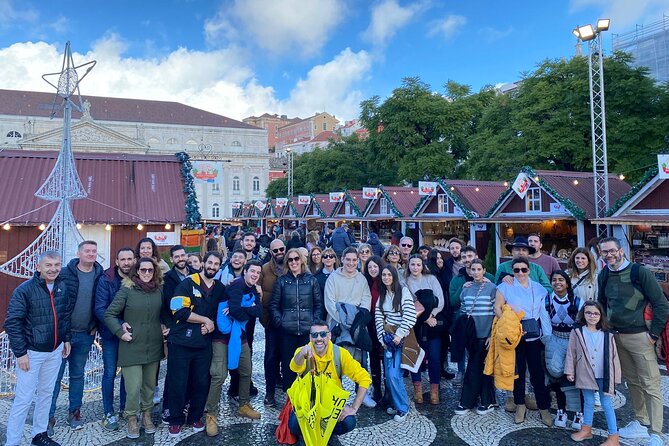
- A small-group feel, with a maximum of 30 travelers and a guide leading the story, not a lecture
Starting at Praça Dom Pedro IV, then letting Rossio pull you in
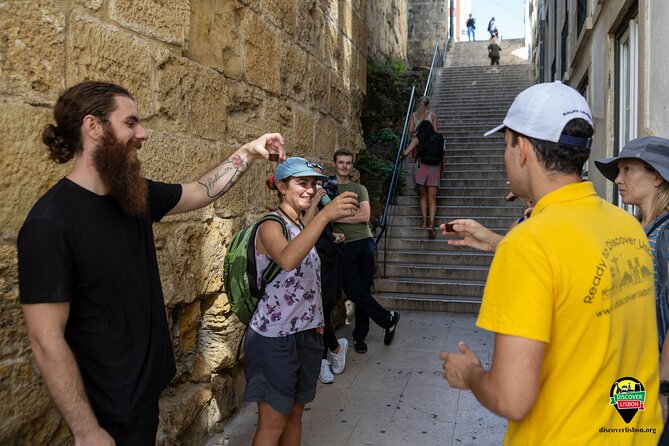
You begin at Praça Dom Pedro IV (1100-200 Lisboa). This is one of those places where you can orient fast, because it sits right in the heart of the city and you feel the flow of Lisbon around you. From here, the tour moves through key downtown areas and then turns toward Bairro Alto, so you get a clear shift in atmosphere rather than just walking in circles.
The value here is the rhythm. You are not just sightseeing squares. You are learning how the city’s “center” expanded and why certain streets and landmarks matter. It makes the whole day easier, because you can connect later visits (like nearby viewpoints and churches) to the stories you just heard.
A practical note: bring comfortable walking shoes. The tour is designed for a moderate fitness level, so plan for steady movement, and assume you will hit uneven pavement and some stairs as you angle toward the hillside area.
You can also read our reviews of more walking tours in Lisbon



Rossio Station’s Neo-Manueline façade: the part you notice, if you know what to look for
Your second stop is Estação do Rossio, and it is worth paying attention even if you do not plan to ride the train. The building was commissioned by the Portuguese Royal Railway Company, designed between 1886 and 1887 by architect José Luís Monteiro, and completed in 1890. That timeline alone helps you place it historically, right in the late-19th century push to connect Lisbon to the region.
What makes this stop special is the guide focus on details that most people miss:
- The intertwined horseshoe portals at the entrance, with signage that reads Central Station
- The way the façade draws from Romantic recreations of Manueline style, which is why it feels more like a temple than a typical station
You also get context on how Rossio Station connected Lisbon with the Sintra region. That matters because it explains why this area became such an important downtown anchor. This is one of those walk-by moments that turns into a “now I see it” experience.
The tour keeps it efficient too, with about 25 minutes here. You get enough time to look closely without turning it into a long indoor detour.
Praça Luís de Camoes: a poet square that explains Portugal’s sea story
Next you head to Praça Luís de Camoes. This stop is not just about the name on the sign. It is about how one writer is used like a national reference point in everyday language and pride.
Here is what you learn to connect:
- Luís de Camões wrote the epic poem Os Lusíadas, tied to Vasco da Gama’s sea route to India
- It is said Camões lost one eye in a battle in Ceuta
- The influence of his masterpiece is so strong that Portuguese is sometimes referred to as the language of Camões
That kind of detail is why this tour works for first-time visitors. It is easy to treat Lisbon as scenery. This gives you a thread you can follow later, when you see monuments, street plaques, or maritime themes around the city.
Time is about 30 minutes at this stop. If you like learning quick context rather than getting stuck reading everything, you will probably enjoy this pace.
Bairro Alto: from city entrance to plague-era pressures, then into church-centered life
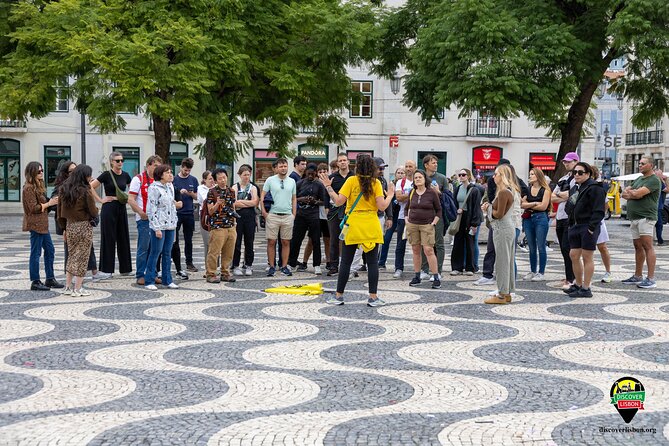
This is the emotional core of the walk, because Bairro Alto is where the city’s story gets complicated. The tour frames the area as part of Lisbon’s earlier growth after the late-15th century influx of people from around the world, driven by the discovery era.
You learn that the area around today’s Camões square was once used as an entrance to the city. The guide connects that to a chain of landmarks and changes, including:
- The older Fernandine wall and the door of Santa Catarina
- What you can see after the earthquake era, when two churches, Encarnação and Loreto, come into the picture
- How one side of the wall related to wealthy noble families, while the higher ground connected to a cemetery of plague victims
Then the story moves from tragedy to a specific 1500s turning point. In 1506, King Manuel I requested a relic of Saint Roque from Venice and placed it in a hermitage near the cemetery. As the population grew and the black plague hit again, the less fortunate and the sick ended up moving closer to the church. An urban plan followed to accommodate them.
You can feel why this stop gets people talking. It is not just “look at this neighborhood.” It is “understand why people ended up here, and how faith and survival shaped the streets.”
A consideration: the topic includes plague history. It is presented as part of a local explanation, but if you prefer purely cheerful sightseeing, you might want to mentally prepare for darker material.
Time is about 30 minutes at Bairro Alto, which is long enough for the story to land without exhausting you.
Largo do Carmo and Nuno Álvares Pereira: a vow that became a church and convent
The next stop is Largo do Carmo, where the church and convent tie into one of Portugal’s famous military-legends moments. The tour explains that the complex was built in 1389 after Nuno Álvares Pereira vowed to build the world’s most beautiful church if he defeated the Castilians in 1385 at the Battle of Aljubarrota. Portugal came out victorious, and he kept the promise.
The guide also adds what happens after the building was completed in 1423: he joined the Carmelite order and spent the rest of his life in the convent. That detail makes the site feel less like an “old building” and more like a human story with a clear arc.
The practical takeaway is simple: if you are walking Lisbon and want to understand why churches look the way they do, this is a good stop. You get the reason behind the vow, the timeline behind the construction, and the personal commitment behind it.
You only have about 15 minutes here, so it is more of a guided orientation than a long interior visit. That can be a plus if you want to keep moving through the city.





Ending at Miradouro de Santa Catarina: a viewpoint finish you can actually use
The walk finishes at Miradouro de Santa Catarina (1200-262 Lisboa). Even though the focus is the guided story along the way, ending at a miradouro is smart. You can regroup, catch your breath, and check your next plans from an actual vantage point rather than just returning to a random street corner.
This is also where the tour’s “short and effective” style pays off. You have a clear endpoint, and you can leave with better bearings for the rest of your trip. If you are aiming to fit Lisbon into a busy schedule, a tour that ends at a viewpoint is a practical win.
Price and value: how $3.60 makes this feel like a bargain education
At $3.60 per person, this is priced at a level where it feels more like a local community walk than a typical sightseeing product. Even if you treat the price as a promo or budget-friendly rate, the structure still supports good value: you get an expert local guide, around 2 hours 30 minutes of walking, and stories at multiple stops.
Here is what you should compare when judging value:
- You are not buying museum tickets. Most stops are free to enjoy at the squares and viewpoints, and the tour is built around outside and walk-by learning.
- You are paying for translation of meaning, not just access to places. That is why the details like José Luís Monteiro’s role or the Saint Roque relic matter.
Not included items are limited, which keeps expectations clean. Private transportation is not part of this, and entry to the Santa Justa elevator is not included. If your dream Lisbon day includes riding the elevator, plan to do it separately.
Also note the booking pattern: it is often booked about 13 days in advance on average. Not a must, but if your dates are tight, secure your spot sooner rather than later.
Who should book this Bairro Alto and downtown walk
This works best if you want:
- A first-time Lisbon orientation that focuses on the downtown-to-Bairro Alto transition
- A short walking experience with meaningful context at each stop
- A guide-driven route that helps you reach areas you might not wander into on your own
It is also a solid pick if you like your history human-sized. You get poets, builders, and rulers tied to specific places, instead of long lectures.
Skip it, or at least think twice, if you are hoping for:
- Lots of inside museum time
- A heavy emphasis on ticketed attractions
- A calmer pace with minimal walking
And because the tour is set for moderate physical fitness, bring comfortable shoes and plan for steady walking.
Should you book it or plan your own walk?
I would book this if you want a smart way to see Lisbon’s center and then climb into Bairro Alto with a guide explaining why the neighborhood has the shape it does. For the price, you are getting a lot of “connective tissue” that makes independent sightseeing afterward easier. The best part is that the tour is short, so you stay curious, not exhausted.
I would only hesitate if you already have a strong self-guided plan and you dislike learning about plague history. Otherwise, this is a tidy, story-rich introduction that helps you understand what you are seeing in real time.
FAQ
How long is the Walk Lisbon Like a Local tour?
It lasts about 2 hours 30 minutes.
What does it cost?
The price is $3.60 per person.
Is the tour offered in English?
Yes, it is offered in English.
Where does the tour start and end?
It starts at Praça Dom Pedro IV, 1100-200 Lisboa, Portugal and ends at Miradouro de Santa Catarina, 1200-262 Lisboa, Portugal.
What is included in the price?
The tour includes an expert local guide, the 2.5 hour walking tour, and intriguing stories and legends.
Is the Santa Justa elevator entry included?
No. Entry to the Santa Justa elevator is not included.
Do I need a printed ticket?
No. You get a mobile ticket.
How big is the group?
The tour has a maximum of 30 travelers.
What is the cancellation policy?
You can cancel for a full refund up to 24 hours before the experience starts. If you cancel less than 24 hours before, the amount you paid is not refunded.
Is the tour suitable for everyone physically?
It requires moderate physical fitness, and it is near public transportation. Service animals are allowed.
More Walking Tours in Lisbon



More Tour Reviews in Lisbon
Not for you? Here's more nearby things to do in Lisbon we have reviewed










Lisbon City Tours, side by side.
 ★ 5.0Lisbon City Center Tour – The Unmissable LisbonTickets from $322,234 traveller reviews
 ★ 4.7Sintra, Pena, Regaleira, Cabo da Roca & CascaisTickets from $2319,656 traveller reviews
 ★ 4.1Jerónimos Monastery Entrance TicketTickets from $2114,164 traveller reviews
 ★ 4.8History, Stories and Lifestyle Walking TourTickets from $2910,902 traveller reviews
 ★ 4.5Sunset Boat Party Cruise with DJ and Open BarTickets from $2710,378 traveller reviews
 ★ 4.7Pena Palace, Sintra, Cabo da Roca, & Cascais DaytripTickets from $919,981 traveller reviews
 ★ 4.6Oceanário de Lisboa Entrance TicketTickets from $299,943 traveller reviews
 ★ 5.0True 4Hour Private Tuk Tuk Tour: Discover Lisbon with a Local!Tickets from $1088,008 traveller reviews
More useful lists for this tour