Review · LISBON
The Portuguese Tiles
Tiles are Lisbon’s secret language. This 3.5-hour Lisbon Portuguese tiles walk turns that language into clear history, from Moorish-influenced rooms to signed older panels you can still see. I especially liked how the guide, Miguel, makes each stop feel purposeful, not random.
What I really loved is the visual range. You go from early Portuguese tile beginnings in churches to 19th-century tile coverage on places you would never think of as tile landmarks, like a brewery and a bookstore. One thing to consider: it’s a lot of walking in a short time, and the tour requires good weather, so wear grippy shoes.
Key highlights you should know before you go
- Miguel’s storytelling connects tile styles to Lisbon’s bigger history, not just decoration
- You’ll see tiles across centuries, including 16th-century signed panels and later 19th-century facades
- Unexpected stops like an old brewery, a classic bookstore, and a pastry shop with ceramic art
- One paid admission is built in at Viuva Lamego, while most other stops are free
- Small group size (max 9) keeps the pace flexible, especially if you want breaks
Lisbon’s tile story makes a great first-time plan
If you want Lisbon to start clicking fast, this tour is a smart way to do it. The big idea is simple. Tiles in Lisbon are not just pretty walls. They are a timeline you can read in public spaces, churches, and even everyday shops.
With Miguel, you get a guided tour that feels like learning how to notice. He points out what changes from period to period, so later, when you are walking on your own, the city starts showing you patterns you would have missed. In the reviews, people kept praising how Miguel didn’t rush and how he adjusted for comfort. That matters on a walk like this.
Also, the group stays small, with a maximum of 9 travelers. That usually means less waiting around at corners and more back-and-forth questions. The tour runs in English, and you get a mobile ticket.
You can also read our reviews of more tours and experiences in Lisbon.



Casa do Alentejo: start where tiles and romance meet
Stop 1 is Casa do Alentejo, and it sets the mood right away. This is a house full of history. It was once an aristocratic home, then remodeled in the 19th century to house Lisbon’s first casino. That “former life” shows in the decoration, including a Moorish influence that fits the romantic style of that era.
Why this stop works for you: it trains your eye. Before you even hit the more famous blue-and-white examples, you learn that tile style often reflects taste and cultural mixing from long ago. Even if tiles are new to you, the design language here is meant to be noticed.
Time is short, about 10 minutes, and the ticket is free for this stop. So you are not stuck in a long entry line. It’s a good launch pad.
Practical note: this is an early stop, so it’s a nice moment to get oriented before the walking ramps up.
Convento de São Pedro de Alcântara: early blue and white origins
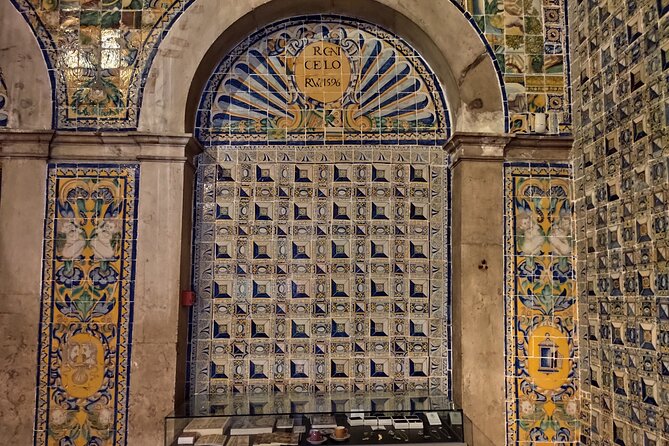
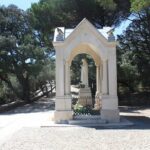
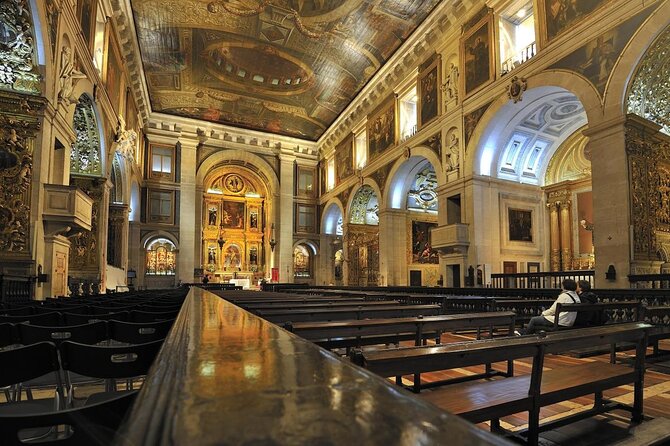
Stop 2 takes you to the church of São Pedro de Alcântara, where you can see beginnings of the blue-and-white tile tradition in Portugal. The church houses tiles from the late 17th century and early 18th century.
What you should pay attention to here: look at how the patterns feel more “historical” than decorative. At this stage, the tiles help you understand the shift into the style many people associate with Lisbon. This is the kind of context that makes the later stops less confusing, because you know what you are looking for.
It’s another short stop, around 15 minutes, with free admission. The quick timing is a plus if you are jet-lagged or just want efficient sightseeing.
Igreja de São Roque: signed 16th-century panels in place
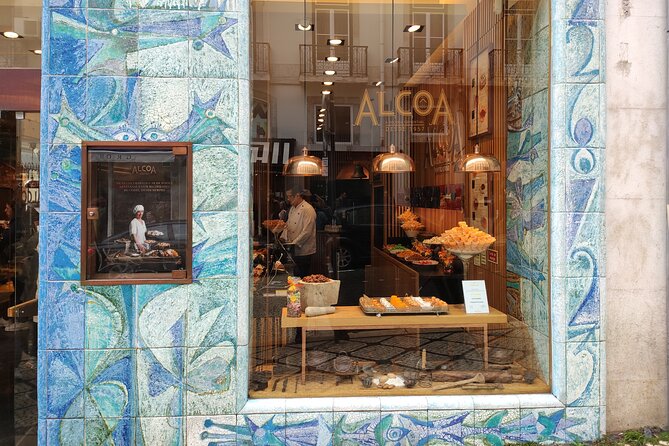
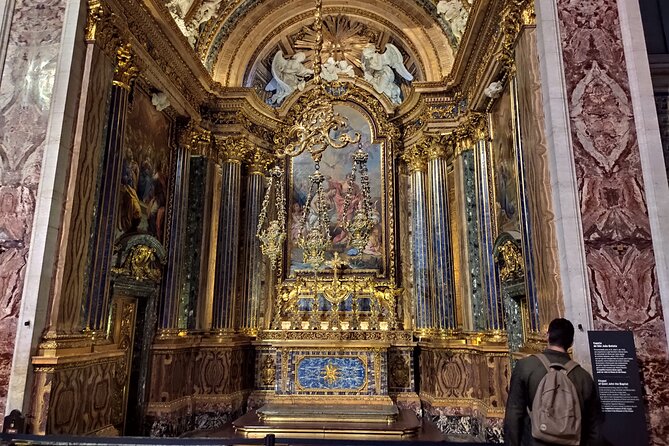
Stop 3 is Igreja de São Roque, one of the most meaningful stops on the route. Here you see the oldest tile panels in Lisbon in situ, including signed panels from the 16th century. This is also where the story turns. The guide frames these panels as marking the transition from Moorish tradition to a more distinctly Portuguese tile identity.
Why this matters: it’s not just “old tiles.” It’s old tiles with a clear historical marker. Signed panels give you a sense of authorship and craft, not just anonymous wall decoration.
You get about 15 minutes here, and again, free admission. Plan to slow down your pace at this stop. If you rush, you will miss the details Miguel is aiming you toward.
Trindade brewery and Largo Rafael Bordalo Pinheiro: tile covers everyday life
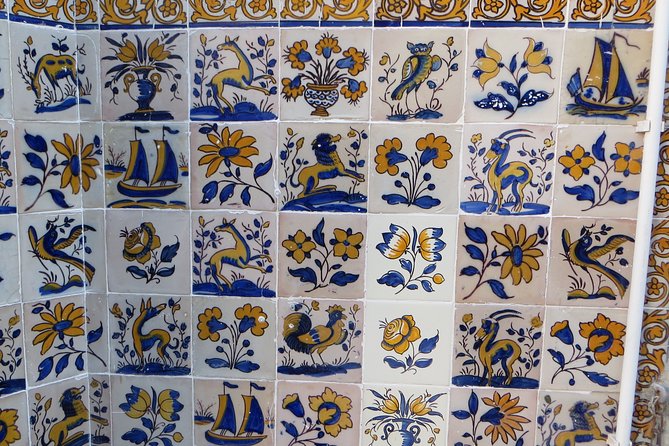
Stop 4 is Trindade, described as the oldest brewery in town, totally covered with 19th-century tiles. This is the fun contrast in the tour. You are not just in heritage buildings. You are in a place that used to serve drinks in a tiled shell.
Tile takeaway: once you see tiles on a brewery, you start to understand that azulejos were part of daily city life, not only religious or elite spaces.
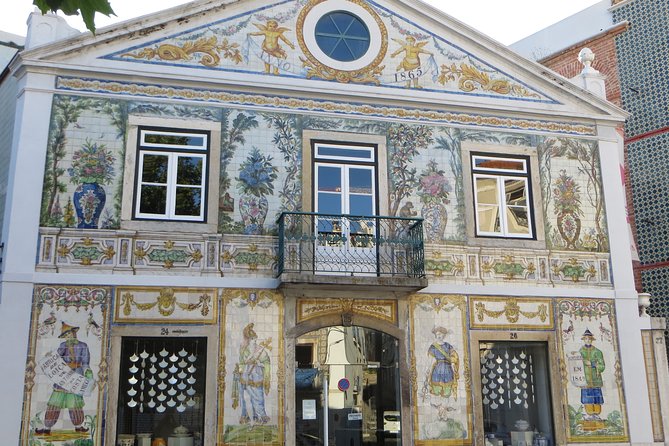
Next, Stop 5 is Largo Rafael Bordalo Pinheiro, where you see a 19th-century tile façade with Masonic motifs. The tour also explains the history of the man behind this iconic Lisbon façade.
Both of these stops are short, about 5 minutes each, and both are free. That quick format works here because the visual hits are strong. You get the main message fast, then you move on.


Livraria Bertrand in Chiado: a classic bookstore, tiled up
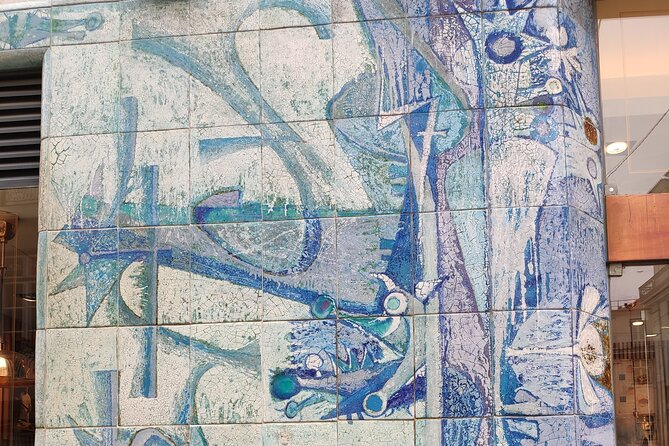
Stop 6 is Livraria Bertrand in Chiado. It’s the oldest bookstore in the world still in operation. The building facades are covered with blue-and-white tiles from the 19th century.
This is a great stop for you if you like architecture that makes a photo look better without trying too hard. It’s also a nice break from purely religious sites. Tiles are doing a different job here. They signal prestige and identity.
Expect about 5 minutes here, free admission. In that short time, you can still see the overall façade patterns and get a feel for how tile styles look when they wrap a “front door” to culture.
Alcôa pastry stop: lottery shop history, ceramic art
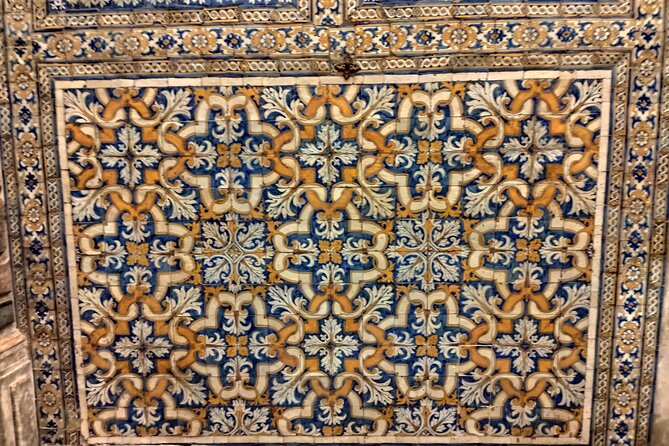
Stop 7 is Alcôa, an iconic pastry shop in Lisbon. The interesting twist is that it used to be a lottery shop, and in that context it was covered with ceramic work by one of the greatest Portuguese potters of the 20th century.
I like this stop because it makes the story feel lived-in. Lisbon tiles are not behind glass. They hang where people buy treats and small necessities. The tile work acts like a layer of memory on top of everyday business.
Time is about 10 minutes, free admission. It’s also a good moment to rehydrate if you need it.
Praça Dom Pedro IV: where tiles meet Lisbon’s main stories
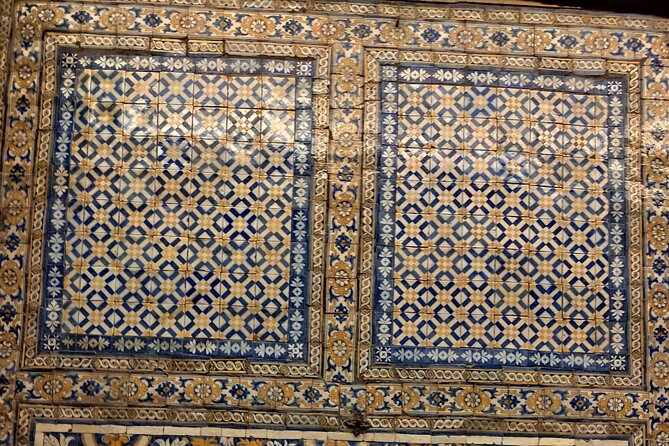
Stop 8 is Praca Dom Pedro IV. This is the most important square in Lisbon, and the tour uses it as a storytelling platform, with history and local tales tied to what you’ve already been seeing.
Even if you only spend around 10 minutes here, the value is in how it helps you connect dots. After hours of looking at façades and churches, you can suddenly place Lisbon into a bigger map in your head. You start to get your bearings for later parts of the trip.
Viuva Lamego showroom: when the tile factories become real
Stop 9 is Viuva Lamego, and this is where you get a more direct look at production history. This place was the site of one of the two most important tile factories in Lisbon. Today it functions as a showroom.
Here’s what makes this stop useful for you: factory context changes the way you read tiles. When you know there was a production system behind the walls, the patterns feel less like random artworks and more like a designed visual language.
Time is about 10 minutes, and this stop includes admission ticket. So compared to the other free stops, you are getting a little more “paid structure” in the total price.
Rua da Misericórdia: tile store that feels close to a museum
Stop 10 is Rua da Misericórdia, a store that is almost like a museum. It’s the kind of place where you can enjoy tiles from almost every era.
This is a smart closer. By the final stop, you’ve learned enough to shop with your eyes open. You are not just browsing. You are connecting what you see to the evolution you were taught earlier.
Time is about 20 minutes, and admission is free. If you want to buy small tile souvenirs, this is the time to do it while you still remember the differences between styles.
Logistics that affect your comfort: timing, weather, and group size
This tour runs about 3 hours 30 minutes. It starts at 10:00 am, and the meeting point is Av. da Liberdade 6, 1250-144 Lisboa. You end in a different location, so build in a little buffer for whatever you plan right after.
A few details matter in real life:
- The group max is 9, which helps with pacing.
- It’s offered in English.
- You’ll get a mobile ticket.
- The tour is near public transportation.
- Service animals are allowed.
- Good weather is required.
That last point is not just legalese. You will be walking and stopping outdoors, and in bad weather it’s harder to enjoy the slow, careful looking. If rain is in the forecast, ask Miguel what his best route options are, and do not be shy about taking extra care with your footing.
Also, be honest with your energy level. Some people loved the pacing so much they lost track of time, but others found the day-ending legs a bit heavy. If you feel that coming on, you can ask for adjustments. In the reviews, Miguel was praised for not rushing.
Price and value: what $60.24 buys you
The price is $60.24 per person for about 3.5 hours. At first glance, that may feel like you are paying for walking. But you are not just buying movement. You’re buying a guide who knows how to connect tile details to Lisbon’s timeline and cultural shifts.
Here is why I think the value is solid:
- Most stops have free admission tickets, so you are not paying repeated entry fees.
- Viuva Lamego includes admission ticket, which gives you one structured “inside” component.
- You cover a tight set of tile landmarks across centuries, from 16th-century signed panels through 19th-century façades and later ceramic work.
- The small group size keeps the time useful.
And because this is booked fairly far ahead on average, about 37 days, it signals steady demand. That often means you are not stuck with a random schedule or overfull timing, but you still should book early if you have fixed dates.
Who should book this Portuguese tiles tour
You should strongly consider this tour if:
- You love architecture and want to understand what you’re seeing, not just take photos
- You want a first-day plan that helps you notice Lisbon tiles all week long
- You prefer a guide who connects art to the city’s wider historical layers
It also works well for couples and small groups, especially if you want a slower, more human walking pace. Based on the guide responses in the reviews, Miguel is used to adjusting for comfort needs, including weather and walking concerns.
If you hate walking or you are traveling with limited mobility, you might find the 3.5 hours demanding. The good news is it is a small group, and the route is designed for short stop times, so it’s not one long museum after another.
Should you book The Portuguese Tiles with Miguel?
Yes, if tiles are on your Lisbon “must see” list, and you want the story behind them. This tour is built around the idea that azulejos are a way to read Lisbon. You’ll see the shift from Moorish influence toward a Portuguese identity, and you’ll get specific, real places where that change is visible.
Book it early in your trip, ideally on a day when you can enjoy walking at a calm pace. Bring grippy shoes, especially if the forecast is iffy. And if you want to make it extra effective, go into it with a simple mindset: look up often, take your time at the churches, and let Miguel teach you what to notice.
FAQ
How long is the Portuguese Tiles tour?
It runs approximately 3 hours 30 minutes.
What time does the tour start, and where is the meeting point?
The start time is 10:00 am, and the meeting point is Av. da Liberdade 6, 1250-144 Lisboa, Portugal.
Is the tour in English?
Yes, the tour is offered in English.
What is the group size limit?
The tour has a maximum of 9 travelers.
Are tickets included for all stops?
Admission tickets are free for many stops, and the ticket at Viuva Lamego is included.
What happens if the weather is poor?
The experience requires good weather. If it is canceled due to poor weather, you will be offered a different date or a full refund.