
Review · LISBON CITY TOURS
Sight Sailing in Lisbon
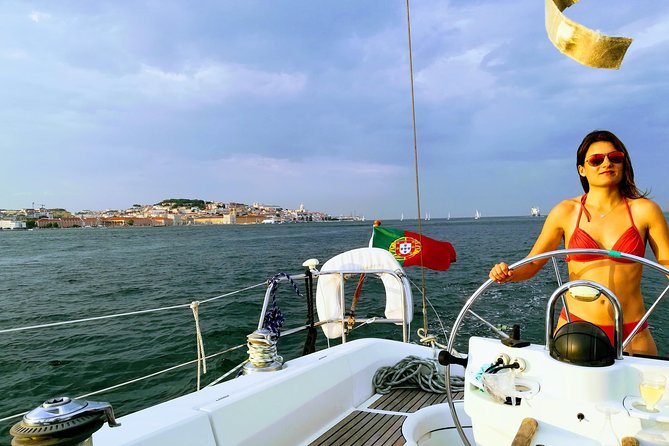
One of Lisbon’s best views is on the water. You get a private Tagus River cruise with landmark spotting plus onboard drinks and Portuguese food, not a rushed photo stop tour.
I particularly like the way the local guide connects the skyline to stories you can actually picture, and the sunset-ready pacing keeps the whole 2 hours 30 minutes feeling unhurried. One consideration: hotel pickup is not included, so you’ll want to plan an easy walk or short ride to the start point at Av. Brasília.
Key highlights to know before you sail
- Private sailing on the Tagus with a welcome drink as soon as you’re onboard
- Wine tasting and Portuguese gastronomy included, so you’re not hunting for snacks mid-route
- Big sights from a small boat perspective, including Belém Tower and the April 25 Bridge
- Almada side views of Christ-King and river architecture that look totally different from the promenade
- A story-first local guide experience, with crew members known for friendly, engaging hosting (you might even meet hosts like Luis, Tomás, Bruno, or Fernando, based on past guest experiences)
- Optional little surprises, like chance sightings of dolphins and, in at least one sailing, guests being allowed to drive the boat briefly
From Av. Brasília to a calm 2.5-hour skyline loop
Lisbon looks dramatic from land, but it turns cinematic from the Tagus. After you meet at Av. Brasília 5, 1350-353 Lisboa, you’ll board your private sailing experience and settle in for a guided route that mixes classic monuments with modern waterfront Lisbon.
The vibe is simple and practical. There’s a welcome drink onboard, and you’ll have bottled water with the food and tasting included. Because this is a private tour, you are not pressed into a cattle-car schedule, which matters when you want time to look up at the landmarks instead of just snapping and moving on.
If you want the best results for your day, aim to bring a light layer. The river breeze can feel cooler than you expect, especially later in the afternoon. And since there is no hotel pickup, I’d plan to arrive a bit early so boarding stays stress-free.
You can also read our reviews of more boat tours in Lisbon

Belém Tower and the Age of Discoveries, seen up close from the river
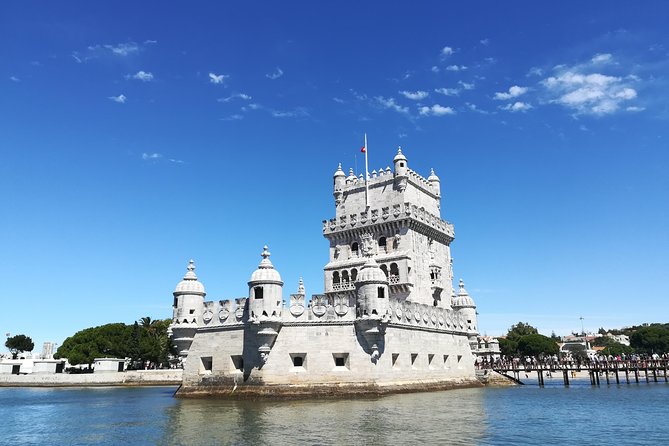
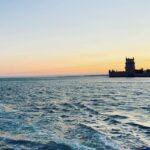
Your sailing route puts you in position to understand why Belém matters. Belém Tower was built at the narrowest point of the Tagus estuary to help defend Lisbon. The interesting part is how the tower’s surroundings changed over time. Today it is symbolically connected to land by a pedestrian bridge, so from the water you get that “fortress at the edge” feeling, then the modern connection makes sense.
Right along that same theme comes the Monument of the Discoveries, with its ship-like shape and Henry the Navigator at the prow. The monument also includes stone figures representing people linked to the discoveries era, and it was originally built for a Portuguese World Exhibition in 1940, using materials that were later dismantled. From the river, you’re not just reading a plaque. You’re watching the monument’s form make sense, because it literally reads like a vessel.
If you care about Portuguese maritime history, you’ll also appreciate how the route pairs these Belém landmarks with the Jerónimos Monastery area. The Jerónimos complex is a 16th-century architectural masterpiece and a national monument, and the setting by the Tagus ties it to where navigators once departed. Even when you are viewing from the water, the scale and spacing help you see why the Portuguese built monuments here instead of anywhere else.
The possible drawback here
Belém is a big sightseeing zone. If you’re the type who loves going inside every monument, a sailing cruise will feel like you’re seeing the outside only. The value is the perspective plus the onboard storytelling, not museum time.
Terreiro do Paço and the November 1, 1755 earthquake story
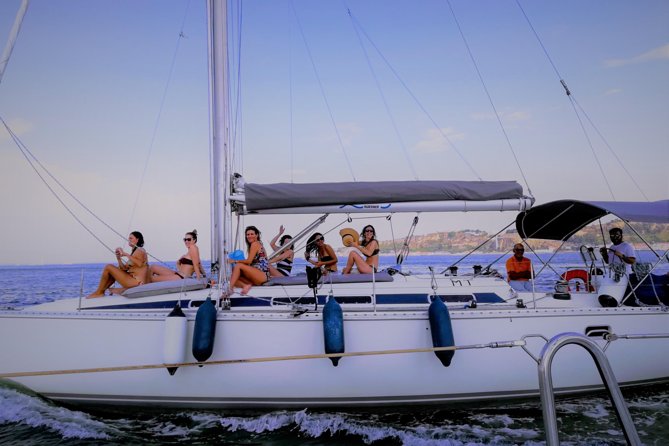
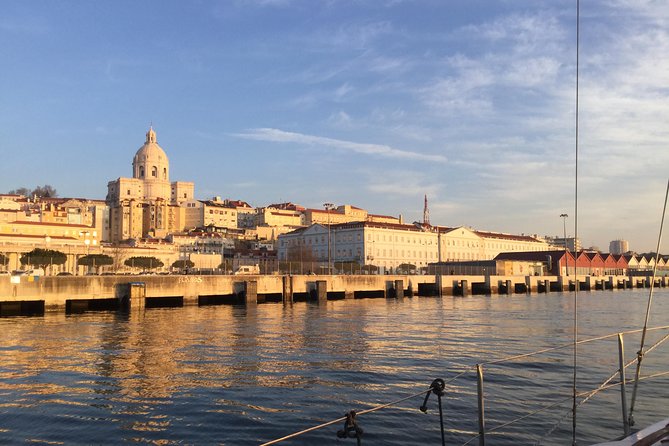
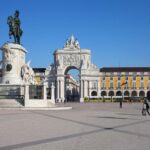
One of the most useful things about this cruise is how it gives context while you watch the riverfront unfold. The square of Terreiro do Paço is tied to the 1755 earthquake, which started around 9:30 a.m. on November 1 and caused widespread collapse in Lisbon, including downtown and the hillside toward Chiado. That kind of disaster reshaped the city, and Terreiro do Paço shows how reconstruction turned loss into a new urban plan.
From the Tagus, that matters. You can see the river as part of Lisbon’s “front yard,” not just a backdrop. The cruise helps you connect why the reconstructed square opens toward the water, and you can even think ahead to how it’s used today for major events, including New Year’s fireworks put on by Lisbon’s city council.
April 25 Bridge, the Golden Gate comparison, and the river as a connector
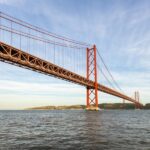
When the cruise brings you past the April 25th Bridge, you’ll probably understand why people compare it to the Golden Gate Bridge. It’s been called the Portuguese version for its suspension-bridge look, and it was attributed, after long planning stages, to a North American company. It was built quickly and cost less than anticipated, and it connects Lisbon with Almada across the Tagus.
Seeing a landmark like this from the water changes how you judge it. From land you focus on the towers and cables. From the river you feel the bridge’s role as infrastructure, a living link between cities instead of a standalone photo background.
A small practical tip: if you want photos of the bridge without other angles cluttering the shot, shift your position onboard when the guide points out the best sightlines. Your best photo on a river cruise is often a matter of a few steps.
You can also read our reviews of more sailing experiences in Lisbon


Almada and the Christ-King viewpoint that faces Lisbon
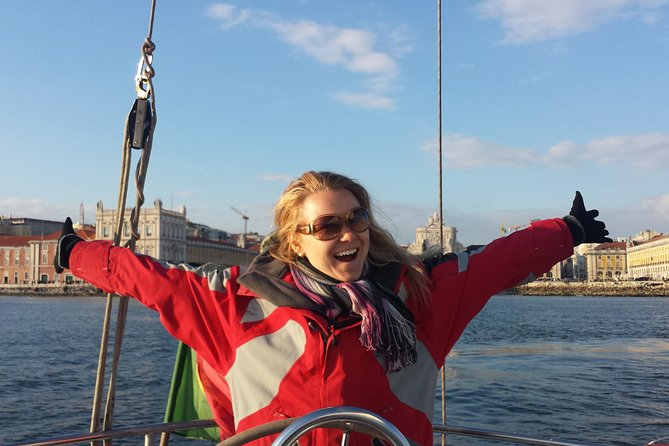
Crossing the skyline toward Almada means you get a different “Lisbon from above” perspective. Christ-King is the big attraction in the municipality of Almada, topped by the statue of the Most Holy Redeemer with open arms facing Lisbon. The portico is 75 meters high and the statue is 28 meters, with the full structure reaching 82 meters including the pedestal.
What makes this more than a pretty viewpoint is the story behind it. The monument was built to fulfill a vow made by the Portuguese episcopate in 1940, asking God to free Portugal from participating in World War II. Portugal’s leaders, including António Oliveira Salazar, preferred to remain neutral. From the Tagus, this turns into a visual reminder of how faith, politics, and Lisbon’s geography were intertwined.
Alfama from a distance, plus São Jorge Castle and the view logic
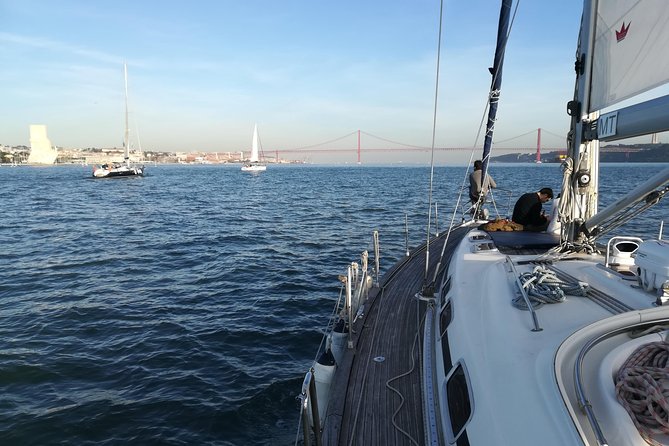
The cruise route also frames Lisbon’s oldest neighborhoods. Alfama is Portugal’s oldest neighborhood and one of the oldest in Europe, shaped by narrow cobbled streets and colorful houses climbing along the hill. It sits beside the Castle of São Jorge and has the Tagus as one of its boundaries.
From the river, you don’t get the same street-level wandering you would on foot, but you do get something useful: you can understand why Alfama’s layout works. The steep slopes and tight streets are easier to “read” when you’re viewing from lower down, looking up.
You also get a clear look at São Jorge Castle, founded in the 10th and 11th centuries when Lisbon was an important Muslim port city. In 1147, D. Afonso Henriques conquered the castle and city from the Moors, and the fortress’s hilltop position is still one of the best ways to grasp how power shaped Lisbon’s geography.
The tradeoff
If you’re hoping for Fado night plans, the cruise will not replace an evening out in Alfama. It sets the stage. For the full experience, you’ll still want to return to the neighborhood for live music at one of the bars or restaurants.
National Pantheon (Santa Engrácia) and Lisbon Cathedral, with the story behind the stone
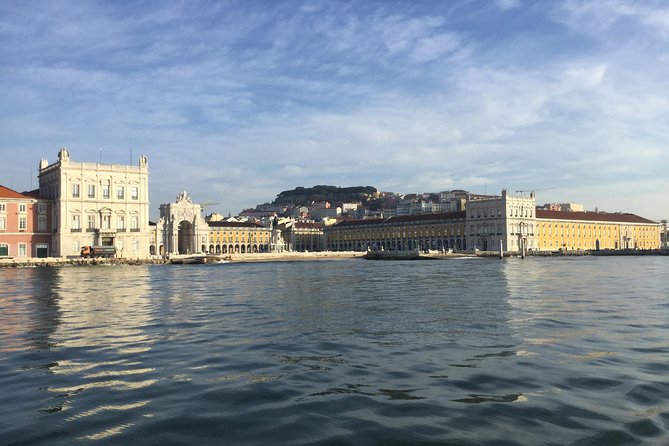
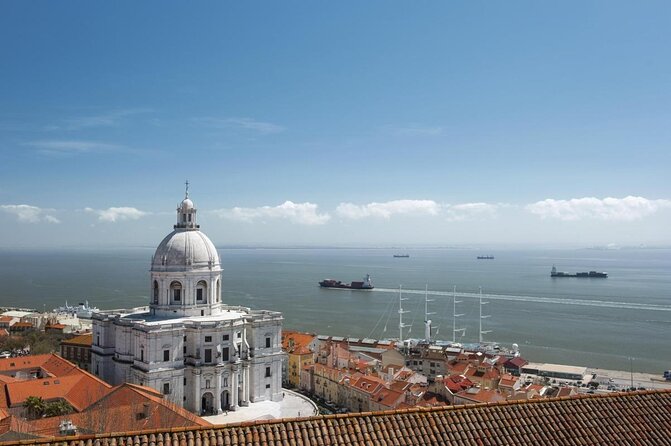
Two religious landmarks add depth to the skyline view. The National Pantheon, also called Church of Santa Engrácia, sits in Alfama and is known for its architecture and panoramic views. It is also tied to Portugal’s national monuments story, housing the remains of exceptional Portuguese people.
Then there’s Lisbon Cathedral, whose construction began in the second half of the 12th century after the city’s conquest from the Moors. It is Lisbon’s oldest church and one of the most important religious buildings in Portugal, and its treasury is a highlight, with relics, jewels, and sacred art.
From the river, these landmarks can feel like part of a larger map of Lisbon’s layers: medieval power, religious identity, and the way hills and water shaped what got built where.
Ajuda Palace, Central Tejo, and MAAT: the riverfront changes over time
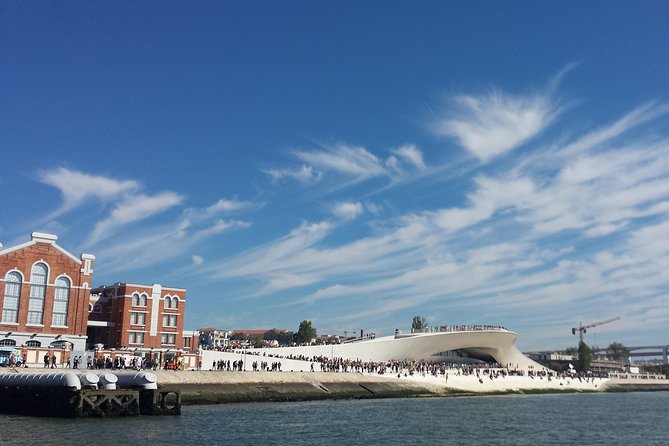
Lisbon’s best trick is that it never stays in one century. Ajuda Palace, built in the 19th century as a residence for the Portuguese royal family, now functions as a national museum and is known for its location with views over the Tagus and Lisbon. Even if you never step inside, seeing its place in the skyline helps you understand how royal Lisbon looked outward.
On the more industrial and modern side, Central Tejo is a major contrast. It was a thermoelectric plant built in 1908, active for electricity supply between 1909 and 1972. It became the Electricity Museum when it opened to the public in 1990, and then reopened after restoration in 2006. From the water, it is a reminder that the river was also Lisbon’s energy corridor, not just a trade and defense line.
Then comes the contemporary turn with MAAT (Museum of Art, Architecture and Technology), opened in 2016. It was designed by British architect Amanda Levete and is known for exhibitions and educational programming with contemporary artists, architects, and thinkers. On a sailing day, MAAT makes the route feel current, not like you’re only watching statues from history.
Santa Apolónia Station and the Port life details you normally miss
If you like details, you’ll likely enjoy how this cruise includes places linked to movement and logistics, not just monuments. Santa Apolónia Station is one of Portugal’s oldest train stations, inaugurated in 1865 in a building that previously housed a convent. Since 2007, it has been the final station for one of Lisbon’s metro lines, and it is close to the cruise port terminal. In the station area, the five-star hotel The Editory Riverside Santa Apolónia also occupies part of the complex.
The cruise also points your attention toward how ships are guided. The Maritime Traffic Control Centre, VTS Tower manages navigation in the port administration area of Lisbon up to a radius of 16.5 nautical miles, centered on VTS Lisboa, with the Vasco da Gama Bridge as an upstream limit. Controllers use radars, sensors, surveillance cameras, and other equipment to monitor maritime movement and manage wharves. The tower also accommodates a dolphin observatory on the Tagus River.
That’s the kind of background info that makes the river feel alive. It’s not just scenery. It is a working system.
Science, folk art, and the river station culture of Lisbon
Some stops on the route broaden the story beyond monuments. The Champalimaud Foundation (also called the Research Center for the Unknown) was created by António Champalimaud and supports advanced biomedical research programs and interdisciplinary clinical care. It is known for scientific research output and awards, including the Champalimaud Prize for Medical Research.
For culture lovers, Lisbon’s Folk Art Museum (FAM) adds another layer. It started as a pavilion for the Popular Life Section of the Portuguese World Exhibition in 1940, then transformed into a museum project and opened on July 15, 1948. Today it is associated with ethnology and functions as a cultural landmark that attracts art lovers.
And then there’s Cais do Sodré, which helps you connect the river to the city’s social energy. Historically it was the Port of Vessels in the 17th century, with ships heading to Portuguese colonies. By the 19th century, it became an entertainment zone with bars and places that attracted sailors and adventurers.
From the water, you can feel why these districts matter. They helped turn Lisbon into a stopover city, not just a destination.
Food, wine, and the crew who make the whole thing feel personal
This is where the experience earns its strong reputation. Included with your sailing are wine tasting plus alcoholic beverages, Portuguese gastronomy, and bottled water. The welcome drink right after boarding sets the mood so you’re not waiting for the good part to start.
The onboard hosting is also a big deal. In past sailings, I’ve seen guests highlight crew members like Luis and Fernando as story tellers, and Bruno as a key part of making the day feel special. Other names that come up include Tomás. The common thread is attention and good hosting, with guides who explain Lisbon’s landmarks in a way that sticks.
There are also a couple of fun “this is why sailing beats walking” moments. Some groups have reported dolphin sightings just before sunset. And in at least one sailing, the captain allowed guests to drive the boat briefly. Even if you do not get those exact moments, the cruise format gives you chances that land tours do not.
Price and value: is $226.41 per person worth it?
At $226.41 per person for about 2 hours 30 minutes, this is not the cheapest way to see Lisbon from the water. But it is also not just a “ride past buildings” ticket.
What you’re buying is a private format plus the extras that usually cost extra on cheaper tours: all fees and taxes, a local guide, a welcome drink, wine tasting, and Portuguese gastronomy. You also get bottled water and alcoholic beverages included.
That combination is why it can feel like good value, especially if you’re traveling as a small group or you prefer an experience that feels tailored rather than crowded. If your ideal day in Lisbon is guided, food-and-drinks friendly, and skyline-focused, this is a solid match.
The simple decision: who should book, and who should skip
Book this if:
- You want Lisbon highlights from the Tagus without doing museum-to-museum hopping
- You value a guide who tells the stories, not just someone pointing at buildings
- You like your sightseeing with wine tasting and Portuguese food onboard
- You’re planning a special moment, since many guests mention celebrations and smooth hosting
Skip it if:
- You want guaranteed time inside monuments, since this is a sailing perspective
- You’re staying in a place that makes Av. Brasília 5 hard to reach, because there is no hotel pickup
FAQ
Is this a private tour?
Yes. It is a private tour or activity, so only your group participates.
How long is the sightseeing sailing?
The duration is about 2 hours 30 minutes.
Where do I meet for the tour?
The start point is Av. Brasília 5, 1350-353 Lisboa, Portugal. The activity ends back at the meeting point.
What’s included in the price?
Included are all fees and taxes, a local guide, a welcome drink, wine tasting, the opportunity to taste Portuguese gastronomy, bottled water, and alcoholic beverages.
Do I need hotel pickup?
No. Hotel pickup and drop-off are not included.
Is there a mobile ticket?
Yes. The tour uses a mobile ticket.
When should I expect confirmation?
Confirmation is received at the time of booking.
Can I get a refund if I cancel?
No. This experience is non-refundable and cannot be changed for any reason.
More Sailing Experiences in Lisbon
More Boat Tours & Cruises in Lisbon

More Tour Reviews in Lisbon


Not for you? Here's more nearby things to do in Lisbon we have reviewed





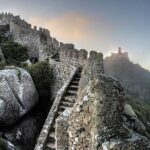
Lisbon City Tours, side by side.
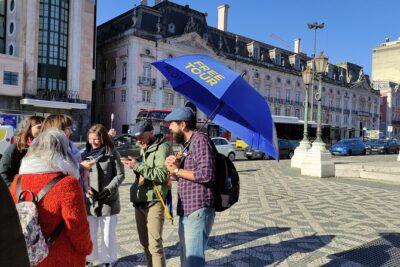 ★ 5.0Lisbon City Center Tour – The Unmissable LisbonTickets from $322,234 traveller reviews
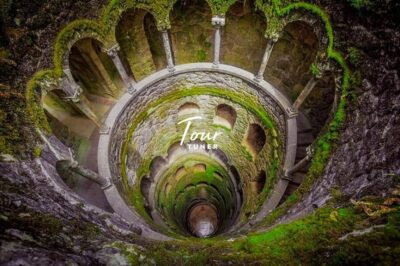 ★ 4.7Sintra, Pena, Regaleira, Cabo da Roca & CascaisTickets from $2319,656 traveller reviews
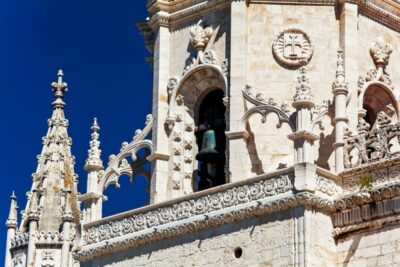 ★ 4.1Jerónimos Monastery Entrance TicketTickets from $2114,164 traveller reviews
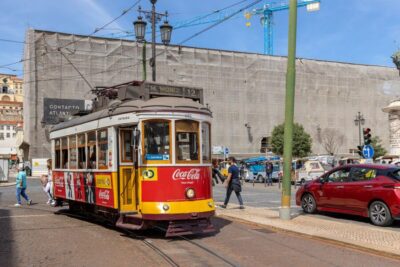 ★ 4.8History, Stories and Lifestyle Walking TourTickets from $2910,902 traveller reviews
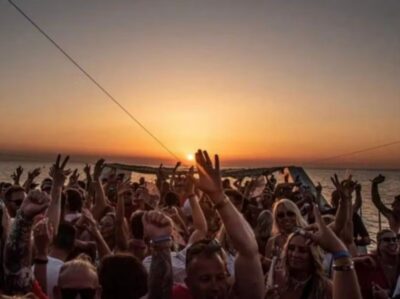 ★ 4.5Sunset Boat Party Cruise with DJ and Open BarTickets from $2710,378 traveller reviews
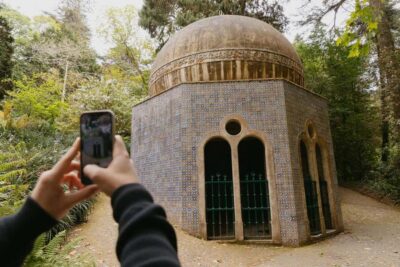 ★ 4.7Pena Palace, Sintra, Cabo da Roca, & Cascais DaytripTickets from $919,981 traveller reviews
 ★ 4.6Oceanário de Lisboa Entrance TicketTickets from $299,943 traveller reviews
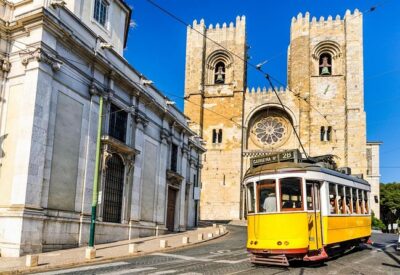 ★ 5.0True 4Hour Private Tuk Tuk Tour: Discover Lisbon with a Local!Tickets from $1088,008 traveller reviews
More useful lists for this tour