
Review · LISBON CITY TOURS
Lisbon on foot: From the hills to the river – Dutch guide
Lisbon changes fast on foot. This Dutch-guided walk keeps things easy to follow, and it strings together big sights without feeling rushed. I like the smooth flow from hills to the river, and I like how the guide connects neighborhoods with stories you can actually picture. One thing to consider: it is not suitable for mobility impairments, since you’ll be walking outdoors for the full route.
You get a relaxed 2-hour route in a small group, then you finish at Time Out Market, so you can keep the day going with a snack or drink right away. The pace is built around walking first, with one planned food moment for a pastel de nata.
Along the way, you’ll hit classic Lisbon corners, including Café A Brasileira and the Santa Justa Lift descent, plus a stop for what your guide calls their favorite pastry. It’s a great mix of scenery, city history, and just enough eating to make the effort feel worth it.
Key takeaways before you go
- Dutch-only guidance so you never lose the thread
- Hills to the Tagus River route that matches how Lisbon is really built
- São Pedro de Alcântara viewpoint to start with a city-wide view
- Café A Brasileira with a Fernando Pessoa statue stop
- Santa Justa Lift to Baixa for an efficient route down into the rebuilt center
- Time Out Market finish for an easy post-tour bite
Starting at São Pedro de Alcântara, Lisbon’s best head start
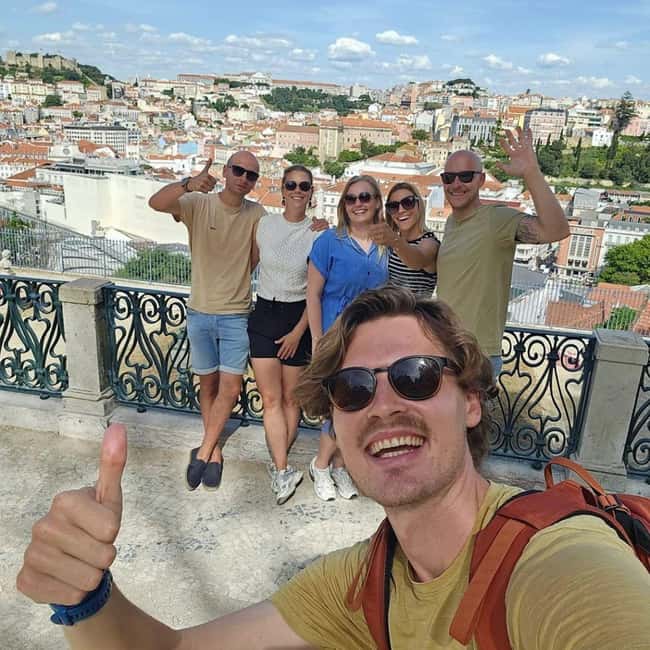
The tour begins at São Pedro de Alcântara viewpoint (Miradouro de São Pedro de Alcântara). This is a smart way to start, because Lisbon is all angles and height. From up here, you get an instant sense of where you are, how neighborhoods stack, and why the rest of the walk makes sense.
You’ll also see São Jorge Castle from this viewpoint. Even if you don’t go inside anything, that first sight helps your brain map the city while you walk. That’s the kind of practical sightseeing I like, because it reduces that early-day wandering feeling.
Because the tour is 100% in Dutch, you can focus on listening instead of decoding. You’ll hear stories about Lisbon past and present as you go, and the route design helps you remember what you learn. If you want your guide to explain things in a language you actually speak, this is the big selling point.
You can also read our reviews of more guided tours in Lisbon



Bairro Alto and Chiado, maritime stories while you walk
After the viewpoint, the walk moves into Bairro Alto and Chiado. This part is all about connection: you’re moving through lively streets while your guide talks about Portugal’s maritime history and the Age of Exploration.
You’ll hear about major figures like Vasco da Gama and Luís de Camões. What makes this valuable is timing. You are not hearing these names in a lecture hall. You’re seeing the streets and viewpoints they’re tied to, so the stories land with more weight than a quick stop at a single landmark.
This section also works well for photo moments. As you move between streets and squares, you get recurring glimpses of Lisbon’s layered urban layout. Just keep your camera ready, but don’t let it steal all your attention. The guide’s narration is part of the experience, especially if you’re here for the city’s context, not just the “see and go” checklist.
Café A Brasileira and the Pessoa stop that makes Lisbon feel personal

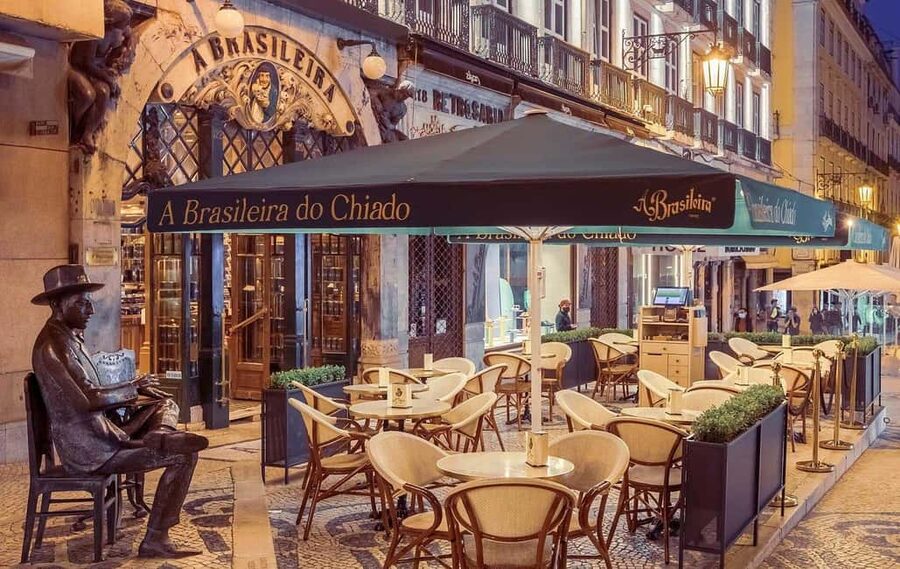
One of the most memorable breaks in the route comes at Café A Brasileira. You’ll be greeted by a statue of Fernando Pessoa. Even if you’re not a huge literature fan, that detail adds personality to the city. It reminds you Lisbon is more than architecture and viewpoints. It has ideas and artists baked into everyday places.
This stop also helps reset your energy. It’s not a long sit-down meal, but it gives you that small, grounded pause that makes a two-hour walking tour feel comfortable. Lisbon walking tours can be deceptively tiring because of the hills, and a timed stop keeps you from burning out early.
If you’re traveling with someone who likes culture but also wants practical logistics, this café stop is a nice compromise. You get a specific place with a concrete detail (Pessoa), plus a moment to steady yourself.
Santa Justa Lift down to Baixa, the shortcut into the rebuilt city
From Café A Brasileira, you’ll descend via the Santa Justa Lift into the Baixa district. The value here is twofold. First, it saves time and energy. Second, it gives you a sense of how Lisbon connects its higher areas to the rebuilt center.
Baixa is where the tour shifts from viewpoints and stories into reconstruction history. You’ll learn how Lisbon was rebuilt after the great earthquake of 1755. Even if you’ve read about that event before, hearing it while you walk through Baixa makes the lessons feel concrete. The city’s layout becomes the evidence.
There is also a break time in Baixa. That’s important because the walk is continuous in terms of moving, but your body needs one pause. Use it for water, a quick photo, or just standing still for a minute. If you want to enjoy the rest of the route, don’t treat the break like optional. Take it seriously.
One more practical note: the tour does not include entrance fees to attractions and you will not go inside anything. So the lift and streets are part of the “no-ticket-needed” sightseeing strategy. You still get major Lisbon moments without paying extra on the fly.
Praça Luís de Camões, Carmo Convent, and St. Dominic’s Square
As you continue, you’ll cover Praça Luís de Camões, Carmo Convent, and St. Dominic’s Square. These are the kind of stops that work best when your guide is talking. Without context, they can blend together as “pretty squares and buildings.” With context, they become anchors for how Lisbon grew, rebuilt, and remembered.
Carmo Convent is listed as a guided stop, and that suggests you’ll get the story behind it while you’re there, not just a quick glance. The same goes for Praça Luís de Camões. Since Luís de Camões is already part of the Age of Exploration storyline earlier in the walk, this square feels like a natural reinforcement point.
St. Dominic’s Square continues that pattern: you’re moving through the center in a way that keeps the narration relevant. This is one reason I like this tour format. It keeps the history tied to the street rather than dumping facts on you at random.
Also, because it’s a small group, you’re less likely to get lost behind a crowd. That matters on Lisbon streets, where getting separated for even a short moment can add stress to a tight, timed route.





Commerce Square and the 25th of April Bridge, big Lisbon outdoors views
Next comes Commerce Square (Praça do Comércio). This is a strong “centerpiece” stop because it sets you up for the next phase: the bridge and river area.
From there, you’ll learn about the 25 de Abril Bridge while enjoying scenic views on the way. You won’t have to guess why it’s famous. The guide will walk you through its significance, and you’ll see it in its working, real-world setting near the Tagus River.
Then the route shifts into river mode. You’ll follow the Tagus River along Ribeira das Naus toward Cais do Sodré and the finish.
This is a genuinely nice change of pace. Earlier in the walk you’re in steep streets, viewpoints, and center-city stops. Here, the air tends to feel more open, and the walking becomes more about the scenery and the flow of the waterfront. Even if you only catch a limited number of river photos, you’ll feel like you actually reached the river, not just passed near it.
Ribeira das Naus to Time Out Market, snack your way to the finish
The tour ends at Time Out Market. This finish point is practical for two reasons. One, it’s easy to understand where you are at the end. Two, you get options to eat without searching.
Since the route includes a stop for a pastel de nata (your guide’s recommended choice), you’ll likely leave wanting either coffee, something salty, or a proper meal after the snack. Time Out Market makes that easy. You can grab something quick if you still have energy, or just slow down if you’re already feeling the day’s walking.
As for the food itself, the plan includes a tasting moment for pastel de nata, and that is the only real food stop described. The tour notes say there is no break during the walk, but there is a tasty stop for the pastry. Translation: expect movement, with structured pauses at Baixa and at the pastry moment.
If you’re the type who gets snacky on foot days, plan your schedule with this in mind. You’re not meant to eat a full lunch in the middle. Think of it as Lisbon by walking, then eating later.
Price and logistics that make this $36 walk feel fair

At $36 per person for a 2-hour walking tour, the price is mainly paying for one thing: a Dutch-speaking guide who can stitch together the city’s layers. If you’re in Lisbon but don’t want the hassle of language barriers, that guide value matters more than the cost number.
It also helps that the tour does not include entrance fees, and you are not going inside attractions. So you are not paying extra for tickets that might not even be worth your time. Instead, you’re spending the money on time with a guide and on a route that covers multiple areas effectively.
Other logistics that influence value:
- Small group format means you usually get clearer attention from the guide
- Multiple start options make it easier to fit your day (São Pedro de Alcântara is the main one)
- A finish at Time Out Market keeps your end-of-tour plan simple
If you’re trying to get through Lisbon efficiently without turning every landmark into a separate mission, this is a decent fit.
What to wear and bring so the hills do not win
This walk is doable for most visitors who can handle urban walking, but it’s not “sit and sightsee.” Wear comfortable shoes. Lisbon’s hilly streets can punish fresh sneakers and first-time flip-flops.
Bring a water bottle. Even if it looks mild, you’ll be moving for two hours, plus you’ll be outdoors during most of it. On sunny days, sunscreen and a hat are smart. Camera time matters too, because this route includes viewpoints, squares, and river views.
One more tip: go with the mindset of walking plus listening. If you keep your phone buried in your pocket for long stretches, you’ll enjoy the stories more. The guide’s explanations are the point, not an optional bonus.
Who should book this Dutch Lisbon walk
This tour is a strong match if you want:
- A Dutch-speaking guide and a route that makes sense without translation stress
- A mix of viewpoints, neighborhoods, and river scenery in one go
- A guided overview of Portugal’s maritime history and the Age of Exploration, with names like Vasco da Gama and Luís de Camões
- A practical route that includes efficient movement from higher areas into Baixa
It’s also a good choice for couples and solo travelers who like structure. You’ll see a lot of Lisbon in two hours, and you end in a place where continuing the day is easy.
It’s not the best fit if you have mobility impairments, since the tour is not suitable for that.
Should you book this Lisbon on foot experience?
If you’re considering it, I’d book when these are your priorities: a Dutch-only guide, a well-planned route from São Pedro de Alcântara down to the Tagus, and real city context (maritime history, Age of Exploration, and Lisbon’s earthquake rebuild story). The combination of Café A Brasileira with Fernando Pessoa, a Santa Justa Lift descent, and a pastel de nata tasting stop adds variety without turning the day into a ticket-hunting exercise.
Skip it if you hate hills or you need a low-mobility route, since the experience is built around walking and does not suit mobility impairments. Also, if you want lots of museum time or inside-the-building visits, this is not that kind of tour. It’s about streets, viewpoints, and guided storytelling.
My bottom line: for $36, two hours, and Dutch narration, it’s a solid way to get your bearings fast and end by the river with an easy meal option waiting for you at Time Out Market.
FAQ
How long is the Lisbon on foot walking tour?
The tour duration is 2 hours.
Is the guide speaking Dutch only?
Yes. The tour is conducted in Dutch.
Where does the tour start?
It starts at São Pedro de Alcântara viewpoint (Miradouro de São Pedro de Alcântara). The meeting point may vary depending on the option booked.
Where does the tour end?
The tour ends at Time Out Market.
What is the price?
The price is $36 per person.
Is this tour suitable for people with mobility impairments?
No. The tour is not suitable for people with mobility impairments.
What is included in the price?
You get a walking tour of Lisbon and a Dutch tour guide. Entrance fees to attractions are not included since the tour does not go inside any attractions.
More Guided Tours in Lisbon



More Tour Reviews in Lisbon
Not for you? Here's more nearby things to do in Lisbon we have reviewed










Lisbon City Tours, side by side.
 ★ 5.0Lisbon City Center Tour – The Unmissable LisbonTickets from $322,234 traveller reviews
 ★ 4.7Sintra, Pena, Regaleira, Cabo da Roca & CascaisTickets from $2319,656 traveller reviews
 ★ 4.1Jerónimos Monastery Entrance TicketTickets from $2114,164 traveller reviews
 ★ 4.8History, Stories and Lifestyle Walking TourTickets from $2910,902 traveller reviews
 ★ 4.5Sunset Boat Party Cruise with DJ and Open BarTickets from $2710,378 traveller reviews
 ★ 4.7Pena Palace, Sintra, Cabo da Roca, & Cascais DaytripTickets from $919,981 traveller reviews
 ★ 4.6Oceanário de Lisboa Entrance TicketTickets from $299,943 traveller reviews
 ★ 5.0True 4Hour Private Tuk Tuk Tour: Discover Lisbon with a Local!Tickets from $1088,008 traveller reviews