
Review · LISBON CITY TOURS
Lisbon: Entry Tickets to Mosteiro de São Vicente de Foram
A monastery ticket in Lisbon that feels like a quiet secret. You get baroque glazed tiles in their original place and the chance to enjoy a panoramic view over the city and the river. I also love that it is designed as an on-the-ground visit, with clear explanations on site rather than a lecture.
One thing to consider: this ticket is self-paced and you do not get a guided tour or an audio guide, so you will rely on the panels and the included map.
Key points before you go
- Tiles in situ: the monastery is known for its huge collection of baroque glazed tiles left in place.
- Royal Pantheon access: see the Bragança Dynasty burial space, including the last Portuguese royal family.
- Mannerism-era architecture: founded in the 12th century, rebuilt in the 16th century, and shaped by later Bragança use.
- La Fontaine fables exhibition: 38 fables shown through glazed-tile panels.
- A working medieval cistern: one of the functional surprises inside.
- Self-guided comfort: informative panels, a flyer map, and a bathroom included.
Why Mosteiro de São Vicente de Fora deserves time on your Lisbon day
Mosteiro de São Vicente de Fora is one of those Lisbon places where the building and the details talk to each other. This monastery is not just a church you walk past. It is a symbol of Portuguese royal power across different ruling dynasties, and you can feel that shift as you move through the spaces.
I especially like the way the site focuses your attention. You are drawn to the tiles, then your eyes move upward to the architecture, and finally you end up with the panoramic view that makes the visit feel complete. Another reason it is worth your time: the monastery is presented as a circuit, so you can see a lot without guessing what is important.
More Lisbon tours and experiences for the shortlist



Entering the monastery: what your ticket includes and how to plan your pace
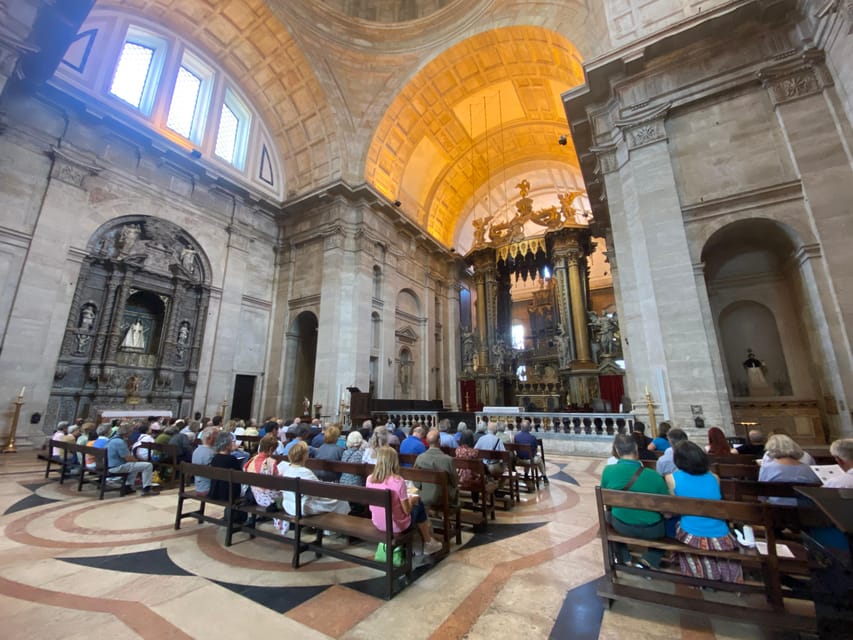
Your entry starts at the ticket office inside the Church of São Vicente de Fora. The visit then loops through the monastery’s interior highlights and exhibitions. The good part is that your ticket covers much more than just one room.
What you get with the ticket:
- Entrance to the monastery
- Access to exhibitions and areas within the visit circuit
- Bathroom access
- Informative explanatory panels throughout
- A flyer with a map and brief descriptions of what you are seeing
Because this is self-paced, I suggest planning for a leisurely walk. If you read the panels and take time with the tile work, you will likely want a solid chunk of your day. Also note what is not included: there is no guided tour and no audio guide. That is fine if you like exploring at your own speed, but if you prefer someone guiding you through the story, you might feel a bit on your own.
The story in stone and tiles: a quick guide to the monastery’s timeline

To appreciate what you are seeing, it helps to know the main storyline of the building.
The monastery was originally founded in the 12th century by D. Afonso Henriques. Then it was rebuilt in the 16th century by D. Filipe I (also known as II of Spain). That rebuild matters because the site today is considered one of Portugal’s best examples of Mannerism style.
After that, the Bragança Dynasty took the monastery as something more than a religious site. Their later use gave the complex its most recognizable treasures: the glazed-tile collection left in place, royal spaces used as burial and ceremonial settings, and decorative finishes that make the building feel almost like a crafted interior stage.
Baroque glazed tiles in situ: the reason you came
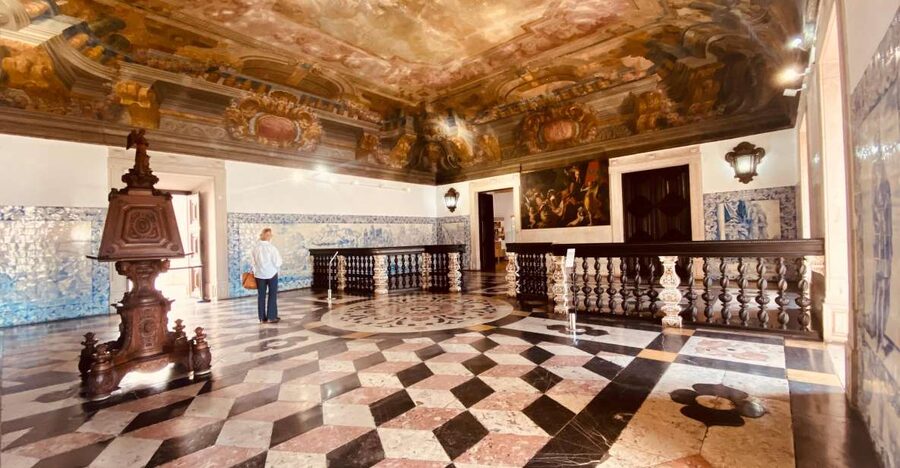
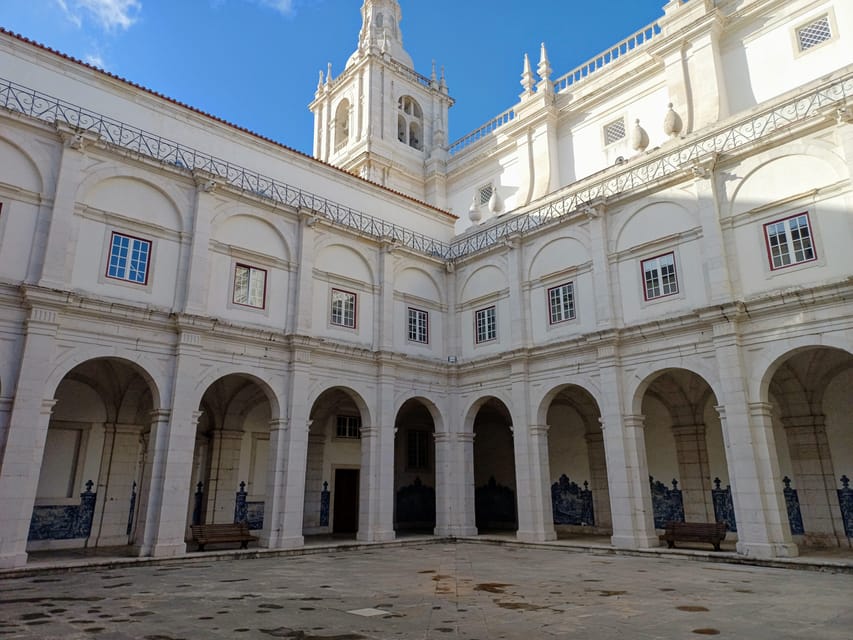
If you only remember one thing about Mosteiro de São Vicente de Fora, make it this: it is famed for having the largest collection of baroque glazed tiles left in situ, meaning in their original locations.
This is what changes the visit from “nice church, cool art” into “wait, how is this still here?” The tiles are not treated like removable decoration. They function like part of the architecture, so as you walk, the panels and surfaces help tell the story.
You also get multiple tile moments across different areas. The site includes:
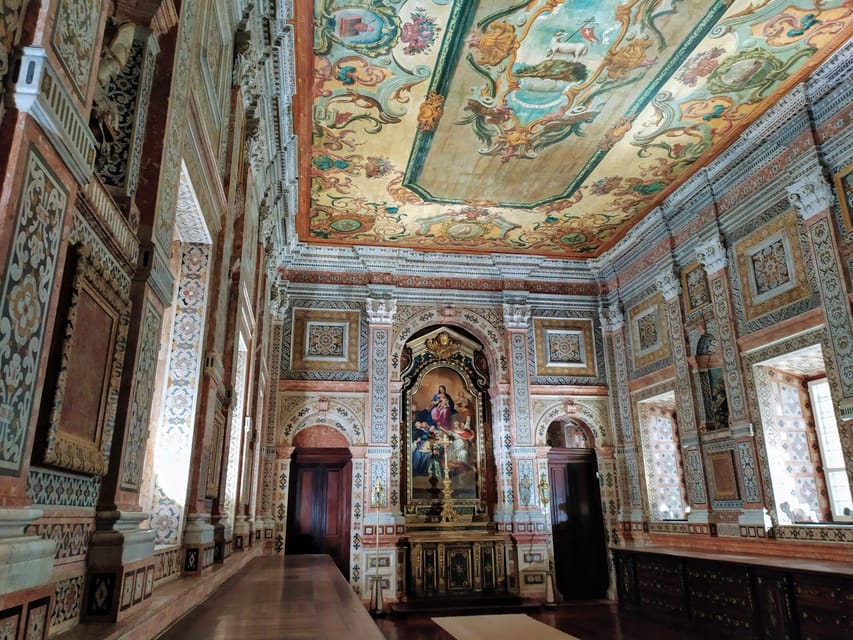
- A sacristy with walls fully decorated with inlaid marbles (a different texture, but it pairs well with the tile storytelling)
- Exhibition-style presentation of glazed panels later in the route
- The overall sense that tile work is shaping the room the way paint would in a modern interior
Practical tip: slow down here. You do not need to read every label to enjoy the craftsmanship, but it helps to pause and look at how the tile designs are arranged across the space. Up close, the details feel deliberate, not random.
The cistern and sacristy stops: where function meets decoration
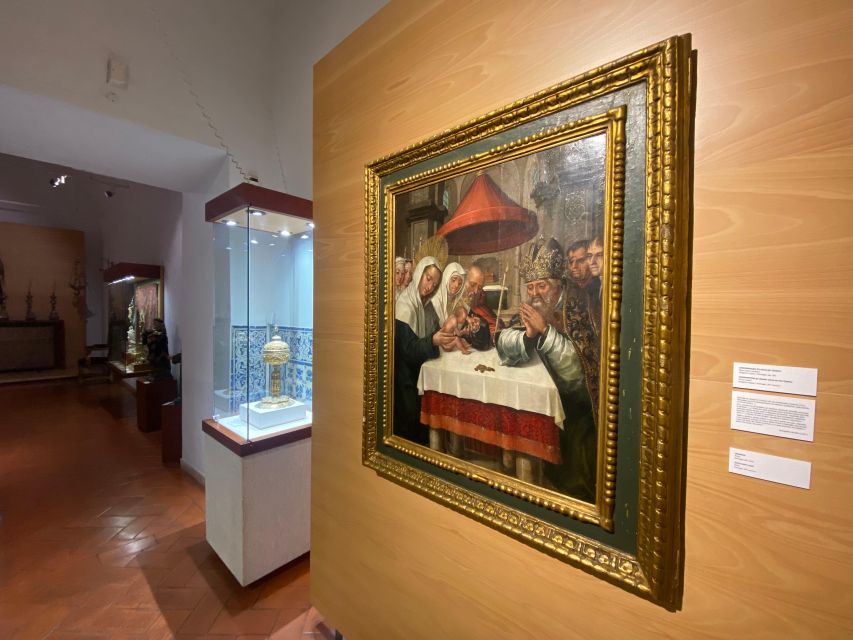
One of the most interesting surprises inside is the medieval cistern that still works. That detail is not just trivia. It gives you a sense of how the monastery operated as a living complex, not just a preserved monument.
Then you move into the sacristy, where the walls are fully decorated with inlaid marbles. This contrast is great for your eyes. Tiles can be visually loud in a good way, and then marble decoration gives you something more solid and grounded.
If you like religious sites for their layout, you will appreciate how the route uses different rooms to change the mood:
- utilitarian space (cistern)
- devotional and decorative space (sacristy)
It keeps the visit from feeling like one long corridor of the same type of art.




Royal Pantheon of the Bragança Dynasty: a quiet must-see
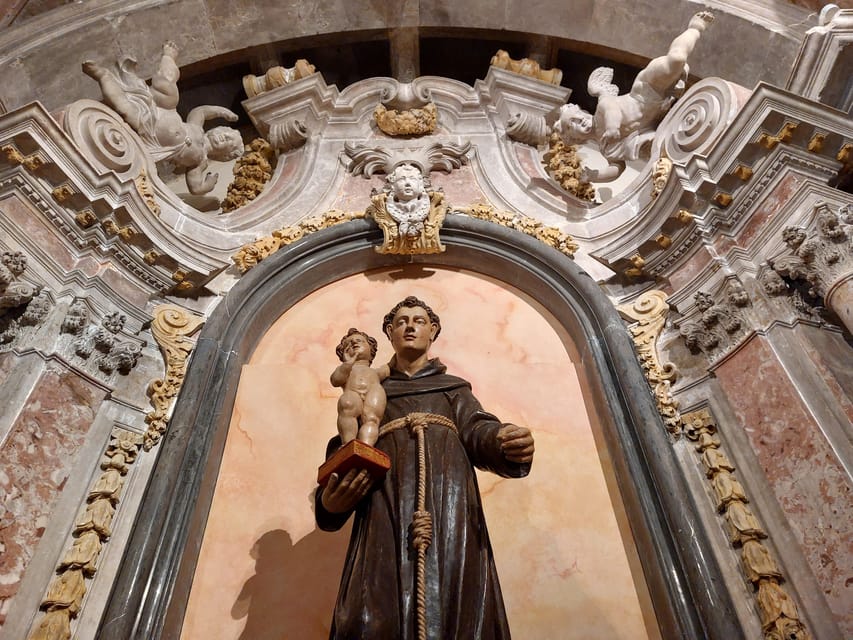
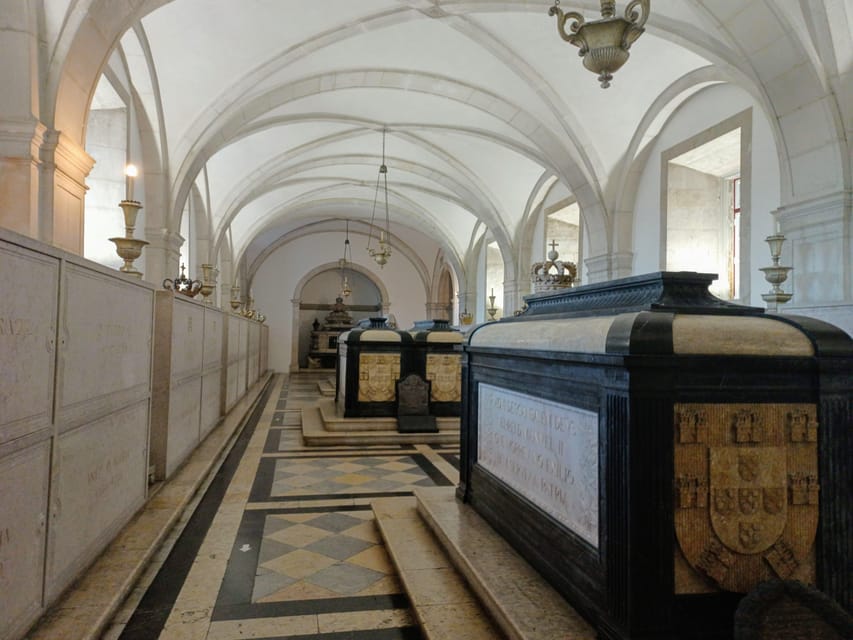
The Royal Pantheon of the Bragança Dynasty is one of the core reasons people buy this ticket. This is where the last Portuguese royal family is entombed.
Even if you are not a royal-history person, this stop lands because it is clear what the space is for. You are not just looking at decoration. You are seeing a designed resting place tied directly to Portugal’s ruling story, through the Bragança Dynasty.
This also helps connect the earlier timeline: founded in the 12th century, rebuilt under D. Filipe I in the 16th century, and then made into a royal monument through Bragança reuse. The Pantheon is where that narrative becomes physical.
The La Fontaine fables exhibition on glazed tile panels
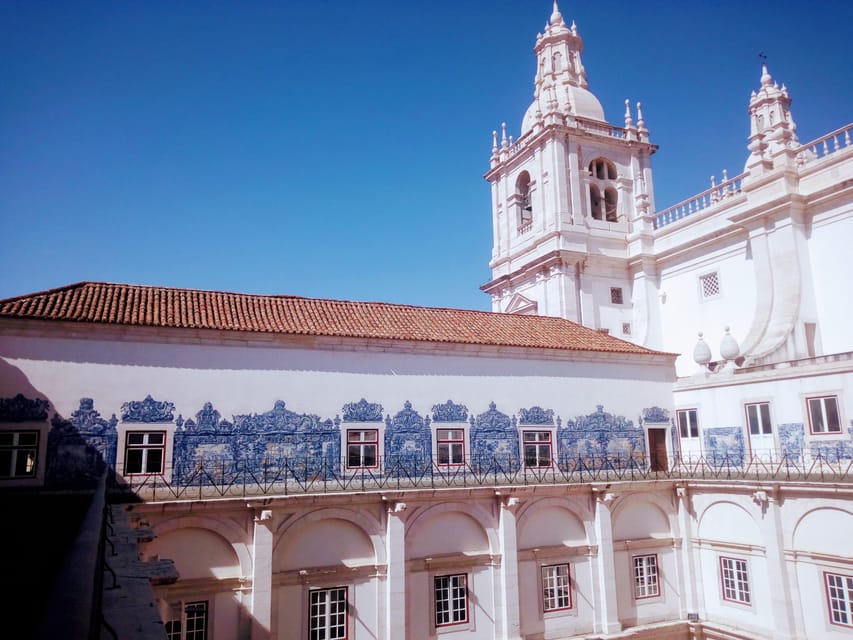
Another highlight is the exhibition of 38 fables by Jean de La Fontaine, depicted in glazed tile panels.
This is a smart choice for a self-guided ticket because it gives you a repeated visual structure. You are not bouncing between unrelated artworks. Instead, you are following a set of stories translated into tile format, so you start noticing patterns in how scenes are framed and how characters are represented.
The overall effect is that you can keep moving through the exhibition without getting lost. If you enjoy storytelling art, this section is a good use of time.
Panoramic view over Lisbon and the river: plan a short pause
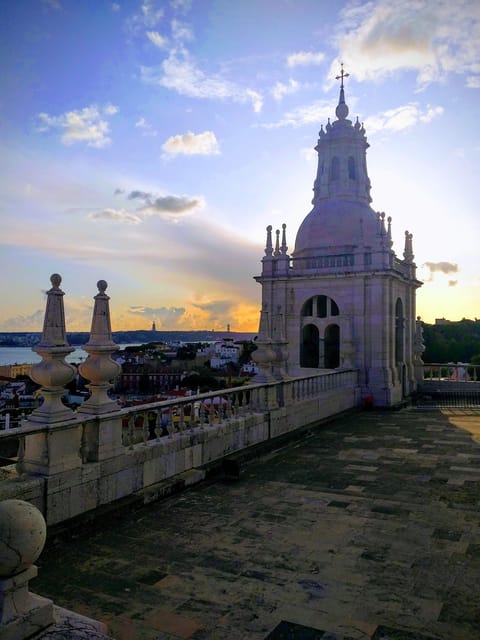
After you’ve worked through the tiles, royal spaces, and exhibitions, you get the payoff that makes the monastery feel like more than indoor sightseeing: a panoramic view over the city and the river.
If you time it well, this can become a calm moment after rooms filled with decorative details. Bring your phone camera, but also take a few minutes to look without it. This is the kind of view that helps you mentally place the monastery in Lisbon’s geography.
One more practical thought: since this part can be your favorite, do not schedule it as a last-minute squeeze. Give yourself time so you are not rushed when you reach the viewpoints.
Practical tips so the visit stays smooth
Here are the rules and habits that matter most for a stress-free visit, based on the site conditions.
Plan to travel light: luggage or large bags are not allowed. Food and drinks are not allowed, and smoking is not allowed. If you need water or snacks, handle that before you enter the circuit area.
Use the panels and flyer: your ticket includes informative explanatory panels and a flyer with a map and brief descriptions. Since there is no audio guide and no guided tour, these tools become your self-guided commentary. Use them early, so you know what you are looking for as you go.
Expect a proper monument circuit: the ticket gives access to the areas within the circuit. You do not get access to areas out of the circuit, so do not plan on wandering into restricted spaces.
Language support: the host or greeter is available in English, Spanish, French, Portuguese, and Italian. That is useful if you need help orienting yourself at the start.
Who this ticket fits best (and who might want another option)
I think Mosteiro de São Vicente de Fora tickets are a great fit if:
- You love tiles and want them in their original context
- You enjoy royal history but prefer it delivered through spaces you can walk through
- You like self-guided visits with clear on-site explanations
You might consider something else if:
- You want a live guide narrating the story start to finish
- You dislike reading panels and prefer audio commentary
- You will arrive with large luggage or heavy bags (since those are not allowed)
Should you book Mosteiro de São Vicente de Fora entry tickets?
Yes, if you want one Lisbon monument where the main attractions are concentrated and easy to follow. The price is low for what you get, especially because the ticket includes access to exhibitions, multiple interior highlights, and the panoramic viewpoint. It is also a smart choice for people who like calm sightseeing, since the monastery is presented in a way that does not force constant crowds around you.
Skip it only if you strongly prefer guided storytelling. In this case, the lack of a guided tour and audio guide can feel limiting. But if you are happy to explore with panels and a map, this is one of the better uses of a half-day to full-day slot in Lisbon.
FAQ
Where is the ticket office and meeting point?
The start is the ticket office inside the Church of São Vicente de Fora. The activity ends back at the meeting point.
How much does the ticket cost?
The price is listed as $9 per person.
How long is the ticket valid?
The ticket is valid for 1 day. You should check availability to see starting times.
What is included with the ticket?
Included items are entry to the monastery, access to all exhibitions and areas within the circuit, a bathroom, informative explanatory panels, and a flyer with a map and brief description.
Is a guided tour included?
No. A guided tour is not included.
Is an audio guide included?
No. An audio guide is not included.
What languages is the host or greeter available in?
English, Spanish, French, Portuguese, and Italian.
What are you not allowed to bring or do?
Smoking is not allowed. Food and drinks are not allowed. Luggage or large bags are not allowed. Alcohol and drugs are not allowed.
Can you access areas outside the visit circuit?
No. Access to areas out of the circuit is not included.
What is the cancellation policy?
Free cancellation is available up to 24 hours in advance for a full refund.
More Tickets in Lisbon


More Tour Reviews in Lisbon
Not for you? Here's more nearby things to do in Lisbon we have reviewed










Lisbon City Tours, side by side.
 ★ 5.0Lisbon City Center Tour – The Unmissable LisbonTickets from $322,234 traveller reviews
 ★ 4.7Sintra, Pena, Regaleira, Cabo da Roca & CascaisTickets from $2319,656 traveller reviews
 ★ 4.1Jerónimos Monastery Entrance TicketTickets from $2114,164 traveller reviews
 ★ 4.8History, Stories and Lifestyle Walking TourTickets from $2910,902 traveller reviews
 ★ 4.5Sunset Boat Party Cruise with DJ and Open BarTickets from $2710,378 traveller reviews
 ★ 4.7Pena Palace, Sintra, Cabo da Roca, & Cascais DaytripTickets from $919,981 traveller reviews
 ★ 4.6Oceanário de Lisboa Entrance TicketTickets from $299,943 traveller reviews
 ★ 5.0True 4Hour Private Tuk Tuk Tour: Discover Lisbon with a Local!Tickets from $1088,008 traveller reviews